Heating and Insulation 
© PDST Home Economics
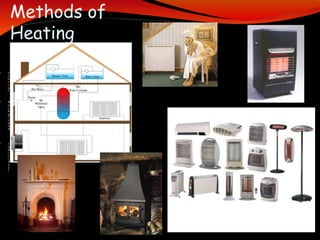
Methods of Heating 
Central heating: heat created by burning fuel (solid, 
oil, gas) in a boiler in a central location and delivered 
to the rest of the house by heating and circulating 
hot water through radiators . House kept @ 16-20⁰C. 
Hot water provided as well. 
Partial or background heating: electric storage 
heaters using off-peak electricity provide gentle 
background heat but some rooms e.g. living room, will 
need another heat source 
Individual heaters: each room has its own source of 
heat e.g. Open fire, stove, portable gas heater, 
electric fan heater, oil filled radiator.
Methods of 
Heating 
 Ce 
nt 
r 
al 
 Bac 
kgr 
o 
u 
nd 
 I 
ndi 
vi 
d 
ual
Heating methods 
Advantages Disadvantages 
Quick 
Efficient i.e. no waste 
Clean 
Easy to use 
Pleasant 
No storage needed 
Heats water 
No fumes or ashes 
Easy to regulate 
Portable 
Cheaper to run 
Modern features e.g. timer 
Dries the air 
No hot water 
Dangerous 
Storage needed 
Gives off fumes 
Not cosy 
Lots of work 
Dirty 
Not portable 
Causes pollution 
Not easy to control
Insulation 
Heat is lost from a 
house through 
walls, roof, 
windows, doors and 
floors. Good 
insulation can stop 
75% of this heat 
loss. 
Insulation is made 
from materials 
that are bad 
conductors of heat 
e.g. still air, wool, 
polystyrene.
Good Insulation 
Keeps house warmer 
Saves money on heating bills 
Saves the environment by using less energy 
Sound proofs the house
Types of insulation - walls 
 Cavity 
 Polystyrene 
sheets
Types of insulation 
– attic/roof 
 Felt 
 Wool 
 Fibreglass 
 Polystyrene 
pellets
Types of insulation – windows and 
doors 
Double glazing 
Draught 
Excluders 
Heavy lined 
curtains
Insulation for 
floors 
Polystyren 
e sheets 
Carpets 
Underlay
Hot Water Cylinder 
Lagging jacket

Heating

  • 1.
    Heating and Insulation © PDST Home Economics
  • 2.
    Methods of Heating Central heating: heat created by burning fuel (solid, oil, gas) in a boiler in a central location and delivered to the rest of the house by heating and circulating hot water through radiators . House kept @ 16-20⁰C. Hot water provided as well. Partial or background heating: electric storage heaters using off-peak electricity provide gentle background heat but some rooms e.g. living room, will need another heat source Individual heaters: each room has its own source of heat e.g. Open fire, stove, portable gas heater, electric fan heater, oil filled radiator.
  • 3.
    Methods of Heating  Ce nt r al  Bac kgr o u nd  I ndi vi d ual
  • 4.
    Heating methods AdvantagesDisadvantages Quick Efficient i.e. no waste Clean Easy to use Pleasant No storage needed Heats water No fumes or ashes Easy to regulate Portable Cheaper to run Modern features e.g. timer Dries the air No hot water Dangerous Storage needed Gives off fumes Not cosy Lots of work Dirty Not portable Causes pollution Not easy to control
  • 5.
    Insulation Heat islost from a house through walls, roof, windows, doors and floors. Good insulation can stop 75% of this heat loss. Insulation is made from materials that are bad conductors of heat e.g. still air, wool, polystyrene.
  • 6.
    Good Insulation Keepshouse warmer Saves money on heating bills Saves the environment by using less energy Sound proofs the house
  • 7.
    Types of insulation- walls  Cavity  Polystyrene sheets
  • 8.
    Types of insulation – attic/roof  Felt  Wool  Fibreglass  Polystyrene pellets
  • 9.
    Types of insulation– windows and doors Double glazing Draught Excluders Heavy lined curtains
  • 10.
    Insulation for floors Polystyren e sheets Carpets Underlay
  • 11.
    Hot Water Cylinder Lagging jacket