Output and Outcomes
• Output is the direct product of any activity
that is delivered for example the number of
classes taught.
• Outcome is the benefit or the change for
participants after the activity for example
acquiring new knowledge and increased skills.
What are Intended Learning outcomes
An outcome is simply a result or consequence
of an action or process.
Learning outcomes are statements of what is
expected that a student will be able to DO as a
result of a learning activity….(Jenkins and
Unwin).
The Intended Learning Outcomes (ILOs) is a
statements describing what students know,
understand, and can do with their knowledge
What are Intended Learning outcomes
• The learning activity could be, a lecture, a
module or an entire programme.
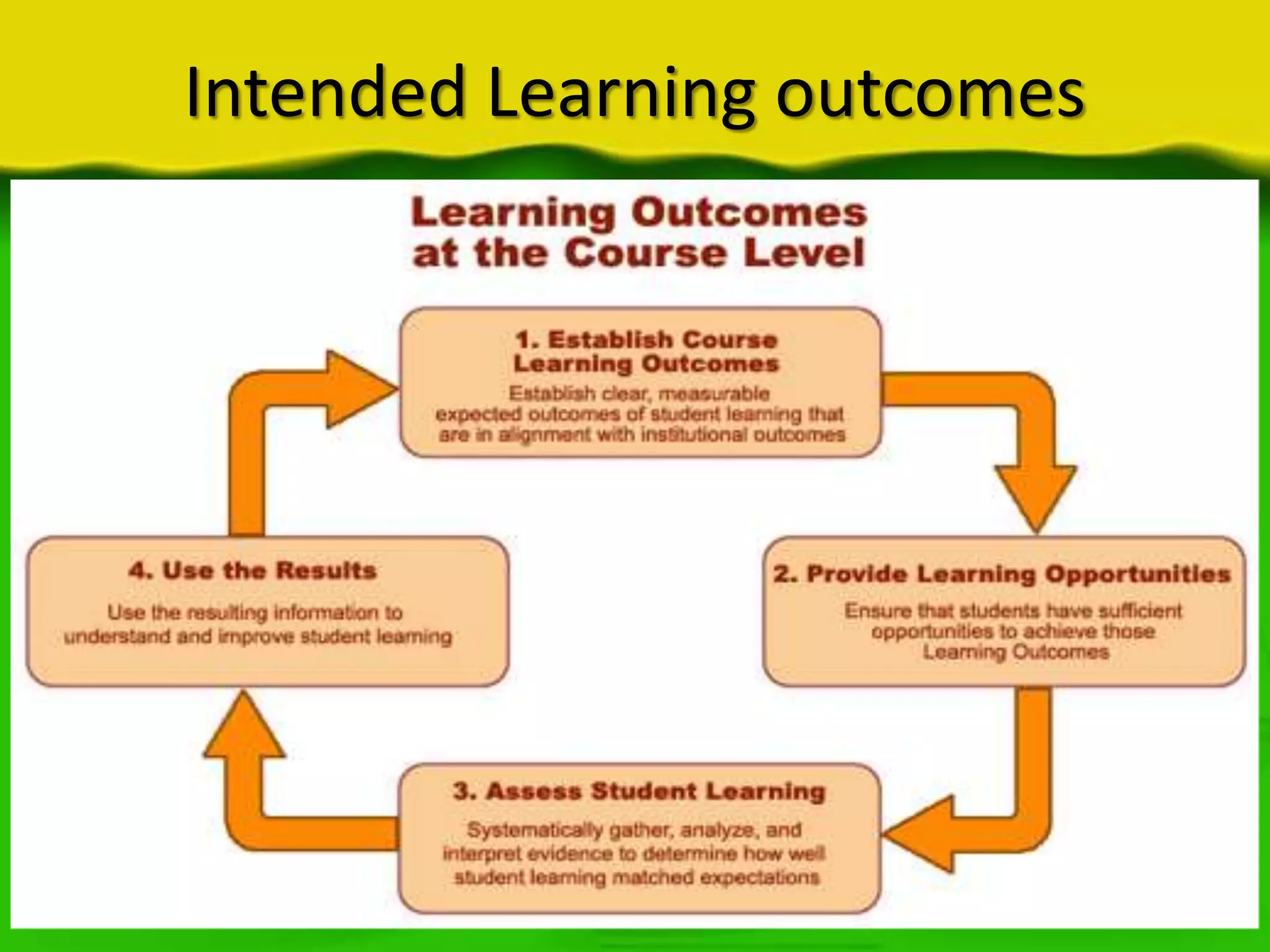
• Learning outcomes must be simply and clearly
described.
• Intended learning outcomes lay the
groundwork for a meaningful assessment.
What are Intended Learning outcomes
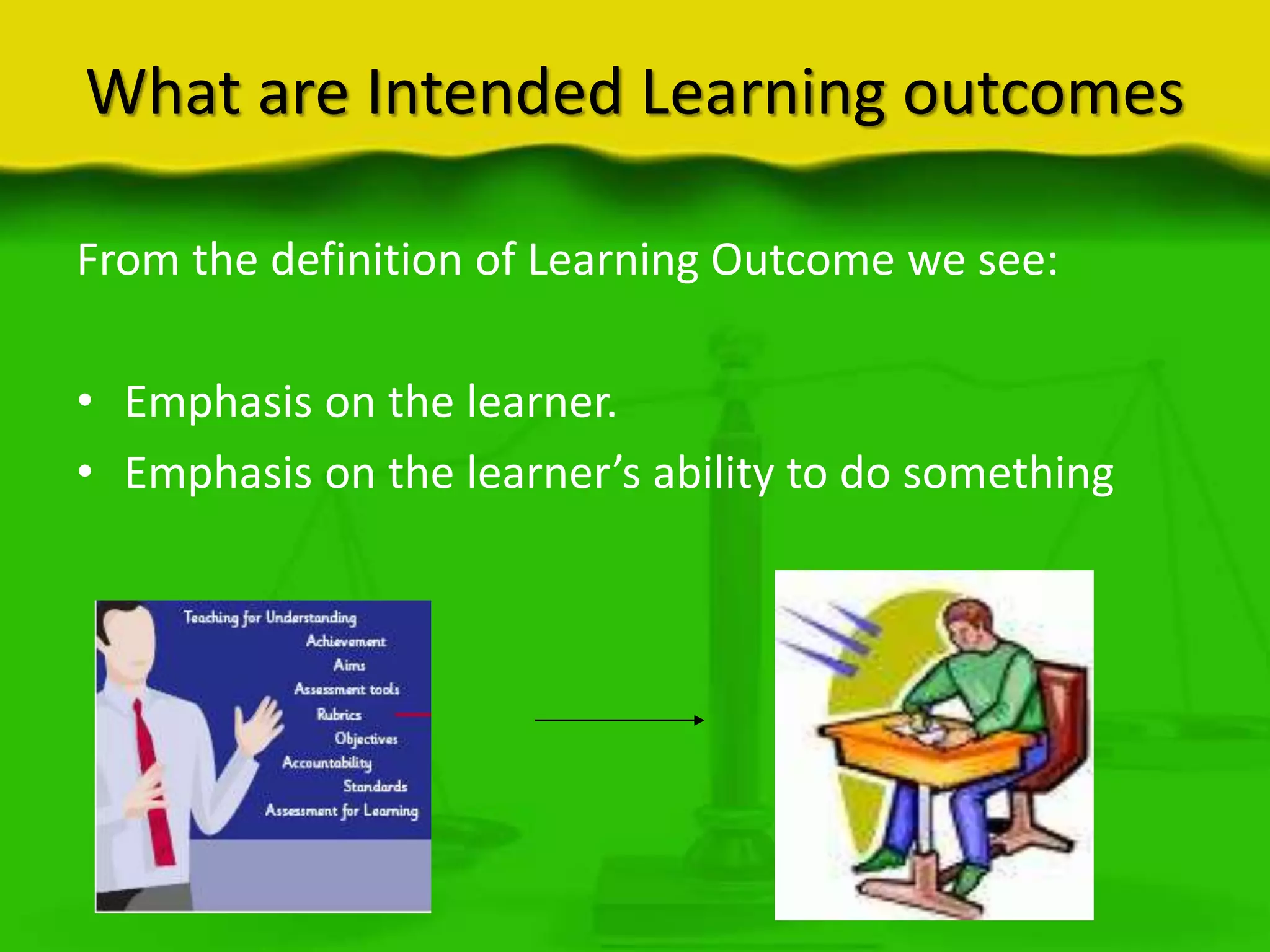
From the definition of Learning Outcome we see:
• Emphasis on the learner.
• Emphasis on the learner’s ability to do something
Intended Learning outcomes
• When students know what is expected of them,
they tend to focus their studying time and energy
better, thus improving learning.
Assessing student learning outcomes can provide
information to students on their strengths and
weaknesses in relationship to specific learning
dimensions.
Assessing student learning outcomes can provide
faculty with information that can be used to
improve educational programs and demonstrate
their effectiveness.
Most Important: Assessing Intended
Learning Outcomes
• Focus is on assessing what are students are able to:
– Know (cognitive),
– Think (attitudinal)
– Do (behavioral)
as a result of the educational program.

• Purpose: To obtain information that can be used by program
faculty to answer the following questions:
–
–
–
–
–

Are our students learning what we think is important?
Are they learning what they need to succeed in this field or profession?
Are we improving in our ability to help students learn?
Should our curriculum or teaching strategies be modified?
Are there other techniques or additional resources that would help our
students learn more effectively?
Intended Learning Outcome
Assessment Techniques
Standardized tests (nationally-constructed or department based
to assess cognitive achievement)
Course-embedded assessment (uses exams, class activities, and
assignments)
Portfolio analysis (collection of student work)
Performance-based measures (activities such as writing an
essay, making a presentation, completing a problem-solving
exercise, giving a performance, and simulations)
Capstone courses (special courses for research projects )
Surveys, interviews, and focus groups of students, alumni, and
employers
Institutional data on graduation and retention
Thank You

Measuring Intended Learning Outcomes

  • 2.
    Output and Outcomes •Output is the direct product of any activity that is delivered for example the number of classes taught. • Outcome is the benefit or the change for participants after the activity for example acquiring new knowledge and increased skills.
  • 3.
    What are IntendedLearning outcomes An outcome is simply a result or consequence of an action or process. Learning outcomes are statements of what is expected that a student will be able to DO as a result of a learning activity….(Jenkins and Unwin). The Intended Learning Outcomes (ILOs) is a statements describing what students know, understand, and can do with their knowledge
  • 4.
    What are IntendedLearning outcomes • The learning activity could be, a lecture, a module or an entire programme. • Learning outcomes must be simply and clearly described. • Intended learning outcomes lay the groundwork for a meaningful assessment.
  • 5.
    What are IntendedLearning outcomes From the definition of Learning Outcome we see: • Emphasis on the learner. • Emphasis on the learner’s ability to do something
  • 6.
  • 7.
    • When studentsknow what is expected of them, they tend to focus their studying time and energy better, thus improving learning.
  • 8.
    Assessing student learningoutcomes can provide information to students on their strengths and weaknesses in relationship to specific learning dimensions.
  • 9.
    Assessing student learningoutcomes can provide faculty with information that can be used to improve educational programs and demonstrate their effectiveness.
  • 10.
    Most Important: AssessingIntended Learning Outcomes • Focus is on assessing what are students are able to: – Know (cognitive), – Think (attitudinal) – Do (behavioral) as a result of the educational program. • Purpose: To obtain information that can be used by program faculty to answer the following questions: – – – – – Are our students learning what we think is important? Are they learning what they need to succeed in this field or profession? Are we improving in our ability to help students learn? Should our curriculum or teaching strategies be modified? Are there other techniques or additional resources that would help our students learn more effectively?
  • 11.
    Intended Learning Outcome AssessmentTechniques Standardized tests (nationally-constructed or department based to assess cognitive achievement) Course-embedded assessment (uses exams, class activities, and assignments) Portfolio analysis (collection of student work) Performance-based measures (activities such as writing an essay, making a presentation, completing a problem-solving exercise, giving a performance, and simulations) Capstone courses (special courses for research projects ) Surveys, interviews, and focus groups of students, alumni, and employers Institutional data on graduation and retention
  • 12.