MEASUREMENT OF
SPOT SPEED
 Spot speed is the instantaneous speed of a
vehicle at a specified location. Spot speed studies
are used to determine the speed distribution of a
traffic stream at a specific location.
Spot speed data have a number of safety
applications, including the following :
1. Determining existing traffic operations and
evaluation of traffic control devices.
2. Establishing roadway design elements
3. Monitoring traffic speed trends by systematic
ongoing speed studies
4. Measuring effectiveness of traffic control devices
or traffic programs, including signs and markings,
traffic operational changes, and speed
enforcement programs
Measurement technique
of spot speed :
 ENOSCOPE
 RADAR SPEEDOMETER
 PRESSURE CONTACT TUBES OR DIRECT TIMING
PROCEDURE
 PNEUMATIC ROAD TUBE METHOD
 TIME-LAPSE PHOTOGRAPHIC METHODS
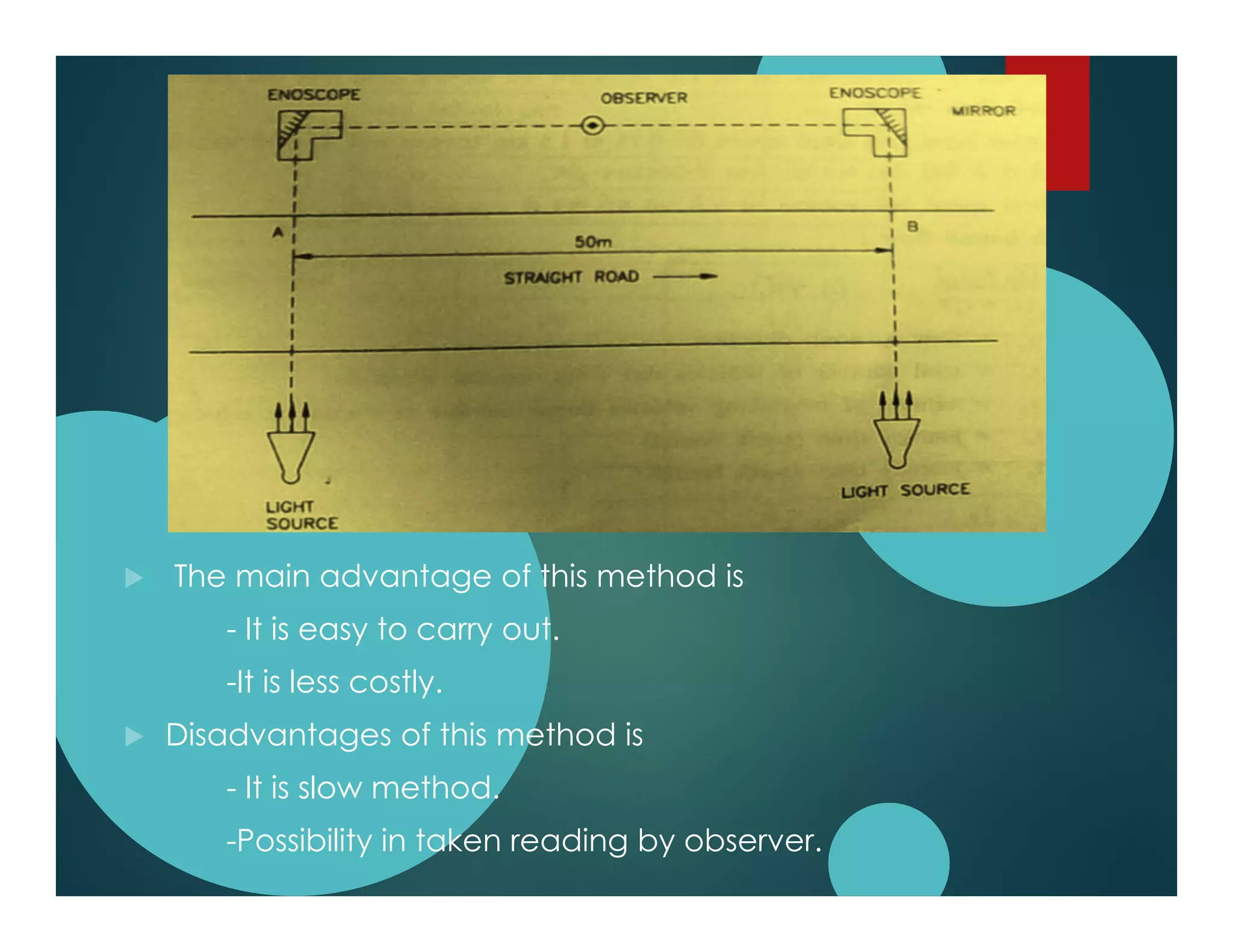
1. Eno scope is also known as mirror box.
2. It is L-shape box; which is open on both faces.
3. It contains mirror/meter fitted with 45°.
The procedure of Eno scope is following :
 Observer start stopwatch when a vehicle crosses the entry
boundary.
 Eno scope is placed at a distance about 30m in such a
way that image of the vehicle can be seen by observer
when vehicle cross exit boundary.
 At this instant stopwatch is stopped.
 Time required for the vehicle to cross the known length is
recorded and converted to speed.
 For given figure the
spot speed = Distance AB/ Time
 The main advantage of this method is
- It is easy to carry out.
-It is less costly.
 Disadvantages of this method is
- It is slow method.
-Possibility in taken reading by observer.
 Frequently used for measurement of spot speed.
 Measure speed directly by reflecting an emitted radar wave
off an oncoming vehicle and measuring the difference in
the frequency between the emitted and reflected radar
wave.
The difference in frequency
(referred to as ‘doppler
effect’) is proportional to the
speed of on coming vehicle.
Practical Limitations of using
Radar meters
 license may be required if radar waves are in the range of
government regulated frequencies and length
 Accuracy of various meters may vary.
 Difficult to conceal – drivers tend to slow down affecting the
result of measurement.
 Accurate measurement are obtained only when the radar
wave is reflected directly along the axis of the vehicle
movement; Practically difficult.
Adjustment requires a good measurement of the angle of
wave deflection.

Measurement of spot speed

  • 1.
  • 2.
     Spot speedis the instantaneous speed of a vehicle at a specified location. Spot speed studies are used to determine the speed distribution of a traffic stream at a specific location. Spot speed data have a number of safety applications, including the following : 1. Determining existing traffic operations and evaluation of traffic control devices. 2. Establishing roadway design elements 3. Monitoring traffic speed trends by systematic ongoing speed studies 4. Measuring effectiveness of traffic control devices or traffic programs, including signs and markings, traffic operational changes, and speed enforcement programs
  • 3.
    Measurement technique of spotspeed :  ENOSCOPE  RADAR SPEEDOMETER  PRESSURE CONTACT TUBES OR DIRECT TIMING PROCEDURE  PNEUMATIC ROAD TUBE METHOD  TIME-LAPSE PHOTOGRAPHIC METHODS
  • 4.
    1. Eno scopeis also known as mirror box. 2. It is L-shape box; which is open on both faces. 3. It contains mirror/meter fitted with 45°. The procedure of Eno scope is following :  Observer start stopwatch when a vehicle crosses the entry boundary.  Eno scope is placed at a distance about 30m in such a way that image of the vehicle can be seen by observer when vehicle cross exit boundary.  At this instant stopwatch is stopped.
  • 5.
     Time requiredfor the vehicle to cross the known length is recorded and converted to speed.  For given figure the spot speed = Distance AB/ Time
  • 6.
     The mainadvantage of this method is - It is easy to carry out. -It is less costly.  Disadvantages of this method is - It is slow method. -Possibility in taken reading by observer.
  • 7.
     Frequently usedfor measurement of spot speed.  Measure speed directly by reflecting an emitted radar wave off an oncoming vehicle and measuring the difference in the frequency between the emitted and reflected radar wave. The difference in frequency (referred to as ‘doppler effect’) is proportional to the speed of on coming vehicle.
  • 8.
    Practical Limitations ofusing Radar meters  license may be required if radar waves are in the range of government regulated frequencies and length  Accuracy of various meters may vary.  Difficult to conceal – drivers tend to slow down affecting the result of measurement.  Accurate measurement are obtained only when the radar wave is reflected directly along the axis of the vehicle movement; Practically difficult. Adjustment requires a good measurement of the angle of wave deflection.