DEPARTMENT OF CIVIL
ENGINEERING
Permanent way of Railway
Salient Features and types of Components
viz.
Rails, Sleepers, Ballast, Rail Fastenings
Types and Selection of Rail Gauges
PART-1
Er. RAMPRASAD KUMAWAT
(M.Tech)
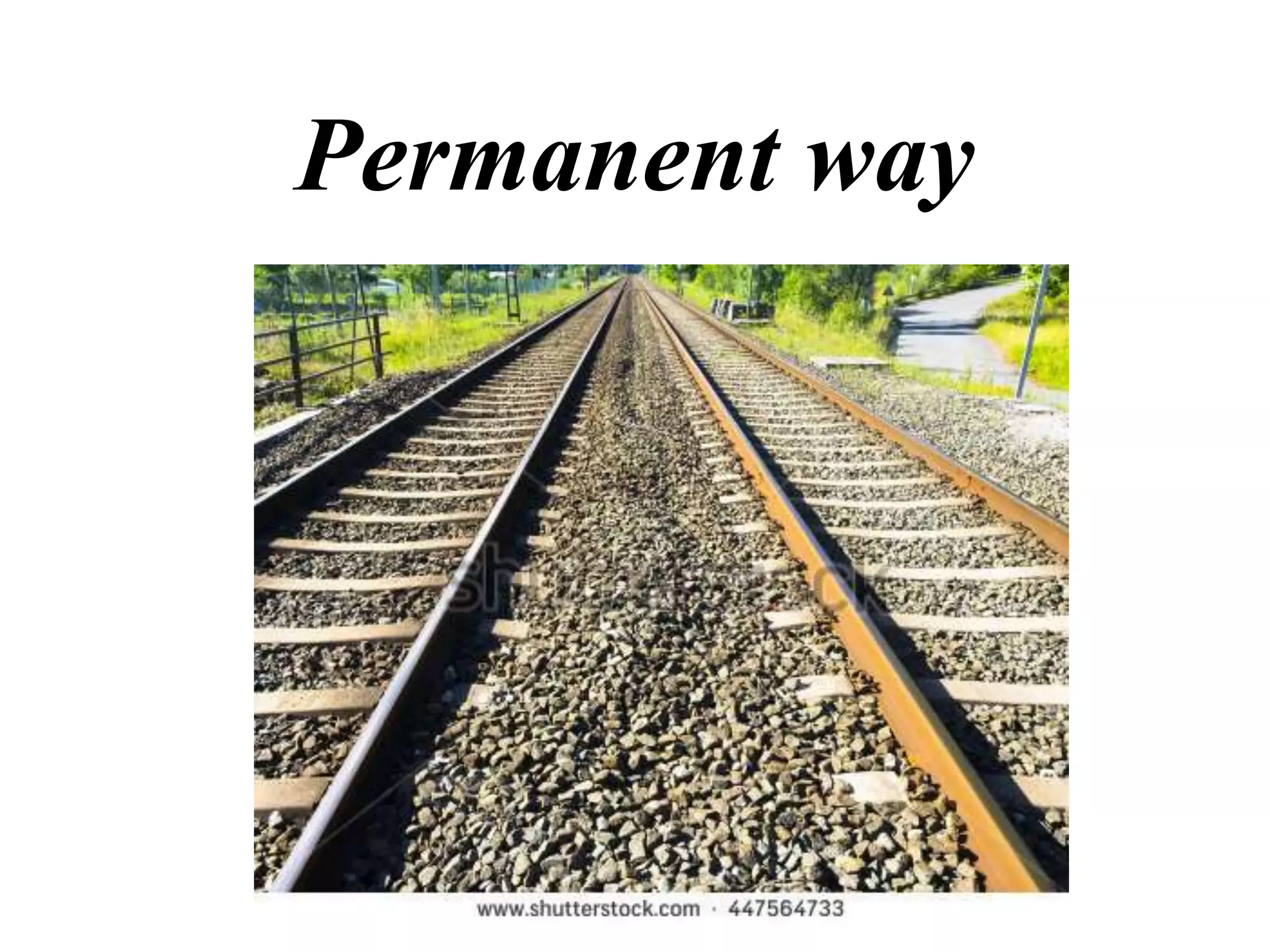
Permanent way
Permanent way
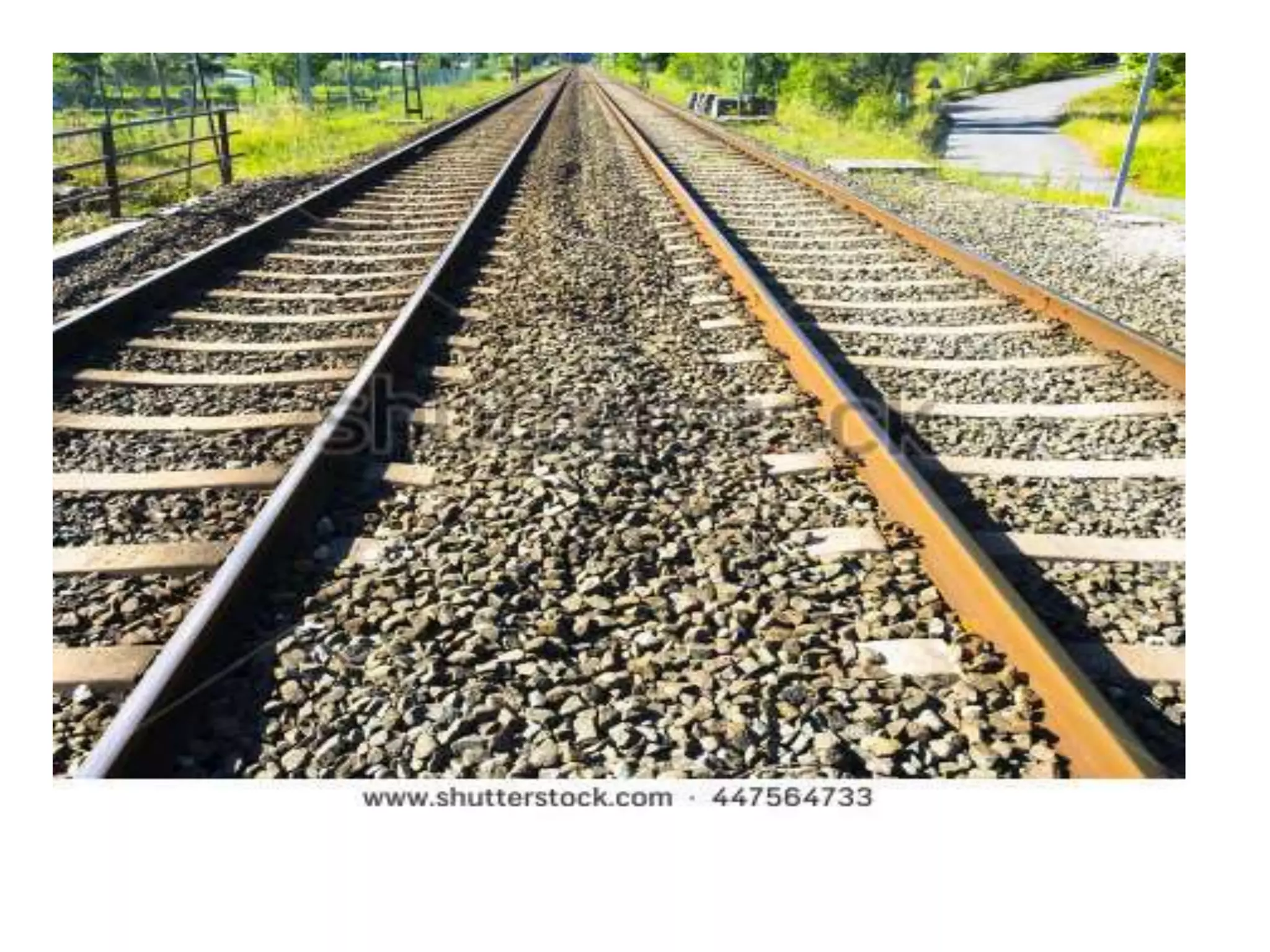
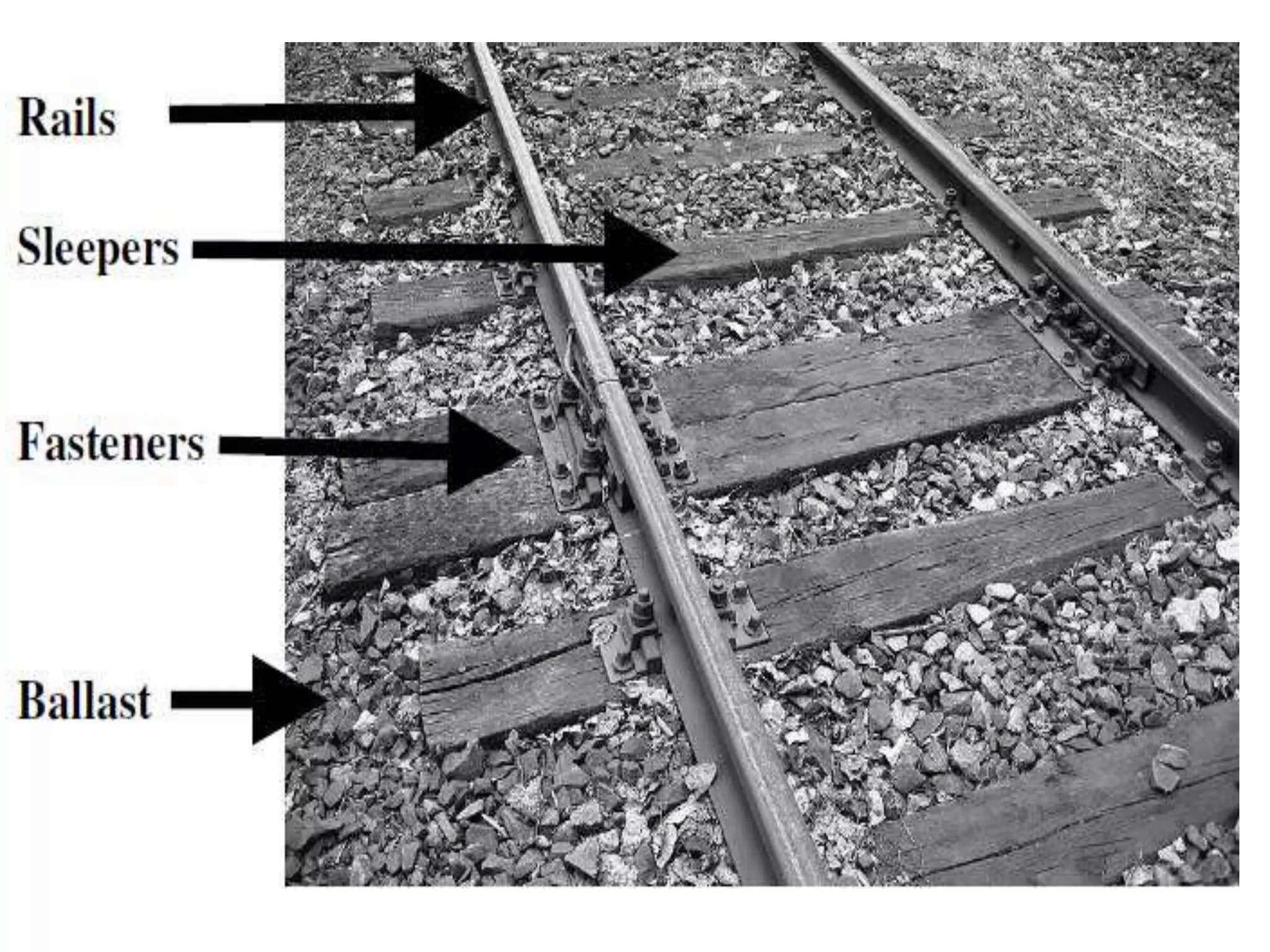
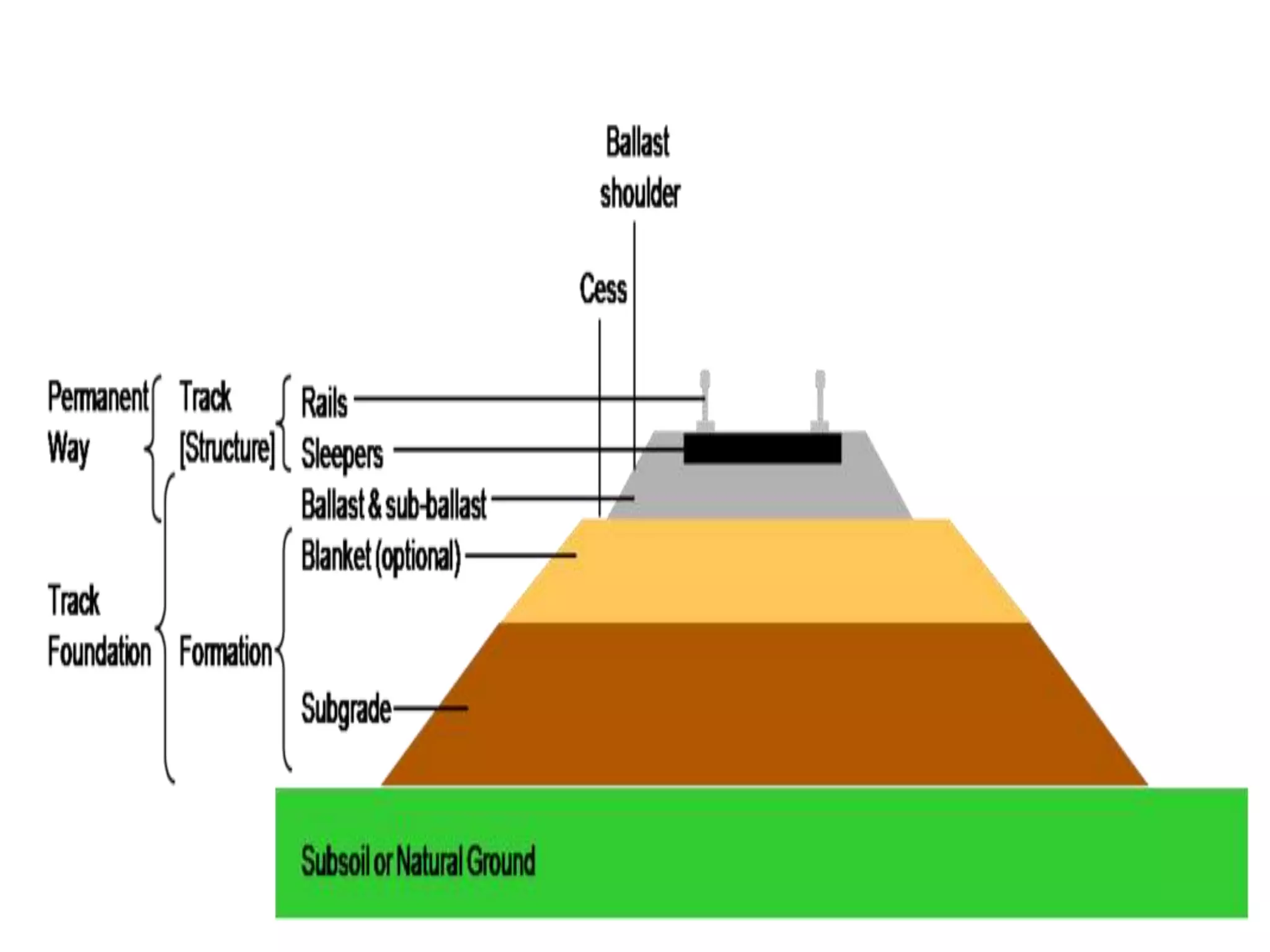
• A permanent way is the combination of rails,
sleepers, ballasts, fixtures and fastenings, etc.
• The track on a railway or railroad, also known
as the permanent way, is the structure
consisting of the rails, fasteners, railroad
ties (sleepers, British English) and ballast (or
slab track), plus the underlying sub grade.
• Railway Track is also known as Permanent
Way.
• The purpose of use of a permanent way is to
provide the permanent facility for safety and
quick movement of
normal commercial traffic between the
starting and destination stations. permanent
way costs nearly 40% of the total investment
to the railways.
Requirements
of Ideal permanent way
• The alignment of the should be correct.
• The track should process sufficient elasticity. It
should also possess sufficient lateral rigidity
and stiffness so that it may withstand the
lateral thrust and centrifugal forces.
• The track should be designed that load of the
train should be distribute uniformly over it.
• The gauge of track should be correct and
uniform.
• The track should possess high resistance to
damage at the time of derailment and its
maintenance cost is minimum.
• The rail level should be same while on curves,
proper super elevation should be provided.
• The friction between the wheels of rolling
stock and rail should be minimum.
• The gradient should be uniform joints, point
and crossings should be designed and
maintained properly.
• Facilities of repair, replacement etc of damage
portion of track should be adequate.
COMPONENTS OF
PERMANENT WAY
• The Main Components of Permanent Way are
as Follows:
• Rails
• Sleepers (or Ties)
• Fasteners
• Ballast (or Slab Track)
• Sub grade
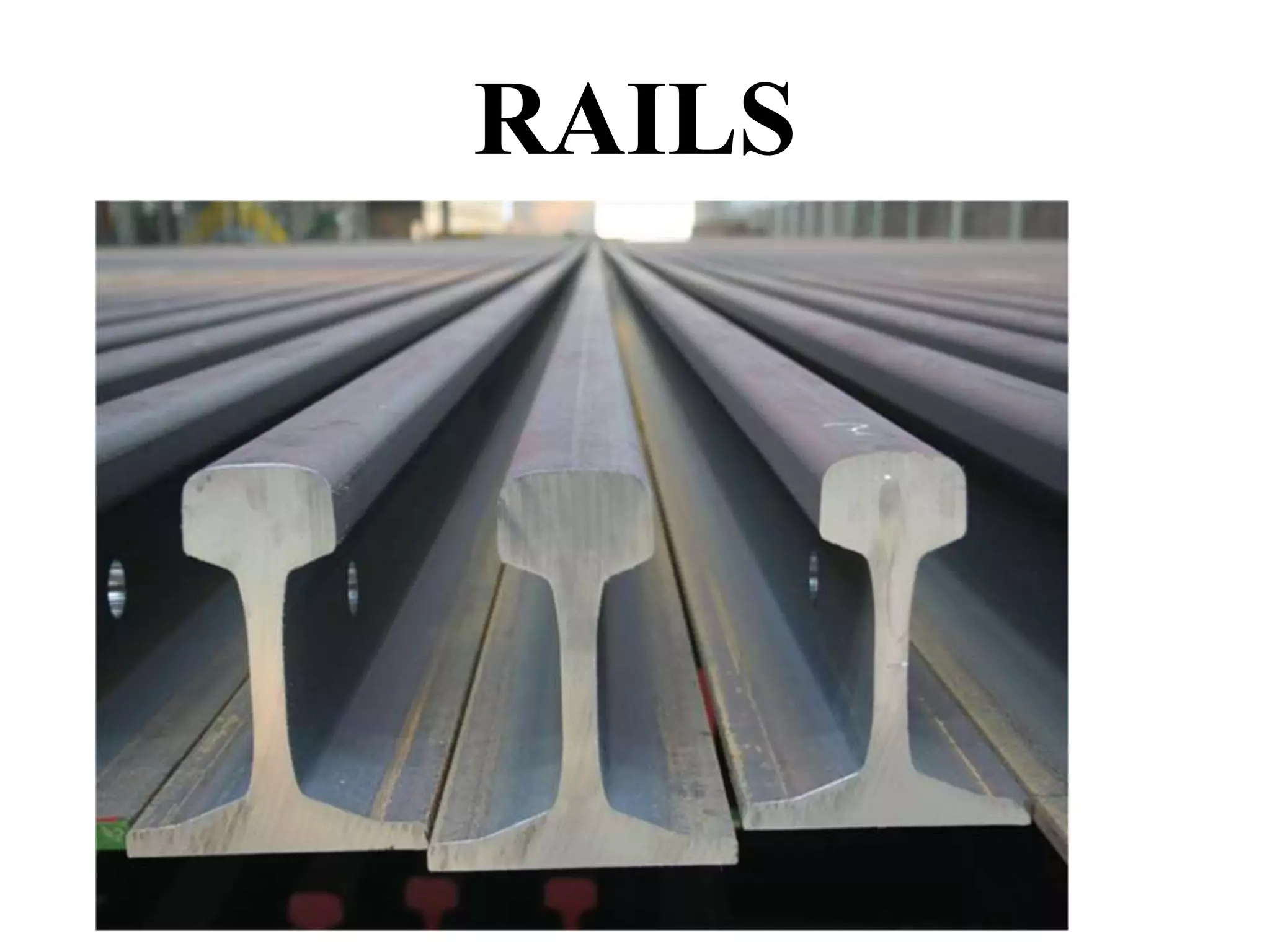
RAILS
TYPES OF RAILS
• The rails used in the construction of railway
track are of following types:
• 1. Double headed rails(D.H. Rails)
• 2. Bull headed rails(B.H.Rails)
• 3. Flat footed rails(F.F.Rails)
DOUBLE HEADED RAILS
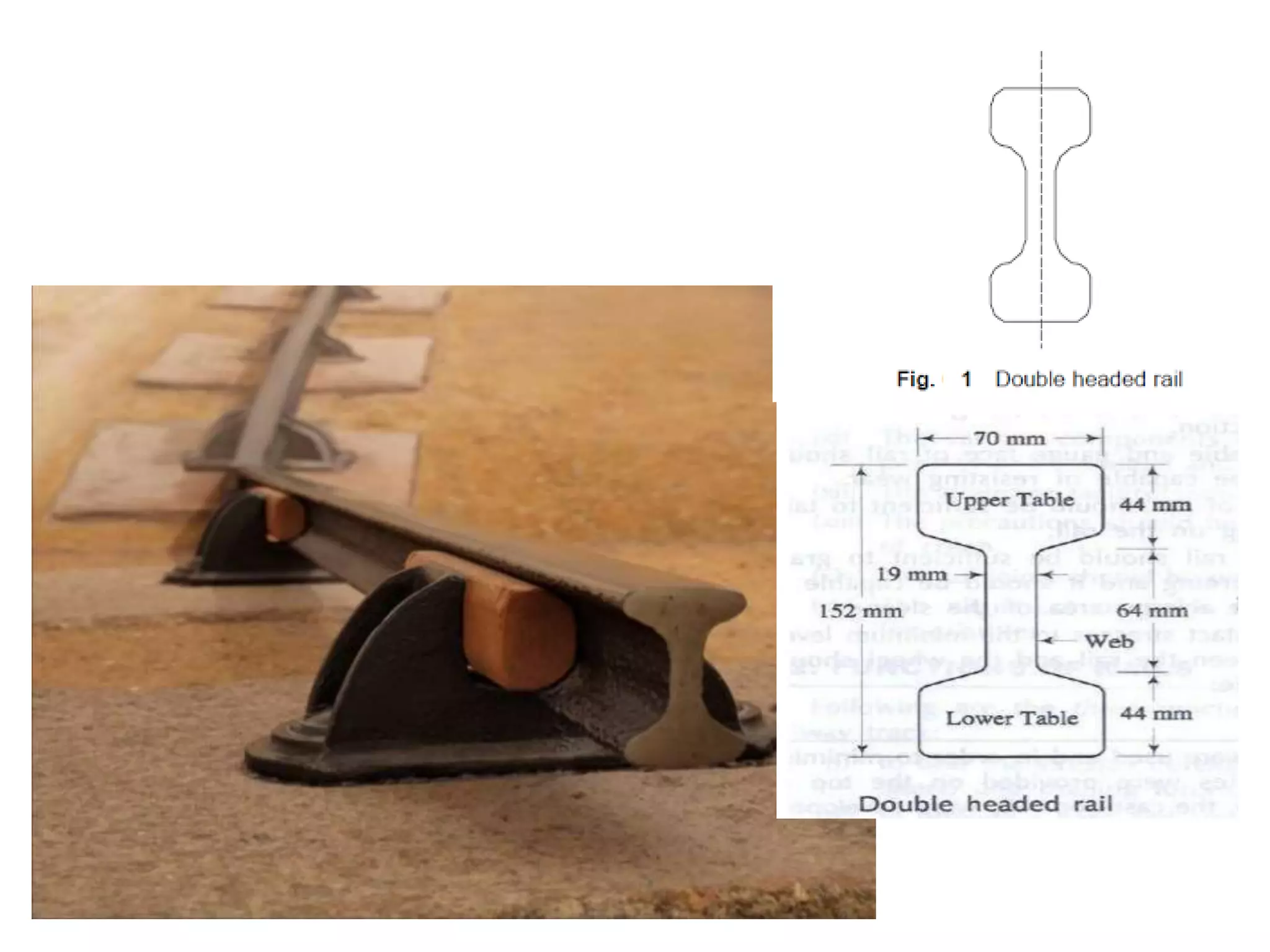
• The rail sections, whose foot and head are of
same dimensions, are called Double headed or
Dumb-bell rails.
• In the beginning, these rails were widely used
in the railway track.
• The idea behind using these rails was that
when the head had worn out due to rubbing
action of wheels, the rails could be inverted
and reused.
• But by experience it was found that their foot
could not be used as running surface because it
also got corrugated under the impact of wheel
loads.
• This type of rail is not in use in Indian
Railways now-a days.
BULL HEADED RAILS
• The rail section whose head dimensions are
more than that of their foot are called bull
headed rails. In this type of rail the head is
made little thicker and stronger than the lower
part by adding more metal to it. These rails
also require chairs for holding them in
position.
Bull headed rails are especially used
for making points and crossings.
MERITS
• (i) B.H. Rails keep better alignment and
provide more smoother and stronger track.
• (ii) These rails provide longer life to wooden
sleepers and greater stability to the track.
• (iii) These rails are easily removed from
sleepers and hence renewal of track is easy.
DEMERITS
• (i) B.H. rails require additional cost of iron
chairs.
• (ii) These rails require heavy maintenance
cost.
• (iii) B.H. rails are of less strength and stiffness.
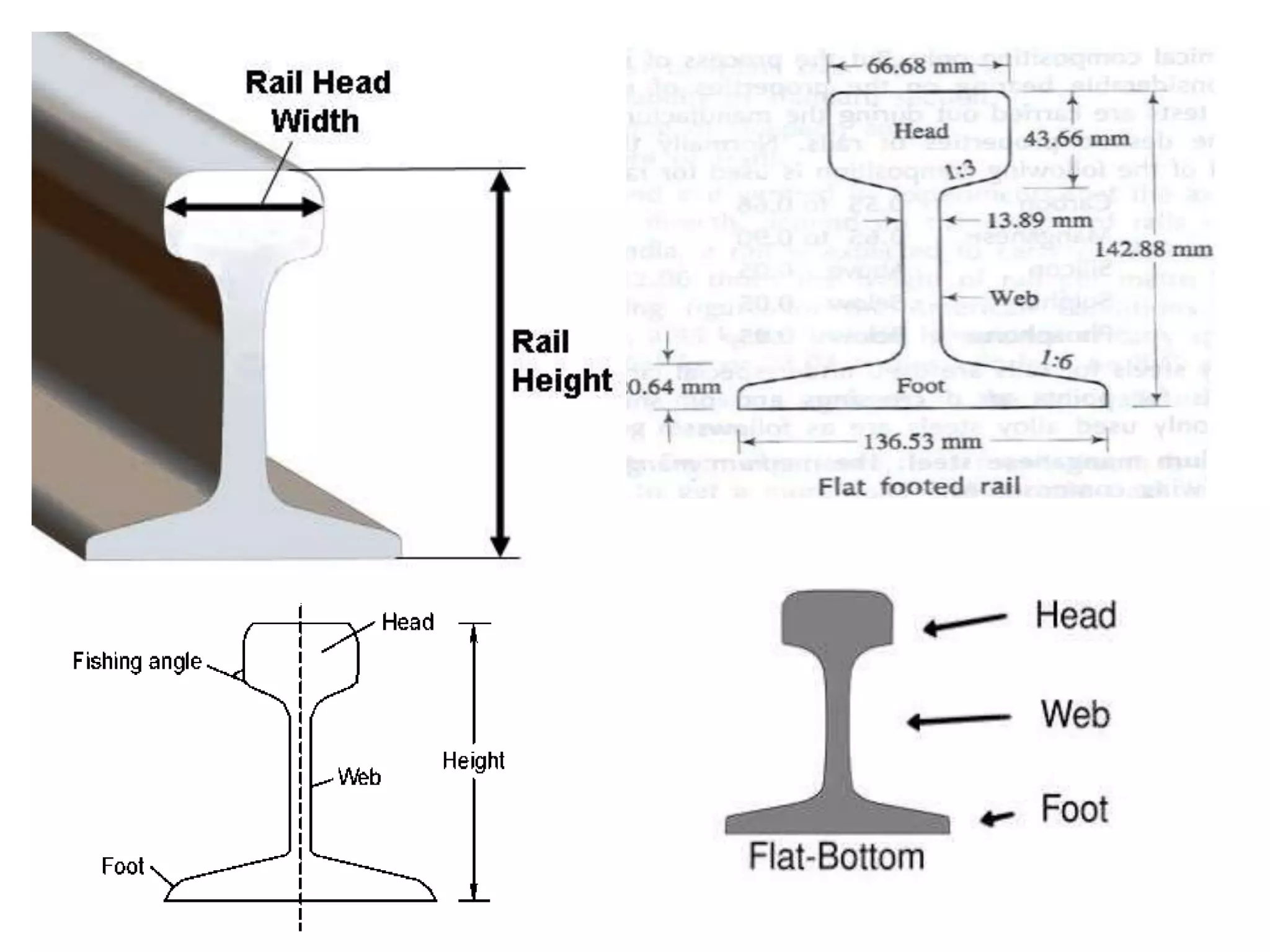
FLAT FOOTED RAILS
• The rail sections having their foot rolled to flat
are called flat footed or vignole`s rails.
• This type of rail was invented by Charles
Vignole in 1836.
• It was initially thought that the flat footed rails
could by fixed directly to wooden sleepers and
would eliminate chairs and keys required for
the B.H. rails.
• But later on, it was observed that heavy train
loads caused the foot of the rail to sink into the
sleepers and making the spikes loose.
• To remove this defect, steel bearing plates
were used in between flat footed rails and the
wooden sleeper.
• These rails are most commonly used in India.
MERITS
• (i) F.F. rails have more strength and stiffness.
• (ii) No chairs are required for holding them in
position.
• (iii) These rails require less number of
fastenings.
• (iv) The maintenance cost of track formed with
F.F. rails is less.
DEMERITS
• (i) The fittings get loosened more frequently.
• (ii) These rails are not easily removed and
hence renewal of track becomes difficult.
• (iii) It is difficult to manufacture points and
crossings by using these rails.
…Part -2

Permanent Way of Railway & Components ?(part -1,2,3,4,5)

  • 1.
    DEPARTMENT OF CIVIL ENGINEERING Permanentway of Railway Salient Features and types of Components viz. Rails, Sleepers, Ballast, Rail Fastenings Types and Selection of Rail Gauges PART-1 Er. RAMPRASAD KUMAWAT (M.Tech)
  • 2.
  • 3.
    Permanent way • Apermanent way is the combination of rails, sleepers, ballasts, fixtures and fastenings, etc. • The track on a railway or railroad, also known as the permanent way, is the structure consisting of the rails, fasteners, railroad ties (sleepers, British English) and ballast (or slab track), plus the underlying sub grade. • Railway Track is also known as Permanent Way.
  • 4.
    • The purposeof use of a permanent way is to provide the permanent facility for safety and quick movement of normal commercial traffic between the starting and destination stations. permanent way costs nearly 40% of the total investment to the railways.
  • 6.
    Requirements of Ideal permanentway • The alignment of the should be correct. • The track should process sufficient elasticity. It should also possess sufficient lateral rigidity and stiffness so that it may withstand the lateral thrust and centrifugal forces. • The track should be designed that load of the train should be distribute uniformly over it.
  • 7.
    • The gaugeof track should be correct and uniform. • The track should possess high resistance to damage at the time of derailment and its maintenance cost is minimum. • The rail level should be same while on curves, proper super elevation should be provided.
  • 8.
    • The frictionbetween the wheels of rolling stock and rail should be minimum. • The gradient should be uniform joints, point and crossings should be designed and maintained properly. • Facilities of repair, replacement etc of damage portion of track should be adequate.
  • 9.
    COMPONENTS OF PERMANENT WAY •The Main Components of Permanent Way are as Follows: • Rails • Sleepers (or Ties) • Fasteners • Ballast (or Slab Track) • Sub grade
  • 12.
  • 13.
    TYPES OF RAILS •The rails used in the construction of railway track are of following types: • 1. Double headed rails(D.H. Rails) • 2. Bull headed rails(B.H.Rails) • 3. Flat footed rails(F.F.Rails)
  • 14.
    DOUBLE HEADED RAILS •The rail sections, whose foot and head are of same dimensions, are called Double headed or Dumb-bell rails. • In the beginning, these rails were widely used in the railway track. • The idea behind using these rails was that when the head had worn out due to rubbing action of wheels, the rails could be inverted and reused.
  • 15.
    • But byexperience it was found that their foot could not be used as running surface because it also got corrugated under the impact of wheel loads. • This type of rail is not in use in Indian Railways now-a days.
  • 17.
    BULL HEADED RAILS •The rail section whose head dimensions are more than that of their foot are called bull headed rails. In this type of rail the head is made little thicker and stronger than the lower part by adding more metal to it. These rails also require chairs for holding them in position.
  • 18.
    Bull headed railsare especially used for making points and crossings.
  • 19.
    MERITS • (i) B.H.Rails keep better alignment and provide more smoother and stronger track. • (ii) These rails provide longer life to wooden sleepers and greater stability to the track. • (iii) These rails are easily removed from sleepers and hence renewal of track is easy.
  • 20.
    DEMERITS • (i) B.H.rails require additional cost of iron chairs. • (ii) These rails require heavy maintenance cost. • (iii) B.H. rails are of less strength and stiffness.
  • 21.
    FLAT FOOTED RAILS •The rail sections having their foot rolled to flat are called flat footed or vignole`s rails. • This type of rail was invented by Charles Vignole in 1836. • It was initially thought that the flat footed rails could by fixed directly to wooden sleepers and would eliminate chairs and keys required for the B.H. rails.
  • 22.
    • But lateron, it was observed that heavy train loads caused the foot of the rail to sink into the sleepers and making the spikes loose. • To remove this defect, steel bearing plates were used in between flat footed rails and the wooden sleeper. • These rails are most commonly used in India.
  • 24.
    MERITS • (i) F.F.rails have more strength and stiffness. • (ii) No chairs are required for holding them in position. • (iii) These rails require less number of fastenings. • (iv) The maintenance cost of track formed with F.F. rails is less.
  • 25.
    DEMERITS • (i) Thefittings get loosened more frequently. • (ii) These rails are not easily removed and hence renewal of track becomes difficult. • (iii) It is difficult to manufacture points and crossings by using these rails.
  • 26.