BY
Dr. Gurumeet.C.Wadhawa
DEPARTMENT OF CHEMISTRY
K. B. P. College,Vashi,Navimumbai
McMurry Coupling
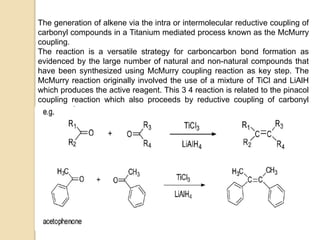
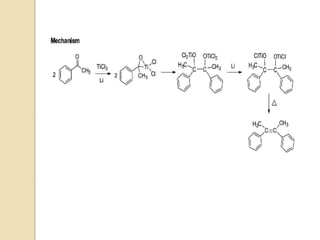
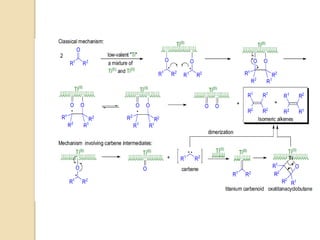
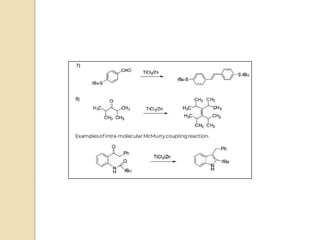
The generation of alkene via the intra or intermolecular reductive coupling of
carbonyl compounds in a Titanium mediated process known as the McMurry
coupling.
The reaction is a versatile strategy for carboncarbon bond formation as
evidenced by the large number of natural and non-natural compounds that
have been synthesized using McMurry coupling reaction as key step. The
McMurry reaction originally involved the use of a mixture of TiCl and LiAlH
which produces the active reagent. This 3 4 reaction is related to the pinacol
coupling reaction which also proceeds by reductive coupling of carbonyl
compounds.
In the early 1970s, the research groups of T. Mukaiyama, S. Tyrlik, and
J.E. McMurry5 independently discovered that the treatment of carbonyl
compounds with low-valent titanium led to olefinic coupled products. In
the following
years, McMurry investigated the scope and limitation of the process, and
today the reductive coupling of carbonyl compounds using low-valent
titanium complexes to form the corresponding alkenes is known as the
McMurry
coupling. The general features of this coupling reaction are:
1) it is used most often for the homocoupling of aldehydes and ketones to afford alkenes. However,
mixed coupling is feasible if one component is used in excess or one of the coupling partners is a
diaryl ketone;
2) the low-valent titanium reducing agent can be prepared in many
ways but the most common is the reduction of TiCl3 with a zinc-copper couple (Zn-Cu) in DME;20
3) if the reaction is conducted at low temperature, the pinacol intermediate may be isolated;
4) at high temperature the alkenes are formed directly;
5) sterically hindered and/or strained olefins, which cannot be prepared by other means, are formed
in high yield;
6) even sterically hindered tetrasubstituted alkenes can be prepared;
7) macrocyclization under highdilution conditions is successful for the synthesis of medium and large
rings and the yields are independent of the ring size unlike in other macrocyclizations (e.g., acyloin
condensation);
8) intramolecular reactions are the fastest for the
formation of five- and six-membered rings and the formation of eight- or higher-membered rings is
considerably slower;
9) the reaction conditions do not tolerate the presence of easily reducible functional groups (e.g.,
epoxides, α-
halo ketones, unprotected 1,2-diols; allylic and benzylic alcohols, quinones, halohydrins, aromatic
and aliphatic nitro
compounds, oximes, and sulfoxides), but most other functional groups are compatible;
10) aldehydes react much
faster than ketones so the coupling of two aldehydes in the presence of a ketone can be performed
chemoselectively;
11) the alkene product is formed with poor stereoselectivity, although there is a slight preference for
the formation of
(E)-alkenes in intermolecular reactions; and
12) in the presence of a chlorosilane the McMurry reaction becomes catalytic
References
1. (a) McMurry, J. E.; Fleming, M. P. J. Am. Chem. Soc. 1974, 96, 4708􀀐
4712. (b)
McMurry, J. E. Chem. Rev. 1989, 89, 1513-1524. (Review).
2. Hirao, T. Synlett 1999, 175-181.
3. Sabelle, S.; Hydrio, J.; Leclerc, E.; Mioskowski, C.; Renard, P.-Y.
Tetrahedron Lett.
2002, 43, 3645-3648.
4. Williams, D. R.; Heidebrecht, R. W., Jr. J. Am. Chem. Soc. 2003, 125, 1843
􀀐1850.
5. Honda, T.; Namiki, H.; Nagase, H.; Mizutani, H. Tetrahedron Lett. 2003, 44,
3035-3038.
6. Ephritikhine, M.; Villiers, C. In Modern Carbonyl Olefination Takeda, T., Ed.;
Wiley-
VCH: Weinheim, Germany, 2004, 223-285. (Review).
7. Uddin, M. J.; Rao, P. N. P.; Knaus, E. E. Synlett 2004, 1513-1516.
8. Stuhr-Hansen, N. Tetrahedron Lett. 2005, 46, 5491-5494.
9. Zeng, D. X.; Chen, Y. Synlett 2006, 490-492.
10. Duan, X.-F.; Zeng, J.; Zhang, Z.-B.; Zi, G.-F. J. Org. Chem. 2007, 72,
10283-10286.
11. Debroy, P.; Lindeman, S. V.; Rathore, R. J. Org. Chem. 2009, 74, 2080-

Mcmurry reaction

  • 1.
    BY Dr. Gurumeet.C.Wadhawa DEPARTMENT OFCHEMISTRY K. B. P. College,Vashi,Navimumbai McMurry Coupling
  • 2.
    The generation ofalkene via the intra or intermolecular reductive coupling of carbonyl compounds in a Titanium mediated process known as the McMurry coupling. The reaction is a versatile strategy for carboncarbon bond formation as evidenced by the large number of natural and non-natural compounds that have been synthesized using McMurry coupling reaction as key step. The McMurry reaction originally involved the use of a mixture of TiCl and LiAlH which produces the active reagent. This 3 4 reaction is related to the pinacol coupling reaction which also proceeds by reductive coupling of carbonyl compounds.
  • 4.
    In the early1970s, the research groups of T. Mukaiyama, S. Tyrlik, and J.E. McMurry5 independently discovered that the treatment of carbonyl compounds with low-valent titanium led to olefinic coupled products. In the following years, McMurry investigated the scope and limitation of the process, and today the reductive coupling of carbonyl compounds using low-valent titanium complexes to form the corresponding alkenes is known as the McMurry coupling. The general features of this coupling reaction are:
  • 6.
    1) it isused most often for the homocoupling of aldehydes and ketones to afford alkenes. However, mixed coupling is feasible if one component is used in excess or one of the coupling partners is a diaryl ketone; 2) the low-valent titanium reducing agent can be prepared in many ways but the most common is the reduction of TiCl3 with a zinc-copper couple (Zn-Cu) in DME;20 3) if the reaction is conducted at low temperature, the pinacol intermediate may be isolated; 4) at high temperature the alkenes are formed directly; 5) sterically hindered and/or strained olefins, which cannot be prepared by other means, are formed in high yield; 6) even sterically hindered tetrasubstituted alkenes can be prepared; 7) macrocyclization under highdilution conditions is successful for the synthesis of medium and large rings and the yields are independent of the ring size unlike in other macrocyclizations (e.g., acyloin condensation); 8) intramolecular reactions are the fastest for the formation of five- and six-membered rings and the formation of eight- or higher-membered rings is considerably slower; 9) the reaction conditions do not tolerate the presence of easily reducible functional groups (e.g., epoxides, α- halo ketones, unprotected 1,2-diols; allylic and benzylic alcohols, quinones, halohydrins, aromatic and aliphatic nitro compounds, oximes, and sulfoxides), but most other functional groups are compatible; 10) aldehydes react much faster than ketones so the coupling of two aldehydes in the presence of a ketone can be performed chemoselectively; 11) the alkene product is formed with poor stereoselectivity, although there is a slight preference for the formation of (E)-alkenes in intermolecular reactions; and 12) in the presence of a chlorosilane the McMurry reaction becomes catalytic
  • 16.
    References 1. (a) McMurry,J. E.; Fleming, M. P. J. Am. Chem. Soc. 1974, 96, 4708􀀐 4712. (b) McMurry, J. E. Chem. Rev. 1989, 89, 1513-1524. (Review). 2. Hirao, T. Synlett 1999, 175-181. 3. Sabelle, S.; Hydrio, J.; Leclerc, E.; Mioskowski, C.; Renard, P.-Y. Tetrahedron Lett. 2002, 43, 3645-3648. 4. Williams, D. R.; Heidebrecht, R. W., Jr. J. Am. Chem. Soc. 2003, 125, 1843 􀀐1850. 5. Honda, T.; Namiki, H.; Nagase, H.; Mizutani, H. Tetrahedron Lett. 2003, 44, 3035-3038. 6. Ephritikhine, M.; Villiers, C. In Modern Carbonyl Olefination Takeda, T., Ed.; Wiley- VCH: Weinheim, Germany, 2004, 223-285. (Review). 7. Uddin, M. J.; Rao, P. N. P.; Knaus, E. E. Synlett 2004, 1513-1516. 8. Stuhr-Hansen, N. Tetrahedron Lett. 2005, 46, 5491-5494. 9. Zeng, D. X.; Chen, Y. Synlett 2006, 490-492. 10. Duan, X.-F.; Zeng, J.; Zhang, Z.-B.; Zi, G.-F. J. Org. Chem. 2007, 72, 10283-10286. 11. Debroy, P.; Lindeman, S. V.; Rathore, R. J. Org. Chem. 2009, 74, 2080-