Combinatorial Synthesis
Most Rapidly Developing Field in the
Pharmaceutical industry
Definition
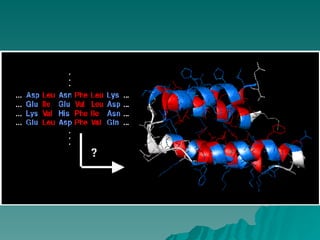
 Combinatorial synthesis is a means of
producing large number of compounds in a
short time using a defined reaction route and
large variety of starting material and reagents.
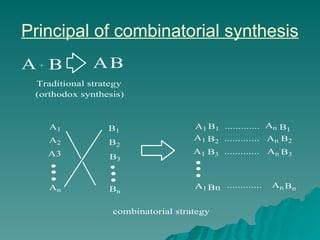
Principal of combinatorial synthesis
A + B AB
(orthodox synthesis)
Traditional strategy
A1
A2
An
B1
B2
B3
Bn
A1
A1
A1
A1
B1
B2
B3
Bn
An
An
An
An
B1
B2
B3
Bn
combinatorial strategy
.............
.............
.............
.............
A3
 20 A.A. = 2010
=10 240 000 000
000
 Collection of compounds intended for
bioassay that typically share a
common pharmacophore or activity
towards a given class of target.
 More than 10,000 compounds per
week
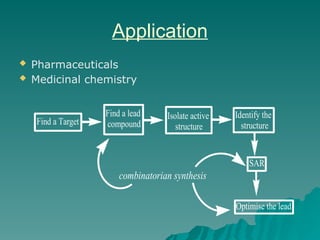
Application
 Pharmaceuticals
 Medicinal chemistry
Find a lead
compound
Isolate active
structure
Identify the
structure
Optimise the lead
Find a Target
SAR
combinatorian synthesis
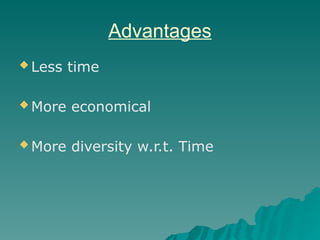
Advantages
 Less time
 More economical
 More diversity w.r.t. Time
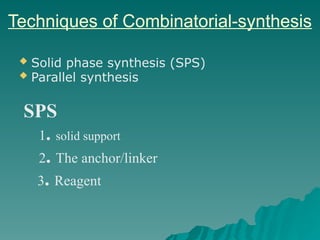
Techniques of Combinatorial-synthesis
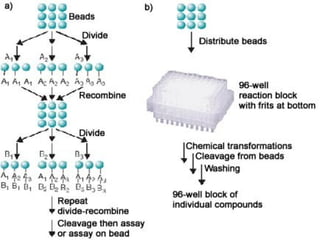
 Solid phase synthesis (SPS)
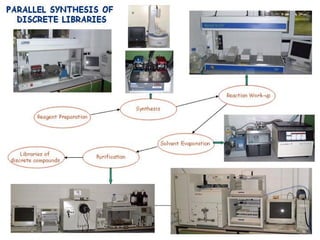
 Parallel synthesis
SPS
1. solid support
2. The anchor/linker
3. Reagent
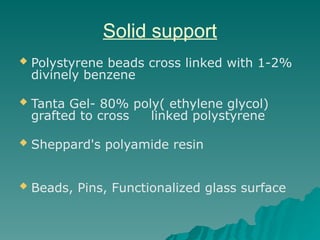
Solid support
 Polystyrene beads cross linked with 1-2%
divinely benzene
 Tanta Gel- 80% poly( ethylene glycol)
grafted to cross linked polystyrene
 Sheppard's polyamide resin
 Beads, Pins, Functionalized glass surface
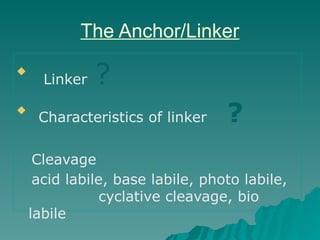
The Anchor/Linker

Linker ?

Characteristics of linker ?
Cleavage
acid labile, base labile, photo labile,
cyclative cleavage, bio
labile
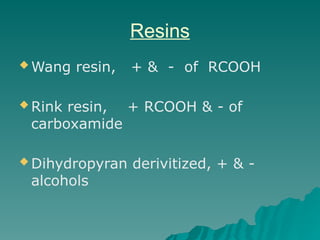
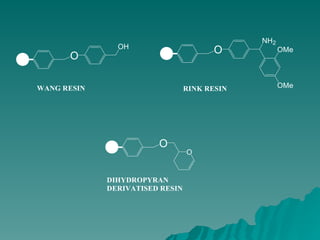
Resins
 Wang resin, + & - of RCOOH
 Rink resin, + RCOOH & - of
carboxamide
 Dihydropyran derivitized, + & -
alcohols
O
OH
WANG RESIN
O
NH2
OMe
OMe
RINK RESIN
O
O
DIHYDROPYRAN
DERIVATISED RESIN
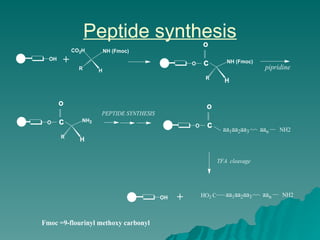
Peptide synthesis
OH +
NH (Fmoc)
R
CO2H
H
pipridine
O NH2
R
H
o
O NH (Fmoc)
R
H
o
PEPTIDE SYNTHESIS
O
o
aa1aa2aa3 aan NH2
TFA cleavage
aa1aa2aa3 aan NH2
HO2 C
OH +
Fmoc =9-flourinyl methoxy carbonyl
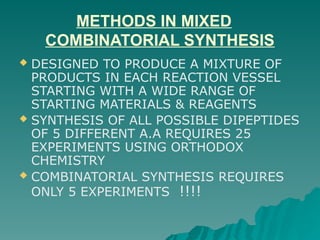
METHODS IN MIXED
COMBINATORIAL SYNTHESIS
 DESIGNED TO PRODUCE A MIXTURE OF
PRODUCTS IN EACH REACTION VESSEL
STARTING WITH A WIDE RANGE OF
STARTING MATERIALS & REAGENTS
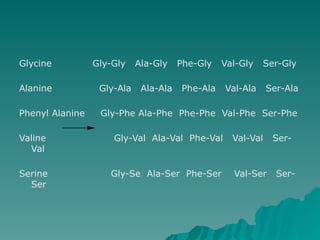
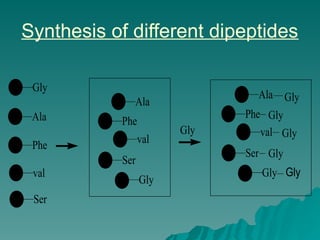
 SYNTHESIS OF ALL POSSIBLE DIPEPTIDES
OF 5 DIFFERENT A.A REQUIRES 25
EXPERIMENTS USING ORTHODOX
CHEMISTRY
 COMBINATORIAL SYNTHESIS REQUIRES
ONLY 5 EXPERIMENTS !!!!
Glycine Gly-Gly Ala-Gly Phe-Gly Val-Gly Ser-Gly
Alanine Gly-Ala Ala-Ala Phe-Ala Val-Ala Ser-Ala
Phenyl Alanine Gly-Phe Ala-Phe Phe-Phe Val-Phe Ser-Phe
Valine Gly-Val Ala-Val Phe-Val Val-Val Ser-
Val
Serine Gly-Se Ala-Ser Phe-Ser Val-Ser Ser-
Ser
Synthesis of different dipeptides
Gly
Ala
Phe
val
Ser
Gly
Ala
Phe
val
Ser
Gly
Ala
Phe
val
Ser
Gly
Gly
Gly
Gly
Gly
Gly
The Mix and Split Method
 Minimize the efforts involved
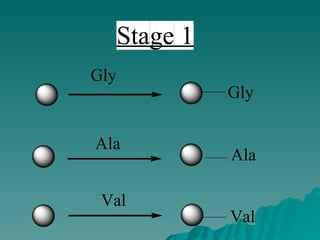
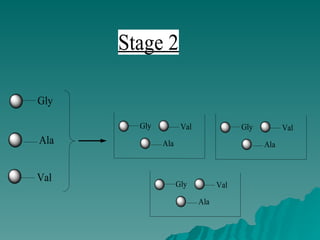
 Synthesis of all possible tripeptides
of three different amino acids is
completed in five stages
Gly
Gly
Ala
Ala
Val
Val
Stage 1
Gly
Ala
Val
Gly Val
Ala Ala
Gly Val
Ala
Gly Val
Stage 2
Ala
Gly Val
Ala
Gly Val
Ala
Gly Val
---Gly---Val ---Val---Val
---Ala---Val
---Gly---Ala
---Ala---Ala
---Val---Ala
---Gly---Gly
---Ala---Gly
---Val---Gly
Gly
Ala
Val
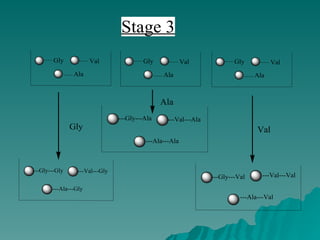
Stage 3
---Gly---Val
---Val---Val
---Ala---Val
---Gly---Ala
---Ala---Ala
---Val---Ala
---Gly---Gly
---Ala---Gly
---Val---Gly
---Gly---Val
---Val---Val
---Ala---Val
---Gly---Ala
---Ala---Ala
---Val---Ala
---Gly---Gly
---Ala---Gly
---Val---Gly
---Gly---Val
---Val---Val
---Ala---Val
---Gly---Ala
---Ala---Ala
---Val---Ala
---Gly---Gly
---Ala---Gly
---Val---Gly
---Gly---Val
---Val---Val
---Ala---Val
---Gly---Ala
---Ala---Ala
---Val---Ala
---Gly---Gly
---Ala---Gly
---Val---Gly
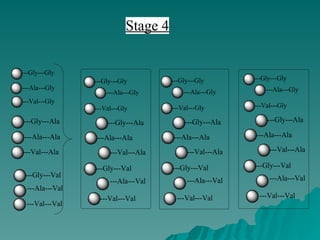
Stage 4
---Gly---Val
---Val---Val
---Ala---Val
---Gly---Ala
---Ala---Ala
---Val---Ala
---Gly---Gly
---Ala---Gly
---Val---Gly
---Gly---Val
---Val---Val
---Ala---Val
---Gly---Ala
---Ala---Ala
---Val---Ala
---Gly---Gly
---Ala---Gly
---Val---Gly
---Gly---Val
---Val---Val
---Ala---Val
---Gly---Ala
---Ala---Ala
---Val---Ala
---Gly---Gly
---Ala---Gly
---Val---Gly
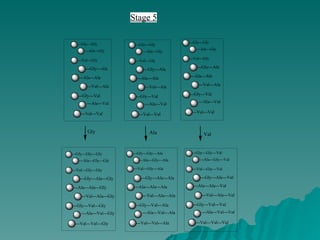
Stage 5
Gly Ala Val
---Gly---Val---Gly
---Val---Val---Gly
---Ala---Val---Gly
---Gly---Ala---Gly
---Ala---Ala---Gly
---Val---Ala---Gly
---Gly---Gly---Gly
---Ala---Gly---Gly
---Val---Gly---Gly
---Gly---Val---Ala
---Val---Val---Ala
---Ala---Val---Ala
---Gly---Ala---Ala
---Ala---Ala---Ala
---Val---Ala---Ala
---Gly---Gly---Ala
---Ala---Gly---Ala
---Val---Gly---Ala
---Gly---Val---Val
---Val---Val---Val
---Ala---Val---Val
---Gly---Ala---Val
---Val---Ala---Val
---Gly---Gly---Val
---Ala---Gly---Val
---Val---Gly---Val
---Ala---Ala---Val
DECONVOLUTION
 “ISOLATION & IDENTIFICATION OF THE
MOST ACTIVE COMPOUND IN THE
MIXTURE”
 METHODS OF DECONVOLUTION ARE;
1-MICROMANIPULATION
2-RECURSIVE DECONVOLUTION
3-SEQUENTIAL RELEASE
Strucure Determination of Active
Compounds
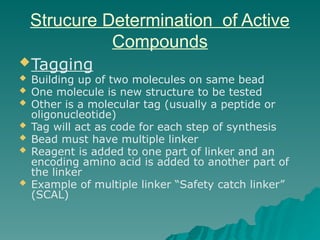
Tagging
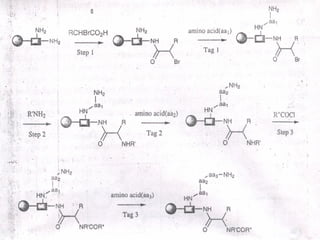
 Building up of two molecules on same bead
 One molecule is new structure to be tested
 Other is a molecular tag (usually a peptide or
oligonucleotide)
 Tag will act as code for each step of synthesis
 Bead must have multiple linker
 Reagent is added to one part of linker and an
encoding amino acid is added to another part of
the linker
 Example of multiple linker “Safety catch linker”
(SCAL)
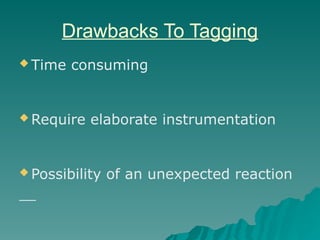
Drawbacks To Tagging
 Time consuming
 Require elaborate instrumentation
 Possibility of an unexpected reaction
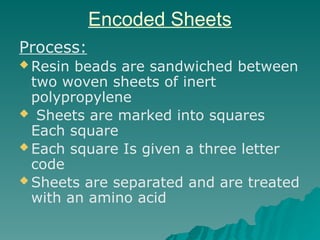
Encoded Sheets
Process:
 Resin beads are sandwiched between
two woven sheets of inert
polypropylene
 Sheets are marked into squares
Each square
 Each square Is given a three letter
code
 Sheets are separated and are treated
with an amino acid
 Finally sheets are treated with
piperdine to remove F-moc
protecting group
 Sheets are restacked and cut into
three sets of columns
 Each column with another activated
F-moc
 amino acid
 Strips are restacked and cut into
rows
 Each set is treated with third amino
acid to form all possible 27
Tripeptides
 Each square containing a unique
Tripeptide sequence
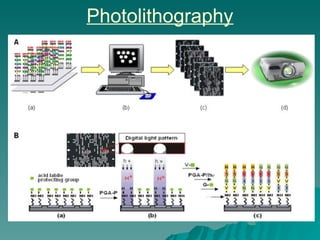
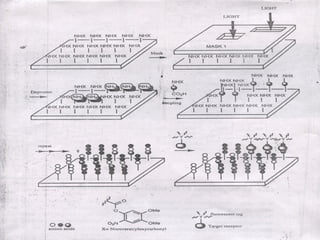
Photolithography
“A technique which permits
miniaturization and spatial resolution
such that specific products are
synthesized on a plate of
immobilized solid support”
 Amino acids are protected by photo
labile protecting groups Nitroveratryl
oxycarbonyl (NVOC)
Photolithography
Examples of Combinatorial
Chemistry
 HIV Protease inhibitors
 Antimicrobials agents
 Opiates receptors ligands
 Aspartic acid Protease inhibitors
 Earliest example was 1,4-
benzodiazepines
 Piperazinediones 2,5-disubsituted
tetrahydrofurans and thiazolidines
have also been synthesized
Testing For Activity
 High Throughput Screening
 96 small wells with capacity of 0.1ml
 Test volume is reduced to 1-10ųl
 Fluorescence and chemiluminescence
allow simultaneous identification of
active wells
 Major advancement involves the
manipulation of Microfluid circuits
 Separation of analytical sample using
capillary electrophoresis
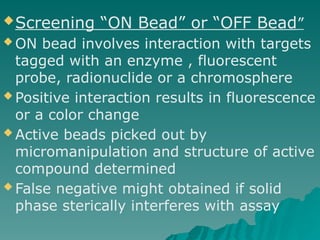
Screening “ON Bead” or “OFF Bead”
 ON bead involves interaction with targets
tagged with an enzyme , fluorescent
probe, radionuclide or a chromosphere
 Positive interaction results in fluorescence
or a color change
 Active beads picked out by
micromanipulation and structure of active
compound determined
 False negative might obtained if solid
phase sterically interferes with assay
Vitamin C (Ascorbic Acid)
 History
 Physical properties
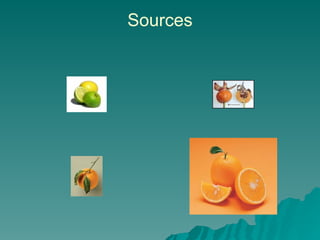
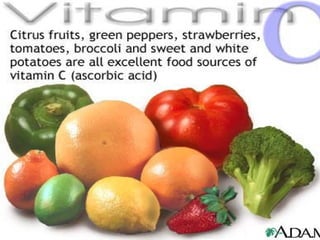
 Sources
 Fresh fruits and vegetable like
Guava, Citrus fruits, Tomatoes,
Onions, Spinach, Cabbage, Turnips,
Melons, Potatoes etc
 Half Life
 Excretion
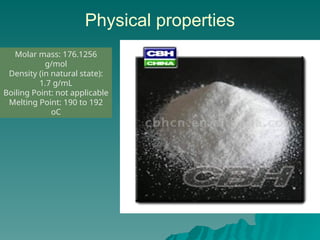
Physical properties
Molar mass: 176.1256
g/mol
Density (in natural state):
1.7 g/mL
Boiling Point: not applicable
Melting Point: 190 to 192
oC
Sources
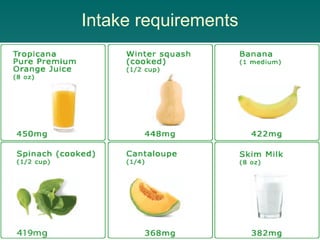
Intake requirements
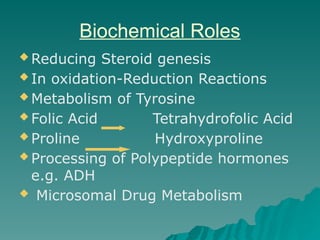
Biochemical Roles
 Reducing Steroid genesis
 In oxidation-Reduction Reactions
 Metabolism of Tyrosine
 Folic Acid Tetrahydrofolic Acid
 Proline Hydroxyproline
 Processing of Polypeptide hormones
e.g. ADH
 Microsomal Drug Metabolism
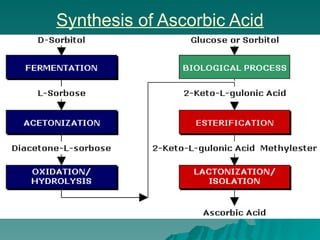
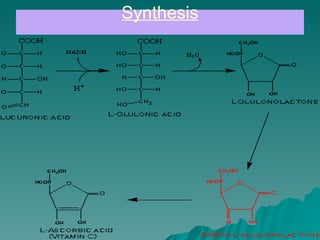
Synthesis of Ascorbic Acid
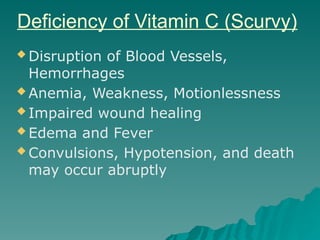
Deficiency of Vitamin C (Scurvy)
 Disruption of Blood Vessels,
Hemorrhages
 Anemia, Weakness, Motionlessness
 Impaired wound healing
 Edema and Fever
 Convulsions, Hypotension, and death
may occur abruptly
Synthesis
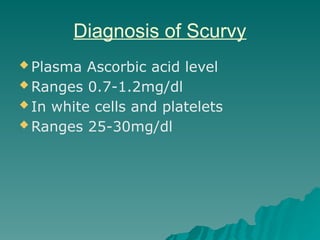
Diagnosis of Scurvy
 Plasma Ascorbic acid level
 Ranges 0.7-1.2mg/dl
 In white cells and platelets
 Ranges 25-30mg/dl
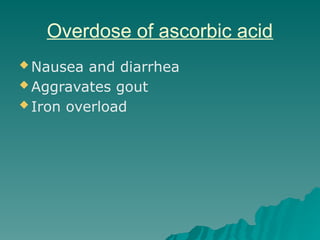
Overdose of ascorbic acid
 Nausea and diarrhea
 Aggravates gout
 Iron overload

Comninatural Chemistry basic chemistry .pptx