DRUG DISCOVERY
Dr.Gurumeet C Wadhawa ,Assistant Professor, Department of Chemistry.
Rayat Shikshan sansthas Veer Wajekar ASC College,Phunde,Uran
Drug…
Any chemical that produces a change in the
body…
Defined by characteristics:
1. Use or potential use in diagnosis or treatment
of disease
2. Selective in their actions
Need for Drug Discovery
Unmet Medical Needs:
New Diseases ,AIDS, Alzheimer’s, obesity
Low efficacy – dementia, cancer
Side effects – antipsychotics, antidepressants
Downstream health cost - (Alzheimer’s; spinal
injury)
cost of therapy; (Interleukins)
costs to individual/country; (depression)
Sustain industrial activity; pharmaceutical
industry employs thousands and makes a massive
contribution to overseas earnings; patent expiry
The changed context of drug
discovery and development
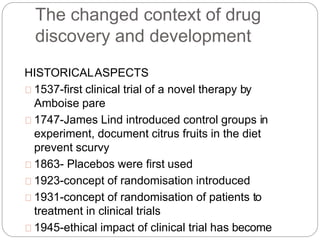
HISTORICALASPECTS
1537-first clinical trial of a novel therapy by
Amboise pare
1747-James Lind introduced control groups in
experiment, document citrus fruits in the diet
prevent scurvy
1863- Placebos were first used
1923-concept of randomisation introduced
1931-concept of randomisation of patients to
treatment in clinical trials
1945-ethical impact of clinical trial has become
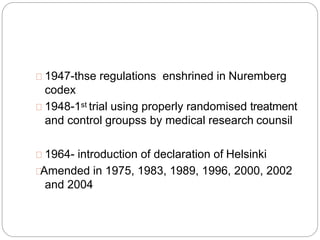
1947-thse regulations enshrined in Nuremberg
codex
1948-1st trial using properly randomised treatment
and control groupss by medical research counsil
1964- introduction of declaration of Helsinki
Amended in 1975, 1983, 1989, 1996, 2000, 2002
and 2004
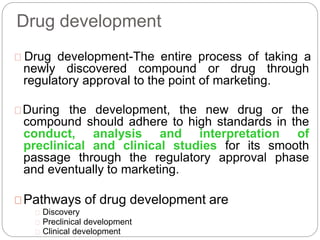
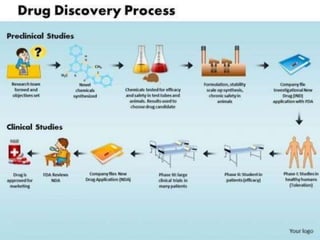
Drug development
Drug development-The entire process of taking a
newly discovered compound or drug through
regulatory approval to the point of marketing.
During the development, the new drug or the
compound should adhere to high standards in the
conduct, analysis and interpretation of
preclinical and clinical studies for its smooth
passage through the regulatory approval phase
and eventually to marketing.
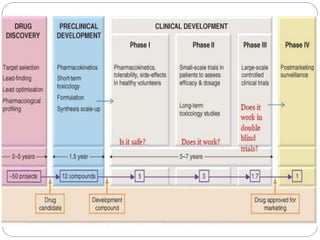
Pathways of drug development are
Discovery
Preclinical development
Clinical development
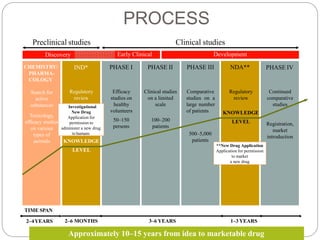
PROCESS
Discovery
Preclinical studies
CHEMISTRY/
PHARMA-
COLOGY
IND* PHASE IV
Search for
active
substances
Toxicology,
efficacy studies
on various
types of
animals
Regulatory
review
Clinical studies
on a limited
scale
Comparative
studies on a
large number
of patients
Regulatory
review
Continued
comparative
studies
*Investigational
New Drug
Application for
permission to
administer a new drug
to humans
Efficacy
studies on
healthy
volunteers
50–150
persons
100–200
patients
500–5,000
patients
Registration,
market
introduction
**New Drug Application
Application for permission
to market
a new drug
KNOWLEDGE
LEVEL
KNOWLEDGE
LEVEL
2–6 MONTHS 3–6 YEARS 1–3 YEARS
Approximately 10–15 years from idea to marketable drug
TIME SPAN
2–4YEARS
Clinical studies
Early Clinical Development
PHASE I PHASE II PHASE III NDA**
T
H
A
N
KY
O
U

Drug Discovery.pptx

  • 1.
    DRUG DISCOVERY Dr.Gurumeet CWadhawa ,Assistant Professor, Department of Chemistry. Rayat Shikshan sansthas Veer Wajekar ASC College,Phunde,Uran
  • 2.
    Drug… Any chemical thatproduces a change in the body… Defined by characteristics: 1. Use or potential use in diagnosis or treatment of disease 2. Selective in their actions
  • 3.
    Need for DrugDiscovery Unmet Medical Needs: New Diseases ,AIDS, Alzheimer’s, obesity Low efficacy – dementia, cancer Side effects – antipsychotics, antidepressants Downstream health cost - (Alzheimer’s; spinal injury) cost of therapy; (Interleukins) costs to individual/country; (depression) Sustain industrial activity; pharmaceutical industry employs thousands and makes a massive contribution to overseas earnings; patent expiry
  • 4.
    The changed contextof drug discovery and development HISTORICALASPECTS 1537-first clinical trial of a novel therapy by Amboise pare 1747-James Lind introduced control groups in experiment, document citrus fruits in the diet prevent scurvy 1863- Placebos were first used 1923-concept of randomisation introduced 1931-concept of randomisation of patients to treatment in clinical trials 1945-ethical impact of clinical trial has become
  • 5.
    1947-thse regulations enshrinedin Nuremberg codex 1948-1st trial using properly randomised treatment and control groupss by medical research counsil 1964- introduction of declaration of Helsinki Amended in 1975, 1983, 1989, 1996, 2000, 2002 and 2004
  • 6.
    Drug development Drug development-Theentire process of taking a newly discovered compound or drug through regulatory approval to the point of marketing. During the development, the new drug or the compound should adhere to high standards in the conduct, analysis and interpretation of preclinical and clinical studies for its smooth passage through the regulatory approval phase and eventually to marketing. Pathways of drug development are Discovery Preclinical development Clinical development
  • 10.
    PROCESS Discovery Preclinical studies CHEMISTRY/ PHARMA- COLOGY IND* PHASEIV Search for active substances Toxicology, efficacy studies on various types of animals Regulatory review Clinical studies on a limited scale Comparative studies on a large number of patients Regulatory review Continued comparative studies *Investigational New Drug Application for permission to administer a new drug to humans Efficacy studies on healthy volunteers 50–150 persons 100–200 patients 500–5,000 patients Registration, market introduction **New Drug Application Application for permission to market a new drug KNOWLEDGE LEVEL KNOWLEDGE LEVEL 2–6 MONTHS 3–6 YEARS 1–3 YEARS Approximately 10–15 years from idea to marketable drug TIME SPAN 2–4YEARS Clinical studies Early Clinical Development PHASE I PHASE II PHASE III NDA**
  • 11.