‫باال‬ ‫فک‬ ‫استئوتومی‬ ‫های‬ ‫تکنیک‬
Orthognathic Surgery:
Maxillary Osteotomies
‫گردآوری‬:
‫حسینی‬ ‫هادی‬ ‫سید‬ ‫دکتر‬
‫صورت‬ ‫و‬ ‫فک‬ ‫جراحی‬ ‫متخصص‬
Maxillary Osteotomy:
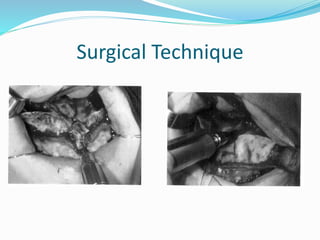
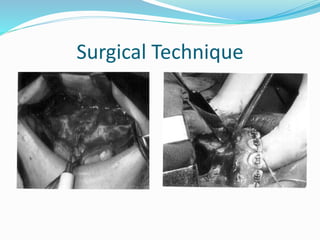
 Lefort 1 Osteotomy
 Lefort 1 Segmental Osteotomy
 Lefort 3 Osteotomy
 Subcranial Lefort 3 Osteotomy
 Modified (subtotal)Lefort 3 Osteotomy
 Transverse Maxillary Distraction Osteogenesis
 Maxillary Osteotomies for Asymetry And Plan
Rotation
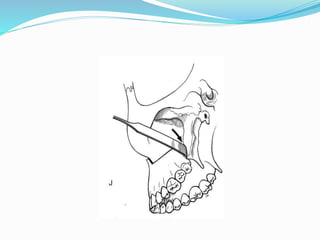
Lefort 1 Osteotomy
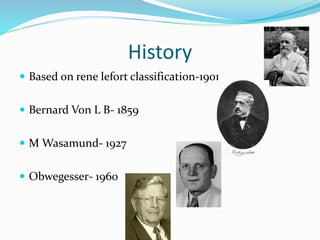
History
 Based on rene lefort classification-1901
 Bernard Von L B- 1859
 M Wasamund- 1927
 Obwegesser- 1960
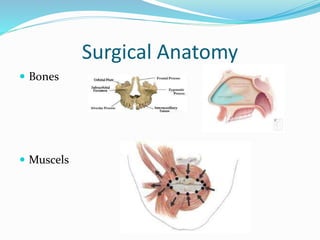
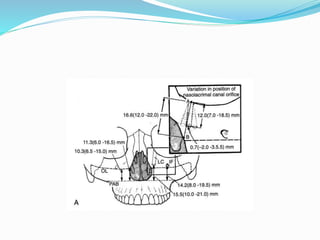
Surgical Anatomy
 Bones
 Muscels
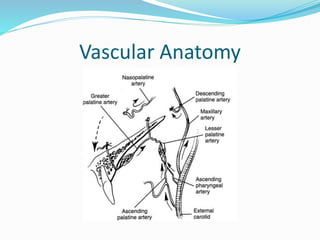
Vascular Anatomy
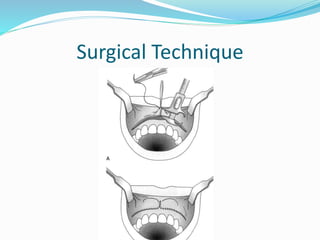
Surgical Technique
 Patient position
Surgical Technique
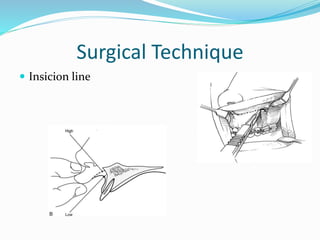
 Insicion line
Surgical Technique
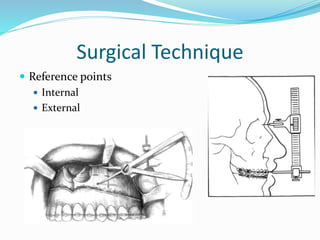
 Reference points
 Internal
 External
Surgical Technique
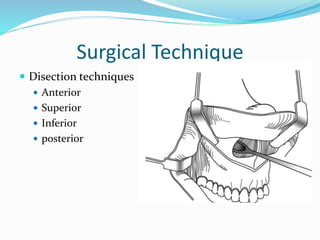
 Disection techniques
 Anterior
 Superior
 Inferior
 posterior
Surgical Technique
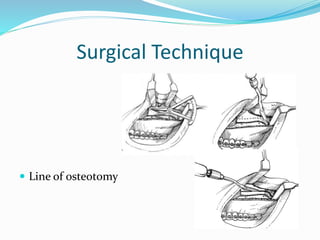
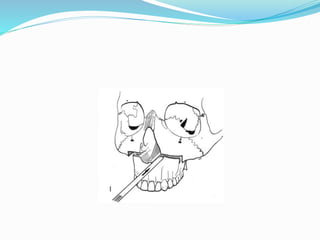
 Line of osteotomy
Surgical Technique
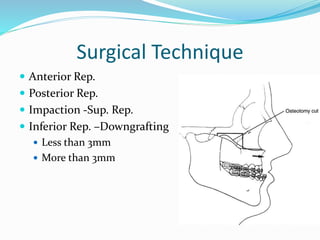
 Anterior Rep.
 Posterior Rep.
 Impaction -Sup. Rep.
 Inferior Rep. –Downgrafting
 Less than 3mm
 More than 3mm
Surgical Technique
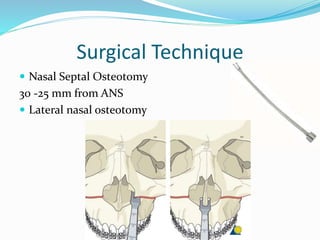
 Nasal Septal Osteotomy
30 -25 mm from ANS
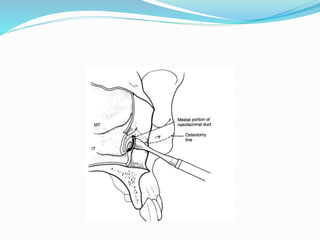
 Lateral nasal osteotomy
Surgical Technique
Surgical Technique
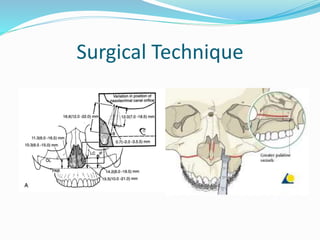
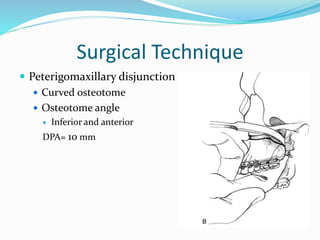
 Peterigomaxillary disjunction
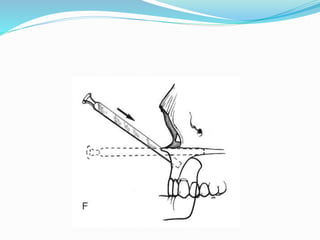
 Curved osteotome
 Osteotome angle
 Inferior and anterior
DPA= 10 mm
Surgical Technique
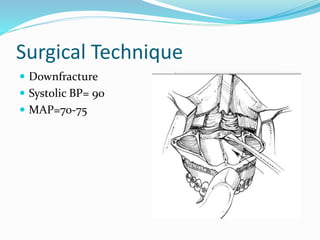
 Downfracture
 Systolic BP= 90
 MAP=70-75
Surgical Technique
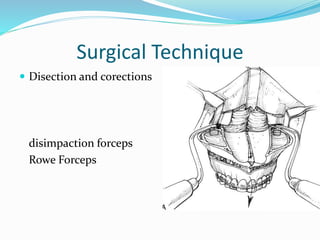
 Disection and corections
disimpaction forceps
Rowe Forceps
Surgical Technique
Surgical Technique
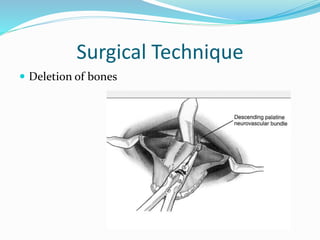
 Deletion of bones
Surgical Technique
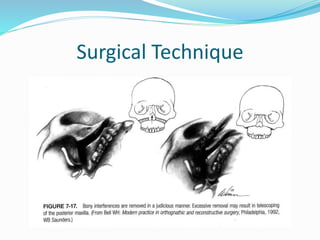
Excessive bone removal
1. Segmental instability
2. Lack of bone contanct
3. Excessive post. Impaction
4. Telescopic contact
Surgical Technique
Surgical Technique
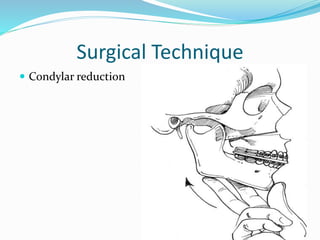
 Condylar reduction
Surgical Technique
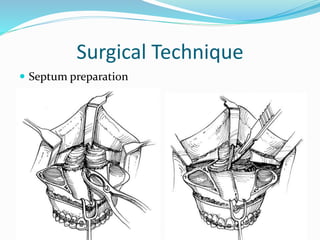
 Septum preparation
Surgical Technique
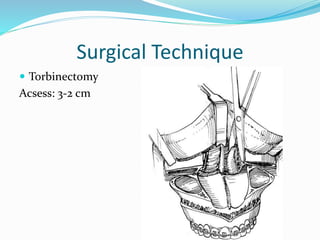
 Torbinectomy
Acsess: 3-2 cm
Surgical Technique
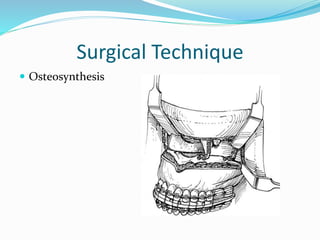
 Osteosynthesis
Surgical Technique
Surgical Technique
Rules of Fixation
Post Surgical management
 Elastic theraphy 6-8 weeks
 Splints
 Nasal spray
 Steroids
 Anti Biotics
Hierarchy of stability
 stability
 Amount of displacement
 Vertical position
 RF
 Bone Grafts
Soft Tissue Changes
 One years
Structures Change:
 Clomella show
 Nasal tip
 Upper lip
 Nasolabial angle
 Alar width
Change factors:
Time
Soft tissue width
Wound closure
technique
Complications
 Bleeding
 Avascular necrosis
 Septum deviation
 Ununion and gap
 Ligation
 Iscemic changes
 Hemorage
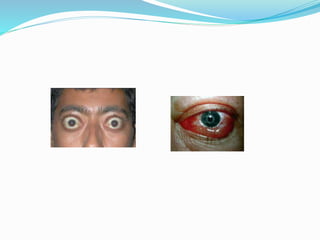
 cavernous sinus fistula
 Maxillary artery pesudoaneurysm
 Mobilization
Maxillary Osteotomy:
Lefort 1 Segmental
Osteotomy
History
Indications
Transverse Deficency Treatments
 SARPE- SAME-SARME
 Lefort 1 multisegmental
 Mandibular narowing
 Orthodency
 OME
Diagnosis
 Leteral ceph
 OPG
 CT***
 PA
Surgical Technique
 Vasoconstrictions
 Hypotensive GA
Surgical Technique
 Incision
Surgical Technique
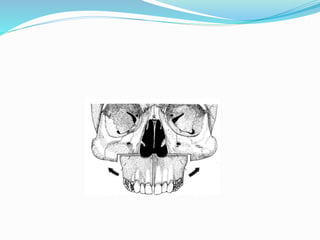
 Lefort 1 osteotomy
Surgical Technique
Surgical Technique
Surgical Technique
 Downfracture
Surgical Technique
 Mocusal reflecting
Surgical Technique
 Bone structures
Surgical Technique
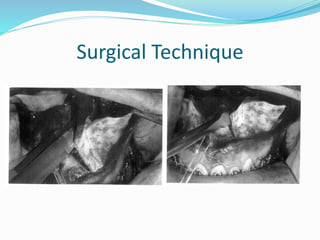
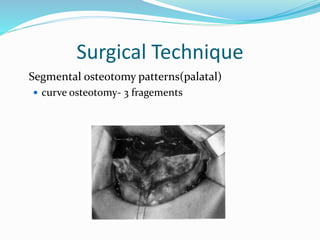
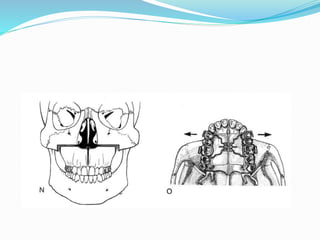
Segmental osteotomy patterns(palatal)
Surgical Technique
Surgical Technique
Segmental osteotomy patterns(palatal)
 curve osteotomy- 3 fragements
Surgical Technique
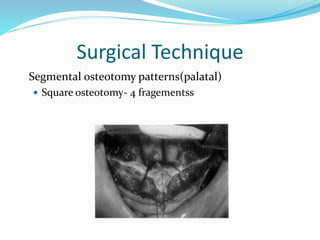
Segmental osteotomy patterns(palatal)
 Square osteotomy- 4 fragementss
Surgical Technique
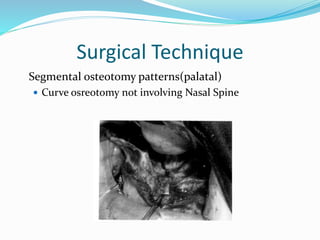
Segmental osteotomy patterns(palatal)
 Curve osreotomy not involving Nasal Spine
Surgical Technique
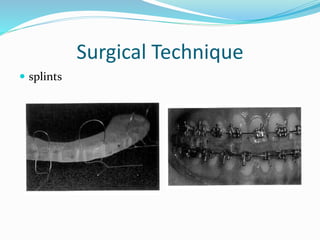
 splints
Surgical Technique
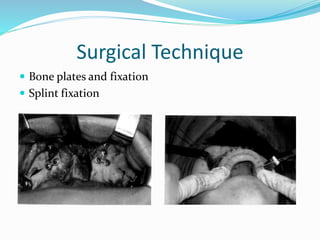
 Bone plates and fixation
 Splint fixation
Postsurgical Care
 Retainers
 Smokers
postsurgery
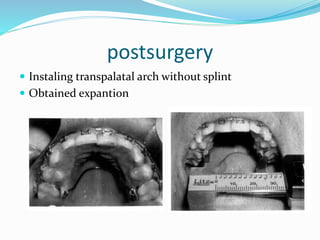
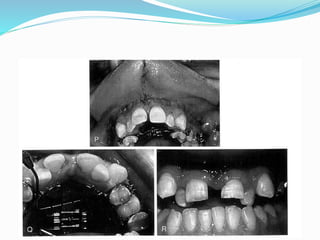
 Instaling transpalatal arch without splint
 Obtained expantion
Periparation for surgery
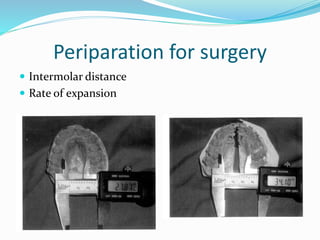
 Intermolar distance
 Rate of expansion
Complications
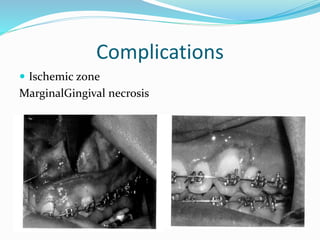
 Ischemic zone
MarginalGingival necrosis
Complications
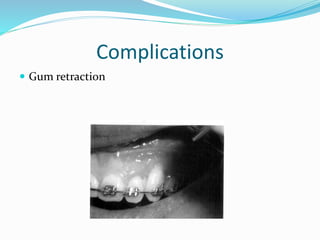
 Gum retraction
Complications
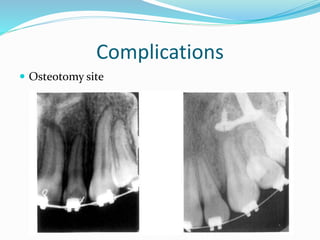
 Osteotomy site
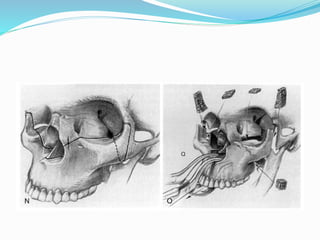
Lefort 3 Osteotomy
Subcranial Lefort 3 Osteotomy
Modified (subtotal)Lefort 3 Osteotomy
Indications
 Osteotomy
 Nose.orbits.zygomas.maxilla
 Modified version: kufner
 Craniofacial disostosis
 Apert
 Crozun
 Pfeiffer
 Seathre chotzen
 carpenter
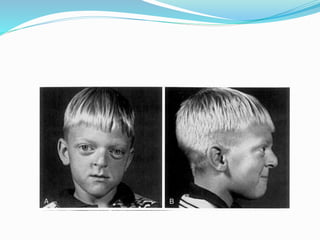
Midface Deficiency
 Frontal bossing
 Petosis
 Dystopy lateral canthal
 Exorbitism-exotropia
 Maxillary hypopalsia
 Maybe hypertelorism
 Tarnsverse deficiency
 C3 malloclusion
 Apertognathia
 Beatencooper
 Clefts
Technique
 Nasal intubation
 Subcranial LF3
 Coronal incision
 Lower eyelid
 Intra oral
 Modified
 Intra oral
 Peri orbital
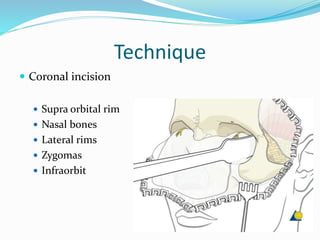
Technique
 Coronal incision
 Supra orbital rim
 Nasal bones
 Lateral rims
 Zygomas
 Infraorbit
Technique
 Transconjectival incision
 Lower subciliary
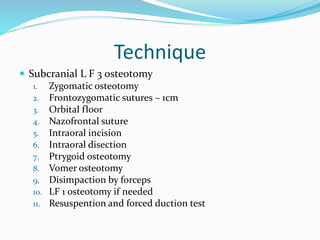
Technique
 Subcranial L F 3 osteotomy
1. Zygomatic osteotomy
2. Frontozygomatic sutures – 1cm
3. Orbital floor
4. Nazofrontal suture
5. Intraoral incision
6. Intraoral disection
7. Ptrygoid osteotomy
8. Vomer osteotomy
9. Disimpaction by forceps
10. LF 1 osteotomy if needed
11. Resuspention and forced duction test
Technique
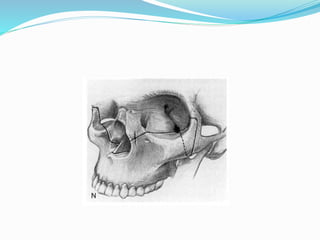
 Modified LF 3 osteotomy
 Frontozygomatic osteotomy
 Maxillary osteotomy
 Zygomatic osteotomy
 Septum osteotomy
 Fixation
Postoperative
 Steroids
 Anti biotics
 NG tube
 Extubation
 Avoid nasal packing
 Nasal spray
 Diet
 Complications
 Diplopia- amnosia- sensory diorders
Transverse Maxillary
Distraction Osteogenesis
Incidence and Origins
 Incidence 8 – 18 %
 Origins
 Iatrogenic
 Traumatic
 Developmental
Diagnosis
 Alar base
 Nasolabial fold
 maxilla
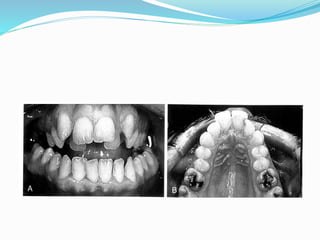
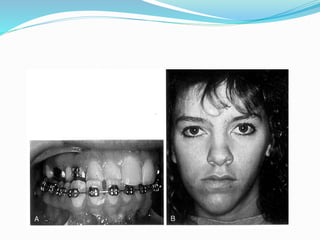
Clinical Evidenses
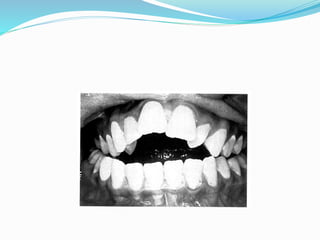
 Posterior crossbite
 Crowding
 Hourglass arch
 Deep palate
 Dental or skeletal
 Skeletal discerpancy
 Narrow maxilla- normal mandible
 Normal maxilla- wide mandible
 Narrow maxilla- wide mandible
 Transverse deficiency
 Maxillary hypoplasia
 Mandibular prognatism and sagital deficiency
 Apertognathie
 Repaired clefts
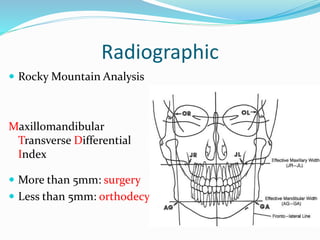
Radiographic
 Rocky Mountain Analysis
Maxillomandibular
Transverse Differential
Index
 More than 5mm: surgery
 Less than 5mm: orthodecy
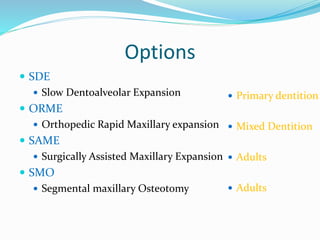
Options
 SDE
 Slow Dentoalveolar Expansion
 ORME
 Orthopedic Rapid Maxillary expansion
 SAME
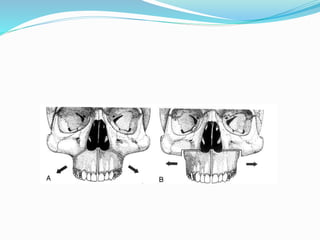
 Surgically Assisted Maxillary Expansion
 SMO
 Segmental maxillary Osteotomy
 Primary dentition
 Mixed Dentition
 Adults
 Adults
Technique
 SDE
Technique
 ORME
Technique
 SAME
 Advanteges
 Stability
 Non ex
 Negative space control
 Good breathing
 No periodontal complications
 Indications
 More than 5 discerpancy
 Narrow maxilla and wide mandible
 Orthodentic failure
 More than 7mm need
 Perio Complications
 Estenosis
 Clefts complications
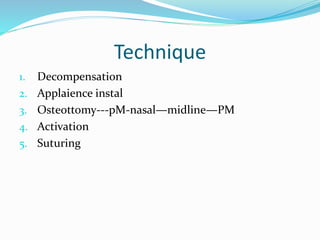
Technique
1. Decompensation
2. Applaience instal
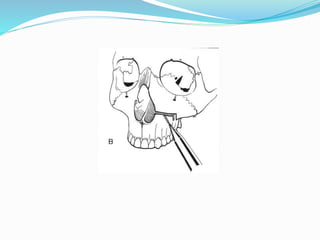
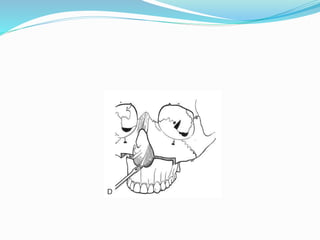
3. Osteottomy---pM-nasal—midline—PM
4. Activation
5. Suturing
Complications
 Hemorrhage
 Maxillary Inadequate disjunction
 Pain
 Tiping
 Perio
 Palatal necrosis
 Relapse
 Device
 Necrosis
 Deformity
Modifications
 Older patients
 Palatal Tori surgery
 Modified incision
 Patient with open bite
maxillary osteotomies

maxillary osteotomies