Chapter 6
Manufacturing and
Process Selection
Design
2
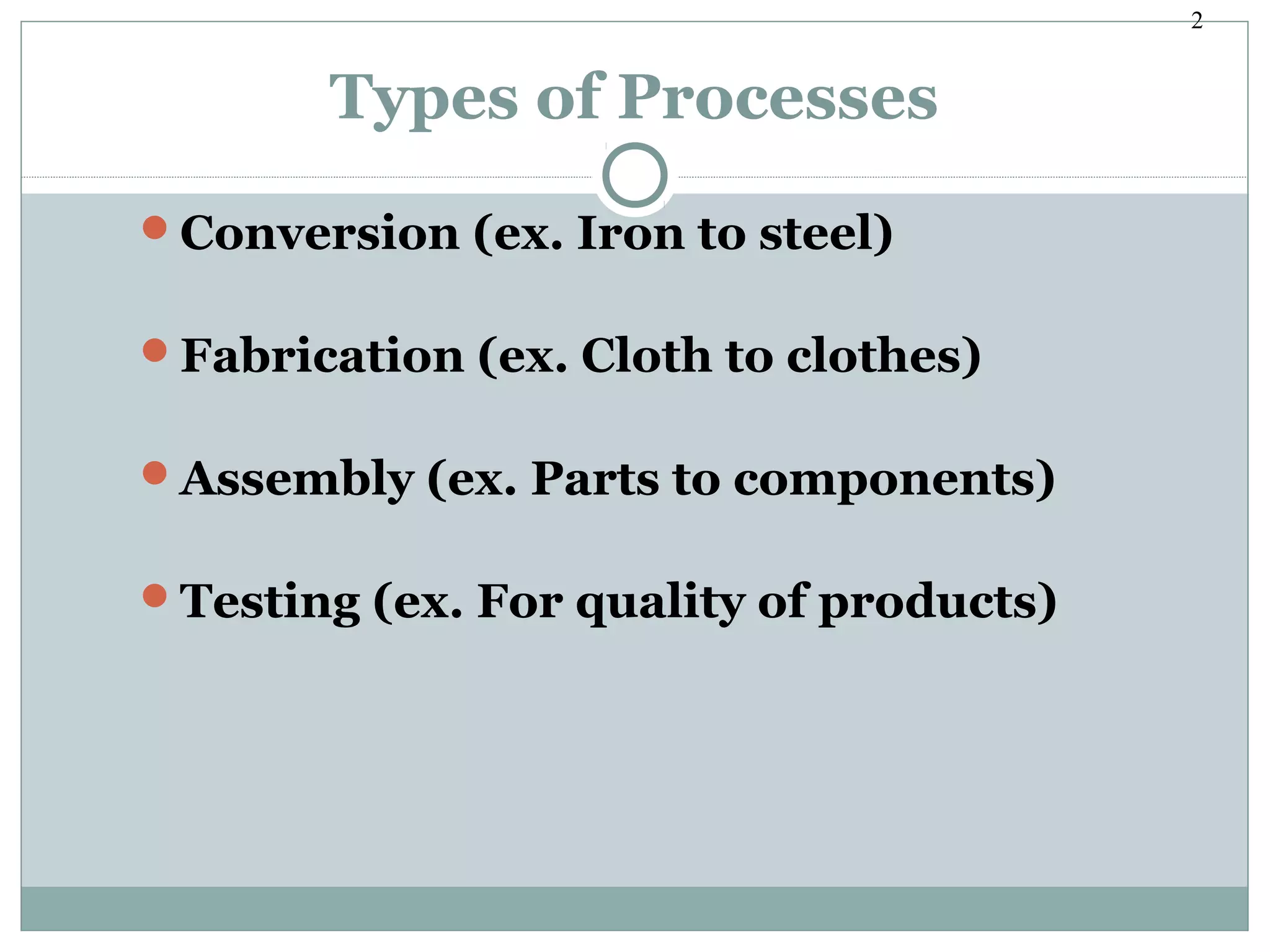
Types of Processes
Conversion (ex. Iron to steel)
Fabrication (ex. Cloth to clothes)
Assembly (ex. Parts to components)
Testing (ex. For quality of products)
3
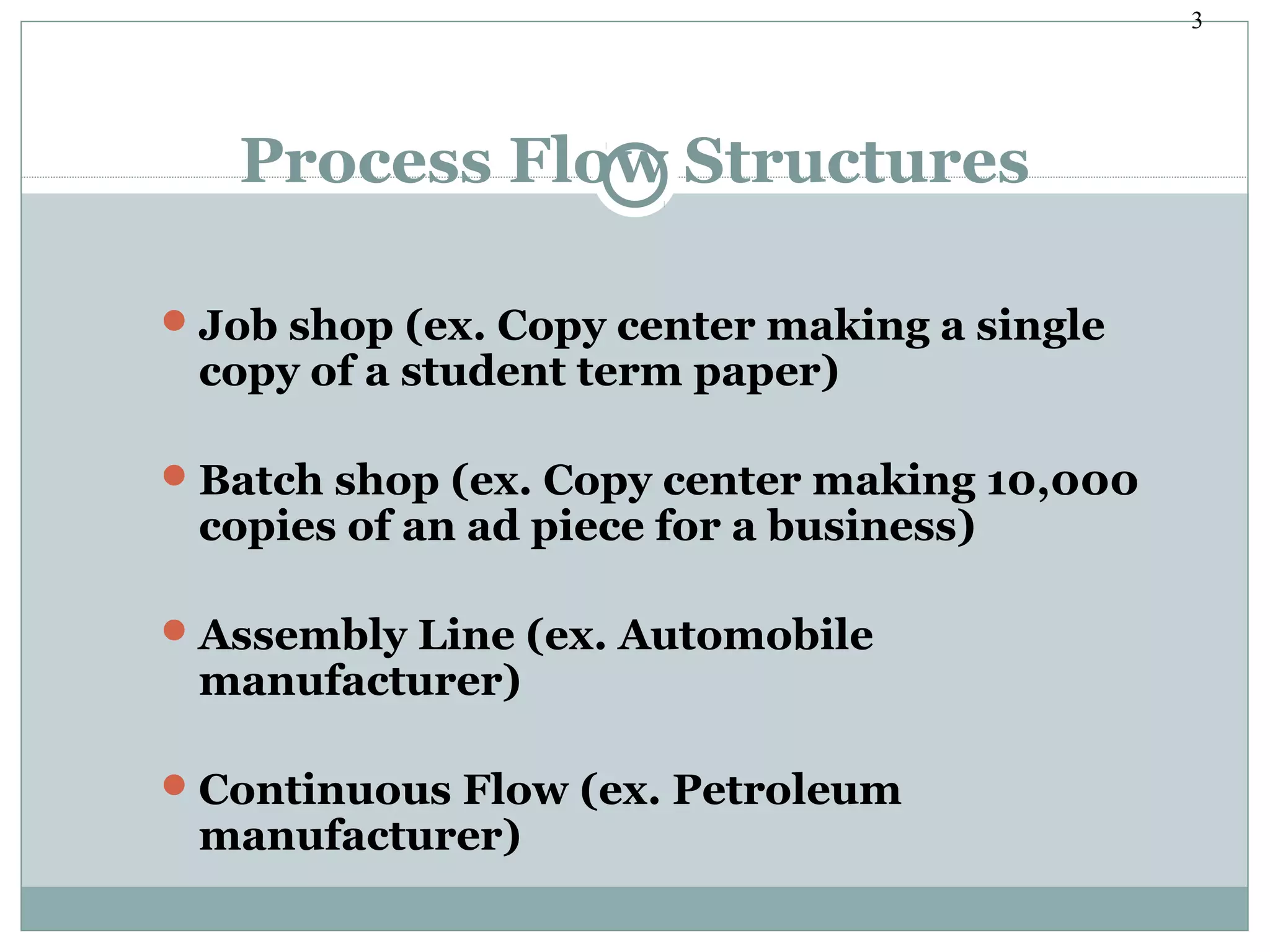
Process Flow Structures
Job shop (ex. Copy center making a single
copy of a student term paper)
Batch shop (ex. Copy center making 10,000
copies of an ad piece for a business)
Assembly Line (ex. Automobile
manufacturer)
Continuous Flow (ex. Petroleum
manufacturer)
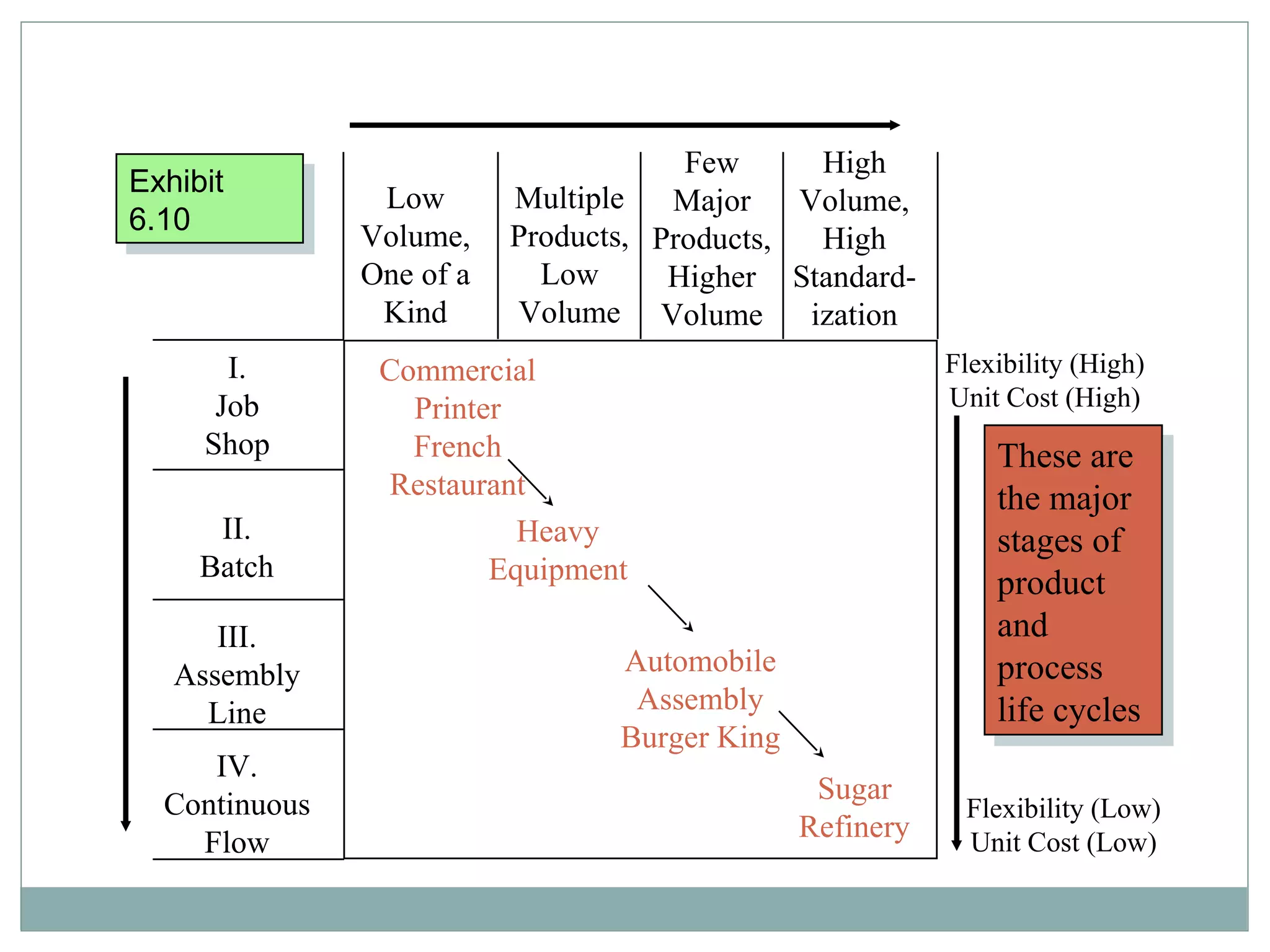
IV.
Continuous
Flow
III.
Assembly
Line
II.
Batch
I.
Job
Shop
Low
Volume,
One of a
Kind
Multiple
Products,
Low
Volume
Few
Major
Products,
Higher
Volume
High
Volume,
High
Standard-
ization
Commercial
Printer
French
Restaurant
Heavy
Equipment
Automobile
Assembly
Burger King
Sugar
Refinery
Flexibility (High)
Unit Cost (High)
Flexibility (Low)
Unit Cost (Low)
Exhibit
6.10
Exhibit
6.10
These are
the major
stages of
product
and
process
life cycles
These are
the major
stages of
product
and
process
life cycles
5
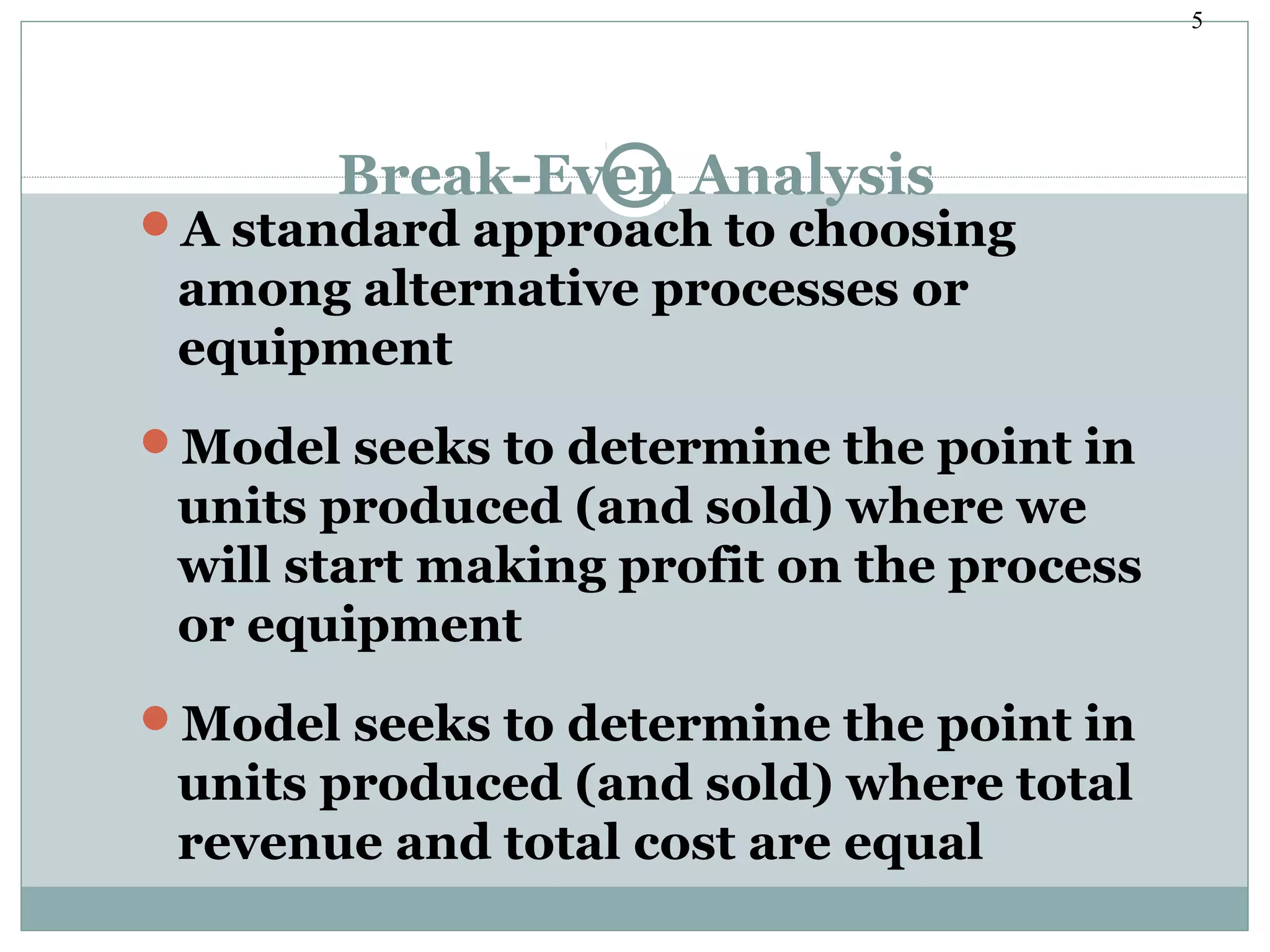
Break-Even Analysis
A standard approach to choosing
among alternative processes or
equipment
Model seeks to determine the point in
units produced (and sold) where we
will start making profit on the process
or equipment
Model seeks to determine the point in
units produced (and sold) where total
revenue and total cost are equal
6
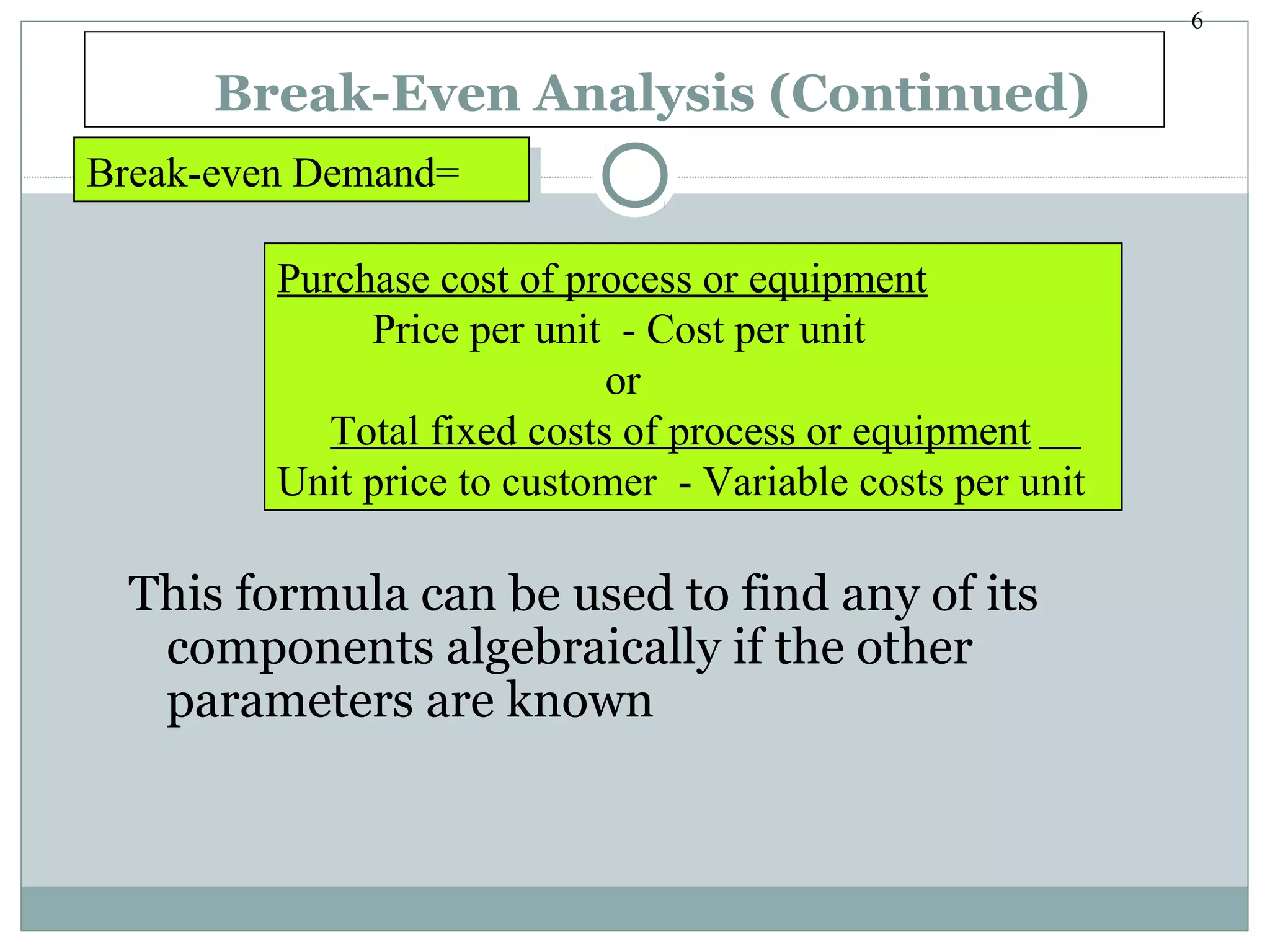
Break-Even Analysis (Continued)
This formula can be used to find any of its
components algebraically if the other
parameters are known
Break-even Demand=Break-even Demand=
Purchase cost of process or equipment
Price per unit - Cost per unit
or
Total fixed costs of process or equipment
Unit price to customer - Variable costs per unit
Purchase cost of process or equipment
Price per unit - Cost per unit
or
Total fixed costs of process or equipment
Unit price to customer - Variable costs per unit
7
Break-Even Analysis (Continued)
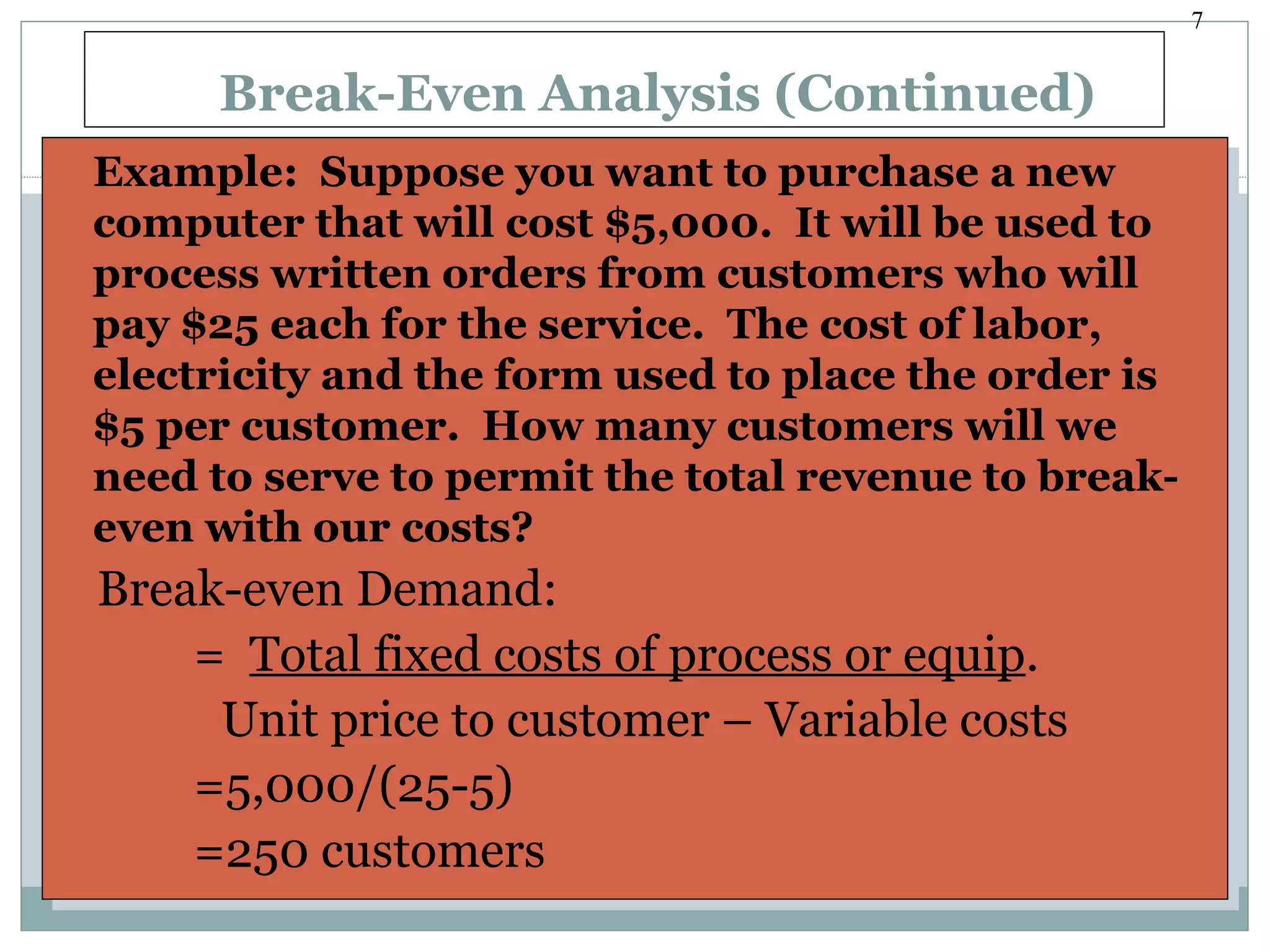
Example: Suppose you want to purchase a new
computer that will cost $5,000. It will be used to
process written orders from customers who will
pay $25 each for the service. The cost of labor,
electricity and the form used to place the order is
$5 per customer. How many customers will we
need to serve to permit the total revenue to break-
even with our costs?
Break-even Demand:
= Total fixed costs of process or equip.
Unit price to customer – Variable costs
=5,000/(25-5)
=250 customers
Example: Suppose you want to purchase a new
computer that will cost $5,000. It will be used to
process written orders from customers who will
pay $25 each for the service. The cost of labor,
electricity and the form used to place the order is
$5 per customer. How many customers will we
need to serve to permit the total revenue to break-
even with our costs?
Break-even Demand:
= Total fixed costs of process or equip.
Unit price to customer – Variable costs
=5,000/(25-5)
=250 customers
8
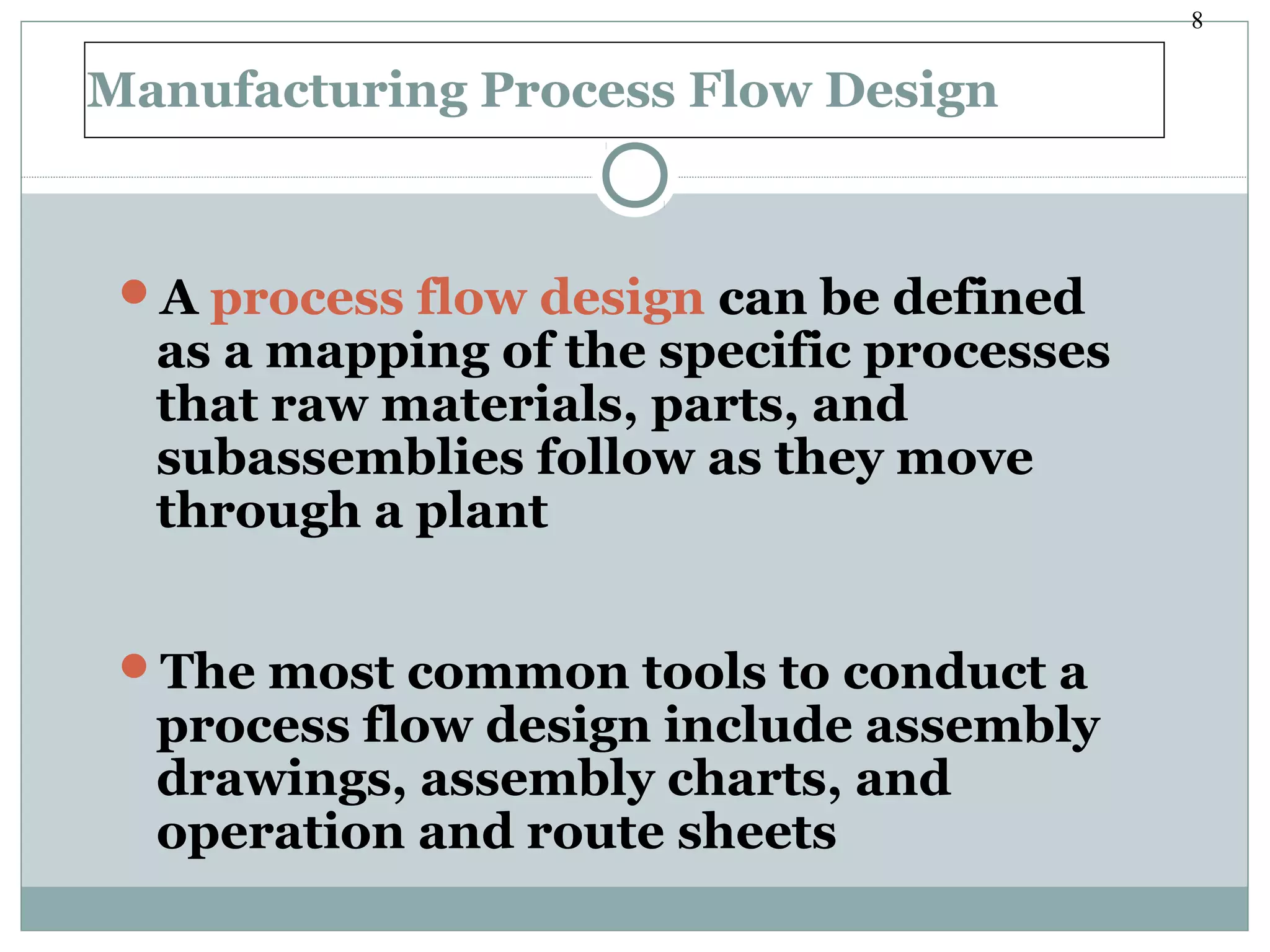
Manufacturing Process Flow Design
A process flow design can be defined
as a mapping of the specific processes
that raw materials, parts, and
subassemblies follow as they move
through a plant
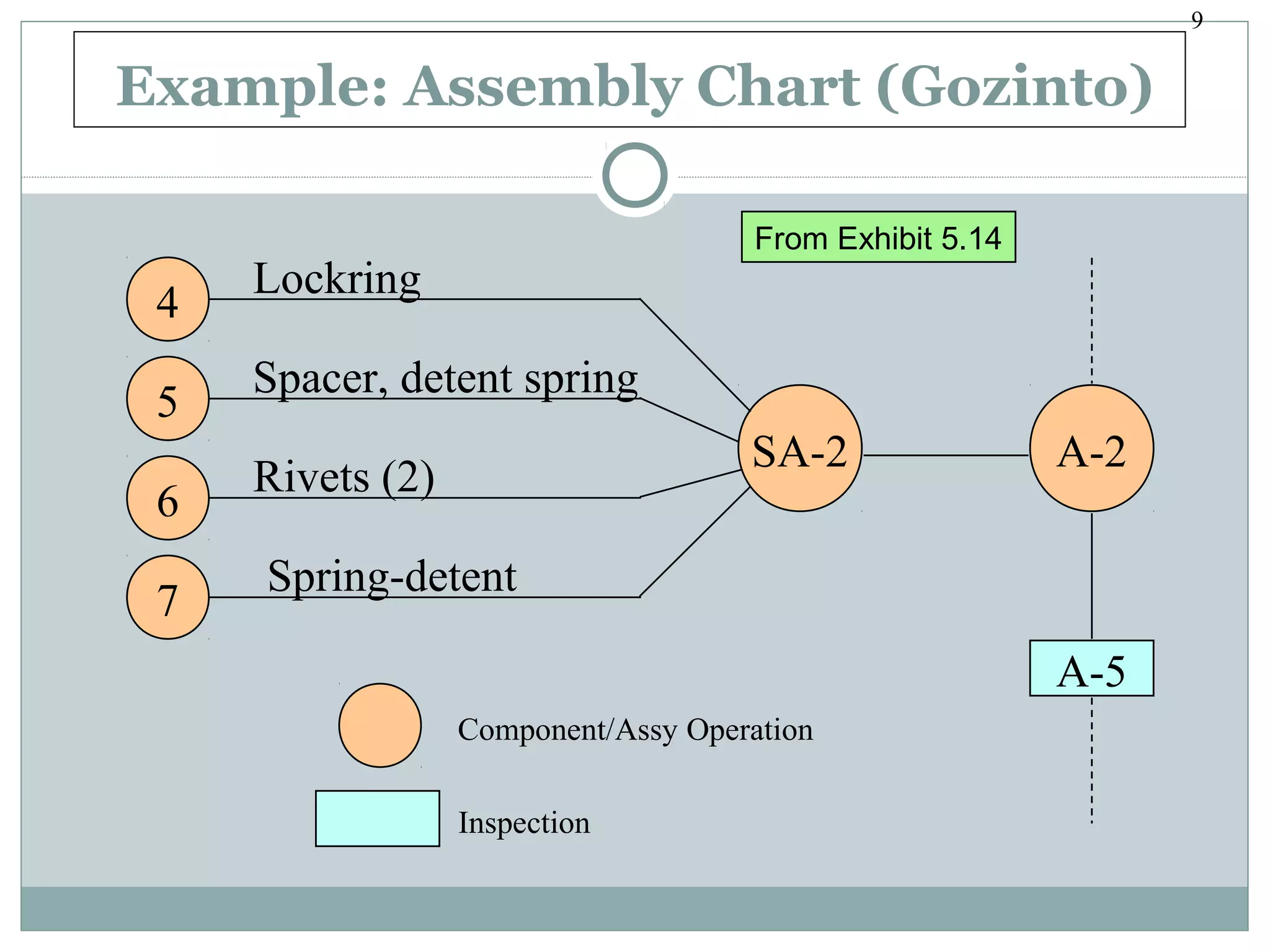
The most common tools to conduct a
process flow design include assembly
drawings, assembly charts, and
operation and route sheets
9
Example: Assembly Chart (Gozinto)
A-2SA-2
4
5
6
7
Lockring
Spacer, detent spring
Rivets (2)
Spring-detent
A-5
Component/Assy Operation
Inspection
From Exhibit 5.14From Exhibit 5.14
10
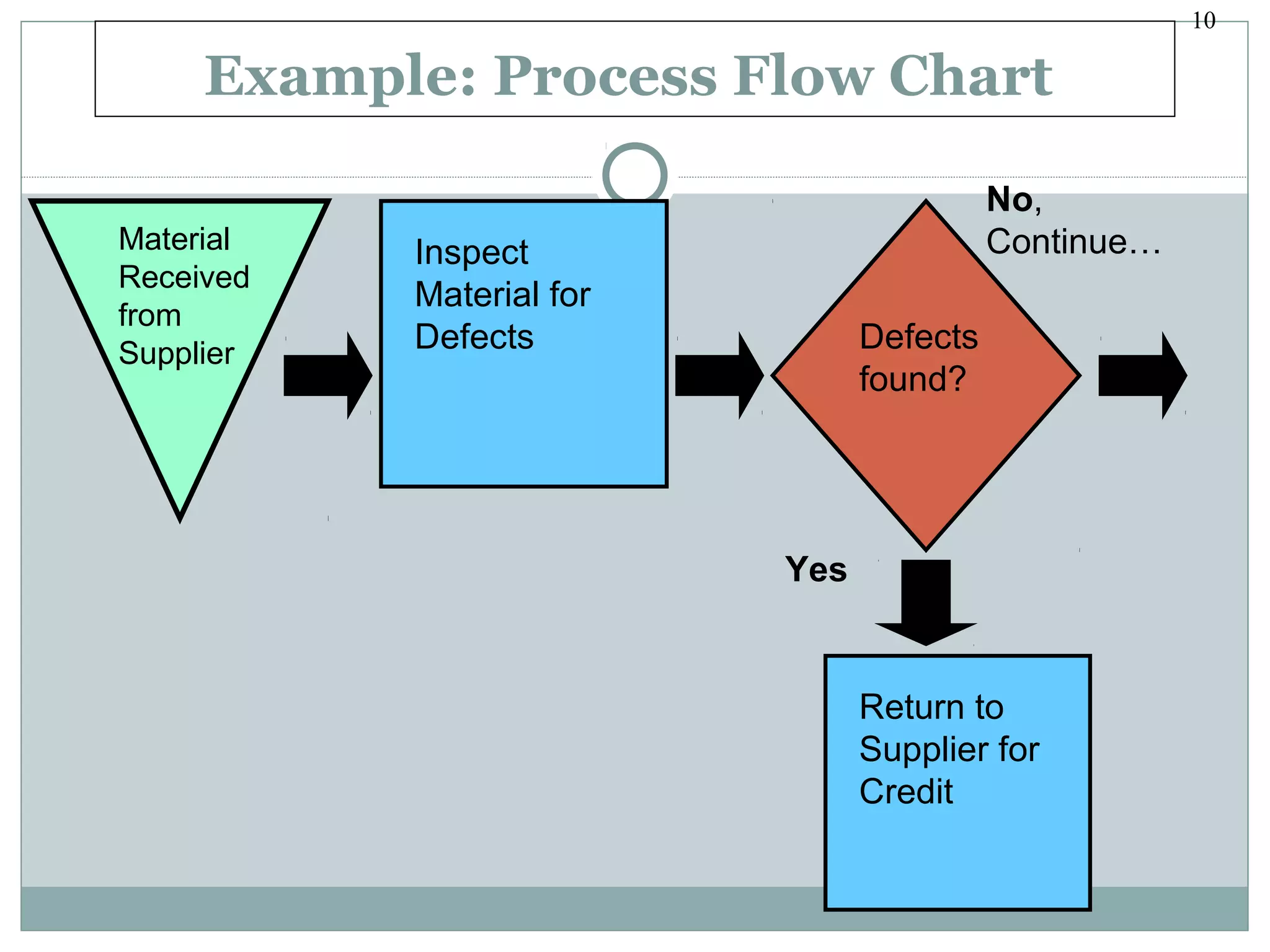
Example: Process Flow Chart
Material
Received
from
Supplier
Inspect
Material for
Defects Defects
found?
Return to
Supplier for
Credit
Yes
No,
Continue…

Manufacturing and process selection design

  • 1.
  • 2.
    2 Types of Processes Conversion(ex. Iron to steel) Fabrication (ex. Cloth to clothes) Assembly (ex. Parts to components) Testing (ex. For quality of products)
  • 3.
    3 Process Flow Structures Jobshop (ex. Copy center making a single copy of a student term paper) Batch shop (ex. Copy center making 10,000 copies of an ad piece for a business) Assembly Line (ex. Automobile manufacturer) Continuous Flow (ex. Petroleum manufacturer)
  • 4.
    IV. Continuous Flow III. Assembly Line II. Batch I. Job Shop Low Volume, One of a Kind Multiple Products, Low Volume Few Major Products, Higher Volume High Volume, High Standard- ization Commercial Printer French Restaurant Heavy Equipment Automobile Assembly BurgerKing Sugar Refinery Flexibility (High) Unit Cost (High) Flexibility (Low) Unit Cost (Low) Exhibit 6.10 Exhibit 6.10 These are the major stages of product and process life cycles These are the major stages of product and process life cycles
  • 5.
    5 Break-Even Analysis A standardapproach to choosing among alternative processes or equipment Model seeks to determine the point in units produced (and sold) where we will start making profit on the process or equipment Model seeks to determine the point in units produced (and sold) where total revenue and total cost are equal
  • 6.
    6 Break-Even Analysis (Continued) Thisformula can be used to find any of its components algebraically if the other parameters are known Break-even Demand=Break-even Demand= Purchase cost of process or equipment Price per unit - Cost per unit or Total fixed costs of process or equipment Unit price to customer - Variable costs per unit Purchase cost of process or equipment Price per unit - Cost per unit or Total fixed costs of process or equipment Unit price to customer - Variable costs per unit
  • 7.
    7 Break-Even Analysis (Continued) Example:Suppose you want to purchase a new computer that will cost $5,000. It will be used to process written orders from customers who will pay $25 each for the service. The cost of labor, electricity and the form used to place the order is $5 per customer. How many customers will we need to serve to permit the total revenue to break- even with our costs? Break-even Demand: = Total fixed costs of process or equip. Unit price to customer – Variable costs =5,000/(25-5) =250 customers Example: Suppose you want to purchase a new computer that will cost $5,000. It will be used to process written orders from customers who will pay $25 each for the service. The cost of labor, electricity and the form used to place the order is $5 per customer. How many customers will we need to serve to permit the total revenue to break- even with our costs? Break-even Demand: = Total fixed costs of process or equip. Unit price to customer – Variable costs =5,000/(25-5) =250 customers
  • 8.
    8 Manufacturing Process FlowDesign A process flow design can be defined as a mapping of the specific processes that raw materials, parts, and subassemblies follow as they move through a plant The most common tools to conduct a process flow design include assembly drawings, assembly charts, and operation and route sheets
  • 9.
    9 Example: Assembly Chart(Gozinto) A-2SA-2 4 5 6 7 Lockring Spacer, detent spring Rivets (2) Spring-detent A-5 Component/Assy Operation Inspection From Exhibit 5.14From Exhibit 5.14
  • 10.
    10 Example: Process FlowChart Material Received from Supplier Inspect Material for Defects Defects found? Return to Supplier for Credit Yes No, Continue…