Unit 2 - Process Planning Activities
Process parameter calculation for
various production processes
Three important process parameters to be
calculated for production operation during
process planning are
Cutting speed
Feed rate
Depth of cut
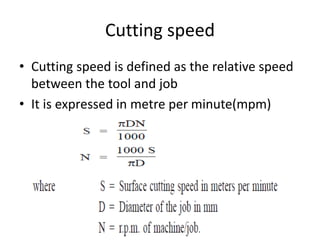
Cutting speed
• Cutting speed is defined as the relative speed
between the tool and job
• It is expressed in metre per minute(mpm)
Factors affecting the selection of
cutting speed
Nature of cut
Work material
Cutting tool material
Cutting fluid application
Purpose of machining
Type of machining operation
Capacity of the machine tool
Condition of the machine tool
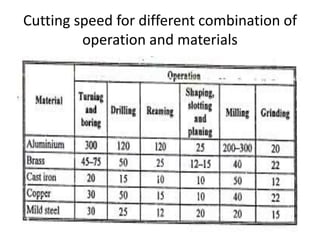
Cutting speed for different combination of
operation and materials
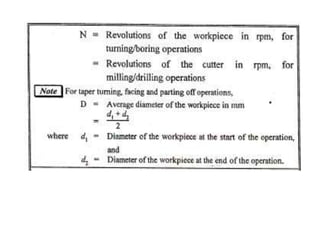
Calculation of cutting speed
Feed rate
Depth of cut
Selection of jigs and fixtures
JIGS
Fixtures
Jigs vs Fixtures
Reason for using Jigs and Fixtures
Types of Jigs and Fixtures
JIGS
• Drill jigs
• Boring jigs
Drill jig
FIXTURES
Economics of Process
Planning
Introduction
The process planner should have the knowledge of
Cost estimating
Cost accounting
Types of costs
Calculation of manufacturing cost
Components cost
The knowledge of costing will help the
Process Planner
• Type of material to be used for the
component
• Type of manufacturing process to be used for
the product
• Volume of product to be manufactured
• Make or buy a product
Concept of break Even Analysis with respect to process
planning activity
Break Even Analysis
Aim of Break Even analysis
Break Even Point(BEP)
Determination of Break Even Point
• Algebric method
• Graphical method
1. Algebric Method
a)Fixed costs (FC)
The fixed costs are the items of expenditure
which remain more or less constant irrespective
of the volume of production. Some important
items under fixed costs are
Depreciation of plant and machinery and building
Interest on capital
Supervisory charges
Cost of lighting, heating and cleaning the works,
operator charges, rent of building
2. Variable costs (VC)
Variable costs are those items of expenditure
which vary with the volume of production. Some
important items under variable costs are
Direct material cost,
Cost of power/fuel consumed,
Cost of tools used,
Cost of consumable stores,
Repair and maintenance charges, storage charges,
Contribution
2. Graphical method
Break-Even chart
It is a graphical representation of inter-relationship
between quantity produced, cost of producing and
sales return.
The total cost of production (fixed cost +variable
cost) and total sales return are plotted against
quantity produced.
The intersection of the total cost and total sales
return lines gives the break-even point.
Example 1
TC = FC+(VCXQ)

UNIT 2 PPCE.pptx

  • 1.
    Unit 2 -Process Planning Activities
  • 2.
    Process parameter calculationfor various production processes Three important process parameters to be calculated for production operation during process planning are Cutting speed Feed rate Depth of cut
  • 3.
    Cutting speed • Cuttingspeed is defined as the relative speed between the tool and job • It is expressed in metre per minute(mpm)
  • 4.
    Factors affecting theselection of cutting speed Nature of cut Work material Cutting tool material Cutting fluid application Purpose of machining Type of machining operation Capacity of the machine tool Condition of the machine tool
  • 5.
    Cutting speed fordifferent combination of operation and materials
  • 6.
  • 12.
  • 13.
  • 14.
    Selection of jigsand fixtures
  • 15.
  • 17.
  • 19.
  • 21.
    Reason for usingJigs and Fixtures
  • 22.
    Types of Jigsand Fixtures JIGS • Drill jigs • Boring jigs Drill jig
  • 23.
  • 25.
  • 26.
    Introduction The process plannershould have the knowledge of Cost estimating Cost accounting Types of costs Calculation of manufacturing cost Components cost
  • 27.
    The knowledge ofcosting will help the Process Planner • Type of material to be used for the component • Type of manufacturing process to be used for the product • Volume of product to be manufactured • Make or buy a product Concept of break Even Analysis with respect to process planning activity
  • 28.
  • 29.
    Aim of BreakEven analysis
  • 30.
  • 31.
    Determination of BreakEven Point • Algebric method • Graphical method
  • 32.
    1. Algebric Method a)Fixedcosts (FC) The fixed costs are the items of expenditure which remain more or less constant irrespective of the volume of production. Some important items under fixed costs are Depreciation of plant and machinery and building Interest on capital Supervisory charges Cost of lighting, heating and cleaning the works, operator charges, rent of building
  • 33.
    2. Variable costs(VC) Variable costs are those items of expenditure which vary with the volume of production. Some important items under variable costs are Direct material cost, Cost of power/fuel consumed, Cost of tools used, Cost of consumable stores, Repair and maintenance charges, storage charges,
  • 36.
  • 37.
  • 38.
    Break-Even chart It isa graphical representation of inter-relationship between quantity produced, cost of producing and sales return. The total cost of production (fixed cost +variable cost) and total sales return are plotted against quantity produced. The intersection of the total cost and total sales return lines gives the break-even point.
  • 40.
  • 45.