Managing Your Digital Footprint
#TravelTalk
People you can talk to.
Results that speak for
themselves.
Award-winning social media
and digital marketing agency.
We work with a wide range of
travel and tourism brands.
2
Digital Visitor
Our clients
3
Digital footprint
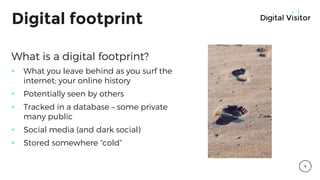
What is a digital footprint?
• What you leave behind as you surf the
internet; your online history
• Potentially seen by others
• Tracked in a database – some private
many public
• Social media (and dark social)
• Stored somewhere “cold”
4
A trail of data…
Your digital footprint includes
• Timeline comments
• WhatsApp chats you had
• Photos shared
• Skype video calls
• LinkedIn jobs enquired about
• Emails (regrettable & un-regrettable)
5
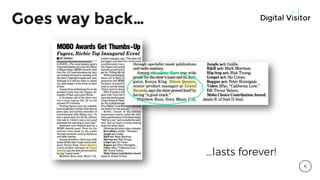
Goes way back…
6
…lasts forever!
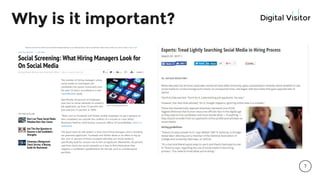
Why is it important?
7
Employers are watching
• 60% of employers do detailed people searches
• Not everyone snooping 24/7
• But don’t expect people not to use info
• What if you have a problem – content or
pictures that damage reputation?
• What’s a better way to look at the challenge?
• How can you think more positively about
impacting your digital footprint?
8
“Everything you do now ends
up in your permanent record.
The best plan is to overload
Google with a long tail of
good stuff…”
Seth Godin, 2008
9
“What if, instead of avoiding social
media in school altogether or
focusing solely on the negative
aspects, we teach students how to…
build a digital footprint that reflects
their best selves…”
Susan M. Bearden
10
Professional branding online
02
11
Managing your footprint
• Always start with insight on yourself first
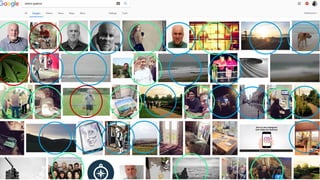
• Search your name in Google or Pipl
• Regular & image searches
• Understand “situation”
• Good or bad (odd!)
• Perfectly possible to stay less visible –
whatever results currently say
• Algorithms rely on relevance & freshness
• Possible to change picture (what Seth said)
12
What is a digital footprint?
13
Pro Imposter Personal
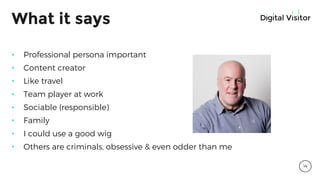
What it says
• Professional persona important
• Content creator
• Like travel
• Team player at work
• Sociable (responsible)
• Family
• I could use a good wig
• Others are criminals, obsessive & even odder than me
14
Why create personal brand?
• Like business brand
• Gives you an identity
• Platform to project USPs
• Help focus content you create
• Help identify a role for you
online
• Support what you say about
yourself
• Shows you “walking the talk”
15
Personal value proposition
Be your social professional best…
• Focus on showcasing the results you
create – not what you do
• “the value you add”
• Where you “fit”
• Focus on area of unique ability
• Your PVP is a personal statement
16
How to write a PVP
1. Set a clear target – what do you want to be?
2. Identify your strengths – not ‘I’m a marketer’
3. Tie your strengths to your target position
4. Provide evidence and success stories
Harvard Business Review
17
Socialise your PVP
• Use it to guide your online presence
• Your editorial direction on themes to cover
• Guide channel focus – LinkedIn Twitter etc
• Guide content plan – this kind of content
• Guide a role to play – curator, thought leader, helper etc…
• All professional “public” touch points – should say the same
• Know employers will look (just like customers look at brands)
18
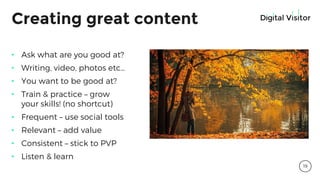
Creating great content
• Ask what are you good at?
• Writing, video, photos etc…
• You want to be good at?
• Train & practice – grow
your skills! (no shortcut)
• Frequent – use social tools
• Relevant – add value
• Consistent – stick to PVP
• Listen & learn
19
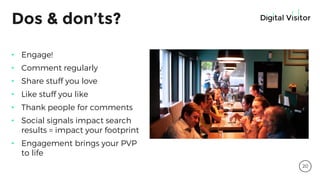
Dos & don’ts?
• Engage!
• Comment regularly
• Share stuff you love
• Like stuff you like
• Thank people for comments
• Social signals impact search
results = impact your footprint
• Engagement brings your PVP
to life
20
“Your future is created
by what you do today,
not tomorrow.”
21
Questions next…
Simon Quance
Head of Strategy
+44 (0) 117 911 1420
s.quance@digitalvisitor.com
Twitter: @simonquance
LinkedIn: in/simonquance
22

Managing Your Digital Footprint

  • 1.
    Managing Your DigitalFootprint #TravelTalk
  • 2.
    People you cantalk to. Results that speak for themselves. Award-winning social media and digital marketing agency. We work with a wide range of travel and tourism brands. 2 Digital Visitor
  • 3.
  • 4.
    Digital footprint What isa digital footprint? • What you leave behind as you surf the internet; your online history • Potentially seen by others • Tracked in a database – some private many public • Social media (and dark social) • Stored somewhere “cold” 4
  • 5.
    A trail ofdata… Your digital footprint includes • Timeline comments • WhatsApp chats you had • Photos shared • Skype video calls • LinkedIn jobs enquired about • Emails (regrettable & un-regrettable) 5
  • 6.
  • 7.
    Why is itimportant? 7
  • 8.
    Employers are watching •60% of employers do detailed people searches • Not everyone snooping 24/7 • But don’t expect people not to use info • What if you have a problem – content or pictures that damage reputation? • What’s a better way to look at the challenge? • How can you think more positively about impacting your digital footprint? 8
  • 9.
    “Everything you donow ends up in your permanent record. The best plan is to overload Google with a long tail of good stuff…” Seth Godin, 2008 9
  • 10.
    “What if, insteadof avoiding social media in school altogether or focusing solely on the negative aspects, we teach students how to… build a digital footprint that reflects their best selves…” Susan M. Bearden 10
  • 11.
  • 12.
    Managing your footprint •Always start with insight on yourself first • Search your name in Google or Pipl • Regular & image searches • Understand “situation” • Good or bad (odd!) • Perfectly possible to stay less visible – whatever results currently say • Algorithms rely on relevance & freshness • Possible to change picture (what Seth said) 12
  • 13.
    What is adigital footprint? 13 Pro Imposter Personal
  • 14.
    What it says •Professional persona important • Content creator • Like travel • Team player at work • Sociable (responsible) • Family • I could use a good wig • Others are criminals, obsessive & even odder than me 14
  • 15.
    Why create personalbrand? • Like business brand • Gives you an identity • Platform to project USPs • Help focus content you create • Help identify a role for you online • Support what you say about yourself • Shows you “walking the talk” 15
  • 16.
    Personal value proposition Beyour social professional best… • Focus on showcasing the results you create – not what you do • “the value you add” • Where you “fit” • Focus on area of unique ability • Your PVP is a personal statement 16
  • 17.
    How to writea PVP 1. Set a clear target – what do you want to be? 2. Identify your strengths – not ‘I’m a marketer’ 3. Tie your strengths to your target position 4. Provide evidence and success stories Harvard Business Review 17
  • 18.
    Socialise your PVP •Use it to guide your online presence • Your editorial direction on themes to cover • Guide channel focus – LinkedIn Twitter etc • Guide content plan – this kind of content • Guide a role to play – curator, thought leader, helper etc… • All professional “public” touch points – should say the same • Know employers will look (just like customers look at brands) 18
  • 19.
    Creating great content •Ask what are you good at? • Writing, video, photos etc… • You want to be good at? • Train & practice – grow your skills! (no shortcut) • Frequent – use social tools • Relevant – add value • Consistent – stick to PVP • Listen & learn 19
  • 20.
    Dos & don’ts? •Engage! • Comment regularly • Share stuff you love • Like stuff you like • Thank people for comments • Social signals impact search results = impact your footprint • Engagement brings your PVP to life 20
  • 21.
    “Your future iscreated by what you do today, not tomorrow.” 21
  • 22.
    Questions next… Simon Quance Headof Strategy +44 (0) 117 911 1420 s.quance@digitalvisitor.com Twitter: @simonquance LinkedIn: in/simonquance 22