



=is the ability to manage
and lead people.
 The organization structure
is the first step in defining
the formal groups in the
organization.
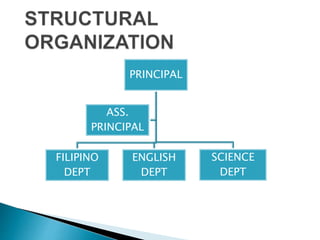
PRINCIPAL
FILIPINO
DEPT
ENGLISH
DEPT
SCIENCE
DEPT
ASS.
PRINCIPAL
IMPOSE
The management can impose
their leadership on the group
which brings in certain group
dynamics where the “we-they”
sentiment creeps.
Management can share their
leaderships in which case
there is a joint ownerships to
do the tasks and goals.
giving groups autonomy in the
way they plan and execute
tasks. This brings in greater
deal of
a.) self control
b.) motivation
C.) sense of achievement
1.)Formal- carrying out their
assigned duties in a group,
workers interact and generate
sentiments. Some are
expected sentiments that go
with being professionals.
 Managers have to manage
the unplanned sentiments to
bring cohesion within the
group. Failure to do so will
force the workers to form
informal groups that develop a
life of their own.
2.)Informal groups are quite
separate from work groups.
Cohesion in work groups is
encouraged through Team
Building exercises. The
success of informal groups is
their cohesion.
Cohesion is the ability to be
coordinated, logical and
consisted in bringing results.
It aids the pursuits of group
objectives and emotional
health of group members.
Homogeneity-coming from
the same ethnic background,
having common interests,
sharing the same set of
values and coming to each
other’s help.
Communication with one
another fosters cohesion
 People unable to express
themselves and negotiate
their expectations.
Multi-cultural workforces
have difficulty in
establishing easy
communications
Noisy environment like
kitchen, stewarding,
laundry.
Some jobs tend to isolate
people like gardeners and
public area cleaners
because they are dispersed
to remote corners of the
property.
Counter sales person are at
the in-house delicatessen may
have difficulty in finding
cohesion with a group.
Remedy: job rotation is a
wonderful method just as
much as daily briefings.
Size of the group influences
group cohesion.
Larger the group, the more
difficult is to bring cohesion.
The smaller group, the
better is cohesion. People
can communicate easily.
 It is a threat or pressure
from the outside creates
permanent high cohesion.
Management can create
such pressure by focusing
on an external competitor.
 They can also apply pressure but
with cohesion in order to meet
closely the goals.
 a.) deadlines
 b.) customer service
 c.) bottom line results
 d.) quality
The higher the status of the
group the greater is the
cohesion.
A group gets status when its
shown constantly
excellence,
 has a monopoly on certain
practices, autonomy, opportunities
for promotion, working conditions
and locations of activity.
 A functional and healthy group is
ultimately dependent on the kind
of leaderships they receive.
by:
Cecille/Cez

Managerial leadership

  • 1.
    =is the abilityto manage and lead people.
  • 2.
     The organizationstructure is the first step in defining the formal groups in the organization.
  • 3.
  • 4.
    IMPOSE The management canimpose their leadership on the group which brings in certain group dynamics where the “we-they” sentiment creeps.
  • 5.
    Management can sharetheir leaderships in which case there is a joint ownerships to do the tasks and goals.
  • 6.
    giving groups autonomyin the way they plan and execute tasks. This brings in greater deal of a.) self control b.) motivation C.) sense of achievement
  • 7.
    1.)Formal- carrying outtheir assigned duties in a group, workers interact and generate sentiments. Some are expected sentiments that go with being professionals.
  • 8.
     Managers haveto manage the unplanned sentiments to bring cohesion within the group. Failure to do so will force the workers to form informal groups that develop a life of their own.
  • 9.
    2.)Informal groups arequite separate from work groups. Cohesion in work groups is encouraged through Team Building exercises. The success of informal groups is their cohesion.
  • 10.
    Cohesion is theability to be coordinated, logical and consisted in bringing results. It aids the pursuits of group objectives and emotional health of group members.
  • 11.
    Homogeneity-coming from the sameethnic background, having common interests, sharing the same set of values and coming to each other’s help.
  • 12.
  • 13.
     People unableto express themselves and negotiate their expectations.
  • 14.
    Multi-cultural workforces have difficultyin establishing easy communications
  • 15.
  • 16.
    Some jobs tendto isolate people like gardeners and public area cleaners because they are dispersed to remote corners of the property.
  • 17.
    Counter sales personare at the in-house delicatessen may have difficulty in finding cohesion with a group. Remedy: job rotation is a wonderful method just as much as daily briefings.
  • 18.
    Size of thegroup influences group cohesion. Larger the group, the more difficult is to bring cohesion.
  • 19.
    The smaller group,the better is cohesion. People can communicate easily.
  • 20.
     It isa threat or pressure from the outside creates permanent high cohesion. Management can create such pressure by focusing on an external competitor.
  • 21.
     They canalso apply pressure but with cohesion in order to meet closely the goals.  a.) deadlines  b.) customer service  c.) bottom line results  d.) quality
  • 22.
    The higher thestatus of the group the greater is the cohesion. A group gets status when its shown constantly excellence,
  • 23.
     has amonopoly on certain practices, autonomy, opportunities for promotion, working conditions and locations of activity.  A functional and healthy group is ultimately dependent on the kind of leaderships they receive.
  • 24.