MANAGEMENT 
INFORMATION SYSTEM 
SYSTEM DEVELOPMENT LIFE CYCLE 
(SDLC)
Introduction 
The system development life cycle (SDLC) is the 
traditional system development method used by 
most organizations. “The period of time begins 
when a system is conceived and ends when a 
system is fully operational for use and gets 
maintained is called the development life cycle 
of a system.” The SDLC is a structured 
framework that consist of sequential process by 
which information system are developed.
In the past, developers used the 
‘waterfall’ approach to the SDLC, in which 
task in one stage were completed before the 
work proceeded to the next stage. Today, 
developers go back and forth among the 
stages as necessary.
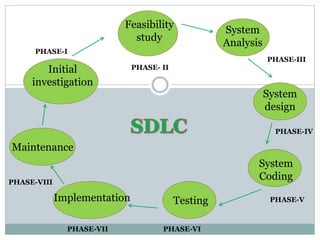
SDLC consist the following phases 
1. Initial Investigation 
2. Feasibility Study 
3. System Analysis 
4. System Design 
5. System Coding 
6. Testing 
7. Implementation 
8. Maintenance
System 
Analysis 
System 
design 
Testing 
Initial 
investigation 
Maintenance 
Implementation 
System 
Coding 
PHASE-I 
PHASE-III 
PHASE-IV 
PHASE-V 
PHASE-VII PHASE-VI 
PHASE-VIII 
Feasibility 
study 
PHASE- II
Preliminary Investigation 
This phase is very important as in this phase 
system analyst identify the real problem of the 
existing system, without clear understanding of 
the problem in the system, any further work done 
will lead to wastage of efforts at a later stage. 
Problem definition defines the user requirements, 
or what user expect from the system.
This phases also sets the projects boundaries, 
which defines what parts of the system can be 
changes by the project and what part should 
remain unchanged. This also include a rough 
idea of the resources requirements, estimated 
start and completion dates for each phases and 
the number of persons expected to be involved in 
each phase for project.
Feasibility Study 
A feasibility study is undertaken to determine the 
possibilities of either improving the existing 
system or develop a completely new system. 
This study also help to obtain an overview of the 
problem and to get rough assessment of whether 
feasible solution exist or not. “Feasibility studies 
are used as a basis for deciding whether to 
proceed with, postpone or cancel the project”.
 There are three aspects of feasibility study as 
follows: 
1. Technical feasibility = (Analyze of present 
technology + Recognition of improvement + 
finance consideration) 
2. Economical feasibility = (Benefits + Savings 
are compared with the cost) 
3. Operational feasibility =Working of System
System Analysis 
The analysis phases is the detailed understanding 
of all important facts of the business area under 
investigation. In this the relationship of the 
various system components among themselves 
and with environment are studied and 
understood. This requires data collection from a 
variety of sources. For this, questionnaires, 
forms, interviews, study of existing documents, 
records etc. are used.
 The analyst must try to answer the following set 
of questions: 
1. What is being done in the organizations? 
2. How it is being done? 
3. What are the problem arise, how will it be 
solved? 
4. If a problem arise, how will it be solved?
System Design 
The most creative and challenging phase of system 
development life cycle is system design. each 
module after successful completion of system 
analysis, the system is designed. In system 
design phase, first the system is broken down 
into different module and then its each module is 
designed. Design of system is largely the logical 
design. The logical design can be sketched on a 
paper or on a computer terminal.
 The design also including the physical design 
element, describe the data to be inputted, the 
process involved in the manipulation of data and 
the output. 
1. The analyst should specify the file structures, 
storage devices etc. 
2. The database is also designed in this phases. 
3. Input, output, files and procedures are planned.
System coding 
The next phase is concerned with translating the 
system design specification developed. When the 
design is accepted by the requested department, 
the analyst begins developing the software using 
programming language. This is the phase when 
the programmer plays their role in development 
of the system. They start designing data 
structures and writing of programs as per the 
documents prepared during design phase.
System Testing 
Testing is the most vital phase of SDLC. Once the 
system is designed it should be tested for validity. In 
this phase, the system as a whole is tested with 
different techniques to ensure that the system is bug 
free. Although, during design, the programmers test 
their programs but this sort of testing is generally 
unrecognized without preparation of test data. 
During testing phase, the testing is done in 
systematic way in order to ensure the reliability of 
the system and to make it error free.
Implementation 
Implementation is the final phase of development. 
After testing, the system is installed at the user’s 
place and implemented. It consist of installing 
hardware, programs, collecting data and 
organizing people to interact with and run the 
system. In the implementation phase, user 
actually starts using the system. This phase also 
involves training the users for using the system.
Implementation can be done in two ways. One 
way is by implementing the new system along 
with the old system and make them run in 
parallel. The other method is to replace the entire 
system. In large organizations, the new system 
can be implemented in certain areas as a pilot 
project and if satisfactory result are obtained, it 
can be implemented to other areas also.
Maintenance 
Maintenance is the process of incorporating changes in 
the implemented existing system for proper utilization. 
This involve enhancement, adaptation and corrections. 
 Enhancement: Enhancement implies adding new 
functions or additional capabilities to the system. 
 Adoption: Adoption implies customizing the software 
to run in the new environment 
 Correction: Correction implies correcting the bugs in 
the existing software.
Management information system

Management information system

  • 1.
    MANAGEMENT INFORMATION SYSTEM SYSTEM DEVELOPMENT LIFE CYCLE (SDLC)
  • 2.
    Introduction The systemdevelopment life cycle (SDLC) is the traditional system development method used by most organizations. “The period of time begins when a system is conceived and ends when a system is fully operational for use and gets maintained is called the development life cycle of a system.” The SDLC is a structured framework that consist of sequential process by which information system are developed.
  • 3.
    In the past,developers used the ‘waterfall’ approach to the SDLC, in which task in one stage were completed before the work proceeded to the next stage. Today, developers go back and forth among the stages as necessary.
  • 4.
    SDLC consist thefollowing phases 1. Initial Investigation 2. Feasibility Study 3. System Analysis 4. System Design 5. System Coding 6. Testing 7. Implementation 8. Maintenance
  • 5.
    System Analysis System design Testing Initial investigation Maintenance Implementation System Coding PHASE-I PHASE-III PHASE-IV PHASE-V PHASE-VII PHASE-VI PHASE-VIII Feasibility study PHASE- II
  • 6.
    Preliminary Investigation Thisphase is very important as in this phase system analyst identify the real problem of the existing system, without clear understanding of the problem in the system, any further work done will lead to wastage of efforts at a later stage. Problem definition defines the user requirements, or what user expect from the system.
  • 7.
    This phases alsosets the projects boundaries, which defines what parts of the system can be changes by the project and what part should remain unchanged. This also include a rough idea of the resources requirements, estimated start and completion dates for each phases and the number of persons expected to be involved in each phase for project.
  • 8.
    Feasibility Study Afeasibility study is undertaken to determine the possibilities of either improving the existing system or develop a completely new system. This study also help to obtain an overview of the problem and to get rough assessment of whether feasible solution exist or not. “Feasibility studies are used as a basis for deciding whether to proceed with, postpone or cancel the project”.
  • 9.
     There arethree aspects of feasibility study as follows: 1. Technical feasibility = (Analyze of present technology + Recognition of improvement + finance consideration) 2. Economical feasibility = (Benefits + Savings are compared with the cost) 3. Operational feasibility =Working of System
  • 10.
    System Analysis Theanalysis phases is the detailed understanding of all important facts of the business area under investigation. In this the relationship of the various system components among themselves and with environment are studied and understood. This requires data collection from a variety of sources. For this, questionnaires, forms, interviews, study of existing documents, records etc. are used.
  • 11.
     The analystmust try to answer the following set of questions: 1. What is being done in the organizations? 2. How it is being done? 3. What are the problem arise, how will it be solved? 4. If a problem arise, how will it be solved?
  • 12.
    System Design Themost creative and challenging phase of system development life cycle is system design. each module after successful completion of system analysis, the system is designed. In system design phase, first the system is broken down into different module and then its each module is designed. Design of system is largely the logical design. The logical design can be sketched on a paper or on a computer terminal.
  • 13.
     The designalso including the physical design element, describe the data to be inputted, the process involved in the manipulation of data and the output. 1. The analyst should specify the file structures, storage devices etc. 2. The database is also designed in this phases. 3. Input, output, files and procedures are planned.
  • 14.
    System coding Thenext phase is concerned with translating the system design specification developed. When the design is accepted by the requested department, the analyst begins developing the software using programming language. This is the phase when the programmer plays their role in development of the system. They start designing data structures and writing of programs as per the documents prepared during design phase.
  • 15.
    System Testing Testingis the most vital phase of SDLC. Once the system is designed it should be tested for validity. In this phase, the system as a whole is tested with different techniques to ensure that the system is bug free. Although, during design, the programmers test their programs but this sort of testing is generally unrecognized without preparation of test data. During testing phase, the testing is done in systematic way in order to ensure the reliability of the system and to make it error free.
  • 16.
    Implementation Implementation isthe final phase of development. After testing, the system is installed at the user’s place and implemented. It consist of installing hardware, programs, collecting data and organizing people to interact with and run the system. In the implementation phase, user actually starts using the system. This phase also involves training the users for using the system.
  • 17.
    Implementation can bedone in two ways. One way is by implementing the new system along with the old system and make them run in parallel. The other method is to replace the entire system. In large organizations, the new system can be implemented in certain areas as a pilot project and if satisfactory result are obtained, it can be implemented to other areas also.
  • 18.
    Maintenance Maintenance isthe process of incorporating changes in the implemented existing system for proper utilization. This involve enhancement, adaptation and corrections.  Enhancement: Enhancement implies adding new functions or additional capabilities to the system.  Adoption: Adoption implies customizing the software to run in the new environment  Correction: Correction implies correcting the bugs in the existing software.