System Development
Life Cycle. By – Mr.
Petare Purushottam
SDLC
 (SDLC) is a well-defined process by which a
system is conceived, developed and
implemented.
 In other words, a System Development Life
Cycle is a framework for developing computer
based information system.
it includes various steps which is
explained as below:-
 1.Feasibility Study
 2.System Analysis
 3.System Design
 4.Development
 5.Testing
 6.Implementation
 7.Maintenance
Feasibility study
 is the process of defining the current problem,
determining why a new system is needed and
identifying the objectives of the proposed
system. In this phase the main aim is to
answer ‘Why do we need a system’ and also
‘What are the objectives of new system’.
During the feasibility study the analyst
considers the three main types of feasibility.
 Technical Feasibility
 Economical Feasibility
 Operational Feasibility
Technical Feasibility
 During this study the analyst identifies the
existing computer systems and determine
whether these technical resources are
sufficient for the proposed system or not.
Economical Feasibility
 During this study the analyst determines cost
and benefits of the proposed system and
compares with the budgets.
Operational Feasibility
 Operational feasibility study is the important
study that determines the system will work
properly according to the user wants or not.
System Analysis
 It is the second step of SDLC. It is very important
step of SDLC.
 In this step the analyst study the current system in
detail so that the system requirement can be
determined. System Analysis also called Problem
Analysis or Requirement Analysis.
 Requirement Analysis is the obtaining of the
actual specifications of the system by clearly
understanding the needs of the users. After
analysis a document is prepared by the analyst,
which is called as software
 requirement specification document.
System design
 System design is the third step of Software
Development Life Cycle. After collecting and
studying user’s requirements, the system is
designed.
 This phase involves identification of inputs data,
output, reports and the procedures to process the
data.
 In includes three activities: -
 1.User Interface
 2.Data Design
 3.Process Design
Development
 After designing the input and output the analyst
begins developing the software using a
programming language.
 In this phase programmers play their major role in
development. They start designing of data
structure and writing of programs as per the
documents prepared design phase. This step can
be classified
 into two parts:-
 Database Design
 Program Design
Design
 Database design is the most important aspect
of developing a new system. Data is a basic
component of any information system.
 Program design is mainly concerned with
writing of programs editing of programs using
a text editor, debugging and finally testing
them.
Testing
 Testing is the most time consuming but an
essential activity of a software project. It is vital
to the success of candidate system. The main
purpose is to find out error correct them.
Testing makes the system reliable and error
free. There are many activities that must be
performed during testing process. Some
important activities are:-
 a) Preparation of Test Plan.
 b) Specification of Test Cases.
Testing
 c)Execution and Analysis of Test Cases.
 d)Special System Tests
Implementation
 After testing of the system, the candidate system
is installed and implemented at the user’s place.
 The old system is changed to new or modified
system and users are provided training to operate
the new system. This is the crucial phase of SDLC
and is known as implementation phase.
Implementation may be
 following three types:-
 a)Fresh Implementation.
 b)Replacement Implementation.
 c)Modified Implementation.
Maintenance
 System maintenance involves the monitoring,
evaluating and modifying of a system to make
desirable or necessary improvements.
 In other words maintenance includes
enhancements, modifications or any change
from the original specifications.
 Therefore the information analyst should take
change as his/her responsibility so as to keep
the system functioning at an acceptable level.
 There are various software development life
cycle models defined and designed which are
followed during software development
process. These models are also referred as
"Software Development Process Models".
SDLC Waterfall Model
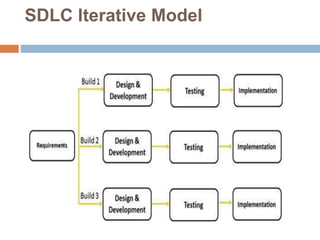
SDLC Iterative Model
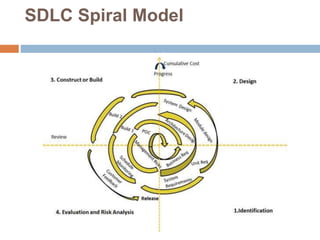
SDLC Spiral Model
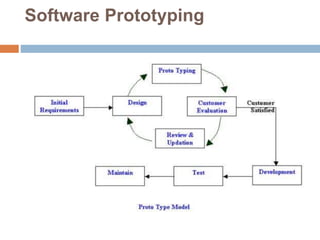
Software Prototyping
 Basic Requirement Identification: This step involves
understanding the very basics product requirements
especially in terms of user interface
 Developing the initial Prototype: The initial Prototype is
developed in this stage, where the very basic requirements
are showcased and user interfaces are provided.
 Review of the Prototype:The prototype developed is then
presented to the customer and the other important
stakeholders in the project. The feedback is collected in an
organized manner and used for further enhancements in the
product under development.
 Revise and enhance the Prototype: The feedback and the
review comments are discussed during this stage and some
negotiations happen with the customer based on factors like ,
time and budget constraints and technical feasibility of actual.

Software Development Life Cycle & Its Models

  • 1.
    System Development Life Cycle.By – Mr. Petare Purushottam
  • 2.
    SDLC  (SDLC) isa well-defined process by which a system is conceived, developed and implemented.  In other words, a System Development Life Cycle is a framework for developing computer based information system.
  • 3.
    it includes varioussteps which is explained as below:-  1.Feasibility Study  2.System Analysis  3.System Design  4.Development  5.Testing  6.Implementation  7.Maintenance
  • 4.
    Feasibility study  isthe process of defining the current problem, determining why a new system is needed and identifying the objectives of the proposed system. In this phase the main aim is to answer ‘Why do we need a system’ and also ‘What are the objectives of new system’. During the feasibility study the analyst considers the three main types of feasibility.  Technical Feasibility  Economical Feasibility  Operational Feasibility
  • 5.
    Technical Feasibility  Duringthis study the analyst identifies the existing computer systems and determine whether these technical resources are sufficient for the proposed system or not.
  • 6.
    Economical Feasibility  Duringthis study the analyst determines cost and benefits of the proposed system and compares with the budgets.
  • 7.
    Operational Feasibility  Operationalfeasibility study is the important study that determines the system will work properly according to the user wants or not.
  • 8.
    System Analysis  Itis the second step of SDLC. It is very important step of SDLC.  In this step the analyst study the current system in detail so that the system requirement can be determined. System Analysis also called Problem Analysis or Requirement Analysis.  Requirement Analysis is the obtaining of the actual specifications of the system by clearly understanding the needs of the users. After analysis a document is prepared by the analyst, which is called as software  requirement specification document.
  • 9.
    System design  Systemdesign is the third step of Software Development Life Cycle. After collecting and studying user’s requirements, the system is designed.  This phase involves identification of inputs data, output, reports and the procedures to process the data.  In includes three activities: -  1.User Interface  2.Data Design  3.Process Design
  • 10.
    Development  After designingthe input and output the analyst begins developing the software using a programming language.  In this phase programmers play their major role in development. They start designing of data structure and writing of programs as per the documents prepared design phase. This step can be classified  into two parts:-  Database Design  Program Design
  • 11.
    Design  Database designis the most important aspect of developing a new system. Data is a basic component of any information system.  Program design is mainly concerned with writing of programs editing of programs using a text editor, debugging and finally testing them.
  • 12.
    Testing  Testing isthe most time consuming but an essential activity of a software project. It is vital to the success of candidate system. The main purpose is to find out error correct them. Testing makes the system reliable and error free. There are many activities that must be performed during testing process. Some important activities are:-  a) Preparation of Test Plan.  b) Specification of Test Cases.
  • 13.
    Testing  c)Execution andAnalysis of Test Cases.  d)Special System Tests
  • 14.
    Implementation  After testingof the system, the candidate system is installed and implemented at the user’s place.  The old system is changed to new or modified system and users are provided training to operate the new system. This is the crucial phase of SDLC and is known as implementation phase. Implementation may be  following three types:-  a)Fresh Implementation.  b)Replacement Implementation.  c)Modified Implementation.
  • 15.
    Maintenance  System maintenanceinvolves the monitoring, evaluating and modifying of a system to make desirable or necessary improvements.  In other words maintenance includes enhancements, modifications or any change from the original specifications.  Therefore the information analyst should take change as his/her responsibility so as to keep the system functioning at an acceptable level.
  • 16.
     There arevarious software development life cycle models defined and designed which are followed during software development process. These models are also referred as "Software Development Process Models".
  • 17.
  • 18.
  • 19.
  • 20.
  • 21.
     Basic RequirementIdentification: This step involves understanding the very basics product requirements especially in terms of user interface  Developing the initial Prototype: The initial Prototype is developed in this stage, where the very basic requirements are showcased and user interfaces are provided.  Review of the Prototype:The prototype developed is then presented to the customer and the other important stakeholders in the project. The feedback is collected in an organized manner and used for further enhancements in the product under development.  Revise and enhance the Prototype: The feedback and the review comments are discussed during this stage and some negotiations happen with the customer based on factors like , time and budget constraints and technical feasibility of actual.