This presentation is strictly made for academic discussions. The information provided here is collected from various sources online, for which, the authors are very much thankful to.
RIGHT  Information  to the  RIGHT  People  at the  RIGHT  Time  To operate Business Effectively & Efficiently
A step in problem solving Intelligence gathering Definition of problem Data gathered on scope Constraints identified Design phase Alternatives identified and assessed Choice Selection of an alternative
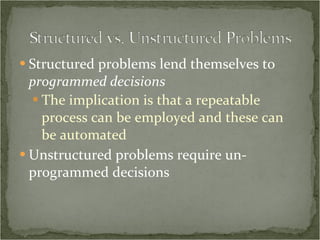
Structured problems lend themselves to  programmed decisions The implication is that a repeatable process can be employed and these can be automated Unstructured problems require un-programmed decisions
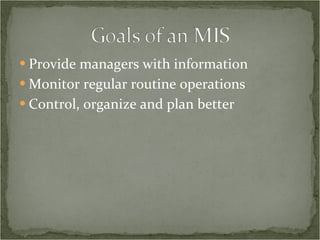
Provide managers with information Monitor regular routine operations Control, organize and plan better
Inputs:  Information from the Sources Outputs: hard and softcopy reports Scheduled reports On-demand reports Key-indicator (business fundamentals) Exception reports
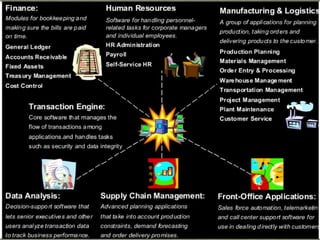
ERP CRM SCM BI
 
Financial MIS Will integrate information from multiple sources Functions Costing P&L reporting Auditing Funds management
Manufacturing Design and Engineering Master Production Scheduling Inventory Control Materials Planning Manufacturing and Process Control Quality Control
Marketing Market research Online / Offline market research Pricing
Transportation and Logistics Route and schedule optimization Human Resources Accounting
Used for unstructured problems Characteristics Data from multiple sources internal and external to organization Presentation flexibility Simulation and what-if capability Support for multiple decision approaches Statistical analysis
Model management software Provides a variety of solution models Financial, statistical, graphical, project management Dialogue Manager Allows user interaction with DSS
How can information technology improve how decisions are made by groups?
Applications Where time is critical Where participants are geographically dispersed Where authority obstructs communication Military Business Government
Common characteristics Meeting moderation/facilitation Signed and anonymous comments Structured deliberations Presentation period Comment period Automated collation of comments “ Voting” Face-to-face and remote
What information does a chief executive of board member require?
High level with drill down Key business and industry data Structured and unstructured information Structured:  orders Unstructured: Industry news feed Graphical
Cognos SAP Brio MS Sharepoint
 

Management Information Systems - A Brief Overview

  • 1.
  • 2.
  • 3.
    This presentation isstrictly made for academic discussions. The information provided here is collected from various sources online, for which, the authors are very much thankful to.
  • 4.
    RIGHT Information to the RIGHT People at the RIGHT Time To operate Business Effectively & Efficiently
  • 5.
    A step inproblem solving Intelligence gathering Definition of problem Data gathered on scope Constraints identified Design phase Alternatives identified and assessed Choice Selection of an alternative
  • 6.
    Structured problems lendthemselves to programmed decisions The implication is that a repeatable process can be employed and these can be automated Unstructured problems require un-programmed decisions
  • 7.
    Provide managers withinformation Monitor regular routine operations Control, organize and plan better
  • 8.
    Inputs: Informationfrom the Sources Outputs: hard and softcopy reports Scheduled reports On-demand reports Key-indicator (business fundamentals) Exception reports
  • 9.
  • 10.
  • 11.
    Financial MIS Willintegrate information from multiple sources Functions Costing P&L reporting Auditing Funds management
  • 12.
    Manufacturing Design andEngineering Master Production Scheduling Inventory Control Materials Planning Manufacturing and Process Control Quality Control
  • 13.
    Marketing Market researchOnline / Offline market research Pricing
  • 14.
    Transportation and LogisticsRoute and schedule optimization Human Resources Accounting
  • 15.
    Used for unstructuredproblems Characteristics Data from multiple sources internal and external to organization Presentation flexibility Simulation and what-if capability Support for multiple decision approaches Statistical analysis
  • 16.
    Model management softwareProvides a variety of solution models Financial, statistical, graphical, project management Dialogue Manager Allows user interaction with DSS
  • 17.
    How can informationtechnology improve how decisions are made by groups?
  • 18.
    Applications Where timeis critical Where participants are geographically dispersed Where authority obstructs communication Military Business Government
  • 19.
    Common characteristics Meetingmoderation/facilitation Signed and anonymous comments Structured deliberations Presentation period Comment period Automated collation of comments “ Voting” Face-to-face and remote
  • 20.
    What information doesa chief executive of board member require?
  • 21.
    High level withdrill down Key business and industry data Structured and unstructured information Structured: orders Unstructured: Industry news feed Graphical
  • 22.
    Cognos SAP BrioMS Sharepoint
  • 23.