Structure of Management Information Systems
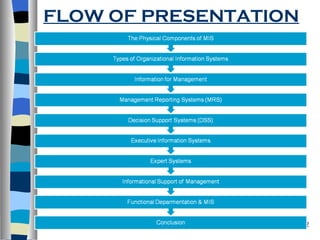
FLOW OF PRESENTATION
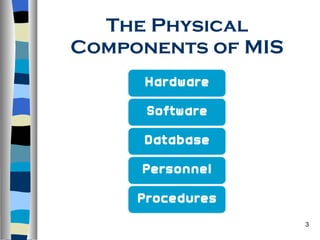
The Physical Components of MIS
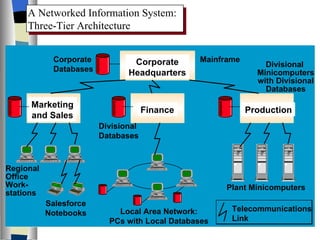
A Networked Information System:  Three-Tier Architecture Corporate Headquarters Finance Production Marketing and Sales Corporate Databases Mainframe Divisional Databases Divisional  Minicomputers with Divisional Databases Local Area Network: PCs with Local Databases Salesforce Notebooks Regional Office Work- stations Plant Minicomputers Telecommunications Link
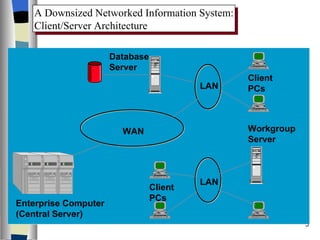
A Downsized Networked Information System: Client/Server Architecture LAN LAN WAN Client  PCs Workgroup Server Database Server Client  PCs Enterprise Computer (Central Server)
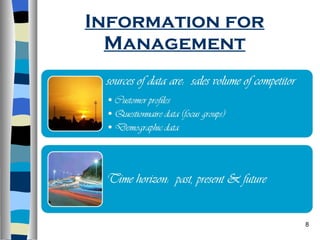
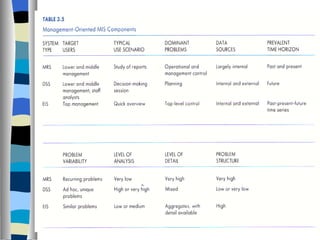
Information for Management
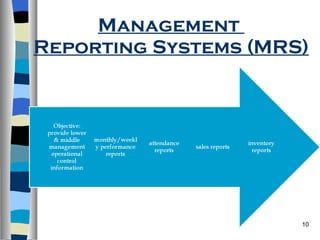
Management  Reporting Systems (MRS)
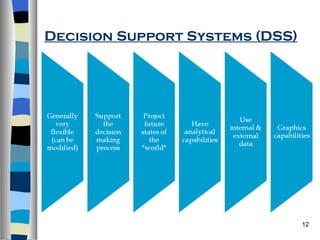
Decision Support Systems (DSS)
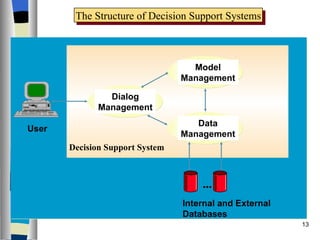
The Structure of Decision Support Systems Model Management Data Management Dialog Management Decision Support System Internal and External Databases User ...
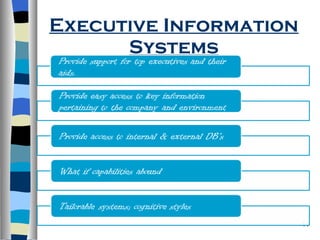
Executive Information Systems
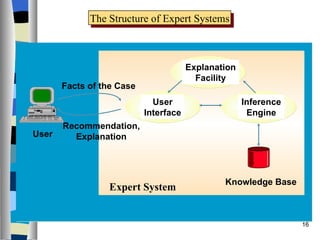
The Structure of Expert Systems Explanation Facility Inference Engine User Interface Expert System Knowledge Base User Facts of the Case Recommendation, Explanation
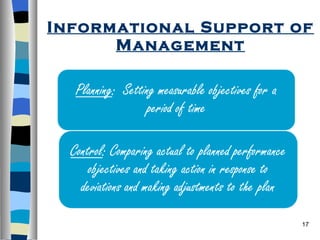
Informational Support of Management
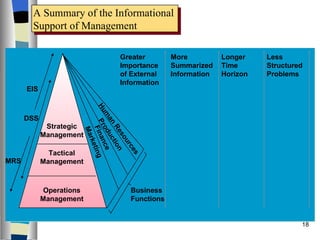
A Summary of the Informational  Support of Management Greater Importance of External Information More Summarized Information Longer Time Horizon Less Structured Problems Strategic Management Tactical Management Operations Management Human Resources Production Finance Marketing Business Functions EIS DSS MRS
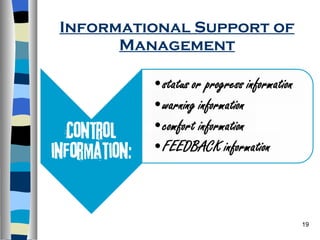
Informational Support of Management
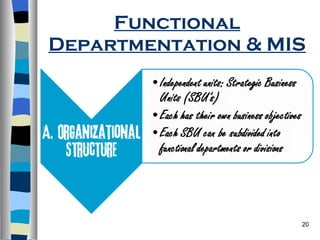
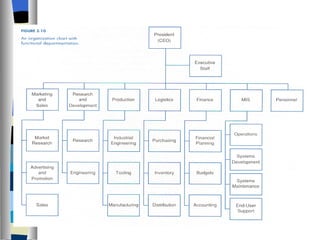
Functional Departmentation & MIS
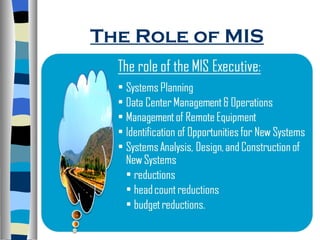
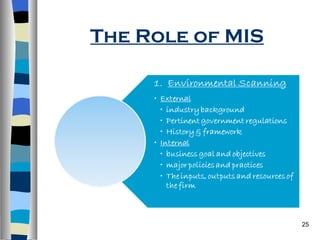
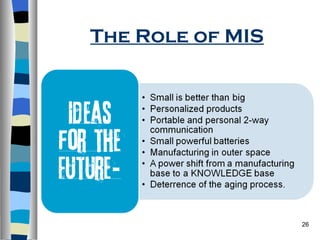
The Role of MIS
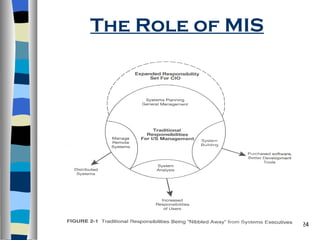
The Role of MIS
The Role of MIS
The Role of MIS
Conclusion "We are moving toward teach them how to do it themselves:" UNIX environments, work stations, PC, LANs, application packages SATISFACTION, USABILITY, Effectiveness, efficiency

Structure Of Is