MANAGEMENT
ACCOUNTING
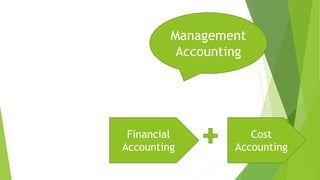
Management
Accounting
Financial
Accounting
Cost
Accounting
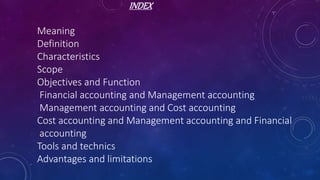
INDEX
Meaning
Definition
Characteristics
Scope
Objectives and Function
Financial accounting and Management accounting
Management accounting and Cost accounting
Cost accounting and Management accounting and Financial
accounting
Tools and technics
Advantages and limitations
MANAGEMENT ACCOUNTING
Meaning
In management accounting or managerial
accounting, managers use the provisions of
accounting information in order to better
themselves before they decide matters within
their organizations, which aids their
management and performance of control
functions.
Definition
According to Cost and Management Accounts,
London, “Management Accounting is
concerned with the presentation of professional
knowledge and abilities to reveal accounting
information which may help to the management
in policy formulation, planning and control for
the undertakings.”
Characteristics of Managerial Accounting
Reporting to managers and internal personnel
Tailored to specific decision-making tasks
Focused on products, departments, and activities
Often uses real-time data for quick responses
Forecasted outcomes for planning.
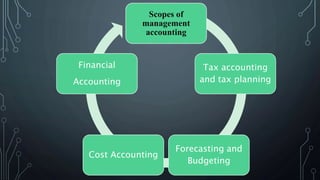
Scopes of
management
accounting
Tax accounting
and tax planning
Forecasting and
Budgeting
Cost Accounting
Financial
Accounting
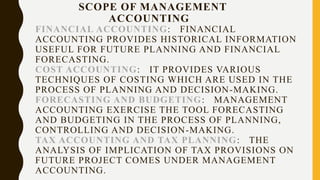
SCOPE OF MANAGEMENT
ACCOUNTING
FINANCIAL ACCOUNTING: FINANCIAL
ACCOUNTING PROVIDES HISTORICAL INFORMATION
USEFUL FOR FUTURE PLANNING AND FINANCIAL
FORECASTING.
COST ACCOUNTING: IT PROVIDES VARIOUS
TECHNIQUES OF COSTING WHICH ARE USED IN THE
PROCESS OF PLANNING AND DECISION-MAKING.
FORECASTING AND BUDGETING: MANAGEMENT
ACCOUNTING EXERCISE THE TOOL FORECASTING
AND BUDGETING IN THE PROCESS OF PLANNING,
CONTROLLING AND DECISION-MAKING.
TAX ACCOUNTING AND TAX PLANNING: THE
ANALYSIS OF IMPLICATION OF TAX PROVISIONS ON
FUTURE PROJECT COMES UNDER MANAGEMENT
ACCOUNTING.
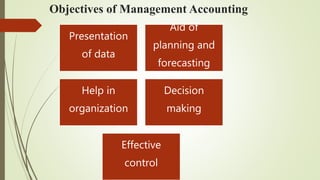
Presentation
of data
Aid of
planning and
forecasting
Help in
organization
Decision
making
Effective
control
Objectives of Management Accounting
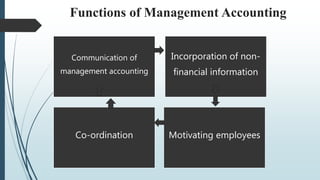
Communication of
management accounting
Incorporation of non-
financial information
Co-ordination Motivating employees
Functions of Management Accounting
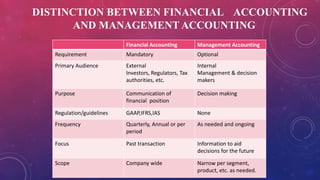
Financial Accounting Management Accounting
Requirement Mandatory Optional
Primary Audience External
Investors, Regulators, Tax
authorities, etc.
Internal
Management & decision
makers
Purpose Communication of
financial position
Decision making
Regulation/guidelines GAAP,IFRS,IAS None
Frequency Quarterly, Annual or per
period
As needed and ongoing
Focus Past transaction Information to aid
decisions for the future
Scope Company wide Narrow per segment,
product, etc. as needed.
DISTINCTION BETWEEN FINANCIAL ACCOUNTING
AND MANAGEMENT ACCOUNTING
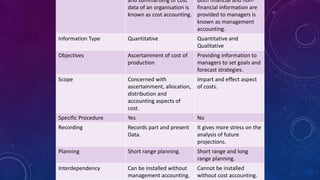
and summarising of cost
data of an organisation is
known as cost accounting.
both financial and non-
financial information are
provided to managers is
known as management
accounting.
Information Type Quantitative Quantitative and
Qualitative
Objectives Ascertainment of cost of
production
Providing information to
managers to set goals and
forecast strategies.
Scope Concerned with
ascertainment, allocation,
distribution and
accounting aspects of
cost.
Impart and effect aspect
of costs.
Specific Procedure Yes No
Recording Records part and present
Data.
It gives more stress on the
analysis of future
projections.
Planning Short range planning. Short range and long
range planning.
Interdependency Can be installed without
management accounting.
Cannot be installed
without cost accounting.
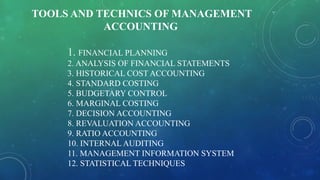
TOOLS AND TECHNICS OF MANAGEMENT
ACCOUNTING
1. FINANCIAL PLANNING
2. ANALYSIS OF FINANCIAL STATEMENTS
3. HISTORICAL COST ACCOUNTING
4. STANDARD COSTING
5. BUDGETARY CONTROL
6. MARGINAL COSTING
7. DECISION ACCOUNTING
8. REVALUATION ACCOUNTING
9. RATIO ACCOUNTING
10. INTERNAL AUDITING
11. MANAGEMENT INFORMATION SYSTEM
12. STATISTICAL TECHNIQUES
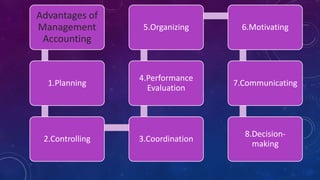
Advantages of
Management
Accounting
1.Planning
2.Controlling 3.Coordination
4.Performance
Evaluation
5.Organizing 6.Motivating
7.Communicating
8.Decision-
making
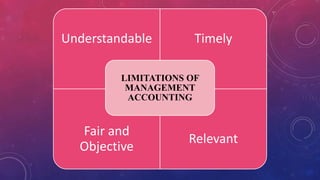
Understandable Timely
Fair and
Objective
Relevant
LIMITATIONS OF
MANAGEMENT
ACCOUNTING
SUBMIT BY
BANUMATHI . N
THANK YOU

Management Accounting - Meaning, Definition, Characteristics, Scope, Objectives and Function

  • 1.
  • 2.
  • 3.
    INDEX Meaning Definition Characteristics Scope Objectives and Function Financialaccounting and Management accounting Management accounting and Cost accounting Cost accounting and Management accounting and Financial accounting Tools and technics Advantages and limitations
  • 4.
    MANAGEMENT ACCOUNTING Meaning In managementaccounting or managerial accounting, managers use the provisions of accounting information in order to better themselves before they decide matters within their organizations, which aids their management and performance of control functions.
  • 5.
    Definition According to Costand Management Accounts, London, “Management Accounting is concerned with the presentation of professional knowledge and abilities to reveal accounting information which may help to the management in policy formulation, planning and control for the undertakings.”
  • 6.
    Characteristics of ManagerialAccounting Reporting to managers and internal personnel Tailored to specific decision-making tasks Focused on products, departments, and activities Often uses real-time data for quick responses Forecasted outcomes for planning.
  • 7.
    Scopes of management accounting Tax accounting andtax planning Forecasting and Budgeting Cost Accounting Financial Accounting
  • 8.
    SCOPE OF MANAGEMENT ACCOUNTING FINANCIALACCOUNTING: FINANCIAL ACCOUNTING PROVIDES HISTORICAL INFORMATION USEFUL FOR FUTURE PLANNING AND FINANCIAL FORECASTING. COST ACCOUNTING: IT PROVIDES VARIOUS TECHNIQUES OF COSTING WHICH ARE USED IN THE PROCESS OF PLANNING AND DECISION-MAKING. FORECASTING AND BUDGETING: MANAGEMENT ACCOUNTING EXERCISE THE TOOL FORECASTING AND BUDGETING IN THE PROCESS OF PLANNING, CONTROLLING AND DECISION-MAKING. TAX ACCOUNTING AND TAX PLANNING: THE ANALYSIS OF IMPLICATION OF TAX PROVISIONS ON FUTURE PROJECT COMES UNDER MANAGEMENT ACCOUNTING.
  • 9.
    Presentation of data Aid of planningand forecasting Help in organization Decision making Effective control Objectives of Management Accounting
  • 10.
    Communication of management accounting Incorporationof non- financial information Co-ordination Motivating employees Functions of Management Accounting
  • 11.
    Financial Accounting ManagementAccounting Requirement Mandatory Optional Primary Audience External Investors, Regulators, Tax authorities, etc. Internal Management & decision makers Purpose Communication of financial position Decision making Regulation/guidelines GAAP,IFRS,IAS None Frequency Quarterly, Annual or per period As needed and ongoing Focus Past transaction Information to aid decisions for the future Scope Company wide Narrow per segment, product, etc. as needed. DISTINCTION BETWEEN FINANCIAL ACCOUNTING AND MANAGEMENT ACCOUNTING
  • 12.
    and summarising ofcost data of an organisation is known as cost accounting. both financial and non- financial information are provided to managers is known as management accounting. Information Type Quantitative Quantitative and Qualitative Objectives Ascertainment of cost of production Providing information to managers to set goals and forecast strategies. Scope Concerned with ascertainment, allocation, distribution and accounting aspects of cost. Impart and effect aspect of costs. Specific Procedure Yes No Recording Records part and present Data. It gives more stress on the analysis of future projections. Planning Short range planning. Short range and long range planning. Interdependency Can be installed without management accounting. Cannot be installed without cost accounting.
  • 13.
    TOOLS AND TECHNICSOF MANAGEMENT ACCOUNTING 1. FINANCIAL PLANNING 2. ANALYSIS OF FINANCIAL STATEMENTS 3. HISTORICAL COST ACCOUNTING 4. STANDARD COSTING 5. BUDGETARY CONTROL 6. MARGINAL COSTING 7. DECISION ACCOUNTING 8. REVALUATION ACCOUNTING 9. RATIO ACCOUNTING 10. INTERNAL AUDITING 11. MANAGEMENT INFORMATION SYSTEM 12. STATISTICAL TECHNIQUES
  • 14.
  • 15.
  • 16.