
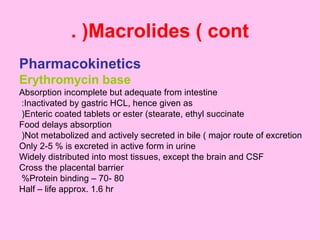
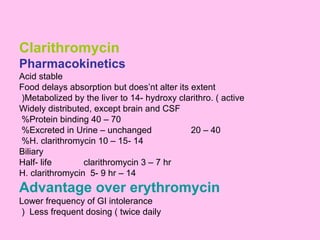
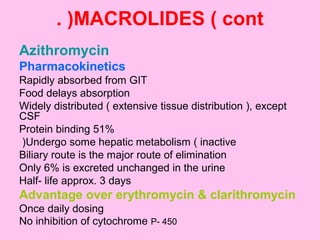
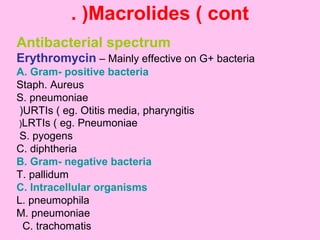

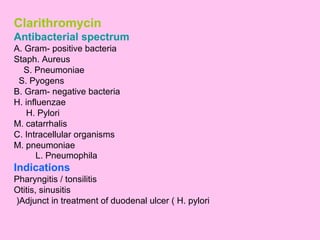
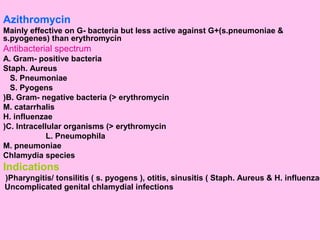



Macrolides, including erythromycin, clarithromycin, and azithromycin, inhibit protein synthesis by binding to the 50s ribosomal subunit and demonstrate variable antibacterial activity. Each macrolide has distinct pharmacokinetics, with clarithromycin offering lower gastrointestinal intolerance and azithromycin allowing for once-daily dosing. The antibacterial spectrum varies, with erythromycin effective against Gram-positive bacteria and clarithromycin having broader activity including Gram-negative bacteria, while side effects mainly include gastrointestinal disturbances and allergic reactions.


