This document discusses the implementation of fast multiplier architectures for convolution applications in signal processing. It examines Vedic multipliers, column bypass multipliers, and multipliers using compressors. Circuit diagrams and simulation results are presented for 4-bit, 8-bit, and 16-bit multipliers. Synthesis results on a Xilinx FPGA show the resource utilization and performance of each multiplier type. Applications of these multipliers include convolution, DSP processors, and fast Fourier transforms.
Introduction to fast multiplier architectures for convolution applications in signal processing and the significance of multiply-accumulate operations.
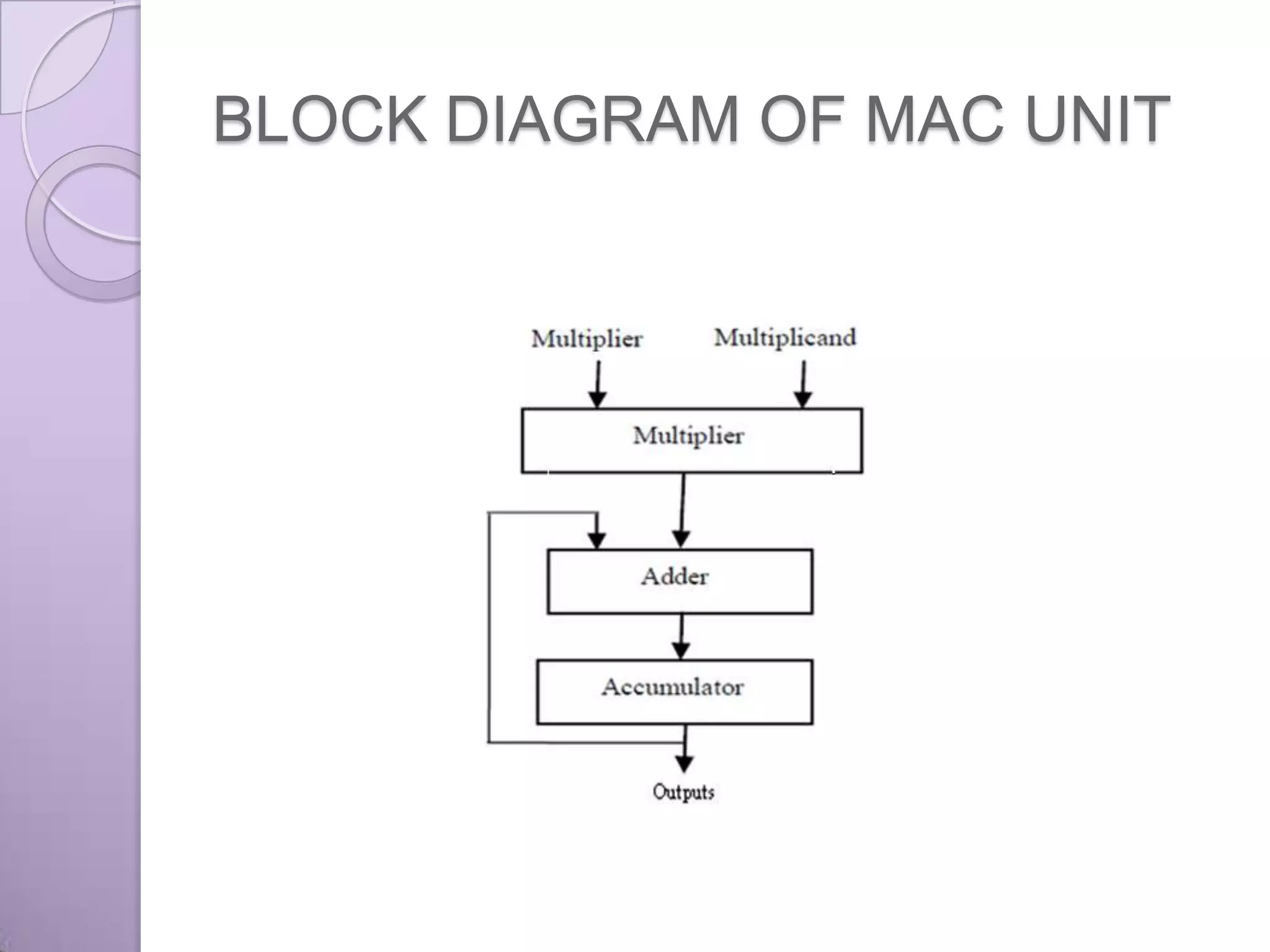
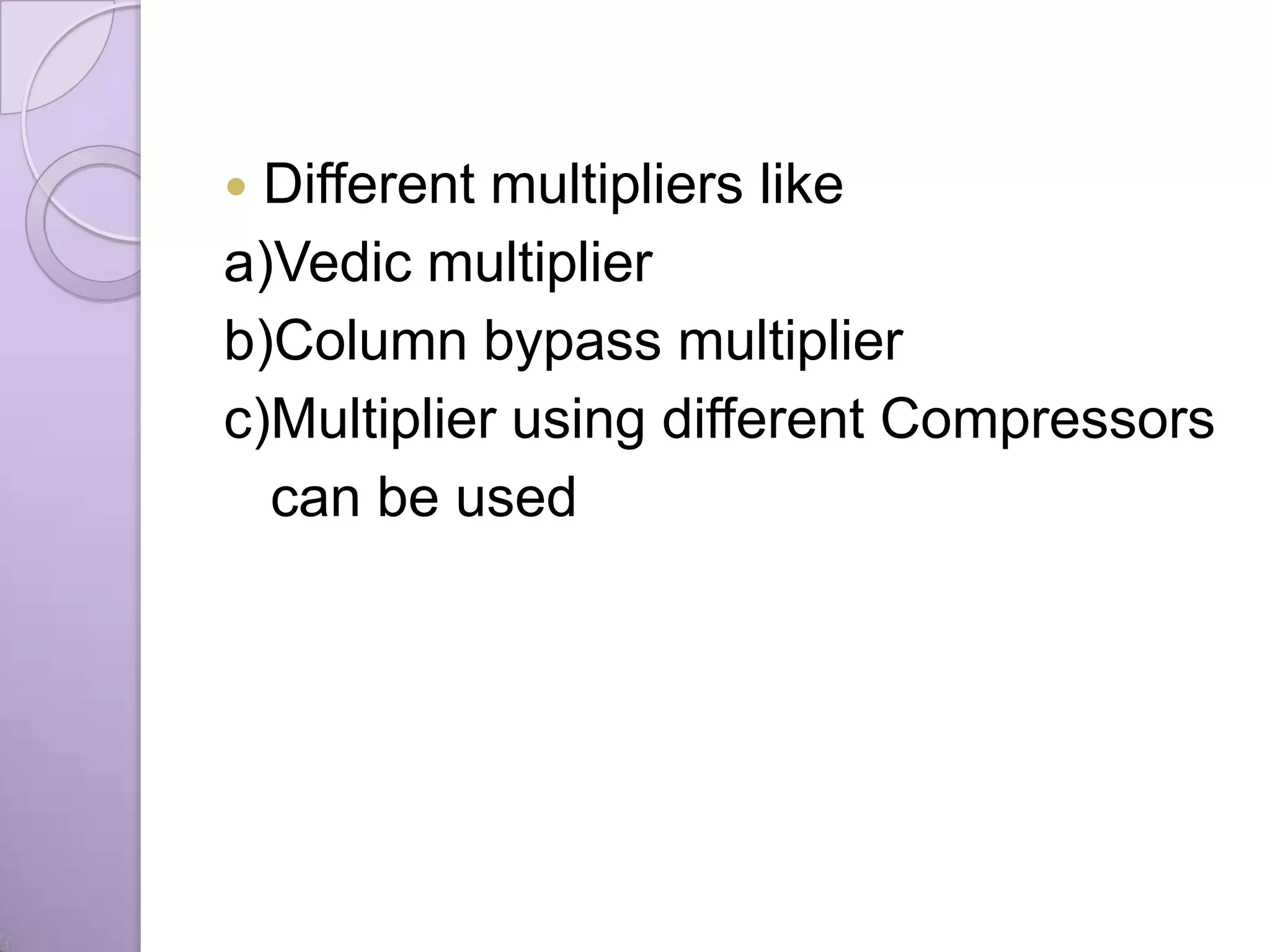
Basic block diagram of the MAC unit and introduction of different multipliers, including Vedic multiplier.
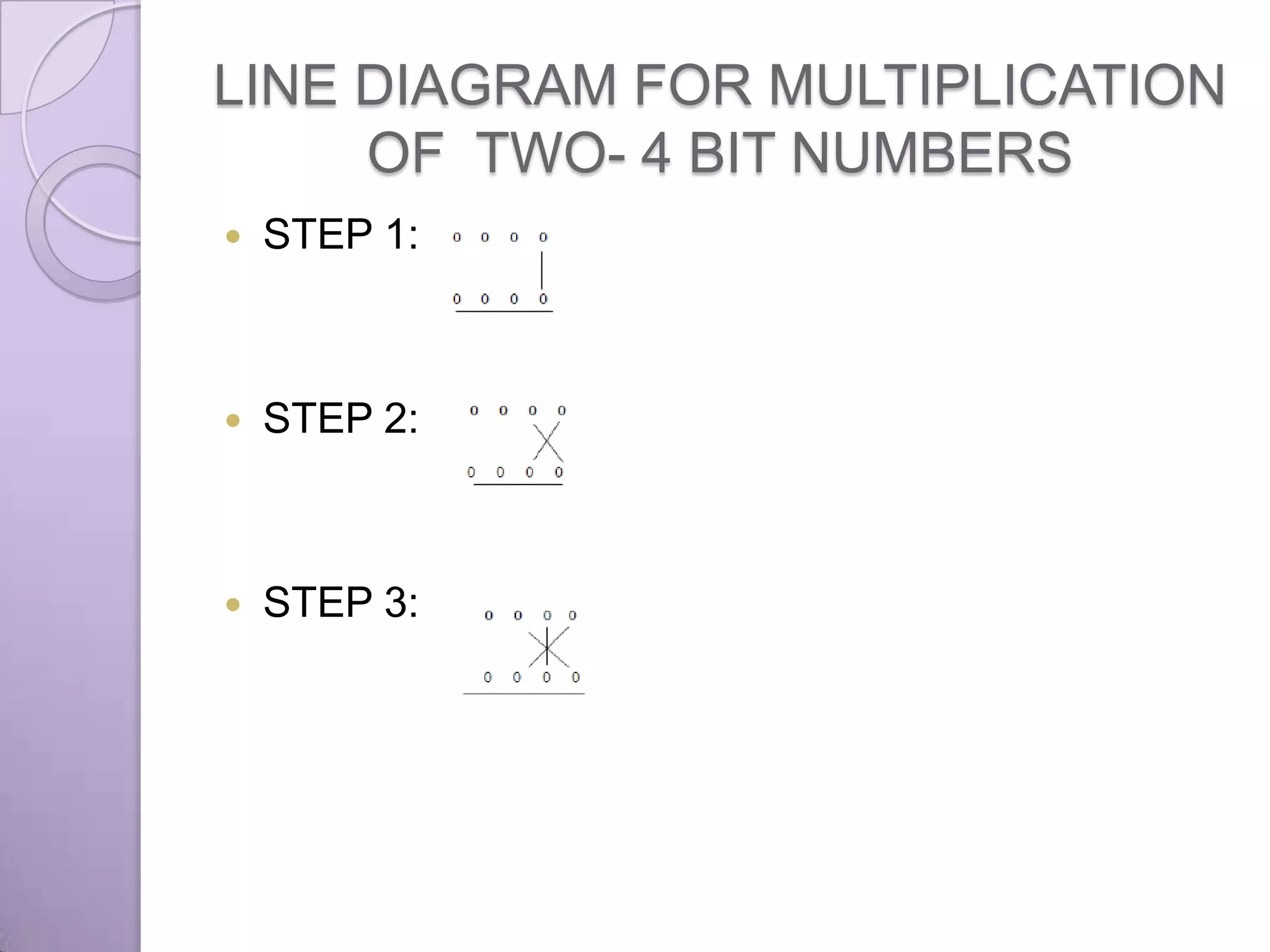
Vedic mathematics simplifies multiplication with unique techniques and principles. Introduction of Urdhva-Triyagbhyam for multiplying two 4-bit numbers.
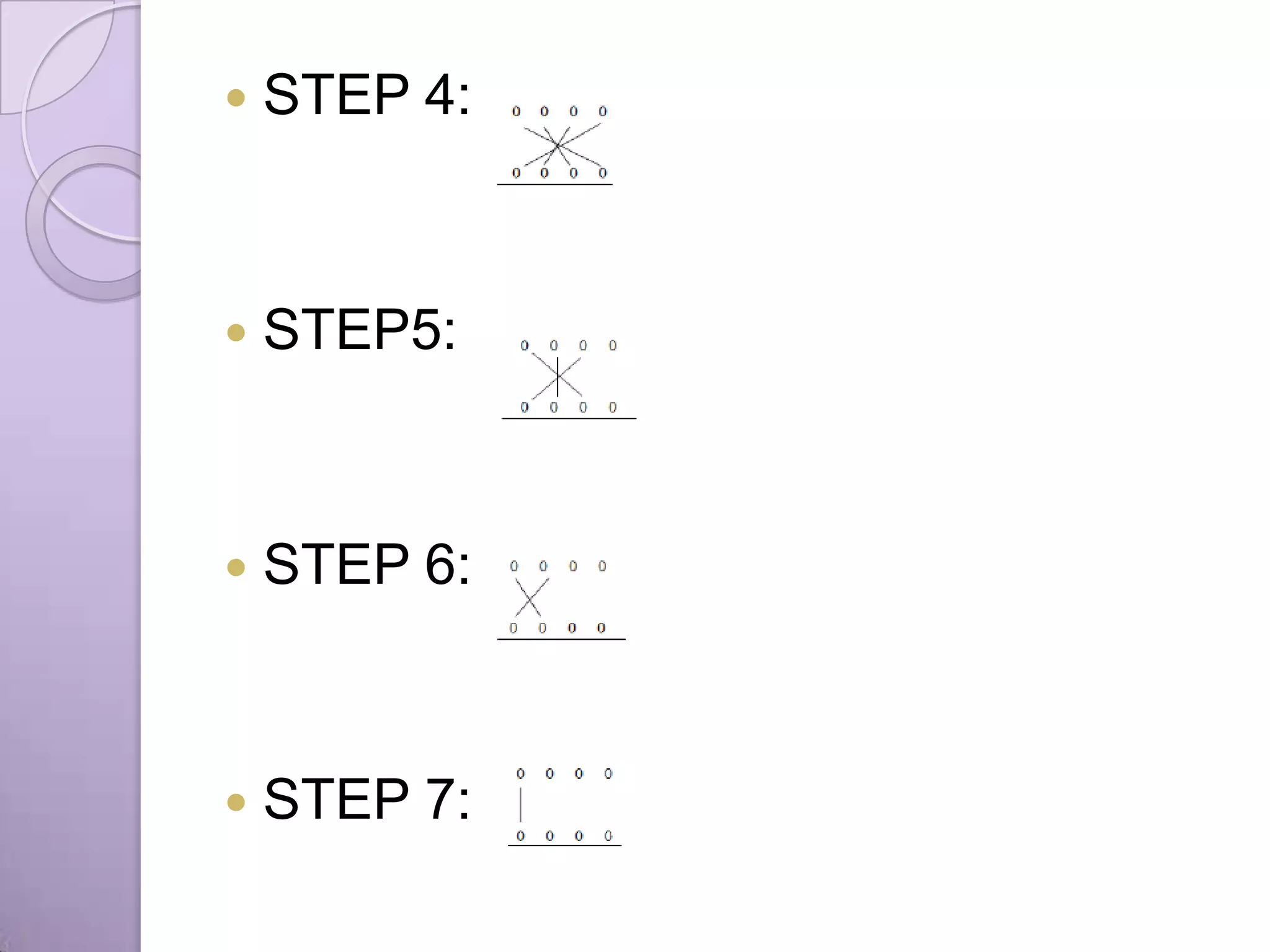
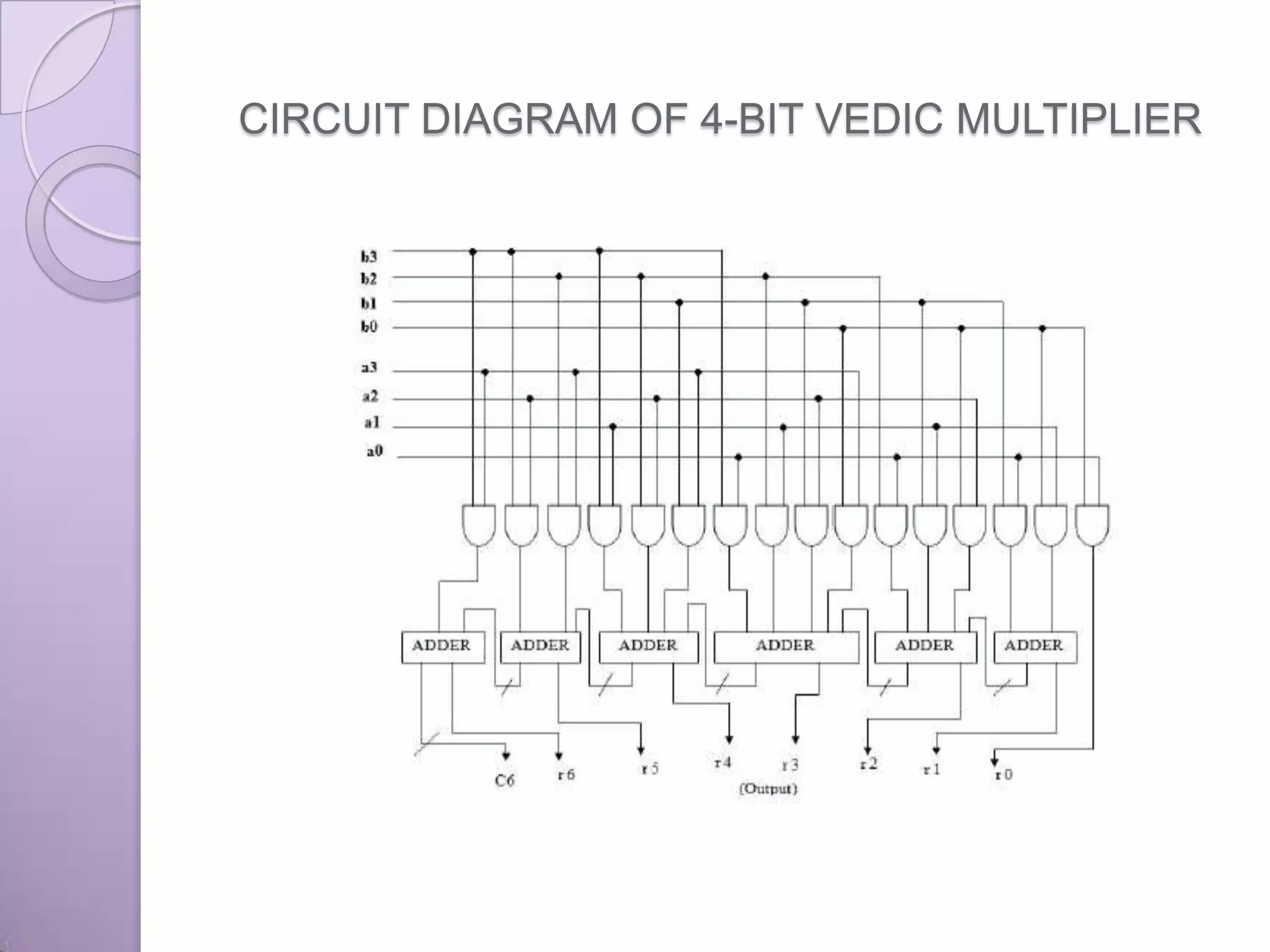
Steps in the multiplication process and the circuit design of a 4-bit Vedic multiplier.
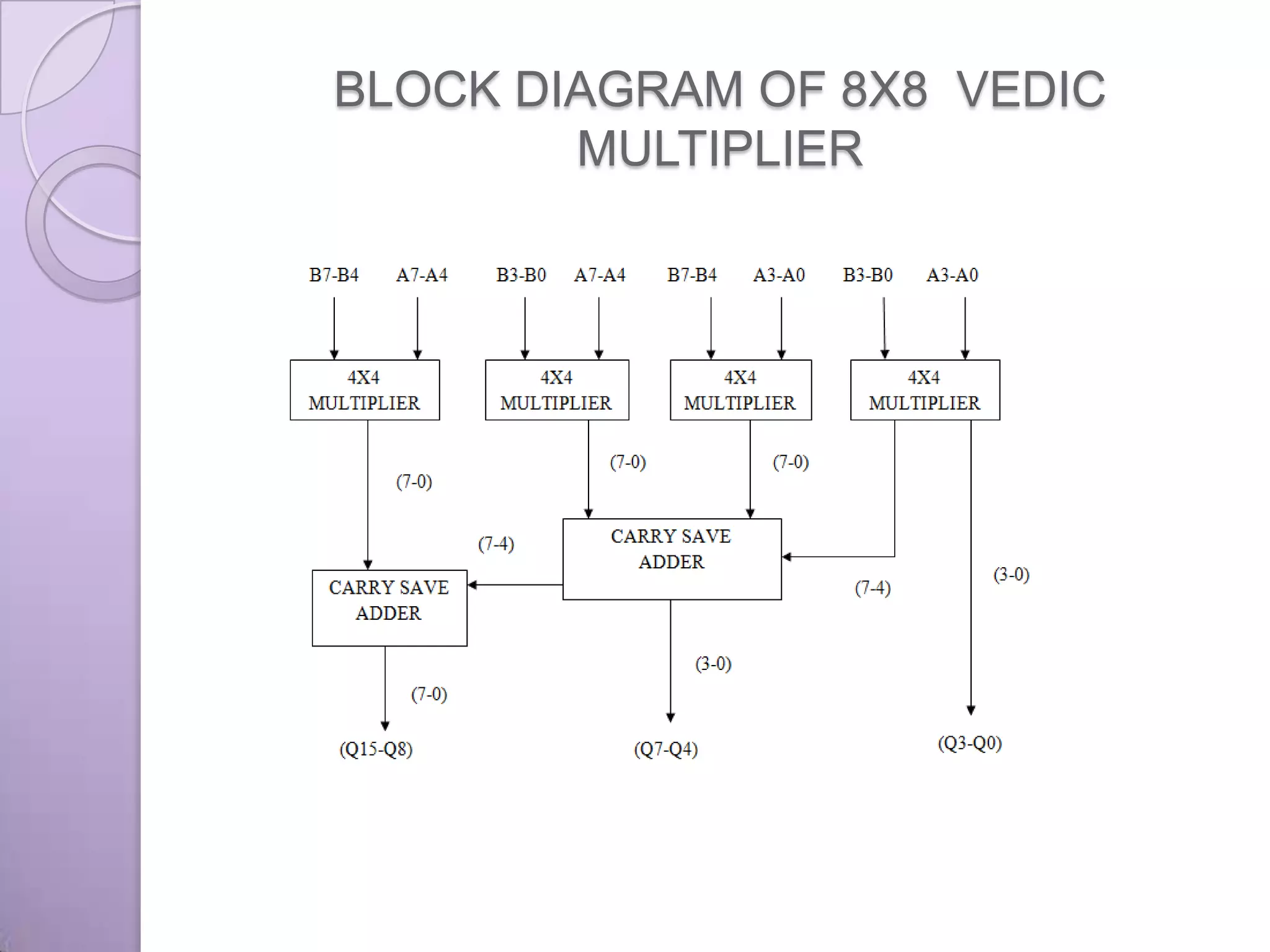
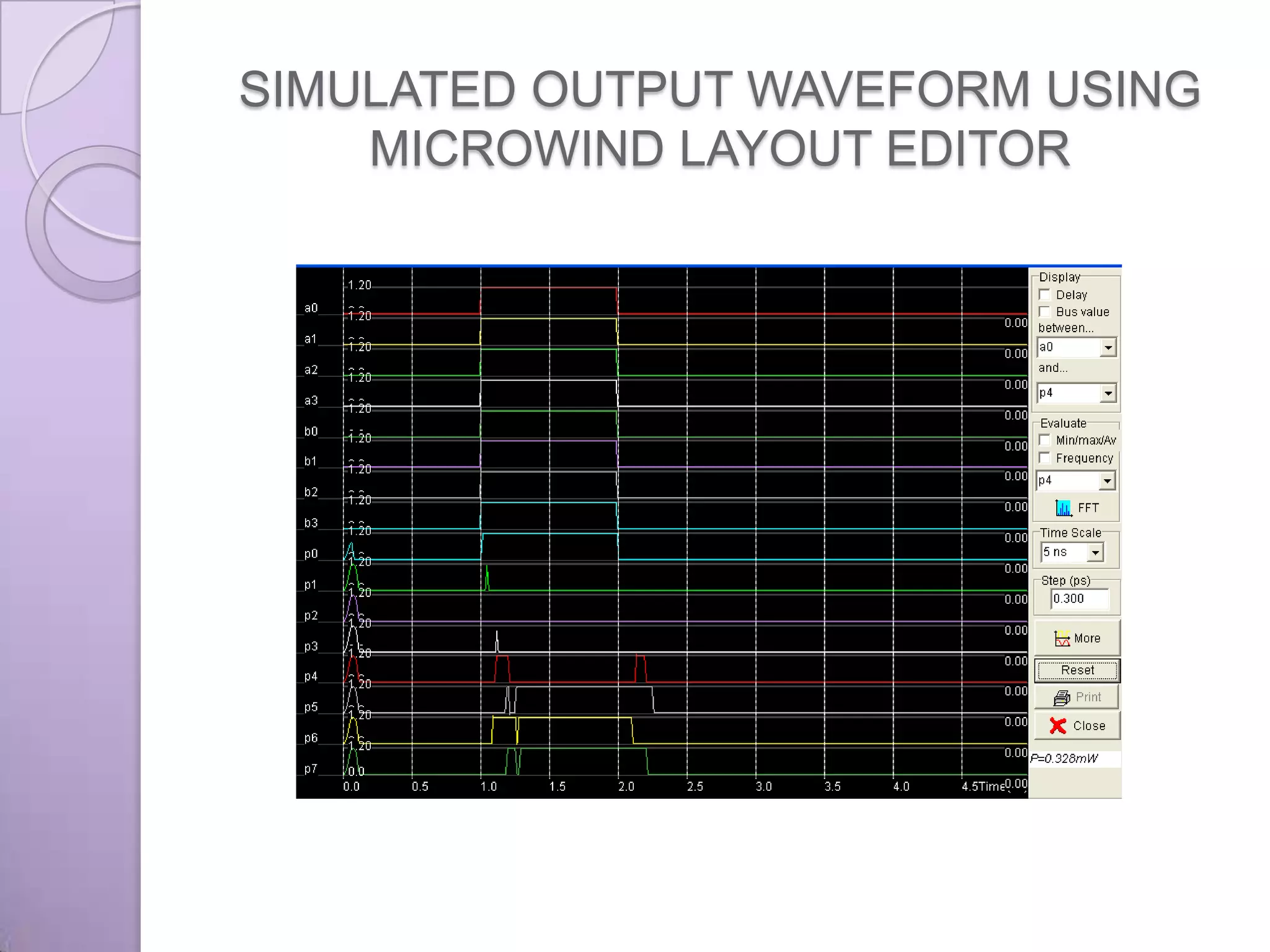
Block diagram representation of an 8x8 Vedic multiplier and simulated waveforms using Xilinx.
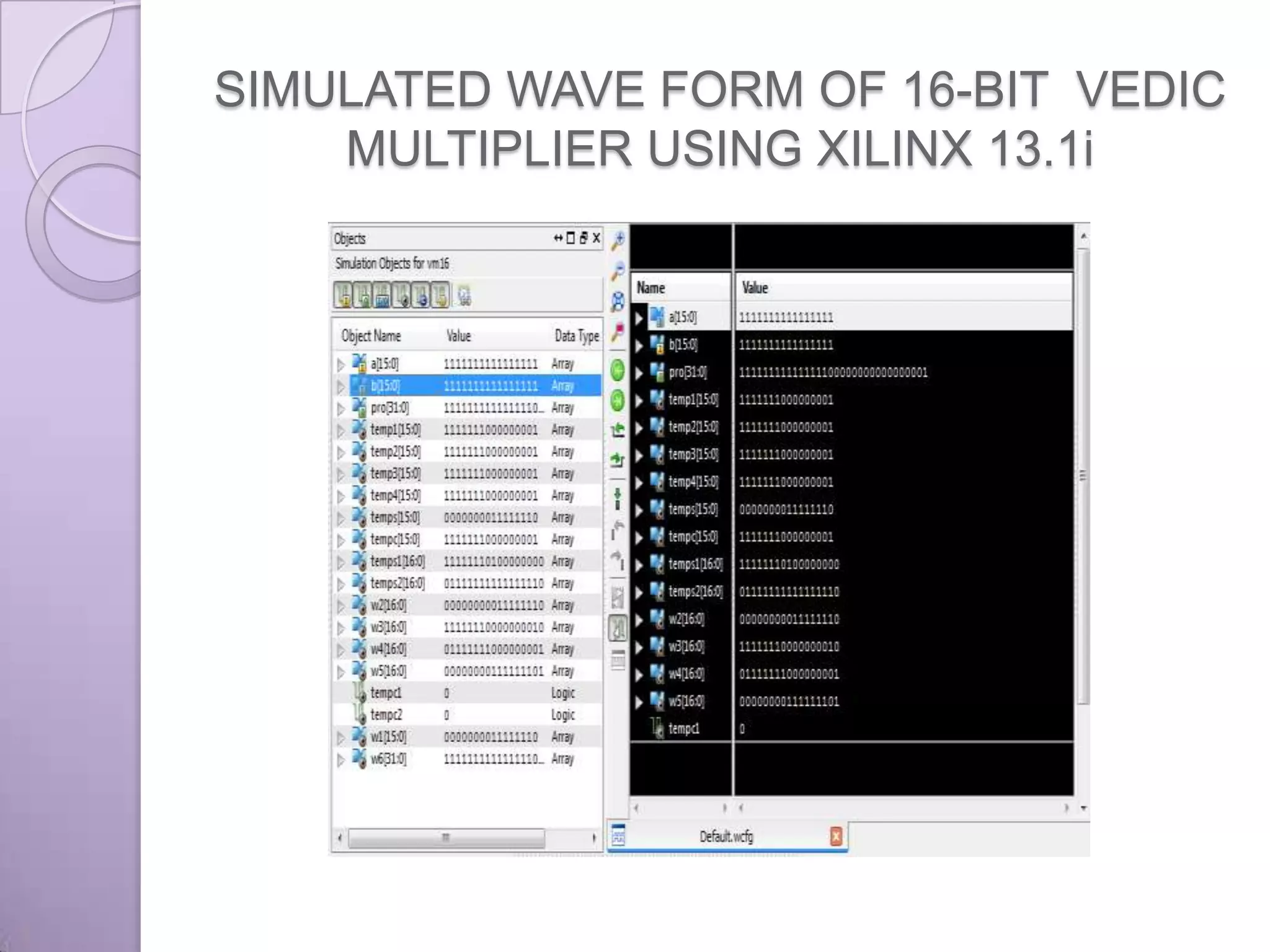
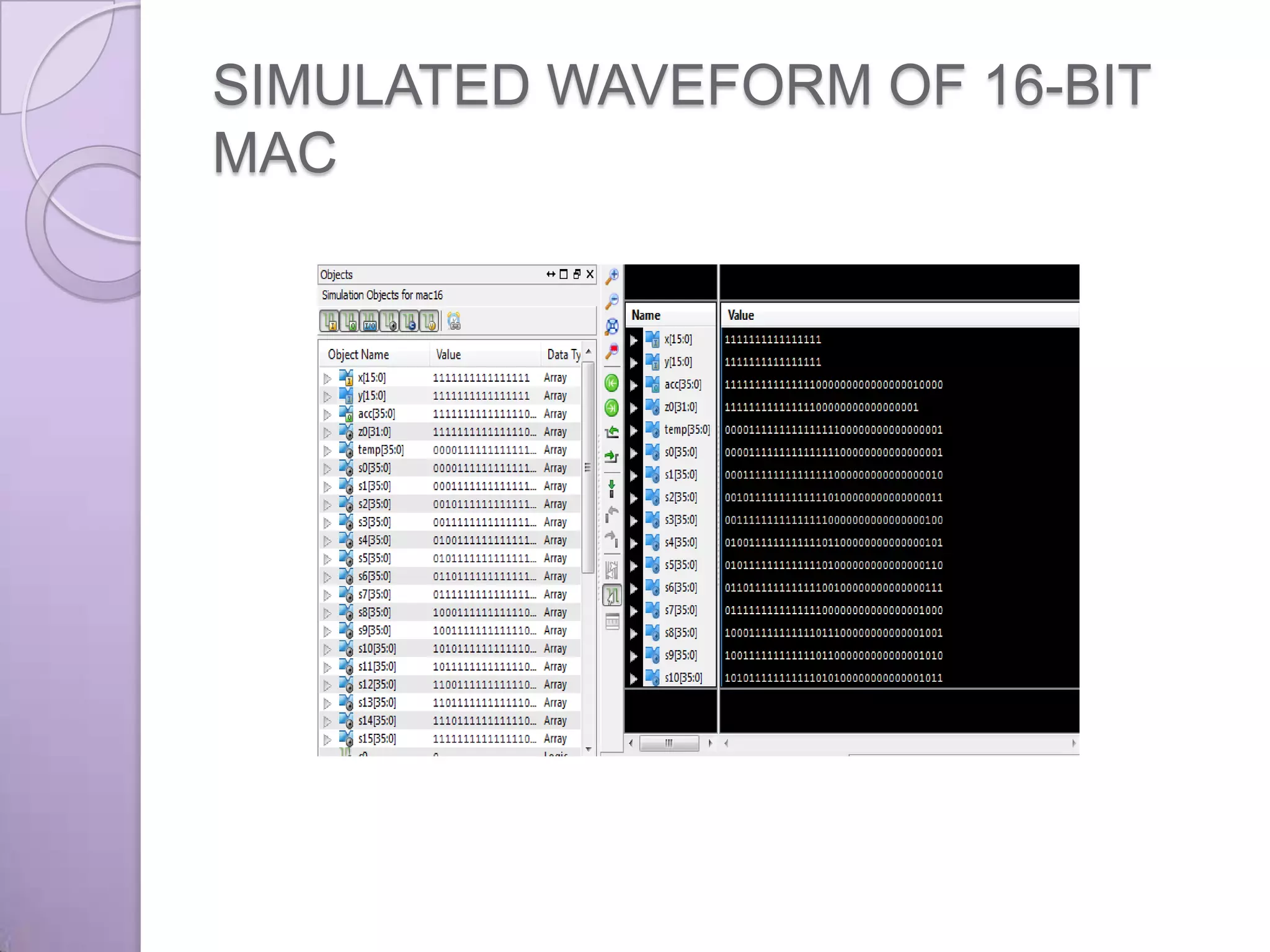
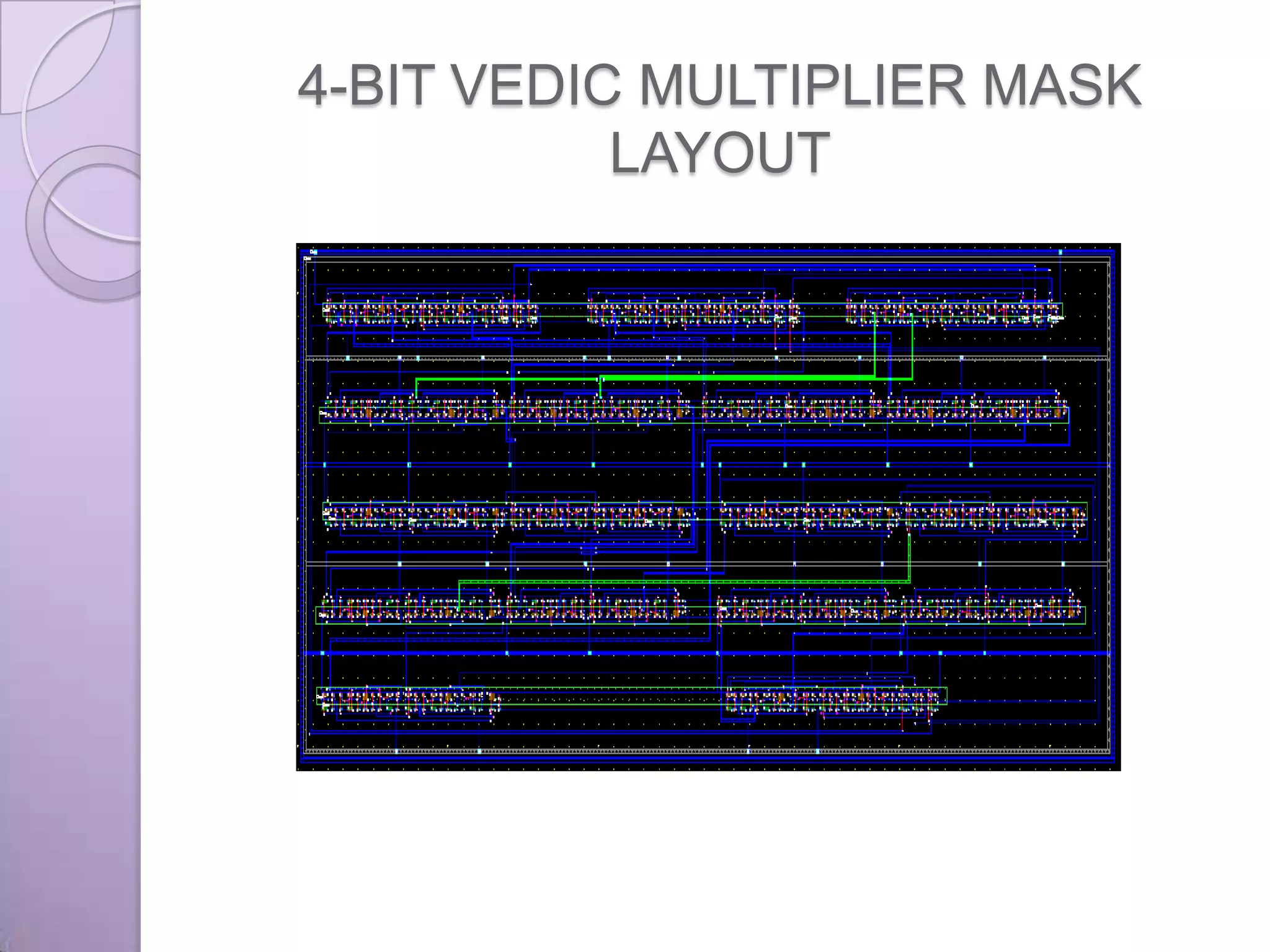
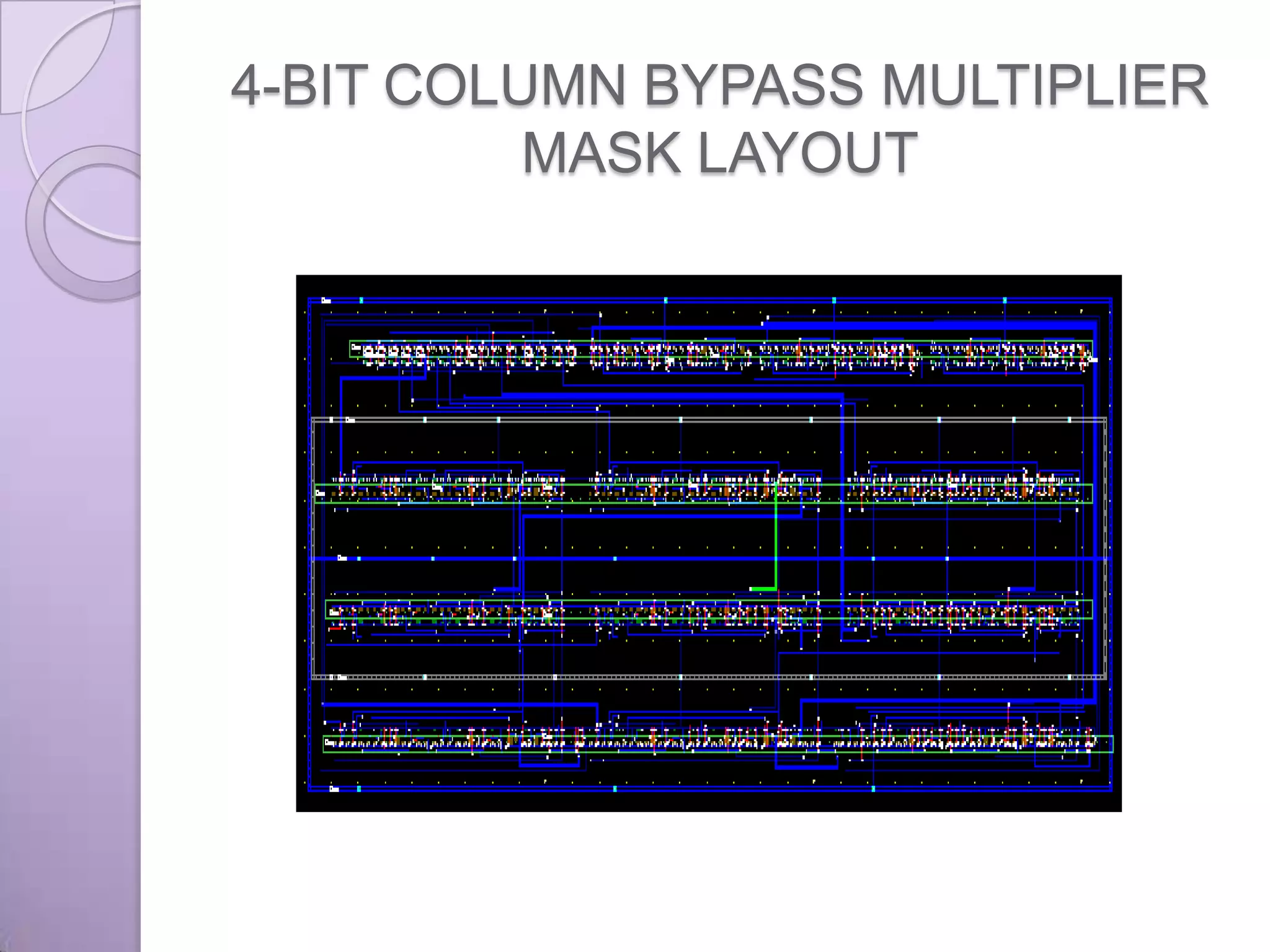
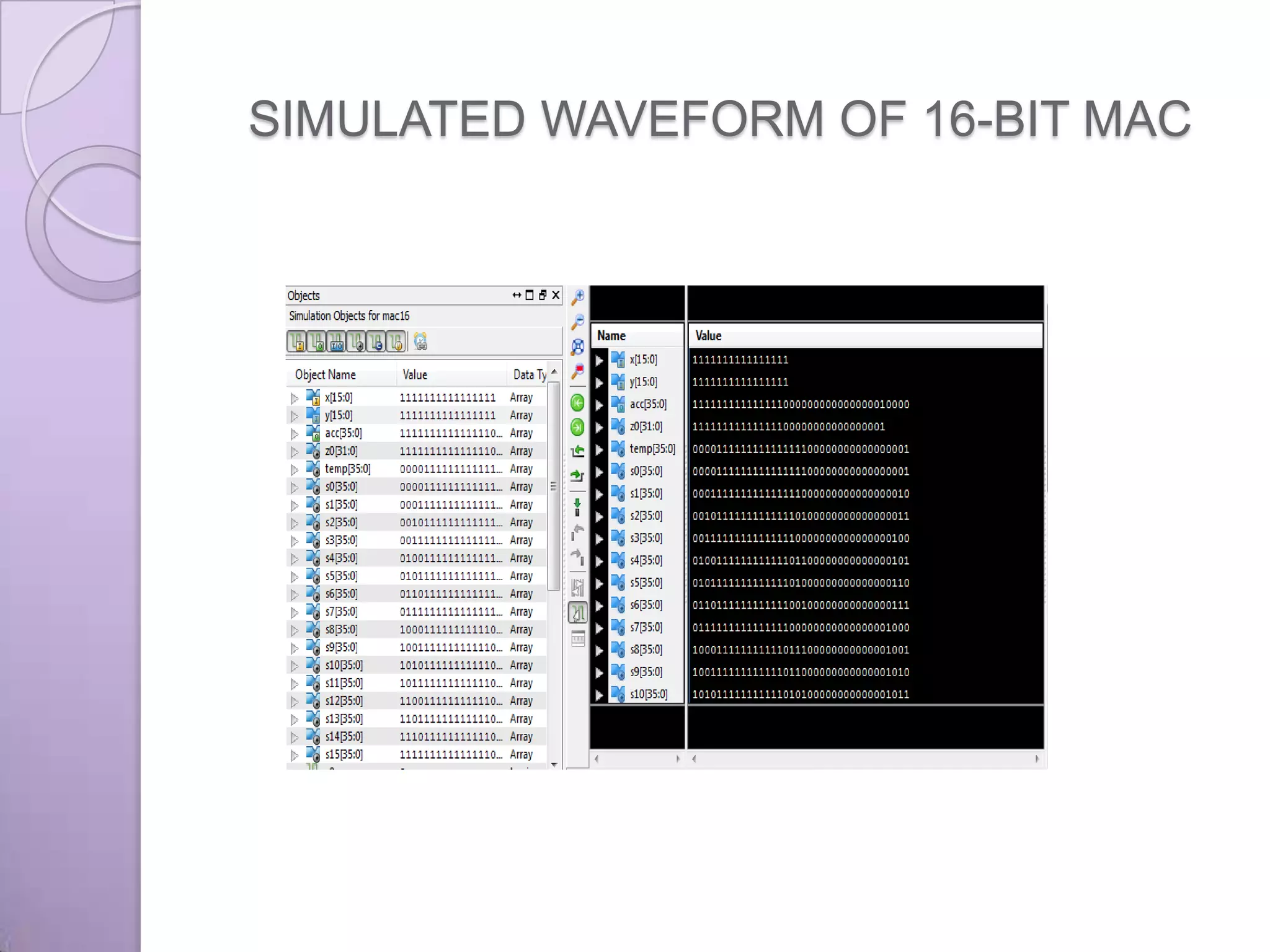
Simulated waveforms for 16-bit Vedic MAC and 4-bit Vedic multiplier mask layout.
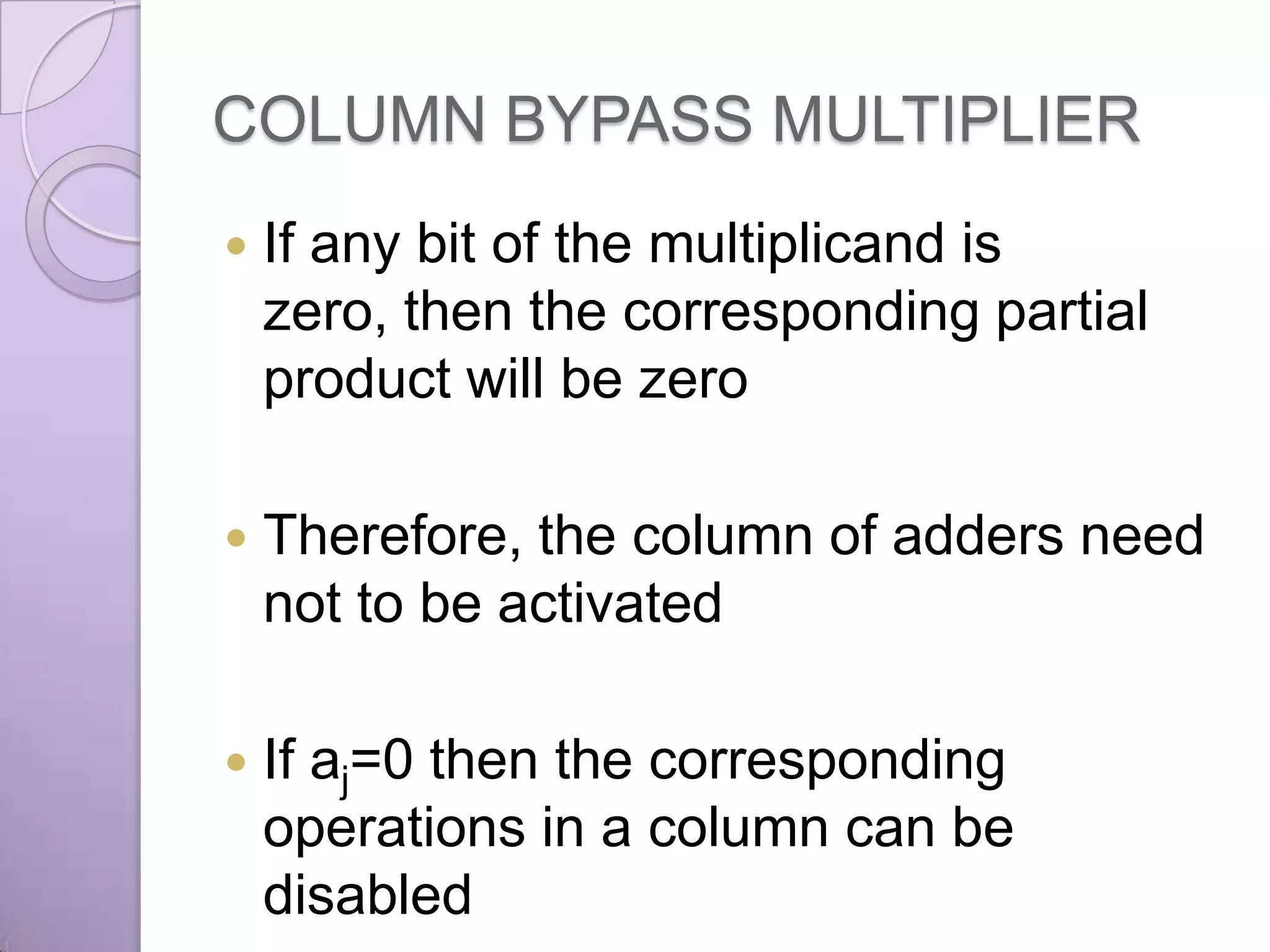
Introduction to column bypass multiplier concepts, advantages, and circuit diagram of 4x4 layout.
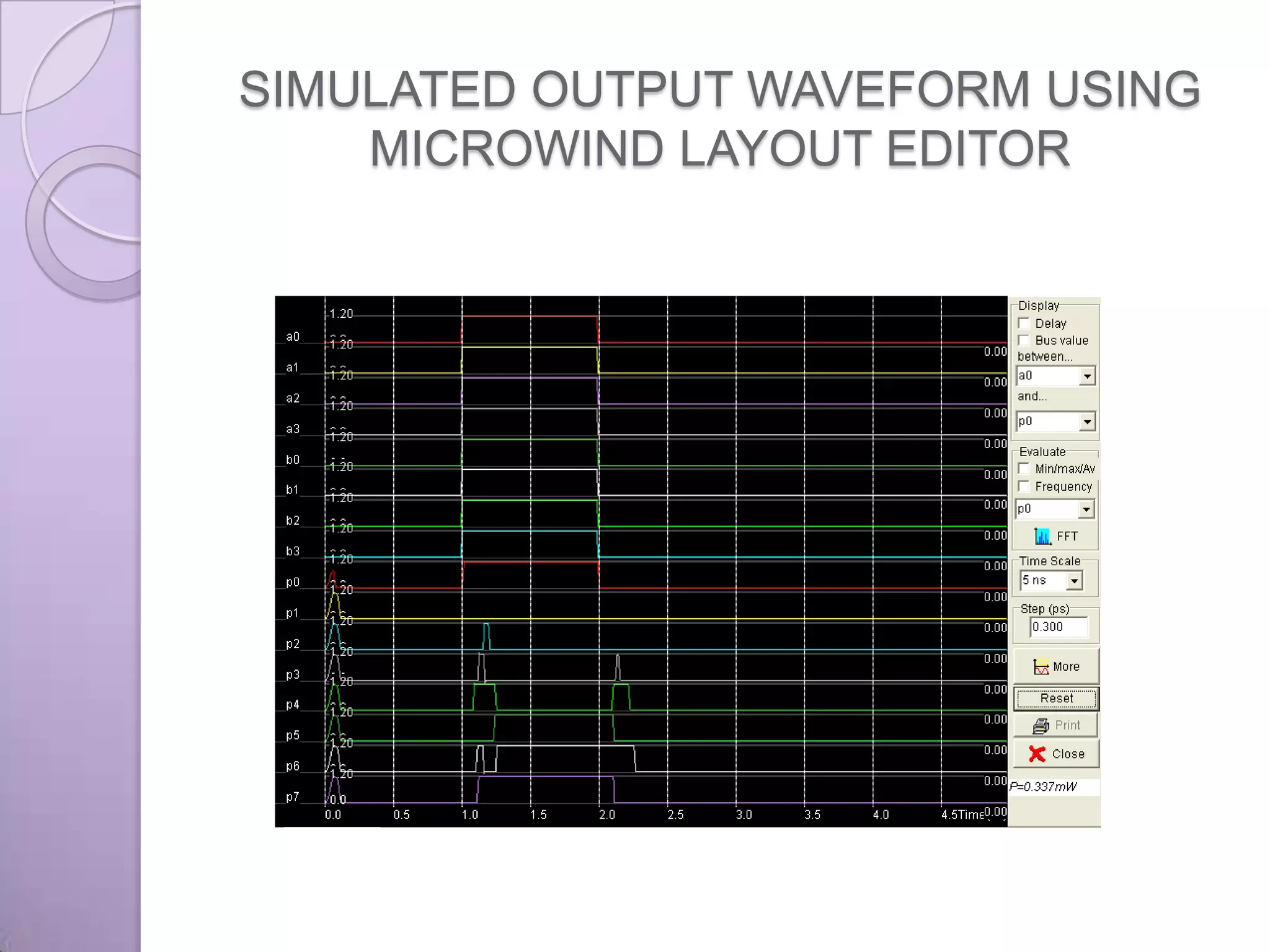
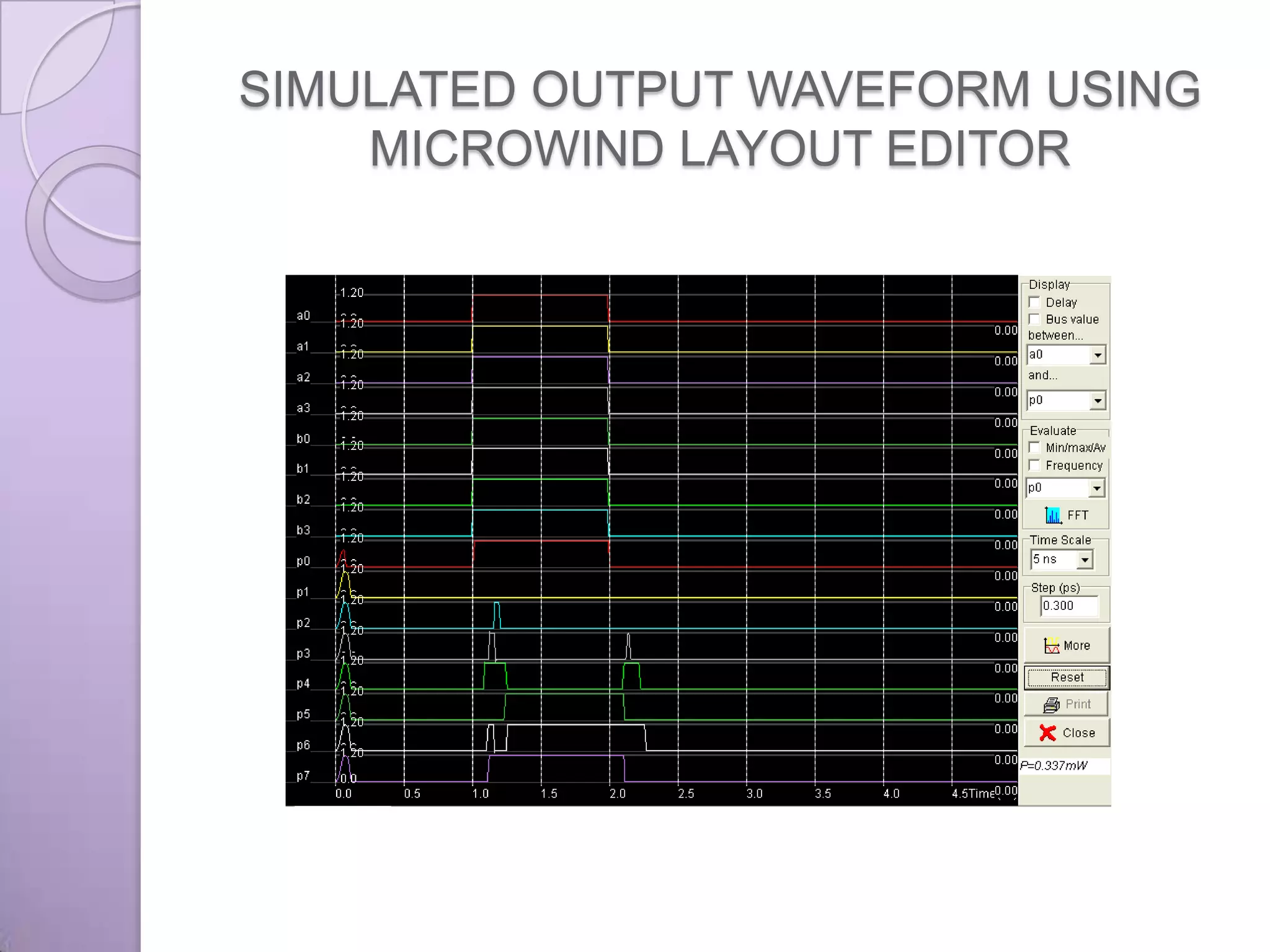
Simulated waveforms of 16-bit column bypass multiplier along with layout outputs.
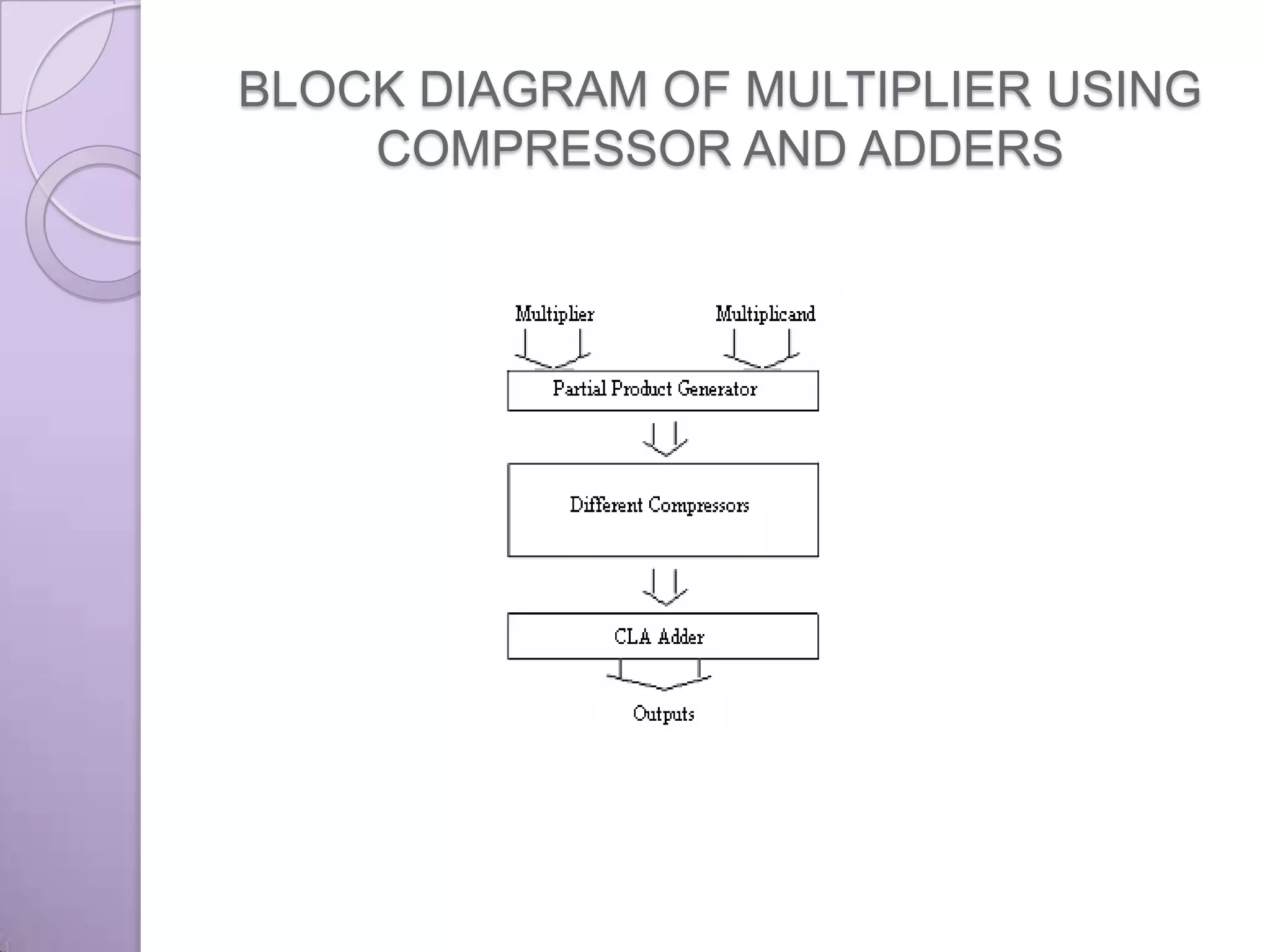
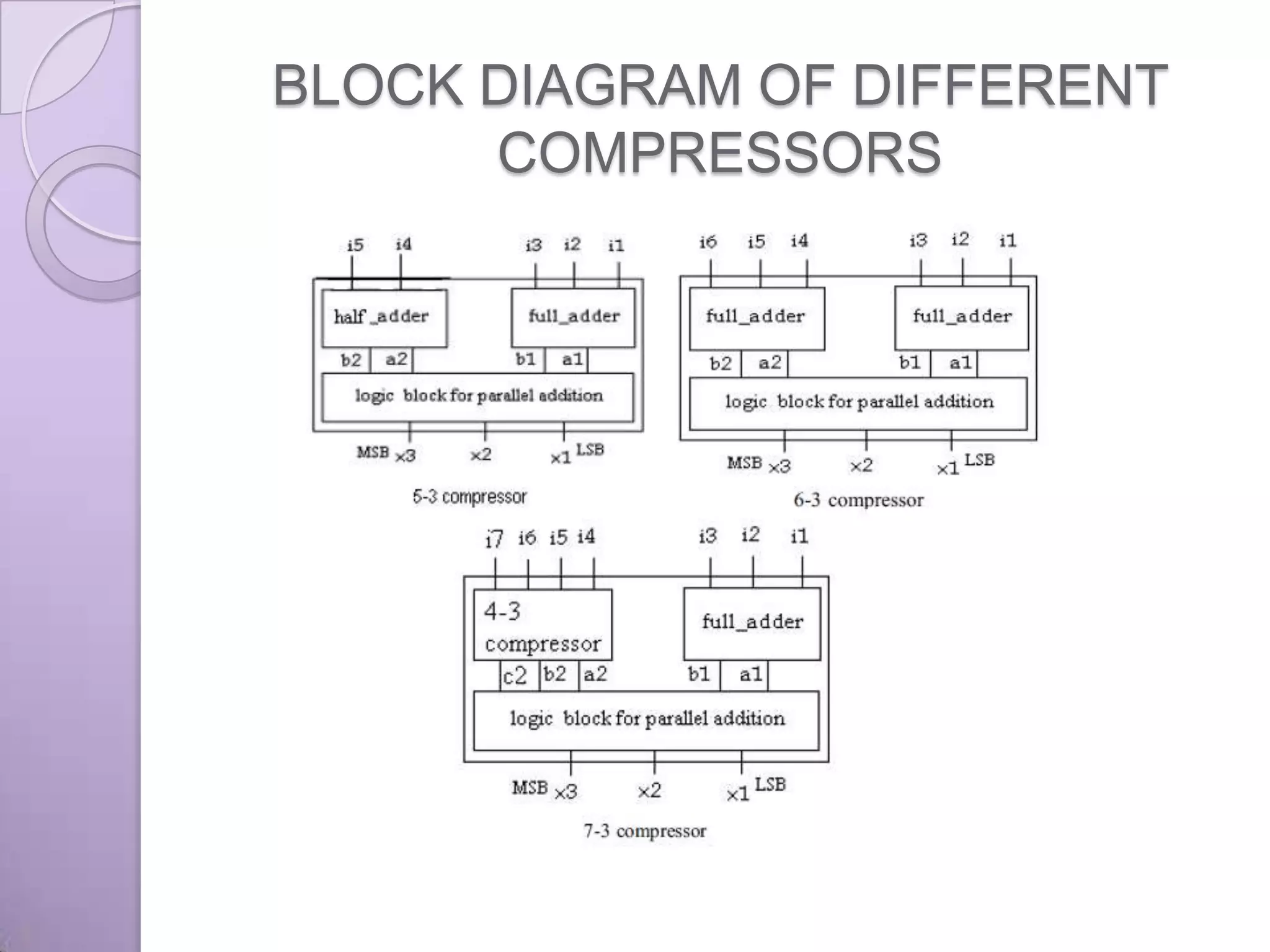
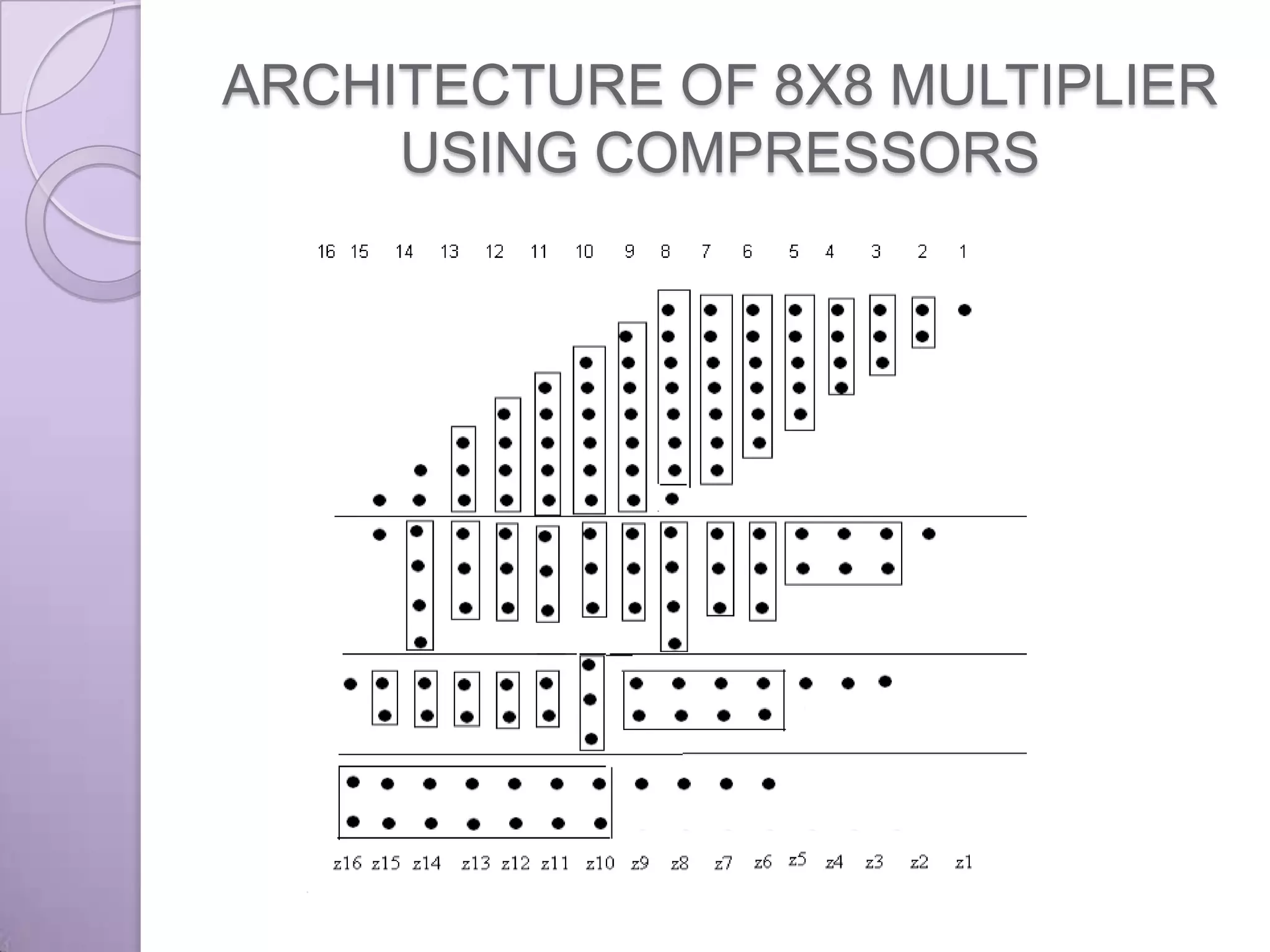
Introduction to multiplier architectures using compressors and adders, including block diagrams.
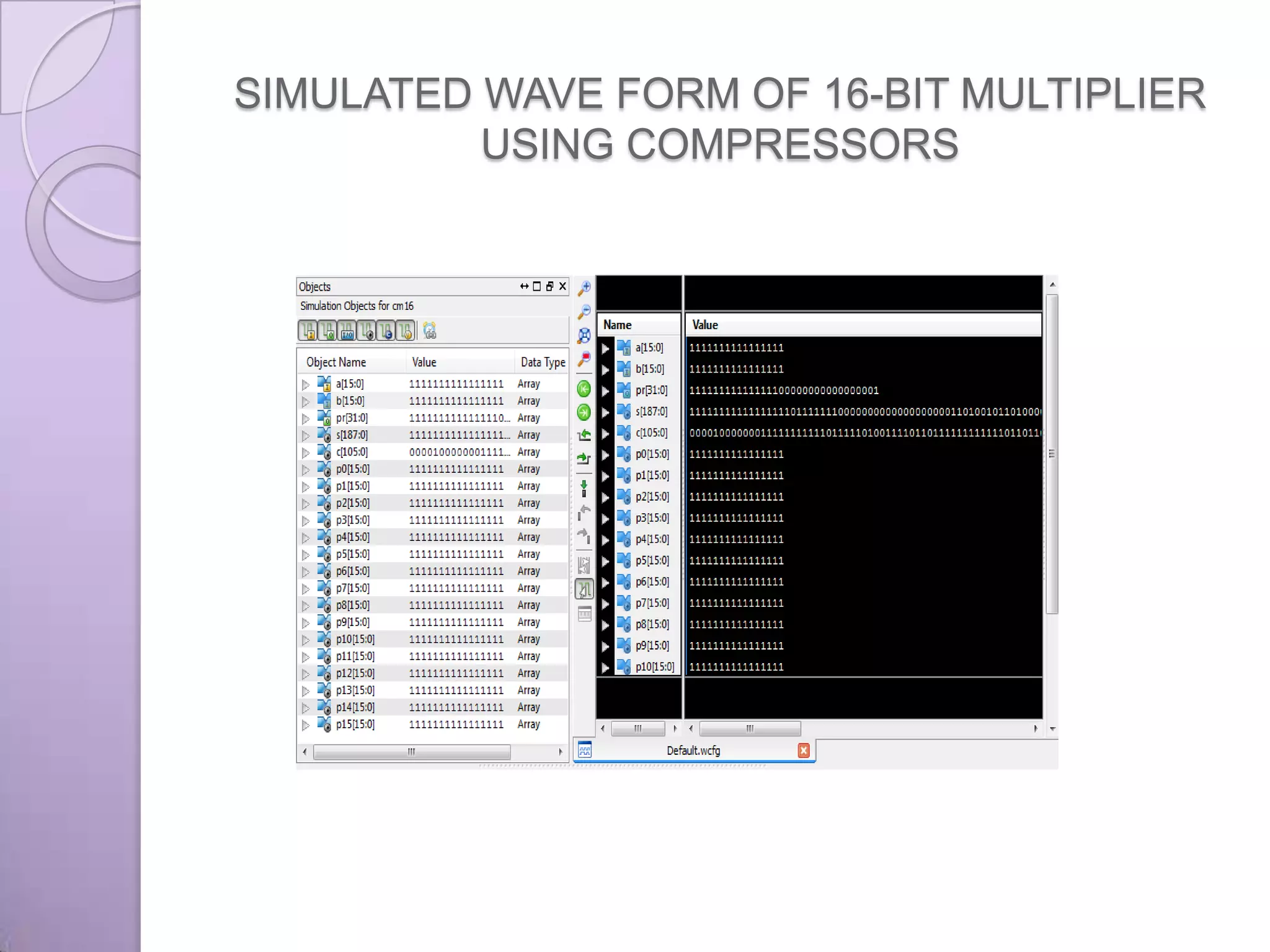
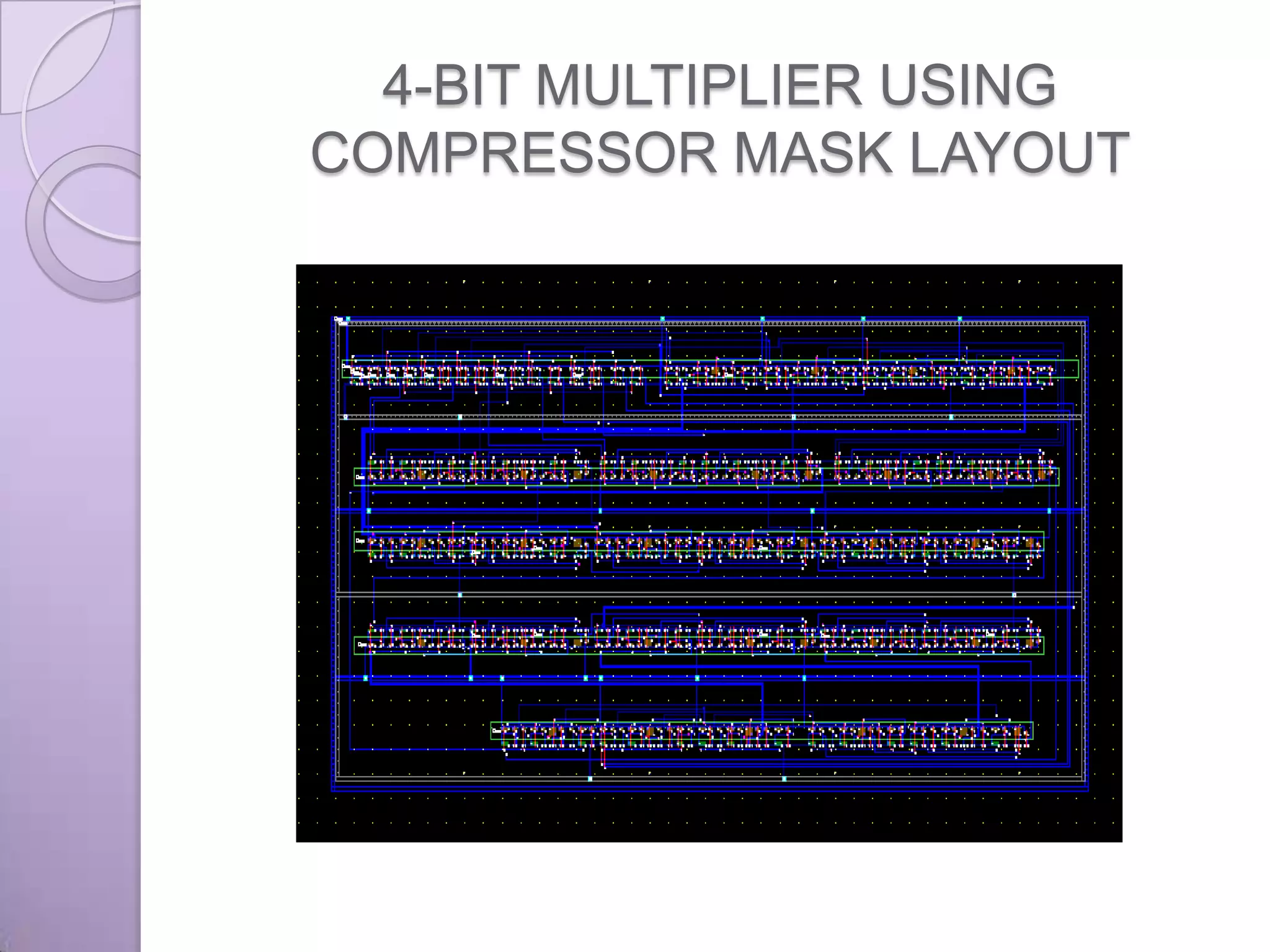
Simulated waveforms for 16-bit multipliers using compressors and corresponding mask layouts.
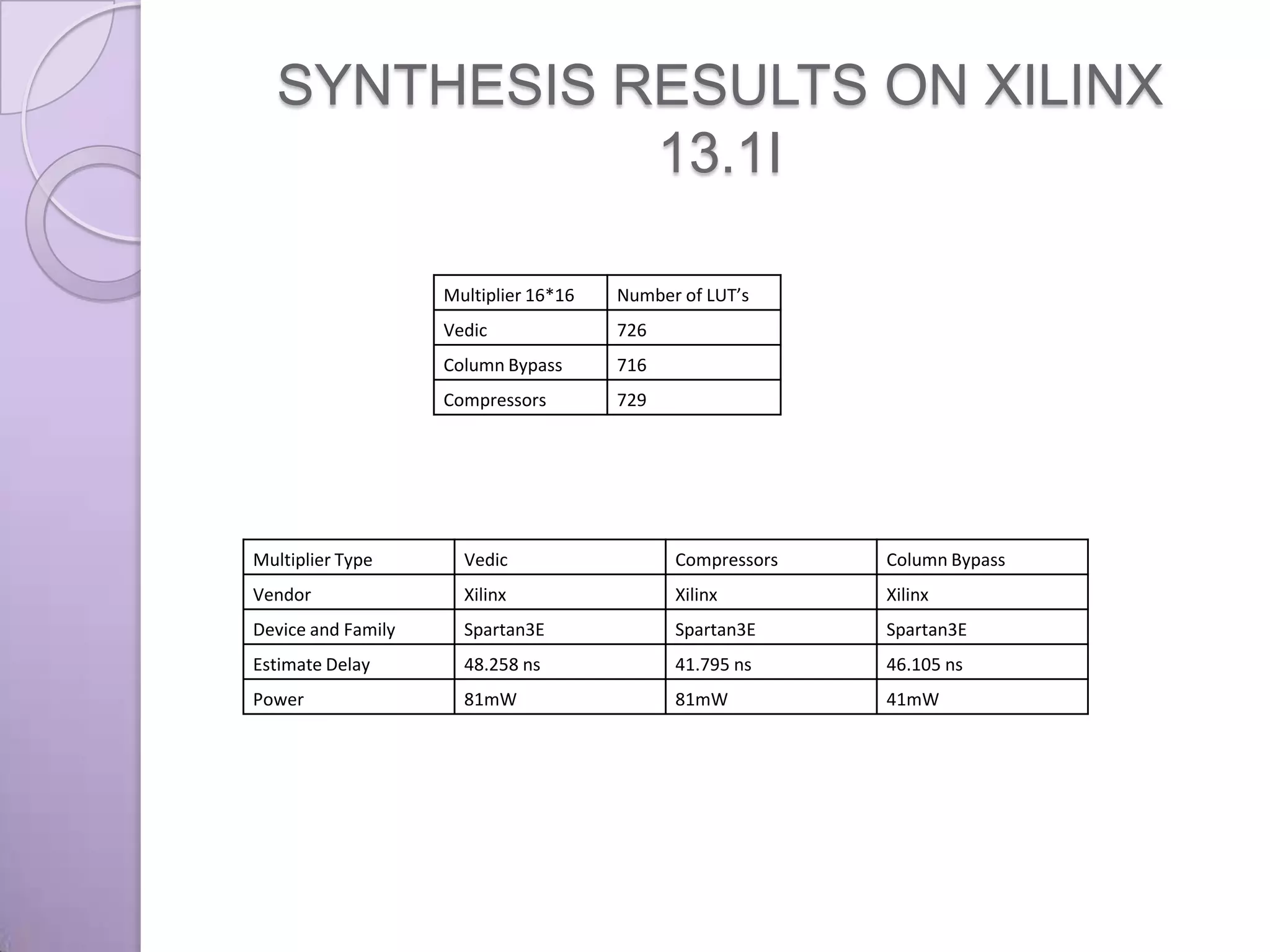
Synthesis results of various multipliers showing LUT count, estimated delay, and power consumption.
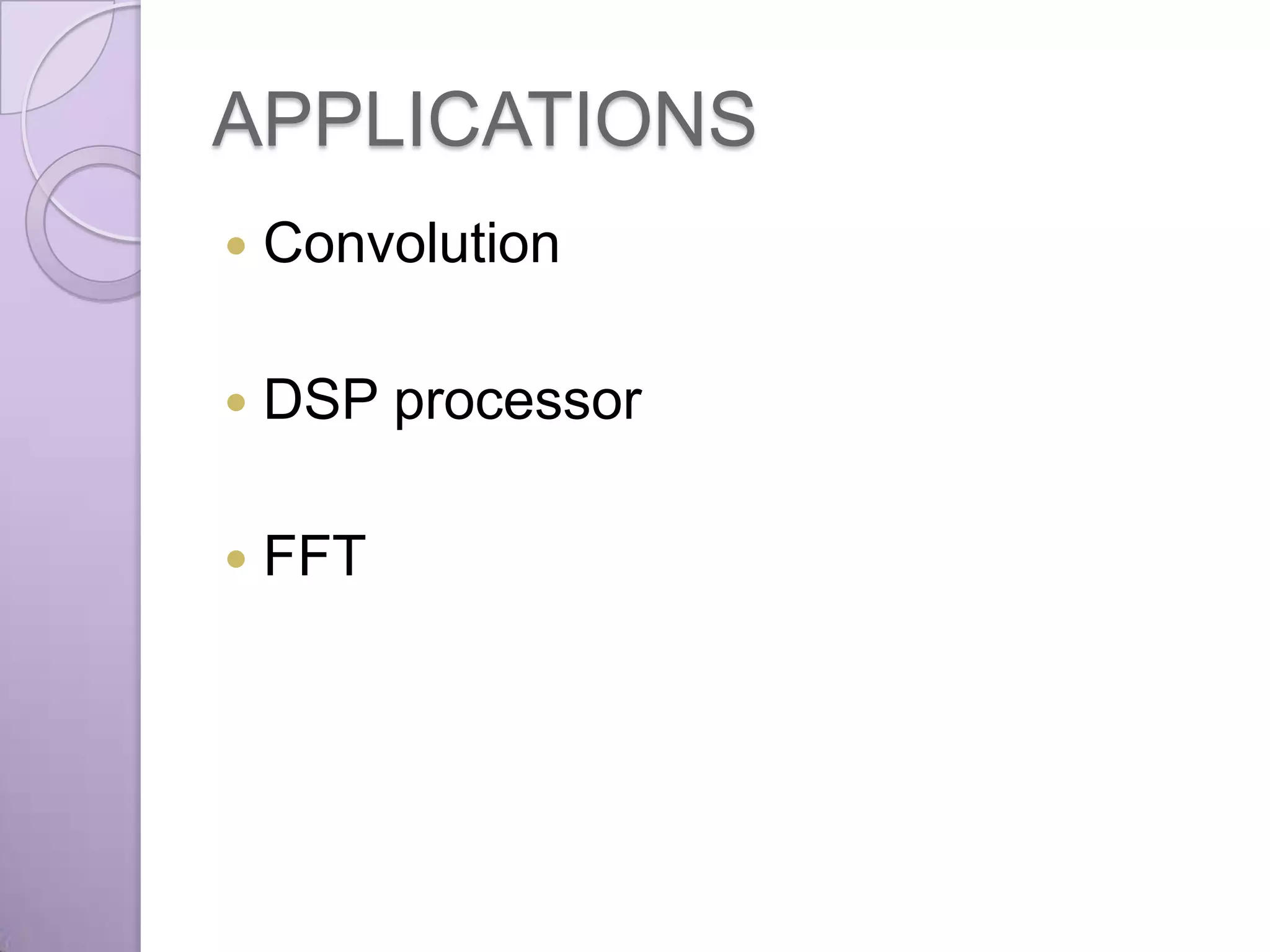
Applications of discussed multiplier architectures in convolution, DSP processors, and FFT.
IMPLEMENTATION OF FASTMULTIPLIER ARCHITECTURES
FOR CONVOLUTION APPLICATION IN SIGNAL
PROCESSING
K.SUSHMA(709212142027)
B.GAYATRI(709212142008)
2.
INTRODUCTION
Convolution isthe fundamental and
important operation in Signal processing
Multiply-accumulate operation is widely
used in Convolution
Computes the product of two numbers and
adds that product to an accumulator
Consists of a multiplier followed by an
accumulator that contains the sum of the
previous consecutive products
VEDIC MATHEMATICS
Ancient technique which simplifies
multiplication, division, squaring and
cubing of a number etc .
Unique technique of calculations
based on simple principles and rules.
Consists of sixteen mathematical
sutras and Upa sutras.
7.
URDHVA- TRIYAGBHYAM
One of the sixteen Vedic sutras.
Urdhva means vertical and
Triyagbhyam means crosswise.
8.
LINE DIAGRAM FORMULTIPLICATION
OF TWO- 4 BIT NUMBERS
STEP 1:
STEP 2:
STEP 3:
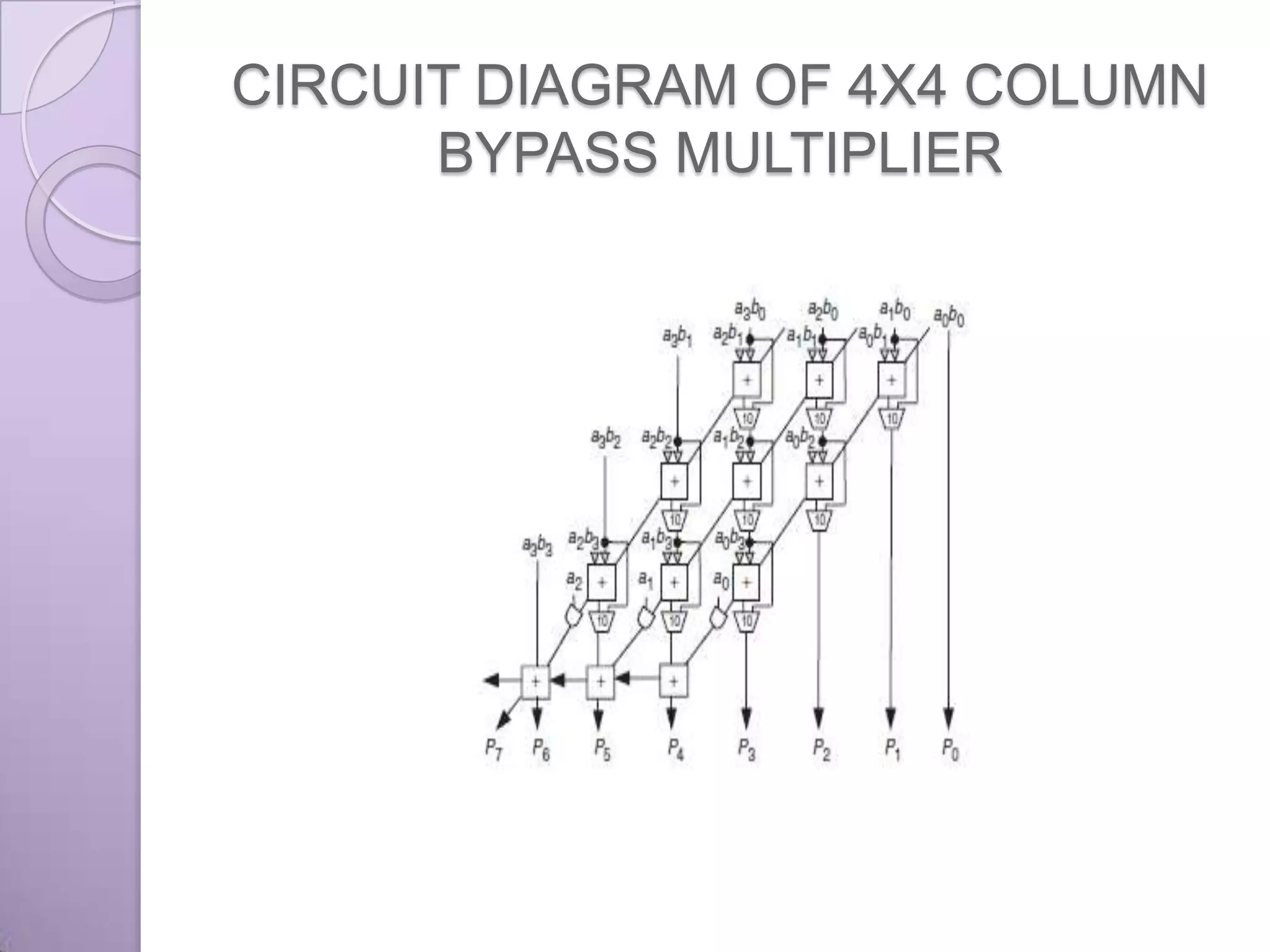
COLUMN BYPASS MULTIPLIER
If any bit of the multiplicand is
zero, then the corresponding partial
product will be zero
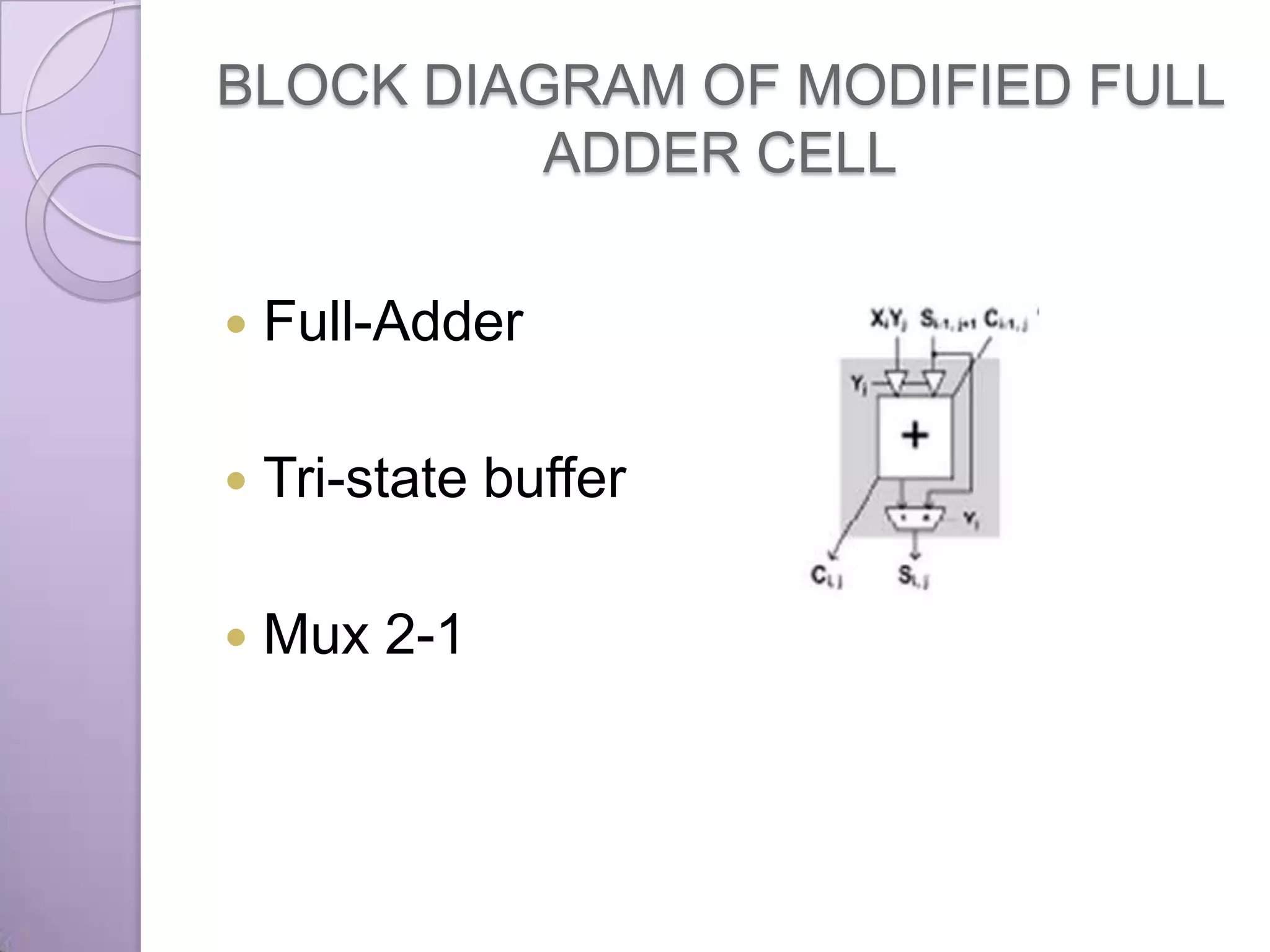
Therefore, the column of adders need
not to be activated
If aj=0 then the corresponding
operations in a column can be
disabled