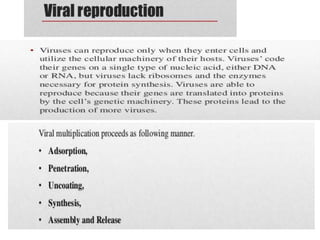
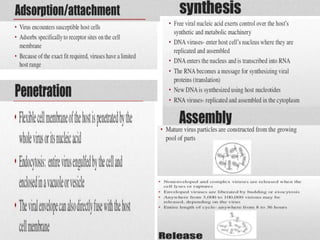
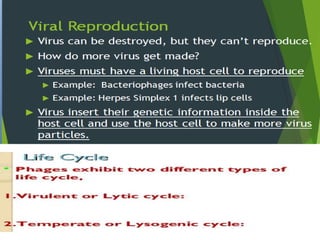
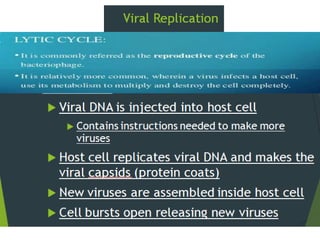
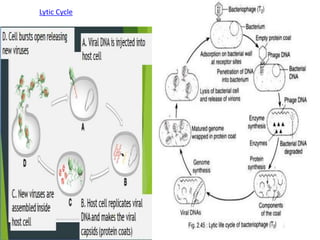
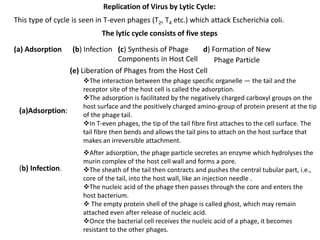
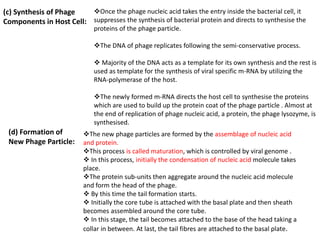
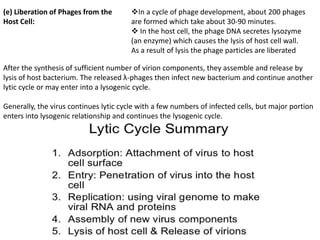
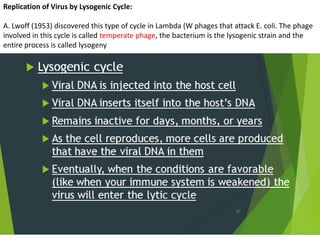
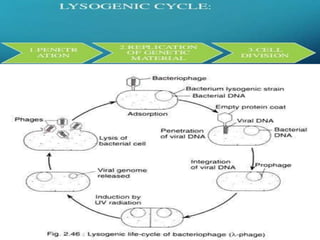
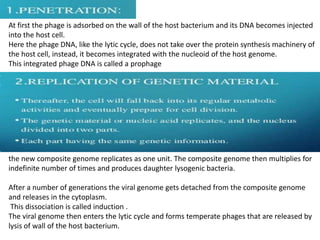
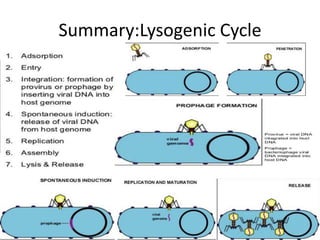
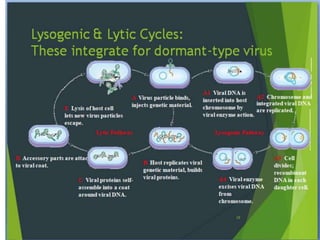
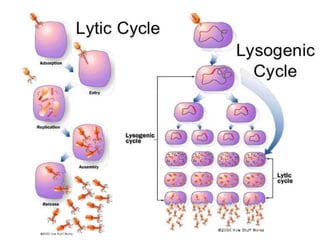
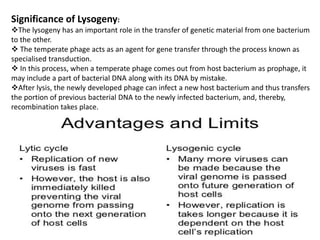
The document summarizes the lytic and lysogenic cycles of viral replication. The lytic cycle involves a virus infecting a host cell, using the cell's machinery to replicate viral components, assembling new virus particles, and then causing the host cell to lyse, releasing new virus particles to infect other cells. The lysogenic cycle involves a temperate virus inserting its DNA into the host genome without killing the cell. The viral DNA is replicated along with the host DNA and remains dormant until inducing factors cause it to enter the lytic cycle. Lysogeny allows for transmission of genetic material between bacteria through specialized transduction.