Downloaded 22 times



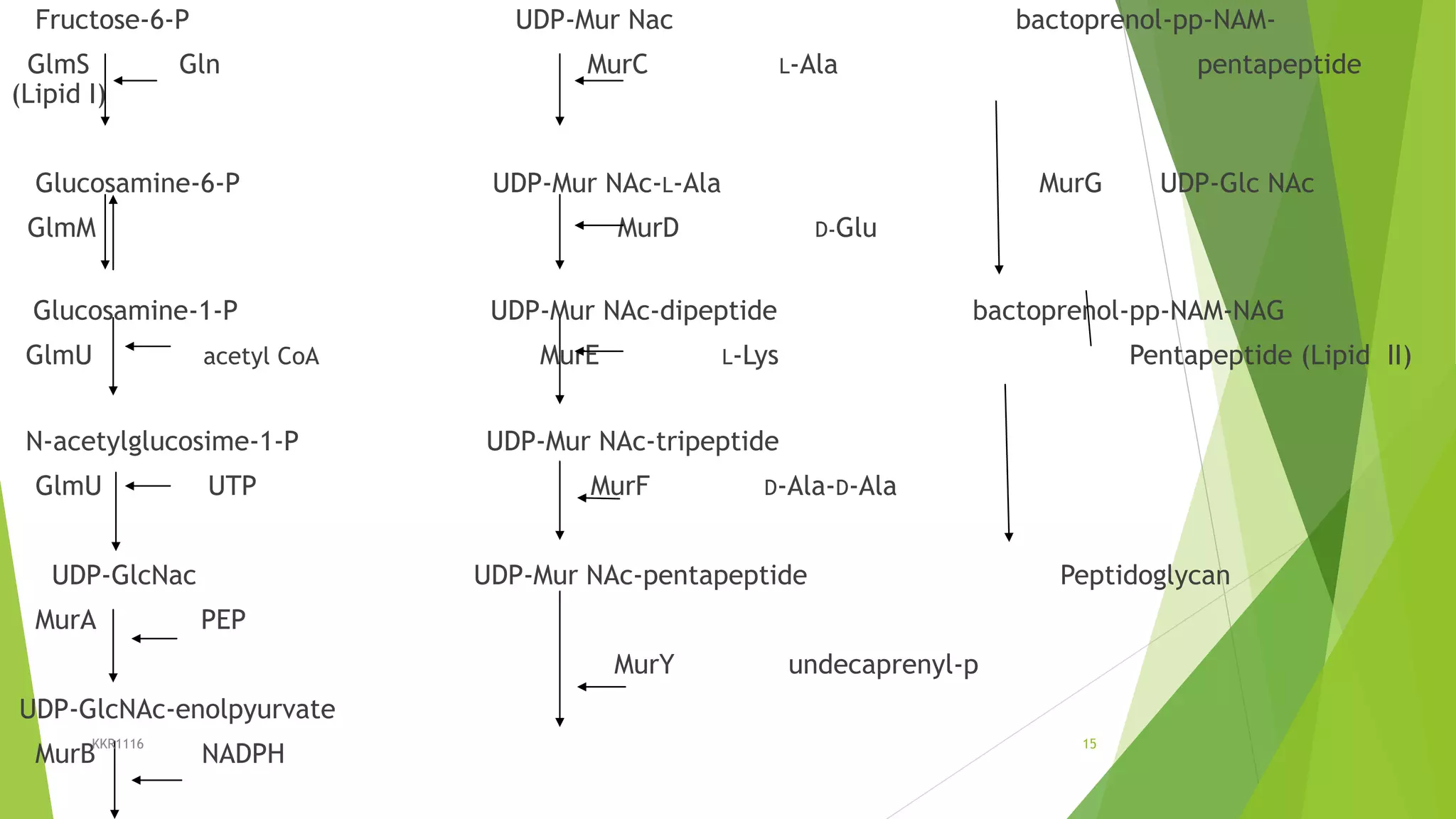
![ First stage:- take place in cytosol.
The two amino sugars that are precursors to the peptidoglycan are N-acetylglucosamine and N-
acetylmuramic acid . Both amino sugars are made from fructose-6-phosphate.
Step(1):- glutamine, which is aa amino acid ,denotes am amino group to a sugar . This turns fructose-6-
phosphate to glucosamine-6-phosphate in the presence of enzyme called glucosamine-6-phosphate
synthase [ Glm S]
fructose-6-phosphate Glm S glucosamine-6-phosphate
Step(2):-In this step isomerisation takes place, that glucosamine-6-phosphate to glucosamine-1-
phosphate in the presence of phosphoglucosamine mutase [ Glm M].
glucosamine-6-phosphate Glm M glucosamine-1-phosphate
Step(3):-An acetyl group is transferred from acetyl CoA to the amino group on the glucosamine-1-
phosphate creating N-acetyl glucosamine-1-phosphate, in presence of enzyme glucosamine-1-
phosphate acetyltransferase [ Glm U].
glucosamine-1-phosphate Glm U N-acetyl glucosamine-1-phosphate
KKR1116 9](https://image.slidesharecdn.com/biosynthesisofpeptidoglycan-210623081112/75/Biosynthesis-of-peptidoglycan-9-2048.jpg)


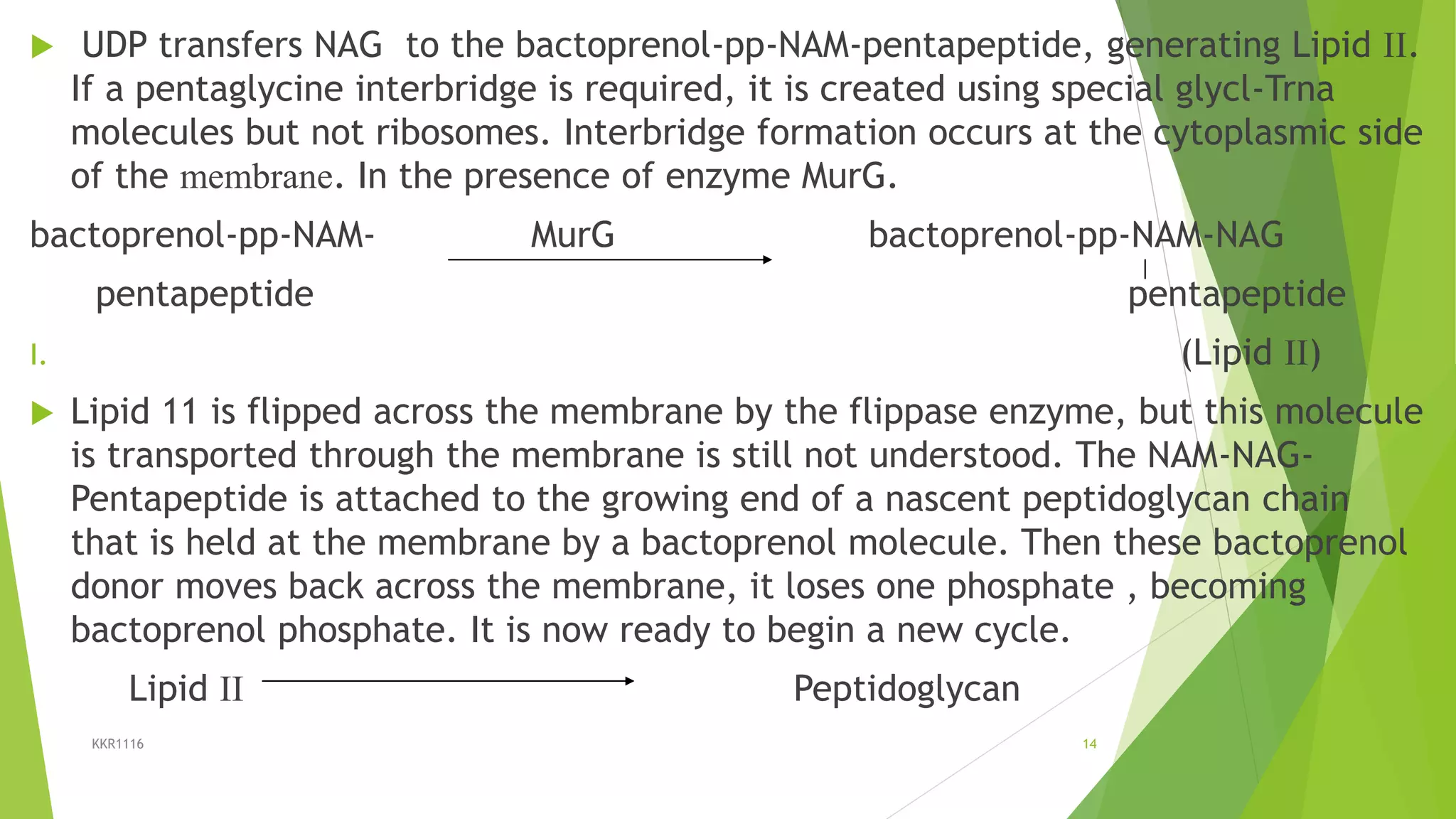


Peptidoglycan is a polymer that forms the cell wall of bacteria and provides structural strength. It consists of alternating sugars (N-acetylglucosamine and N-acetylmuramic acid) linked together into a mesh-like layer with cross-linking peptide chains. Peptidoglycan is synthesized through a two-stage process where sugar nucleotides and amino acids are assembled into a lipid carrier on the inner membrane before being polymerized into the cell wall. Several antibiotics are able to inhibit peptidoglycan synthesis by binding to enzymes involved in cross-linking, preventing cell wall assembly and causing bacterial cell death.


