LYTIC CYCLE
KANCHITA TEWARI
INTRODUCTION
• What is Lytic Cycle?
The definition states that virulent phages are those that can
multiply only on bacterial cells. At the end of their life cycle,
they cause cell lysis, which kills the host bacterium. The
viruses that infect bacteria are called bacteriophages. The
most common examples of a bacteriophage are T4 and
lambda phage. Both these phages can infect the bacterium
Escherichia coli (E. Coli). Phages are obligatory intracellular
parasites like other viruses and need a host cell to
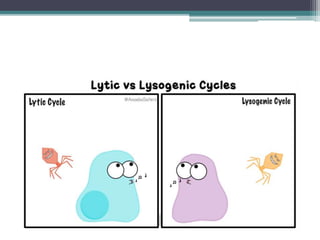
reproduce. The T4 phage replicates by the lytic cycle, which
eventually causes the host cell's death. The lambda phage
multiplies using lysogenic cycle, which does not cause the
host cell to die.
Process
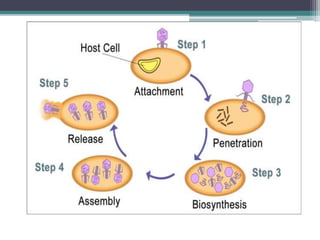
The bacteriophage reproduces using lytic cycle as its
method of reproduction. The five steps of its reproduction
are attachment, penetration, biosynthesis, assembly, and
release. Let us learn about these steps in detail.
• Attachment:
The T4 phage has a complex structure with several tail
fibers. These fibers help in the attachment of virus to the
cell wall of E. coli at the complementary receptor cells.
Once attached, weak chemical bonds are formed between
the receptor site and the attachment, which helps the virus
adhere to the host cell.
• Penetration:
Once the T4 phage is attached to the bacterial cell, it
injects its double-stranded DNA (or single stranded RNA,
depending on the type of phage) into the E. coli cell. The
T4 phage releases enzymes that weaken the cell wall of the
bacterium. This helps in injection of the genetic material of
the virus by pressing its sheath against the cell. The empty
capsid or virus body remains in the bacterial cell. Some
types of phages enter the host cell intact and dissolve their
capsid inside the host. This process is known as uncoating.
• Biosynthesis:
The host's protein synthesis stops when the host DNA is
degraded by the infecting virus. The viral DNA begins to
interfere with the transcription and translation of host
DNA. The T4 phage uses the host nucleotides to replicate
its own DNA. It also uses the host ribosomes, enzymes,
and amino acids to synthesize its own enzymes and
proteins. During the biosynthesis, there are not complete
phages inside the host cell. Thus, this stage is known as the
eclipse period.
• Assembly:
There are many viral components made in the host cell.
These are then assembled into complete viruses. The
proteins coded for phage DNA in case of T4 phage act as
enzymes, which are used for construction of new phages.
The host's metabolism is used for assembly of the phages,
which results in the bacterial cell being filled with new
viruses. Slowly, the capsids are assembled and the DNA is
packaged within the head. Finally, the tail fibers are
attached to the complex viral structure.
• Release:
The viruses are released from the host cell after assembly
of the new viral particle. The phage produces an enzyme
that breaks down the bacterial cell wall from within and
allows entry of fluid. The cell becomes full of new phage
cells (about 100-200) and fluid that cause cell lysis, thus
completing the cycle. The phages released are free to infect
more host cells and continue with the process.
Lytic cycle
Lytic cycle

Lytic cycle

  • 1.
  • 2.
    INTRODUCTION • What isLytic Cycle? The definition states that virulent phages are those that can multiply only on bacterial cells. At the end of their life cycle, they cause cell lysis, which kills the host bacterium. The viruses that infect bacteria are called bacteriophages. The most common examples of a bacteriophage are T4 and lambda phage. Both these phages can infect the bacterium Escherichia coli (E. Coli). Phages are obligatory intracellular parasites like other viruses and need a host cell to reproduce. The T4 phage replicates by the lytic cycle, which eventually causes the host cell's death. The lambda phage multiplies using lysogenic cycle, which does not cause the host cell to die.
  • 3.
    Process The bacteriophage reproducesusing lytic cycle as its method of reproduction. The five steps of its reproduction are attachment, penetration, biosynthesis, assembly, and release. Let us learn about these steps in detail. • Attachment: The T4 phage has a complex structure with several tail fibers. These fibers help in the attachment of virus to the cell wall of E. coli at the complementary receptor cells. Once attached, weak chemical bonds are formed between the receptor site and the attachment, which helps the virus adhere to the host cell.
  • 4.
    • Penetration: Once theT4 phage is attached to the bacterial cell, it injects its double-stranded DNA (or single stranded RNA, depending on the type of phage) into the E. coli cell. The T4 phage releases enzymes that weaken the cell wall of the bacterium. This helps in injection of the genetic material of the virus by pressing its sheath against the cell. The empty capsid or virus body remains in the bacterial cell. Some types of phages enter the host cell intact and dissolve their capsid inside the host. This process is known as uncoating.
  • 5.
    • Biosynthesis: The host'sprotein synthesis stops when the host DNA is degraded by the infecting virus. The viral DNA begins to interfere with the transcription and translation of host DNA. The T4 phage uses the host nucleotides to replicate its own DNA. It also uses the host ribosomes, enzymes, and amino acids to synthesize its own enzymes and proteins. During the biosynthesis, there are not complete phages inside the host cell. Thus, this stage is known as the eclipse period.
  • 6.
    • Assembly: There aremany viral components made in the host cell. These are then assembled into complete viruses. The proteins coded for phage DNA in case of T4 phage act as enzymes, which are used for construction of new phages. The host's metabolism is used for assembly of the phages, which results in the bacterial cell being filled with new viruses. Slowly, the capsids are assembled and the DNA is packaged within the head. Finally, the tail fibers are attached to the complex viral structure.
  • 7.
    • Release: The virusesare released from the host cell after assembly of the new viral particle. The phage produces an enzyme that breaks down the bacterial cell wall from within and allows entry of fluid. The cell becomes full of new phage cells (about 100-200) and fluid that cause cell lysis, thus completing the cycle. The phages released are free to infect more host cells and continue with the process.