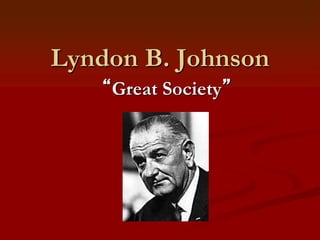
Lyndon B. Johnson
“Great Society”
LBJ’s Path to the White House
 Began political career in 1937
in the House
 “New Deal Democrat”
 Ran for Senate in 1938, won by
87 votes
 Nicknamed “landslide Lyndon”
 showed ambition and talent as
Senator,
 Famous for his “ability to work
within the political system and
accomplish his goals”
LBJ’s Road to the White House
 Ran for Democratic party
nomination in 1960, lost to
JFK
 Accepted Kennedy’s offer to
run as V.P.
 Never liked being VP
 felt the job was powerless
 Missed being in Congress
where he got things done
 Then suddenly, LBJ found
himself President
Entering Office
 Took office 90 minutes
after JFK was killed
 aboard Air Force One
 First address post-
assassination
 “All I have I would have given
gladly not to be standing here
today.”
 LBJ wanted to take up
where JFK left off
 Presidency theme: “Let us
Continue”
Building the Great Society
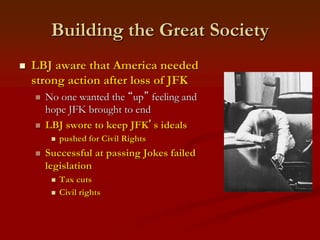
 LBJ aware that America needed
strong action after loss of JFK
 No one wanted the “up” feeling and
hope JFK brought to end
 LBJ swore to keep JFK’s ideals
 pushed for Civil Rights
 Successful at passing Jokes failed
legislation
 Tax cuts
 Civil rights
Building the Great Society
 LBJ’s civil rights laws
 Public education
 Medical care for seniors
 Eliminate poverty
 Spring ’64 LBJ began to use phrase “great
society” to describe his goals for society
Election of 1964
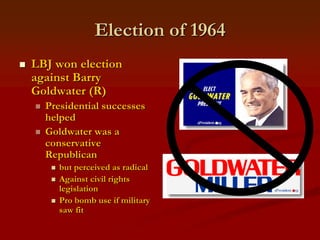
 LBJ won election
against Barry
Goldwater (R)
 Presidential successes
helped
 Goldwater was a
conservative
Republican
 but perceived as radical
 Against civil rights
legislation
 Pro bomb use if military
saw fit
Building the Great Society
 LBJ played on fear of nuclear war
 won him votes over Barry Goldwater
 Ex. Girl with flower commercial
 LBJ won election – rec’d 61% of popular vote;
486 electoral votes
 Tax cuts
 LBJ thought a budget deficit would improve
economy
 Not everyone agreed
Building the Great Society
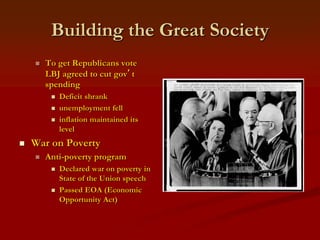
 To get Republicans vote
LBJ agreed to cut gov’t
spending
 Deficit shrank
 unemployment fell
 inflation maintained its
level
 War on Poverty
 Anti-poverty program
 Declared war on poverty in
State of the Union speech
 Passed EOA (Economic
Opportunity Act)
Building the Great Society
 Summer, 1964
 Fought causes of poverty
 Illiteracy
 Unemployment
 inadequate public services
 $950 million set aside to fund 10 different programs
 Work training programs
 Volunteers In Service To America (VISTA)
 Bottom line: EOA gave the poor a voice
 Helped define housing, health and education policies
Building the Great Society
 Aid to Education
 LBJ vowed to improve education
 Successful programs
 Elementary and Secondary Education Act
 provided aid to states based on the number of students from
low income homes
 Money ($1.3 billion) would be distributed to public and
private schools
Building the Great Society
 Medicare & Medicaid
 Important to LBJ
 Medicare
 provided hospital and low-cost medical insurance for
most senior citizens
 Medicaid
 provided low-cost health insurance for poor who
couldn’t afford insurance
 most important pieces of social welfare legislation
since the Social Security Act in 1935.
 Demonstrated the commitment to help those
who needed it.
Building the Great Society
 Immigration Reform
 “great society” also revised immigration
policies
 Previous laws set quotas for each foreign
nation
 Low quotas for Southern & Eastern
European countries
 Banned Asian immigration altogether
 Immigration Act, 1965- eliminated quotas
for individual countries
 170.000 people from E. hemisphere &
120,000 from W. hemisphere
 Family of US citizens were exempt,
also political refugees
 1960s 350,000 immigrants entered US
per year, in 70s rose to 400,000
Uh…sorry
guys but
we’re closed .
Effects of the Great Society
 Although initially successful,
did not last
 Criticisms:
 New programs raised
expectations, created
disillusionment (not all can be
met)
 Too much spent on poor
 Federal gov’t had too much
power
 Money set aside for program
budgets used to fund Vietnam
war
 Former CA governor
 Appointed Chief Justice by
Eisenhower in ‘53
 Served until retirement, 1969
 Under Warren, Supreme
Court:
 overturned many old laws
and rulings
 established new legal
precedents.
 Brown V. Board of
Education (1954)
 Escobedo v. Illinois (1964)
 Miranda v. Arizona (1966)
Chief Justice Earl Warren
 Other important decisions:
 1965-declared a law banning
birth control
unconstitutional
 removed prayer in public
schools
 Changed obscenity laws
(cannot restrict material that
might have “some
redeeming social value”)
 Mapp v. Ohio (1961)
 Gideon v. Wainright (1963)
Chief Justice Earl Warren
 Congressional
reapportionment
 Apportionment: how to figure
the distribution of a legislative
body’s seats among electoral
districts
 State districts were not
reapportioning as they should to
allow for the population shifts
 Baker v. Carr (1962)
 Impact: prevented political party
in power from redrawing district
lines to give them an advantage

Lyndon b

  • 1.
  • 2.
    LBJ’s Path tothe White House  Began political career in 1937 in the House  “New Deal Democrat”  Ran for Senate in 1938, won by 87 votes  Nicknamed “landslide Lyndon”  showed ambition and talent as Senator,  Famous for his “ability to work within the political system and accomplish his goals”
  • 3.
    LBJ’s Road tothe White House  Ran for Democratic party nomination in 1960, lost to JFK  Accepted Kennedy’s offer to run as V.P.  Never liked being VP  felt the job was powerless  Missed being in Congress where he got things done  Then suddenly, LBJ found himself President
  • 4.
    Entering Office  Tookoffice 90 minutes after JFK was killed  aboard Air Force One  First address post- assassination  “All I have I would have given gladly not to be standing here today.”  LBJ wanted to take up where JFK left off  Presidency theme: “Let us Continue”
  • 5.
    Building the GreatSociety  LBJ aware that America needed strong action after loss of JFK  No one wanted the “up” feeling and hope JFK brought to end  LBJ swore to keep JFK’s ideals  pushed for Civil Rights  Successful at passing Jokes failed legislation  Tax cuts  Civil rights
  • 6.
    Building the GreatSociety  LBJ’s civil rights laws  Public education  Medical care for seniors  Eliminate poverty  Spring ’64 LBJ began to use phrase “great society” to describe his goals for society
  • 7.
    Election of 1964 LBJ won election against Barry Goldwater (R)  Presidential successes helped  Goldwater was a conservative Republican  but perceived as radical  Against civil rights legislation  Pro bomb use if military saw fit
  • 8.
    Building the GreatSociety  LBJ played on fear of nuclear war  won him votes over Barry Goldwater  Ex. Girl with flower commercial  LBJ won election – rec’d 61% of popular vote; 486 electoral votes  Tax cuts  LBJ thought a budget deficit would improve economy  Not everyone agreed
  • 10.
    Building the GreatSociety  To get Republicans vote LBJ agreed to cut gov’t spending  Deficit shrank  unemployment fell  inflation maintained its level  War on Poverty  Anti-poverty program  Declared war on poverty in State of the Union speech  Passed EOA (Economic Opportunity Act)
  • 11.
    Building the GreatSociety  Summer, 1964  Fought causes of poverty  Illiteracy  Unemployment  inadequate public services  $950 million set aside to fund 10 different programs  Work training programs  Volunteers In Service To America (VISTA)  Bottom line: EOA gave the poor a voice  Helped define housing, health and education policies
  • 12.
    Building the GreatSociety  Aid to Education  LBJ vowed to improve education  Successful programs  Elementary and Secondary Education Act  provided aid to states based on the number of students from low income homes  Money ($1.3 billion) would be distributed to public and private schools
  • 13.
    Building the GreatSociety  Medicare & Medicaid  Important to LBJ  Medicare  provided hospital and low-cost medical insurance for most senior citizens  Medicaid  provided low-cost health insurance for poor who couldn’t afford insurance  most important pieces of social welfare legislation since the Social Security Act in 1935.  Demonstrated the commitment to help those who needed it.
  • 14.
    Building the GreatSociety  Immigration Reform  “great society” also revised immigration policies  Previous laws set quotas for each foreign nation  Low quotas for Southern & Eastern European countries  Banned Asian immigration altogether  Immigration Act, 1965- eliminated quotas for individual countries  170.000 people from E. hemisphere & 120,000 from W. hemisphere  Family of US citizens were exempt, also political refugees  1960s 350,000 immigrants entered US per year, in 70s rose to 400,000 Uh…sorry guys but we’re closed .
  • 15.
    Effects of theGreat Society  Although initially successful, did not last  Criticisms:  New programs raised expectations, created disillusionment (not all can be met)  Too much spent on poor  Federal gov’t had too much power  Money set aside for program budgets used to fund Vietnam war
  • 16.
     Former CAgovernor  Appointed Chief Justice by Eisenhower in ‘53  Served until retirement, 1969  Under Warren, Supreme Court:  overturned many old laws and rulings  established new legal precedents.  Brown V. Board of Education (1954)  Escobedo v. Illinois (1964)  Miranda v. Arizona (1966)
  • 17.
    Chief Justice EarlWarren  Other important decisions:  1965-declared a law banning birth control unconstitutional  removed prayer in public schools  Changed obscenity laws (cannot restrict material that might have “some redeeming social value”)  Mapp v. Ohio (1961)  Gideon v. Wainright (1963)
  • 18.
    Chief Justice EarlWarren  Congressional reapportionment  Apportionment: how to figure the distribution of a legislative body’s seats among electoral districts  State districts were not reapportioning as they should to allow for the population shifts  Baker v. Carr (1962)  Impact: prevented political party in power from redrawing district lines to give them an advantage