PRESENT BY:KAUSIK DAS.(0215)
Student of (ECE) The Assam Kaziranga University .
1
 Transducer:






Its Classification
Active and Passive Transducers
Advantages of Electrical Transducers
Application of Transducers

 LVDT:








Construction
Principle
Operation
Advantages and Disadvantages
Uses

References
2
A

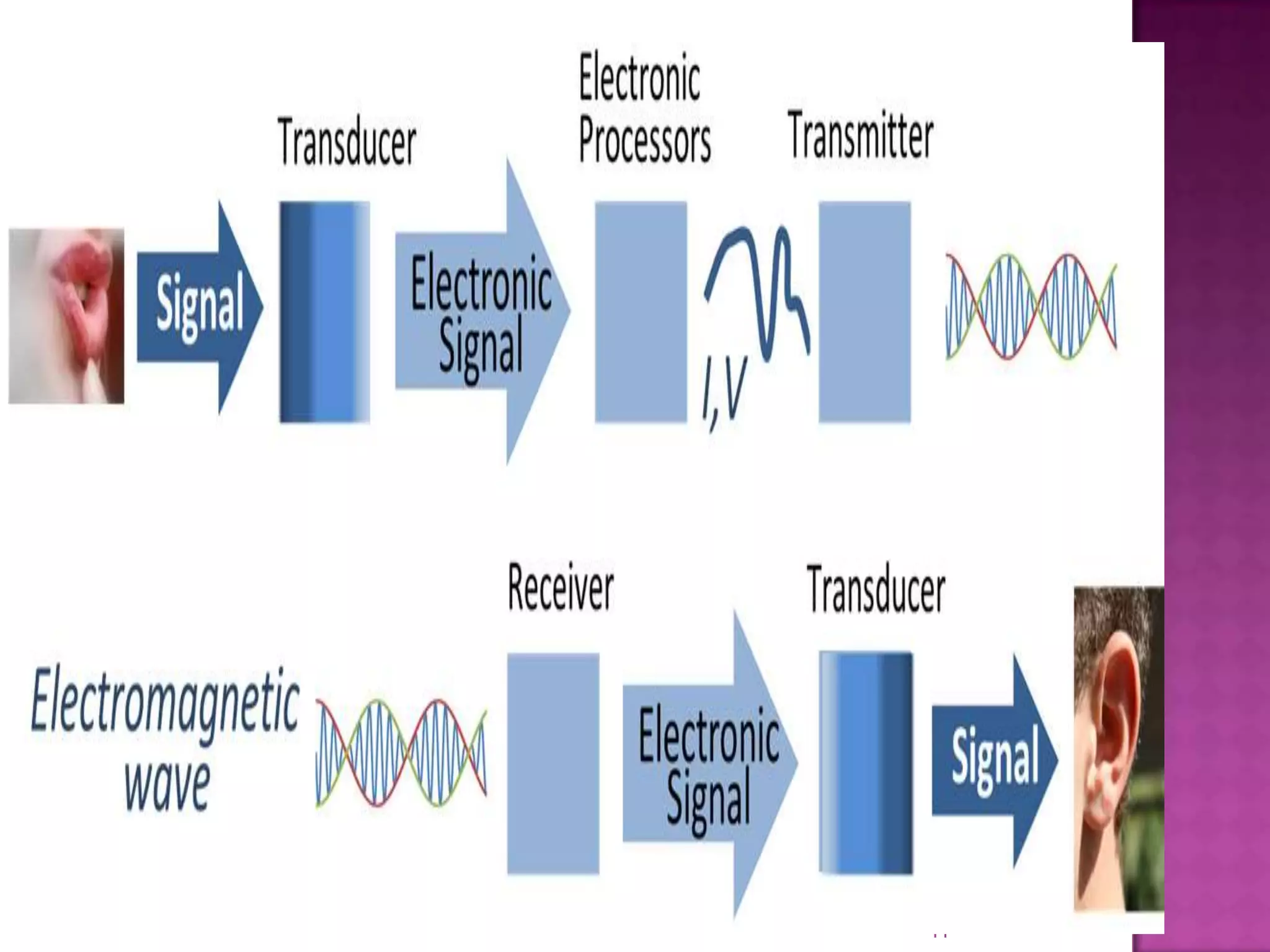
Transducer is a device which converts
mechanical force into an electrical signal
 Many
physical
parameters
such
as
heat, intensity of light, flow rate, liquid
level, humidity and pH level
etc. are
converted to electrical form by means of
transducers

3
Transducers can be classified as:
1) On the basis of principle of transduction as
 Capacitive
 Reactive
 Inductive etc

4
2)As Primary and Secondary Transducers
 “Primary Transducer”- Bourdon Tube
 “Secondary Transducer” - Linear Variable
Differential Transducer(L.V.D.T)
3)As Passive and Active Transducers

4)As Analog and Digital Transducers, and,
5)As Transducers and Inverse Transducers

5
 Active

Transducers are those which do not require
an auxiliary power source to produce their output.

 They

are also known as “self generating type” since
they develop their own voltage or current output.

Eg: Velocity, temperature, light intensity and force
can be transduced with the help of active transducers.

6
 Passive

transducers derive the power
required for transduction from an auxiliary
power source.

 They

are also known as “externally powered
transducers”.

Eg:- Resistive, inductive and capacitive
transducers.

7
The advantages of converting physical
quantities into analogous electrical quantities
are : Electrical amplification and attenuation can
be done easily and that to with static
devices.
 The electrical or electronic system can be
controlled with a very small power level.

8
 The

electrical output can be easily
used, transmitted and processed for the
purpose of measurement.

 Due

to the integrated circuit technology, the
electrical systems are compact.

9
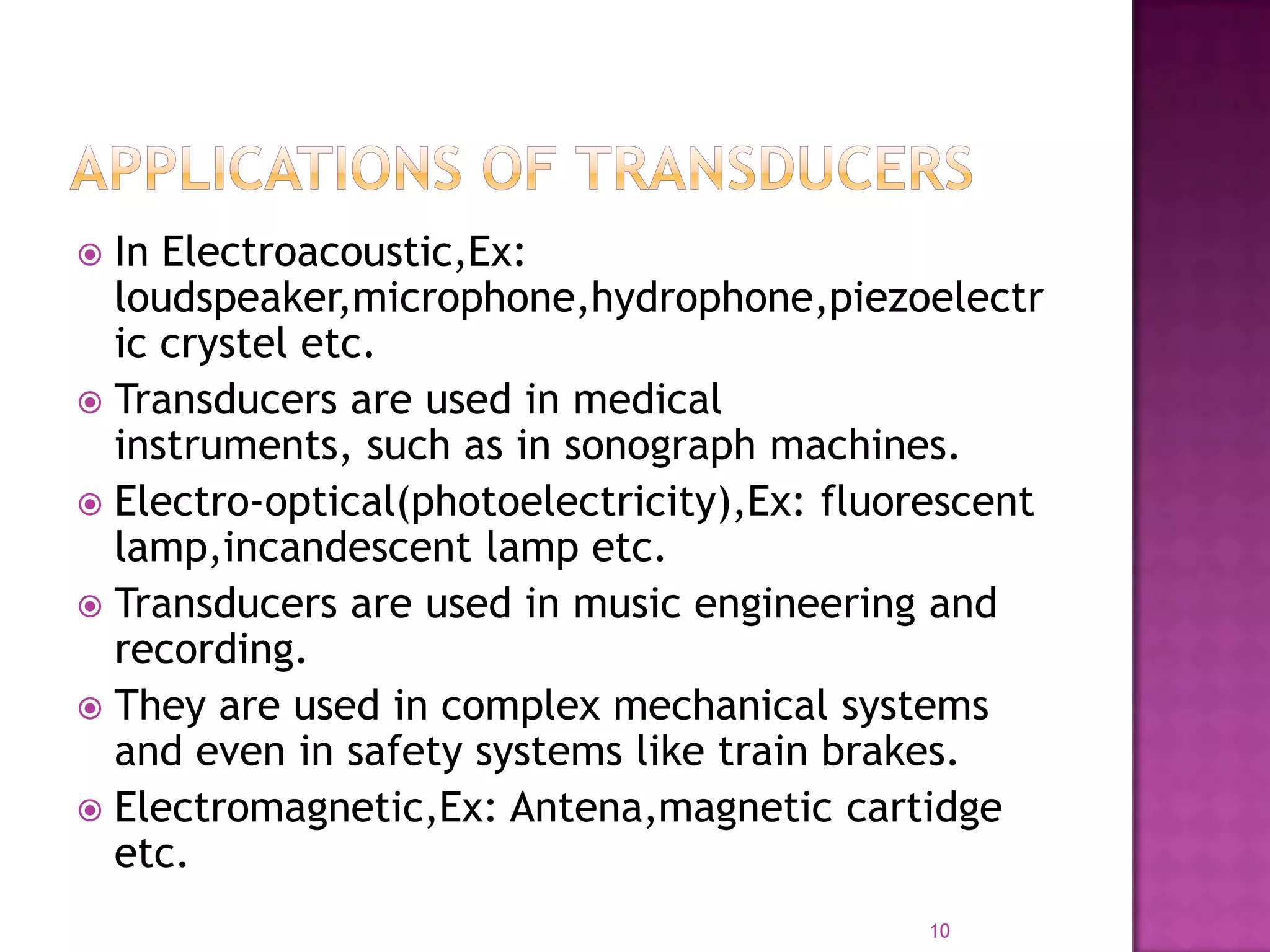
In Electroacoustic,Ex:
loudspeaker,microphone,hydrophone,piezoelectr
ic crystel etc.
 Transducers are used in medical
instruments, such as in sonograph machines.
 Electro-optical(photoelectricity),Ex: fluorescent
lamp,incandescent lamp etc.
 Transducers are used in music engineering and
recording.
 They are used in complex mechanical systems
and even in safety systems like train brakes.
 Electromagnetic,Ex: Antena,magnetic cartidge
etc.


10
11
 The

linear variable-differential
transformer(LVDT) is the most widely used
inductive transducer to translate linear
motion into electrical signal

12
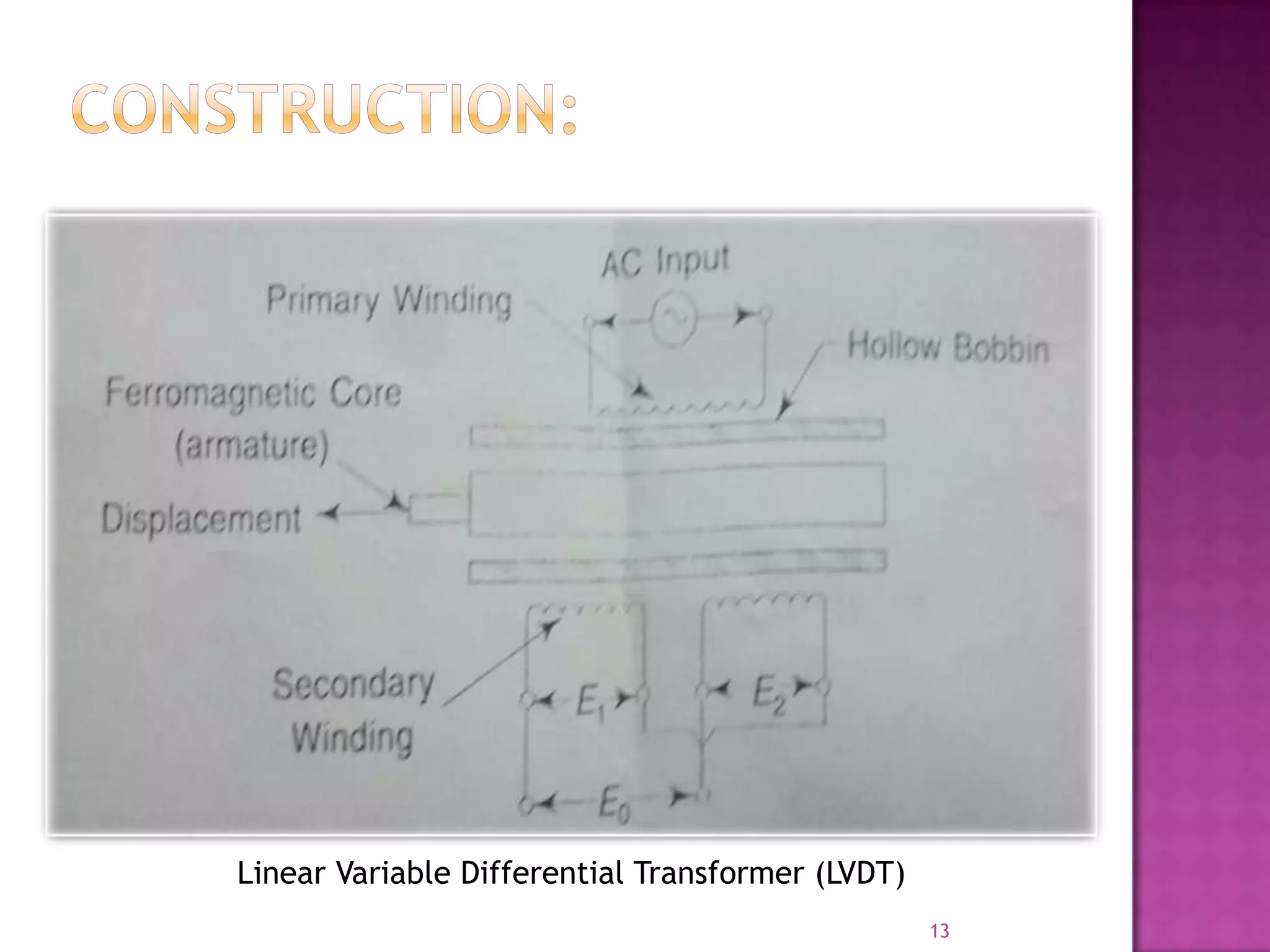
Linear Variable Differential Transformer (LVDT)
13
A

differential transformer consists of a
primary winding and two secondary windings.
The windings are arranged concentrically and
next to each other.
 A ferro-magnetic core(armature) in the shape
of a rod or cylinder is attached to the
transducer sensing shaft.
 The core slides freely within the hollow
portion of the bobbin.

14
 An

a.c. excitation is applied across the
primary winding and the movable core varies
the coupling between it and the two
secondary windings.
 As the core moves away from the centre
position, the coupling to one secondary
becomes more and hence its output voltage
increases, while the coupling and the output
voltage of the other secondary decreases.

15
 Any

physical displacement of the core causes
the voltage of one secondary winding to
increase while simultaneously, reducing the
voltage in the other secondary winding.
 The difference of the two voltages appears
across the output terminals of
the
transducers and gives a measure of the
physical position of the core and hence the
displacement.

16
 When

the core is in the neutral or zero
position, voltages induced in the secondary
windings are equal and opposite and the net
output is negligible.
 By comparing the magnitude and phase of
output with input source, the amount and
direction of movement of core and hence
displacement may be determined.

17
 The

transducers possess a high sensitivity.
 The transducers have low hysteresis and
hence repeatability is excellent under all
conditions.
 They have infinite resolution.
 They are simple,light in weight and easy to
maintain.

18
 They

are sensitive to stray magnetic fields
but shielding is possible.
 They are inherently low in power output.
 Temperature affects the perfomance of
transducer.

19
 The

LVDT can be used in all applications
where displacements ranging from fraction
of a mm to a few cm have to be measured.

 Acting

as a secondary transducer it can be
used as a device to measure force, weight
and pressure.

20
21

Lvdt

  • 1.
    PRESENT BY:KAUSIK DAS.(0215) Studentof (ECE) The Assam Kaziranga University . 1
  • 2.
     Transducer:     Its Classification Activeand Passive Transducers Advantages of Electrical Transducers Application of Transducers  LVDT:       Construction Principle Operation Advantages and Disadvantages Uses References 2
  • 3.
    A Transducer is adevice which converts mechanical force into an electrical signal  Many physical parameters such as heat, intensity of light, flow rate, liquid level, humidity and pH level etc. are converted to electrical form by means of transducers 3
  • 4.
    Transducers can beclassified as: 1) On the basis of principle of transduction as  Capacitive  Reactive  Inductive etc 4
  • 5.
    2)As Primary andSecondary Transducers  “Primary Transducer”- Bourdon Tube  “Secondary Transducer” - Linear Variable Differential Transducer(L.V.D.T) 3)As Passive and Active Transducers 4)As Analog and Digital Transducers, and, 5)As Transducers and Inverse Transducers 5
  • 6.
     Active Transducers arethose which do not require an auxiliary power source to produce their output.  They are also known as “self generating type” since they develop their own voltage or current output. Eg: Velocity, temperature, light intensity and force can be transduced with the help of active transducers. 6
  • 7.
     Passive transducers derivethe power required for transduction from an auxiliary power source.  They are also known as “externally powered transducers”. Eg:- Resistive, inductive and capacitive transducers. 7
  • 8.
    The advantages ofconverting physical quantities into analogous electrical quantities are : Electrical amplification and attenuation can be done easily and that to with static devices.  The electrical or electronic system can be controlled with a very small power level. 8
  • 9.
     The electrical outputcan be easily used, transmitted and processed for the purpose of measurement.  Due to the integrated circuit technology, the electrical systems are compact. 9
  • 10.
    In Electroacoustic,Ex: loudspeaker,microphone,hydrophone,piezoelectr ic crysteletc.  Transducers are used in medical instruments, such as in sonograph machines.  Electro-optical(photoelectricity),Ex: fluorescent lamp,incandescent lamp etc.  Transducers are used in music engineering and recording.  They are used in complex mechanical systems and even in safety systems like train brakes.  Electromagnetic,Ex: Antena,magnetic cartidge etc.  10
  • 11.
  • 12.
     The linear variable-differential transformer(LVDT)is the most widely used inductive transducer to translate linear motion into electrical signal 12
  • 13.
    Linear Variable DifferentialTransformer (LVDT) 13
  • 14.
    A differential transformer consistsof a primary winding and two secondary windings. The windings are arranged concentrically and next to each other.  A ferro-magnetic core(armature) in the shape of a rod or cylinder is attached to the transducer sensing shaft.  The core slides freely within the hollow portion of the bobbin. 14
  • 15.
     An a.c. excitationis applied across the primary winding and the movable core varies the coupling between it and the two secondary windings.  As the core moves away from the centre position, the coupling to one secondary becomes more and hence its output voltage increases, while the coupling and the output voltage of the other secondary decreases. 15
  • 16.
     Any physical displacementof the core causes the voltage of one secondary winding to increase while simultaneously, reducing the voltage in the other secondary winding.  The difference of the two voltages appears across the output terminals of the transducers and gives a measure of the physical position of the core and hence the displacement. 16
  • 17.
     When the coreis in the neutral or zero position, voltages induced in the secondary windings are equal and opposite and the net output is negligible.  By comparing the magnitude and phase of output with input source, the amount and direction of movement of core and hence displacement may be determined. 17
  • 18.
     The transducers possessa high sensitivity.  The transducers have low hysteresis and hence repeatability is excellent under all conditions.  They have infinite resolution.  They are simple,light in weight and easy to maintain. 18
  • 19.
     They are sensitiveto stray magnetic fields but shielding is possible.  They are inherently low in power output.  Temperature affects the perfomance of transducer. 19
  • 20.
     The LVDT canbe used in all applications where displacements ranging from fraction of a mm to a few cm have to be measured.  Acting as a secondary transducer it can be used as a device to measure force, weight and pressure. 20
  • 21.