UNIT 2
CHARACTERISTICS AND TYPES OF TRANSDUCERS
Characteristics for selection of transducers, Classification of
transducers, Resistive transducers, Inductive transducers,
Capacitive transducers
Transducer
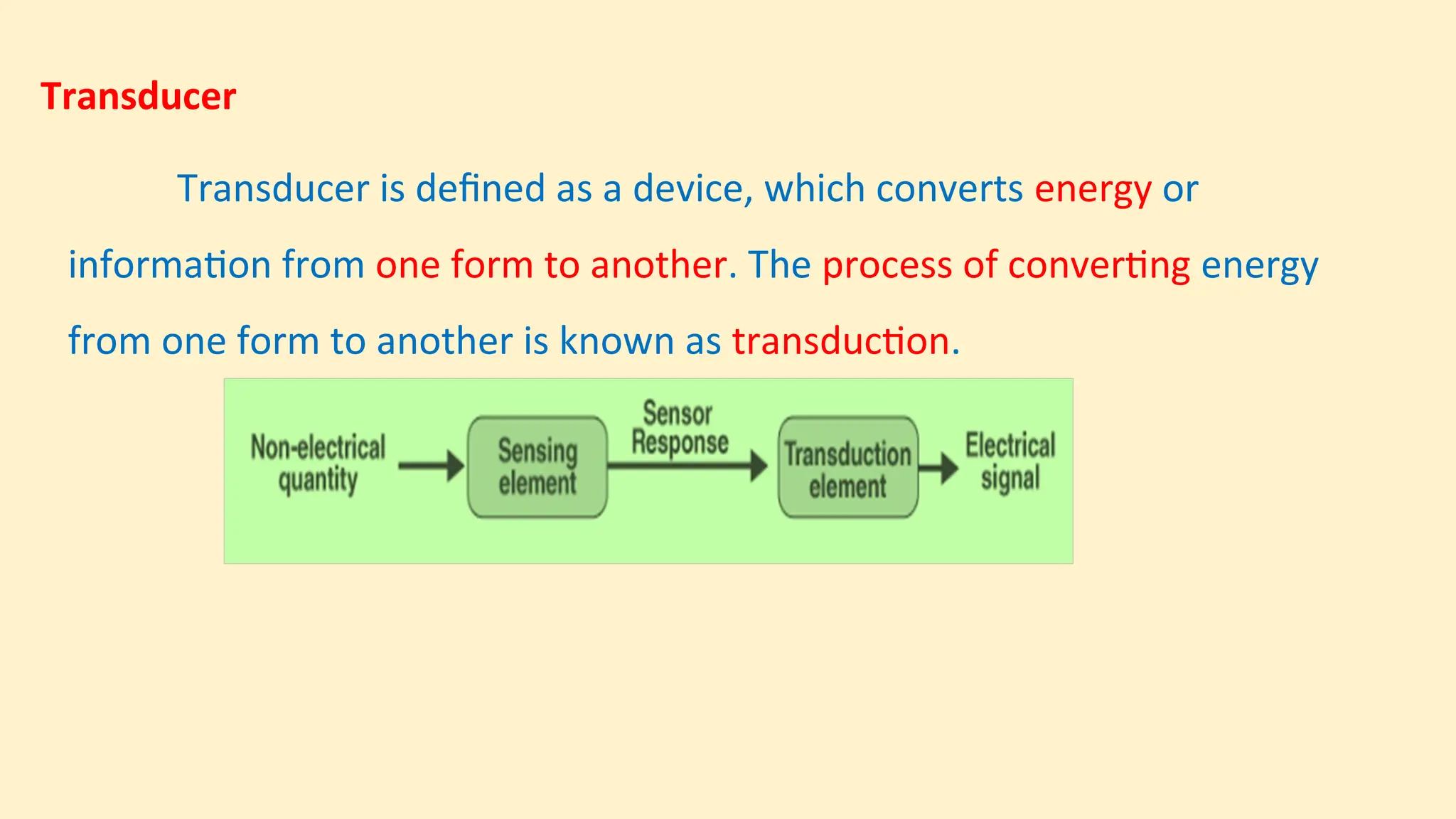
Transducer is defined as a device, which converts energy or
information from one form to another. The process of converting energy
from one form to another is known as transduction.
Why do we need a transducer?
 To determine the exact magnitude of physical forces such as
temperature and pressure is difficult. But, if these physical forces are
converted into an electrical signal, then their values can be easily
determined using a meter.
 The primary function of transducers is to convert a physical
force into an electrical signal so that it can be easily handled and
transmitted for measurement.
Advantages of converting a physical quantity into an electrical signal
Electrical signals are easily transmitted and processed for
measurement.
Electrical signals process less friction error.
Small power is needed to control the electrical systems.
Amplification and attenuation of electrical signals are easy.
The measuring instrument used for measuring the electrical signal is
very compact and accurate.
Parts of Transducer
A transducer consists of the following two important parts:
Sensing element
Transduction element
Transducers have other vital parts such as signal processing equipment,
amplifiers and power supplies.
Sensing Element
It is the part of a transducer that responds to the physical sensation. The
response of the sensing element depends on the physical phenomenon.
Transduction Element
The transduction element of the transducer converts the output of the
sensing element into an electrical signal. The transduction element is also called
the secondary transducer.
Applications of Transducer
A transducer measures load on the engines
They are used to detect the movement of muscles; this process is
known as acceleromyograph.
Transducers are used in an ultrasound machine.
The transducers in a speaker convert electrical signals into acoustic
sound.
A transducer is used in the antenna to convert electromagnetic
waves into an electrical signal.
Classification of transducers
The transducers may be classified in various ways such as on the basis
of electrical principles involved, methods of application, methods of
energy conversion used, nature of output signal etc
On the basis of transduction form used
Primary and Secondary Transducers
Active and Passive Transducers
Analog and Digital Transducers
Transducers and Inverse Transducers
i) On the basis of transduction form used
Depending upon how they convert the input quantity into resistance,
inductance or capacitance.
Resistive, inductive, capacitive etc.
ii) Primary and Secondary Transducers
Some transducers consist of mechanical device along with the electrical device.
In such transducer’s mechanical device acts as a primary transducer and
converts physical quantity into mechanical signal.
The electrical device that converts mechanical signal produced by primary
transducer into an electrical signal acts as a secondary transducer.
For example, in case of pressure measurement, bourdon tube is a primary
sensor which converts pressure first into displacement, and then the
displacement is converted into an output voltage by an LVDT. In this case LVDT
is secondary transducer.
iii) Active and Passive Transducers
Active transducers- These transducers do not require any external source or
power for their operation. So they are called as self-generating type.eg) Piezo
electric crystal.
Passive transducers- do not generate electrical signals by themselves. To
obtain an electric signal for such transducers an extrernal power source is
essential. They are also known as externally power-driven transducers. Eg.
Potentiometer, LVDT
iv) Analog and Digital Transducers
Transducers, on the basis of nature of output signal, may be classified into
analog and digital transducers.
Analog transducer converts input signal into output signal, which is a
continuous function of time such as thermistor, strain gauge, LVDT, thermo-
couple etc.
Digital transducer converts input signal into the output signal of the form of
pulse e.g. Microphone, Loudspeaker, thermometers etc.,
v) Transducers and Inverse Transducers
Transducer, as already defined, is a device that converts a non-electrical
quantity into an electrical quantity.
An inverse transducer is a device that converts an electrical quantity into a
non- electrical quantity. (e.g) Loudspeaker converts electrical signal to sound
signal. An ammeter or voltmeter converts electric current into mechanical
movement.

Characteritics of Transducers,types,appl

  • 1.
    UNIT 2 CHARACTERISTICS ANDTYPES OF TRANSDUCERS Characteristics for selection of transducers, Classification of transducers, Resistive transducers, Inductive transducers, Capacitive transducers
  • 2.
    Transducer Transducer is definedas a device, which converts energy or information from one form to another. The process of converting energy from one form to another is known as transduction.
  • 3.
    Why do weneed a transducer?  To determine the exact magnitude of physical forces such as temperature and pressure is difficult. But, if these physical forces are converted into an electrical signal, then their values can be easily determined using a meter.  The primary function of transducers is to convert a physical force into an electrical signal so that it can be easily handled and transmitted for measurement.
  • 4.
    Advantages of convertinga physical quantity into an electrical signal Electrical signals are easily transmitted and processed for measurement. Electrical signals process less friction error. Small power is needed to control the electrical systems. Amplification and attenuation of electrical signals are easy. The measuring instrument used for measuring the electrical signal is very compact and accurate.
  • 5.
    Parts of Transducer Atransducer consists of the following two important parts: Sensing element Transduction element Transducers have other vital parts such as signal processing equipment, amplifiers and power supplies. Sensing Element It is the part of a transducer that responds to the physical sensation. The response of the sensing element depends on the physical phenomenon. Transduction Element The transduction element of the transducer converts the output of the sensing element into an electrical signal. The transduction element is also called the secondary transducer.
  • 6.
    Applications of Transducer Atransducer measures load on the engines They are used to detect the movement of muscles; this process is known as acceleromyograph. Transducers are used in an ultrasound machine. The transducers in a speaker convert electrical signals into acoustic sound. A transducer is used in the antenna to convert electromagnetic waves into an electrical signal.
  • 7.
    Classification of transducers Thetransducers may be classified in various ways such as on the basis of electrical principles involved, methods of application, methods of energy conversion used, nature of output signal etc On the basis of transduction form used Primary and Secondary Transducers Active and Passive Transducers Analog and Digital Transducers Transducers and Inverse Transducers
  • 8.
    i) On thebasis of transduction form used Depending upon how they convert the input quantity into resistance, inductance or capacitance. Resistive, inductive, capacitive etc. ii) Primary and Secondary Transducers Some transducers consist of mechanical device along with the electrical device. In such transducer’s mechanical device acts as a primary transducer and converts physical quantity into mechanical signal. The electrical device that converts mechanical signal produced by primary transducer into an electrical signal acts as a secondary transducer. For example, in case of pressure measurement, bourdon tube is a primary sensor which converts pressure first into displacement, and then the displacement is converted into an output voltage by an LVDT. In this case LVDT is secondary transducer.
  • 9.
    iii) Active andPassive Transducers Active transducers- These transducers do not require any external source or power for their operation. So they are called as self-generating type.eg) Piezo electric crystal. Passive transducers- do not generate electrical signals by themselves. To obtain an electric signal for such transducers an extrernal power source is essential. They are also known as externally power-driven transducers. Eg. Potentiometer, LVDT
  • 10.
    iv) Analog andDigital Transducers Transducers, on the basis of nature of output signal, may be classified into analog and digital transducers. Analog transducer converts input signal into output signal, which is a continuous function of time such as thermistor, strain gauge, LVDT, thermo- couple etc. Digital transducer converts input signal into the output signal of the form of pulse e.g. Microphone, Loudspeaker, thermometers etc.,
  • 11.
    v) Transducers andInverse Transducers Transducer, as already defined, is a device that converts a non-electrical quantity into an electrical quantity. An inverse transducer is a device that converts an electrical quantity into a non- electrical quantity. (e.g) Loudspeaker converts electrical signal to sound signal. An ammeter or voltmeter converts electric current into mechanical movement.