Lunar Cycle
Goal: Identify the phases of the Moon, and
              relate the phases to eclipses.
Memory Devices:

 White   on the right, growing bright!

 White   on the left, losing light!
Memory Devices:
 Wax   on – increasing light!
 ◦ Just as a candle wick is dipped in wax
   and the candle wax increases the size of
   the candle.

 Wane   off – decreasing light!

 Gibbous   – bulge
Memory Devices:
 New    Moon = Near the Sun

 Full   Moon = Far from Sun

 Remember,   YOU are on the EARTH
 looking at the Moon.
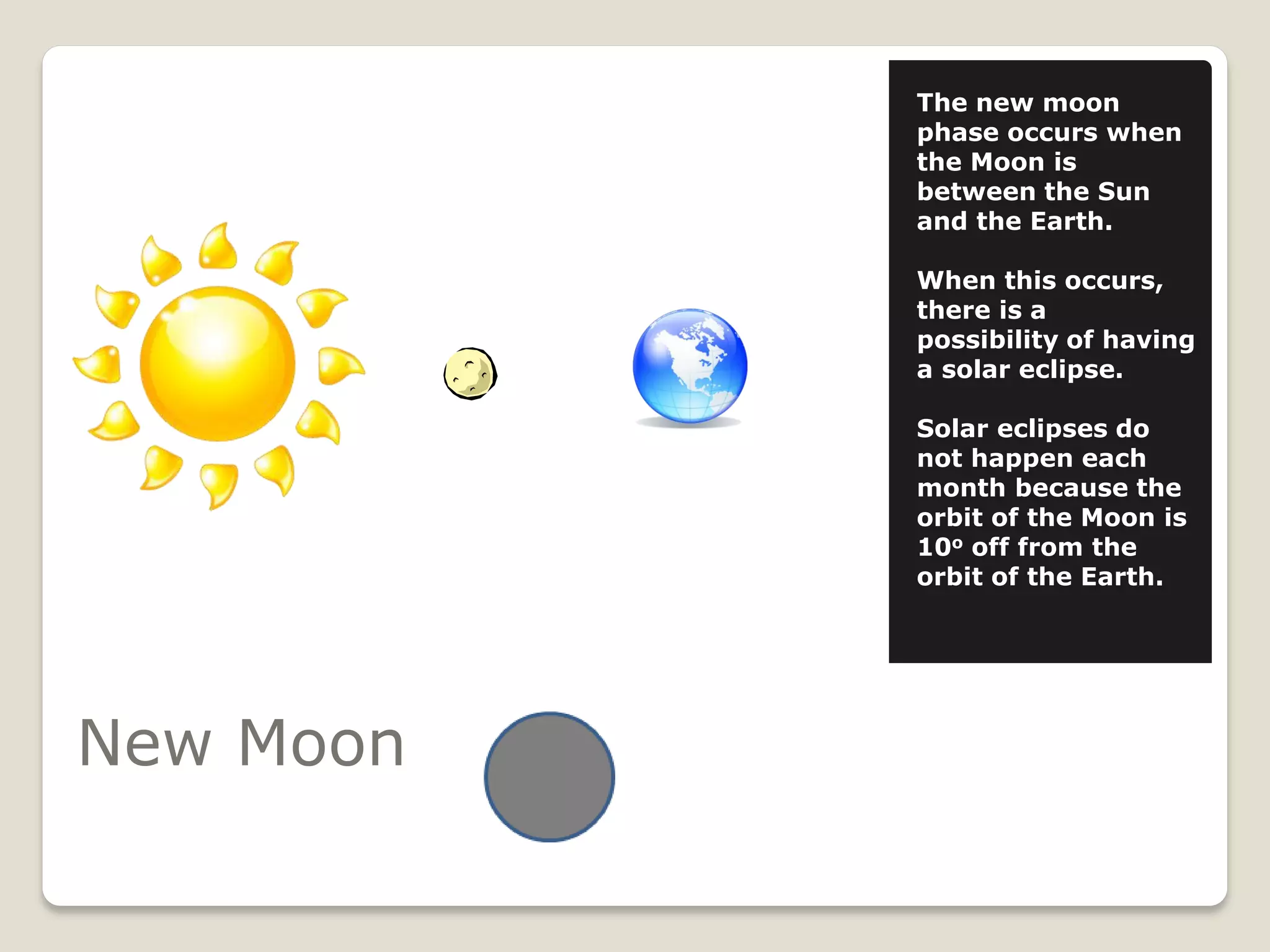
The new moon
           phase occurs when
           the Moon is
           between the Sun
           and the Earth.

           When this occurs,
           there is a
           possibility of having
           a solar eclipse.

           Solar eclipses do
           not happen each
           month because the
           orbit of the Moon is
           10o off from the
           orbit of the Earth.


New Moon
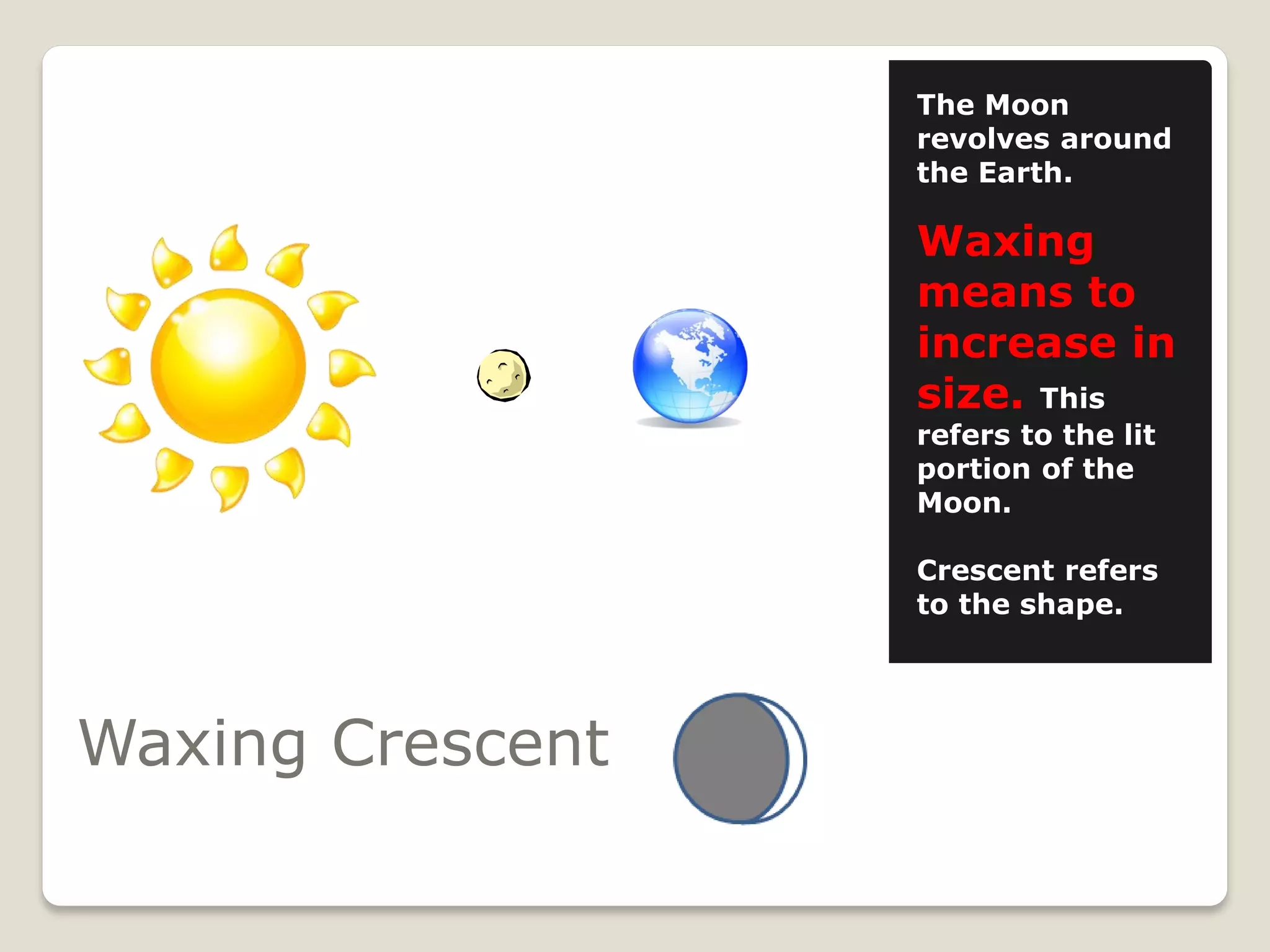
The Moon
                  revolves around
                  the Earth.

                  Waxing
                  means to
                  increase in
                  size. This
                  refers to the lit
                  portion of the
                  Moon.

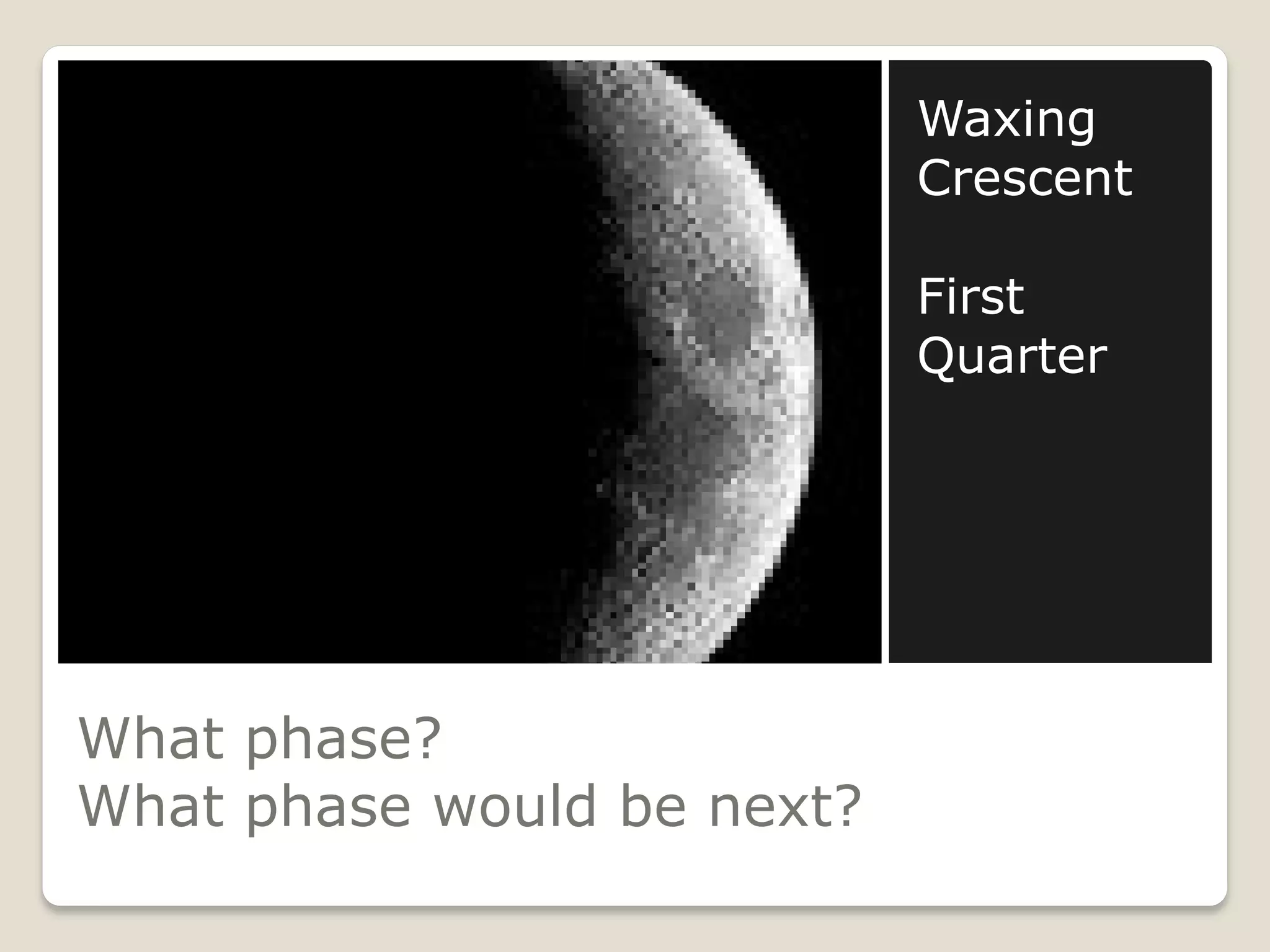
                  Crescent refers
                  to the shape.


Waxing Crescent
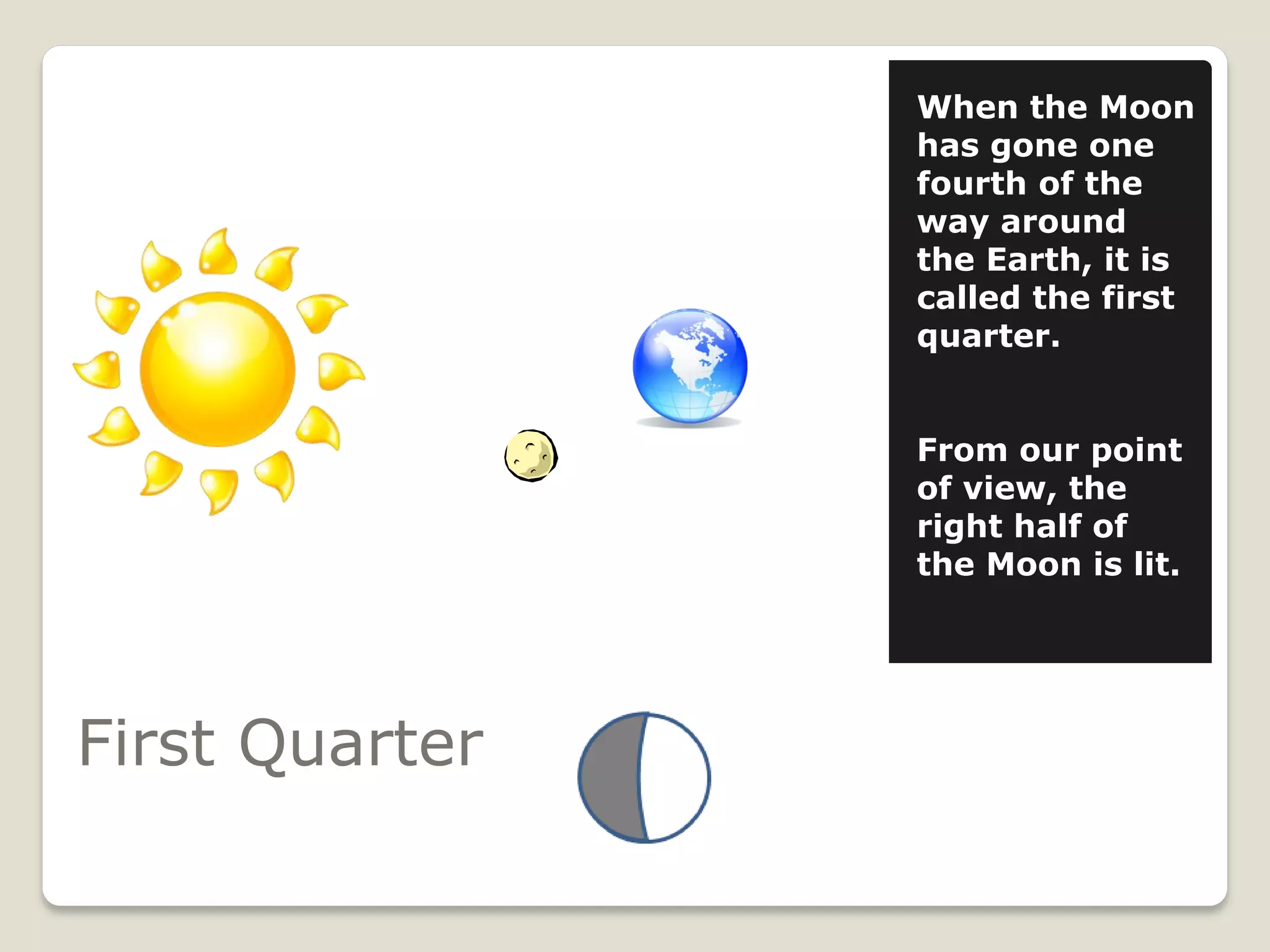
When the Moon
                has gone one
                fourth of the
                way around
                the Earth, it is
                called the first
                quarter.


                From our point
                of view, the
                right half of
                the Moon is lit.


First Quarter
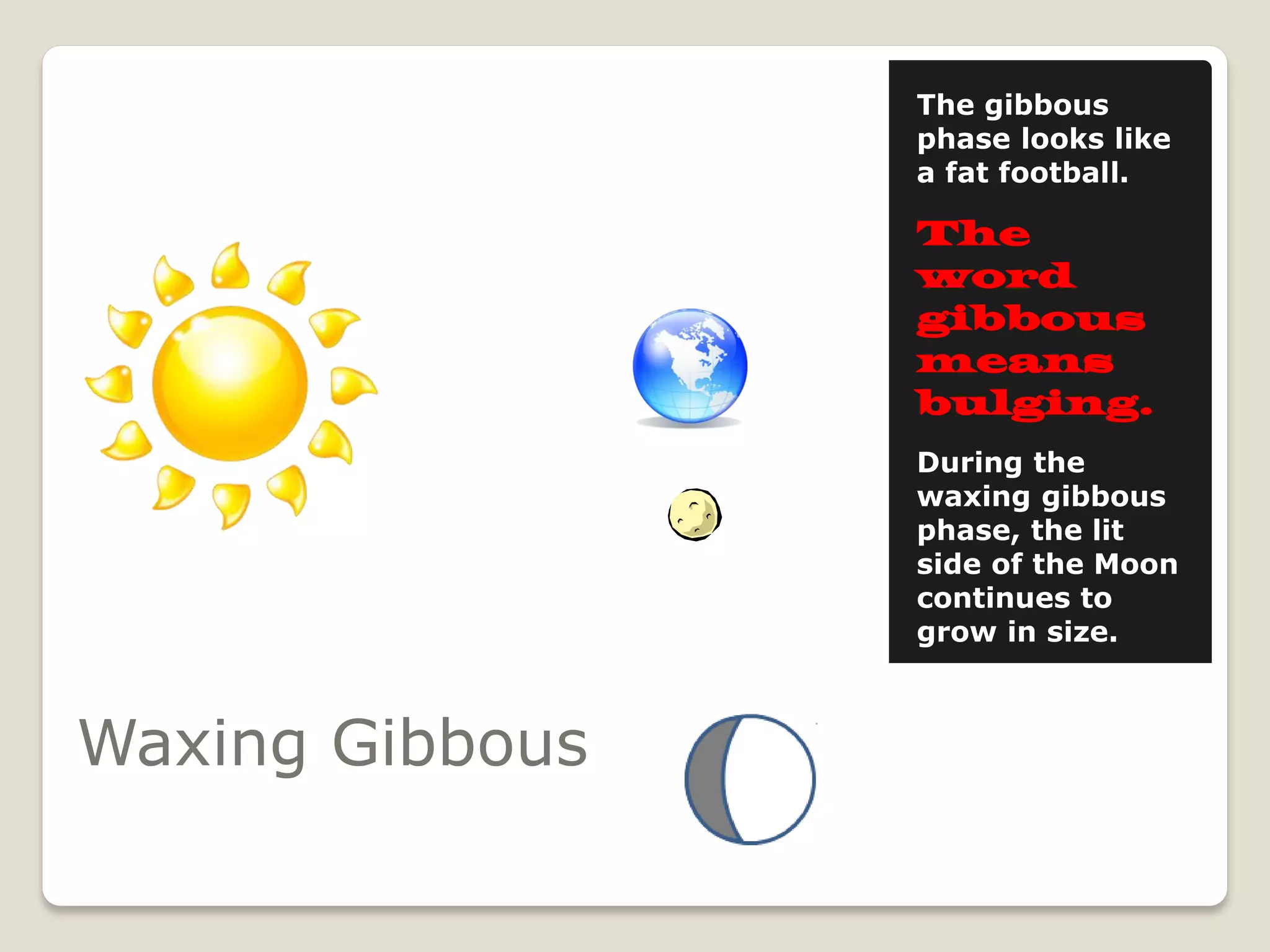
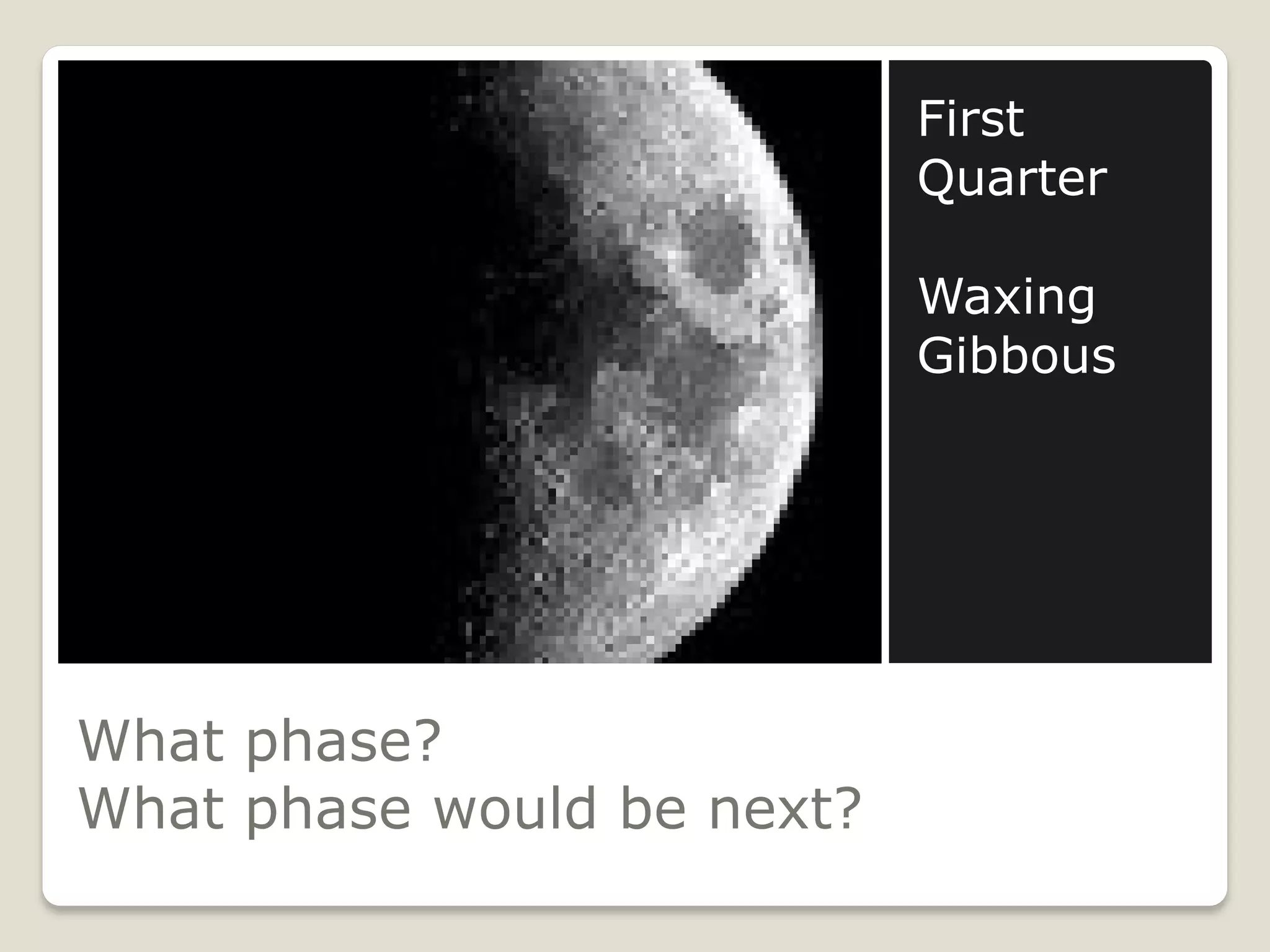
The gibbous
                 phase looks like
                 a fat football.

                 The
                 word
                 gibbous
                 means
                 bulging.
                 During the
                 waxing gibbous
                 phase, the lit
                 side of the Moon
                 continues to
                 grow in size.


Waxing Gibbous
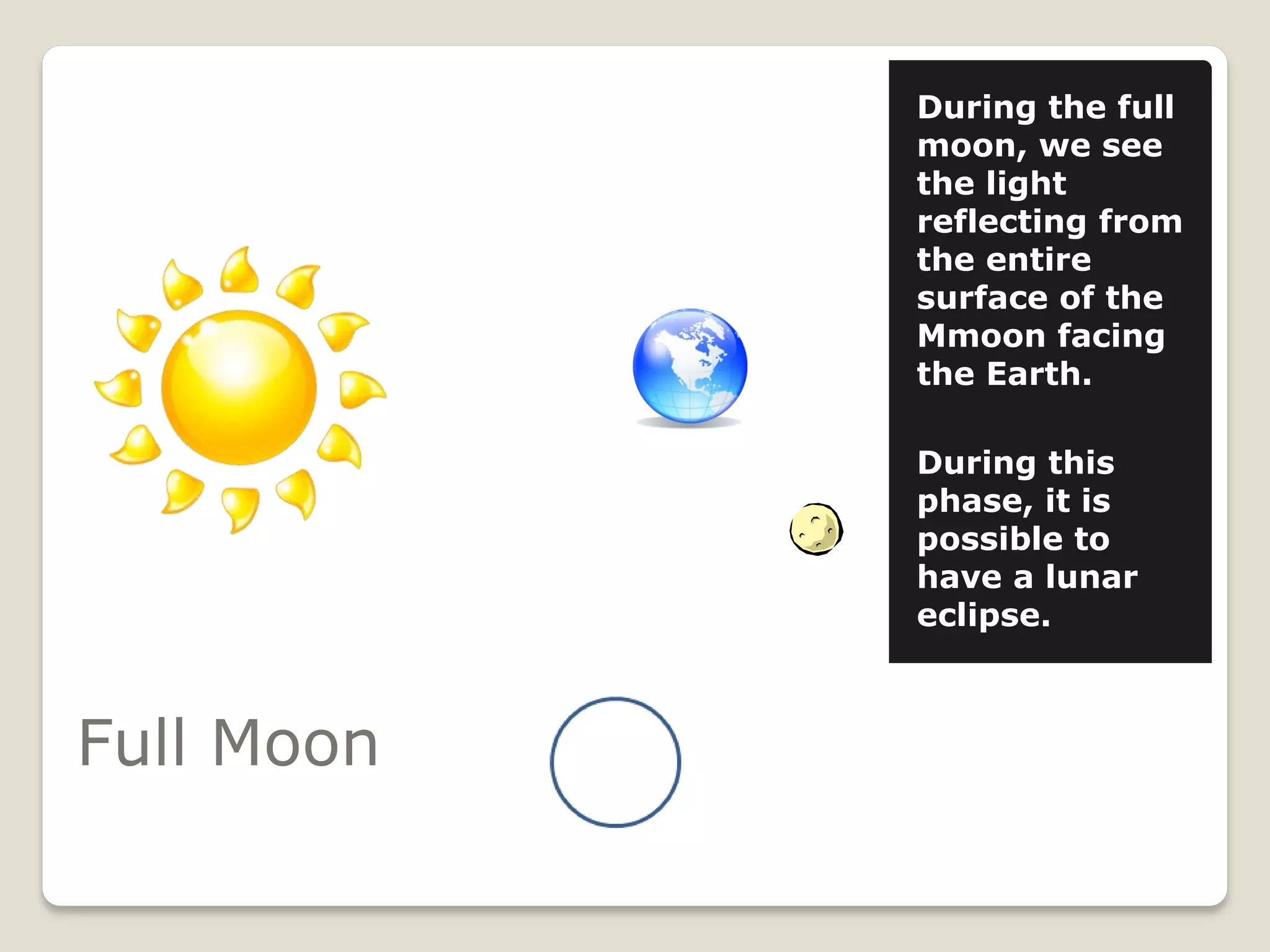
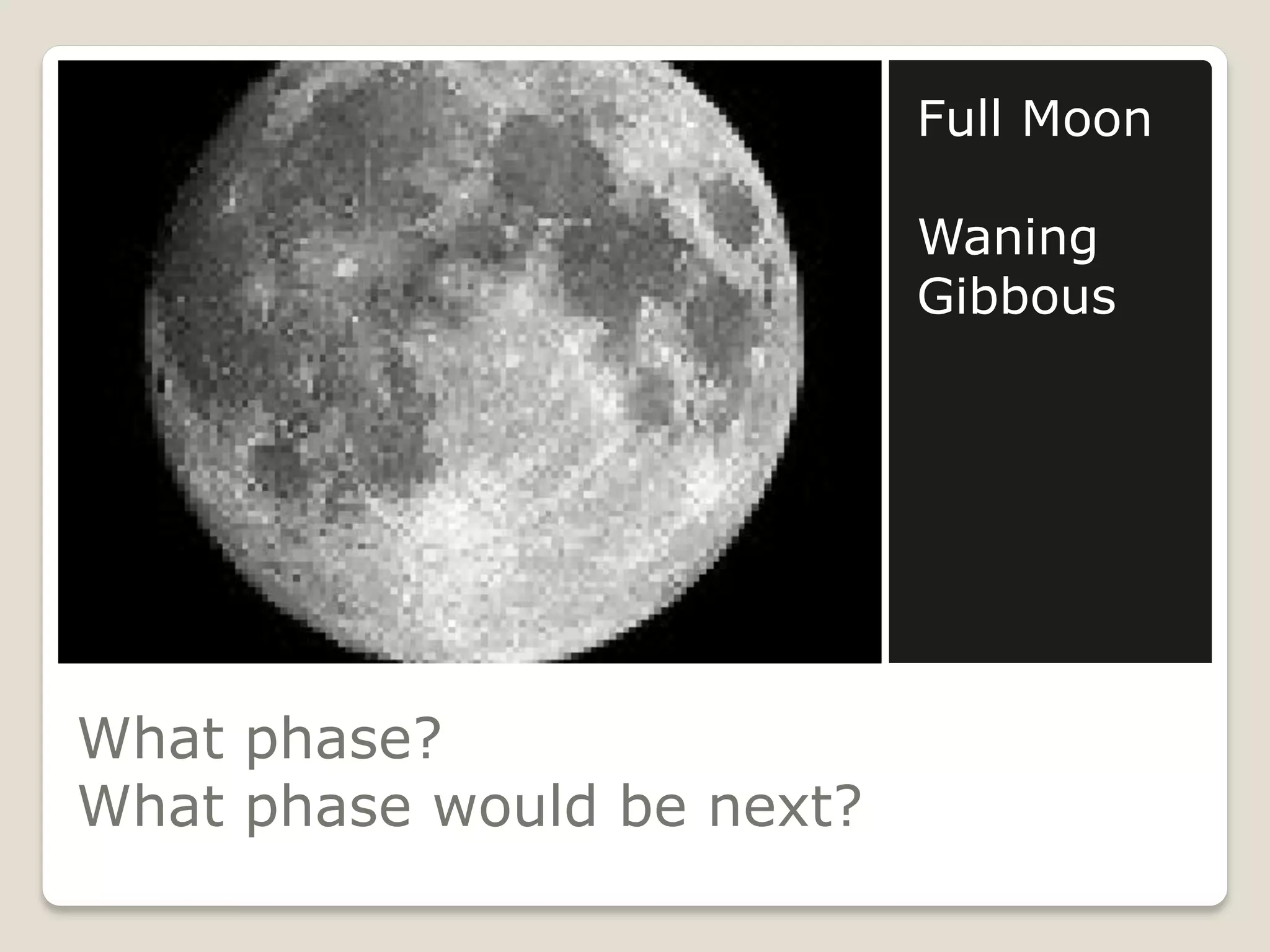
During the full
            moon, we see
            the light
            reflecting from
            the entire
            surface of the
            Mmoon facing
            the Earth.

            During this
            phase, it is
            possible to
            have a lunar
            eclipse.


Full Moon
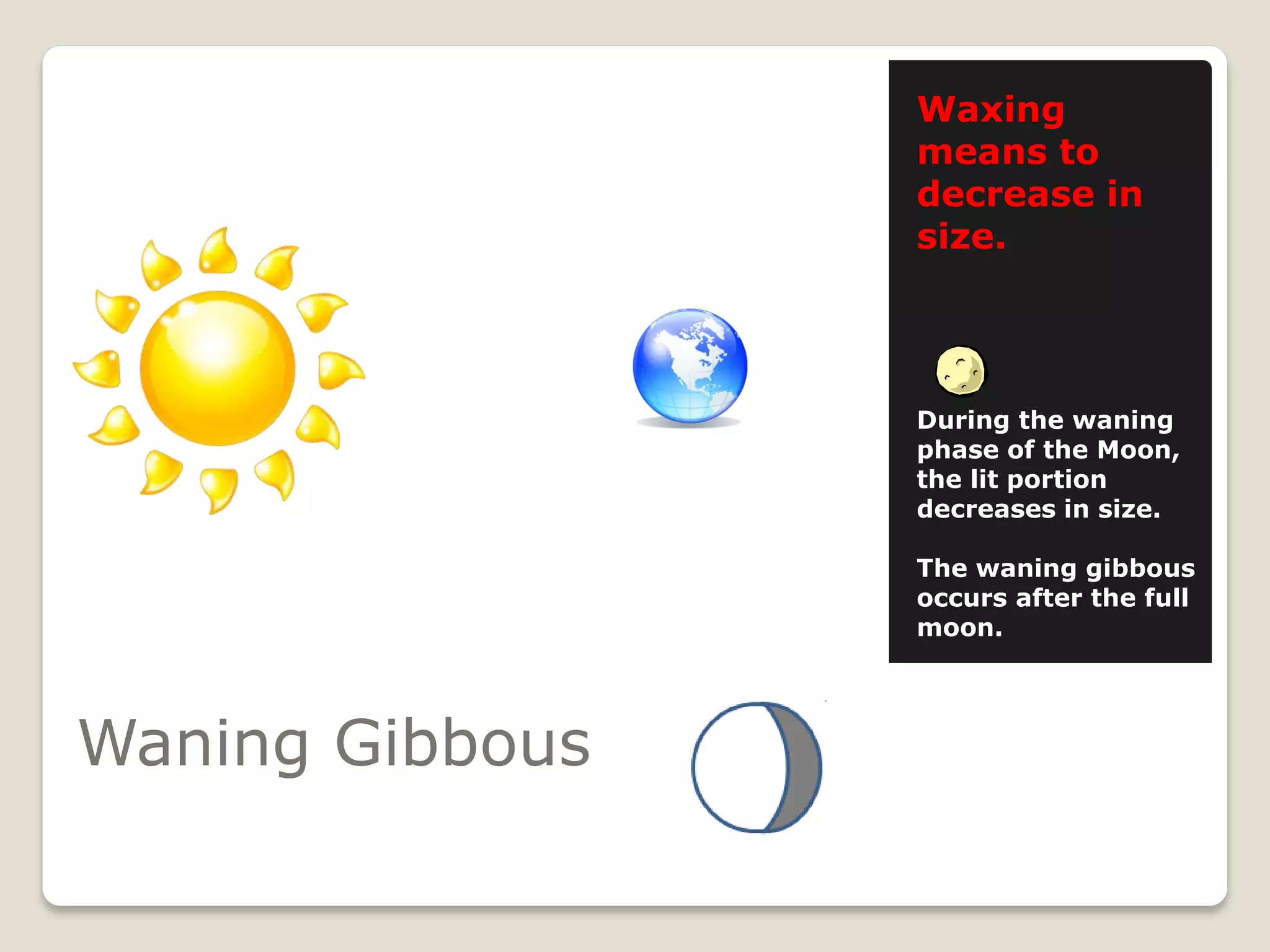
Waxing
                 means to
                 decrease in
                 size.


                 During the waning
                 phase of the Moon,
                 the lit portion
                 decreases in size.

                 The waning gibbous
                 occurs after the full
                 moon.


Waning Gibbous
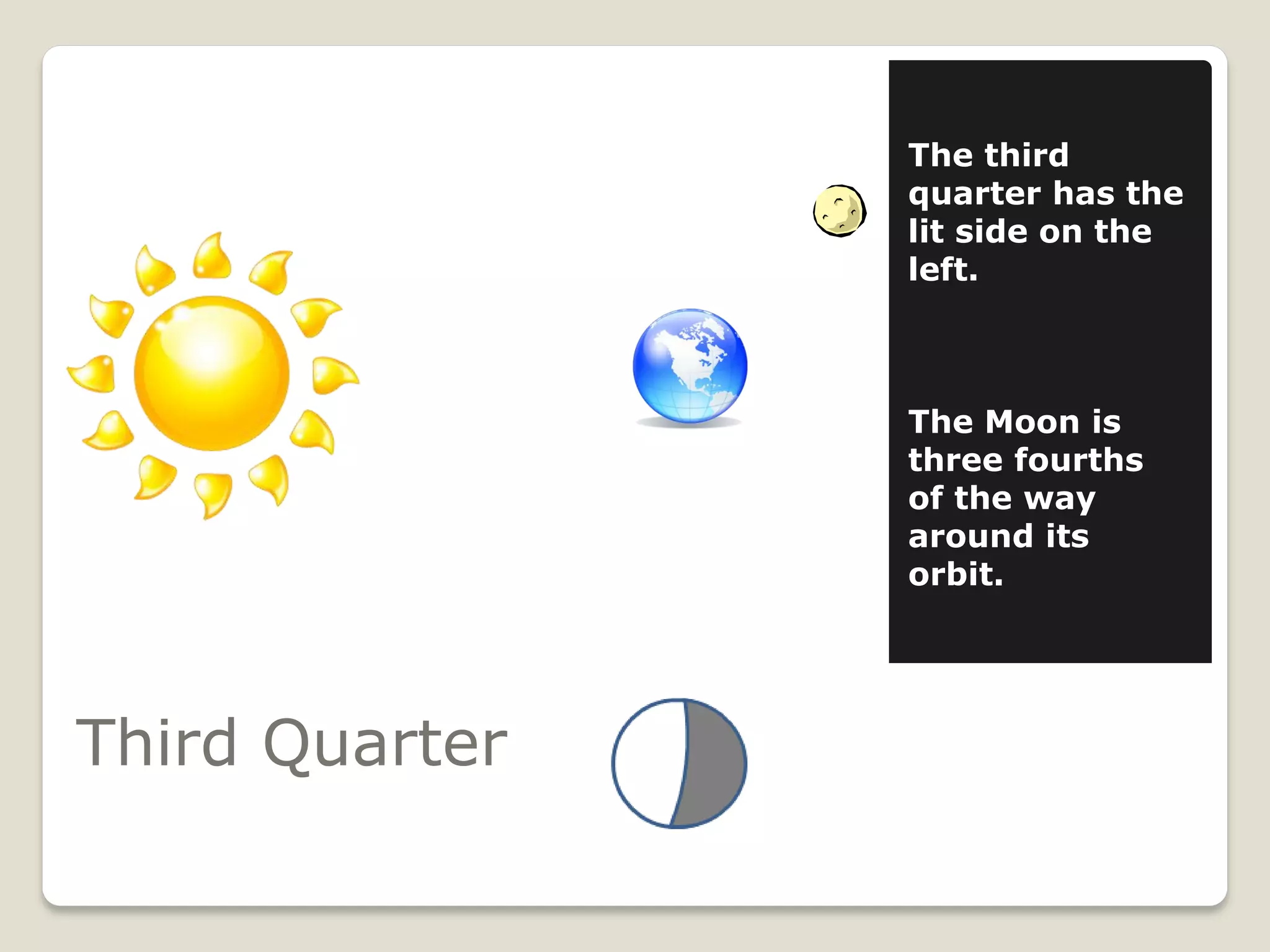
The third
                quarter has the
                lit side on the
                left.


                The Moon is
                three fourths
                of the way
                around its
                orbit.


Third Quarter
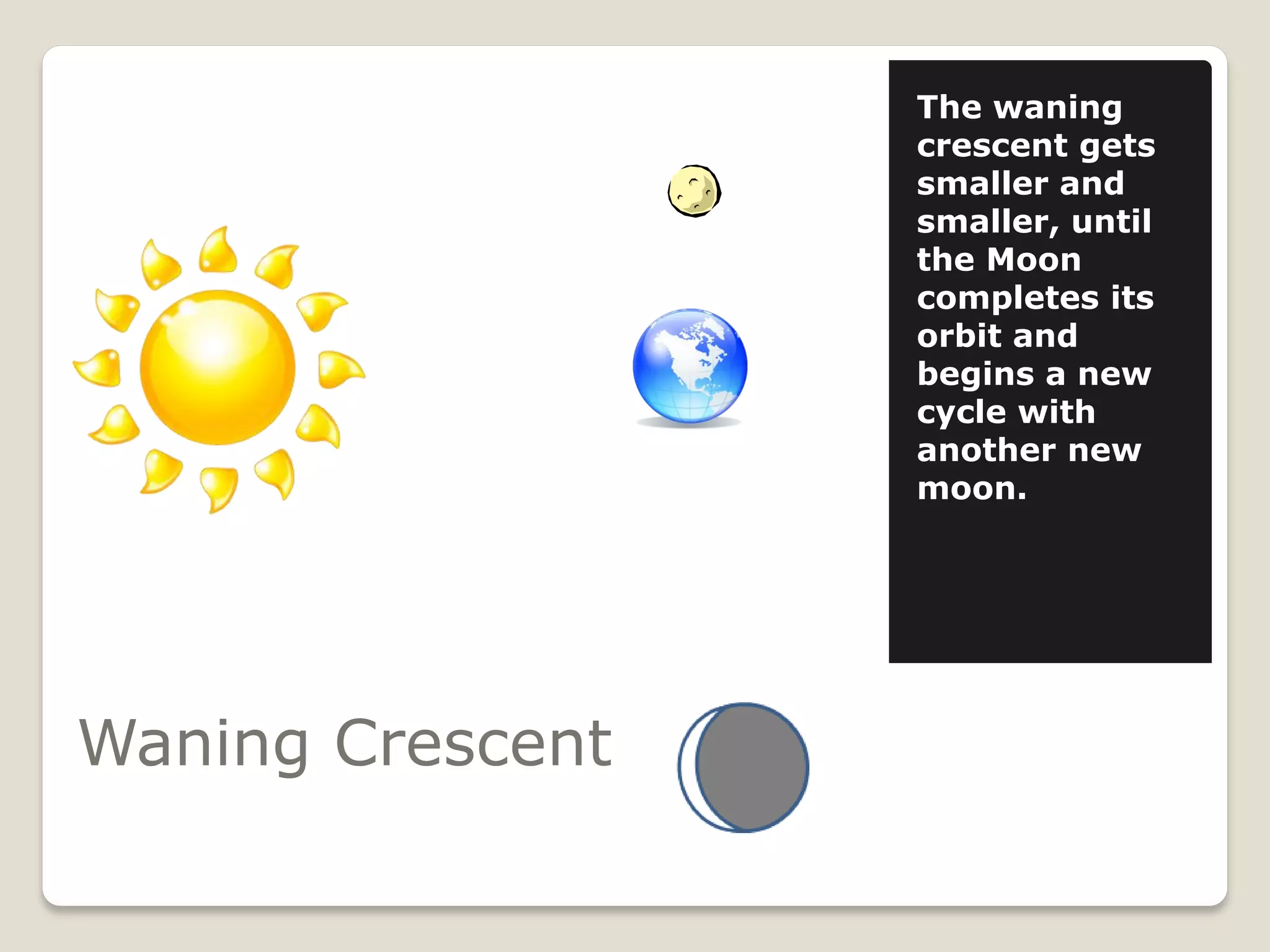
The waning
                  crescent gets
                  smaller and
                  smaller, until
                  the Moon
                  completes its
                  orbit and
                  begins a new
                  cycle with
                  another new
                  moon.


Waning Crescent
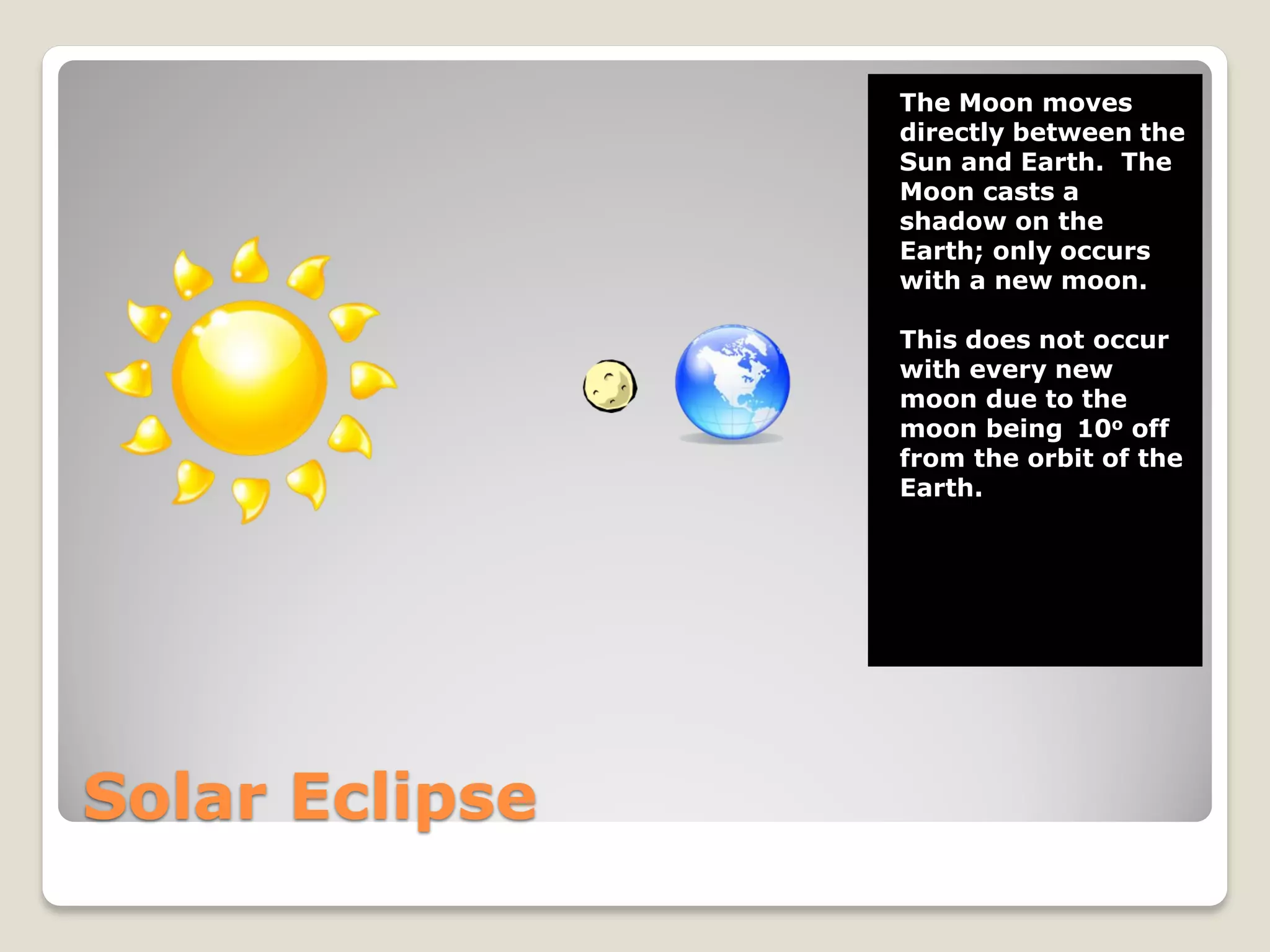
The Moon moves
                directly between the
                Sun and Earth. The
                Moon casts a
                shadow on the
                Earth; only occurs
                with a new moon.

                This does not occur
                with every new
                moon due to the
                moon being 10o off
                from the orbit of the
                Earth.


Solar Eclipse
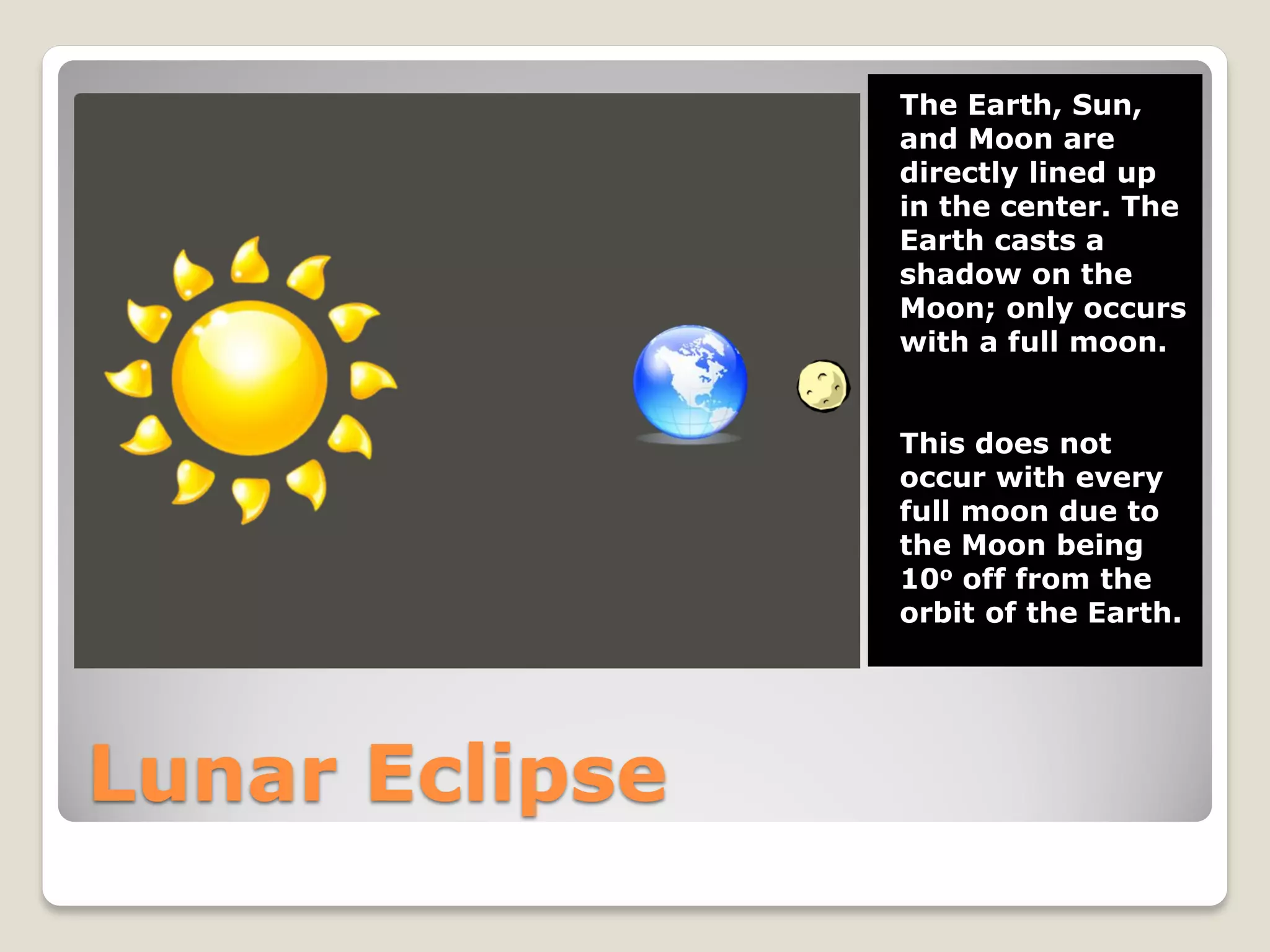
The Earth, Sun,
                and Moon are
                directly lined up
                in the center. The
                Earth casts a
                shadow on the
                Moon; only occurs
                with a full moon.


                This does not
                occur with every
                full moon due to
                the Moon being
                10o off from the
                orbit of the Earth.


Lunar Eclipse
Memory Devices:

 White   on the right, growing bright!

 White   on the left, losing light!
Memory Devices:
 Wax   on – increasing light!
 ◦ Just as a candle wick is dipped in wax
   and the candle wax increases the size of
   the candle.

 Wane   off – decreasing light!

 Gibbous   – bulge
Memory Devices:
 New    Moon = Near the Sun

 Full   Moon = Far from Sun

 Remember,   YOU are on the EARTH
 looking at the Moon.
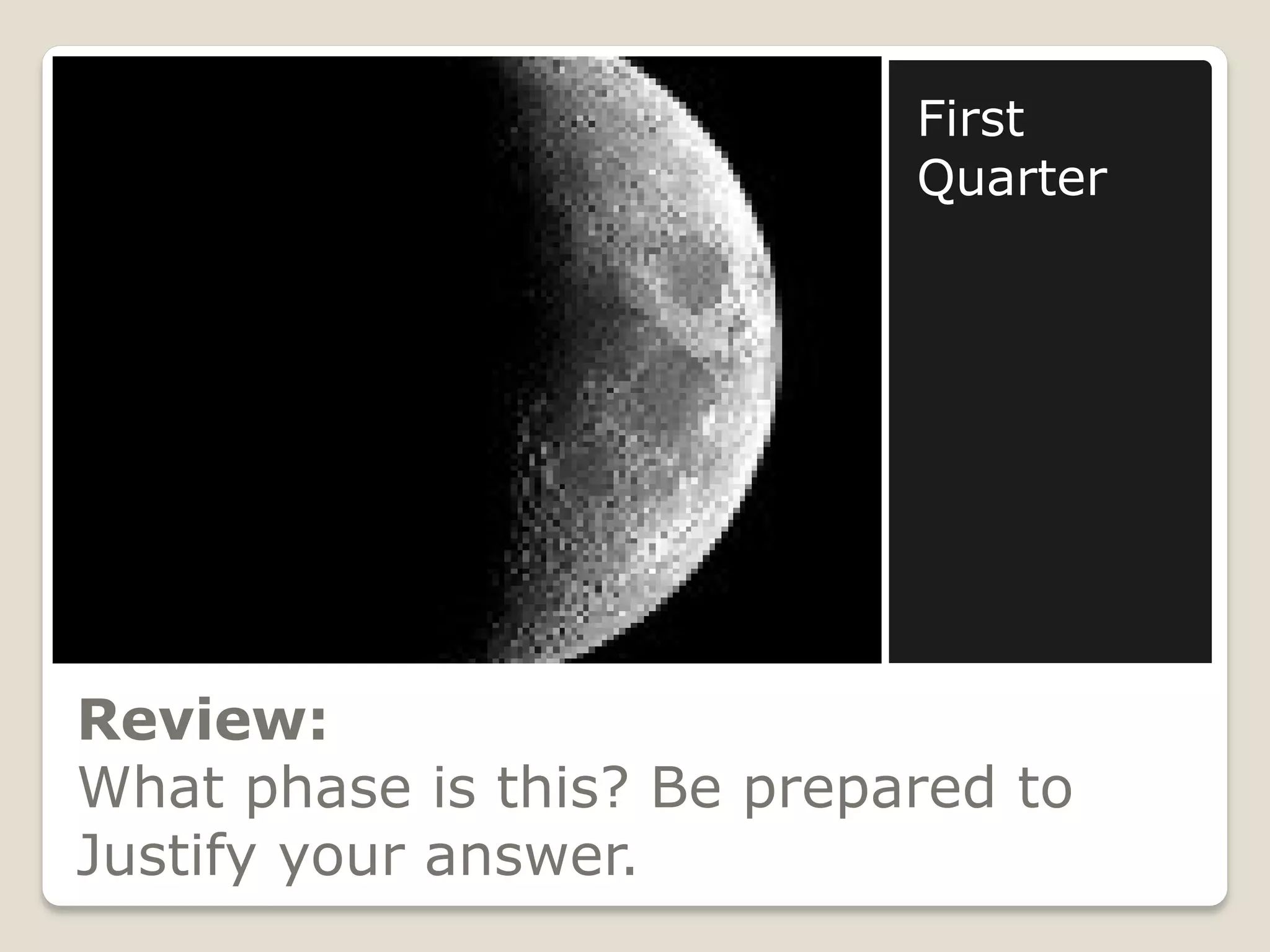
First
                            Quarter


Review:
What phase is this? Be prepared to
Justify your answer.
New Moon

                            Waxing
                            Crescent


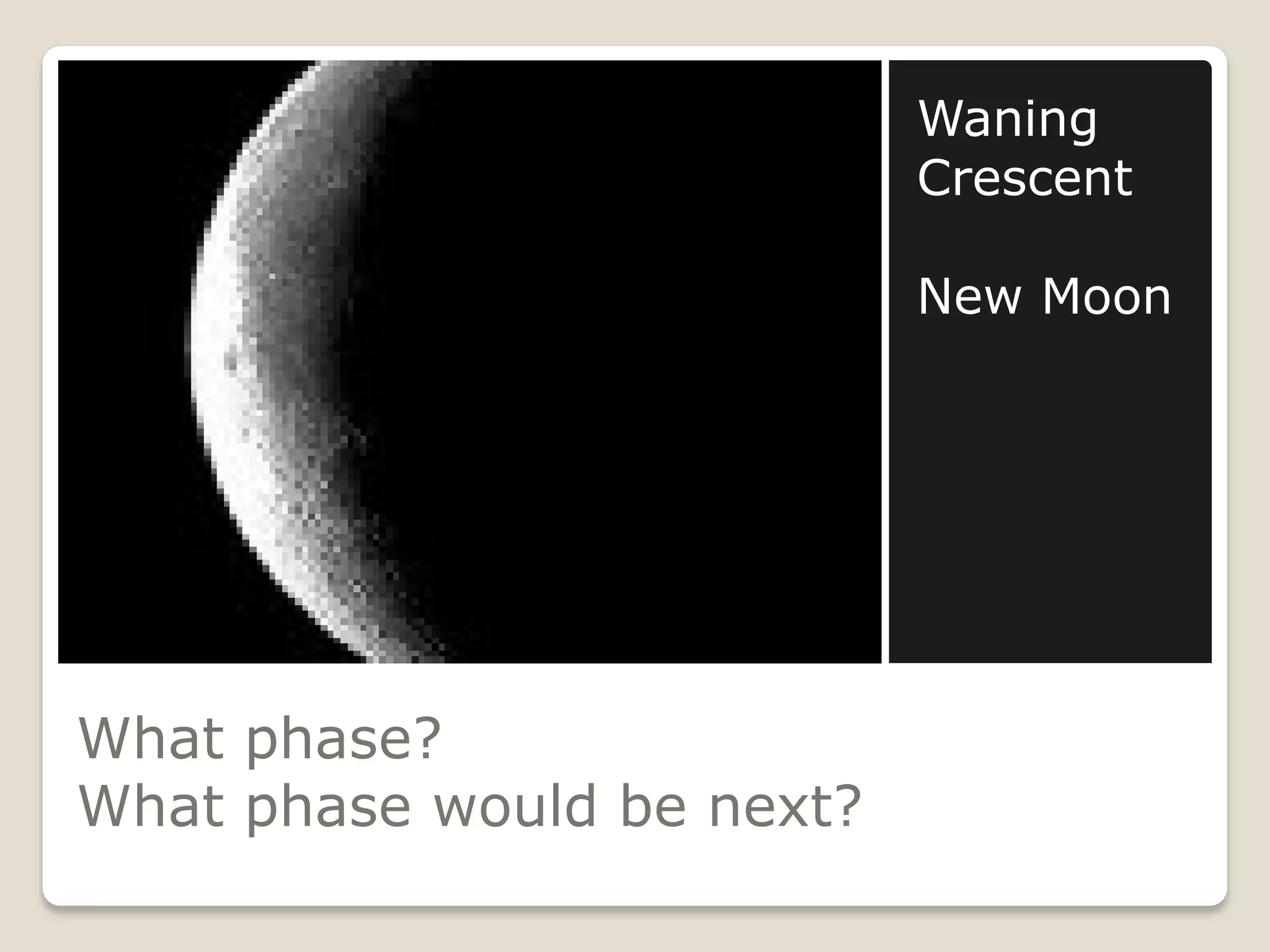
What phase?
What phase would be next?
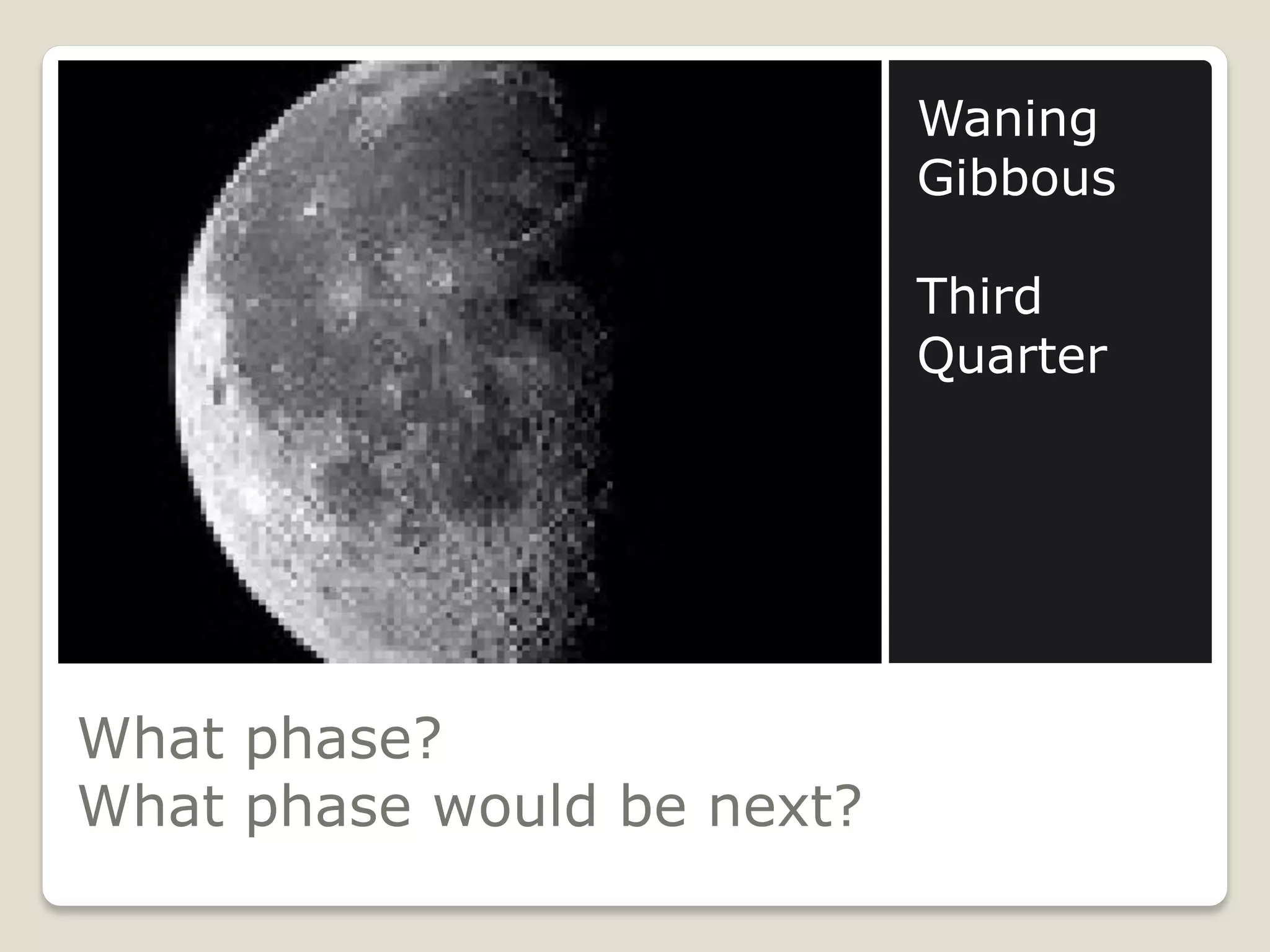
Waning
                            Gibbous

                            Third
                            Quarter


What phase?
What phase would be next?
Full Moon

                            Waning
                            Gibbous


What phase?
What phase would be next?
Waxing
                            Crescent

                            First
                            Quarter


What phase?
What phase would be next?
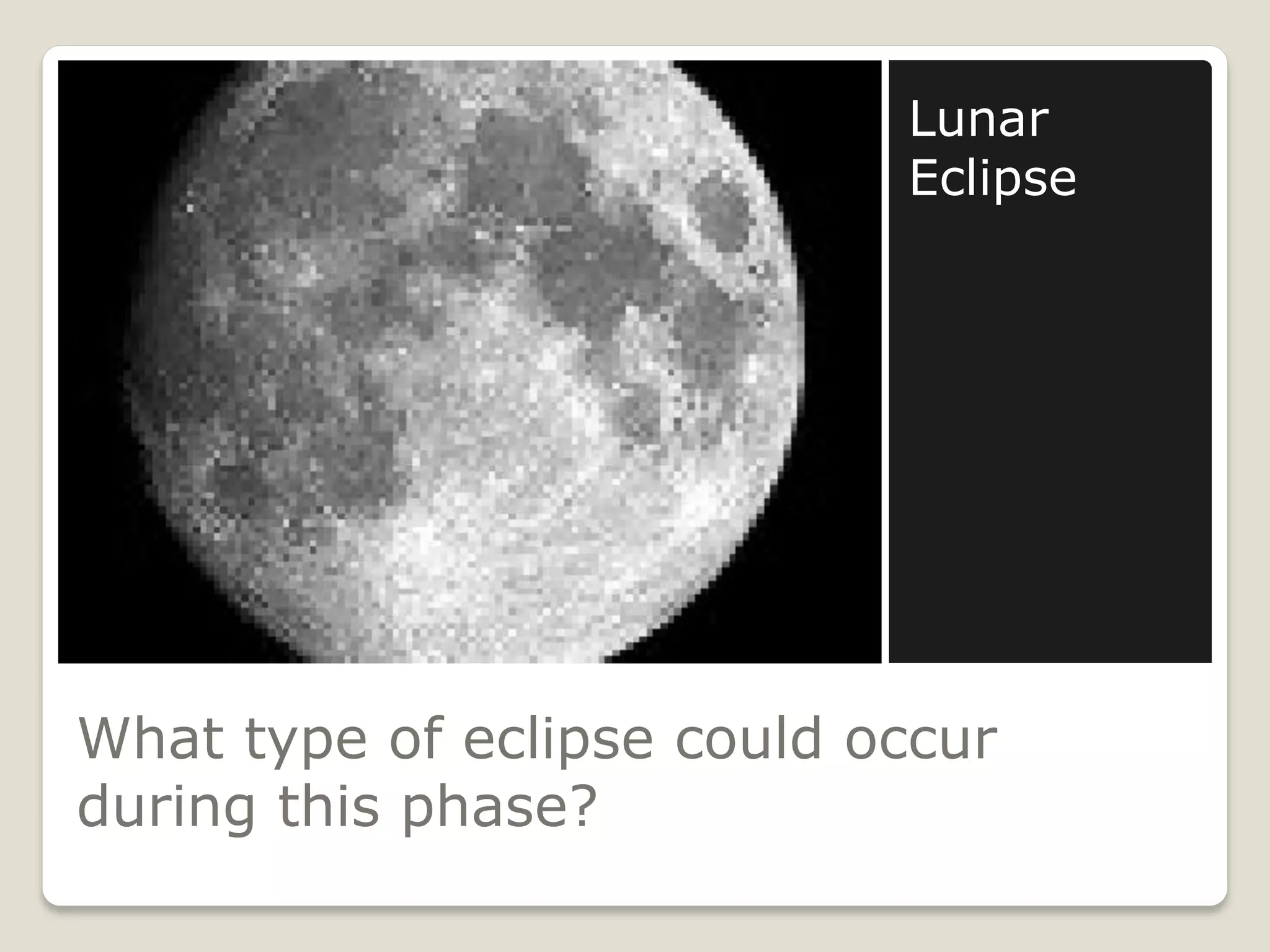
Lunar
                            Eclipse


What type of eclipse could occur
during this phase?
First
                            Quarter

                            Waxing
                            Gibbous


What phase?
What phase would be next?
Waning
                            Crescent

                            New Moon


What phase?
What phase would be next?
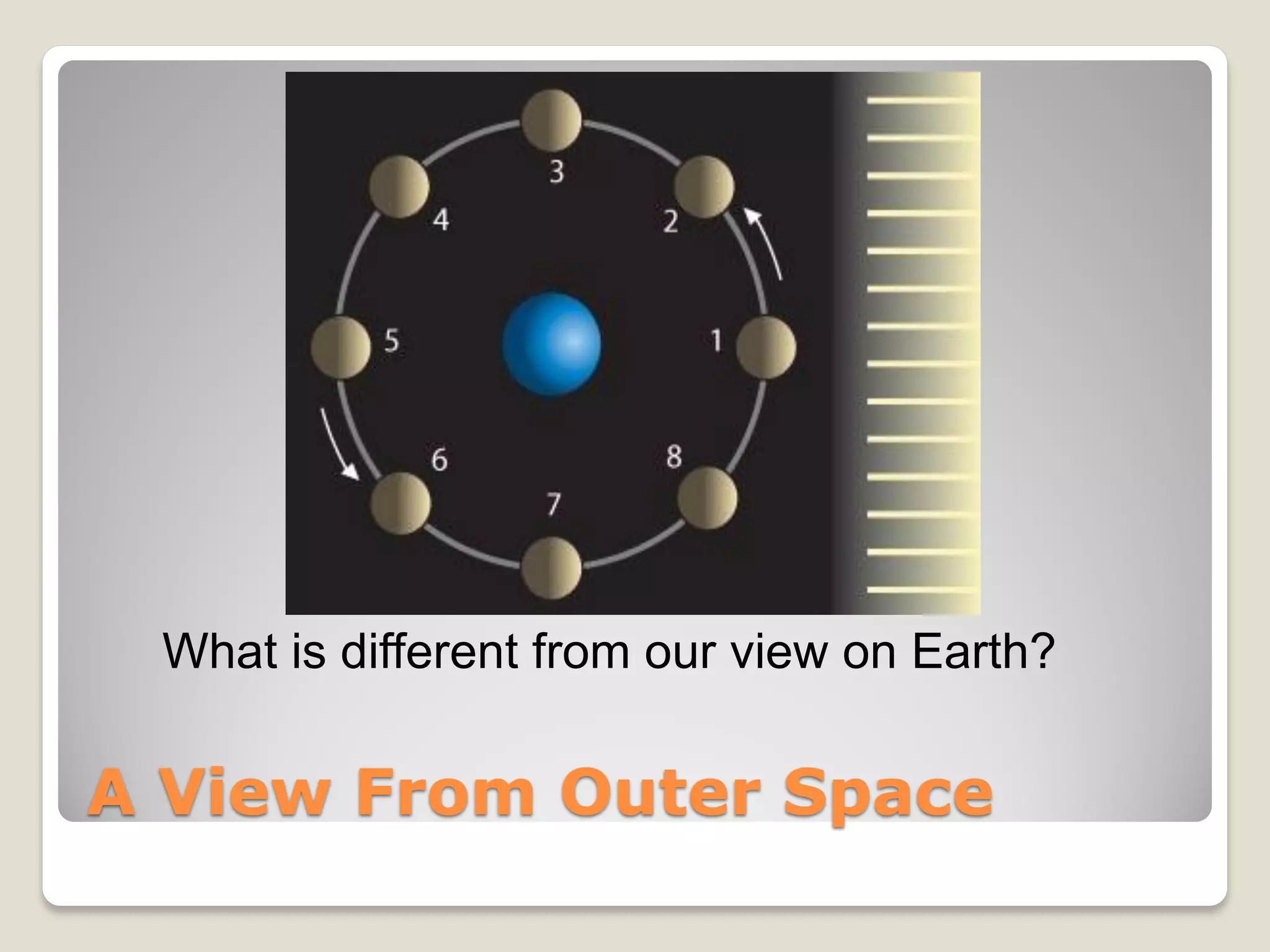
What is different from our view on Earth?

A View From Outer Space
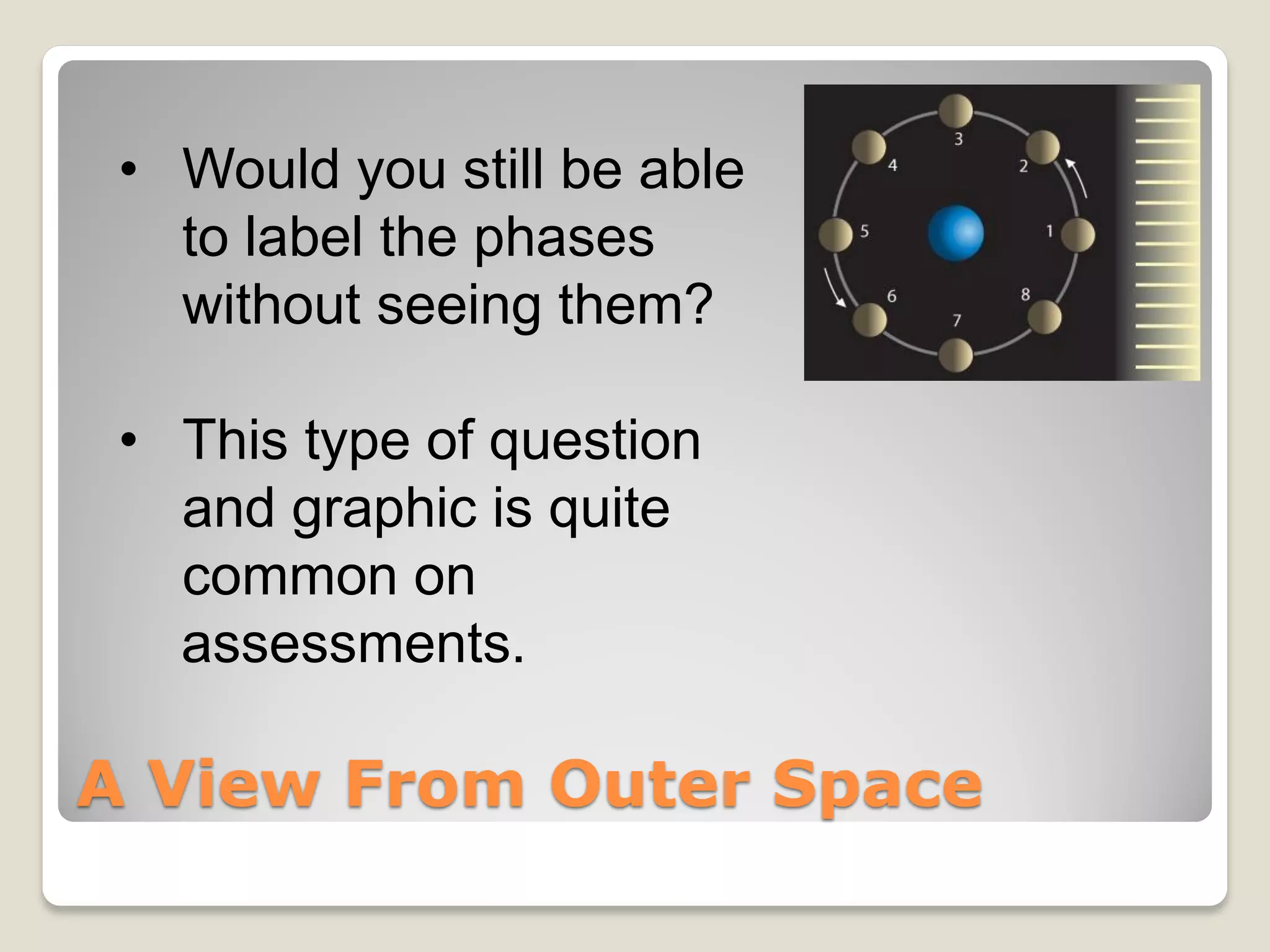
• Would you still be able
   to label the phases
   without seeing them?

 • This type of question
   and graphic is quite
   common on
   assessments.

A View From Outer Space
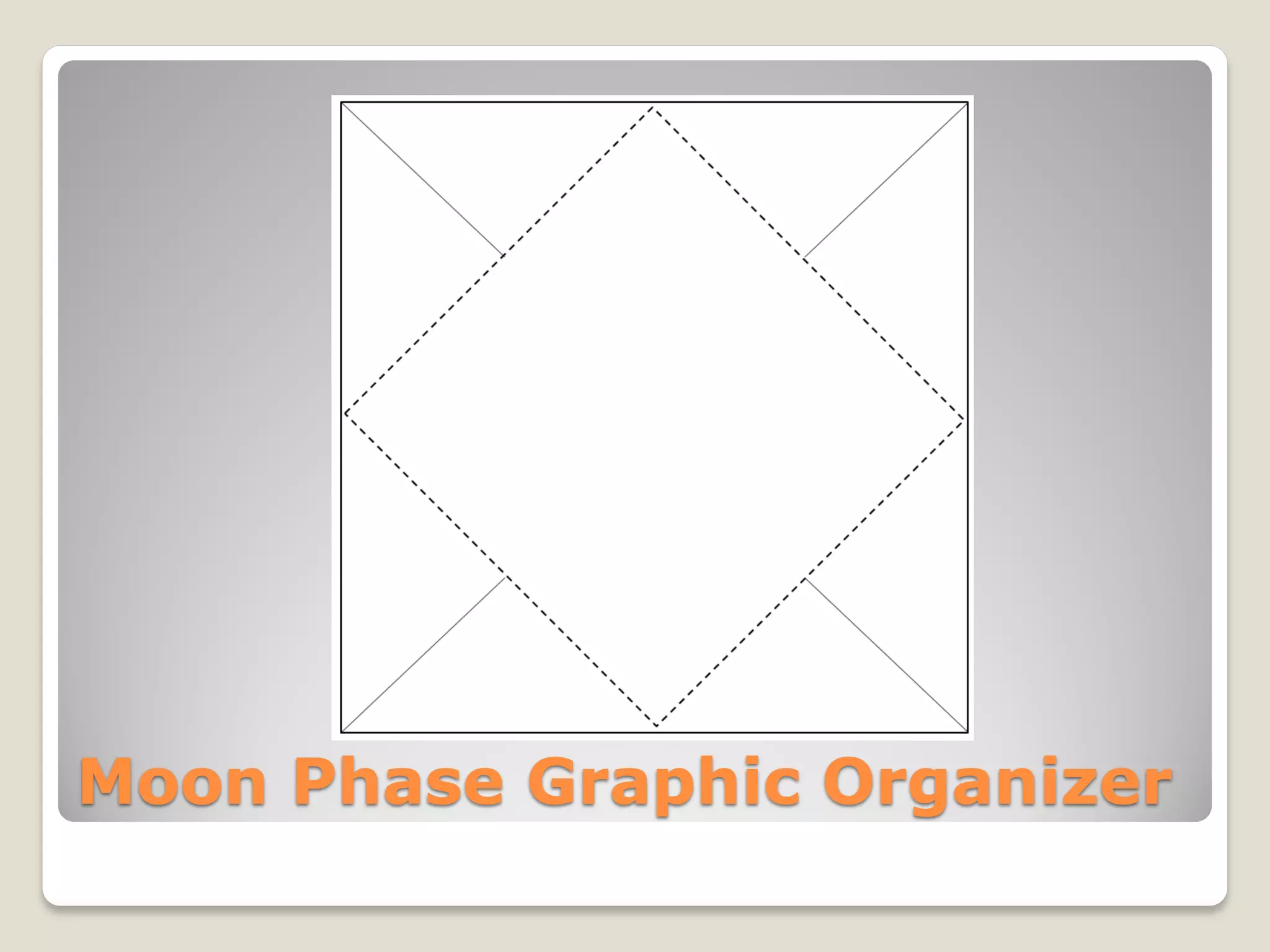
Moon Phase Graphic Organizer

Lunar Cycle ppt cscope

  • 1.
    Lunar Cycle Goal: Identifythe phases of the Moon, and relate the phases to eclipses.
  • 2.
    Memory Devices:  White on the right, growing bright!  White on the left, losing light!
  • 3.
    Memory Devices:  Wax on – increasing light! ◦ Just as a candle wick is dipped in wax and the candle wax increases the size of the candle.  Wane off – decreasing light!  Gibbous – bulge
  • 4.
    Memory Devices:  New Moon = Near the Sun  Full Moon = Far from Sun  Remember, YOU are on the EARTH looking at the Moon.
  • 5.
    The new moon phase occurs when the Moon is between the Sun and the Earth. When this occurs, there is a possibility of having a solar eclipse. Solar eclipses do not happen each month because the orbit of the Moon is 10o off from the orbit of the Earth. New Moon
  • 6.
    The Moon revolves around the Earth. Waxing means to increase in size. This refers to the lit portion of the Moon. Crescent refers to the shape. Waxing Crescent
  • 7.
    When the Moon has gone one fourth of the way around the Earth, it is called the first quarter. From our point of view, the right half of the Moon is lit. First Quarter
  • 8.
    The gibbous phase looks like a fat football. The word gibbous means bulging. During the waxing gibbous phase, the lit side of the Moon continues to grow in size. Waxing Gibbous
  • 9.
    During the full moon, we see the light reflecting from the entire surface of the Mmoon facing the Earth. During this phase, it is possible to have a lunar eclipse. Full Moon
  • 10.
    Waxing means to decrease in size. During the waning phase of the Moon, the lit portion decreases in size. The waning gibbous occurs after the full moon. Waning Gibbous
  • 11.
    The third quarter has the lit side on the left. The Moon is three fourths of the way around its orbit. Third Quarter
  • 12.
    The waning crescent gets smaller and smaller, until the Moon completes its orbit and begins a new cycle with another new moon. Waning Crescent
  • 13.
    The Moon moves directly between the Sun and Earth. The Moon casts a shadow on the Earth; only occurs with a new moon. This does not occur with every new moon due to the moon being 10o off from the orbit of the Earth. Solar Eclipse
  • 14.
    The Earth, Sun, and Moon are directly lined up in the center. The Earth casts a shadow on the Moon; only occurs with a full moon. This does not occur with every full moon due to the Moon being 10o off from the orbit of the Earth. Lunar Eclipse
  • 15.
    Memory Devices:  White on the right, growing bright!  White on the left, losing light!
  • 16.
    Memory Devices:  Wax on – increasing light! ◦ Just as a candle wick is dipped in wax and the candle wax increases the size of the candle.  Wane off – decreasing light!  Gibbous – bulge
  • 17.
    Memory Devices:  New Moon = Near the Sun  Full Moon = Far from Sun  Remember, YOU are on the EARTH looking at the Moon.
  • 18.
    First Quarter Review: What phase is this? Be prepared to Justify your answer.
  • 19.
    New Moon Waxing Crescent What phase? What phase would be next?
  • 20.
    Waning Gibbous Third Quarter What phase? What phase would be next?
  • 21.
    Full Moon Waning Gibbous What phase? What phase would be next?
  • 22.
    Waxing Crescent First Quarter What phase? What phase would be next?
  • 23.
    Lunar Eclipse What type of eclipse could occur during this phase?
  • 24.
    First Quarter Waxing Gibbous What phase? What phase would be next?
  • 25.
    Waning Crescent New Moon What phase? What phase would be next?
  • 26.
    What is differentfrom our view on Earth? A View From Outer Space
  • 27.
    • Would youstill be able to label the phases without seeing them? • This type of question and graphic is quite common on assessments. A View From Outer Space
  • 28.