UNDERSTANDING
THE PHASES OF
THE MOON
A journey through lunar illumination!
Introduction
● If you look at the sky, you will notice that
the moon changes its shape every night.
● These different views are known as phases
of the moon.
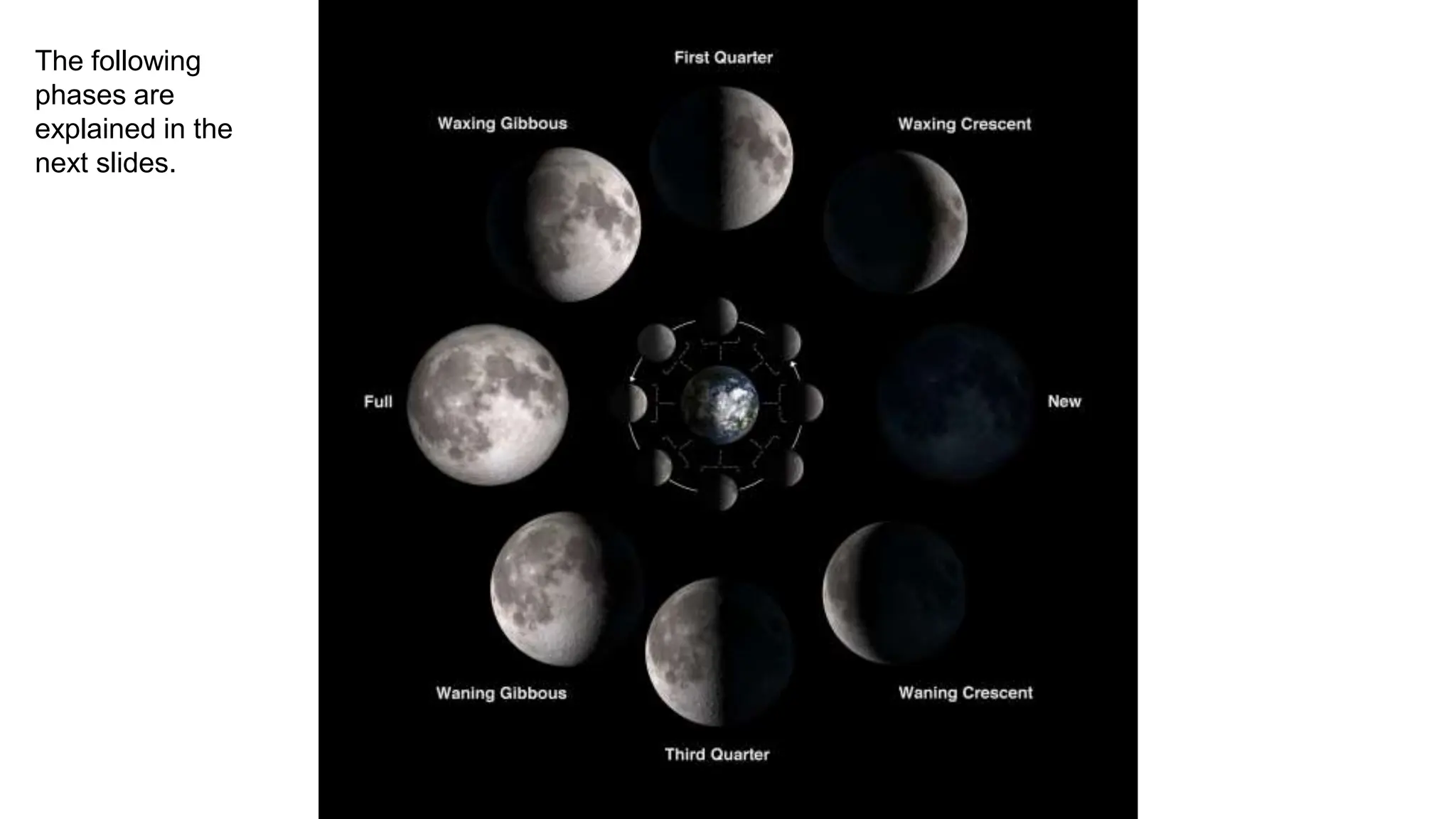
The following
phases are
explained in the
next slides.
What causes moon phases?
● The key factor is the relative positions of
the Earth, Moon, and Sun. As the moon
orbits the Earth, varying amounts of its
illuminated side become visible from our
perspective.
● The phases go on in a repeated process
for about 29.5 days.
New Moon
● During this phase, the Moon is positioned
between the Earth and the Sun. The side
facing the Earth is in shadow, making the
moon appear completely dark.
● It marks the start of the lunar cycle,
Waxing Crescent
● Following the New Moon, we enter the
Waxing Crescent phase.
● A small, illuminated crescent becomes
visible. This phase is visible in the western
sky shortly after sunset.
● The crescent appears in the shape of an
inverted ‘C’
First Quarter
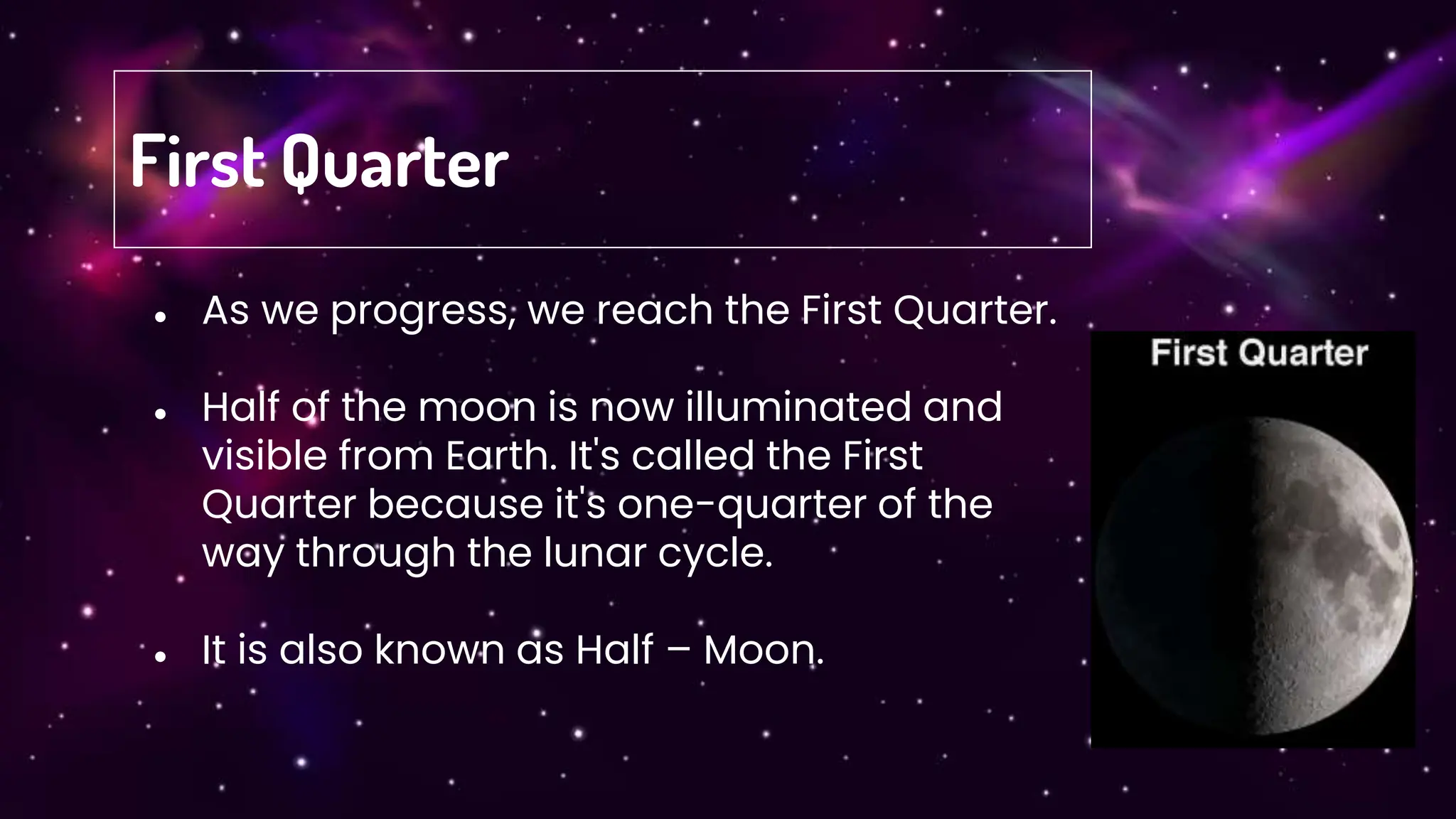
● As we progress, we reach the First Quarter.
● Half of the moon is now illuminated and
visible from Earth. It's called the First
Quarter because it's one-quarter of the
way through the lunar cycle.
● It is also known as Half – Moon.
Waxing Gibbous
● After the First Quarter, we encounter the
Waxing Gibbous phase.
● More than half of the moon is illuminated,
and it continues to grow towards fullness.
● The word ‘Gibbous’ originates from the
Latin word which means Hump
Full Moon
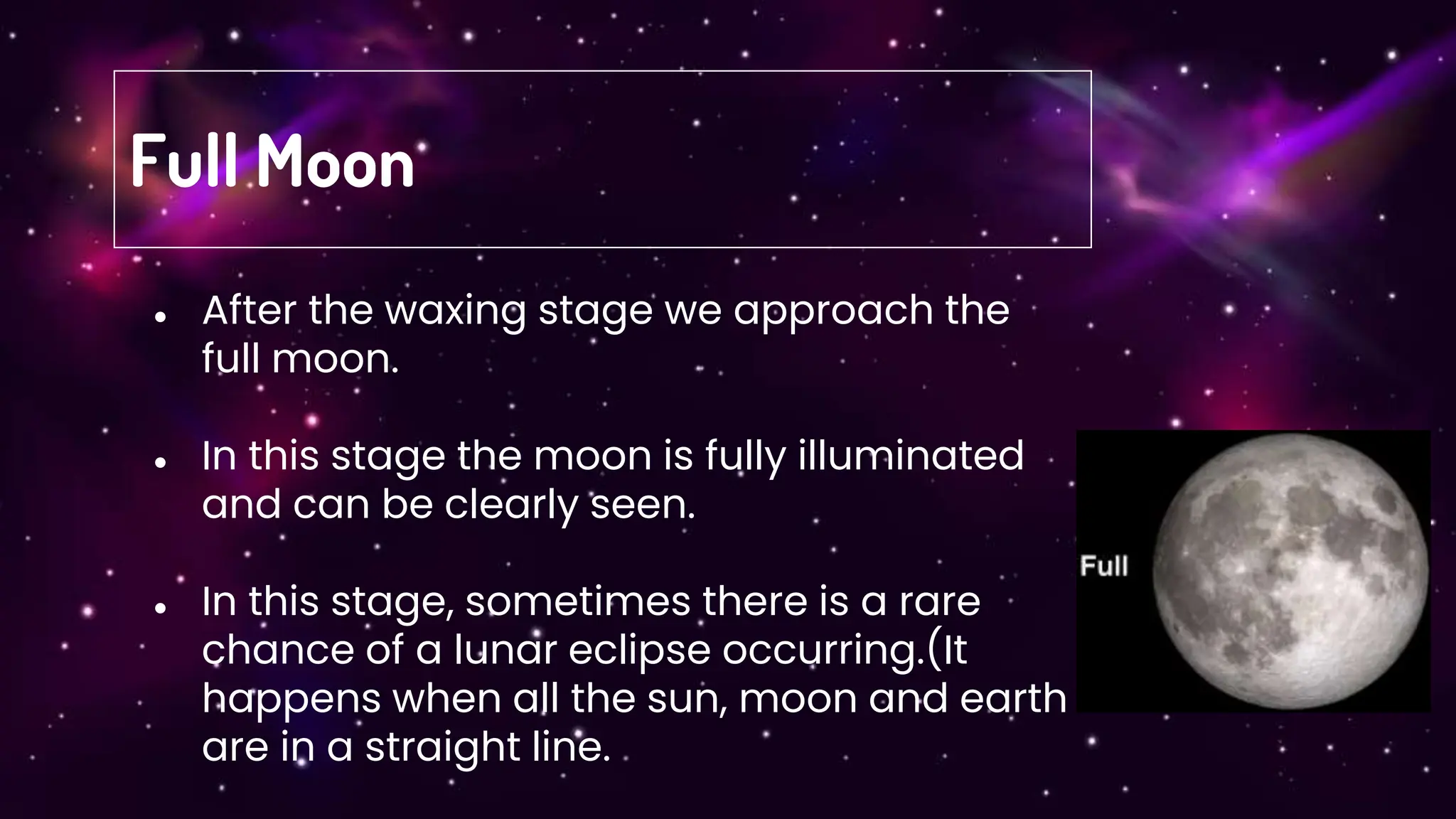
● After the waxing stage we approach the
full moon.
● In this stage the moon is fully illuminated
and can be clearly seen.
● In this stage, sometimes there is a rare
chance of a lunar eclipse occurring.(It
happens when all the sun, moon and earth
are in a straight line.
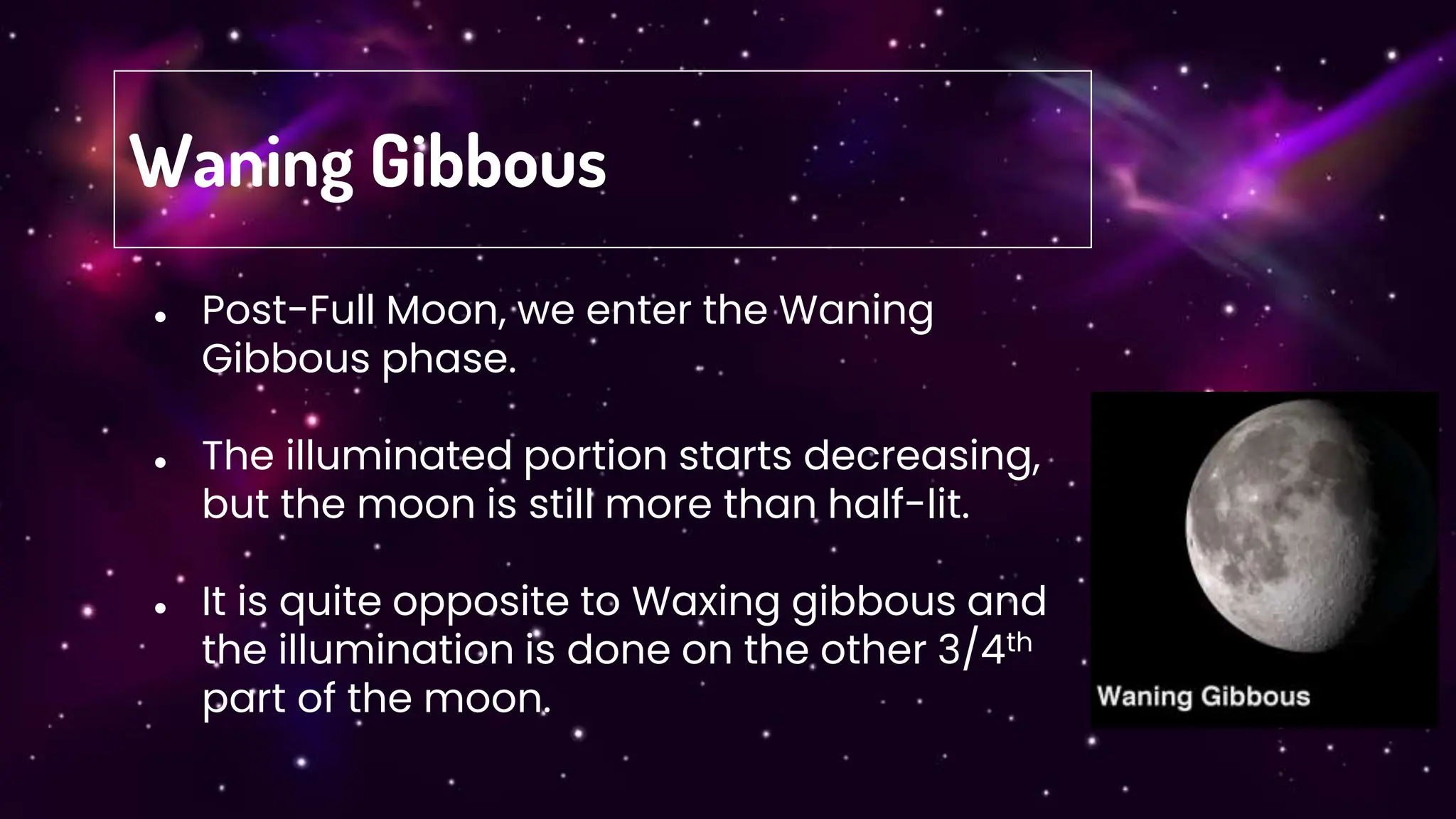
Waning Gibbous
● Post-Full Moon, we enter the Waning
Gibbous phase.
● The illuminated portion starts decreasing,
but the moon is still more than half-lit.
● It is quite opposite to Waxing gibbous and
the illumination is done on the other 3/4th
part of the moon.
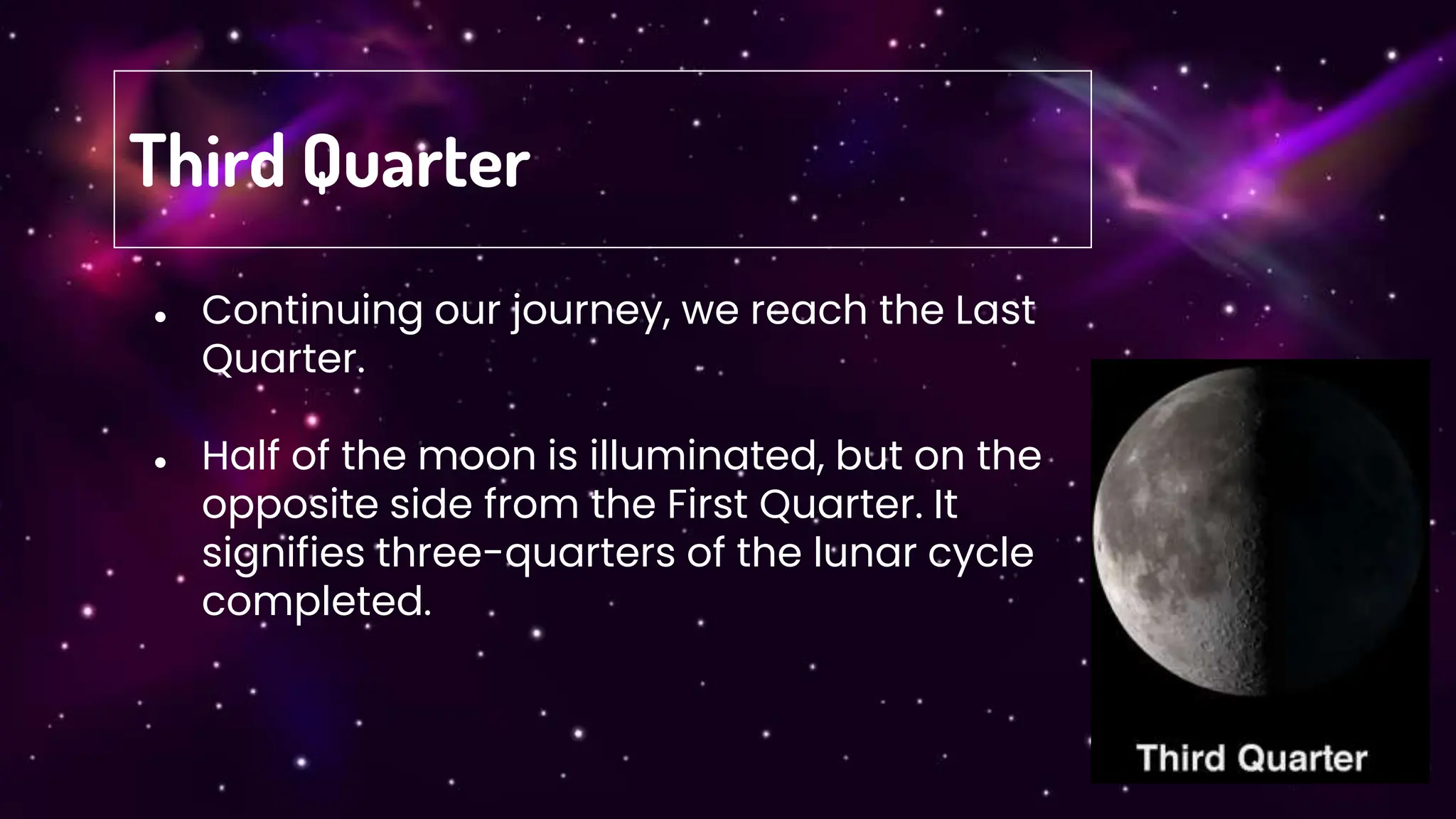
Third Quarter
● Continuing our journey, we reach the Last
Quarter.
● Half of the moon is illuminated, but on the
opposite side from the First Quarter. It
signifies three-quarters of the lunar cycle
completed.
Waning Crescent
● Finally, we approach the Waning Crescent.
● A small, decreasing crescent becomes
visible in the eastern sky before sunrise,
leading us back to the New Moon.
● Unlike the Waxing Crescent stage this one
looks like an upright ‘C’. (After this phase
the cycle restarts with new moon.)
THANK YOU!!!
A power point presentation by : - Vemula Sri
Chethan

The Phases of the moon Presentation

  • 1.
    UNDERSTANDING THE PHASES OF THEMOON A journey through lunar illumination!
  • 2.
    Introduction ● If youlook at the sky, you will notice that the moon changes its shape every night. ● These different views are known as phases of the moon.
  • 3.
  • 4.
    What causes moonphases? ● The key factor is the relative positions of the Earth, Moon, and Sun. As the moon orbits the Earth, varying amounts of its illuminated side become visible from our perspective. ● The phases go on in a repeated process for about 29.5 days.
  • 5.
    New Moon ● Duringthis phase, the Moon is positioned between the Earth and the Sun. The side facing the Earth is in shadow, making the moon appear completely dark. ● It marks the start of the lunar cycle,
  • 6.
    Waxing Crescent ● Followingthe New Moon, we enter the Waxing Crescent phase. ● A small, illuminated crescent becomes visible. This phase is visible in the western sky shortly after sunset. ● The crescent appears in the shape of an inverted ‘C’
  • 7.
    First Quarter ● Aswe progress, we reach the First Quarter. ● Half of the moon is now illuminated and visible from Earth. It's called the First Quarter because it's one-quarter of the way through the lunar cycle. ● It is also known as Half – Moon.
  • 8.
    Waxing Gibbous ● Afterthe First Quarter, we encounter the Waxing Gibbous phase. ● More than half of the moon is illuminated, and it continues to grow towards fullness. ● The word ‘Gibbous’ originates from the Latin word which means Hump
  • 9.
    Full Moon ● Afterthe waxing stage we approach the full moon. ● In this stage the moon is fully illuminated and can be clearly seen. ● In this stage, sometimes there is a rare chance of a lunar eclipse occurring.(It happens when all the sun, moon and earth are in a straight line.
  • 10.
    Waning Gibbous ● Post-FullMoon, we enter the Waning Gibbous phase. ● The illuminated portion starts decreasing, but the moon is still more than half-lit. ● It is quite opposite to Waxing gibbous and the illumination is done on the other 3/4th part of the moon.
  • 11.
    Third Quarter ● Continuingour journey, we reach the Last Quarter. ● Half of the moon is illuminated, but on the opposite side from the First Quarter. It signifies three-quarters of the lunar cycle completed.
  • 12.
    Waning Crescent ● Finally,we approach the Waning Crescent. ● A small, decreasing crescent becomes visible in the eastern sky before sunrise, leading us back to the New Moon. ● Unlike the Waxing Crescent stage this one looks like an upright ‘C’. (After this phase the cycle restarts with new moon.)
  • 13.
    THANK YOU!!! A powerpoint presentation by : - Vemula Sri Chethan