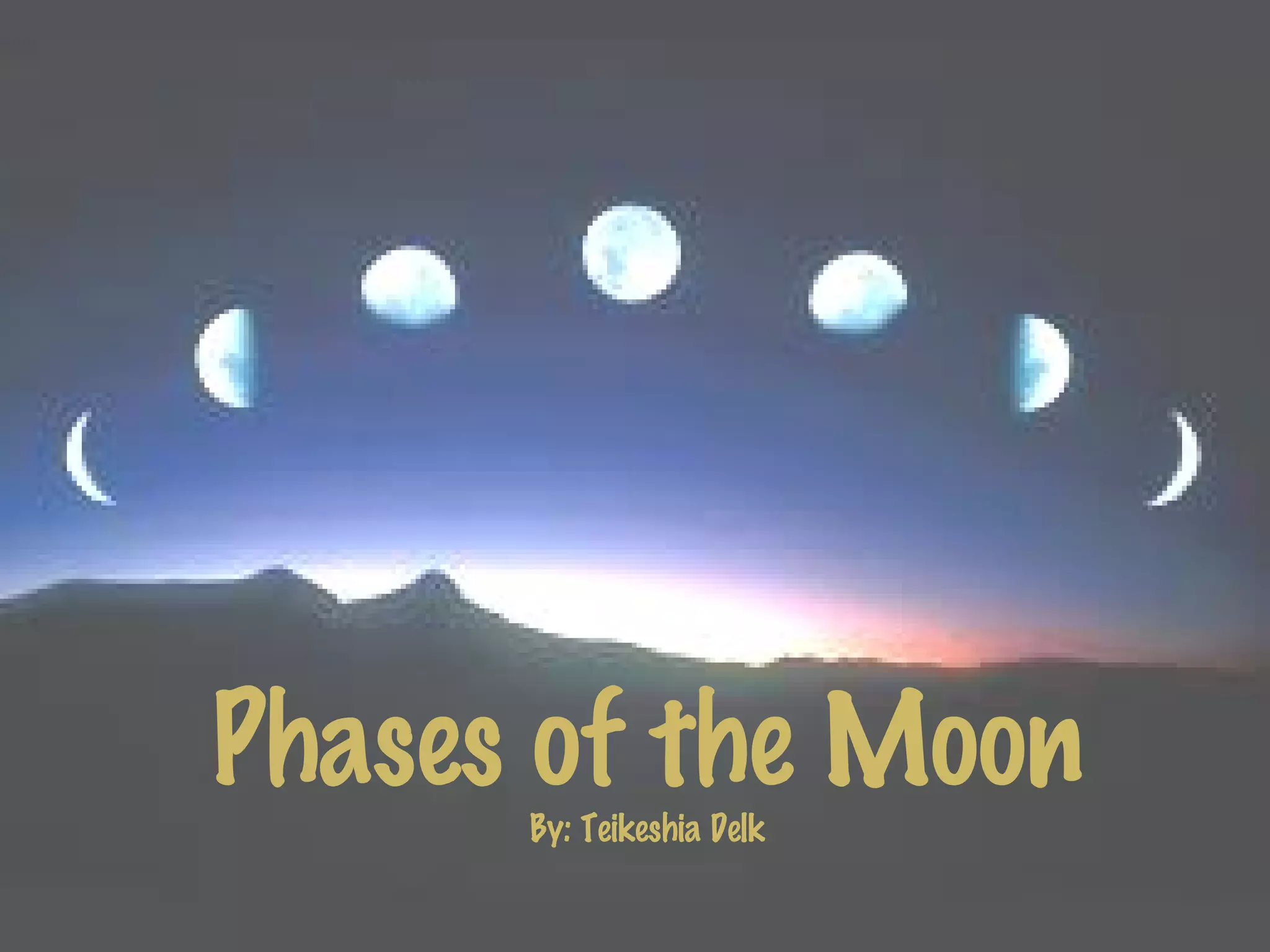
Phases of the Moon By: Teikeshia Delk
Objective: Objects in the sky have a regular and predictable pattern Students know the way in which the moon’s appearance changes during the four week lunar cycle.  California Science Standard 4B
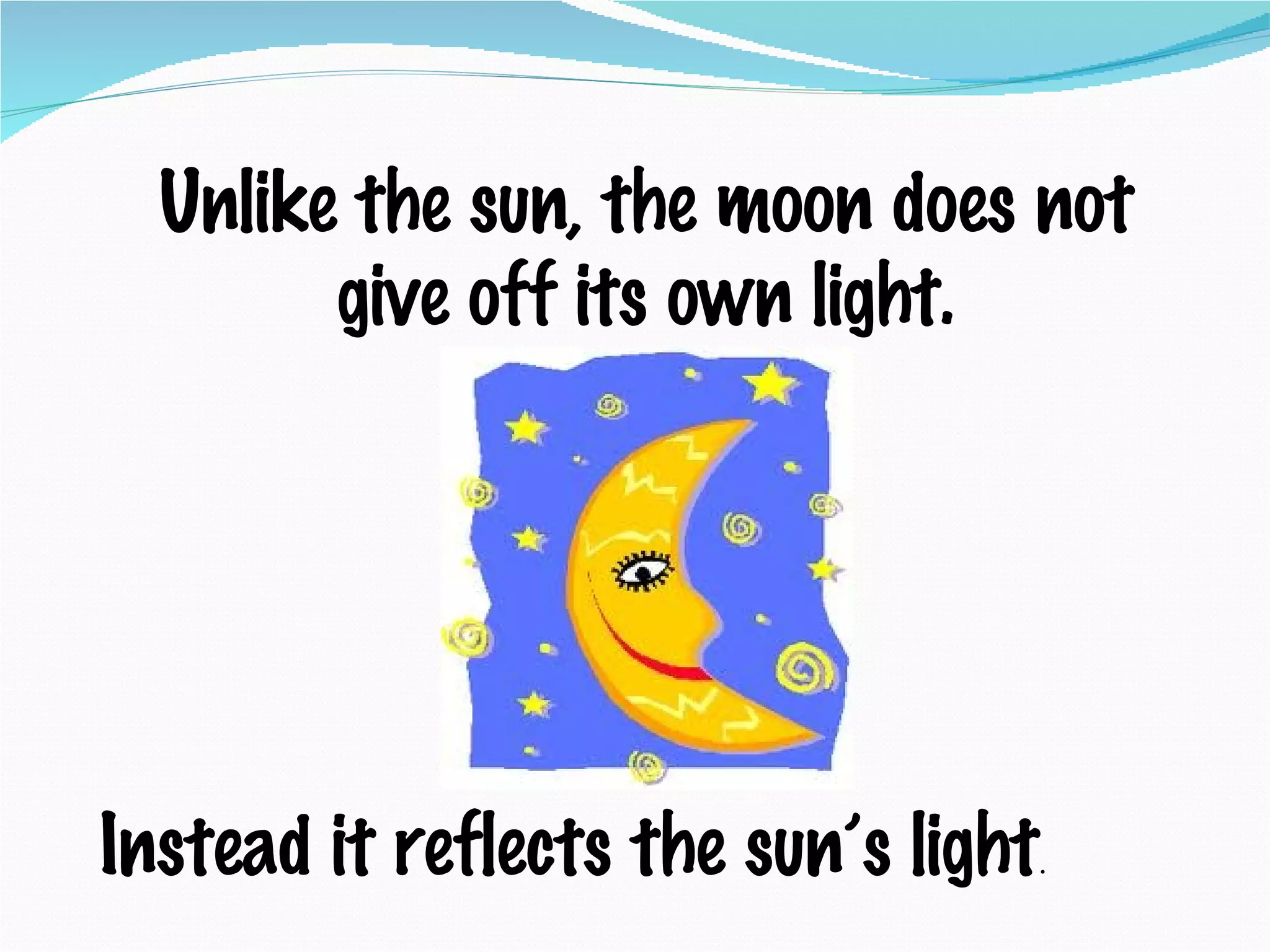
Unlike the sun, the moon does not give off its own light. Instead it reflects the sun’s light .
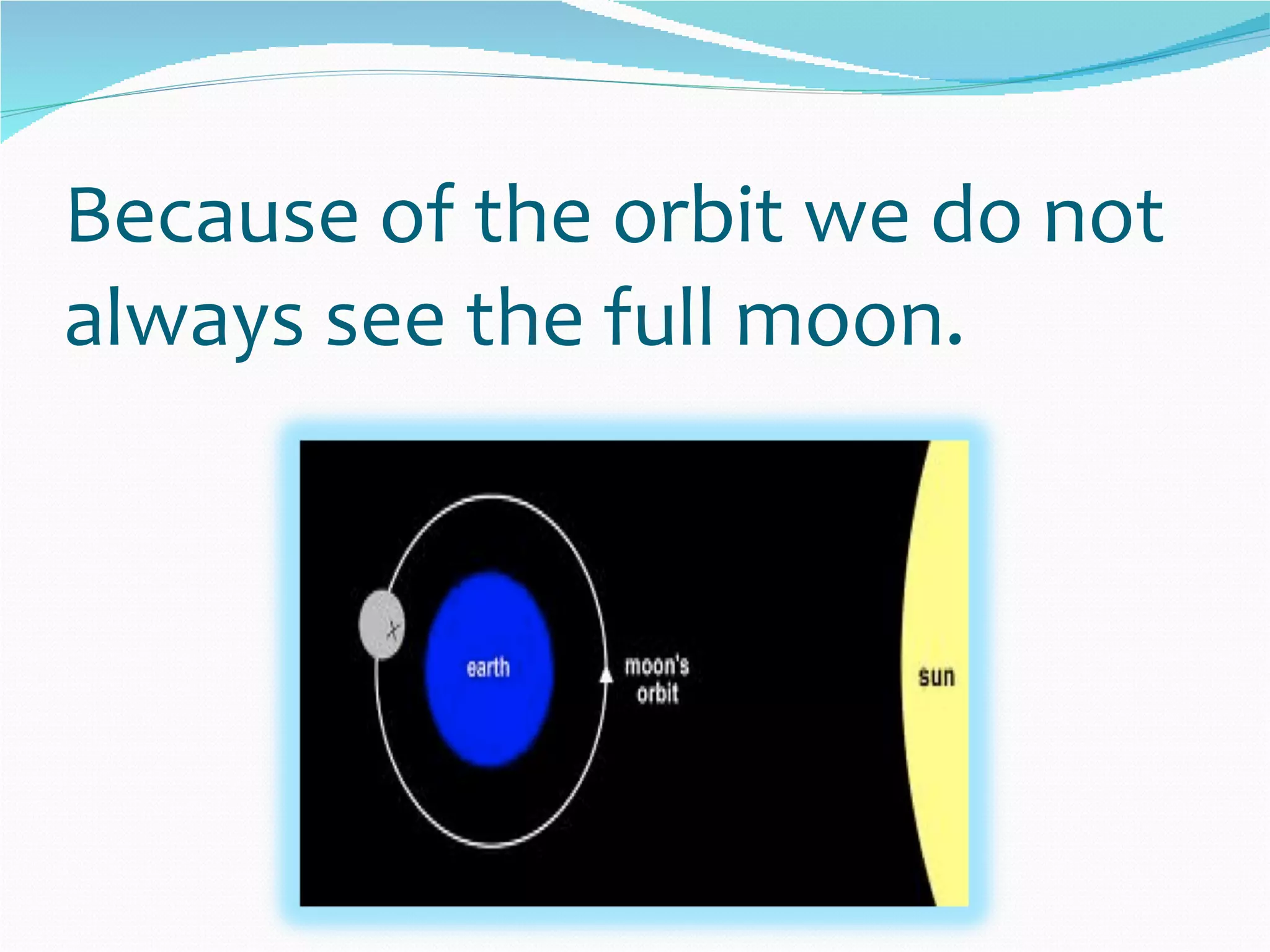
Because of the orbit we do not always see the full moon.
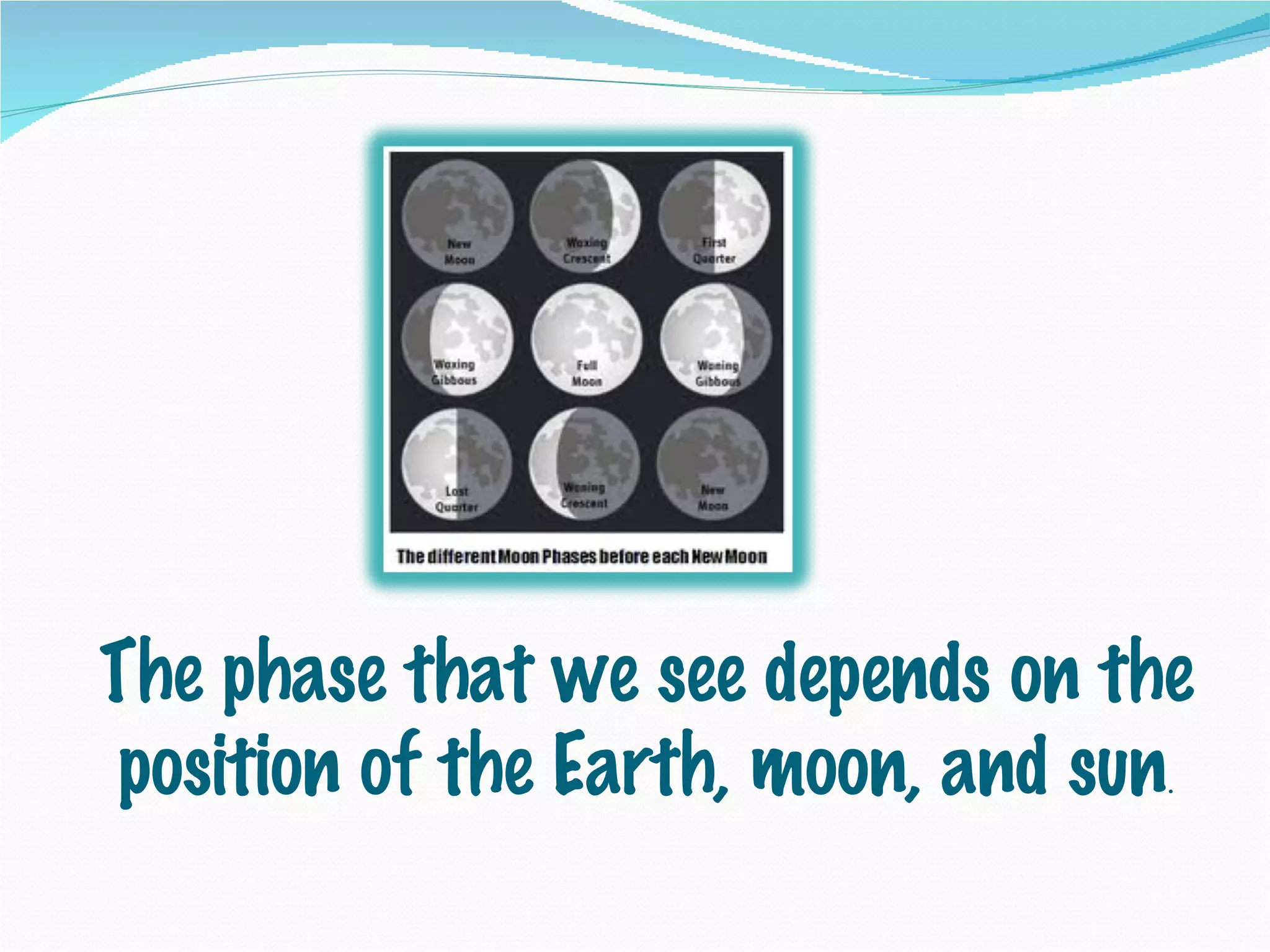
The phase that we see depends on the position of the Earth, moon, and sun .
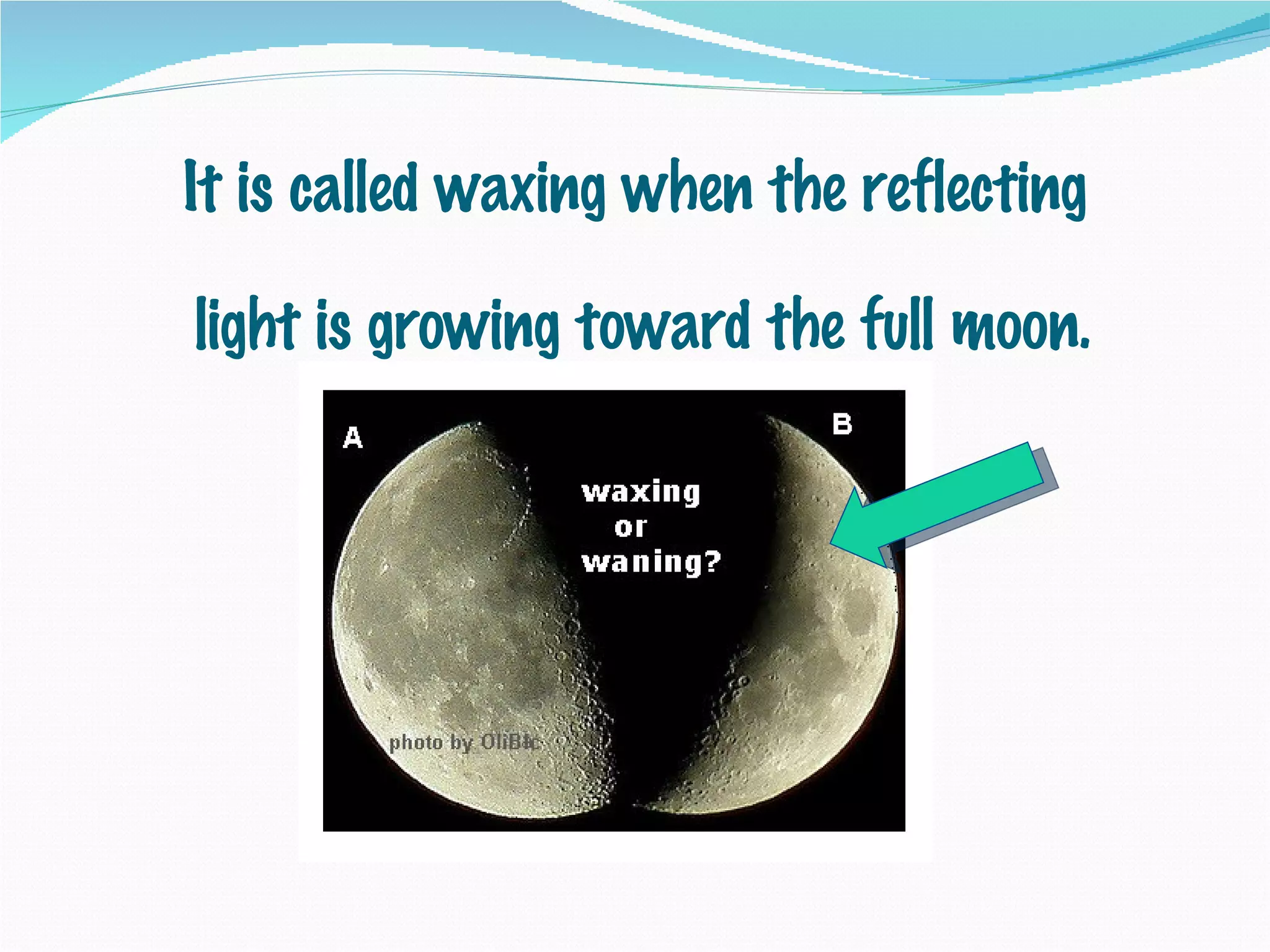
It is called waxing when the reflecting  light is growing toward the full moon.
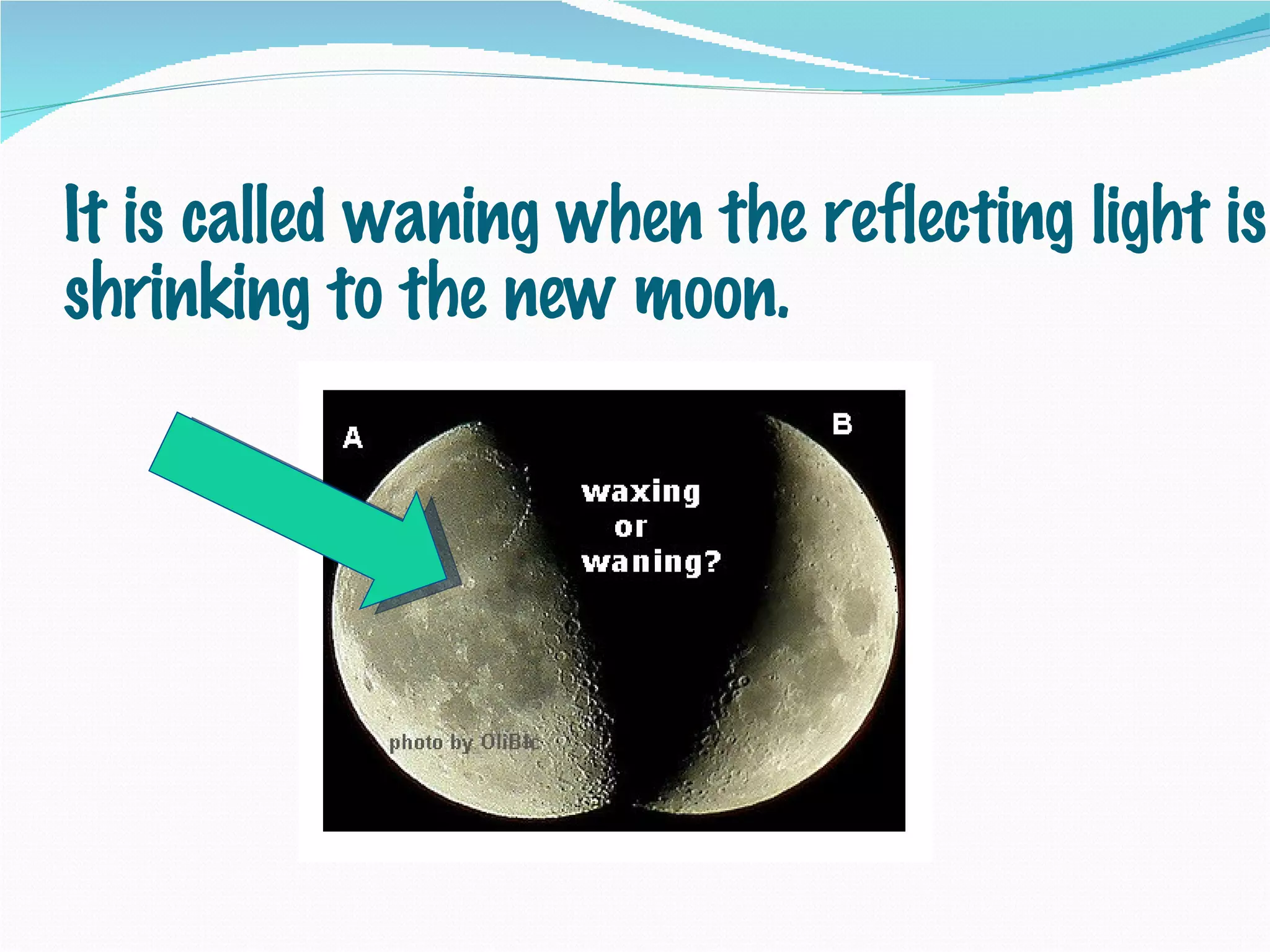
It is called waning when the reflecting light is shrinking to the new moon.
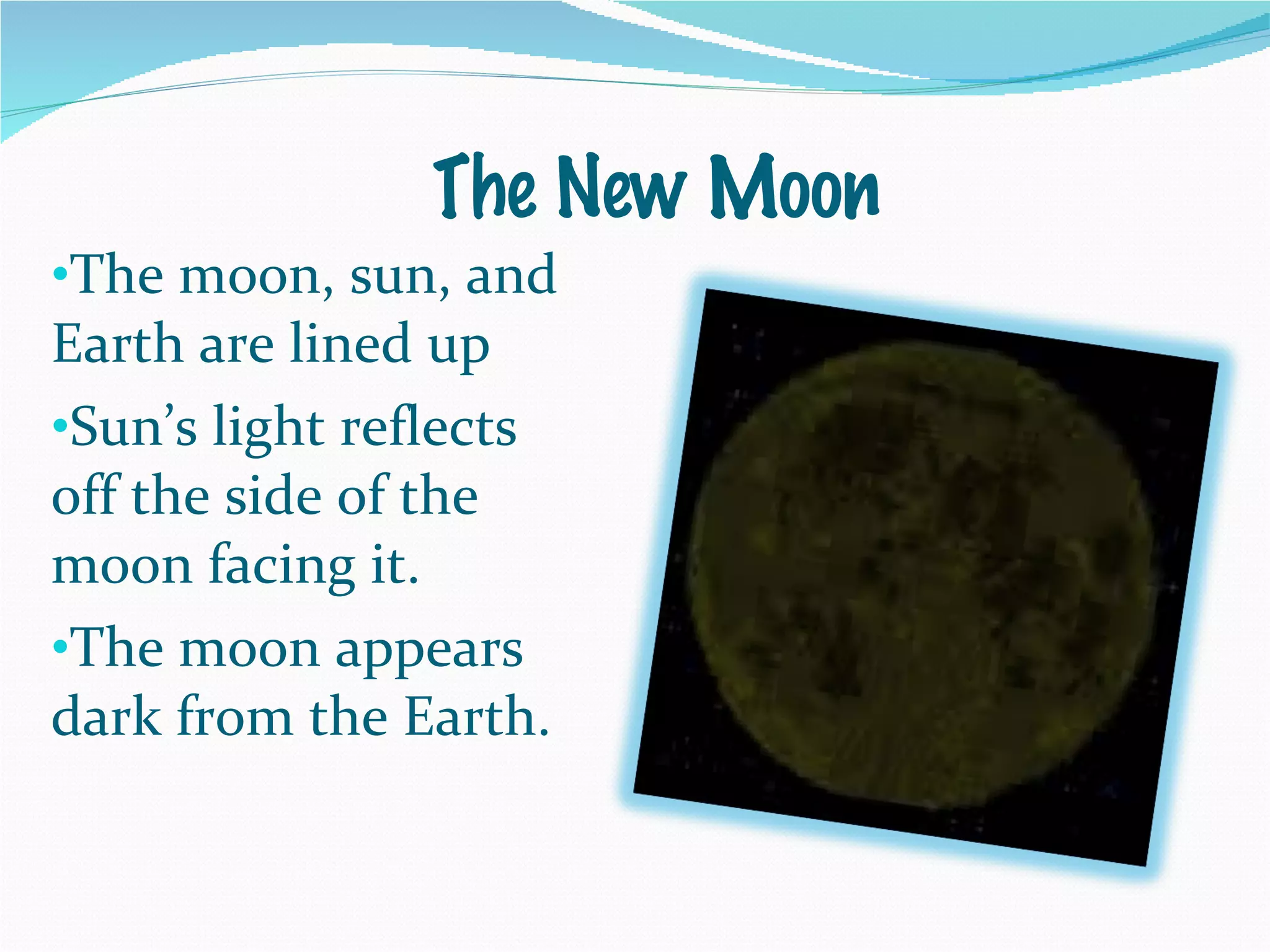
The moon, sun, and Earth are lined up Sun’s light reflects off the side of the moon facing it. The moon appears dark from the Earth. The New Moon
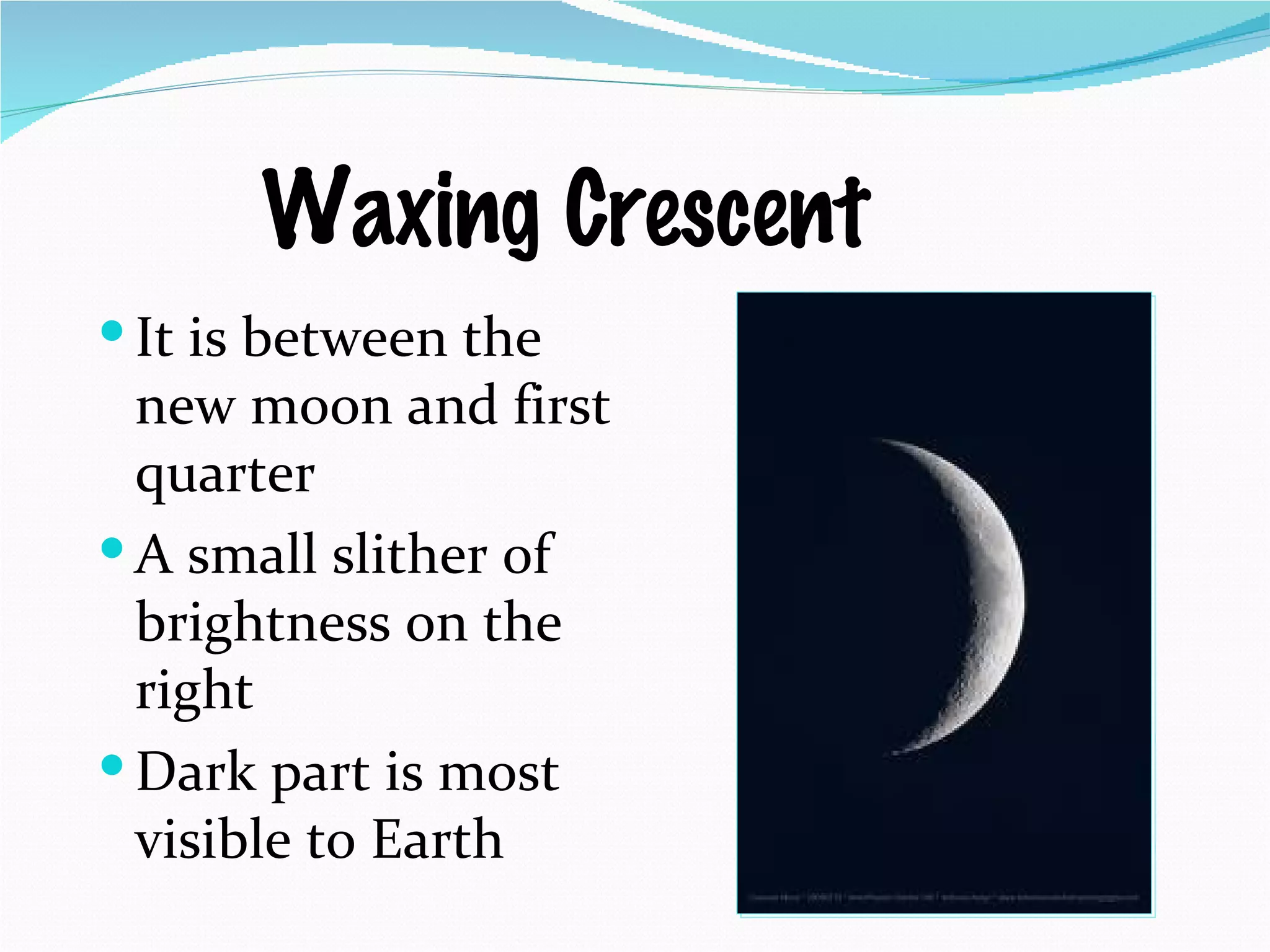
Waxing Crescent It is between the new moon and first quarter A small slither of brightness on the right Dark part is most visible to Earth
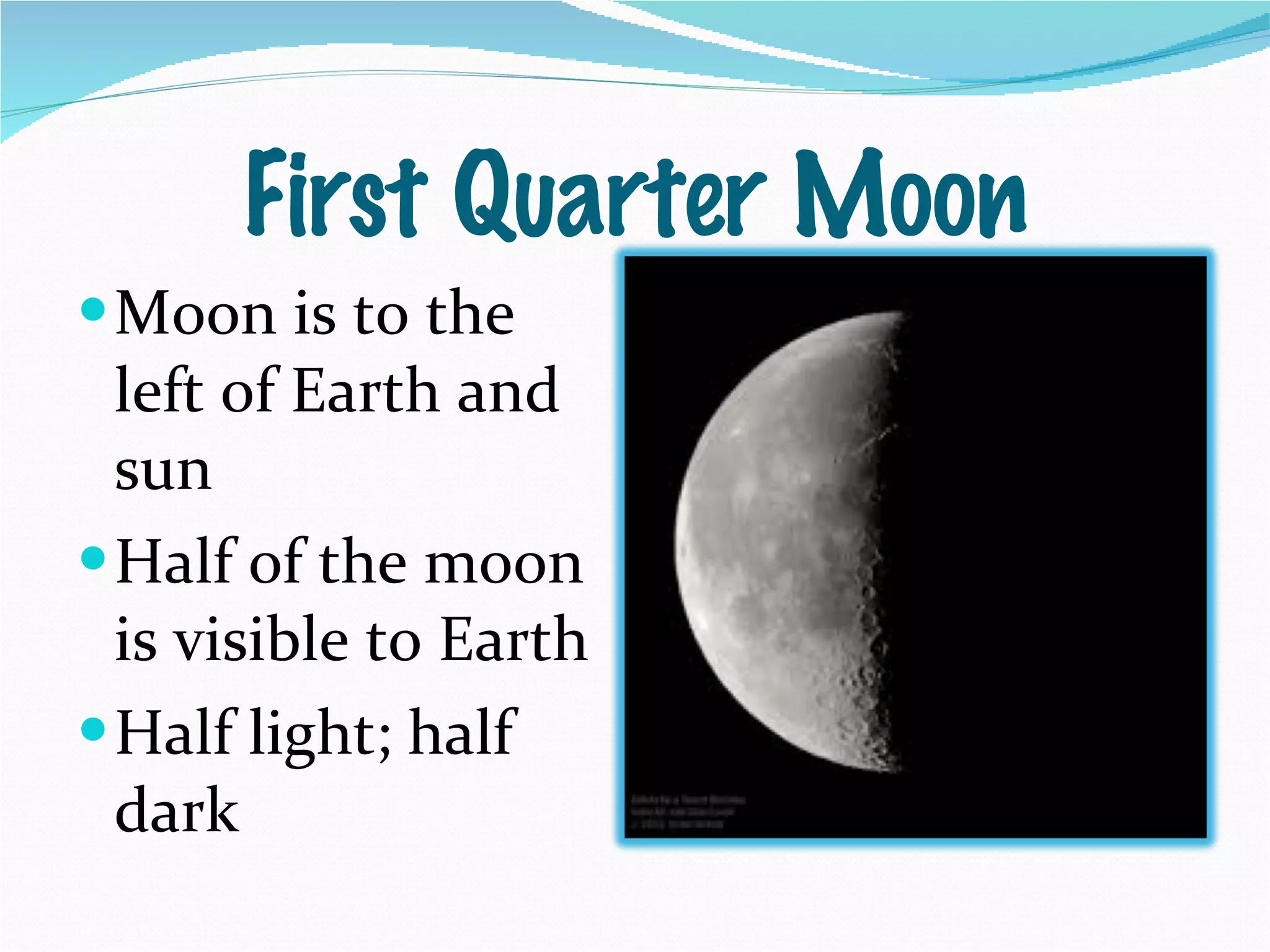
First Quarter Moon Moon is to the left of Earth and sun Half of the moon is visible to Earth Half light; half dark
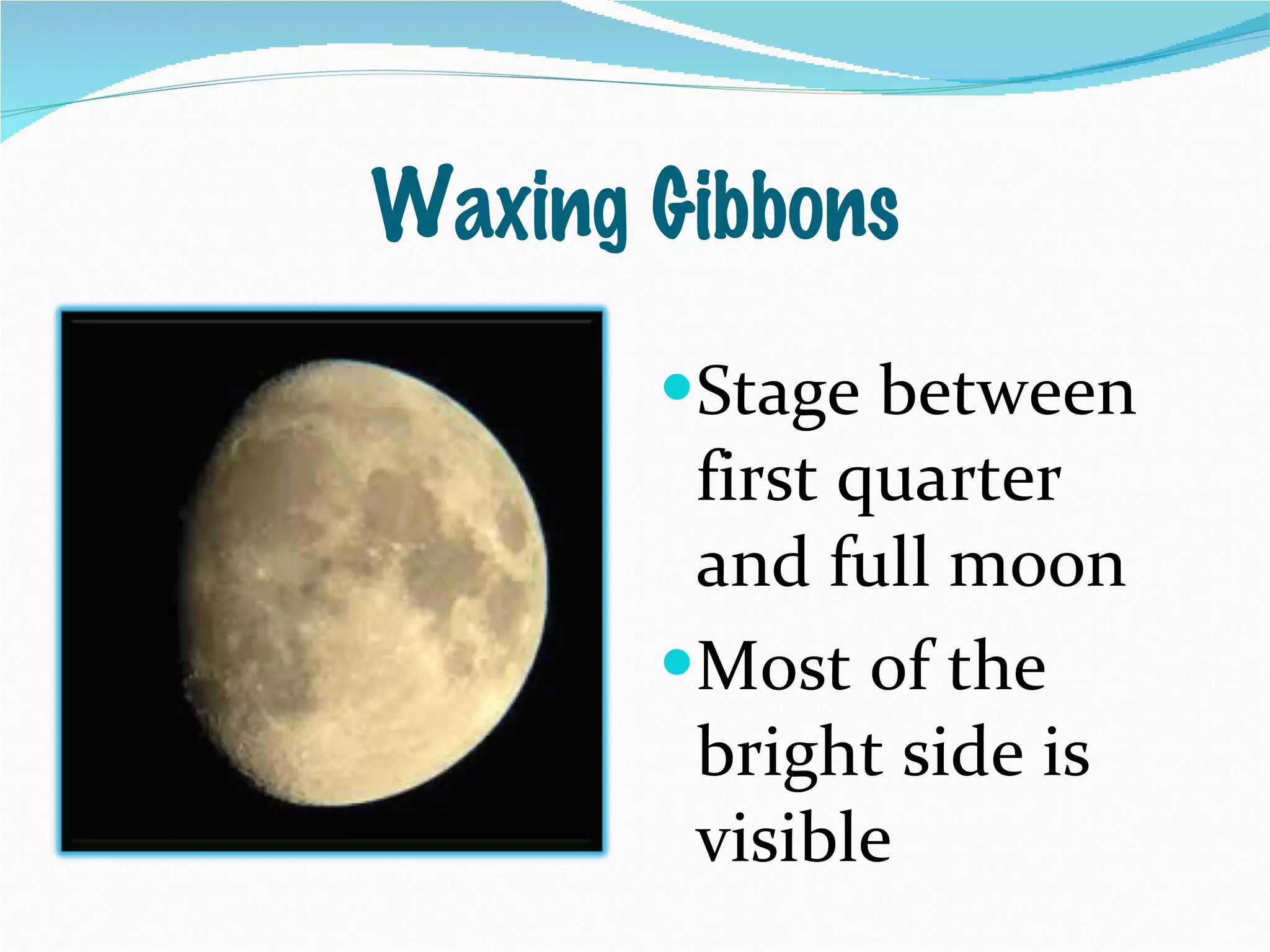
Waxing Gibbons Stage between first quarter and full moon Most of the bright side is visible
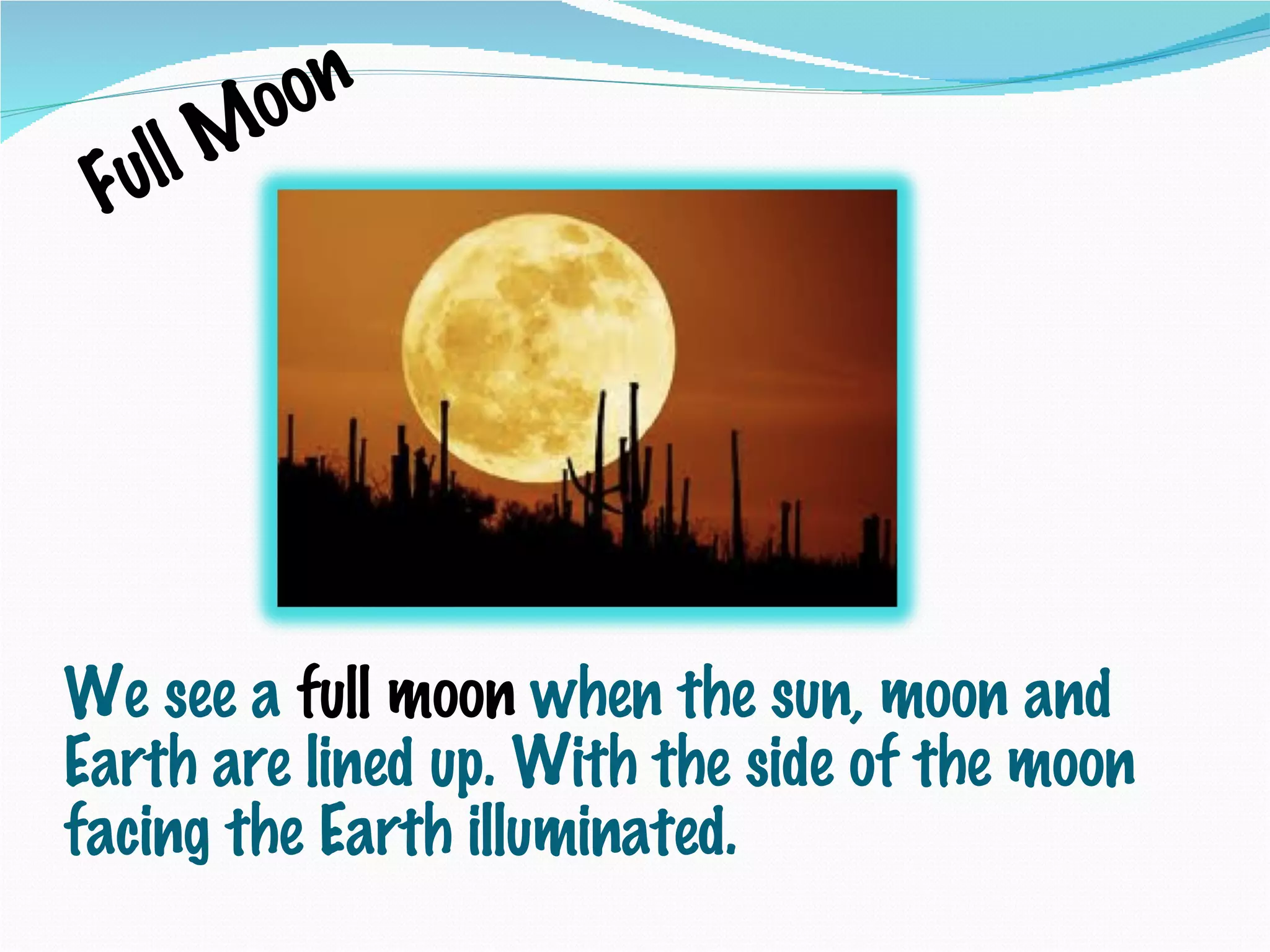
We see a  full moon  when the sun, moon and Earth are lined up. With the side of the moon facing the Earth illuminated. Full Moon
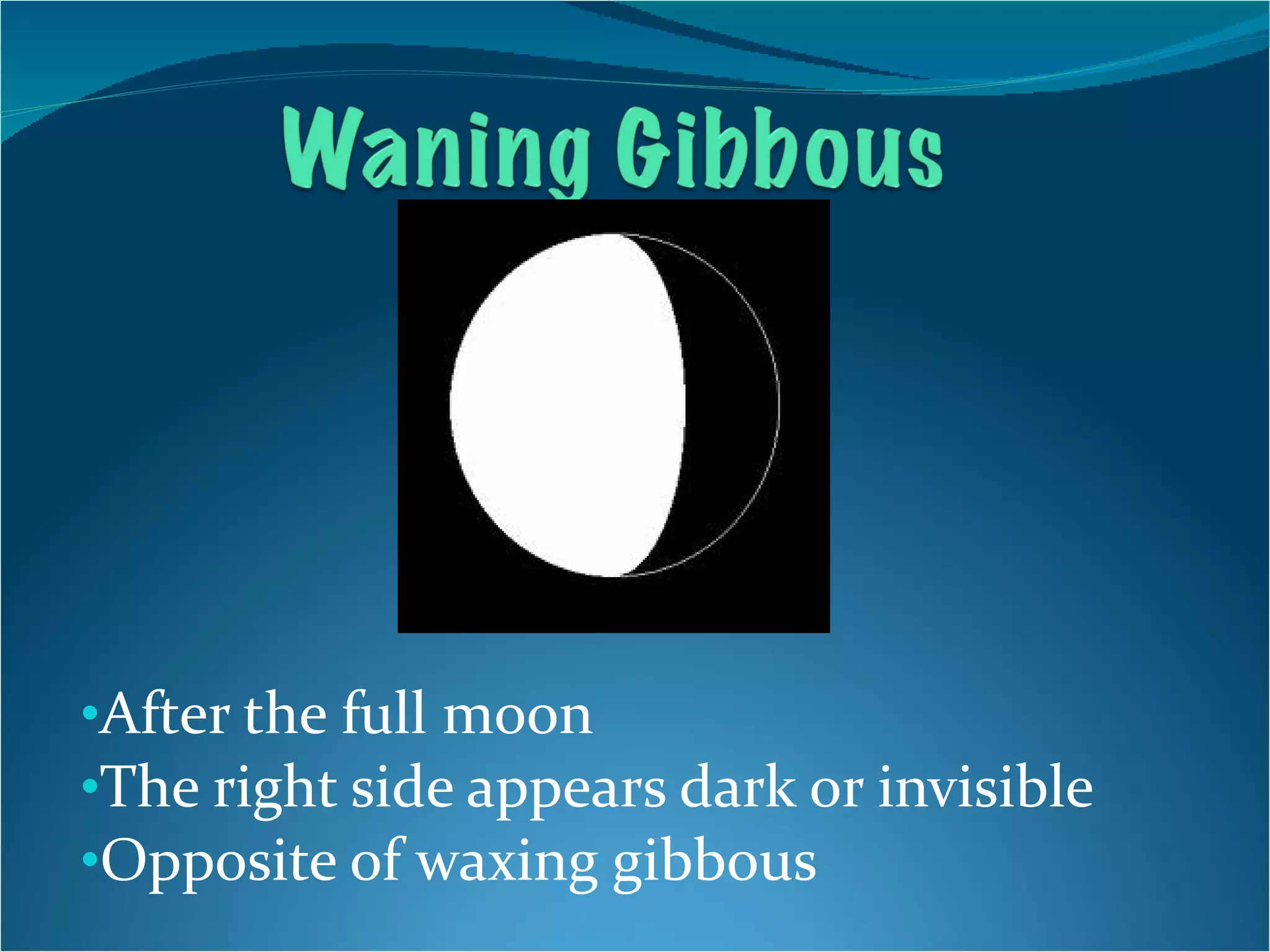
After the full moon The right side appears dark or invisible Opposite of waxing gibbous
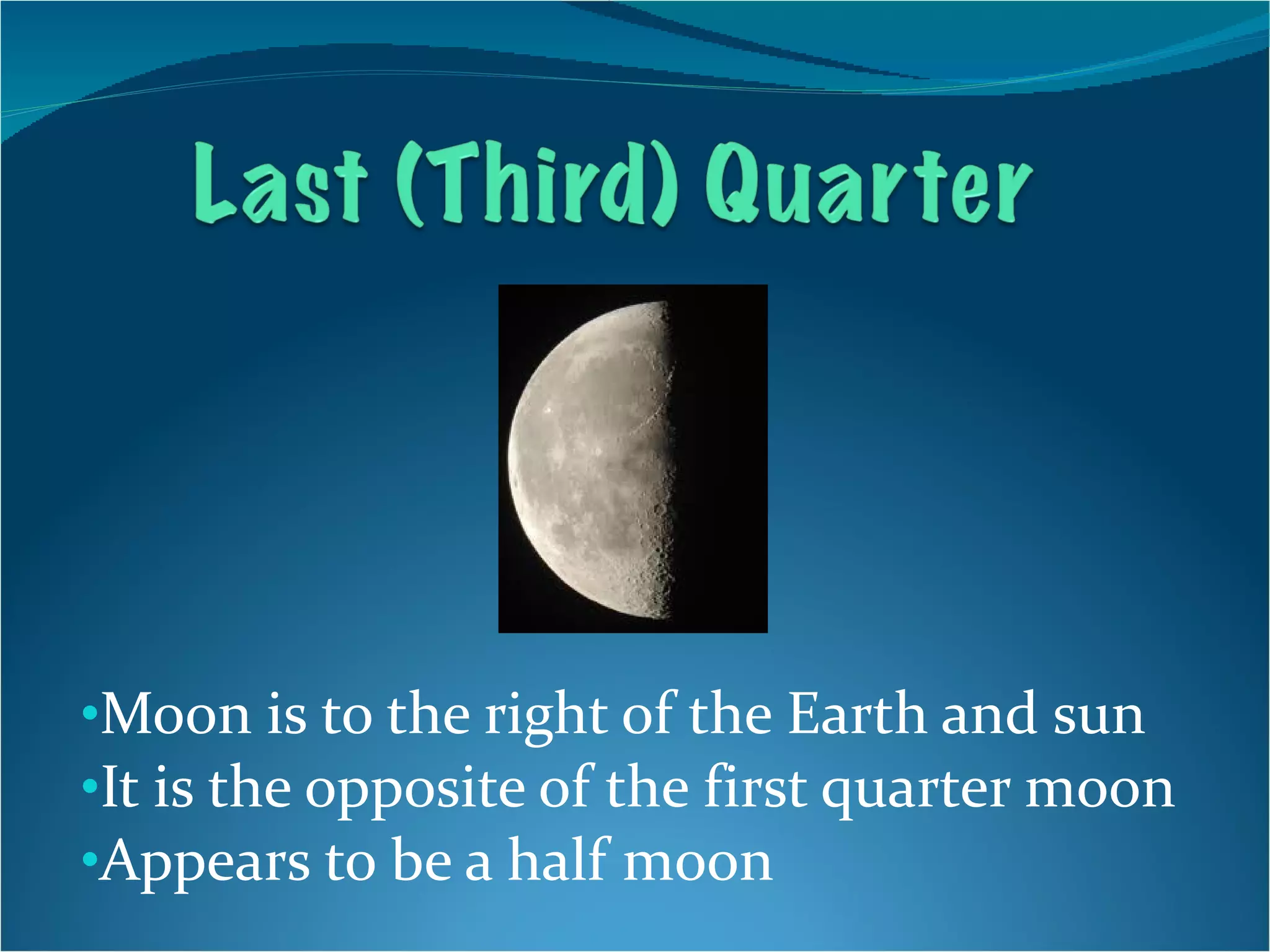
Moon is to the right of the Earth and sun It is the opposite of the first quarter moon Appears to be a half moon
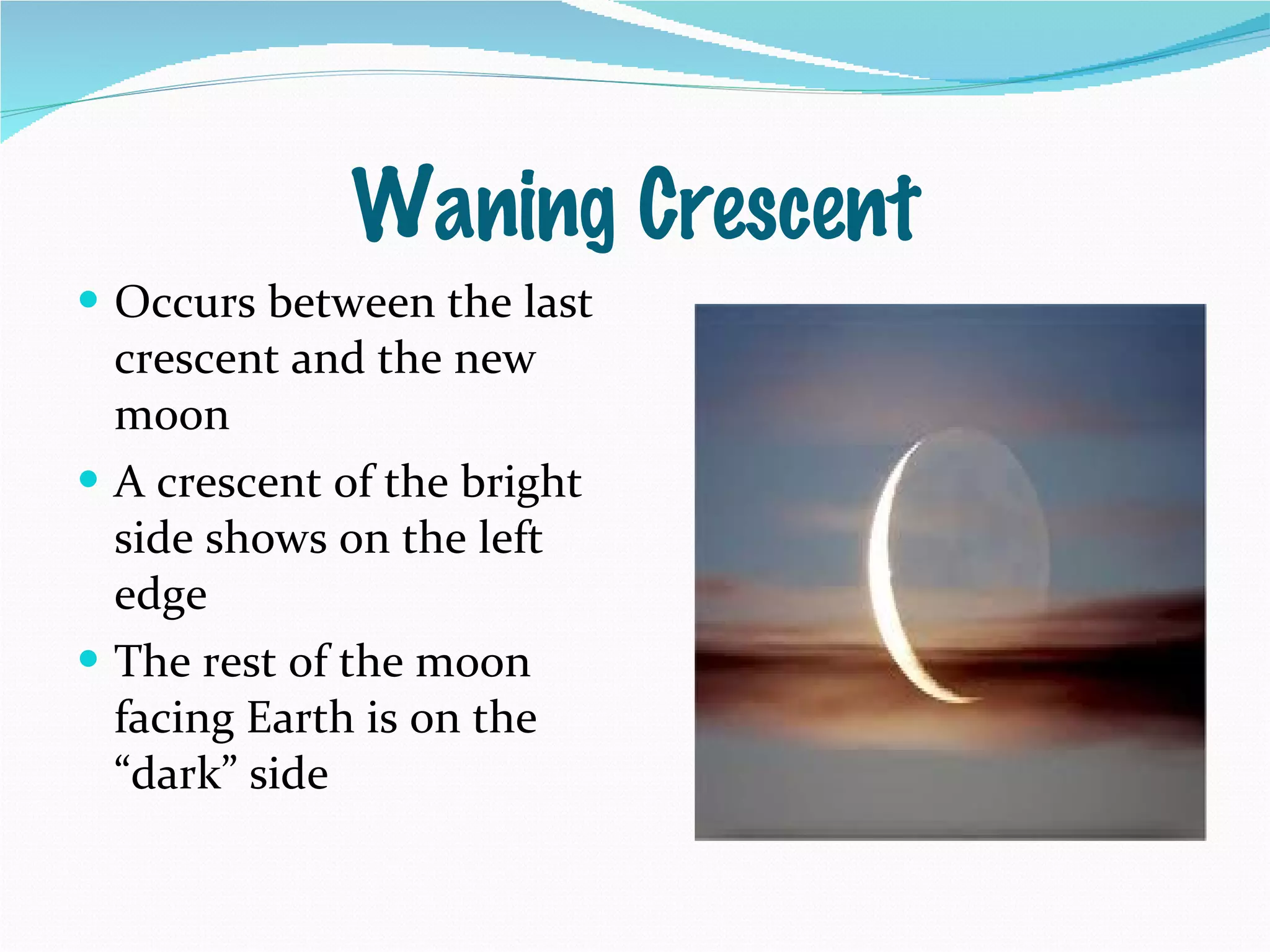
Waning Crescent Occurs between the last crescent and the new moon A crescent of the bright side shows on the left edge The rest of the moon facing Earth is on the “dark” side
 
 
http://library.thinkquest.org/C0114964/phases.htm http://www.hometrainingtools.com/phases-of-the-moon/a/1088/

Phases of the moon

  • 1.
    Phases of theMoon By: Teikeshia Delk
  • 2.
    Objective: Objects inthe sky have a regular and predictable pattern Students know the way in which the moon’s appearance changes during the four week lunar cycle. California Science Standard 4B
  • 3.
    Unlike the sun,the moon does not give off its own light. Instead it reflects the sun’s light .
  • 4.
    Because of theorbit we do not always see the full moon.
  • 5.
    The phase thatwe see depends on the position of the Earth, moon, and sun .
  • 6.
    It is calledwaxing when the reflecting light is growing toward the full moon.
  • 7.
    It is calledwaning when the reflecting light is shrinking to the new moon.
  • 8.
    The moon, sun,and Earth are lined up Sun’s light reflects off the side of the moon facing it. The moon appears dark from the Earth. The New Moon
  • 9.
    Waxing Crescent Itis between the new moon and first quarter A small slither of brightness on the right Dark part is most visible to Earth
  • 10.
    First Quarter MoonMoon is to the left of Earth and sun Half of the moon is visible to Earth Half light; half dark
  • 11.
    Waxing Gibbons Stagebetween first quarter and full moon Most of the bright side is visible
  • 12.
    We see a full moon when the sun, moon and Earth are lined up. With the side of the moon facing the Earth illuminated. Full Moon
  • 13.
    After the fullmoon The right side appears dark or invisible Opposite of waxing gibbous
  • 14.
    Moon is tothe right of the Earth and sun It is the opposite of the first quarter moon Appears to be a half moon
  • 15.
    Waning Crescent Occursbetween the last crescent and the new moon A crescent of the bright side shows on the left edge The rest of the moon facing Earth is on the “dark” side
  • 16.
  • 17.
  • 18.