1. Long-term memory is a system for permanently storing and retrieving information for later use. It codes information according to meaning, patterns, and other characteristics.
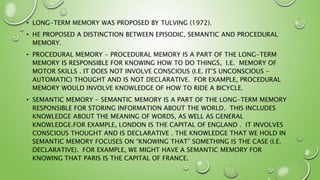
2. Tulving proposed that long-term memory consists of episodic, semantic, and procedural memory. Episodic memory stores autobiographical events, semantic memory stores general world knowledge, and procedural memory stores skills and how to perform actions.
3. Long-term memory is responsible for bringing continuity and meaning to life by storing information relatively permanently based on meaning and importance.