 Why counselling skill
 Basics of counselling
 Step to remember while using basic
counselling skills
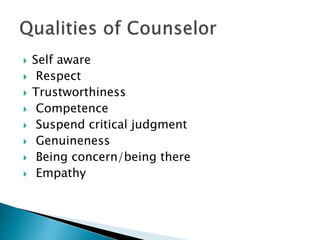
 Qualities of a Counselor
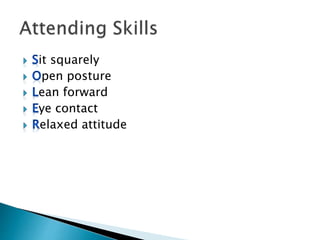
 Attending SKILLS
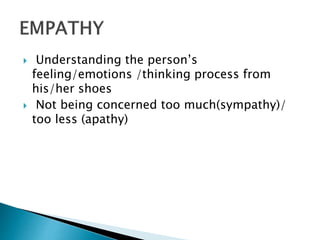
 Empathy
 Observing
 Listening
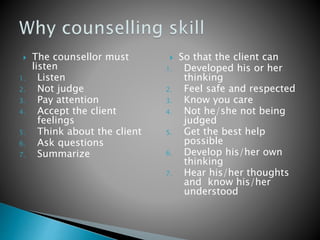
 The counsellor must
listen
1. Listen
2. Not judge
3. Pay attention
4. Accept the client
feelings
5. Think about the client
6. Ask questions
7. Summarize
 So that the client can
1. Developed his or her
thinking
2. Feel safe and respected
3. Know you care
4. Not he/she not being
judged
5. Get the best help
possible
6. Develop his/her own
thinking
7. Hear his/her thoughts
and know his/her
understood
 It can be really helpful to talk to someone
you know and trust
 you may feel more comfortable confiding in
someone who’s removed from your personal
situation and is therefore more objective.
 Having a set time and space to talk may help
you to work through the issues concerning
you.
 Building rapport
 Ensuring trust issues and confidentiality
 Attending
 Listening
 Responding
 Showing genuineness
 Providing Empathy
 Being transparent to self (to be aware of own
emotional issues)
 Self aware
 Respect
 Trustworthiness
 Competence
 Suspend critical judgment
 Genuineness
 Being concern/being there
 Empathy
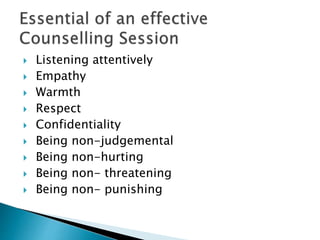
 Listening attentively
 Empathy
 Warmth
 Respect
 Confidentiality
 Being non-judgemental
 Being non-hurting
 Being non- threatening
 Being non- punishing
it squarely
pen posture
ean forward
ye contact
elaxed attitude
 Understanding the person’s
feeling/emotions /thinking process from
his/her shoes
 Not being concerned too much(sympathy)/
too less (apathy)
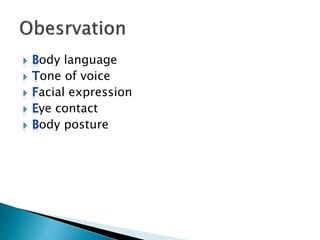
ody language
one of voice
acial expression
ye contact
ody posture
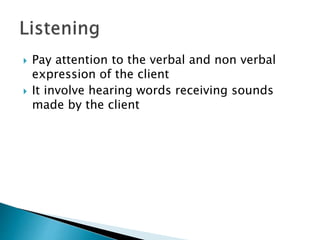
 Pay attention to the verbal and non verbal
expression of the client
 It involve hearing words receiving sounds
made by the client
Basic Counseling skills

Basic Counseling skills

  • 2.
     Why counsellingskill  Basics of counselling  Step to remember while using basic counselling skills  Qualities of a Counselor  Attending SKILLS  Empathy  Observing  Listening
  • 3.
     The counsellormust listen 1. Listen 2. Not judge 3. Pay attention 4. Accept the client feelings 5. Think about the client 6. Ask questions 7. Summarize  So that the client can 1. Developed his or her thinking 2. Feel safe and respected 3. Know you care 4. Not he/she not being judged 5. Get the best help possible 6. Develop his/her own thinking 7. Hear his/her thoughts and know his/her understood
  • 4.
     It canbe really helpful to talk to someone you know and trust  you may feel more comfortable confiding in someone who’s removed from your personal situation and is therefore more objective.  Having a set time and space to talk may help you to work through the issues concerning you.
  • 5.
     Building rapport Ensuring trust issues and confidentiality  Attending  Listening  Responding  Showing genuineness  Providing Empathy  Being transparent to self (to be aware of own emotional issues)
  • 6.
     Self aware Respect  Trustworthiness  Competence  Suspend critical judgment  Genuineness  Being concern/being there  Empathy
  • 7.
     Listening attentively Empathy  Warmth  Respect  Confidentiality  Being non-judgemental  Being non-hurting  Being non- threatening  Being non- punishing
  • 8.
    it squarely pen posture eanforward ye contact elaxed attitude
  • 9.
     Understanding theperson’s feeling/emotions /thinking process from his/her shoes  Not being concerned too much(sympathy)/ too less (apathy)
  • 10.
    ody language one ofvoice acial expression ye contact ody posture
  • 11.
     Pay attentionto the verbal and non verbal expression of the client  It involve hearing words receiving sounds made by the client