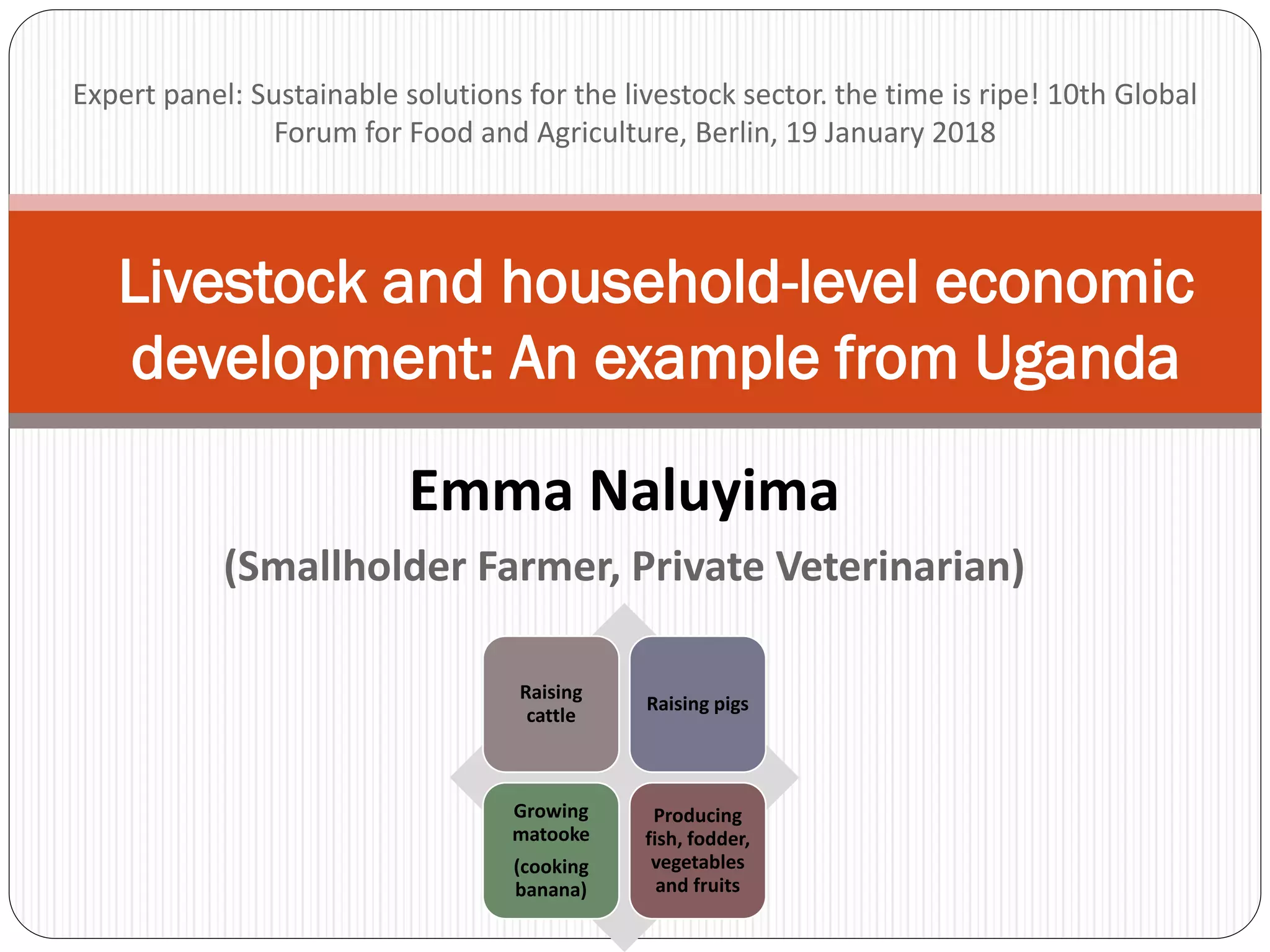
Emma Naluyima
(Smallholder Farmer, Private Veterinarian)
Livestock and household-level economic
development: An example from Uganda
Raising
cattle
Raising pigs
Growing
matooke
(cooking
banana)
Producing
fish, fodder,
vegetables
and fruits
Expert panel: Sustainable solutions for the livestock sector. the time is ripe! 10th Global
Forum for Food and Agriculture, Berlin, 19 January 2018
Key messages
 Small scale integrated livestock farming is
feasible, productive and profitable
 It has made a difference to my family’s
livelihood by supporting mine and my
children’s education, providing stable
income.
 Research solutions need to be shared more
widely and training provided. I have been
able to set up a school to provide a
foundation for local children.
Livestock is fundamental to
life in Uganda
From the start:
The founder of the BUGANDA KINGDOM called Kintu
owned a cow and practiced integrated farming
Today:
As well as food and income, people use livestock as a
‘bank’ and ‘insurance’ (eg school fees, medical, dowries
and to support crop production)
Here’s how it works for me and my family
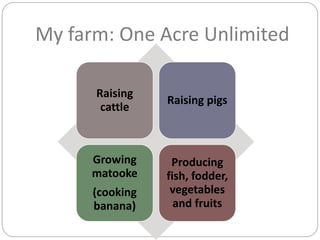
My farm: One Acre Unlimited
 One quarter: raising pigs
 One quarter: raising cattle
 One quarter: growing matooke (cooking
banana)
 One quarter: producing fish, fodder,
vegetables and fruits
My farm: One Acre Unlimited
Raising
cattle
Raising pigs
Growing
matooke
(cooking
banana)
Producing
fish, fodder,
vegetables
and fruits
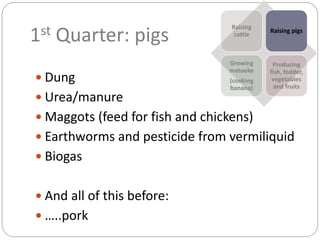
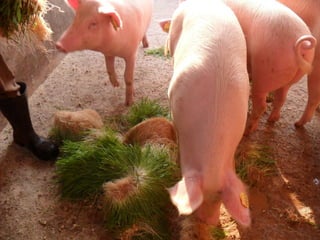
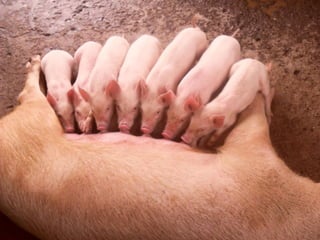
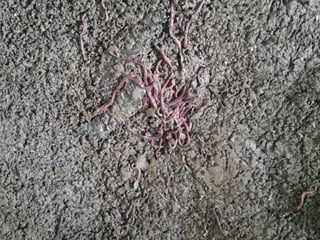
1st Quarter: pigs
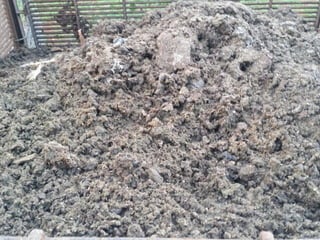
 Dung
 Urea/manure
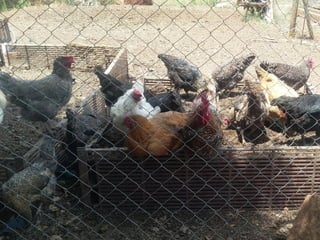
 Maggots (feed for fish and chickens)
 Earthworms and pesticide from vermiliquid
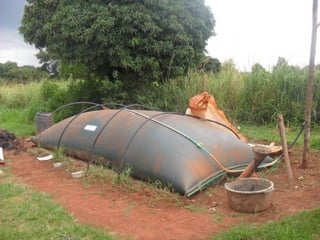
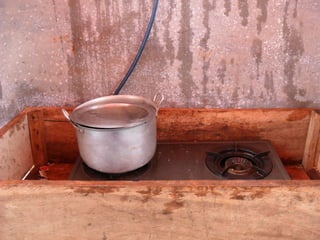
 Biogas
 And all of this before:
 …..pork
Raising
cattle
Raising pigs
Growing
matooke
(cooking
banana)
Producing
fish, fodder,
vegetables
and fruits
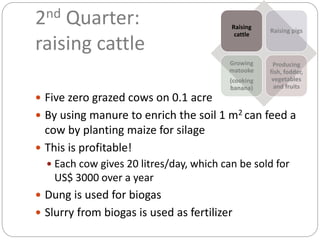
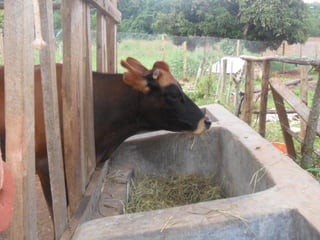
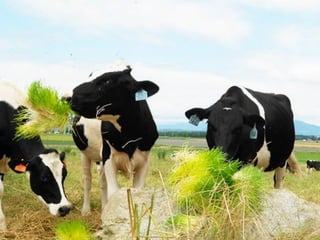
2nd Quarter:
raising cattle
 Five zero grazed cows on 0.1 acre
 By using manure to enrich the soil 1 m2 can feed a
cow by planting maize for silage
 This is profitable!
 Each cow gives 20 litres/day, which can be sold for
US$ 3000 over a year
 Dung is used for biogas
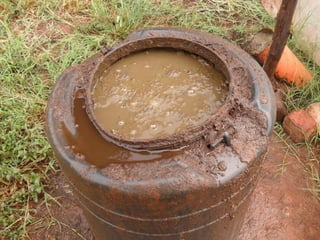
 Slurry from biogas is used as fertilizer
Raising
cattle
Raising pigs
Growing
matooke
(cooking
banana)
Producing
fish, fodder,
vegetables
and fruits
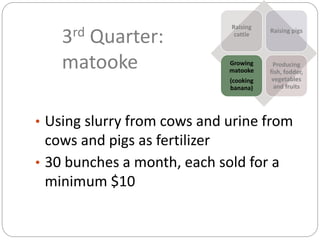
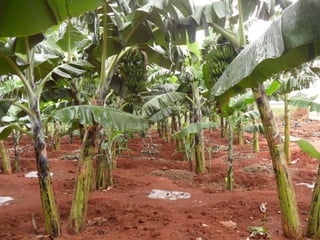
3rd Quarter:
matooke
• Using slurry from cows and urine from
cows and pigs as fertilizer
• 30 bunches a month, each sold for a
minimum $10
Raising
cattle
Raising pigs
Growing
matooke
(cooking
banana)
Producing
fish, fodder,
vegetables
and fruits
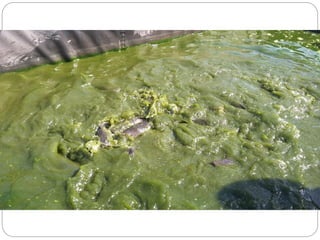
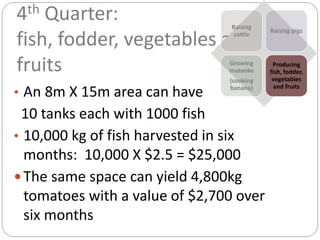
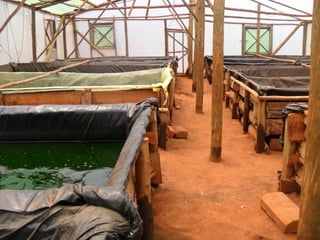
4th Quarter:
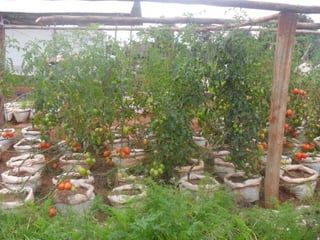
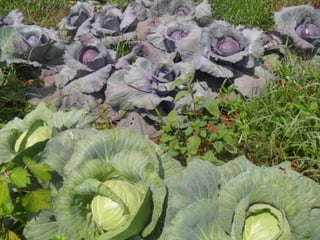
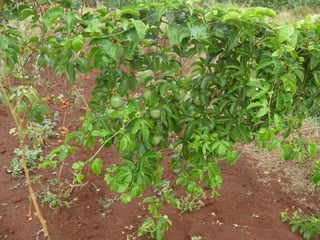
fish, fodder, vegetables and
fruits
• An 8m X 15m area can have
10 tanks each with 1000 fish
• 10,000 kg of fish harvested in six
months: 10,000 X $2.5 = $25,000
The same space can yield 4,800kg
tomatoes with a value of $2,700 over
six months
Raising
cattle
Raising pigs
Growing
matooke
(cooking
banana)
Producing
fish, fodder,
vegetables
and fruits
Key messages
 Small scale integrated livestock farming is
feasible, productive and profitable
 It has made a difference to my family’s
livelihood by supporting mine and my
children’s education, providing stable
income.
 Research solutions need to be shared more
widely and training provided. I have been
able to set up a school to provide a
foundation for local children.
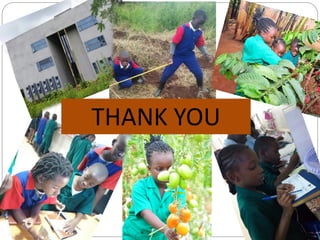
THANK YOU

Livestock and household-level economic development: An example from Uganda

  • 1.
    Emma Naluyima (Smallholder Farmer,Private Veterinarian) Livestock and household-level economic development: An example from Uganda Raising cattle Raising pigs Growing matooke (cooking banana) Producing fish, fodder, vegetables and fruits Expert panel: Sustainable solutions for the livestock sector. the time is ripe! 10th Global Forum for Food and Agriculture, Berlin, 19 January 2018
  • 2.
    Key messages  Smallscale integrated livestock farming is feasible, productive and profitable  It has made a difference to my family’s livelihood by supporting mine and my children’s education, providing stable income.  Research solutions need to be shared more widely and training provided. I have been able to set up a school to provide a foundation for local children.
  • 3.
    Livestock is fundamentalto life in Uganda From the start: The founder of the BUGANDA KINGDOM called Kintu owned a cow and practiced integrated farming Today: As well as food and income, people use livestock as a ‘bank’ and ‘insurance’ (eg school fees, medical, dowries and to support crop production) Here’s how it works for me and my family
  • 4.
    My farm: OneAcre Unlimited  One quarter: raising pigs  One quarter: raising cattle  One quarter: growing matooke (cooking banana)  One quarter: producing fish, fodder, vegetables and fruits
  • 5.
    My farm: OneAcre Unlimited Raising cattle Raising pigs Growing matooke (cooking banana) Producing fish, fodder, vegetables and fruits
  • 6.
    1st Quarter: pigs Dung  Urea/manure  Maggots (feed for fish and chickens)  Earthworms and pesticide from vermiliquid  Biogas  And all of this before:  …..pork Raising cattle Raising pigs Growing matooke (cooking banana) Producing fish, fodder, vegetables and fruits
  • 15.
    2nd Quarter: raising cattle Five zero grazed cows on 0.1 acre  By using manure to enrich the soil 1 m2 can feed a cow by planting maize for silage  This is profitable!  Each cow gives 20 litres/day, which can be sold for US$ 3000 over a year  Dung is used for biogas  Slurry from biogas is used as fertilizer Raising cattle Raising pigs Growing matooke (cooking banana) Producing fish, fodder, vegetables and fruits
  • 21.
    3rd Quarter: matooke • Usingslurry from cows and urine from cows and pigs as fertilizer • 30 bunches a month, each sold for a minimum $10 Raising cattle Raising pigs Growing matooke (cooking banana) Producing fish, fodder, vegetables and fruits
  • 23.
    4th Quarter: fish, fodder,vegetables and fruits • An 8m X 15m area can have 10 tanks each with 1000 fish • 10,000 kg of fish harvested in six months: 10,000 X $2.5 = $25,000 The same space can yield 4,800kg tomatoes with a value of $2,700 over six months Raising cattle Raising pigs Growing matooke (cooking banana) Producing fish, fodder, vegetables and fruits
  • 28.
    Key messages  Smallscale integrated livestock farming is feasible, productive and profitable  It has made a difference to my family’s livelihood by supporting mine and my children’s education, providing stable income.  Research solutions need to be shared more widely and training provided. I have been able to set up a school to provide a foundation for local children.
  • 29.