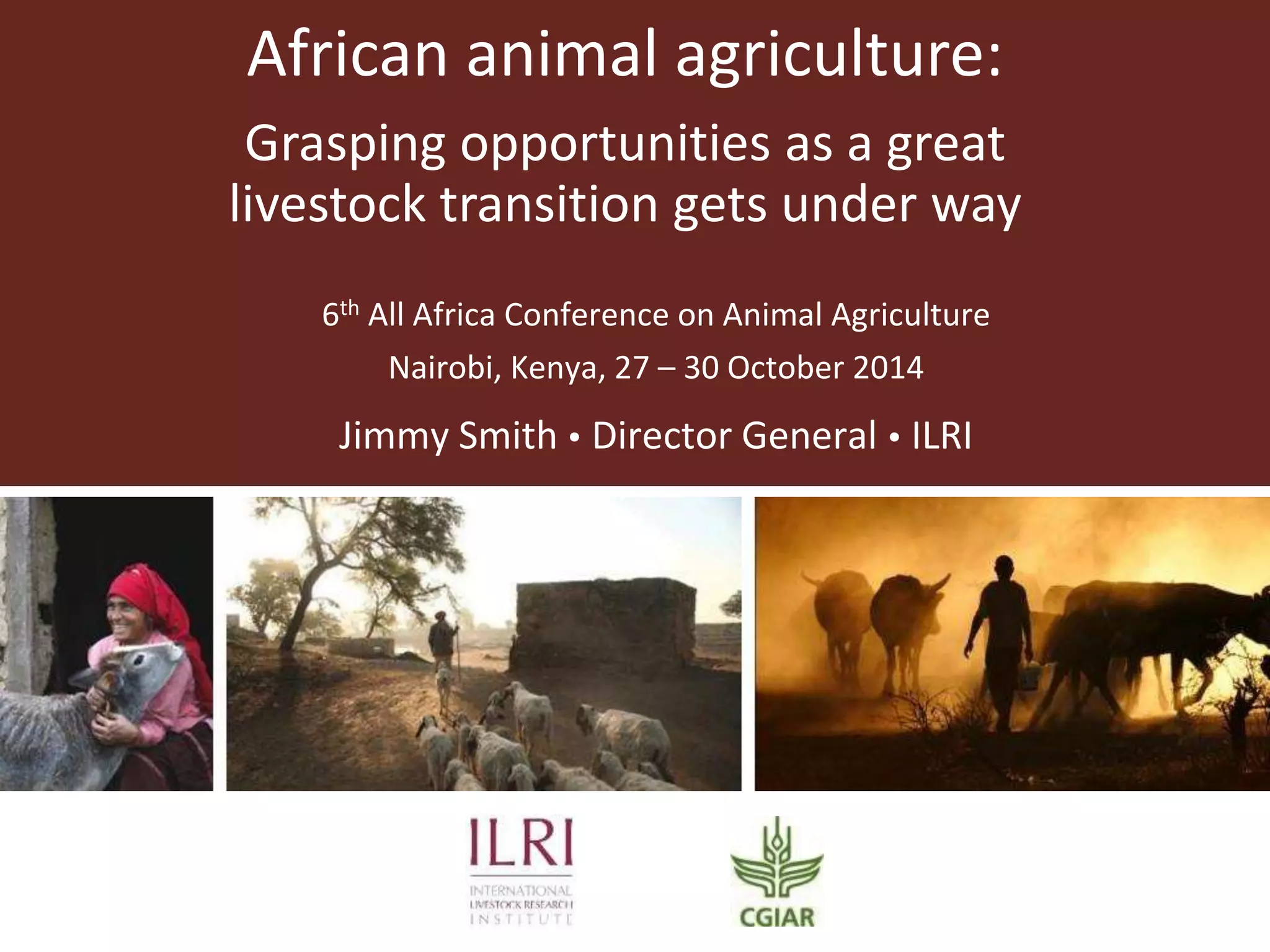
African animal agriculture: 
Grasping opportunities as a great 
livestock transition gets under way 
6th All Africa Conference on Animal Agriculture 
Nairobi, Kenya, 27 – 30 October 2014 
Jimmy Smith  Director General  ILRI
Key messages 
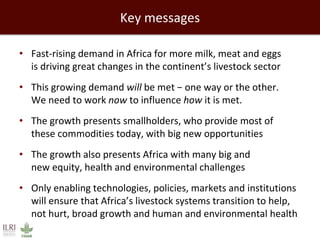
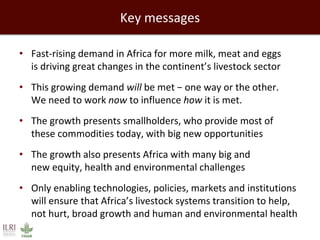
• Fast-rising demand in Africa for more milk, meat and eggs 
is driving great changes in the continent’s livestock sector 
• This growing demand will be met − one way or the other. 
We need to work now to influence how it is met. 
• The growth presents smallholders, who provide most of 
these commodities today, with big new opportunities 
• The growth also presents Africa with many big and 
new equity, health and environmental challenges 
• Only enabling technologies, policies, markets and institutions 
will ensure that Africa’s livestock systems transition to help, 
not hurt, broad growth and human and environmental health
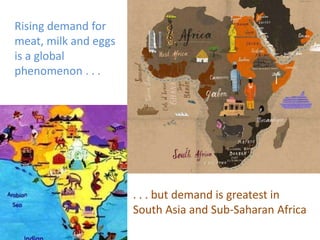
Rising demand for 
meat, milk and eggs 
is a global 
phenomenon . . . 
. . . but demand is greatest in 
South Asia and Sub-Saharan Africa
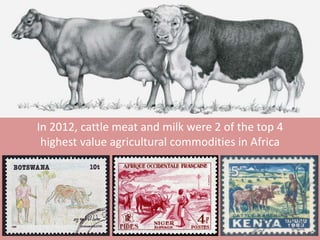
In 2012, cattle meat and milk were 2 of the top 4 
highest value agricultural commodities in Africa
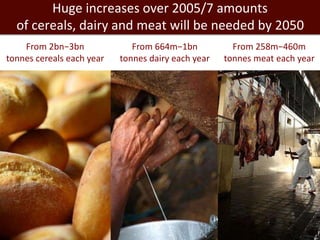
Huge increases over 2005/7 amounts 
of cereals, dairy and meat will be needed by 2050 
From 2bn−3bn 
tonnes cereals each year 
From 664m−1bn 
tonnes dairy each year 
From 258m−460m 
tonnes meat each year
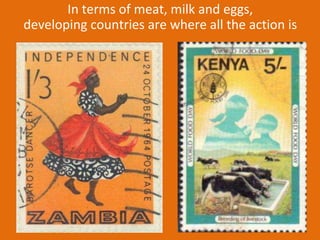
In terms of meat, milk and eggs, 
developing countries are where all the action is
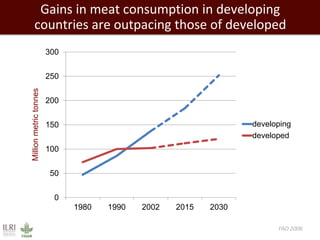
Gains in meat consumption in developing 
countries are outpacing those of developed 
300 
250 
200 
150 
100 
50 
0 
1980 1990 2002 2015 2030 
Million metric tonnes 
developing 
developed 
FAO 2006
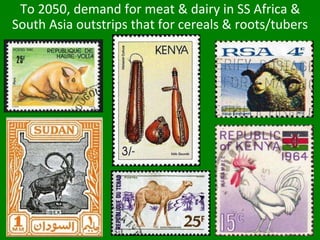
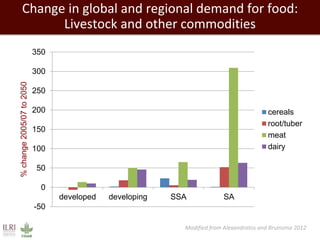
To 2050, demand for meat & dairy in SS Africa & 
South Asia outstrips that for cereals & roots/tubers
Change in global and regional demand for food: 
Livestock and other commodities 
350 
300 
250 
200 
150 
100 
50 
0 
-50 
developed developing SSA SA 
% change 2005/07 to 2050 
cereals 
root/tuber 
meat 
dairy 
Modified from Alexandratos and Bruinsma 2012
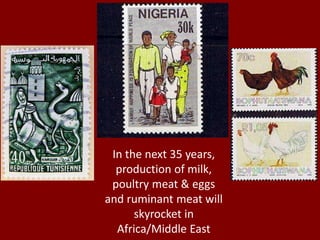
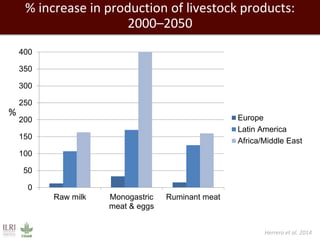
In the next 35 years, 
production of milk, 
poultry meat & eggs 
and ruminant meat will 
skyrocket in 
Africa/Middle East
% increase in production of livestock products: 
2000–2050 
400 
350 
300 
250 
200 
150 
100 
50 
0 
Raw milk Monogastric 
meat & eggs 
Ruminant meat 
Europe 
Latin America 
Africa/Middle East 
% 
Herrero et al. 2014
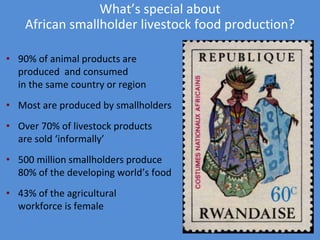
What’s special about 
African smallholder livestock food production? 
• 90% of animal products are 
produced and consumed 
in the same country or region 
• Most are produced by smallholders 
• Over 70% of livestock products 
are sold ‘informally’ 
• 500 million smallholders produce 
80% of the developing world’s food 
• 43% of the agricultural 
workforce is female
What’s special about 
African mixed crop-livestock production systems? 
• Mixed systems are a big 
source of ruminant meat 
in 2000 and 2050 
– Europe: 42% (temperate) 
– L America: 48% (humid) 
– Africa/M East: 38% (arid) 
• More than 50% of milk in all 
regions is from mixed systems 
• Big increases in milk by 
2050 continue to be in 
mixed systems, esp. in 
Africa and M East
What’s special about 
African smallholder livestock keepers? 
East Africa 
• 1 million Kenyan small-holders 
keep Africa’s 
largest dairy herd 
• Ugandans are the world’s 
lowest-cost milk producers 
• Small- and large-scale 
Kenyan poultry and dairy 
producers have same levels 
of efficiency and profits 
IFCN, Omiti et al. 2004, ILRI 2012
Demand for livestock commodities will be met – 
the only question is how 
Scenario #1 
Africa meets 
livestock demand by 
importing livestock products 
Scenario #2 
Africa meets 
livestock demand by 
importing livestock industrial production know-how 
Scenario #3 
Africa meets 
livestock demand by 
transforming smallholder livestock systems
Scenario #1: Bad news for Africa’s economies, 
employment and small-scale livestock livelihoods 
Downsides of importing milk, meat 
and eggs to meet Africa’s rising demand: 
• A huge import bill 
straining foreign exchange 
• Little growth of 
indigenous livestock 
enterprises 
• Industrial-scale pollution 
in developed countries 
• Mass emigration of youth 
(and labour) from 
developing countries
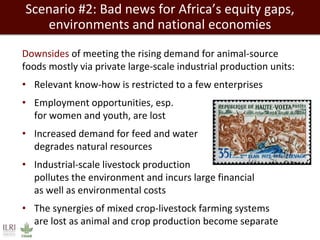
Scenario #2: Bad news for Africa’s equity gaps, 
environments and national economies 
Downsides of meeting the rising demand for animal-source 
foods mostly via private large-scale industrial production units: 
• Relevant know-how is restricted to a few enterprises 
• Employment opportunities, esp. 
for women and youth, are lost 
• Increased demand for feed and water 
degrades natural resources 
• Industrial-scale livestock production 
pollutes the environment and incurs large financial 
as well as environmental costs 
• The synergies of mixed crop-livestock farming systems 
are lost as animal and crop production become separate
Scenario #3: The opportunity is now! 
Upsides of using the transition period for transformation: 
• The coming livestock transitions and consolidations offer 
unprecedented opportunities for millions of African’s to 
improve their food production as well as their health, 
livelihoods and environments 
• But this will not happen without integrated and enabling 
technologies, policies, markets and institutions − all provided 
at sufficient scale 
• Of the world’s 1 billion smallholder livestock producers, some: 
﹣1/3 will find alternate livelihoods to livestock 
﹣1/3 will succeed at market-oriented livestock livelihoods 
﹣1/3 could go either way
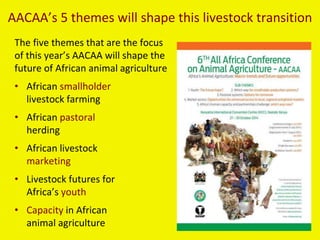
AACAA’s 5 themes will shape this livestock transition 
The five themes that are the focus 
of this year’s AACAA will shape the 
future of African animal agriculture 
• African smallholder 
livestock farming 
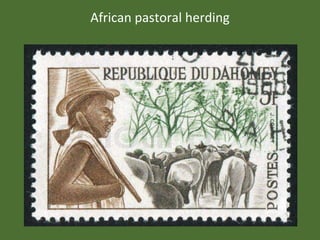
• African pastoral 
herding 
• African livestock 
marketing 
• Livestock futures for 
Africa’s youth 
• Capacity in African 
animal agriculture
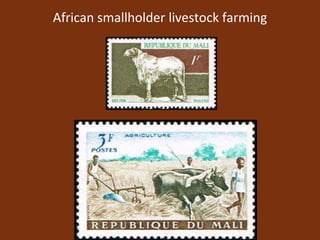
African smallholder livestock farming
African pastoral herding
Africa livestock marketing
Livestock futures for Africa’s youth
Capacity in African animal agriculture
Key messages 
• Fast-rising demand in Africa for more milk, meat and eggs 
is driving great changes in the continent’s livestock sector 
• This growing demand will be met − one way or the other. 
We need to work now to influence how it is met. 
• The growth presents smallholders, who provide most of 
these commodities today, with big new opportunities 
• The growth also presents Africa with many big and 
new equity, health and environmental challenges 
• Only enabling technologies, policies, markets and institutions 
will ensure that Africa’s livestock systems transition to help, 
not hurt, broad growth and human and environmental health
Thank you!
Livestock-based options for 
economic well-being in Africa 
AACAA side event  Tuesday 28 October  14:30−18:00 
followed by ILRI-hosted dinner
better lives through livestock 
ilri.org 
The presentation has a Creative Commons licence. You are free to re-use or distribute this work, provided credit is given to ILRI.

African animal agriculture: Grasping opportunities as a great livestock transition gets under way

  • 1.
    African animal agriculture: Grasping opportunities as a great livestock transition gets under way 6th All Africa Conference on Animal Agriculture Nairobi, Kenya, 27 – 30 October 2014 Jimmy Smith  Director General  ILRI
  • 2.
    Key messages •Fast-rising demand in Africa for more milk, meat and eggs is driving great changes in the continent’s livestock sector • This growing demand will be met − one way or the other. We need to work now to influence how it is met. • The growth presents smallholders, who provide most of these commodities today, with big new opportunities • The growth also presents Africa with many big and new equity, health and environmental challenges • Only enabling technologies, policies, markets and institutions will ensure that Africa’s livestock systems transition to help, not hurt, broad growth and human and environmental health
  • 3.
    Rising demand for meat, milk and eggs is a global phenomenon . . . . . . but demand is greatest in South Asia and Sub-Saharan Africa
  • 4.
    In 2012, cattlemeat and milk were 2 of the top 4 highest value agricultural commodities in Africa
  • 5.
    Huge increases over2005/7 amounts of cereals, dairy and meat will be needed by 2050 From 2bn−3bn tonnes cereals each year From 664m−1bn tonnes dairy each year From 258m−460m tonnes meat each year
  • 6.
    In terms ofmeat, milk and eggs, developing countries are where all the action is
  • 7.
    Gains in meatconsumption in developing countries are outpacing those of developed 300 250 200 150 100 50 0 1980 1990 2002 2015 2030 Million metric tonnes developing developed FAO 2006
  • 8.
    To 2050, demandfor meat & dairy in SS Africa & South Asia outstrips that for cereals & roots/tubers
  • 9.
    Change in globaland regional demand for food: Livestock and other commodities 350 300 250 200 150 100 50 0 -50 developed developing SSA SA % change 2005/07 to 2050 cereals root/tuber meat dairy Modified from Alexandratos and Bruinsma 2012
  • 10.
    In the next35 years, production of milk, poultry meat & eggs and ruminant meat will skyrocket in Africa/Middle East
  • 11.
    % increase inproduction of livestock products: 2000–2050 400 350 300 250 200 150 100 50 0 Raw milk Monogastric meat & eggs Ruminant meat Europe Latin America Africa/Middle East % Herrero et al. 2014
  • 12.
    What’s special about African smallholder livestock food production? • 90% of animal products are produced and consumed in the same country or region • Most are produced by smallholders • Over 70% of livestock products are sold ‘informally’ • 500 million smallholders produce 80% of the developing world’s food • 43% of the agricultural workforce is female
  • 13.
    What’s special about African mixed crop-livestock production systems? • Mixed systems are a big source of ruminant meat in 2000 and 2050 – Europe: 42% (temperate) – L America: 48% (humid) – Africa/M East: 38% (arid) • More than 50% of milk in all regions is from mixed systems • Big increases in milk by 2050 continue to be in mixed systems, esp. in Africa and M East
  • 14.
    What’s special about African smallholder livestock keepers? East Africa • 1 million Kenyan small-holders keep Africa’s largest dairy herd • Ugandans are the world’s lowest-cost milk producers • Small- and large-scale Kenyan poultry and dairy producers have same levels of efficiency and profits IFCN, Omiti et al. 2004, ILRI 2012
  • 15.
    Demand for livestockcommodities will be met – the only question is how Scenario #1 Africa meets livestock demand by importing livestock products Scenario #2 Africa meets livestock demand by importing livestock industrial production know-how Scenario #3 Africa meets livestock demand by transforming smallholder livestock systems
  • 16.
    Scenario #1: Badnews for Africa’s economies, employment and small-scale livestock livelihoods Downsides of importing milk, meat and eggs to meet Africa’s rising demand: • A huge import bill straining foreign exchange • Little growth of indigenous livestock enterprises • Industrial-scale pollution in developed countries • Mass emigration of youth (and labour) from developing countries
  • 17.
    Scenario #2: Badnews for Africa’s equity gaps, environments and national economies Downsides of meeting the rising demand for animal-source foods mostly via private large-scale industrial production units: • Relevant know-how is restricted to a few enterprises • Employment opportunities, esp. for women and youth, are lost • Increased demand for feed and water degrades natural resources • Industrial-scale livestock production pollutes the environment and incurs large financial as well as environmental costs • The synergies of mixed crop-livestock farming systems are lost as animal and crop production become separate
  • 18.
    Scenario #3: Theopportunity is now! Upsides of using the transition period for transformation: • The coming livestock transitions and consolidations offer unprecedented opportunities for millions of African’s to improve their food production as well as their health, livelihoods and environments • But this will not happen without integrated and enabling technologies, policies, markets and institutions − all provided at sufficient scale • Of the world’s 1 billion smallholder livestock producers, some: ﹣1/3 will find alternate livelihoods to livestock ﹣1/3 will succeed at market-oriented livestock livelihoods ﹣1/3 could go either way
  • 19.
    AACAA’s 5 themeswill shape this livestock transition The five themes that are the focus of this year’s AACAA will shape the future of African animal agriculture • African smallholder livestock farming • African pastoral herding • African livestock marketing • Livestock futures for Africa’s youth • Capacity in African animal agriculture
  • 20.
  • 21.
  • 22.
  • 23.
    Livestock futures forAfrica’s youth
  • 24.
    Capacity in Africananimal agriculture
  • 25.
    Key messages •Fast-rising demand in Africa for more milk, meat and eggs is driving great changes in the continent’s livestock sector • This growing demand will be met − one way or the other. We need to work now to influence how it is met. • The growth presents smallholders, who provide most of these commodities today, with big new opportunities • The growth also presents Africa with many big and new equity, health and environmental challenges • Only enabling technologies, policies, markets and institutions will ensure that Africa’s livestock systems transition to help, not hurt, broad growth and human and environmental health
  • 26.
  • 27.
    Livestock-based options for economic well-being in Africa AACAA side event  Tuesday 28 October  14:30−18:00 followed by ILRI-hosted dinner
  • 28.
    better lives throughlivestock ilri.org The presentation has a Creative Commons licence. You are free to re-use or distribute this work, provided credit is given to ILRI.