Better lives through livestock
One Health in action: Perspectives
from 10 years in the field
Shauna Richards1 and Anselme Shyaka2
1Postdoctoral fellow, Animal and Human Health program, International Livestock Research Institute
2University of Global Health Equity, Rwanda
Virtual seminar at Acadia University, Wolfville Nova Scotia, Canada, 26 October 2023
2
Overview
• Introductions
• Background
• Why (and why not) One Health works
• Examples: Multi-country project, Rwanda governance
3
ILRI is co-hosted by both the
governments of Ethiopia and Kenya,
with offices in 8 other countries in
Africa (Burkina Faso, Burundi, Mali,
Nigeria, Senegal, Tanzania, Uganda
and Zimbabwe); 4 countries in Asia
(China, India, Nepal and Vietnam).
ILRI has approximately 600
permanent staff (with a gender
breakdown of 40% female and 60%
male).
ILRI offices and
staff worldwide
EXAMPLES of
ONE HEALTH
f
f
f
Better lives through livestock
6
COHESA Overall Objective
The project aims to generate an inclusive
Research & Innovation ecosystem,
facilitating rapid uptake, adaption and
adoption of solutions to One Health (OH)
issues, with the OH concept embedded
across society in Eastern and Southern
Africa (ESA), working for healthy humans,
animals and environments using a systems
approach to learning.
7
Duration 48 Months –
December 2021 – 2025
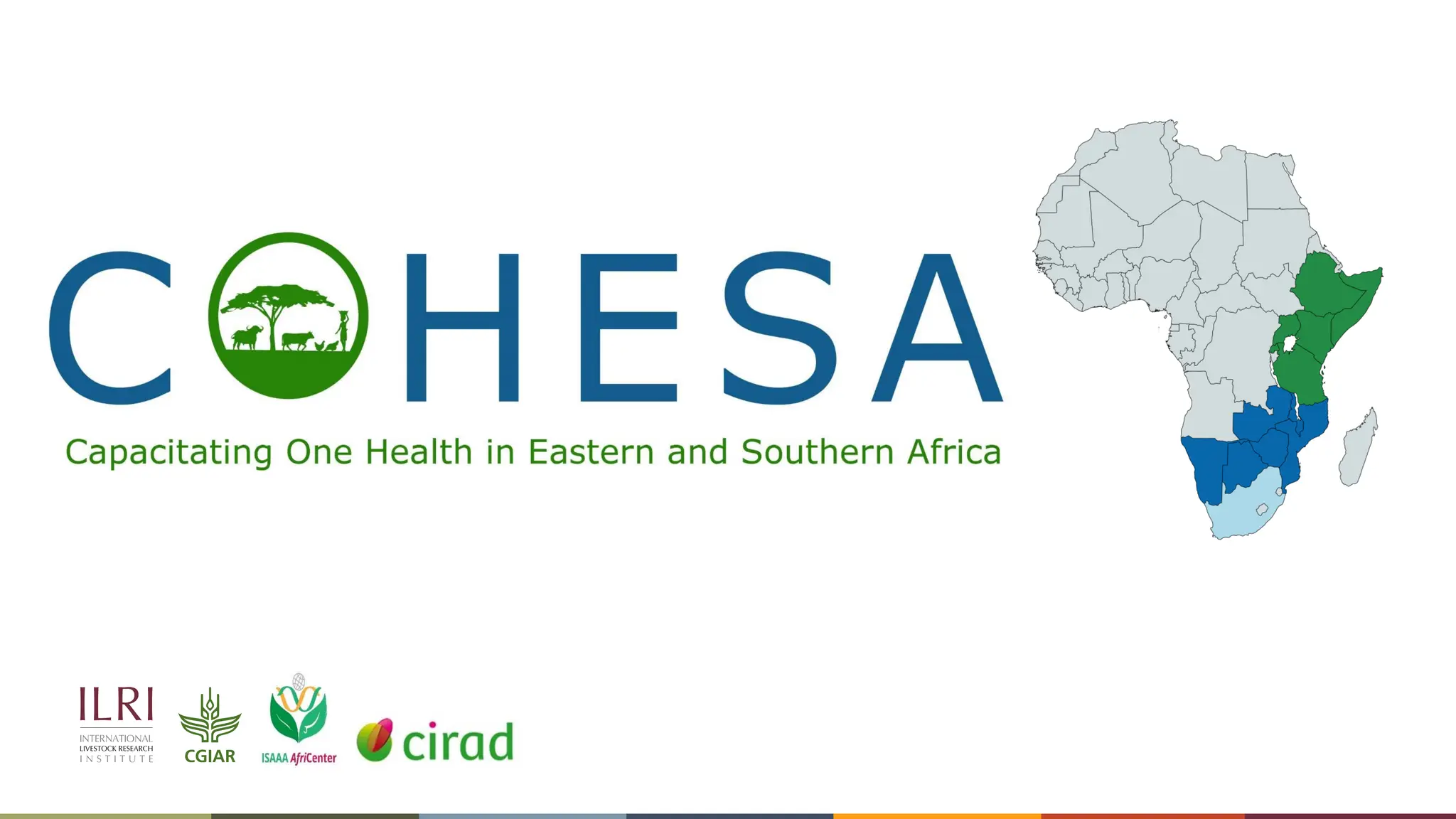
Countries
EA Ethiopia, Kenya,
Rwanda, Somalia, Tanzania,
Uganda
SA Botswana, Namibia,
Malawi, Mozambique,
Zambia, Zimbabwe
Bold Deep Dive, Standard
Italics, rest are focussed
Consortium
ILRI – International Livestock
Research Institute
CIRAD – French Agricultural
Research Centre for
International Development
ISAAA AfriCentre –
International Service for the
Acquisition of Agri-biotech
Applications
University of Pretoria assist
as partner
COHESA Consortium and Countries
8
Donor
This project is supported by the European Commission OACPS Research and
Innovation Programme: ACP-EU initiative, co-founded through ILRI and CIRAD
9
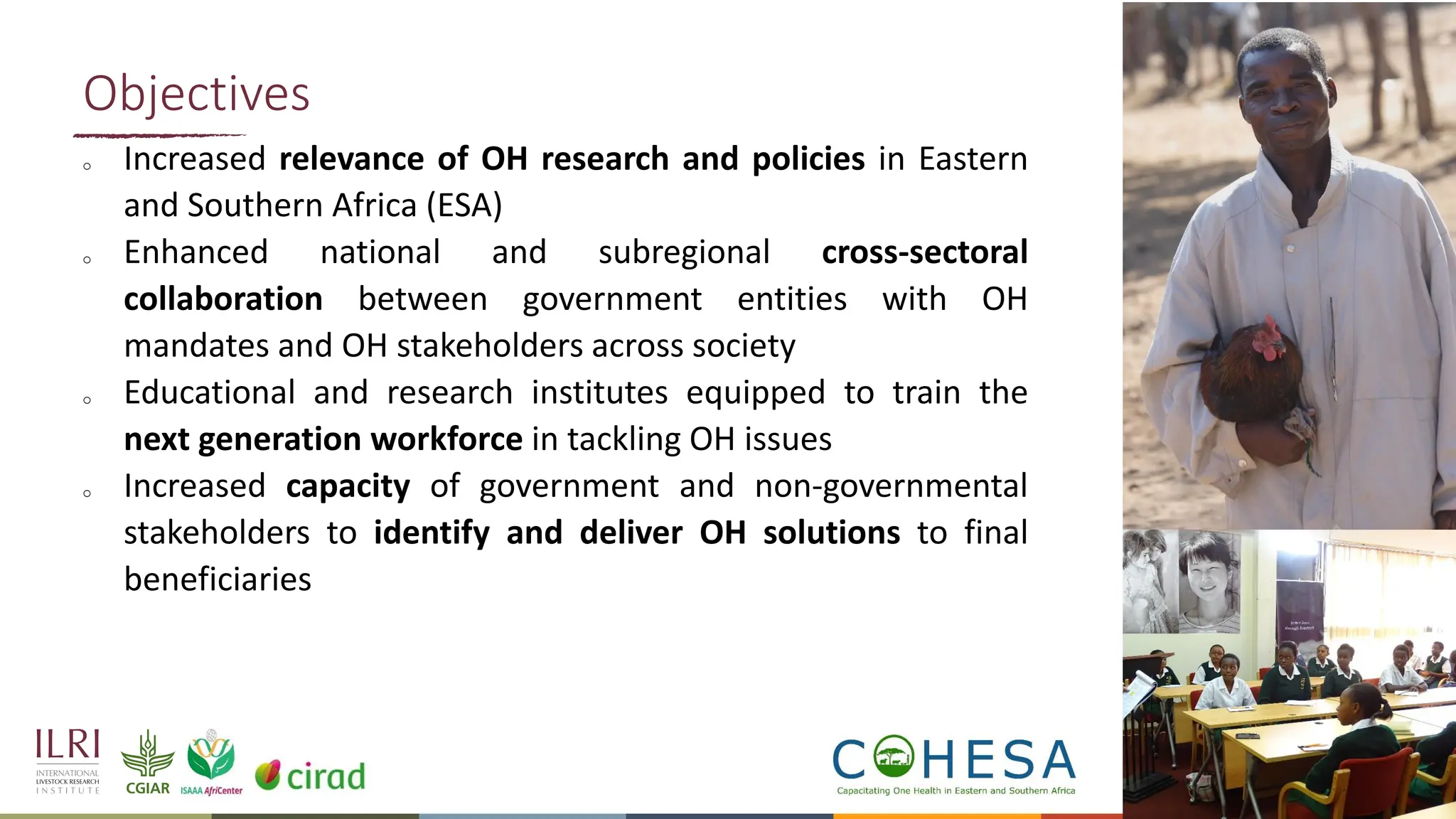
o Increased relevance of OH research and policies in Eastern
and Southern Africa (ESA)
o Enhanced national and subregional cross-sectoral
collaboration between government entities with OH
mandates and OH stakeholders across society
o Educational and research institutes equipped to train the
next generation workforce in tackling OH issues
o Increased capacity of government and non-governmental
stakeholders to identify and deliver OH solutions to final
beneficiaries
Objectives
10
Work Packages
WP1 - Understanding OH
capacity, knowledge and
information sharing
- All countries
WP2 - Promoting
national and regional OH
collaboration and
governance
- All countries
WP3 - Building the future
OH workforce
- Deep Dive, limited in
Standard and Focussed
programme
WP4 - Delivering OH
solutions
Deep Dive, little in
Standard and Focussed
programme
WP5 – Project
management
Consortium led by ILRI,
CIRAD, ISAAA
11
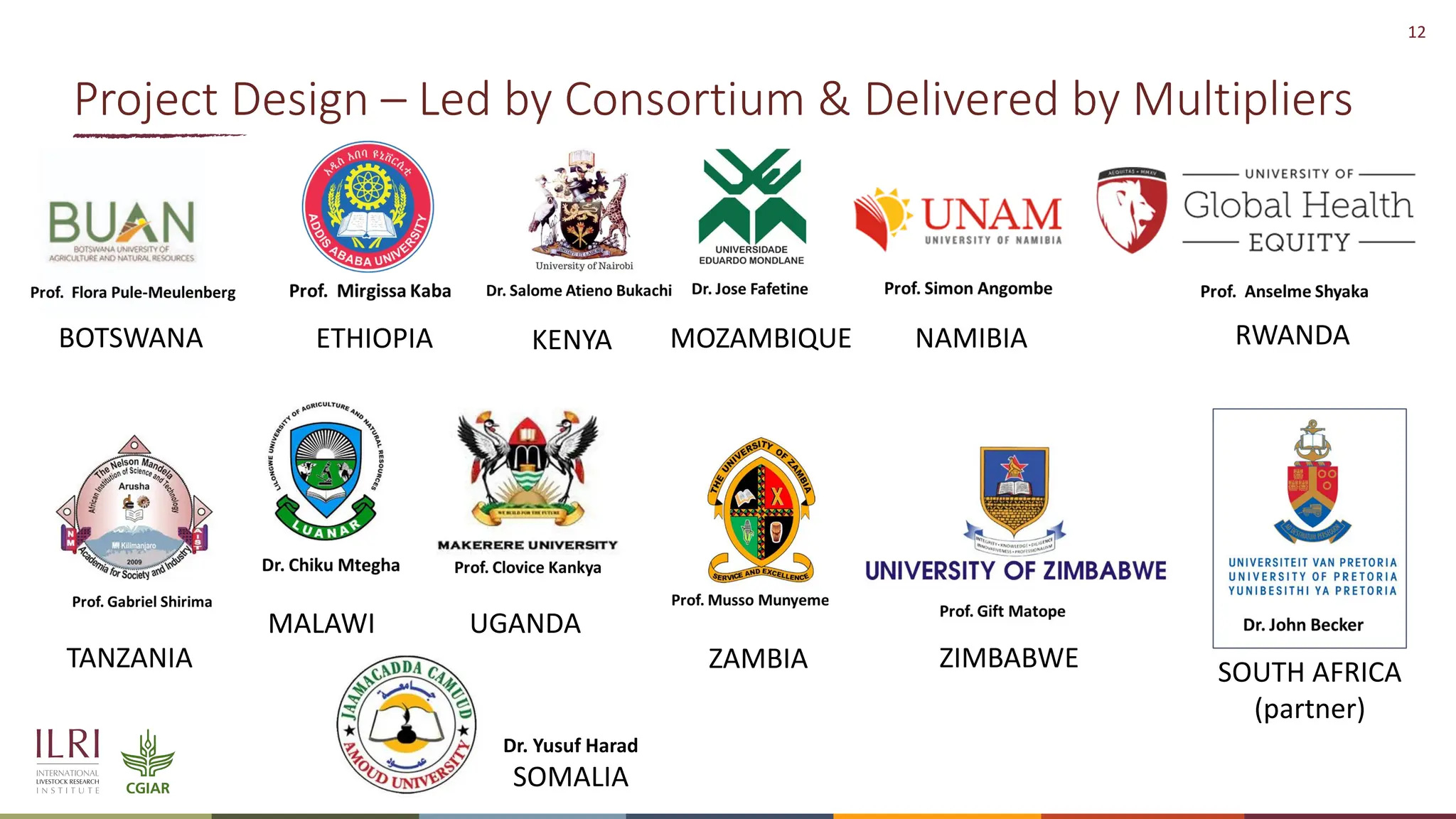
Project Design – Led by Consortium & Delivered by Multipliers
12
BOTSWANA ETHIOPIA KENYA MOZAMBIQUE NAMIBIA RWANDA
TANZANIA
MALAWI UGANDA
ZAMBIA ZIMBABWE SOUTH AFRICA
(partner)
Project Design – Led by Consortium & Delivered by Multipliers
Dr. Yusuf Harad
SOMALIA
13
Baseline: To perform a baseline & endline assessments with key
informants on One Health topics on the following:
1. One Health national challenges, gaps, and capacities
2. Understand current One Health Research and Innovation
landscape to identify strengths and weaknesses
3. Identify rapid approaches to identify key One Health issues
4. Assess sectoral performance in One Health, capacity, and
bottlenecks
5. Avail baseline and endline data to evaluate performance
and impact of COHESA project
Online Observatory & Net-mapping
Work Package 1 – One Health Status
14
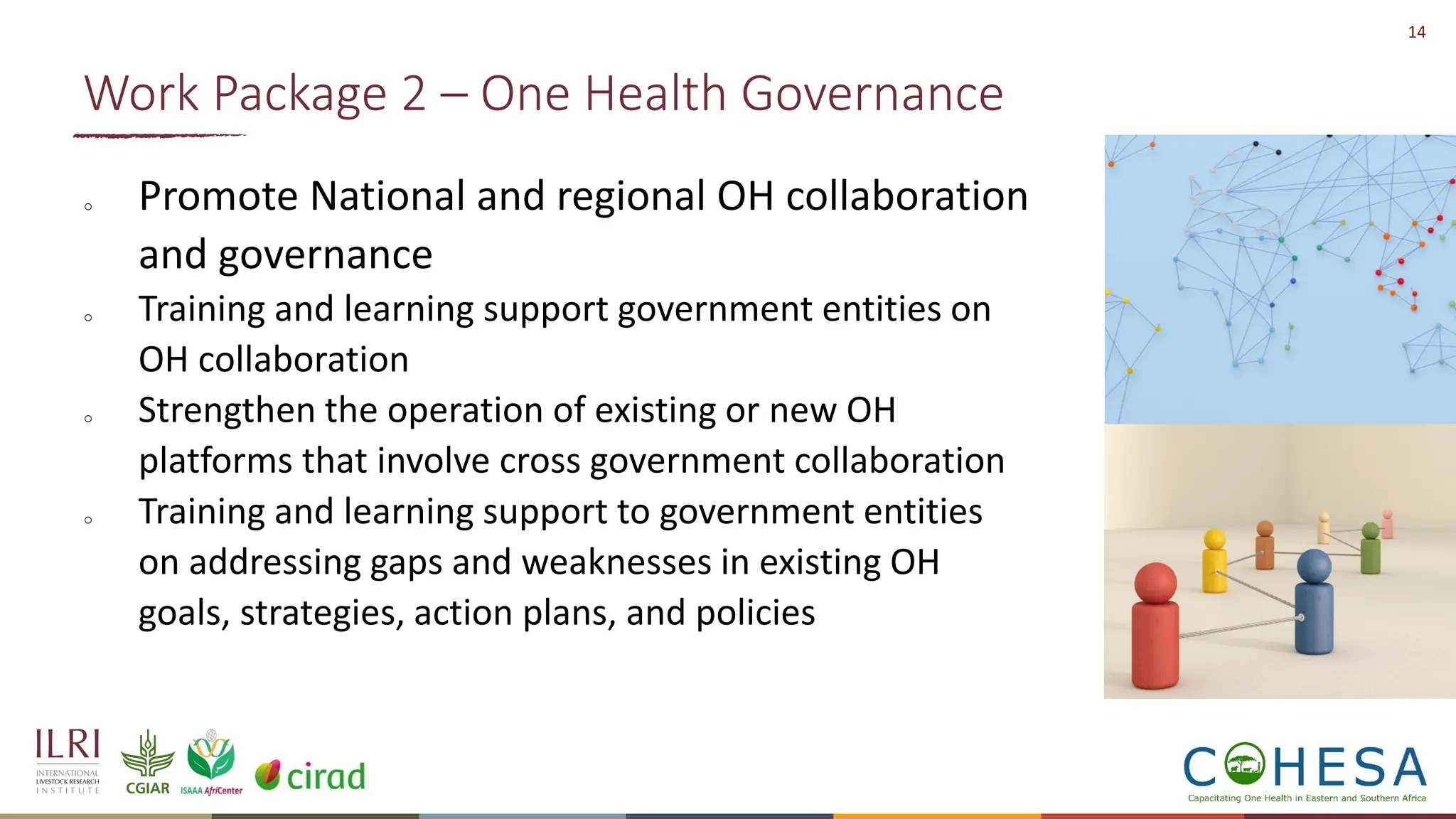
o Promote National and regional OH collaboration
and governance
o Training and learning support government entities on
OH collaboration
o Strengthen the operation of existing or new OH
platforms that involve cross government collaboration
o Training and learning support to government entities
on addressing gaps and weaknesses in existing OH
goals, strategies, action plans, and policies
Work Package 2 – One Health Governance
15
Work Package 3 – Future OH Workforce
One Health
outreach
One Health
capacity
building
material
Bench-
marking
curricula
Baseline
survey on
One Health
education
needs
16
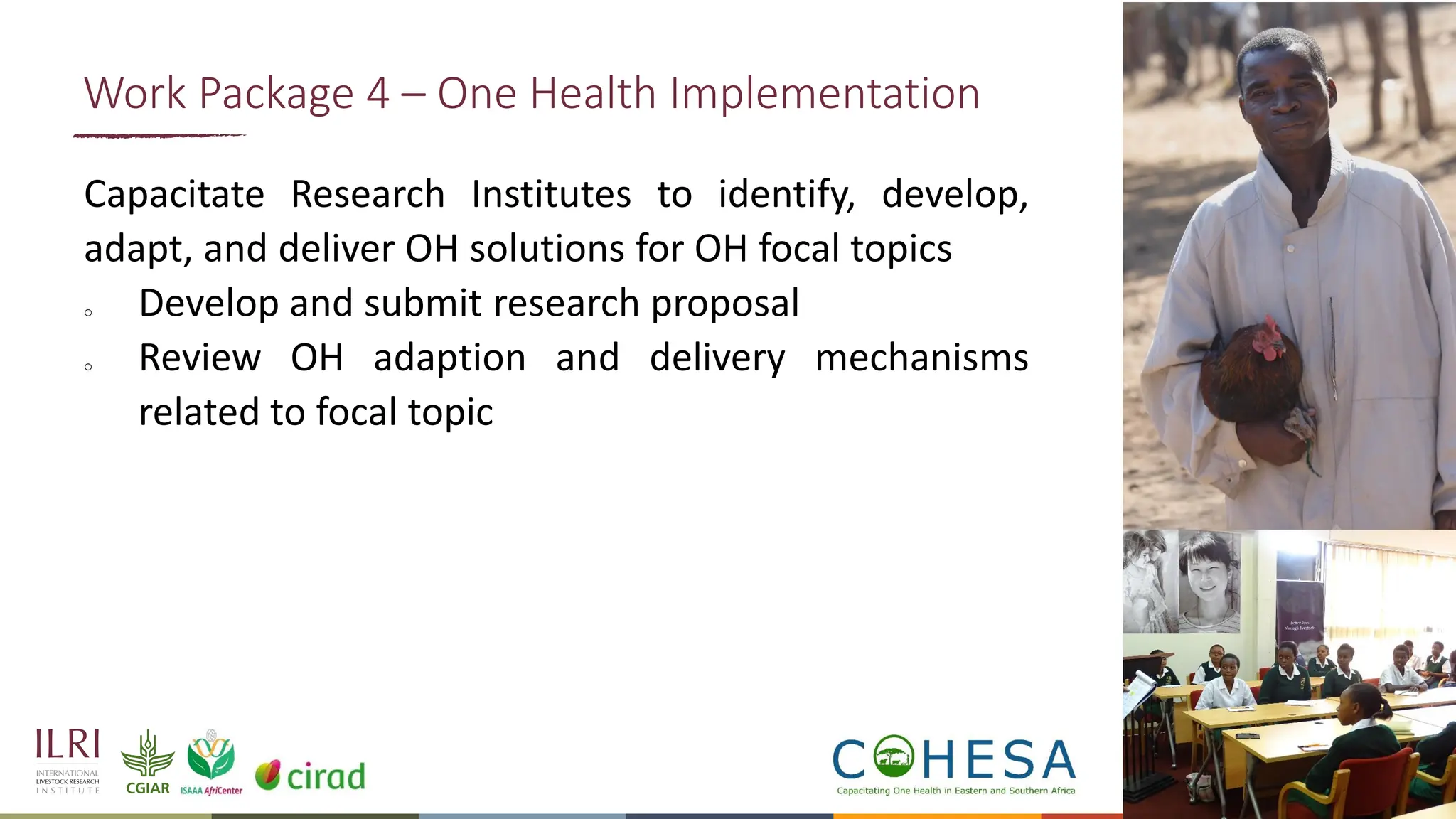
Capacitate Research Institutes to identify, develop,
adapt, and deliver OH solutions for OH focal topics
o Develop and submit research proposal
o Review OH adaption and delivery mechanisms
related to focal topic
Work Package 4 – One Health Implementation
17
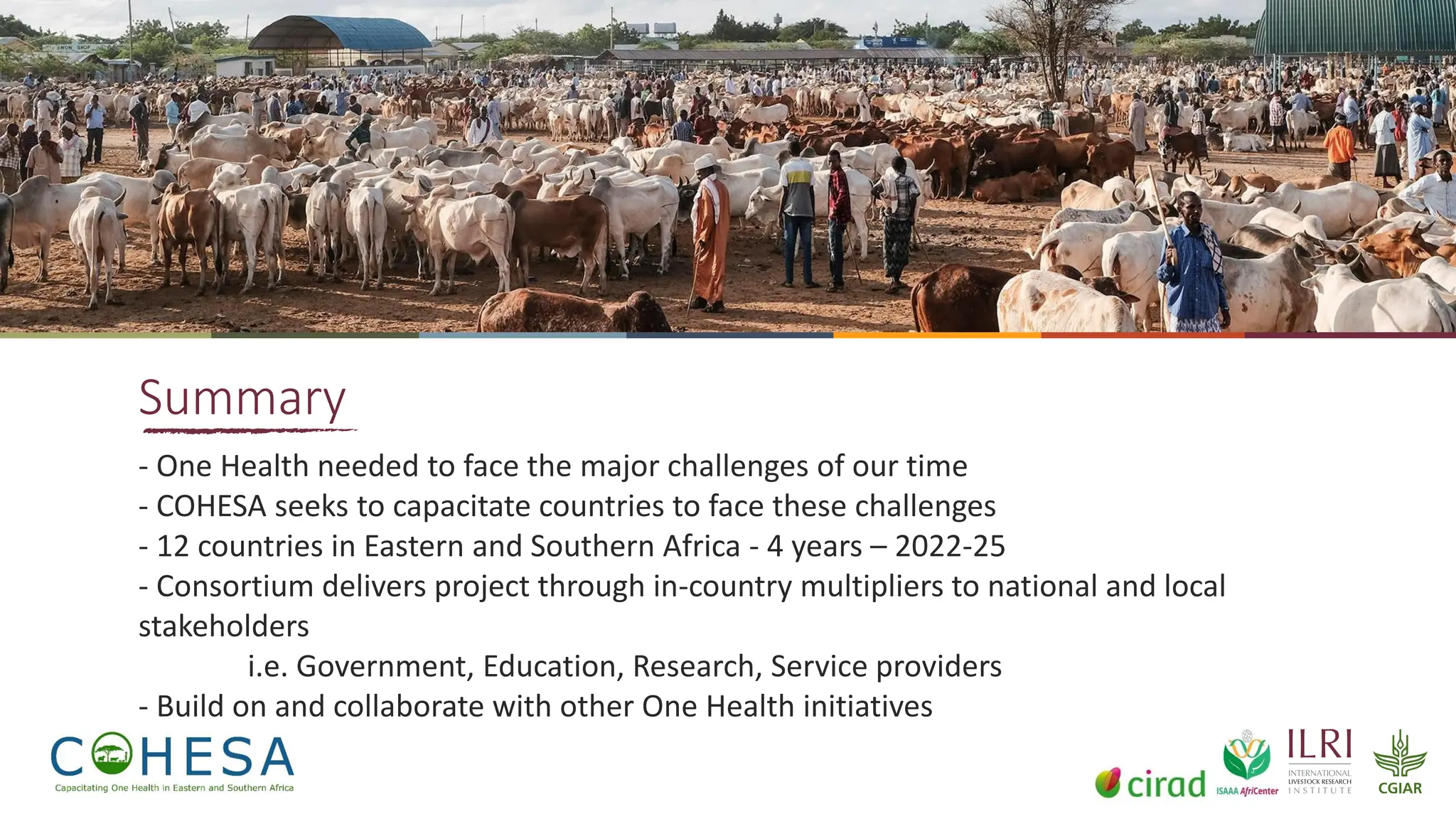
Summary
- One Health needed to face the major challenges of our time
- COHESA seeks to capacitate countries to face these challenges
- 12 countries in Eastern and Southern Africa - 4 years – 2022-25
- Consortium delivers project through in-country multipliers to national and local
stakeholders
i.e. Government, Education, Research, Service providers
- Build on and collaborate with other One Health initiatives
EXAMPLES of
ONE HEALTH
f
f
f
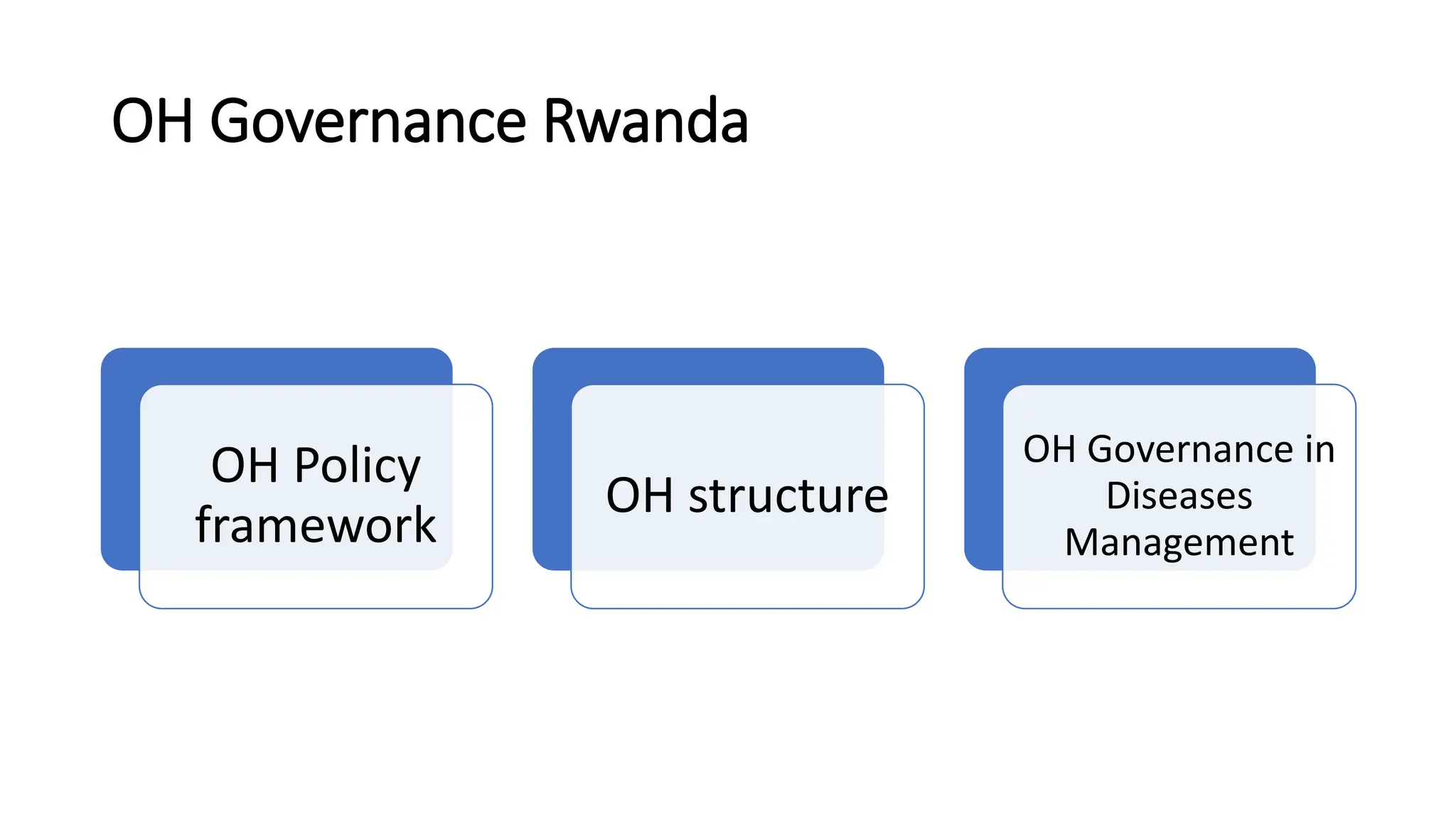
OH Governance Rwanda
OH Policy
framework
OH structure
OH Governance in
Diseases
Management
Theme I: One Health Policy Framework
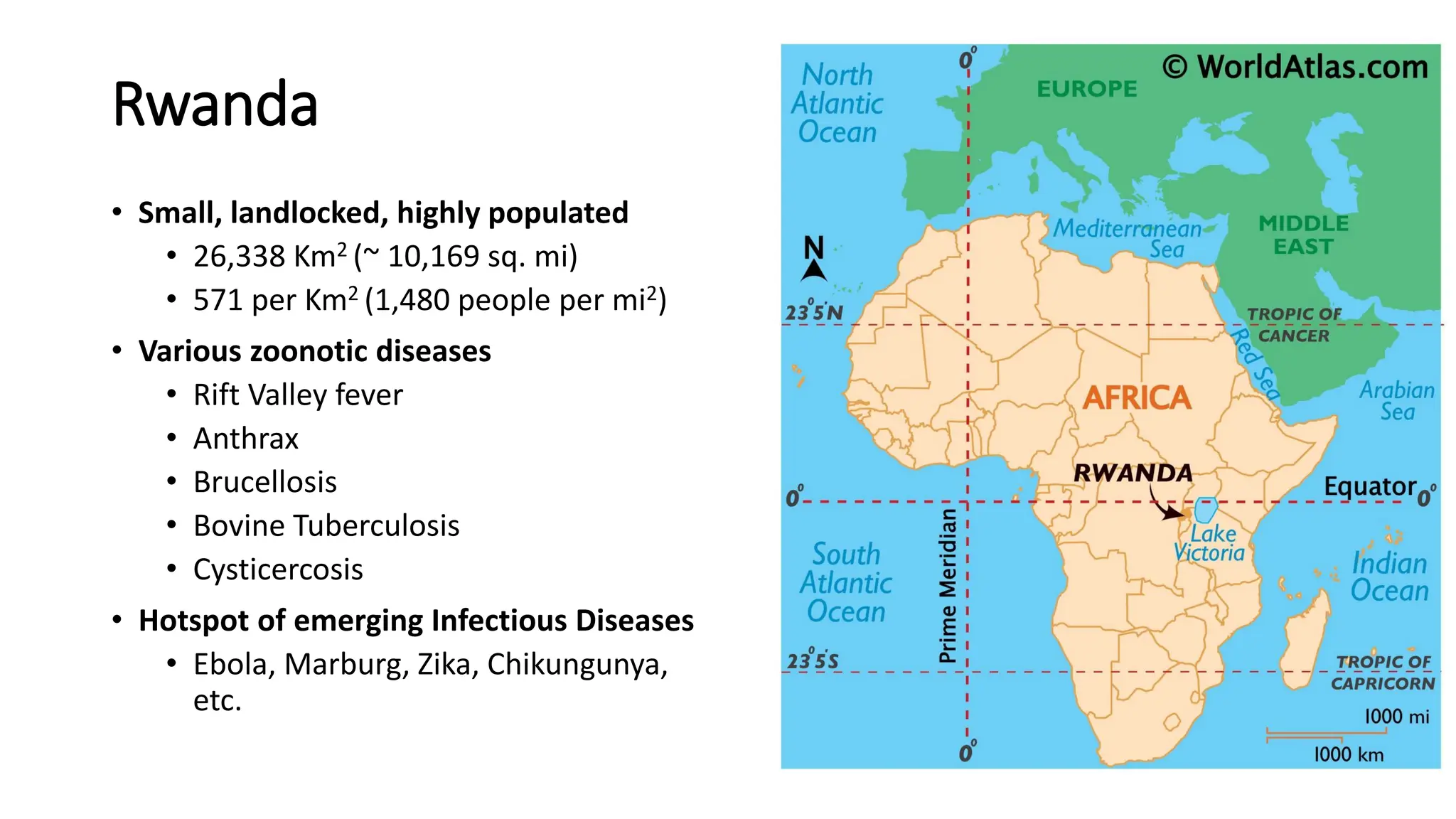
Rwanda
• Small, landlocked, highly populated
• 26,338 Km2 (~ 10,169 sq. mi)
• 571 per Km2 (1,480 people per mi2)
• Various zoonotic diseases
• Rift Valley fever
• Anthrax
• Brucellosis
• Bovine Tuberculosis
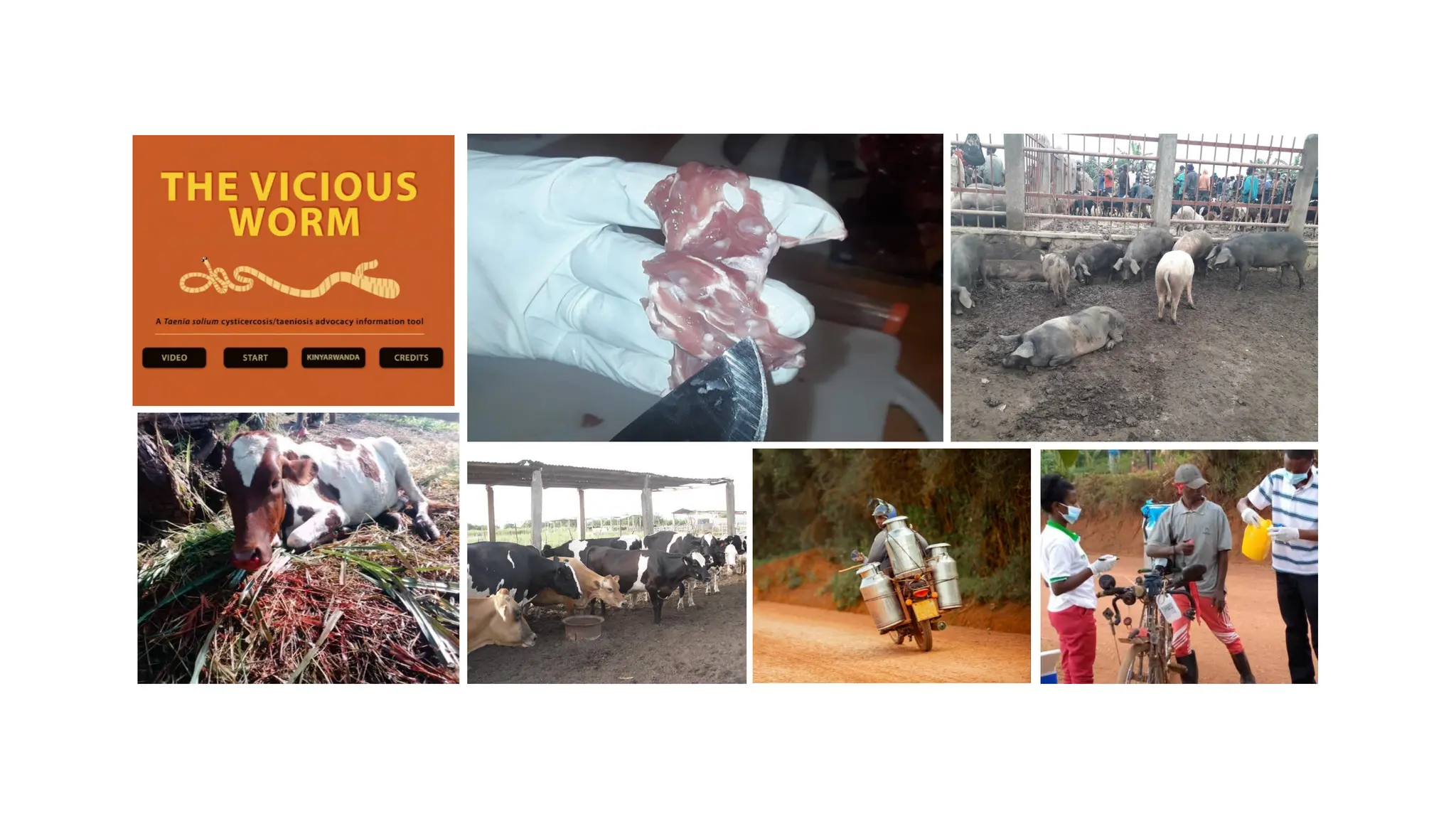
• Cysticercosis
• Hotspot of emerging Infectious Diseases
• Ebola, Marburg, Zika, Chikungunya,
etc.
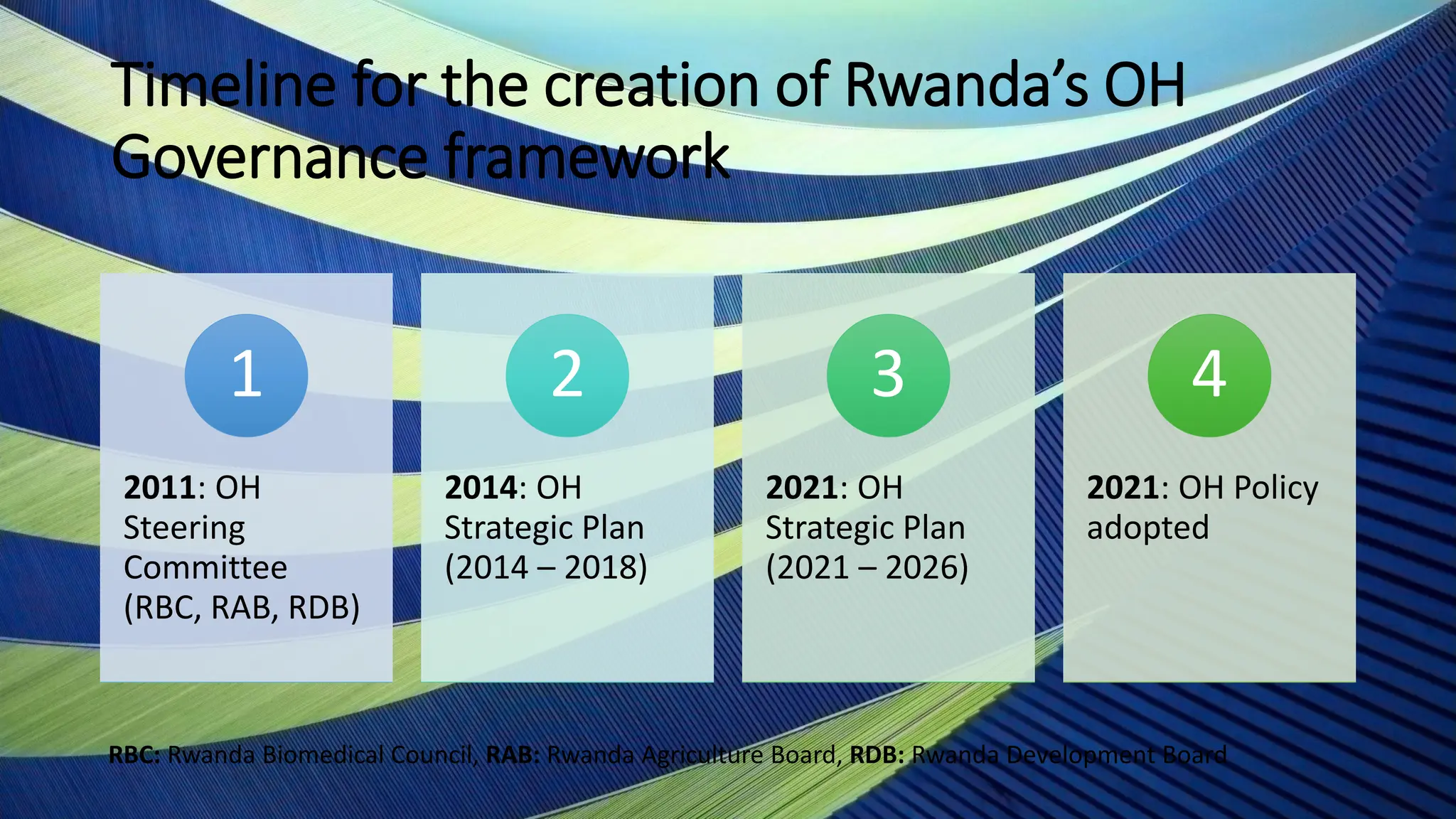
Timeline for the creation of Rwanda’s OH
Governance framework
RBC: Rwanda Biomedical Council, RAB: Rwanda Agriculture Board, RDB: Rwanda Development Board
2011: OH
Steering
Committee
(RBC, RAB, RDB)
1
2014: OH
Strategic Plan
(2014 – 2018)
2
2021: OH
Strategic Plan
(2021 – 2026)
3
2021: OH Policy
adopted
4
Rwanda’s OH Policy
& Strategic Plan
(2021 – 2026)
Objective 1:
Create an
effective OH
platform
Objective 2: Put
in place a Joint
Surveillance
System
Objective 3:
Develop OH
workforce
capacity
Objective 4:
Promote applied
research at
interface
human-animal-
environment
Objective 5:
Strengthen
national
awareness
mechanisms on
OH issues
Objective 6:
Sustainable
mobilization of
resources
Theme II: Rwanda’s One Health Structure
Theme II: Rwanda’s OH structure
Technical Working
Group #1
Office of the PM
Social Cluster
OH Multisectoral
Coordination
Mechanism (OH-MCM)
OH Secretariat
Technical Working
Group #2
Technical Working
Group #3
Technical Working
Group #4
Social cluster: MoH, Min. of Agric., MoE, Min. Educ., Min. of Emerg. Mangmnt
OH-MCM: DG RBC, RAB, RDB and VC - UR
In reality…
• MoH and RBC: Coordinates all activities
• Broken Linkages with other line Ministries and stakeholders
- Rabies: Ministry of Agriculture and Animal Resources/RAB
- AMR: Ministry of Agriculture and Animal Resources/RAB
- No clear linkage with MoE/REMA
- Broken linkages with Development Partners and Academia
• Insufficient Involvement of Other line Ministries
- Don’t feel empowered
- Feel underestimated
- RBC feels left alone with all the activities
Theme III: OH Governance in Diseases
Management
Theme III: OH Governance in Diseases
Management
• A total of 1339 confirmed cases of RVF between 31
March 2022 and 31 December 2022
• 1285 (96%) were reported in cattle
• 34 (3%) in goats and 20 (1%) in sheep
• A total of 516 deaths (38.5%)
• Up to 1254 abortions in animals (all species
combined)
• No official counts for human’s cases
OH Governance in Diseases Management
• Robust One Health response to reduce the disease impact
- Enhanced surveillance was in place (humans and animal cases)
- PCR testing for animal samples supported by hospitals
- Control measures at farm and abattoir level:
- All herds were sprayed using a pyrethroid insecticide (Permapy Plus ©
5L), by veterinarians, para-veterinarians and community health workers
(CHW)
- In total 105 080 animals were sprayed up to 13 May 2022
- Intensive vaccination was widely conducted
- The use of Zipline drones facilitated delivery respecting the cold chain.
- 1.3 million cattle had been vaccinated (87% of the target population), 1.4
million goats (93%) and 0.3 million sheep (75%)
OH Governance in Diseases Management
District Command Post
(30 districts)
National Command Post
Data collected
:(Suspect cases or
confirmed )
Directives (Vaccination,
testing methods) Supplies
Community
(14,837 villages)
Local Government Officials
Public Health Experts
Veterinarians
Epidemiologists
Data managers (Hospitals)
Security Organs
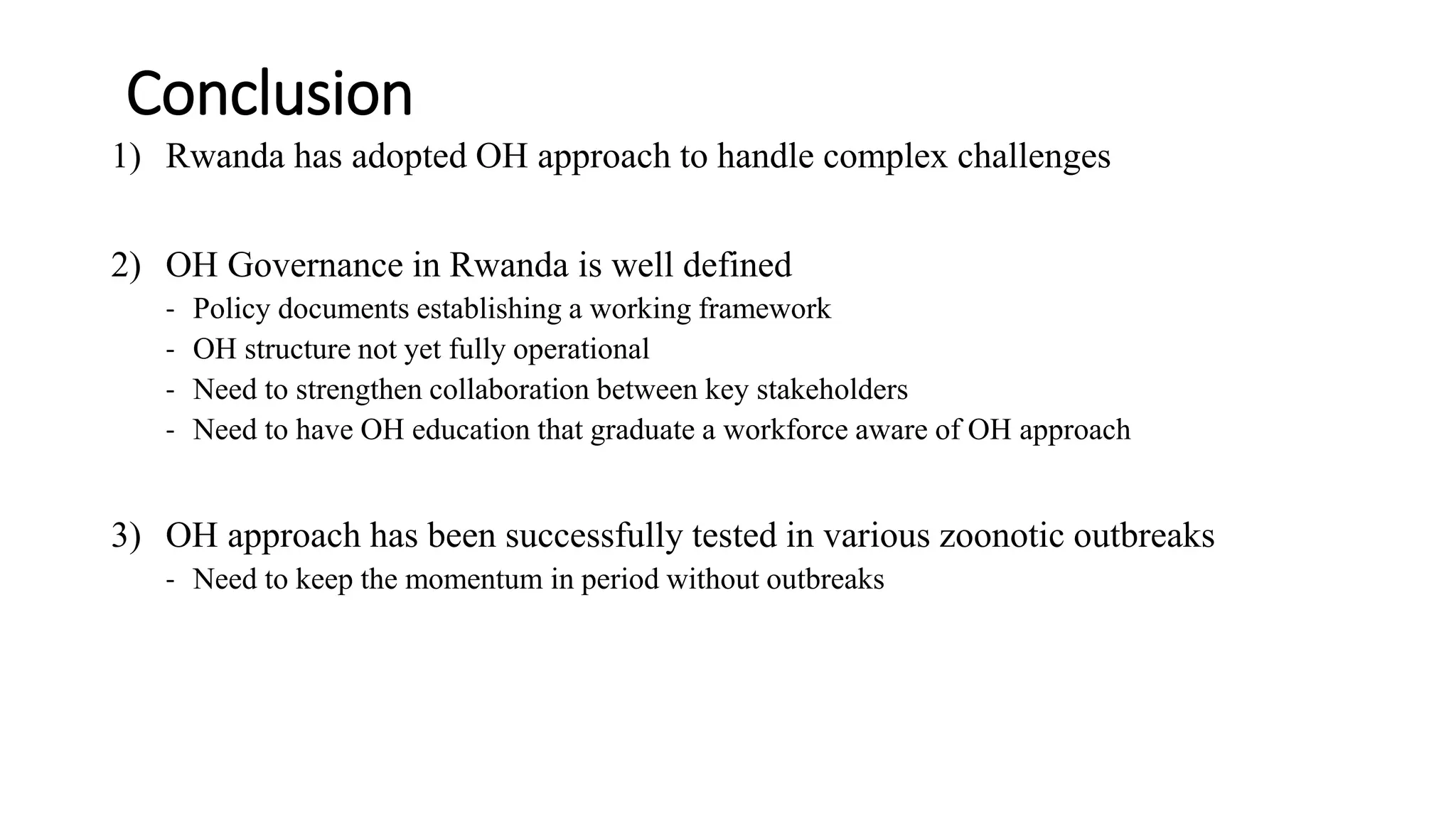
Conclusion
1) Rwanda has adopted OH approach to handle complex challenges
2) OH Governance in Rwanda is well defined
- Policy documents establishing a working framework
- OH structure not yet fully operational
- Need to strengthen collaboration between key stakeholders
- Need to have OH education that graduate a workforce aware of OH approach
3) OH approach has been successfully tested in various zoonotic outbreaks
- Need to keep the momentum in period without outbreaks
34
Questions?
All images are ILRI sourced or stock images via MS
PowerPoint unless specially referenced otherwise
One Health in action: Perspectives from 10 years in the field

One Health in action: Perspectives from 10 years in the field

  • 1.
    Better lives throughlivestock One Health in action: Perspectives from 10 years in the field Shauna Richards1 and Anselme Shyaka2 1Postdoctoral fellow, Animal and Human Health program, International Livestock Research Institute 2University of Global Health Equity, Rwanda Virtual seminar at Acadia University, Wolfville Nova Scotia, Canada, 26 October 2023
  • 2.
    2 Overview • Introductions • Background •Why (and why not) One Health works • Examples: Multi-country project, Rwanda governance
  • 3.
    3 ILRI is co-hostedby both the governments of Ethiopia and Kenya, with offices in 8 other countries in Africa (Burkina Faso, Burundi, Mali, Nigeria, Senegal, Tanzania, Uganda and Zimbabwe); 4 countries in Asia (China, India, Nepal and Vietnam). ILRI has approximately 600 permanent staff (with a gender breakdown of 40% female and 60% male). ILRI offices and staff worldwide
  • 4.
  • 5.
  • 6.
    6 COHESA Overall Objective Theproject aims to generate an inclusive Research & Innovation ecosystem, facilitating rapid uptake, adaption and adoption of solutions to One Health (OH) issues, with the OH concept embedded across society in Eastern and Southern Africa (ESA), working for healthy humans, animals and environments using a systems approach to learning.
  • 7.
    7 Duration 48 Months– December 2021 – 2025 Countries EA Ethiopia, Kenya, Rwanda, Somalia, Tanzania, Uganda SA Botswana, Namibia, Malawi, Mozambique, Zambia, Zimbabwe Bold Deep Dive, Standard Italics, rest are focussed Consortium ILRI – International Livestock Research Institute CIRAD – French Agricultural Research Centre for International Development ISAAA AfriCentre – International Service for the Acquisition of Agri-biotech Applications University of Pretoria assist as partner COHESA Consortium and Countries
  • 8.
    8 Donor This project issupported by the European Commission OACPS Research and Innovation Programme: ACP-EU initiative, co-founded through ILRI and CIRAD
  • 9.
    9 o Increased relevanceof OH research and policies in Eastern and Southern Africa (ESA) o Enhanced national and subregional cross-sectoral collaboration between government entities with OH mandates and OH stakeholders across society o Educational and research institutes equipped to train the next generation workforce in tackling OH issues o Increased capacity of government and non-governmental stakeholders to identify and deliver OH solutions to final beneficiaries Objectives
  • 10.
    10 Work Packages WP1 -Understanding OH capacity, knowledge and information sharing - All countries WP2 - Promoting national and regional OH collaboration and governance - All countries WP3 - Building the future OH workforce - Deep Dive, limited in Standard and Focussed programme WP4 - Delivering OH solutions Deep Dive, little in Standard and Focussed programme WP5 – Project management Consortium led by ILRI, CIRAD, ISAAA
  • 11.
    11 Project Design –Led by Consortium & Delivered by Multipliers
  • 12.
    12 BOTSWANA ETHIOPIA KENYAMOZAMBIQUE NAMIBIA RWANDA TANZANIA MALAWI UGANDA ZAMBIA ZIMBABWE SOUTH AFRICA (partner) Project Design – Led by Consortium & Delivered by Multipliers Dr. Yusuf Harad SOMALIA
  • 13.
    13 Baseline: To performa baseline & endline assessments with key informants on One Health topics on the following: 1. One Health national challenges, gaps, and capacities 2. Understand current One Health Research and Innovation landscape to identify strengths and weaknesses 3. Identify rapid approaches to identify key One Health issues 4. Assess sectoral performance in One Health, capacity, and bottlenecks 5. Avail baseline and endline data to evaluate performance and impact of COHESA project Online Observatory & Net-mapping Work Package 1 – One Health Status
  • 14.
    14 o Promote Nationaland regional OH collaboration and governance o Training and learning support government entities on OH collaboration o Strengthen the operation of existing or new OH platforms that involve cross government collaboration o Training and learning support to government entities on addressing gaps and weaknesses in existing OH goals, strategies, action plans, and policies Work Package 2 – One Health Governance
  • 15.
    15 Work Package 3– Future OH Workforce One Health outreach One Health capacity building material Bench- marking curricula Baseline survey on One Health education needs
  • 16.
    16 Capacitate Research Institutesto identify, develop, adapt, and deliver OH solutions for OH focal topics o Develop and submit research proposal o Review OH adaption and delivery mechanisms related to focal topic Work Package 4 – One Health Implementation
  • 17.
    17 Summary - One Healthneeded to face the major challenges of our time - COHESA seeks to capacitate countries to face these challenges - 12 countries in Eastern and Southern Africa - 4 years – 2022-25 - Consortium delivers project through in-country multipliers to national and local stakeholders i.e. Government, Education, Research, Service providers - Build on and collaborate with other One Health initiatives
  • 18.
  • 20.
    OH Governance Rwanda OHPolicy framework OH structure OH Governance in Diseases Management
  • 21.
    Theme I: OneHealth Policy Framework
  • 22.
    Rwanda • Small, landlocked,highly populated • 26,338 Km2 (~ 10,169 sq. mi) • 571 per Km2 (1,480 people per mi2) • Various zoonotic diseases • Rift Valley fever • Anthrax • Brucellosis • Bovine Tuberculosis • Cysticercosis • Hotspot of emerging Infectious Diseases • Ebola, Marburg, Zika, Chikungunya, etc.
  • 23.
    Timeline for thecreation of Rwanda’s OH Governance framework RBC: Rwanda Biomedical Council, RAB: Rwanda Agriculture Board, RDB: Rwanda Development Board 2011: OH Steering Committee (RBC, RAB, RDB) 1 2014: OH Strategic Plan (2014 – 2018) 2 2021: OH Strategic Plan (2021 – 2026) 3 2021: OH Policy adopted 4
  • 25.
    Rwanda’s OH Policy &Strategic Plan (2021 – 2026) Objective 1: Create an effective OH platform Objective 2: Put in place a Joint Surveillance System Objective 3: Develop OH workforce capacity Objective 4: Promote applied research at interface human-animal- environment Objective 5: Strengthen national awareness mechanisms on OH issues Objective 6: Sustainable mobilization of resources
  • 26.
    Theme II: Rwanda’sOne Health Structure
  • 27.
    Theme II: Rwanda’sOH structure Technical Working Group #1 Office of the PM Social Cluster OH Multisectoral Coordination Mechanism (OH-MCM) OH Secretariat Technical Working Group #2 Technical Working Group #3 Technical Working Group #4 Social cluster: MoH, Min. of Agric., MoE, Min. Educ., Min. of Emerg. Mangmnt OH-MCM: DG RBC, RAB, RDB and VC - UR
  • 28.
    In reality… • MoHand RBC: Coordinates all activities • Broken Linkages with other line Ministries and stakeholders - Rabies: Ministry of Agriculture and Animal Resources/RAB - AMR: Ministry of Agriculture and Animal Resources/RAB - No clear linkage with MoE/REMA - Broken linkages with Development Partners and Academia • Insufficient Involvement of Other line Ministries - Don’t feel empowered - Feel underestimated - RBC feels left alone with all the activities
  • 29.
    Theme III: OHGovernance in Diseases Management
  • 30.
    Theme III: OHGovernance in Diseases Management • A total of 1339 confirmed cases of RVF between 31 March 2022 and 31 December 2022 • 1285 (96%) were reported in cattle • 34 (3%) in goats and 20 (1%) in sheep • A total of 516 deaths (38.5%) • Up to 1254 abortions in animals (all species combined) • No official counts for human’s cases
  • 31.
    OH Governance inDiseases Management • Robust One Health response to reduce the disease impact - Enhanced surveillance was in place (humans and animal cases) - PCR testing for animal samples supported by hospitals - Control measures at farm and abattoir level: - All herds were sprayed using a pyrethroid insecticide (Permapy Plus © 5L), by veterinarians, para-veterinarians and community health workers (CHW) - In total 105 080 animals were sprayed up to 13 May 2022 - Intensive vaccination was widely conducted - The use of Zipline drones facilitated delivery respecting the cold chain. - 1.3 million cattle had been vaccinated (87% of the target population), 1.4 million goats (93%) and 0.3 million sheep (75%)
  • 32.
    OH Governance inDiseases Management District Command Post (30 districts) National Command Post Data collected :(Suspect cases or confirmed ) Directives (Vaccination, testing methods) Supplies Community (14,837 villages) Local Government Officials Public Health Experts Veterinarians Epidemiologists Data managers (Hospitals) Security Organs
  • 33.
    Conclusion 1) Rwanda hasadopted OH approach to handle complex challenges 2) OH Governance in Rwanda is well defined - Policy documents establishing a working framework - OH structure not yet fully operational - Need to strengthen collaboration between key stakeholders - Need to have OH education that graduate a workforce aware of OH approach 3) OH approach has been successfully tested in various zoonotic outbreaks - Need to keep the momentum in period without outbreaks
  • 34.
    34 Questions? All images areILRI sourced or stock images via MS PowerPoint unless specially referenced otherwise