WELCOME TO MY CLASS
Mr.Souvik Chatterjee
M.Sc(Physics), B.Ed
LIGHT ENERGY
SPEED IN DIFFERENT MEDIA
• A medium is said to be denser if the speed of light
in it decreases, while it is said to be rarer if the
speed of light in it increases.
• If no medium, it can be more than 3 X 10^8 m/s
• Speed of light in air is 3 X 10^8 m/s
• Speed of light in water is 2.25 X 10^8 m/s
• Speed of light in glass is 2 X 10^8 m/s
REFRACTION OF LIGHT
• The change in direction of path of
light when it passes from one
optically transparent medium to
another, is called refraction of
light.
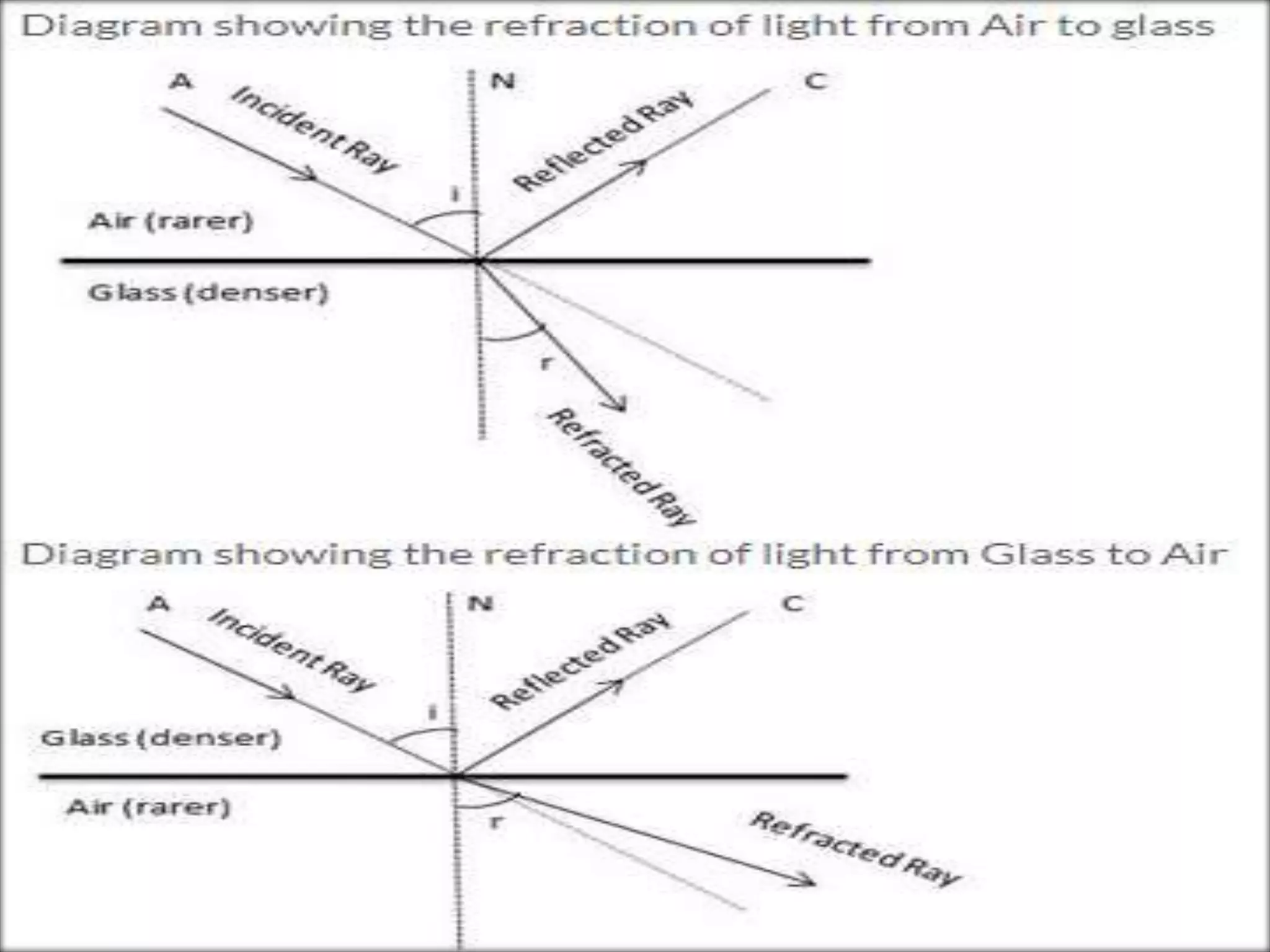
• When ray of light travels from rarer to denser
medium, (say from air to water or from air to
glass), it bends towards the normal
• When a ray of light travels from denser to a
rarer medium(say, from water to air or from
glass to air), it bends away from the normal
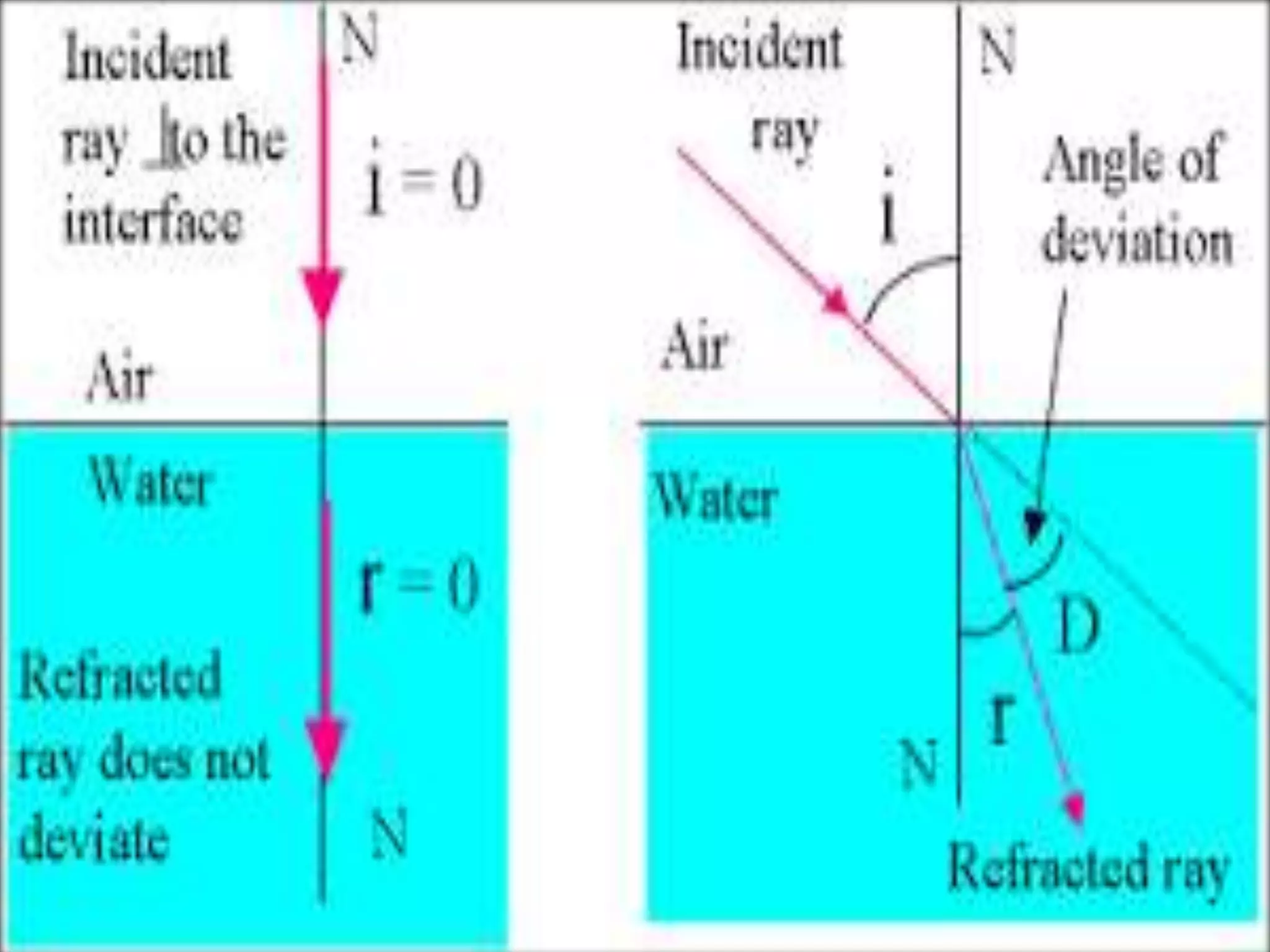
• When a ray of light falls normally on the
surface separating the two media, it passes
undeviated i.e along the same path
SOME TERMS RELATED TO
REFRACTION OF LIGHT
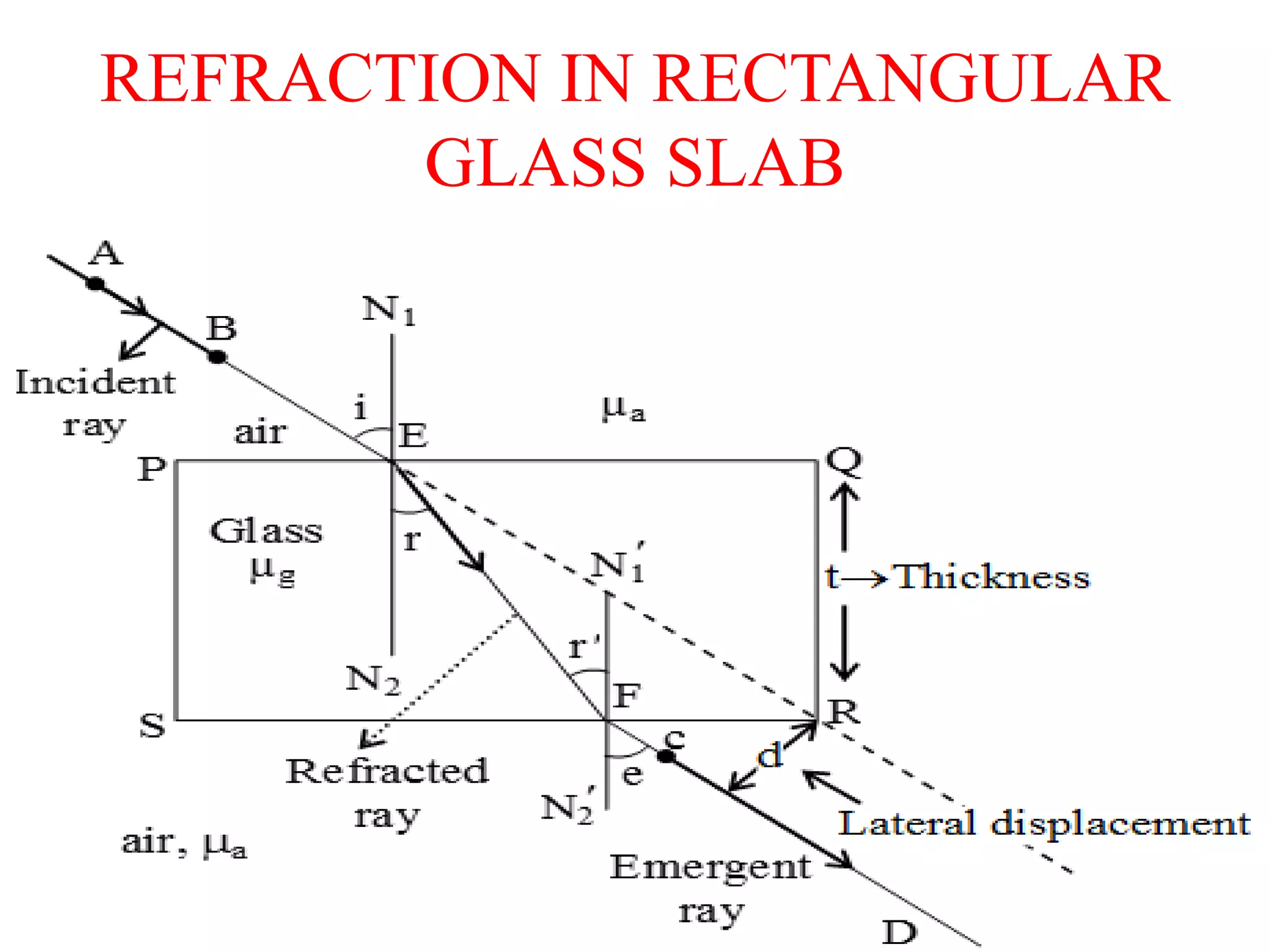
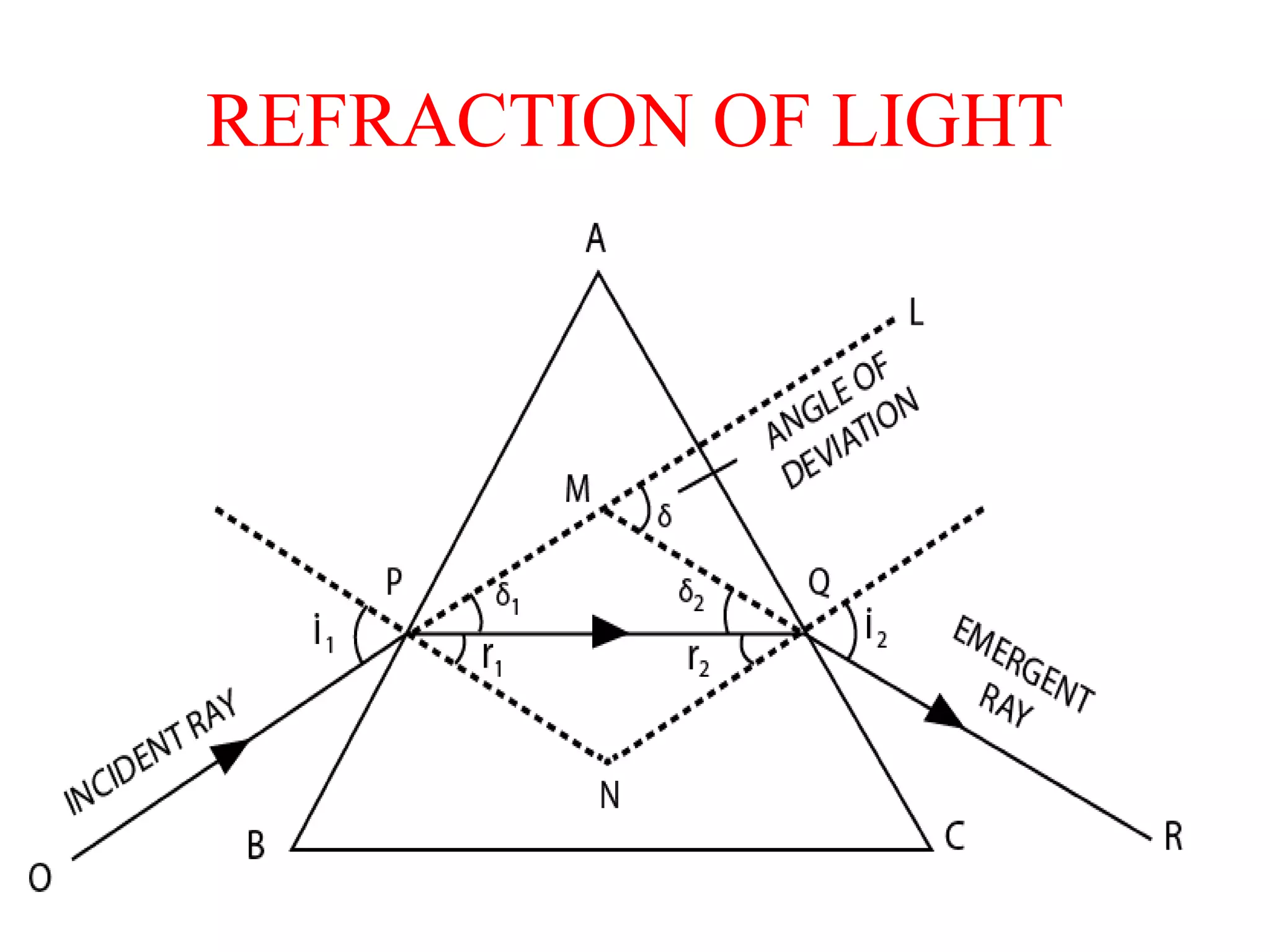
• Incident Ray: The ray of light falling on the
surface separating the two media, is called
incident ray.
• Refracted Ray: The ray of light travelling in the
other medium in the changed direction, is called
refracted ray.
• Normal: The perpendicular drawn on the surface
separating two media, at the point where the
incident ray strikes it i.e at the point of incidence,
is called the normal.
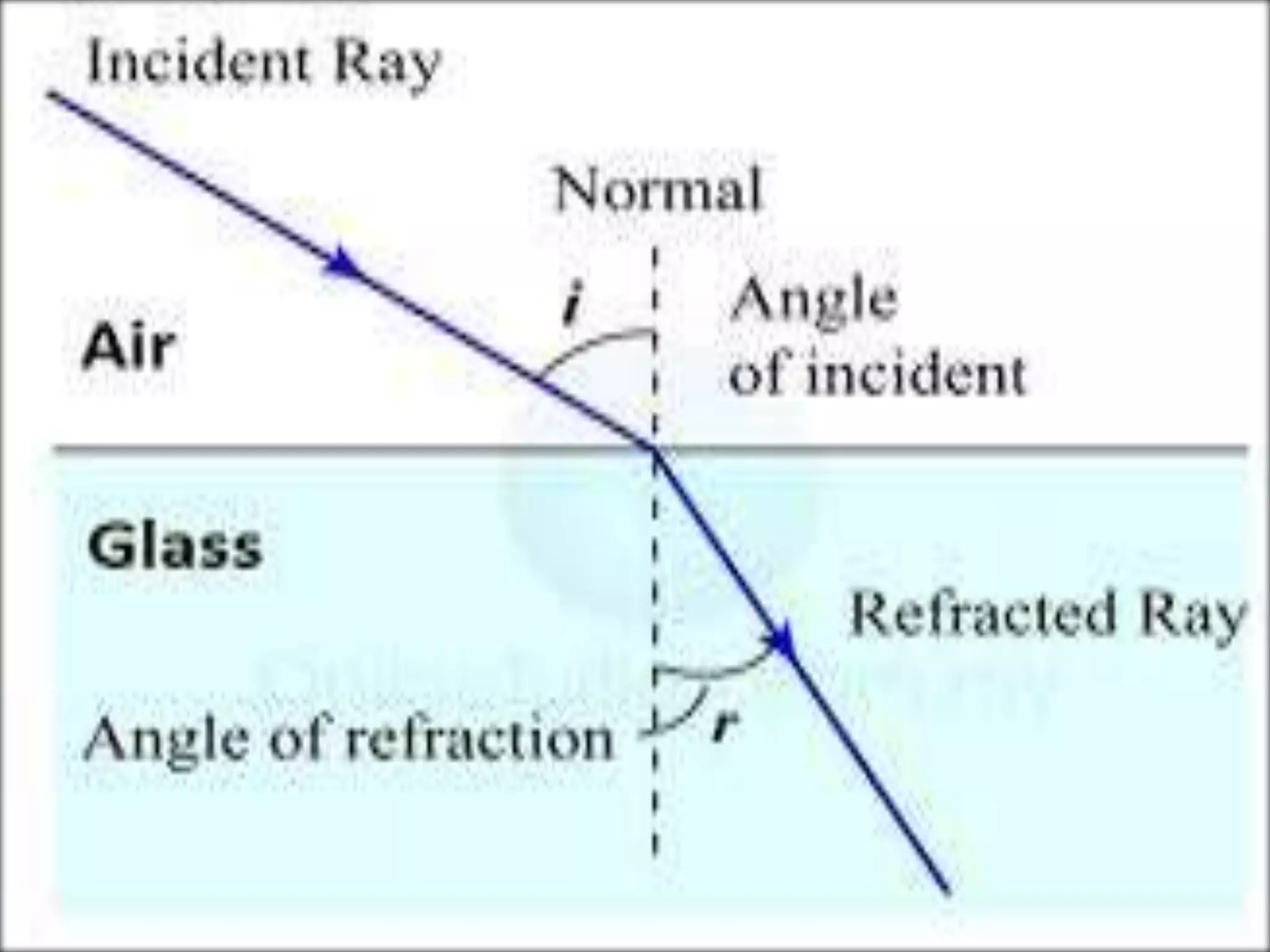
• Angle of incidence: The angle between the
incident ray and the normal is called the angle
of incidence.
• Angle of refraction: The angle between the
refracted ray and the normal is called the angle
of refraction.
SNELL’S LAW
• 1. The incident ray, normal at the point of
incidence and refracted ray, all lie in a same
plane.
• 2. For a given pair of media and given colour of
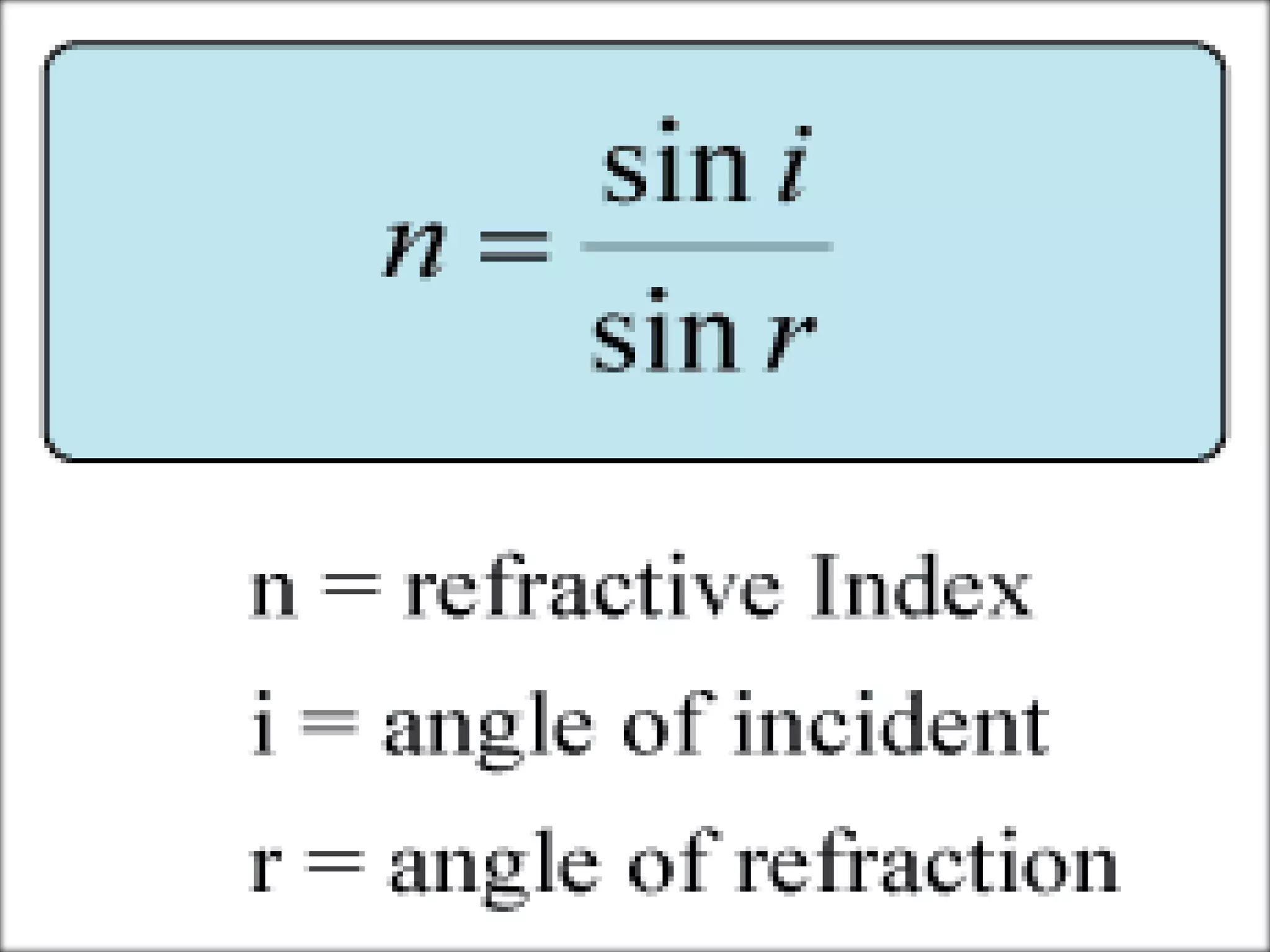
light, the ratio of the sine of angle of incidence i
to the sine of angle of refraction r is a constant i.e
• Sin i/Sinr=Constant
• This constant is known as refractive index of the
second medium with respect to the first medium.
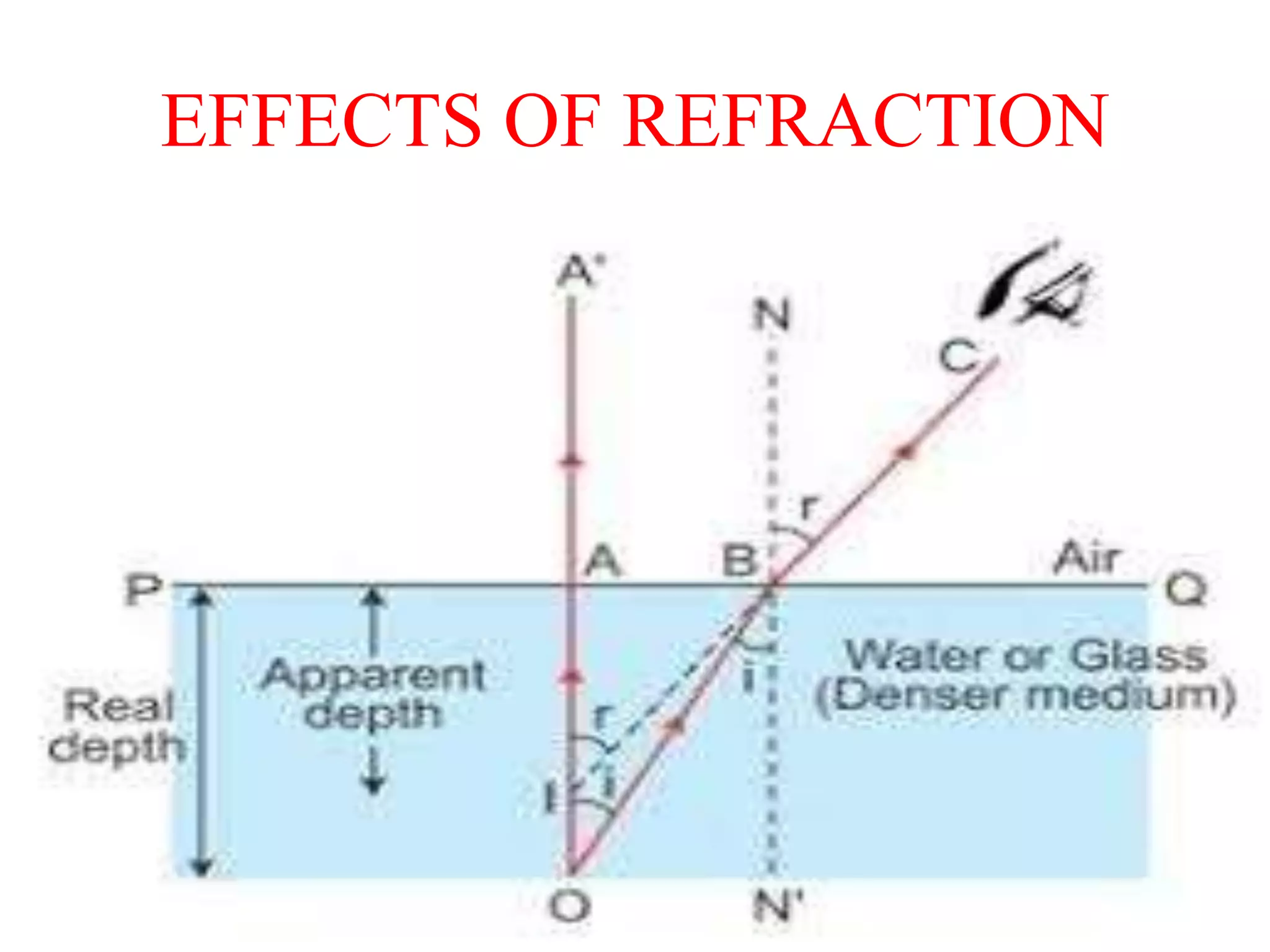
EFFECTS OF REFRACTION
APPARENT DEPTH
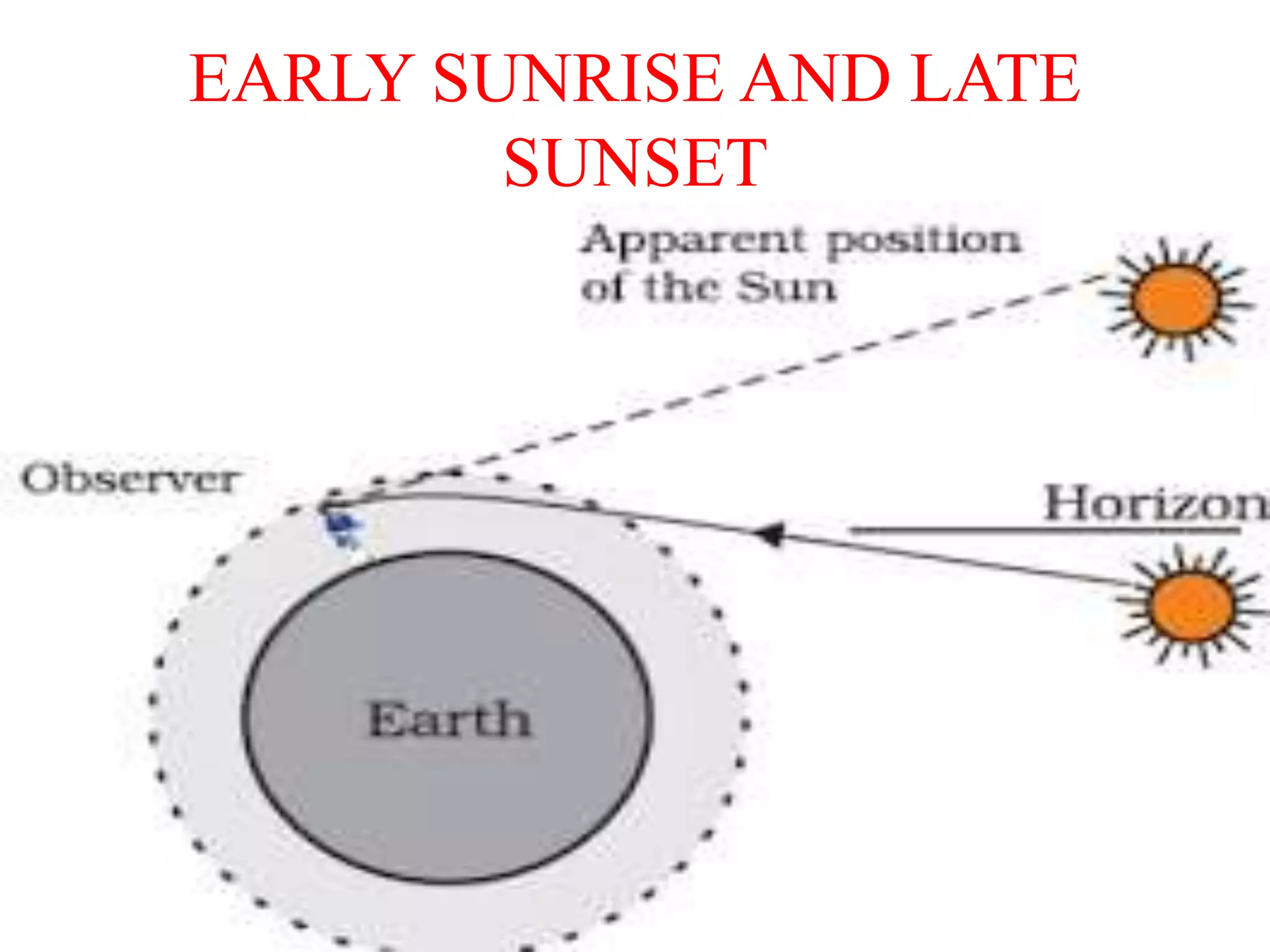
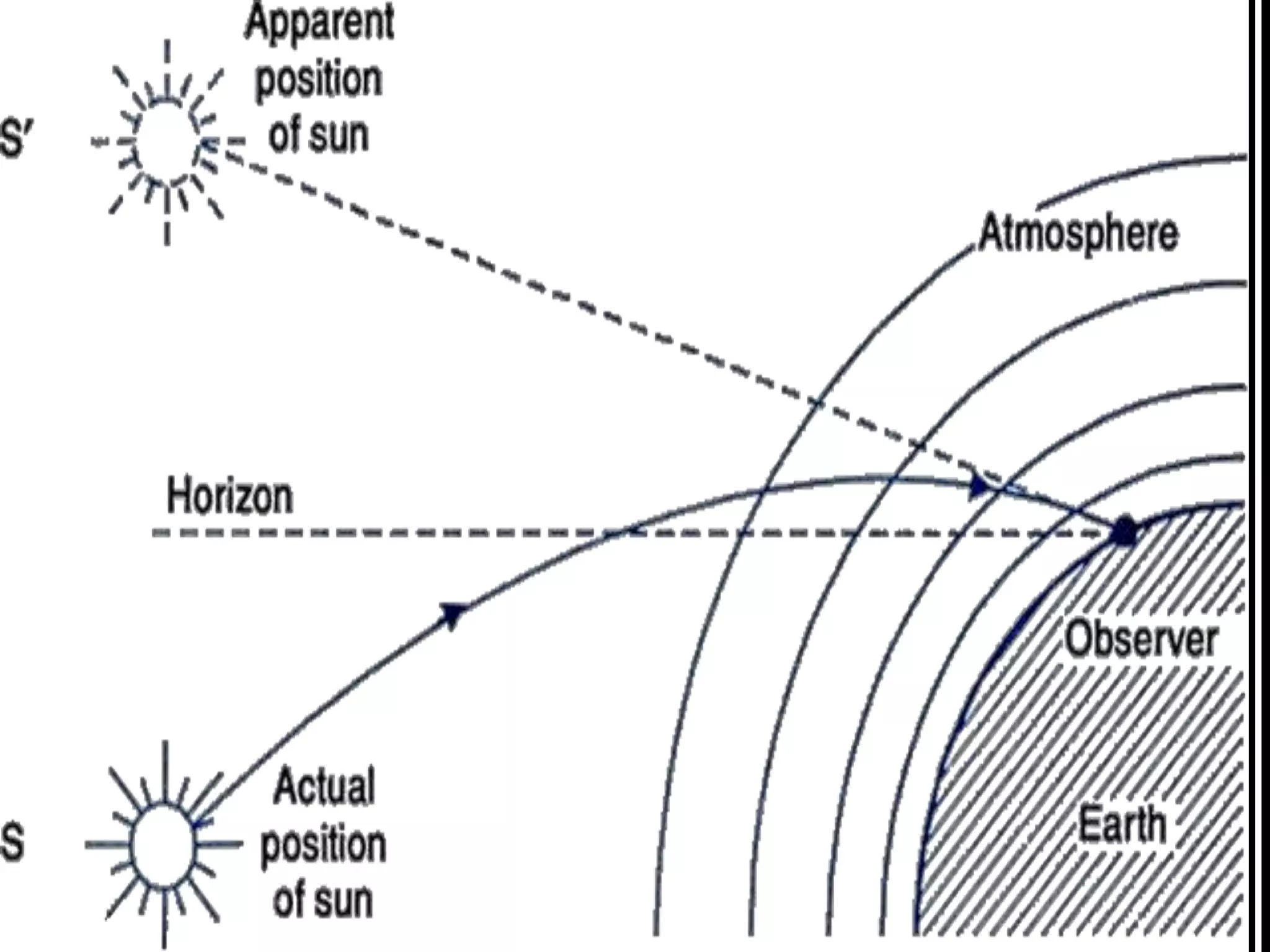
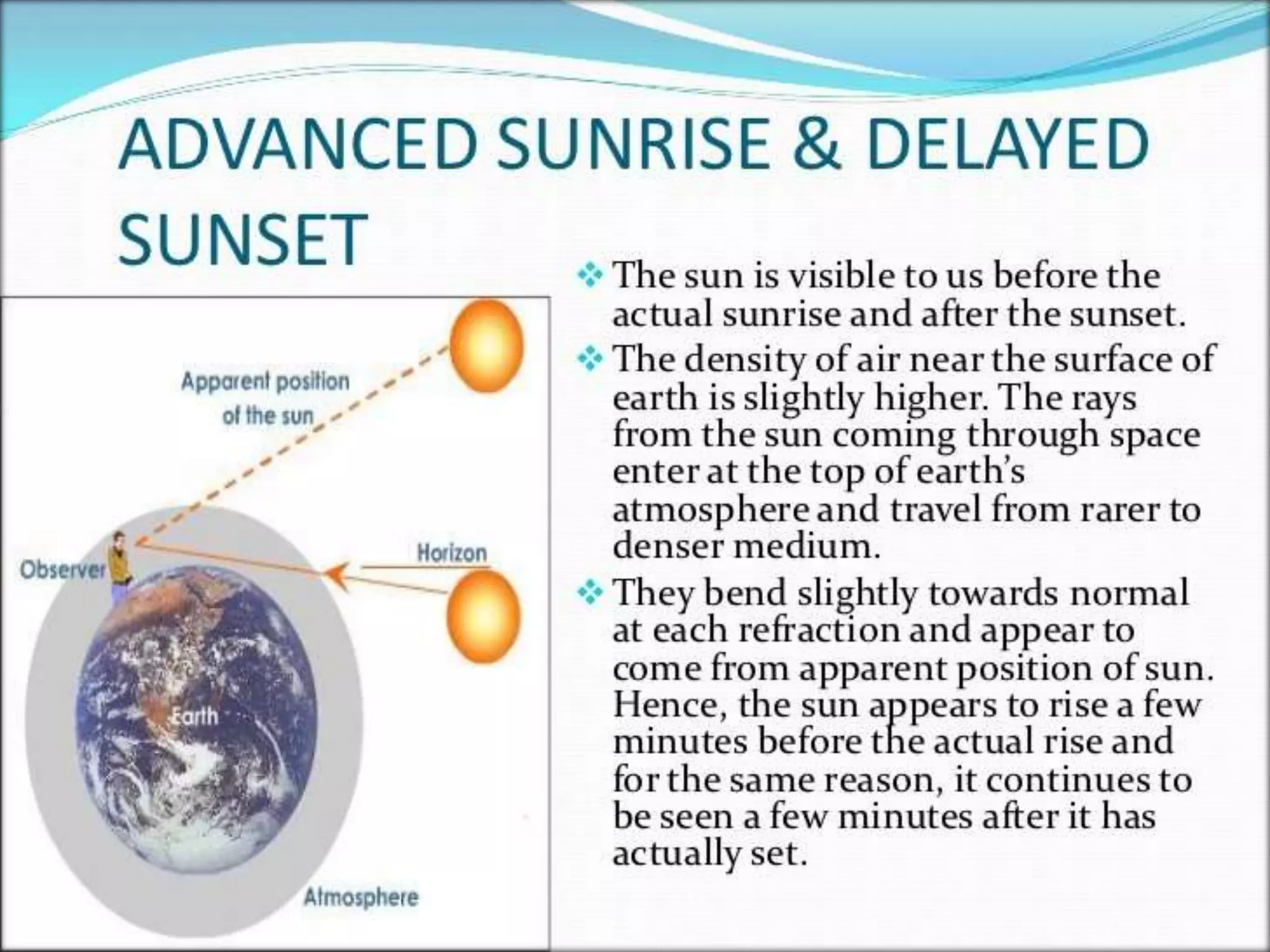
EARLY SUNRISE AND LATE
SUNSET
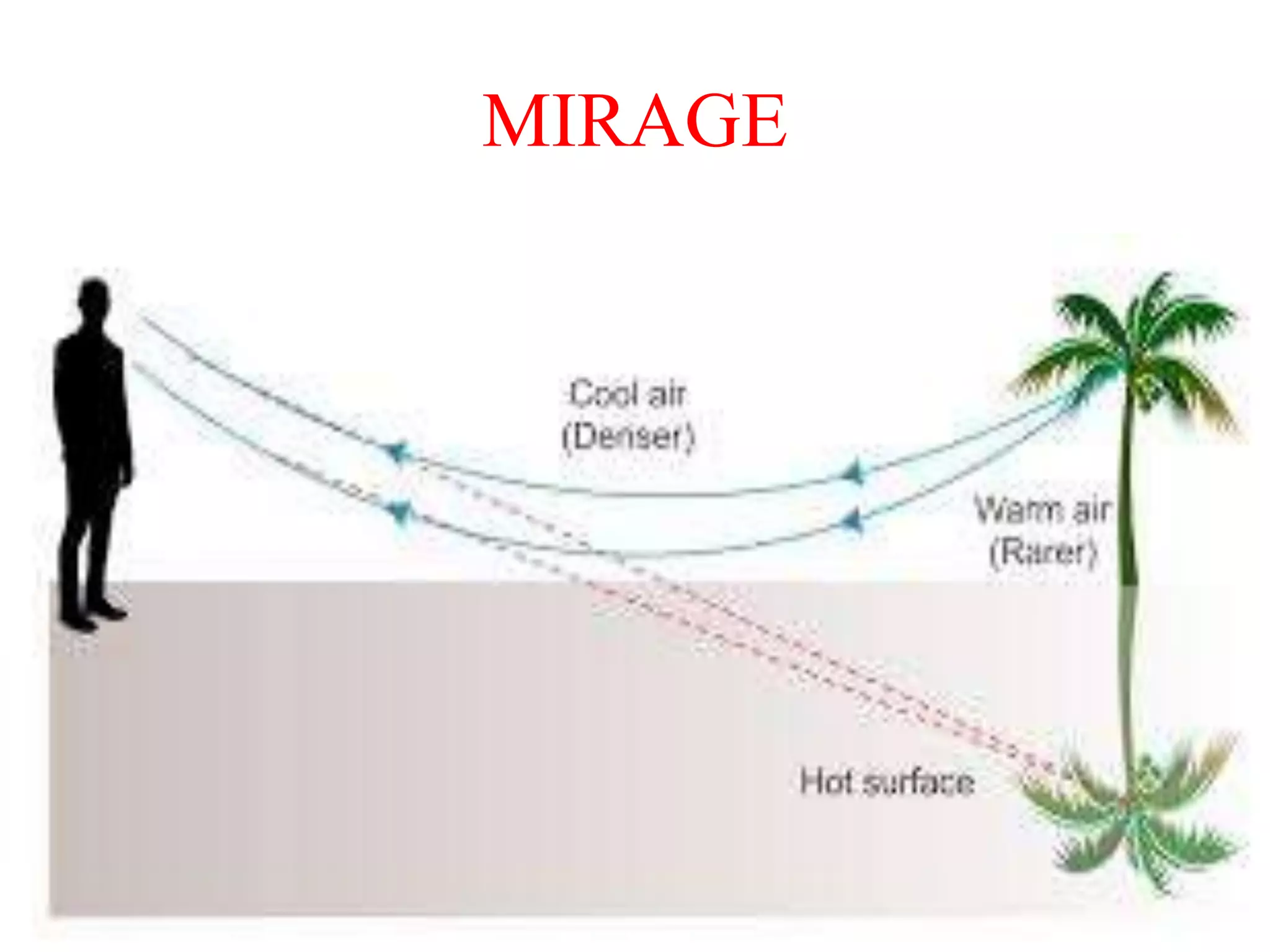
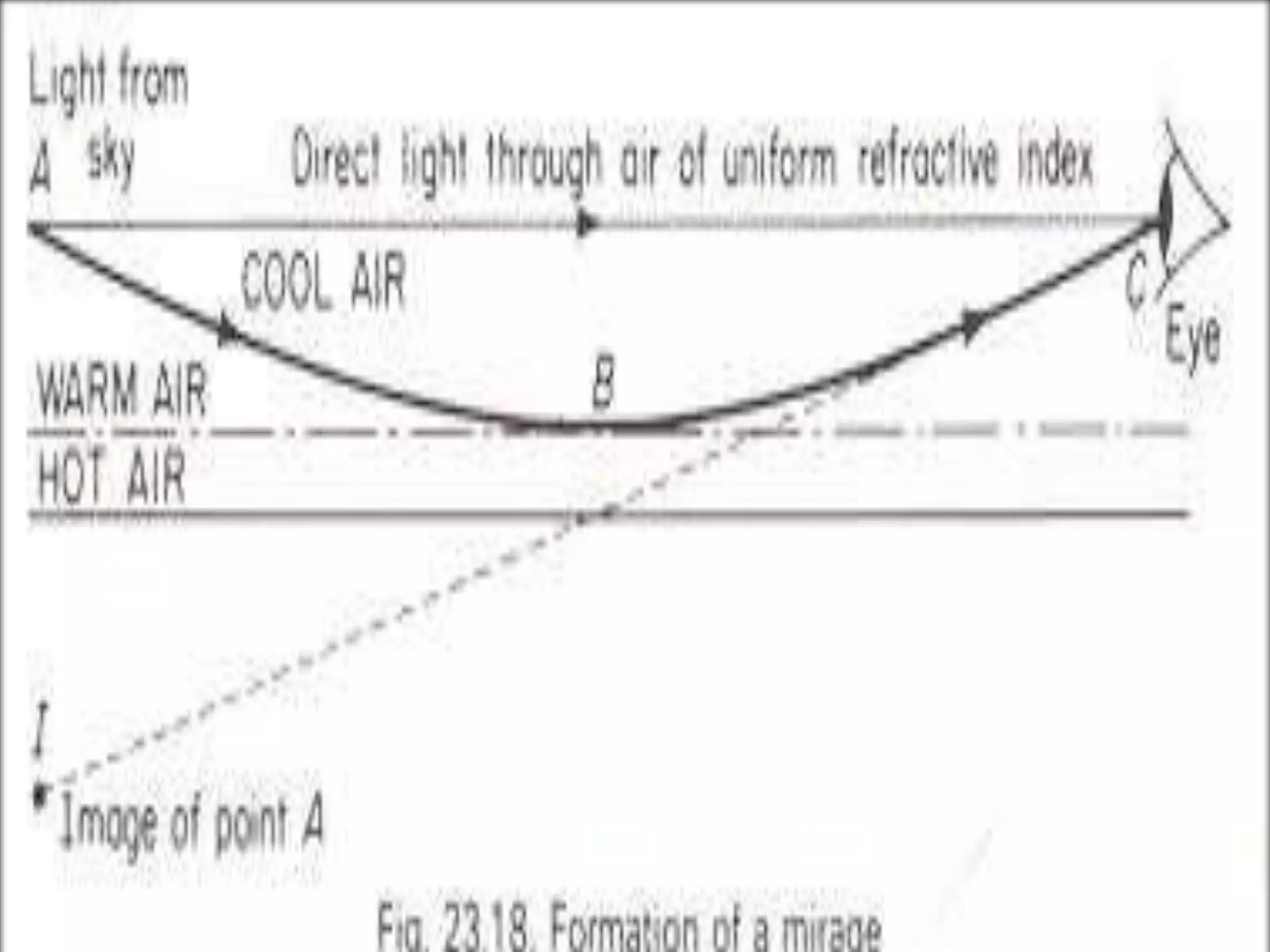
MIRAGE
REFRACTION IN RECTANGULAR
GLASS SLAB
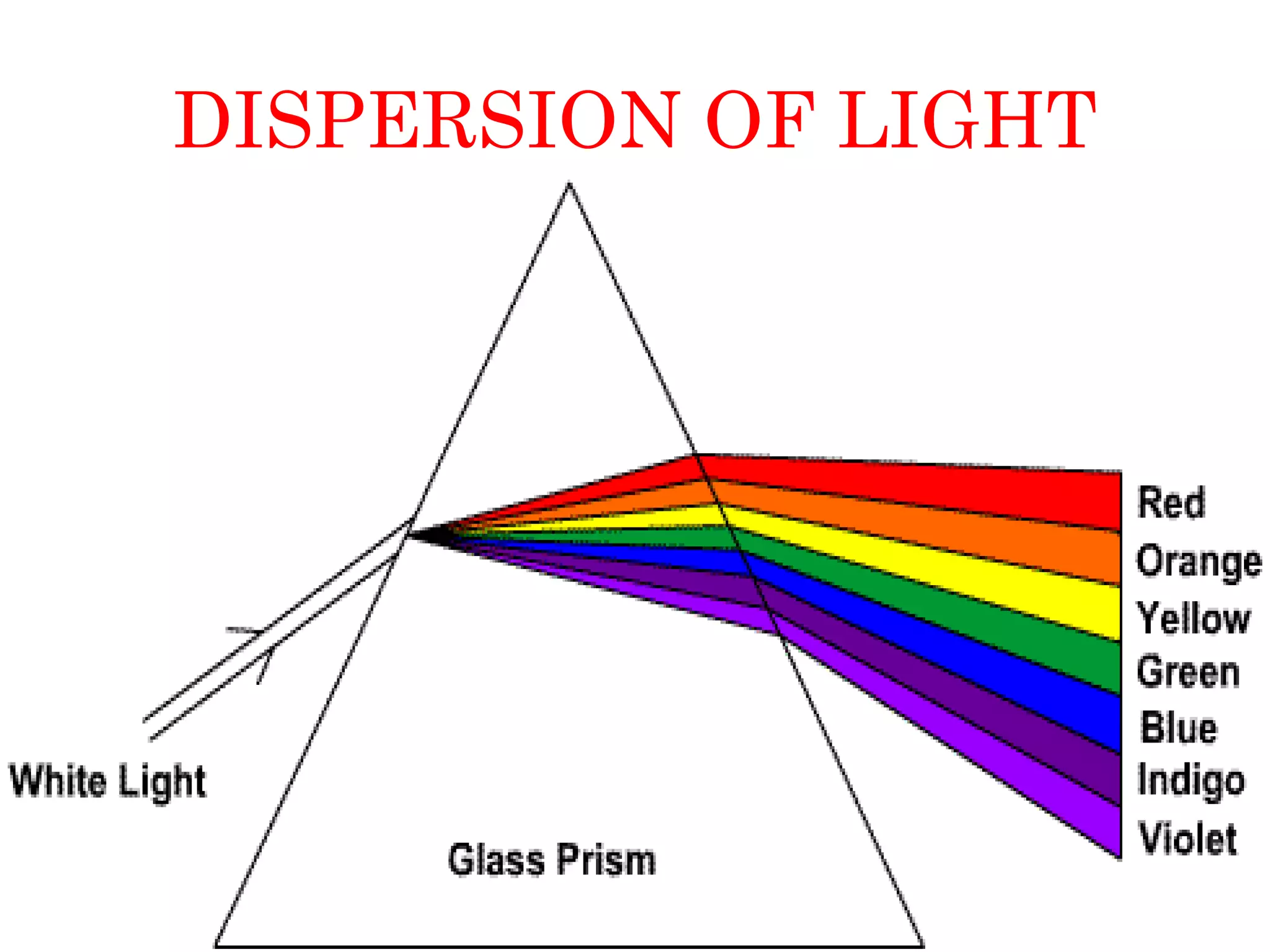
DISPERSION OF LIGHT
REFRACTION OF LIGHT
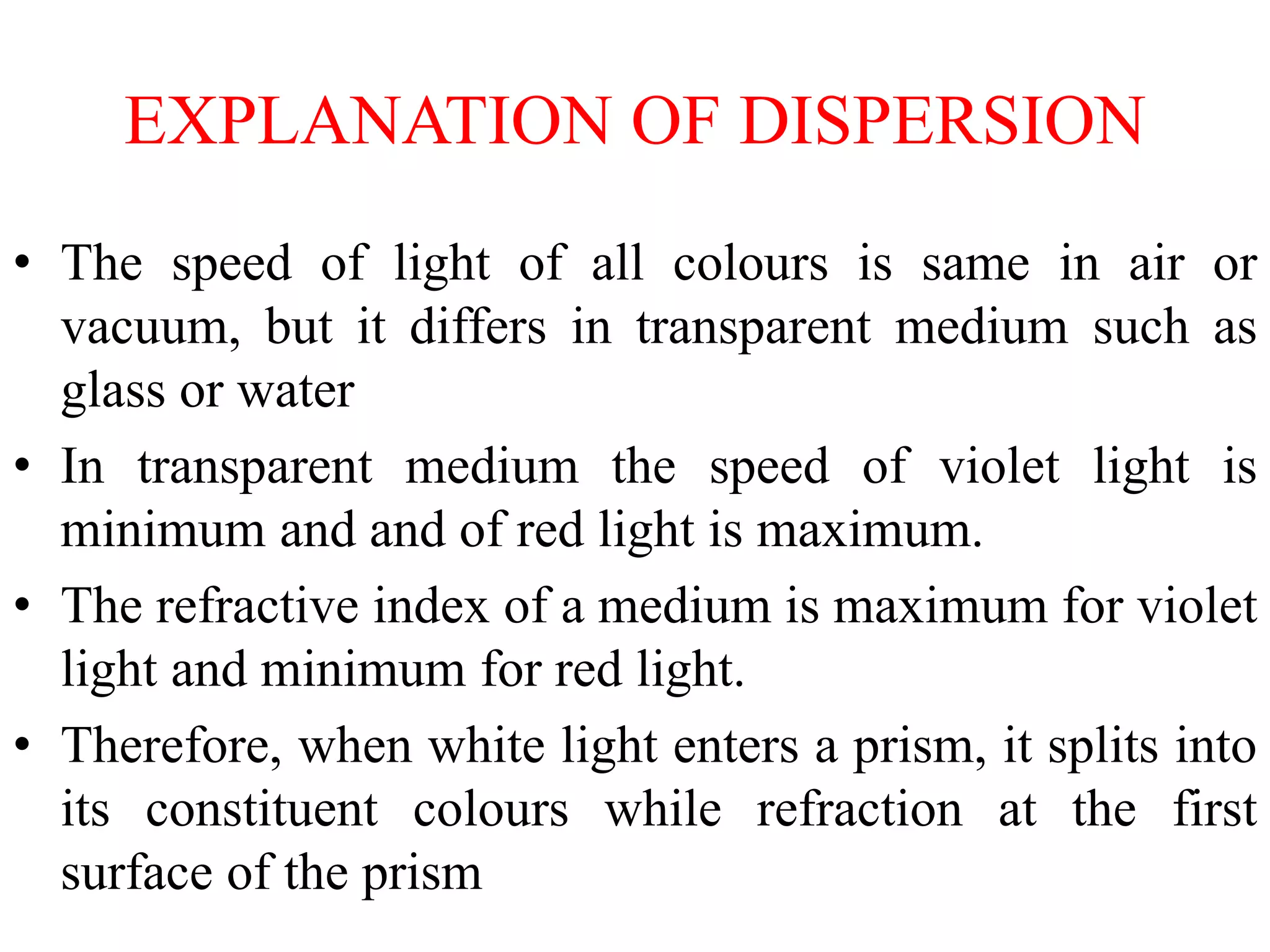
EXPLANATION OF DISPERSION
• The speed of light of all colours is same in air or
vacuum, but it differs in transparent medium such as
glass or water
• In transparent medium the speed of violet light is
minimum and and of red light is maximum.
• The refractive index of a medium is maximum for violet
light and minimum for red light.
• Therefore, when white light enters a prism, it splits into
its constituent colours while refraction at the first
surface of the prism
KEY POINTS
• In rainy season, sometimes after rain, we see
rainbow in the sky, just opposite to the sun.
• It is due to dispesion of white light of sun by
the rain drops which behaves like small
prisms.
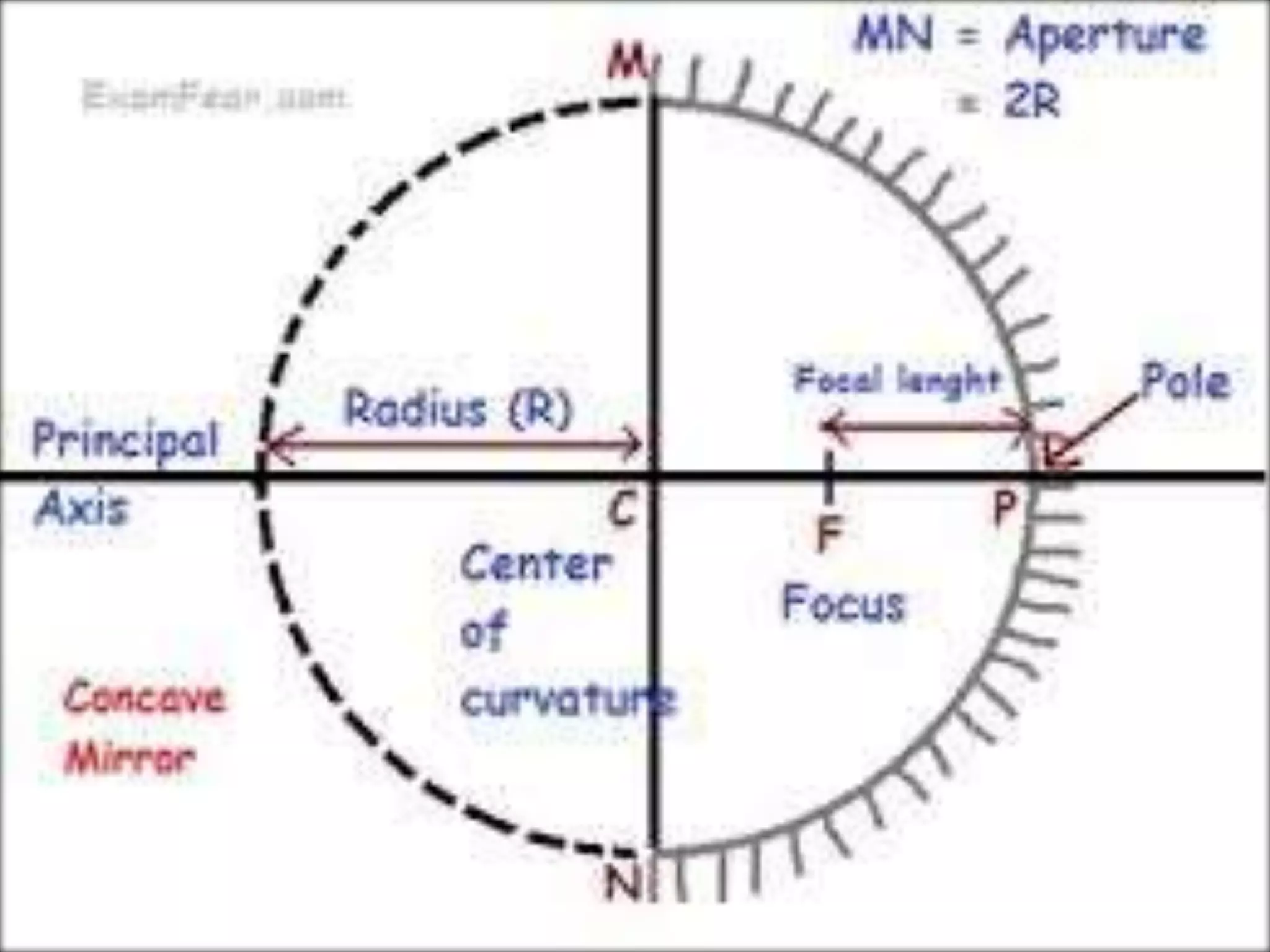
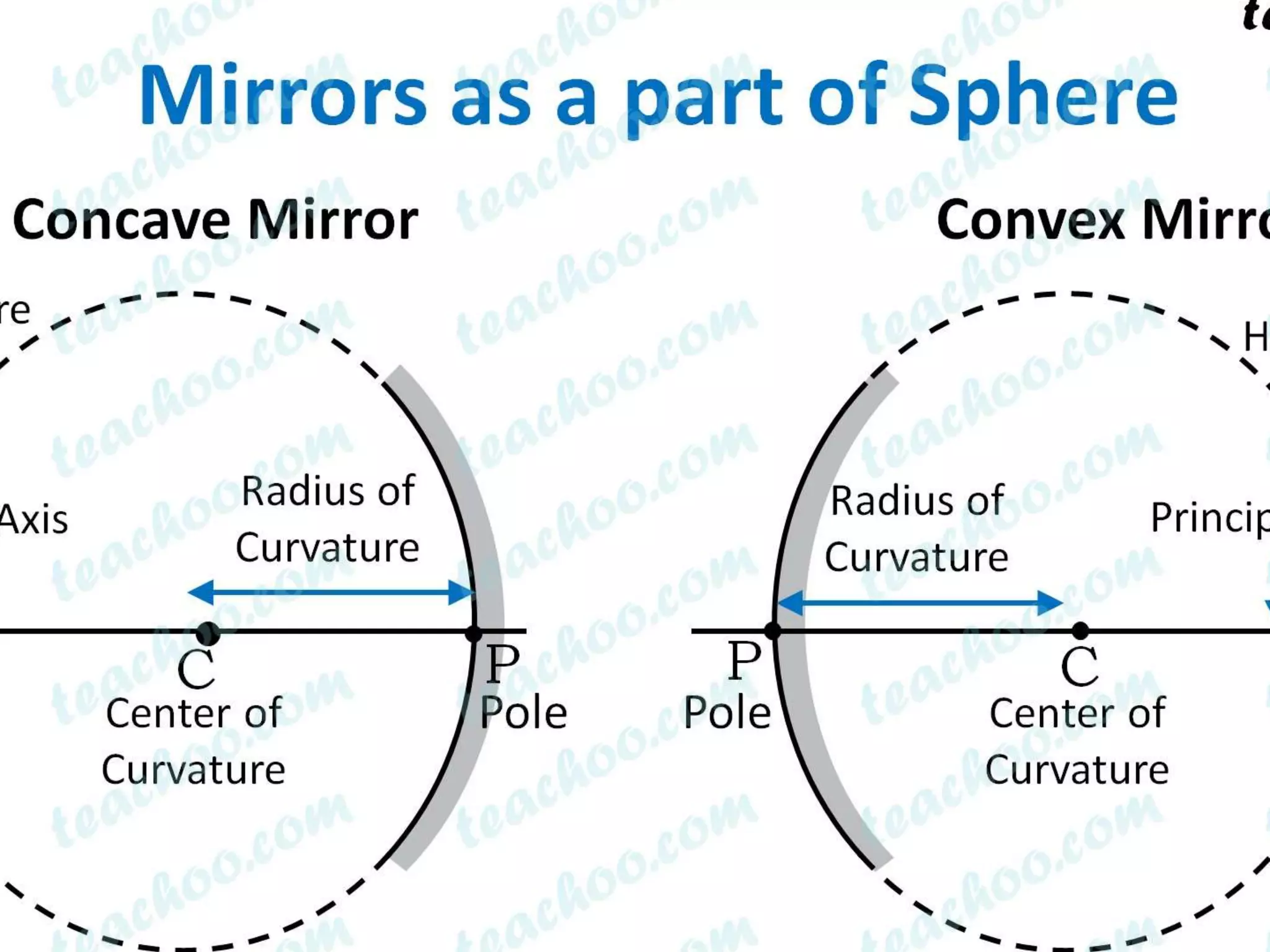
SPHERICAL MIRROR
TERMS/DEFINITIONS
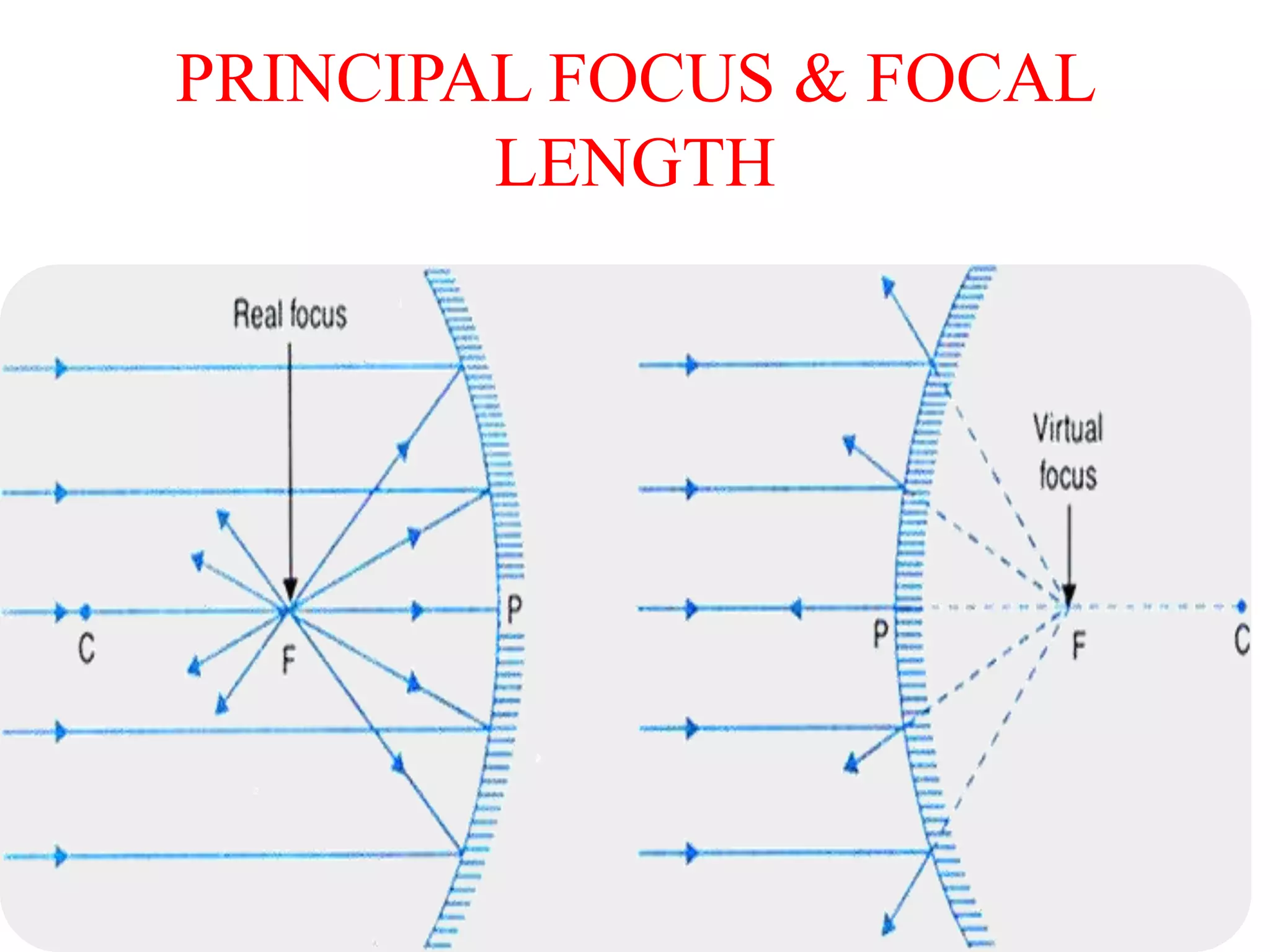
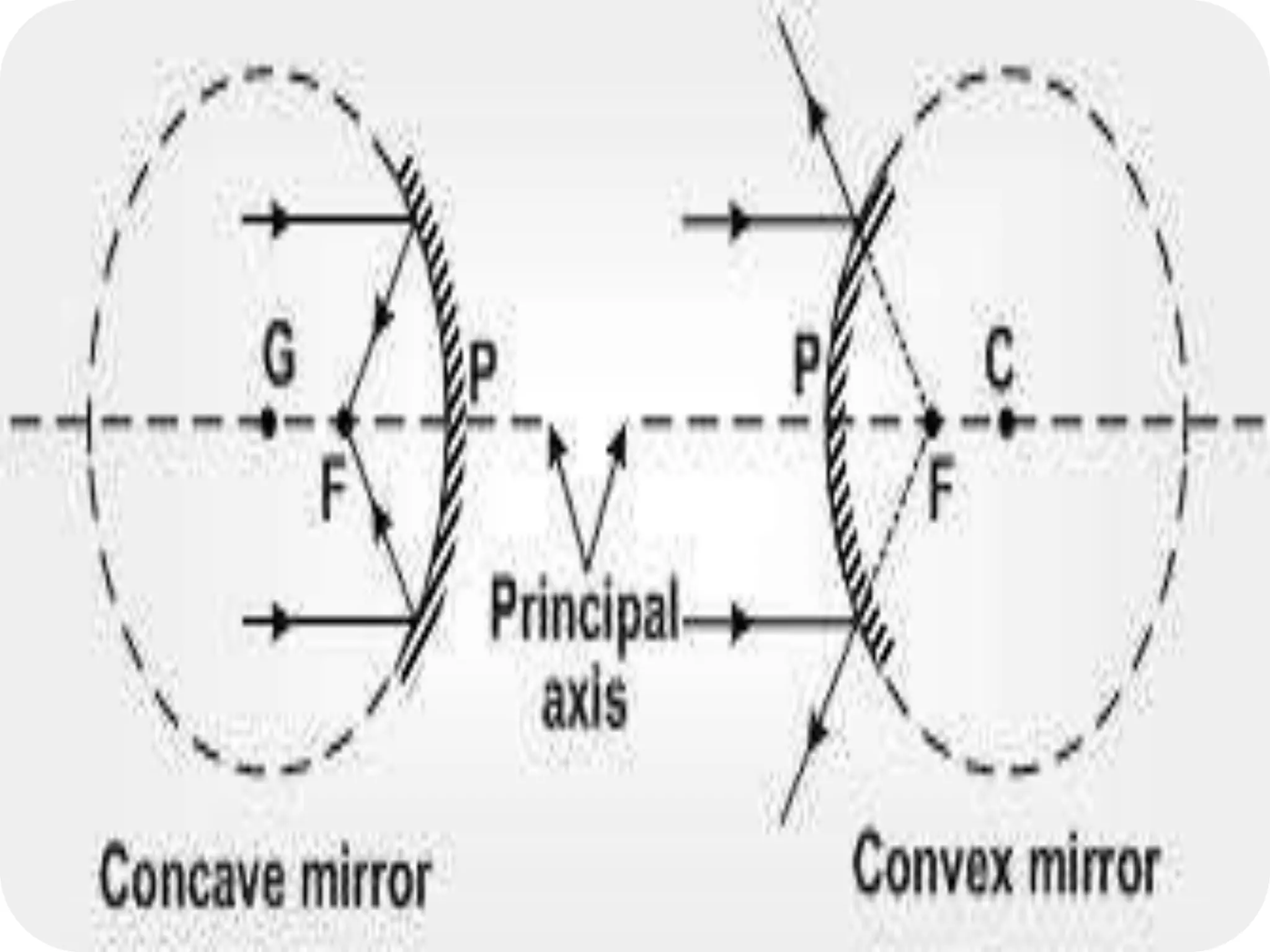
PRINCIPAL FOCUS & FOCAL
LENGTH
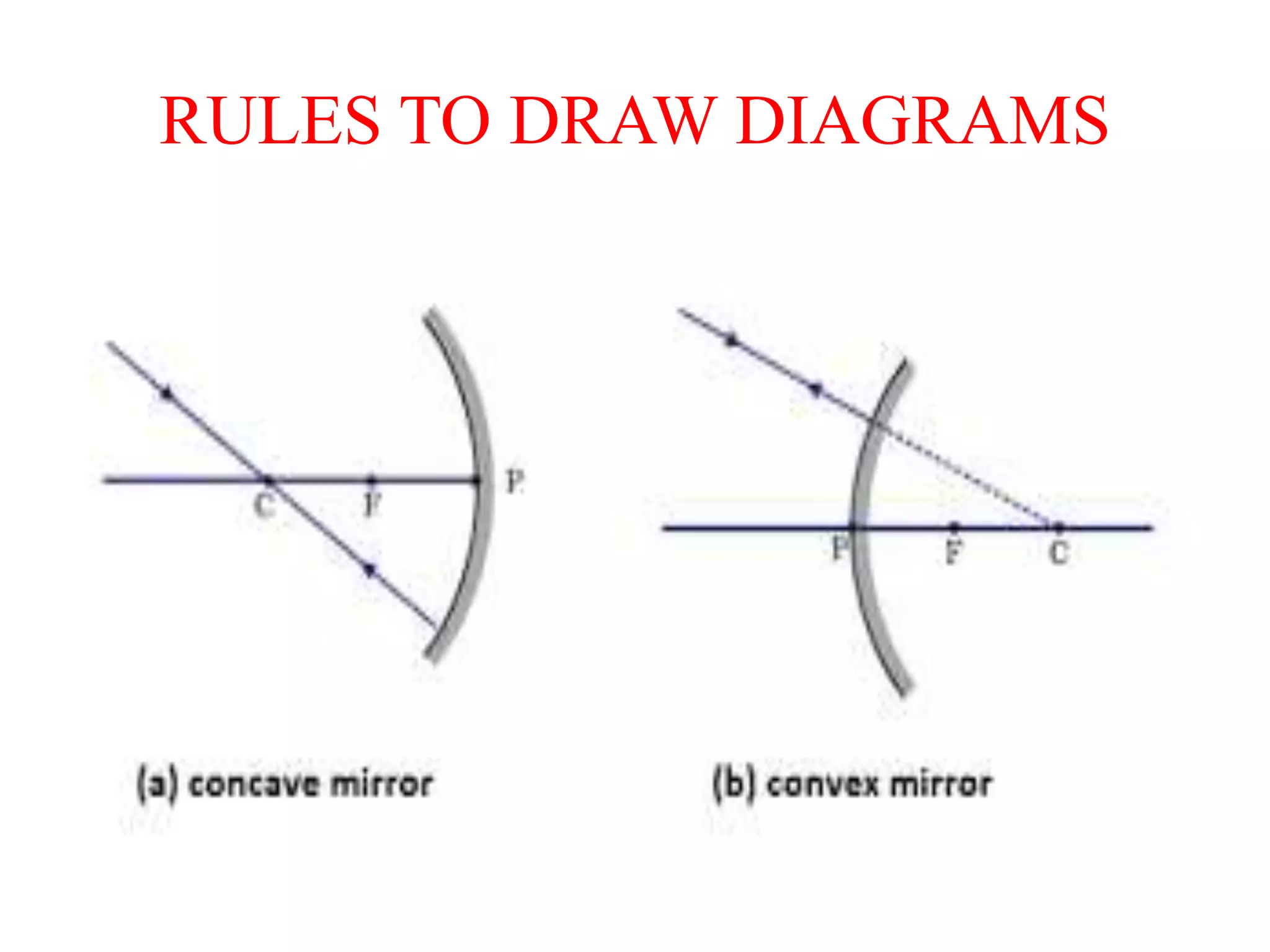
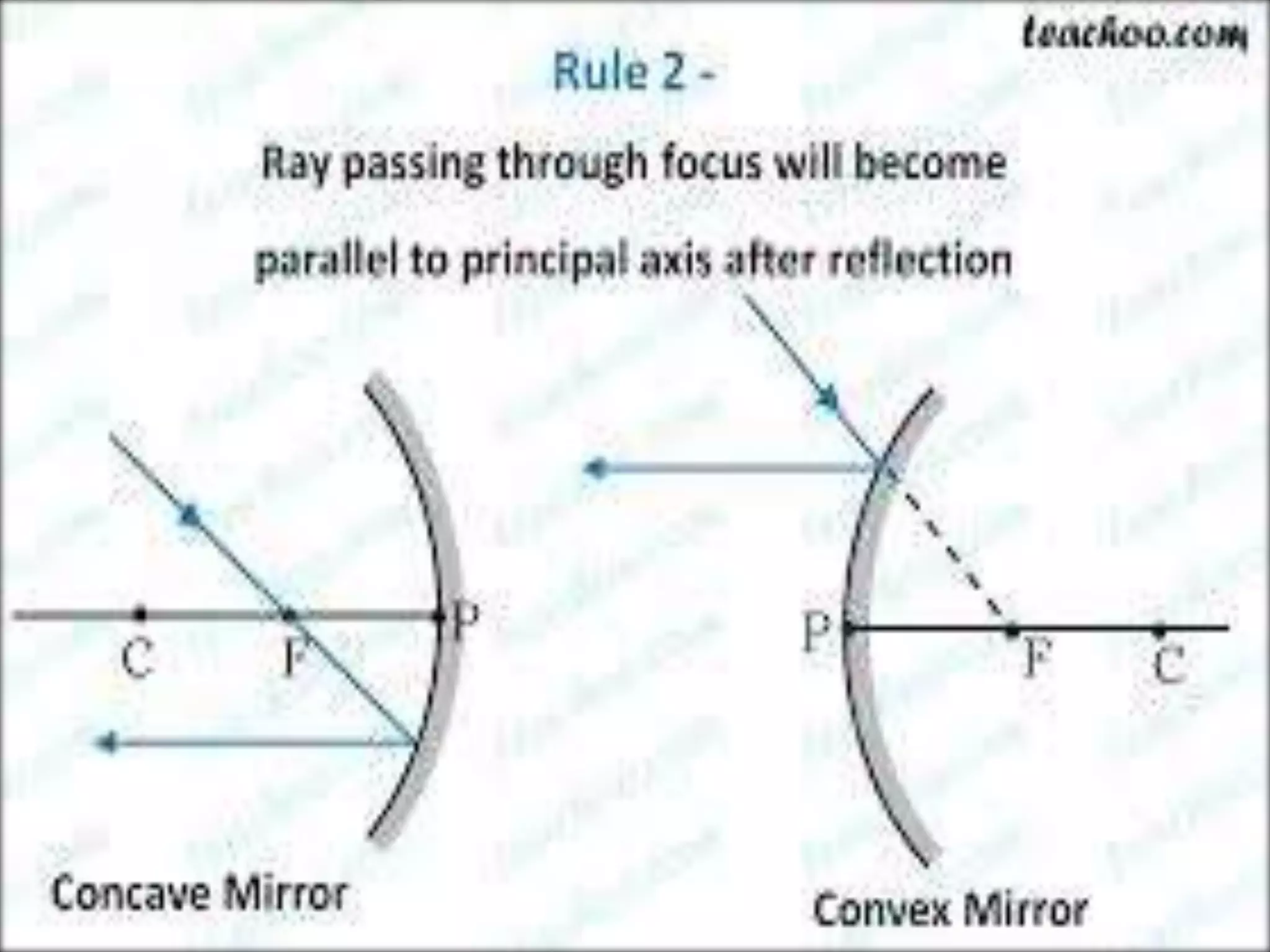
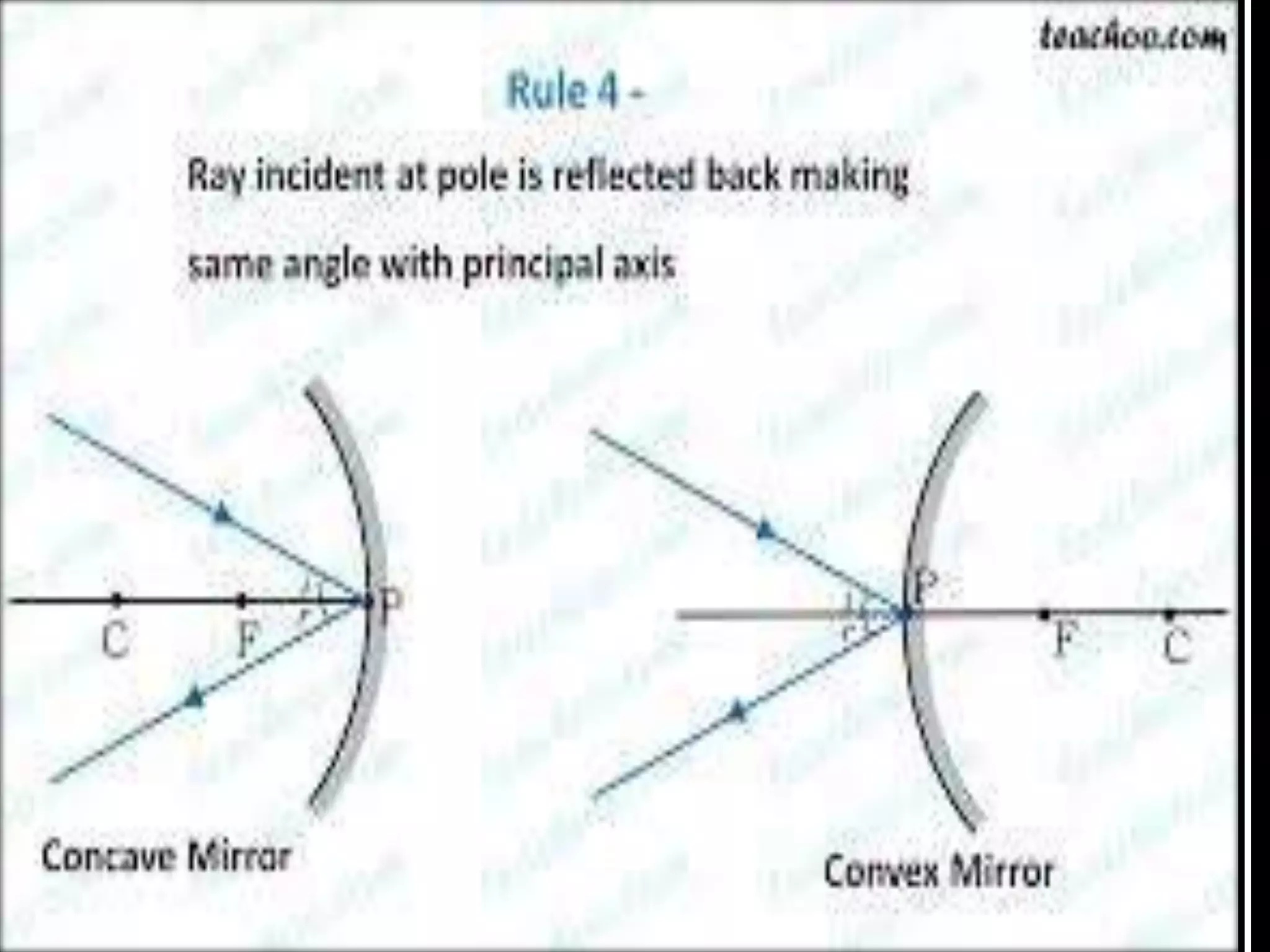
RULES TO DRAW DIAGRAMS
IMAGE FORMATION BY
CONCAVE MIRROR
OBJECT IN BETWEEN INFINITY & CENTRE
OF CURVATURE (C or 2F)
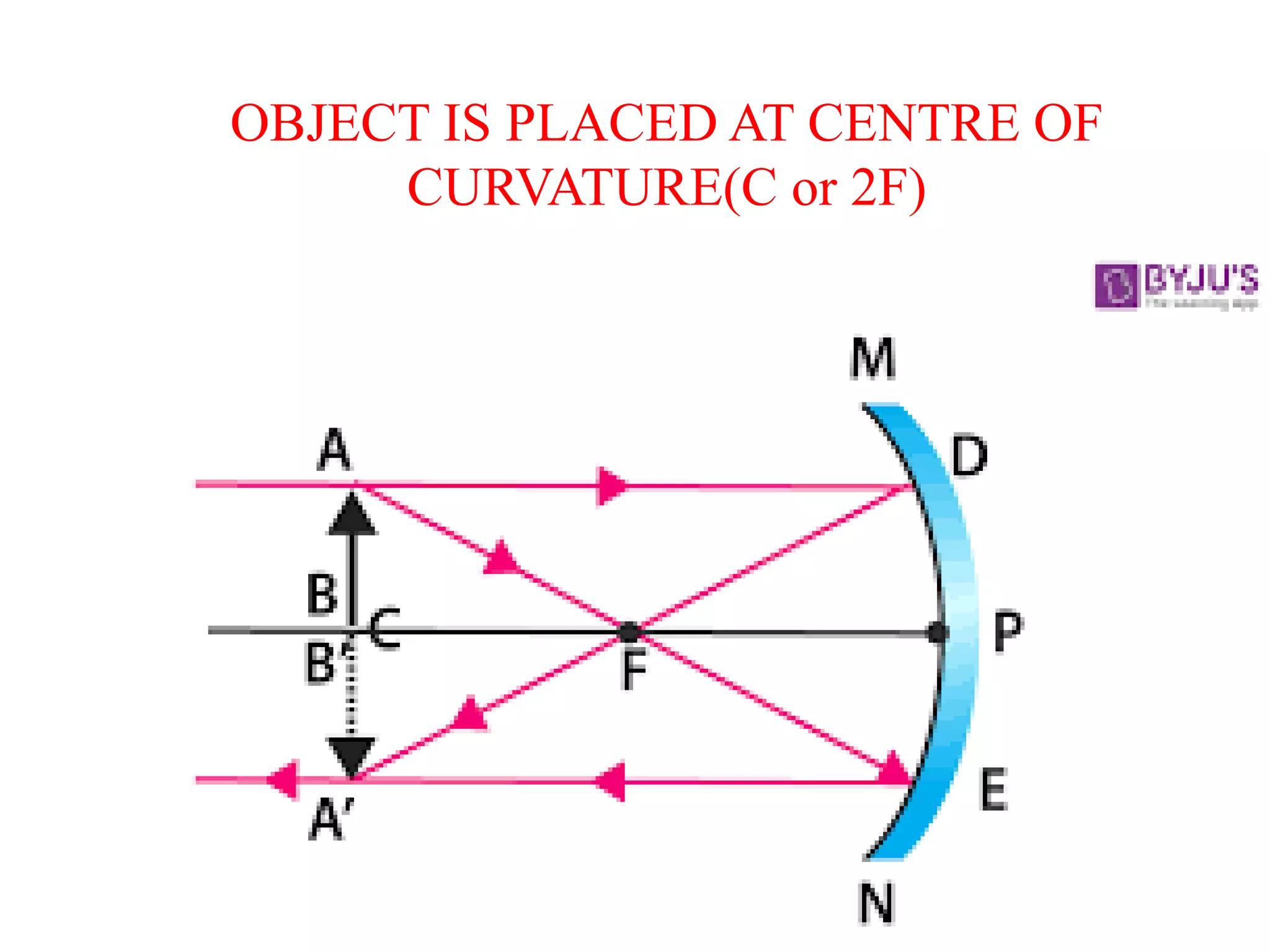
OBJECT IS PLACED AT CENTRE OF
CURVATURE(C or 2F)
OBJECT IN BETWEEN FOCUS & CENTRE OF
CURVATURE (C or 2F)
OBJECT IS PLACED AT FOCUS(2F)
OBJECT IN BETWEEN POLE &
FOCUS (F)
IMAGE FORMATION BY CONVEX
MIRROR
OBJECT IN BETWEEN INFINITY &
POLE)
USES OF CONVEX MIRROR
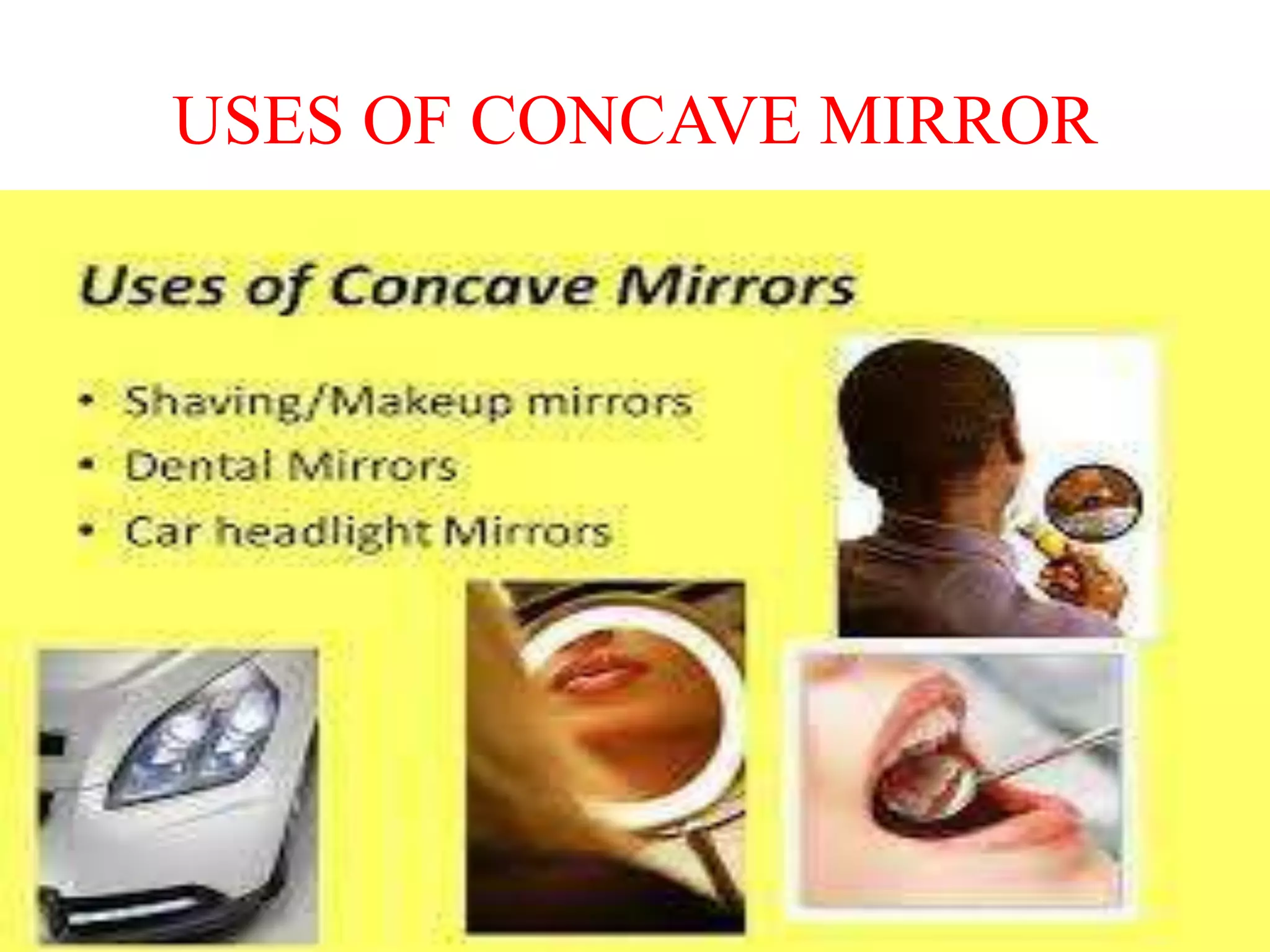
USES OF CONCAVE MIRROR
CLASS 8 LIGHT ENERGY

CLASS 8 LIGHT ENERGY

  • 1.
    WELCOME TO MYCLASS Mr.Souvik Chatterjee M.Sc(Physics), B.Ed
  • 2.
  • 3.
    SPEED IN DIFFERENTMEDIA • A medium is said to be denser if the speed of light in it decreases, while it is said to be rarer if the speed of light in it increases. • If no medium, it can be more than 3 X 10^8 m/s • Speed of light in air is 3 X 10^8 m/s • Speed of light in water is 2.25 X 10^8 m/s • Speed of light in glass is 2 X 10^8 m/s
  • 4.
    REFRACTION OF LIGHT •The change in direction of path of light when it passes from one optically transparent medium to another, is called refraction of light.
  • 5.
    • When rayof light travels from rarer to denser medium, (say from air to water or from air to glass), it bends towards the normal
  • 6.
    • When aray of light travels from denser to a rarer medium(say, from water to air or from glass to air), it bends away from the normal
  • 8.
    • When aray of light falls normally on the surface separating the two media, it passes undeviated i.e along the same path
  • 10.
    SOME TERMS RELATEDTO REFRACTION OF LIGHT • Incident Ray: The ray of light falling on the surface separating the two media, is called incident ray. • Refracted Ray: The ray of light travelling in the other medium in the changed direction, is called refracted ray. • Normal: The perpendicular drawn on the surface separating two media, at the point where the incident ray strikes it i.e at the point of incidence, is called the normal.
  • 11.
    • Angle ofincidence: The angle between the incident ray and the normal is called the angle of incidence. • Angle of refraction: The angle between the refracted ray and the normal is called the angle of refraction.
  • 13.
    SNELL’S LAW • 1.The incident ray, normal at the point of incidence and refracted ray, all lie in a same plane. • 2. For a given pair of media and given colour of light, the ratio of the sine of angle of incidence i to the sine of angle of refraction r is a constant i.e • Sin i/Sinr=Constant • This constant is known as refractive index of the second medium with respect to the first medium.
  • 16.
  • 17.
  • 18.
    EARLY SUNRISE ANDLATE SUNSET
  • 21.
  • 24.
  • 25.
  • 26.
  • 27.
    EXPLANATION OF DISPERSION •The speed of light of all colours is same in air or vacuum, but it differs in transparent medium such as glass or water • In transparent medium the speed of violet light is minimum and and of red light is maximum. • The refractive index of a medium is maximum for violet light and minimum for red light. • Therefore, when white light enters a prism, it splits into its constituent colours while refraction at the first surface of the prism
  • 28.
    KEY POINTS • Inrainy season, sometimes after rain, we see rainbow in the sky, just opposite to the sun. • It is due to dispesion of white light of sun by the rain drops which behaves like small prisms.
  • 29.
  • 34.
  • 35.
    PRINCIPAL FOCUS &FOCAL LENGTH
  • 36.
    RULES TO DRAWDIAGRAMS
  • 40.
  • 41.
    OBJECT IN BETWEENINFINITY & CENTRE OF CURVATURE (C or 2F)
  • 42.
    OBJECT IS PLACEDAT CENTRE OF CURVATURE(C or 2F)
  • 43.
    OBJECT IN BETWEENFOCUS & CENTRE OF CURVATURE (C or 2F)
  • 44.
    OBJECT IS PLACEDAT FOCUS(2F)
  • 45.
    OBJECT IN BETWEENPOLE & FOCUS (F)
  • 46.
    IMAGE FORMATION BYCONVEX MIRROR
  • 47.
    OBJECT IN BETWEENINFINITY & POLE)
  • 48.
  • 49.