
Downloaded 55 times













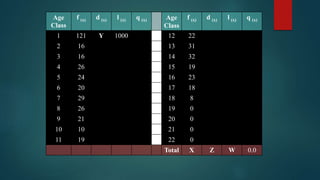





- Life tables provide a comprehensive method to describe mortality, survival, and other vital events in a population by showing how a group of infants would gradually die under constant conditions. They provide measures of longevity and are constructed separately for males and females. - John Graunt and Edmund Halley were early contributors to developing life tables in the 17th century. Life tables are important for calculating life expectancy, comparing mortality among communities, survival after treatment, and analyzing causes of death. - The construction of a life table begins with a cohort (group born at the same time) and provides an age-specific account of mortality through values like number surviving and number of deaths at each age interval.


