

Lesson Study
Continuous Professional Development
for Teachers
A case from Zambia
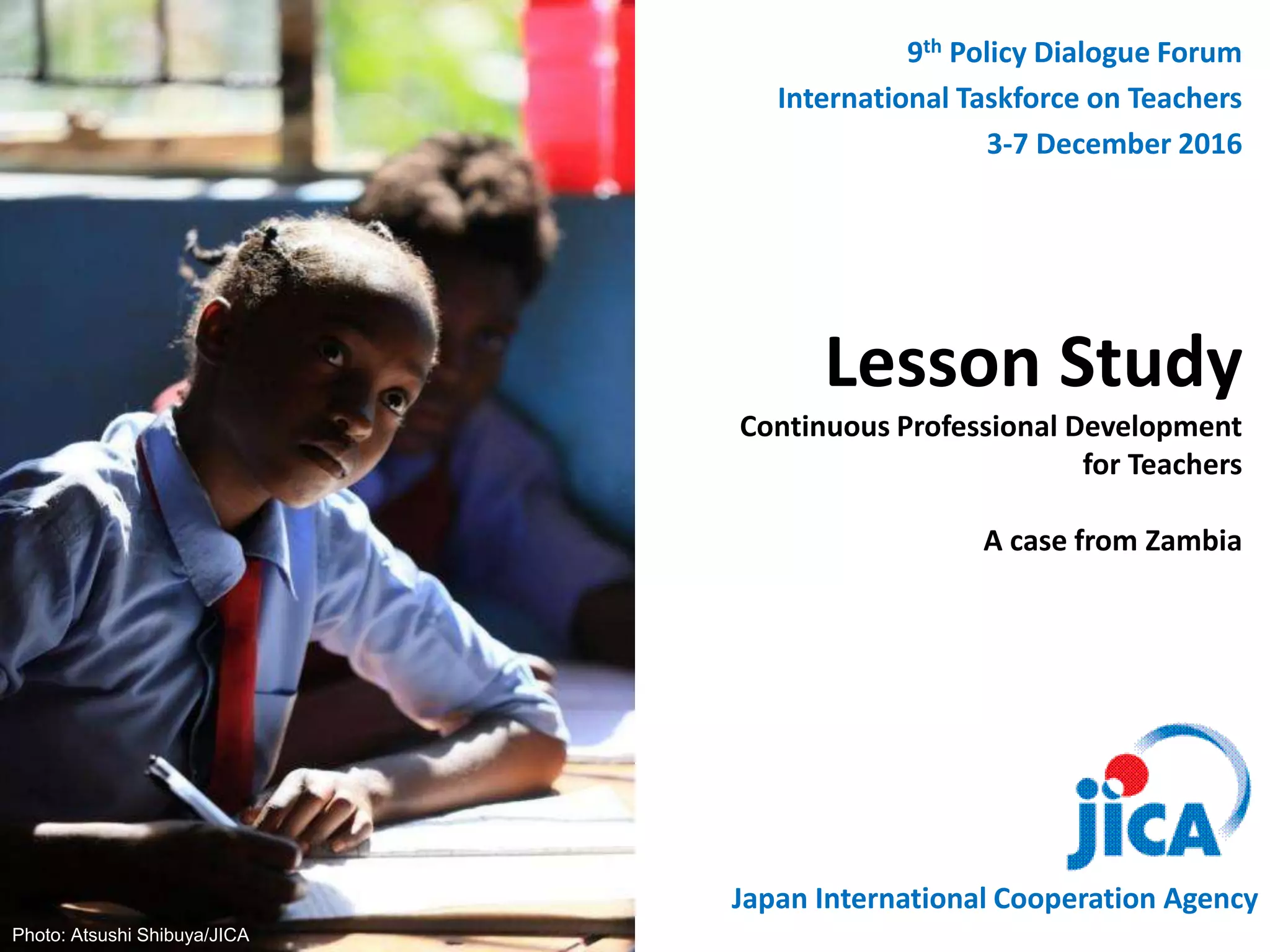
Photo: Atsushi Shibuya/JICA
9th Policy Dialogue Forum
International Taskforce on Teachers
3-7 December 2016
Japan International Cooperation Agency
Lesson Study
• Peer-to-peer learning for in-service teachers to support their
professional growth
• A lesson observed by fellow teachers and post-lesson discussion
held to reflect/improve these lessons
• Teachers learn how to improve learner-centered teaching
methods and develop students’ problem solving and critical
thinking skills
• Motivating teachers with systematic peer support, encouraging
teamwork, as well as improving supervision of school managers
to strengthen school systems
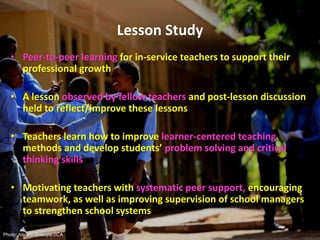
Photo: Atsushi Shibuya/JICA
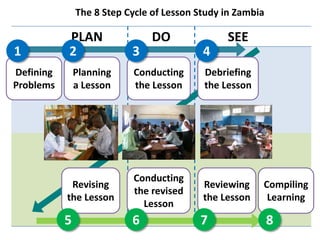
PLAN DO SEE
Defining
Problems
Planning
a Lesson
Conducting
the Lesson
Debriefing
the Lesson
Revising
the Lesson
Conducting
the revised
Lesson
Reviewing
the Lesson
Compiling
Learning
1 2 3 4
5 6 7 8
The 8 Step Cycle of Lesson Study in Zambia
Why Lesson Study was Introduced in Zambia
• Low learner performance in assessments (eg, National
Examination, SACMEQ)
• Greater demands for a sustainable and cost-effective
CPD programme
• Implementation Framework was in place but without
systematic, structured practice
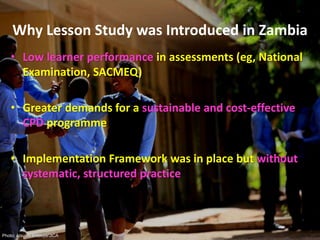
Photo: Atsushi Shibuya/JICA
Lesson Study for
Improving Quality of Education
• Aligned with and introduced under
the National Education Policy
• Integrated into
an existing program (SPRINT)
• Government programme assisted by technical
cooperation projects of JICA
Photo: Atsushi Shibuya/JICA
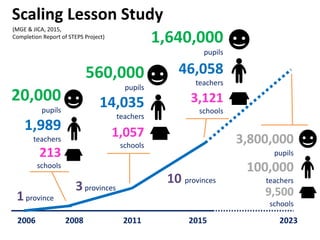
Scaling Lesson Study
2006 2008 2011 2015
1province
3provinces
10 provinces
1,989
teachers
20,000
pupils
213
schools
14,035
teachers
560,000
pupils
1,057
schools
46,058
teachers
1,640,000
pupils
3,121
schools
(MGE & JICA, 2015,
Completion Report of STEPS Project)
2023
100,000
teachers
3,800,000
pupils
9,500
schools
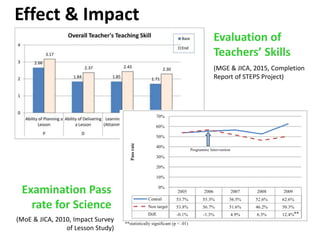
Effect & Impact
Evaluation of
Teachers’ Skills
Examination Pass
rate for Science
(MGE & JICA, 2015, Completion
Report of STEPS Project)
(MoE & JICA, 2010, Impact Survey
of Lesson Study)
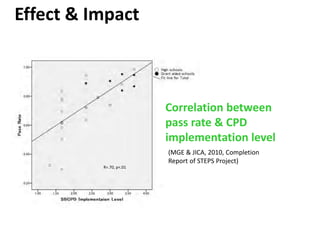
R=.70, p<.01
Effect & Impact
Correlation between
pass rate & CPD
implementation level
(MGE & JICA, 2010, Completion
Report of STEPS Project)
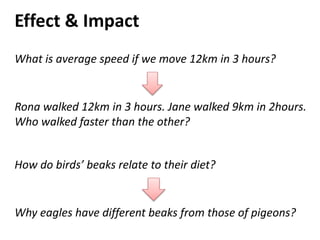
What is average speed if we move 12km in 3 hours?
Rona walked 12km in 3 hours. Jane walked 9km in 2hours.
Who walked faster than the other?
How do birds’ beaks relate to their diet?
Why eagles have different beaks from those of pigeons?
Effect & Impact
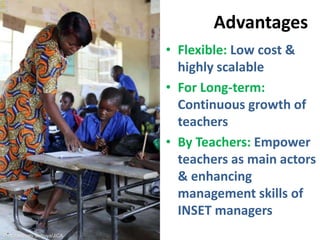
Advantages
• Flexible: Low cost &
highly scalable
• For Long-term:
Continuous growth of
teachers
• By Teachers: Empower
teachers as main actors
& enhancing
management skills of
INSET managers
Photo: Atsushi Shibuya/JICA
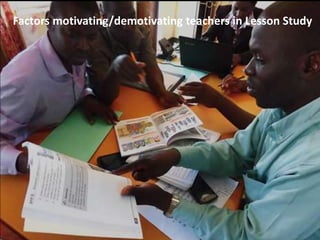
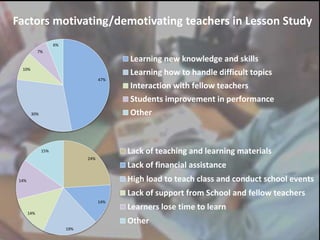
Factors motivating/demotivating teachers in Lesson Study
47%
30%
10%
7%
6%
Learning new knowledge and skills
Learning how to handle difficult topics
Interaction with fellow teachers
Students improvement in performance
Other
24%
14%
19%
14%
14%
15% Lack of teaching and learning materials
Lack of financial assistance
High load to teach class and conduct school events
Lack of support from School and fellow teachers
Learners lose time to learn
Other
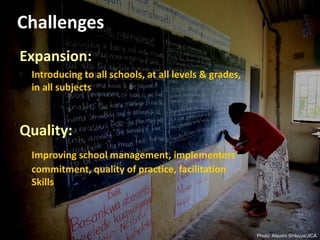
Challenges
Expansion:
Introducing to all schools, at all levels & grades,
in all subjects
Quality:
Improving school management, implementers’
commitment, quality of practice, facilitation
Skills
Photo: Atsushi Shibuya/JICA
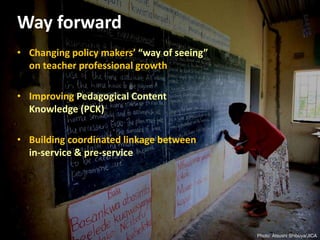
Way forward
• Changing policy makers’ “way of seeing”
on teacher professional growth
• Improving Pedagogical Content
Knowledge (PCK)
• Building coordinated linkage between
in-service & pre-service
Photo: Atsushi Shibuya/JICA
Knowledge Dissemination
Zambia’s experience in Lesson Study has been shared widely:
• Millions Learning project of the Brookings Institution
• Presented at international conferences (eg, Association for the
Development of Education in Africa (ADEA), World Association
of Lesson Studies (WALS)), etc.
References
• Banda B., Nakai K. (2016). Overview of the 1st decade for conducting lesson study in
Zambia, Presentation made at ADEA Northern Africa consultative meeting. 13-14 July
2016. Rabat, Morocco.
• Jung H.Y., et al., (2016). Lesson Study: Scaling up peer to peer learning for teachres in
Zambia, Center for Universal Education, The Brookings Institution
• Ministry of Education (2010). Report on the impact assessment of the school-based
continuing professional development programme in Central province. Oct. 2010.
Lusaka, Zambia.
• Ministry of Education, Science, Vocational Training and Early Education (2015). Project
for improvement of pedagogical content knowledge (IPeCK): Linking pre-service and in-
service education. Project document 2016-2019. March 2015. Lusaka, Zambia
• Ministry of General Education & JICA (2015). Completion report on the technical
cooperation project for Strengthening Teachers’ Performance and Skills (STEPS) through
School-Based Continuing Professional Development. December 2015. Lusaka, Zambia.
• Mumba C., Hama Y. (2014). Assessment of lesson study activities toward quality
improvement and teacher motivation in Zambia, Poster presentation at 2014 WALS
international conference. Nov. 2014, Bandung, Indonesia
Lesson Study
Continuous Professional Development
for Teachers
A case from Zambia
Photo: Atsushi Shibuya/JICA
Thank you.
Japan International Cooperation Agency

Lesson Study Continuous Professional Development for Teachers A case from Zambia

  • 1.
    Lesson Study Continuous ProfessionalDevelopment for Teachers A case from Zambia Photo: Atsushi Shibuya/JICA 9th Policy Dialogue Forum International Taskforce on Teachers 3-7 December 2016 Japan International Cooperation Agency
  • 2.
    Lesson Study • Peer-to-peerlearning for in-service teachers to support their professional growth • A lesson observed by fellow teachers and post-lesson discussion held to reflect/improve these lessons • Teachers learn how to improve learner-centered teaching methods and develop students’ problem solving and critical thinking skills • Motivating teachers with systematic peer support, encouraging teamwork, as well as improving supervision of school managers to strengthen school systems Photo: Atsushi Shibuya/JICA
  • 3.
    PLAN DO SEE Defining Problems Planning aLesson Conducting the Lesson Debriefing the Lesson Revising the Lesson Conducting the revised Lesson Reviewing the Lesson Compiling Learning 1 2 3 4 5 6 7 8 The 8 Step Cycle of Lesson Study in Zambia
  • 4.
    Why Lesson Studywas Introduced in Zambia • Low learner performance in assessments (eg, National Examination, SACMEQ) • Greater demands for a sustainable and cost-effective CPD programme • Implementation Framework was in place but without systematic, structured practice Photo: Atsushi Shibuya/JICA
  • 5.
    Lesson Study for ImprovingQuality of Education • Aligned with and introduced under the National Education Policy • Integrated into an existing program (SPRINT) • Government programme assisted by technical cooperation projects of JICA Photo: Atsushi Shibuya/JICA
  • 6.
    Scaling Lesson Study 20062008 2011 2015 1province 3provinces 10 provinces 1,989 teachers 20,000 pupils 213 schools 14,035 teachers 560,000 pupils 1,057 schools 46,058 teachers 1,640,000 pupils 3,121 schools (MGE & JICA, 2015, Completion Report of STEPS Project) 2023 100,000 teachers 3,800,000 pupils 9,500 schools
  • 7.
    Effect & Impact Evaluationof Teachers’ Skills Examination Pass rate for Science (MGE & JICA, 2015, Completion Report of STEPS Project) (MoE & JICA, 2010, Impact Survey of Lesson Study)
  • 8.
    R=.70, p<.01 Effect &Impact Correlation between pass rate & CPD implementation level (MGE & JICA, 2010, Completion Report of STEPS Project)
  • 9.
    What is averagespeed if we move 12km in 3 hours? Rona walked 12km in 3 hours. Jane walked 9km in 2hours. Who walked faster than the other? How do birds’ beaks relate to their diet? Why eagles have different beaks from those of pigeons? Effect & Impact
  • 10.
    Advantages • Flexible: Lowcost & highly scalable • For Long-term: Continuous growth of teachers • By Teachers: Empower teachers as main actors & enhancing management skills of INSET managers Photo: Atsushi Shibuya/JICA
  • 11.
  • 12.
    Factors motivating/demotivating teachersin Lesson Study 47% 30% 10% 7% 6% Learning new knowledge and skills Learning how to handle difficult topics Interaction with fellow teachers Students improvement in performance Other 24% 14% 19% 14% 14% 15% Lack of teaching and learning materials Lack of financial assistance High load to teach class and conduct school events Lack of support from School and fellow teachers Learners lose time to learn Other
  • 13.
    Challenges Expansion: Introducing to allschools, at all levels & grades, in all subjects Quality: Improving school management, implementers’ commitment, quality of practice, facilitation Skills Photo: Atsushi Shibuya/JICA
  • 14.
    Way forward • Changingpolicy makers’ “way of seeing” on teacher professional growth • Improving Pedagogical Content Knowledge (PCK) • Building coordinated linkage between in-service & pre-service Photo: Atsushi Shibuya/JICA
  • 15.
    Knowledge Dissemination Zambia’s experiencein Lesson Study has been shared widely: • Millions Learning project of the Brookings Institution • Presented at international conferences (eg, Association for the Development of Education in Africa (ADEA), World Association of Lesson Studies (WALS)), etc.
  • 16.
    References • Banda B.,Nakai K. (2016). Overview of the 1st decade for conducting lesson study in Zambia, Presentation made at ADEA Northern Africa consultative meeting. 13-14 July 2016. Rabat, Morocco. • Jung H.Y., et al., (2016). Lesson Study: Scaling up peer to peer learning for teachres in Zambia, Center for Universal Education, The Brookings Institution • Ministry of Education (2010). Report on the impact assessment of the school-based continuing professional development programme in Central province. Oct. 2010. Lusaka, Zambia. • Ministry of Education, Science, Vocational Training and Early Education (2015). Project for improvement of pedagogical content knowledge (IPeCK): Linking pre-service and in- service education. Project document 2016-2019. March 2015. Lusaka, Zambia • Ministry of General Education & JICA (2015). Completion report on the technical cooperation project for Strengthening Teachers’ Performance and Skills (STEPS) through School-Based Continuing Professional Development. December 2015. Lusaka, Zambia. • Mumba C., Hama Y. (2014). Assessment of lesson study activities toward quality improvement and teacher motivation in Zambia, Poster presentation at 2014 WALS international conference. Nov. 2014, Bandung, Indonesia
  • 17.
    Lesson Study Continuous ProfessionalDevelopment for Teachers A case from Zambia Photo: Atsushi Shibuya/JICA Thank you. Japan International Cooperation Agency

Editor's Notes

  • #3 -Zambia, through the Ministry of General Education, recognizes the important role that teachers play in meeting the challenges of providing quality education -The Education Policy (1996) states that the quality and effectiveness of any education system largely depends on the quality of its teachers as they are the single most important resource and determinant of success in meeting the education system’s goals - At school level the quality of education suffered as could be evidence by the results of the National Assessment Surveys that are carried out every two years.
  • #5 -Zambia, through the Ministry of General Education, recognizes the important role that teachers play in meeting the challenges of providing quality education -The Education Policy (1996) states that the quality and effectiveness of any education system largely depends on the quality of its teachers as they are the single most important resource and determinant of success in meeting the education system’s goals - At school level the quality of education suffered as could be evidence by the results of the National Assessment Surveys that are carried out every two years.