+
World Association of Lesson
Study
3 September, 2016
@DrGaryJones
Jones.gary@gmail.com
http://evidencebasededucationalleadership.blogspot.com
+
My argument is ….
 Education is plagued by both fads and zombie ideas
 When introducing new or old ideas and practices to schools and
classrooms, school leaders and teachers should use some form of
disciplined inquiry, for example, evidence-based practice (EBP)
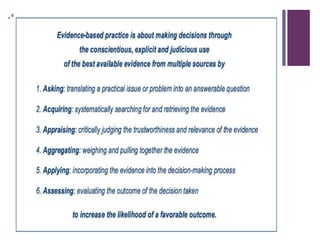
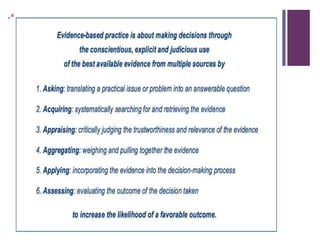
 EBP involves making a decision through a conscientious, explicit and
judicious use of the best available evidence from a multiple of sources
– so as to increase the likelihood of a favourable outcome
 If such a process is applied to Lesson Study (LS) within a school,
although the adoption of LS has the potential to provide benefits – a
small-scale pilot might be appropriate.
 Nevertheless, – it is a judgment call – which depends upon on the
phronesis of school leaders and the particular needs of the school.

+
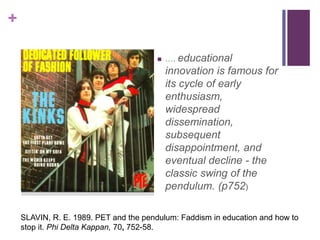
 …. educational
innovation is famous for
its cycle of early
enthusiasm,
widespread
dissemination,
subsequent
disappointment, and
eventual decline - the
classic swing of the
pendulum. (p752)
SLAVIN, R. E. 1989. PET and the pendulum: Faddism in education and how to
stop it. Phi Delta Kappan, 70, 752-58.
+
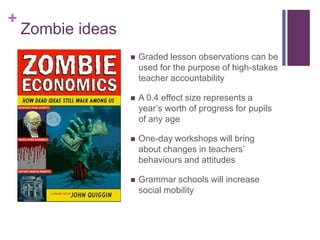
Zombie ideas
 Graded lesson observations can be
used for the purpose of high-stakes
teacher accountability
 A 0.4 effect size represents a
year’s worth of progress for pupils
of any age
 One-day workshops will bring
about changes in teachers’
behaviours and attitudes
 Grammar schools will increase
social mobility
+
Evidence-based practice
+
Evidence-based medicine : a
definition
 … the conscientious, explicit, and judicious use of current
best evidence in making decisions about the care of individual
patients. The practice of evidence based medicine means
integrating individual clinical expertise with the best
available external clinical evidence from systematic
research. By individual clinical expertise we mean the
proficiency and judgment that individual clinicians acquire
through clinical experience and clinical practice. Increased
expertise is reflected in many ways, but especially in more
effective and efficient diagnosis and in the more thoughtful
identification and compassionate use of individual patients'
predicaments, rights, and preferences in making clinical
decisions about their care
DAVID L SACKETT, W. M. C. R., J A MUIR GRAY, R BRIAN HAYNES, W
SCOTT & RICHARDSON 1996. Evidence based medicine: what it is and what it
isn't. British Medical Journal, 312, 71-72.
+
+
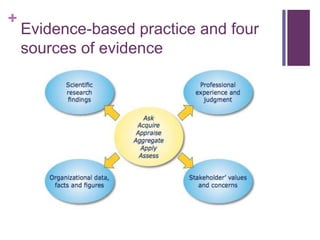
Evidence-based practice and four
sources of evidence
+
Misconceptions associated with
evidence-based practice

 Evidence-based practice ignores the expertise and
knowledge of teachers and head-teachers.
 Evidence-based practice is the same as research-
informed practice.
 Evidence-based practice involves teachers undertaking
research
 Evidence-based practice is all about numbers and
statistics.
+
Misconceptions associated with
evidence-based practice

 School Leaders need to make decisions quickly and
don’t have time for evidence-based practice.
 Each school is unique, so the usefulness of scientific
evidence is limited.
 If you do not have high-quality evidence, you cannot do
anything
 Good-quality evidence gives you the answer to the
problem.
+
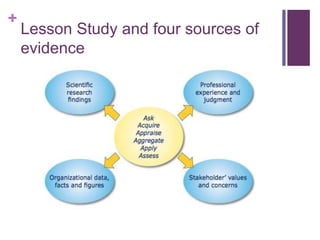
Lesson Study and four sources of
evidence
+
The Four Sources of
Evidence and Lesson Study
+
Scientific Research Findings

 Duration
 Rhythm
 Designed for participants’ needs
 Alignment
 Sense of purpose
 Content
 External facilitators
 Specialists
 Collaboration and peer learning
 Leadership around professional
learning
+
Scientific research findings
 Potential benefits of LS
 Teacher collaboration and
development of a
professional learning
community
 Development of professional
knowledge, practice and
professionalism
 More explicit focus on pupil
learning
 Improved quality of
classroom teaching and
learning
XU, H. & PEDDER, D. 2014. Lesson Study. Lesson Study, 29.
+
Causal evidence
 There is some evidence that Lesson
Study could have a positive impact in
English schools, but not yet enough to
justify scaling it up.
 An evaluation of the UK’s National
Strategies’ Leading Teachers
Programme, which involved Lesson
Study, showed that those schools using
this approach (among others) out-
performed a comparison group in both
English and Mathematics.
 Lesson Study also shares many of the
key characteristics of effective CPD that
were identified in a systematic review
produced by the Evidence for Policy and
Practice Information and Co-ordinating
Centre.
+
 The lesson study approach had broad appeal with headteachers
and staff but was adapted widely by leading teachers and, in some
instances, was not well understood as a process by supported
teachers.
 This raises issues as to the quality of the lesson study approach
that is developing in some schools. The preference for mainly
in‐house approaches to lesson study is also likely considerably to
reduce its effectiveness as a professional development tool.
 As lesson study is based on combining a broad approach to
improving children’s learning with a specific focus on a group of
children in a particular curriculum area, there is a danger that
adapting the approach in schools could become reductionist and
technicist, merely offering teaching tips and strategies.
HADFIELD, M., JOPLING, M. & EMIRA, M. 2011. Evaluation of the
National Strategies’ Primary Leading Teachers Programme. London,
Department for Education.
+
Expert opinion
 Lesson study is an extremely
time-consuming exercise
 There is little agreement about
what lesson study actually is
 May not be viable given teacher
workloads
 There is insufficient evidence
for its utility for it to be a priority
for schools
+
School data, facts and figures
 What are the current challenges facing the school ?
 What is the existing approach to professional learning
 Lesson observations
 Teachers as researchers/inquirers
 Professional learning community
 How strong is pupil voice within the school?
 How is the school located within networks – internal and external
 What curriculum and qualifications changes are being implemented?
 How stable is the senior team
 What resources are available?
 Financial
 Time
 Expertise
+
Views of stakeholders
 How do staff feel about the use of Lesson Study or other
approaches?
 Do they see downsides or unintended negative consequences?
 How do senior leaders and HODs feel about Lesson Study?
 How practical or workable do those responsible for implementing
the interventions feel?
 What do pupils feel about involvement in Lesson Study
 What alternative explanations and proposed solutions do others
have? Eg micro-teaching, peer-coaching, instructional rounds,
strategic inquiry
+
Personal experience
 Have I seen Lesson Study in use before?
 What happened?
 What are my beliefs about the successful teacher learning ?
 What’s worked in the past and why?
 What are my hunches?
 How relevant and applicable is my experience?
 Who do I know in similar circumstances who has used Lesson
Study or similar alternatives – did it work?
+
+
Making a decision
+
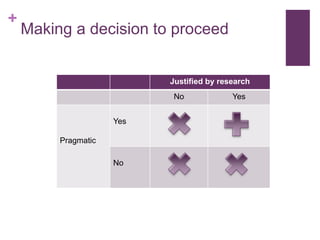
Making a decision to proceed
Justified by research
No Yes
Pragmatic
Yes
No
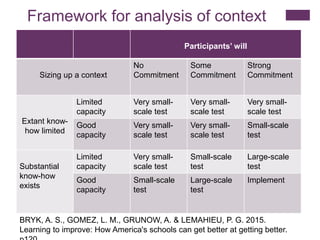
Framework for analysis of context
Participants’ will
Sizing up a context
No
Commitment
Some
Commitment
Strong
Commitment
Extant know-
how limited
Limited
capacity
Very small-
scale test
Very small-
scale test
Very small-
scale test
Good
capacity
Very small-
scale test
Very small-
scale test
Small-scale
test
Substantial
know-how
exists
Limited
capacity
Very small-
scale test
Small-scale
test
Large-scale
test
Good
capacity
Small-scale
test
Large-scale
test
Implement
BRYK, A. S., GOMEZ, L. M., GRUNOW, A. & LEMAHIEU, P. G. 2015.
Learning to improve: How America's schools can get better at getting better.
+
XU, H. & PEDDER, D. 2014.
Lesson Study. Lesson Study, 29.
 Majority of studies neglected to
address the processes through
which the impact of LS on
teacher learning and students
outcomes is achieved
 The majority of studies relied on
teachers’ accounts – need to
focus on different kinds of talk
and language
 Lack of attention to: micro-
politics, building trust, norms of
collegiality
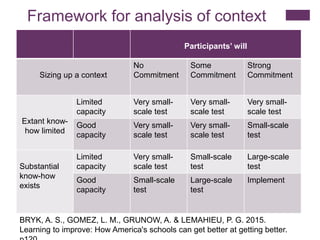
Framework for analysis of context
Participants’ will
Sizing up a context
No
Commitment
Some
Commitment
Strong
Commitment
Extant know-
how limited
Limited
capacity
Very small-
scale test
Very small-
scale test
Very small-
scale test
Good
capacity
Very small-
scale test
Very small-
scale test
Small-scale
test
Substantial
know-how
exists
Limited
capacity
Very small-
scale test
Small-scale
test
Large-scale
test
Good
capacity
Small-scale
test
Large-scale
test
Implement
BRYK, A. S., GOMEZ, L. M., GRUNOW, A. & LEMAHIEU, P. G. 2015.
Learning to improve: How America's schools can get better at getting better.
+
+
 What are the net, net consequences of all my options?
 What are my core obligations?
 What will work in the world as it is?
 Who are we?
 What can I live with?
+
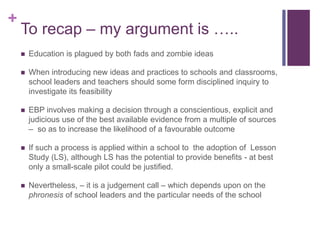
To recap – my argument is …..
 Education is plagued by both fads and zombie ideas
 When introducing new ideas and practices to schools and classrooms,
school leaders and teachers should some form disciplined inquiry to
investigate its feasibility
 EBP involves making a decision through a conscientious, explicit and
judicious use of the best available evidence from a multiple of sources
– so as to increase the likelihood of a favourable outcome
 If such a process is applied within a school to the adoption of Lesson
Study (LS), although LS has the potential to provide benefits - at best
only a small-scale pilot could be justified.
 Nevertheless, – it is a judgement call – which depends upon on the
phronesis of school leaders and the particular needs of the school
+
@DrGaryJones
jones.gary@gmail.com
http://evidencebasededucationalleadership.blogspot.com

V5 wals and lesson study 2016

  • 1.
    + World Association ofLesson Study 3 September, 2016 @DrGaryJones Jones.gary@gmail.com http://evidencebasededucationalleadership.blogspot.com
  • 2.
    + My argument is….  Education is plagued by both fads and zombie ideas  When introducing new or old ideas and practices to schools and classrooms, school leaders and teachers should use some form of disciplined inquiry, for example, evidence-based practice (EBP)  EBP involves making a decision through a conscientious, explicit and judicious use of the best available evidence from a multiple of sources – so as to increase the likelihood of a favourable outcome  If such a process is applied to Lesson Study (LS) within a school, although the adoption of LS has the potential to provide benefits – a small-scale pilot might be appropriate.  Nevertheless, – it is a judgment call – which depends upon on the phronesis of school leaders and the particular needs of the school.
  • 3.
    +  …. educational innovationis famous for its cycle of early enthusiasm, widespread dissemination, subsequent disappointment, and eventual decline - the classic swing of the pendulum. (p752) SLAVIN, R. E. 1989. PET and the pendulum: Faddism in education and how to stop it. Phi Delta Kappan, 70, 752-58.
  • 4.
    + Zombie ideas  Gradedlesson observations can be used for the purpose of high-stakes teacher accountability  A 0.4 effect size represents a year’s worth of progress for pupils of any age  One-day workshops will bring about changes in teachers’ behaviours and attitudes  Grammar schools will increase social mobility
  • 5.
  • 6.
    + Evidence-based medicine :a definition  … the conscientious, explicit, and judicious use of current best evidence in making decisions about the care of individual patients. The practice of evidence based medicine means integrating individual clinical expertise with the best available external clinical evidence from systematic research. By individual clinical expertise we mean the proficiency and judgment that individual clinicians acquire through clinical experience and clinical practice. Increased expertise is reflected in many ways, but especially in more effective and efficient diagnosis and in the more thoughtful identification and compassionate use of individual patients' predicaments, rights, and preferences in making clinical decisions about their care DAVID L SACKETT, W. M. C. R., J A MUIR GRAY, R BRIAN HAYNES, W SCOTT & RICHARDSON 1996. Evidence based medicine: what it is and what it isn't. British Medical Journal, 312, 71-72.
  • 8.
  • 9.
    + Evidence-based practice andfour sources of evidence
  • 10.
    + Misconceptions associated with evidence-basedpractice   Evidence-based practice ignores the expertise and knowledge of teachers and head-teachers.  Evidence-based practice is the same as research- informed practice.  Evidence-based practice involves teachers undertaking research  Evidence-based practice is all about numbers and statistics.
  • 11.
    + Misconceptions associated with evidence-basedpractice   School Leaders need to make decisions quickly and don’t have time for evidence-based practice.  Each school is unique, so the usefulness of scientific evidence is limited.  If you do not have high-quality evidence, you cannot do anything  Good-quality evidence gives you the answer to the problem.
  • 12.
    + Lesson Study andfour sources of evidence
  • 13.
    + The Four Sourcesof Evidence and Lesson Study
  • 14.
    + Scientific Research Findings  Duration  Rhythm  Designed for participants’ needs  Alignment  Sense of purpose  Content  External facilitators  Specialists  Collaboration and peer learning  Leadership around professional learning
  • 15.
    + Scientific research findings Potential benefits of LS  Teacher collaboration and development of a professional learning community  Development of professional knowledge, practice and professionalism  More explicit focus on pupil learning  Improved quality of classroom teaching and learning XU, H. & PEDDER, D. 2014. Lesson Study. Lesson Study, 29.
  • 16.
    + Causal evidence  Thereis some evidence that Lesson Study could have a positive impact in English schools, but not yet enough to justify scaling it up.  An evaluation of the UK’s National Strategies’ Leading Teachers Programme, which involved Lesson Study, showed that those schools using this approach (among others) out- performed a comparison group in both English and Mathematics.  Lesson Study also shares many of the key characteristics of effective CPD that were identified in a systematic review produced by the Evidence for Policy and Practice Information and Co-ordinating Centre.
  • 17.
    +  The lessonstudy approach had broad appeal with headteachers and staff but was adapted widely by leading teachers and, in some instances, was not well understood as a process by supported teachers.  This raises issues as to the quality of the lesson study approach that is developing in some schools. The preference for mainly in‐house approaches to lesson study is also likely considerably to reduce its effectiveness as a professional development tool.  As lesson study is based on combining a broad approach to improving children’s learning with a specific focus on a group of children in a particular curriculum area, there is a danger that adapting the approach in schools could become reductionist and technicist, merely offering teaching tips and strategies. HADFIELD, M., JOPLING, M. & EMIRA, M. 2011. Evaluation of the National Strategies’ Primary Leading Teachers Programme. London, Department for Education.
  • 18.
    + Expert opinion  Lessonstudy is an extremely time-consuming exercise  There is little agreement about what lesson study actually is  May not be viable given teacher workloads  There is insufficient evidence for its utility for it to be a priority for schools
  • 20.
    + School data, factsand figures  What are the current challenges facing the school ?  What is the existing approach to professional learning  Lesson observations  Teachers as researchers/inquirers  Professional learning community  How strong is pupil voice within the school?  How is the school located within networks – internal and external  What curriculum and qualifications changes are being implemented?  How stable is the senior team  What resources are available?  Financial  Time  Expertise
  • 21.
    + Views of stakeholders How do staff feel about the use of Lesson Study or other approaches?  Do they see downsides or unintended negative consequences?  How do senior leaders and HODs feel about Lesson Study?  How practical or workable do those responsible for implementing the interventions feel?  What do pupils feel about involvement in Lesson Study  What alternative explanations and proposed solutions do others have? Eg micro-teaching, peer-coaching, instructional rounds, strategic inquiry
  • 22.
    + Personal experience  HaveI seen Lesson Study in use before?  What happened?  What are my beliefs about the successful teacher learning ?  What’s worked in the past and why?  What are my hunches?  How relevant and applicable is my experience?  Who do I know in similar circumstances who has used Lesson Study or similar alternatives – did it work?
  • 23.
  • 24.
  • 25.
    + Making a decisionto proceed Justified by research No Yes Pragmatic Yes No
  • 27.
    Framework for analysisof context Participants’ will Sizing up a context No Commitment Some Commitment Strong Commitment Extant know- how limited Limited capacity Very small- scale test Very small- scale test Very small- scale test Good capacity Very small- scale test Very small- scale test Small-scale test Substantial know-how exists Limited capacity Very small- scale test Small-scale test Large-scale test Good capacity Small-scale test Large-scale test Implement BRYK, A. S., GOMEZ, L. M., GRUNOW, A. & LEMAHIEU, P. G. 2015. Learning to improve: How America's schools can get better at getting better.
  • 28.
    + XU, H. &PEDDER, D. 2014. Lesson Study. Lesson Study, 29.  Majority of studies neglected to address the processes through which the impact of LS on teacher learning and students outcomes is achieved  The majority of studies relied on teachers’ accounts – need to focus on different kinds of talk and language  Lack of attention to: micro- politics, building trust, norms of collegiality
  • 29.
    Framework for analysisof context Participants’ will Sizing up a context No Commitment Some Commitment Strong Commitment Extant know- how limited Limited capacity Very small- scale test Very small- scale test Very small- scale test Good capacity Very small- scale test Very small- scale test Small-scale test Substantial know-how exists Limited capacity Very small- scale test Small-scale test Large-scale test Good capacity Small-scale test Large-scale test Implement BRYK, A. S., GOMEZ, L. M., GRUNOW, A. & LEMAHIEU, P. G. 2015. Learning to improve: How America's schools can get better at getting better.
  • 30.
  • 31.
    +  What arethe net, net consequences of all my options?  What are my core obligations?  What will work in the world as it is?  Who are we?  What can I live with?
  • 32.
    + To recap –my argument is …..  Education is plagued by both fads and zombie ideas  When introducing new ideas and practices to schools and classrooms, school leaders and teachers should some form disciplined inquiry to investigate its feasibility  EBP involves making a decision through a conscientious, explicit and judicious use of the best available evidence from a multiple of sources – so as to increase the likelihood of a favourable outcome  If such a process is applied within a school to the adoption of Lesson Study (LS), although LS has the potential to provide benefits - at best only a small-scale pilot could be justified.  Nevertheless, – it is a judgement call – which depends upon on the phronesis of school leaders and the particular needs of the school
  • 34.

Editor's Notes

  • #4 The upswing The programme is proposed The programme is piloted The programme is introduced into innovative schools or MATs The programme becomes a hot-topic amongst staff-developers The programme expands rapidly Controlled evaluations begin The downswing Innovative schools move to other programmes Complaints surface in professional publications Preliminary evaluations are disappointing Developer claims that disappointing results are due to poor implementation. Interest in the programme flags Controlled evaluation studies are published - invariably with disappointing results
  • #5 The ideas of economists and political philosophers, both when they are right and when they are wrong, are more powerful than is commonly understood. Indeed the world is ruled by little else. Practical men, who believe themselves to be quite exempt from any intellectual influences, are usually the slaves of some defunct economist. JM Keynes
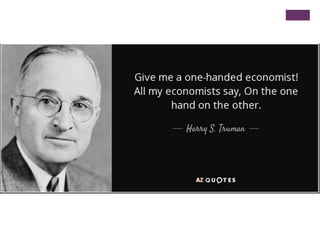
  • #9 Let’s look at this in more details Practitioner expertise – have I seen this before, what happened, what worked in the past, what are my hunches, has this happened elsewhere Local context – what data do you have available, what do local leaders and managers think what is going on, what are the costs and benefits Research evidence – what research is available, how good is the research, is it applicable, what actions/interventions could be taken Perspectives – what students think about the issues at hand, what do staff think, are the interventions workable, what alternative explanations are there What it’s not Cannot use judgment – expertise is relevant Evidence can prove things – provides indications of what might work and informs decisions Doing what the research evidence tells us – no one of 4 sources of evidence
  • #12 Drucker – repetition of familiar problems disguised in uniquenss
  • #28 Apply different to school – Very-small – volunteers – small scale – department – large-scale – year group or key stage – implement – whole school
  • #30 Apply different to school – Very-small – volunteers – small scale – department – large-scale – year group or key stage – implement – whole school
  • #31 Let’s look at this in more details Practitioner expertise – have I seen this before, what happened, what worked in the past, what are my hunches, has this happened elsewhere Local context – what data do you have available, what do local leaders and managers think what is going on, what are the costs and benefits Research evidence – what research is available, how good is the research, is it applicable, what actions/interventions could be taken Perspectives – what students think about the issues at hand, what do staff think, are the interventions workable, what alternative explanations are there What it’s not Cannot use judgment – expertise is relevant Evidence can prove things – provides indications of what might work and informs decisions Doing what the research evidence tells us – no one of 4 sources of evidence