Lesson One Defining Rhetoric Neijiang Normal University  -  Week One  -  Brent A. Simoneaux
“ A piece of writing that has been copied from someone else and is presented as being your own work. ” Plagiarism  剽窃  \`plā-jə-,ri-zəm\   (noun)   :
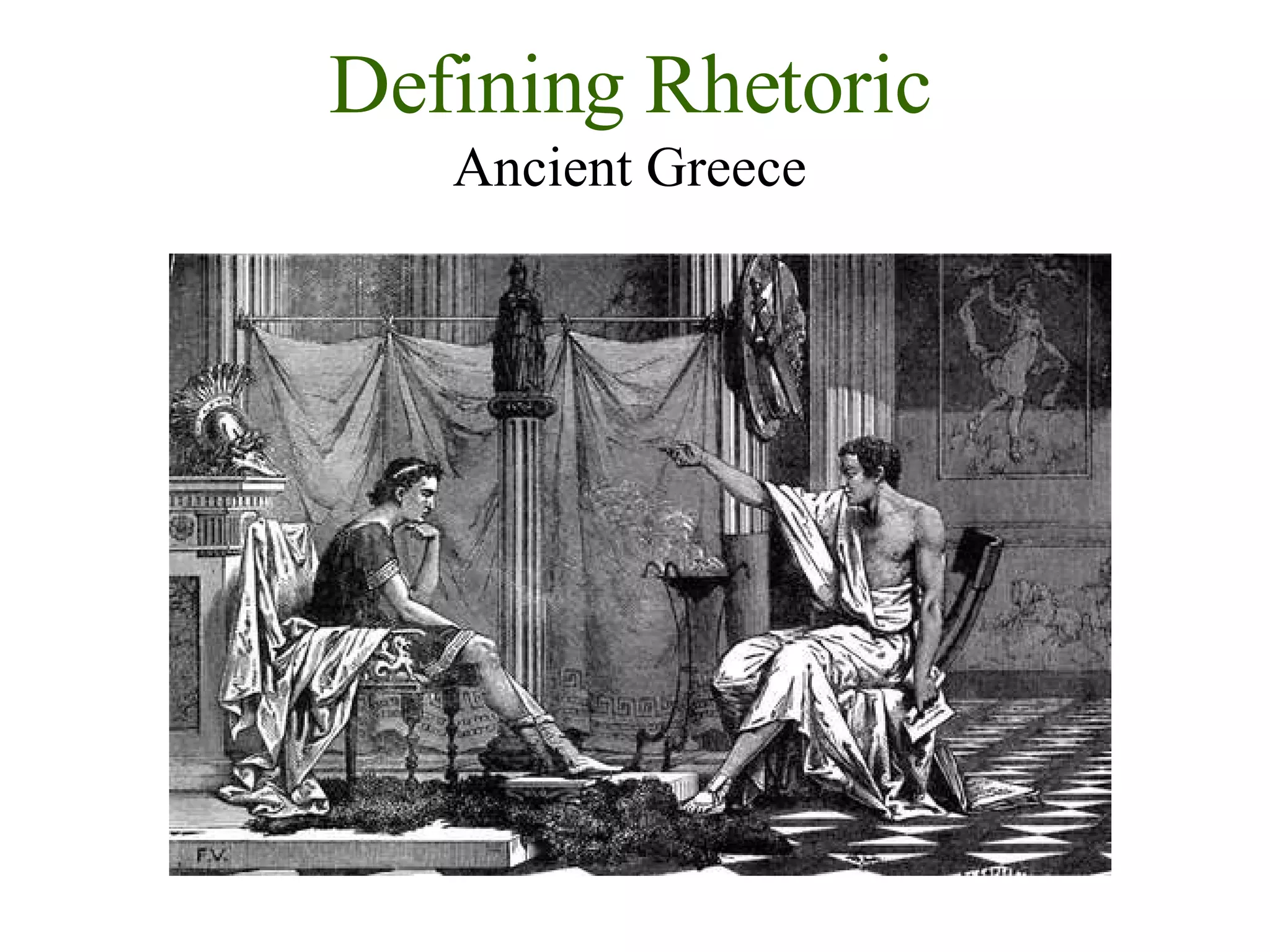
Defining Rhetoric Ancient Greece
Rhetoric  修辞学   \`re-tə-rik\ (noun) : “ The skill of using language in speech or writing in a special way that influences or persuades people”
Rhetoric  修辞学   Extrapolating Meaning A skill, an art Making choices
Five Assumptions About  Rhetoric 1. Rhetoric is both a field of humane study and a  pragmatic art ; that is, we can read about it as well as practice it. 2. The practice of rhetoric is  culturally determined . 3. When we practice rhetoric, we use language to ‘ induce cooperation ’ in an audience.
Five Assumptions About  Rhetoric 4.  The purpose of rhetoric, inducing cooperation, involves  more that mere persuasion , narrowly defined. Discourse  ( 演说 )  that affects an audience, that informs, moves, delights, and teaches, has a rhetorical aim. 5.  Rhetoric implies  choices , for both the writer and the audience.
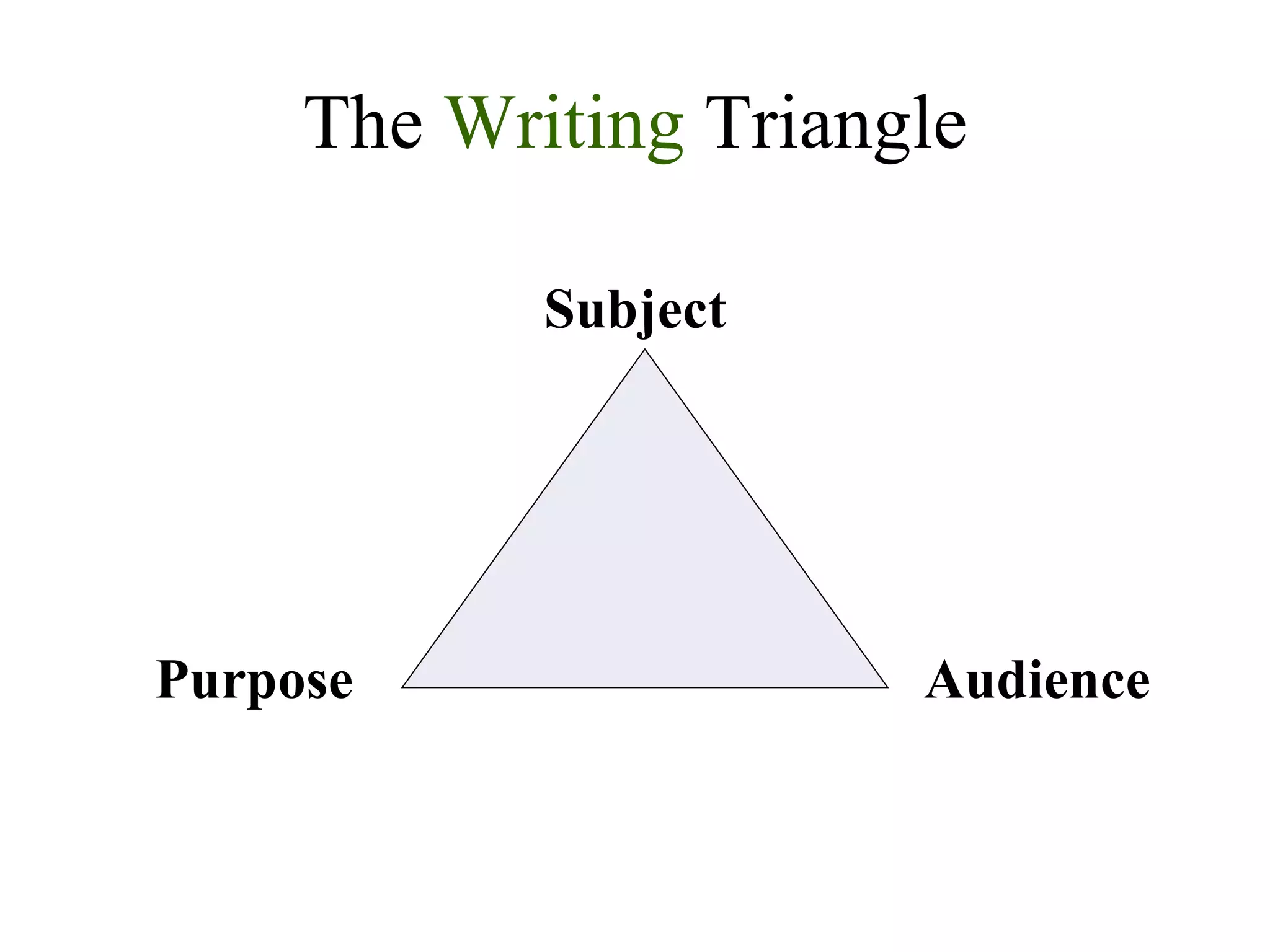
Subject Purpose Audience The  Writing  Triangle
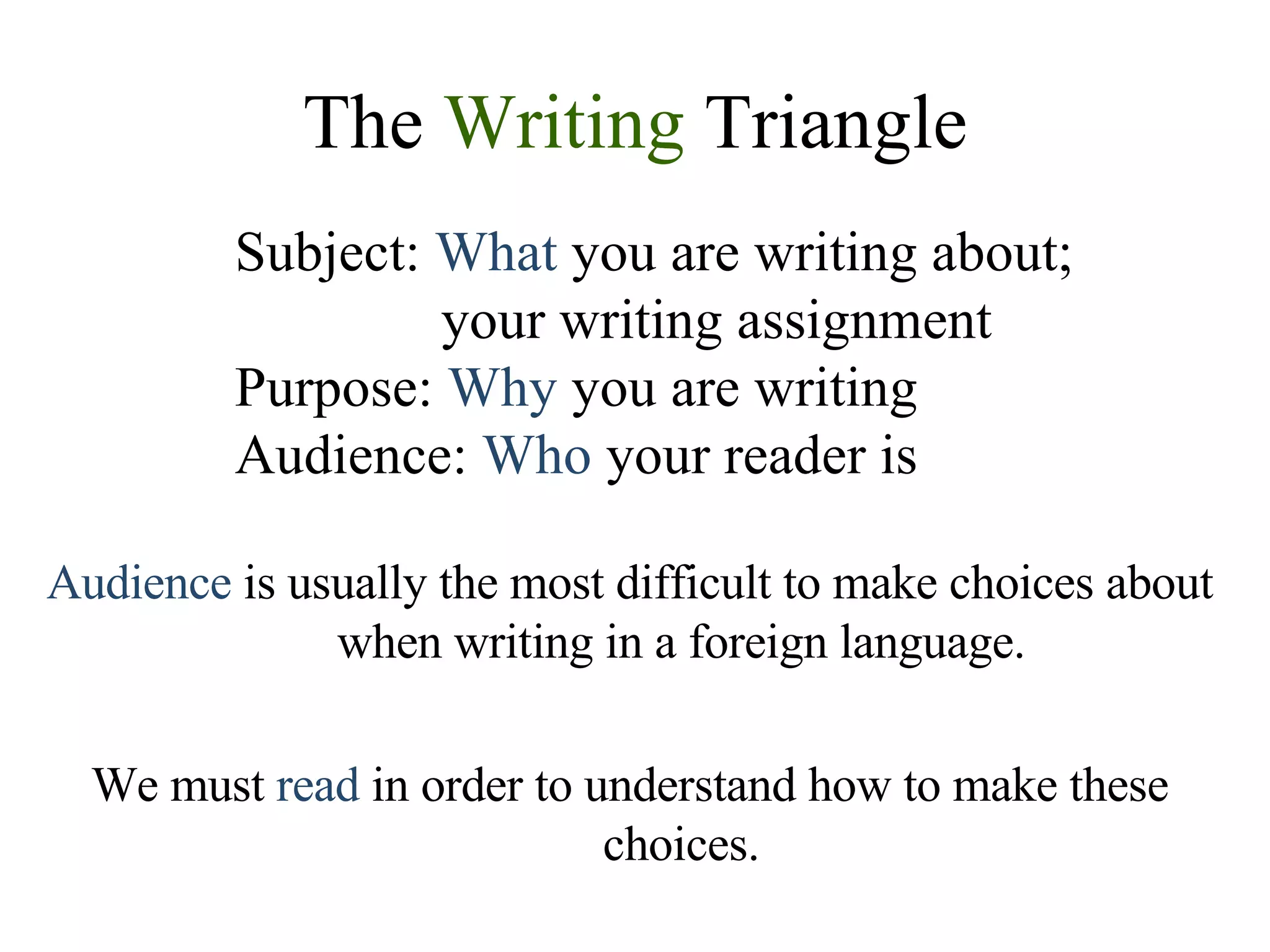
Audience  is usually the most difficult to make choices about when writing in a foreign language. We must  read  in order to understand how to make these choices. The  Writing  Triangle Subject:  What  you are writing about; your writing assignment Purpose:  Why  you are writing Audience:  Who  your reader is
Writing is the skill of conscientiously making choices based on  t he  w riting  t riangle . The  Writing  Triangle
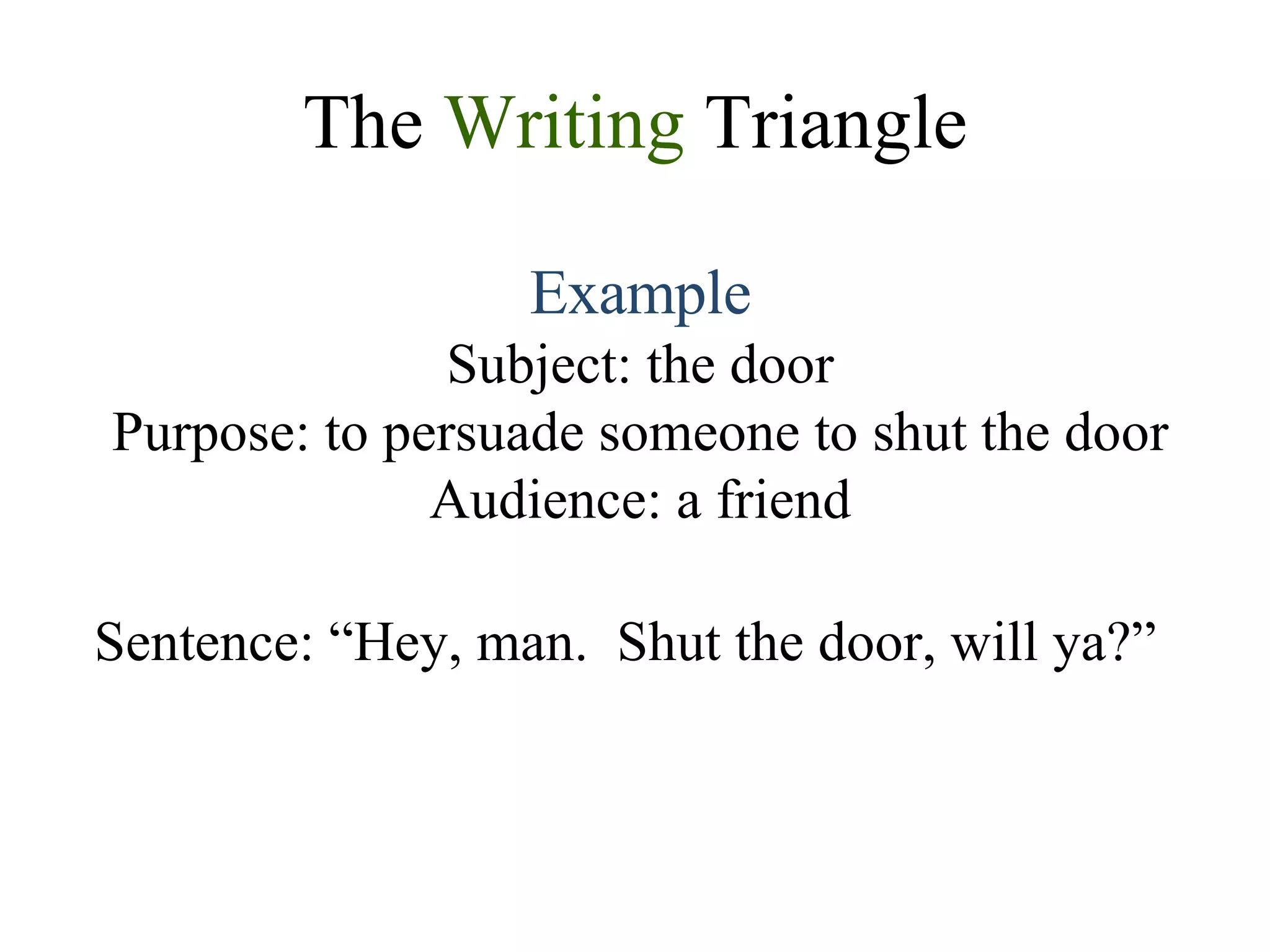
The  Writing  Triangle Example Subject: the door Purpose: to persuade someone to shut the door Audience: a friend Sentence: “Hey, man.  Shut the door, will ya?”
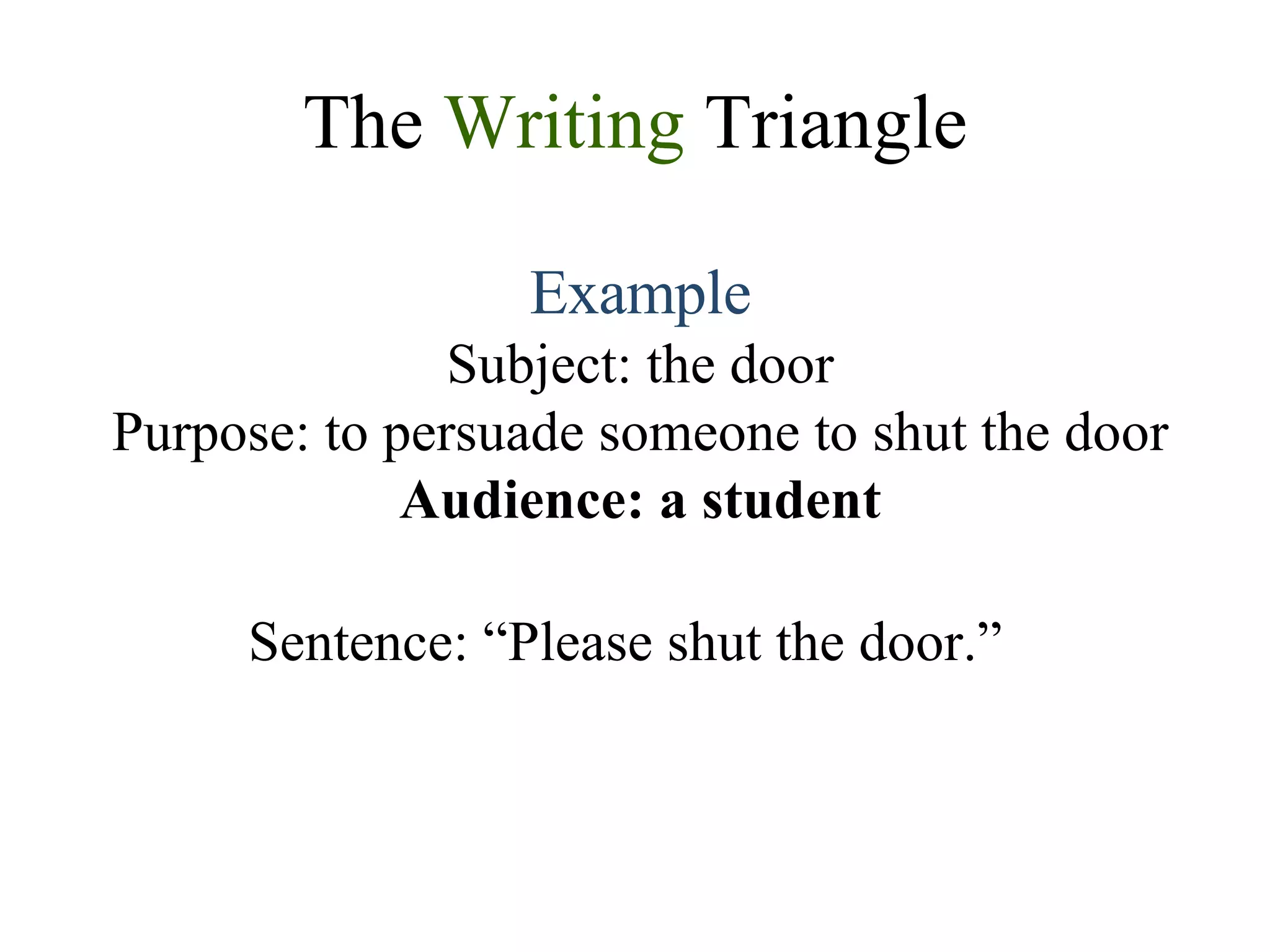
The  Writing  Triangle Example Subject: the door Purpose: to persuade someone to shut the door Audience: a student Sentence: “Please shut the door.”
The  Writing  Triangle Example Subject: the door Purpose: to persuade someone to shut the door Audience: my son Sentence: “How many times do I have to tell you?  Shut the door!”
This semester, we will be learning how to  identify the elements  in the writing triangle and learning how these elements  affect the choices  we make when we are writing.  The  Writing  Triangle
Next  Week Making Choices:  The Dimensions of Language
The  Writing  Assignment Write one or two paragraphs in which you describe and/or explain to one of your classmates your like or dislike for writing in English. Length : 100 - 200 words Due at the beginning of next week’s class.
The  Reading  Assignment Preview Chapter 2, pgs 17-28 for next week’s class

Lesson One: Defining Rhetoric

  • 1.
    Lesson One DefiningRhetoric Neijiang Normal University - Week One - Brent A. Simoneaux
  • 2.
    “ A pieceof writing that has been copied from someone else and is presented as being your own work. ” Plagiarism 剽窃 \`plā-jə-,ri-zəm\ (noun) :
  • 3.
  • 4.
    Rhetoric 修辞学 \`re-tə-rik\ (noun) : “ The skill of using language in speech or writing in a special way that influences or persuades people”
  • 5.
    Rhetoric 修辞学 Extrapolating Meaning A skill, an art Making choices
  • 6.
    Five Assumptions About Rhetoric 1. Rhetoric is both a field of humane study and a pragmatic art ; that is, we can read about it as well as practice it. 2. The practice of rhetoric is culturally determined . 3. When we practice rhetoric, we use language to ‘ induce cooperation ’ in an audience.
  • 7.
    Five Assumptions About Rhetoric 4. The purpose of rhetoric, inducing cooperation, involves more that mere persuasion , narrowly defined. Discourse ( 演说 ) that affects an audience, that informs, moves, delights, and teaches, has a rhetorical aim. 5. Rhetoric implies choices , for both the writer and the audience.
  • 8.
    Subject Purpose AudienceThe Writing Triangle
  • 9.
    Audience isusually the most difficult to make choices about when writing in a foreign language. We must read in order to understand how to make these choices. The Writing Triangle Subject: What you are writing about; your writing assignment Purpose: Why you are writing Audience: Who your reader is
  • 10.
    Writing is theskill of conscientiously making choices based on t he w riting t riangle . The Writing Triangle
  • 11.
    The Writing Triangle Example Subject: the door Purpose: to persuade someone to shut the door Audience: a friend Sentence: “Hey, man. Shut the door, will ya?”
  • 12.
    The Writing Triangle Example Subject: the door Purpose: to persuade someone to shut the door Audience: a student Sentence: “Please shut the door.”
  • 13.
    The Writing Triangle Example Subject: the door Purpose: to persuade someone to shut the door Audience: my son Sentence: “How many times do I have to tell you? Shut the door!”
  • 14.
    This semester, wewill be learning how to identify the elements in the writing triangle and learning how these elements affect the choices we make when we are writing. The Writing Triangle
  • 15.
    Next WeekMaking Choices: The Dimensions of Language
  • 16.
    The Writing Assignment Write one or two paragraphs in which you describe and/or explain to one of your classmates your like or dislike for writing in English. Length : 100 - 200 words Due at the beginning of next week’s class.
  • 17.
    The Reading Assignment Preview Chapter 2, pgs 17-28 for next week’s class