Kuliah Proses Komunikasi
                      Oleh Coky Fauzi Alfi
             cokyfauzialfi.wordpress.com


VISUAL RHETORIC
Topics

•   Define: Visual Rhetoric
•   Characteristics of Visual Rhetoric
•   Rhetorical Figures
•   The Model of Visual Rhetoric
•   The Genre of Photojournalism
Classical rhetoric as applied to arguments
was concerned with the means of giving the
greatest possible persuasive power to the
written or spoken word.

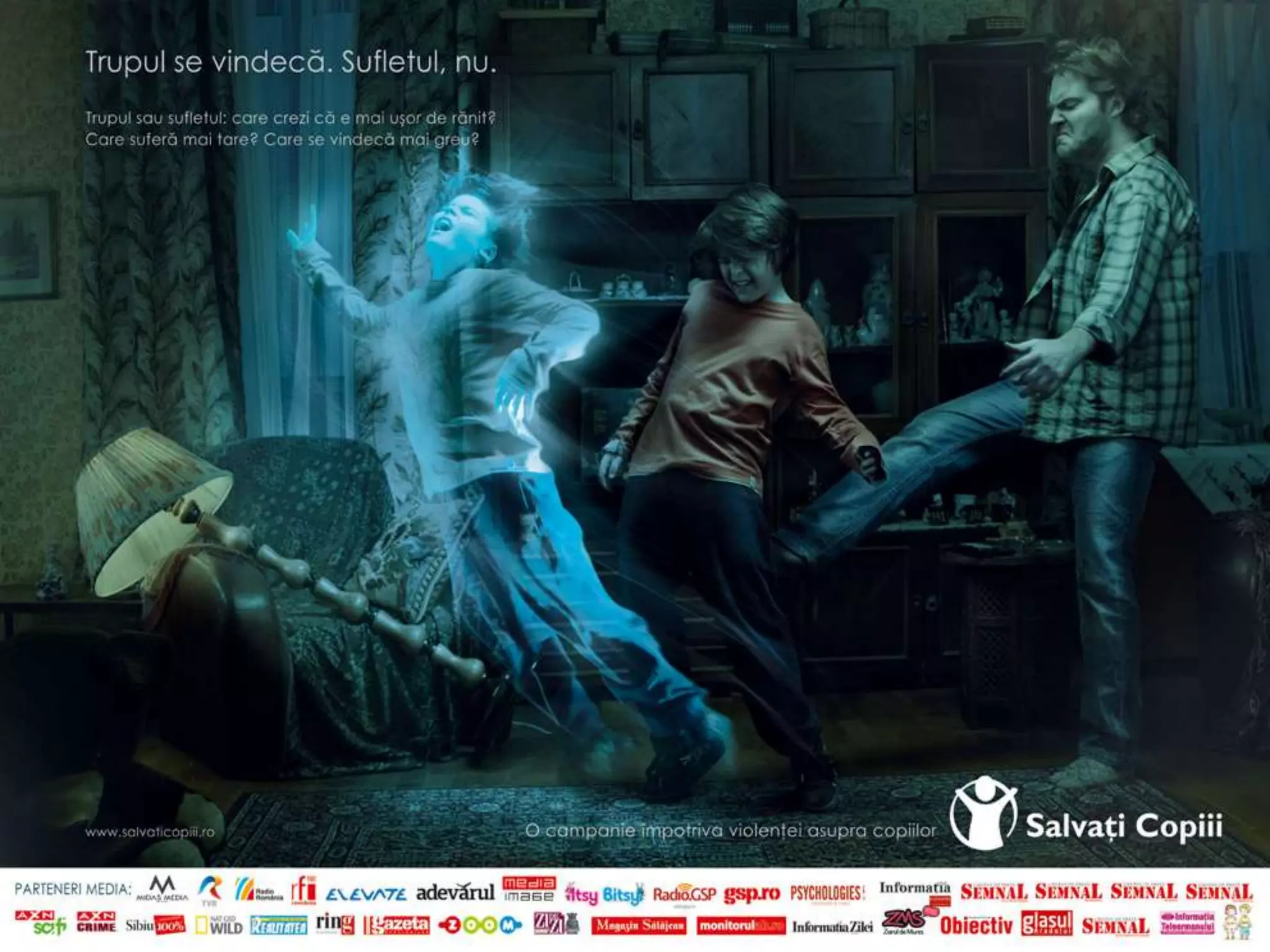
Pictures can also, like words be used to pose
arguments, raise questions, create fictions,
present metaphors, or even mount a critique
and are not intended as faithful copies of
reality.
Define: Visual Rhetoric
Sonja K. Foss generally defined
visual rhetoric as the study of the
use of visual symbols to influence
and manage meanings.
Rhetoric is the art of persuasion and gives
possibilities to the designer to construct
appropriate messages.

The purpose of rhetoric is the efficient use
of language in order to shape attitudes in
others and influence their behavior.

It operates on the basis of logical and esthetic
modes to affect interaction in both a rational
and an emotional way.
Characteristics of Visual
Rhetoric
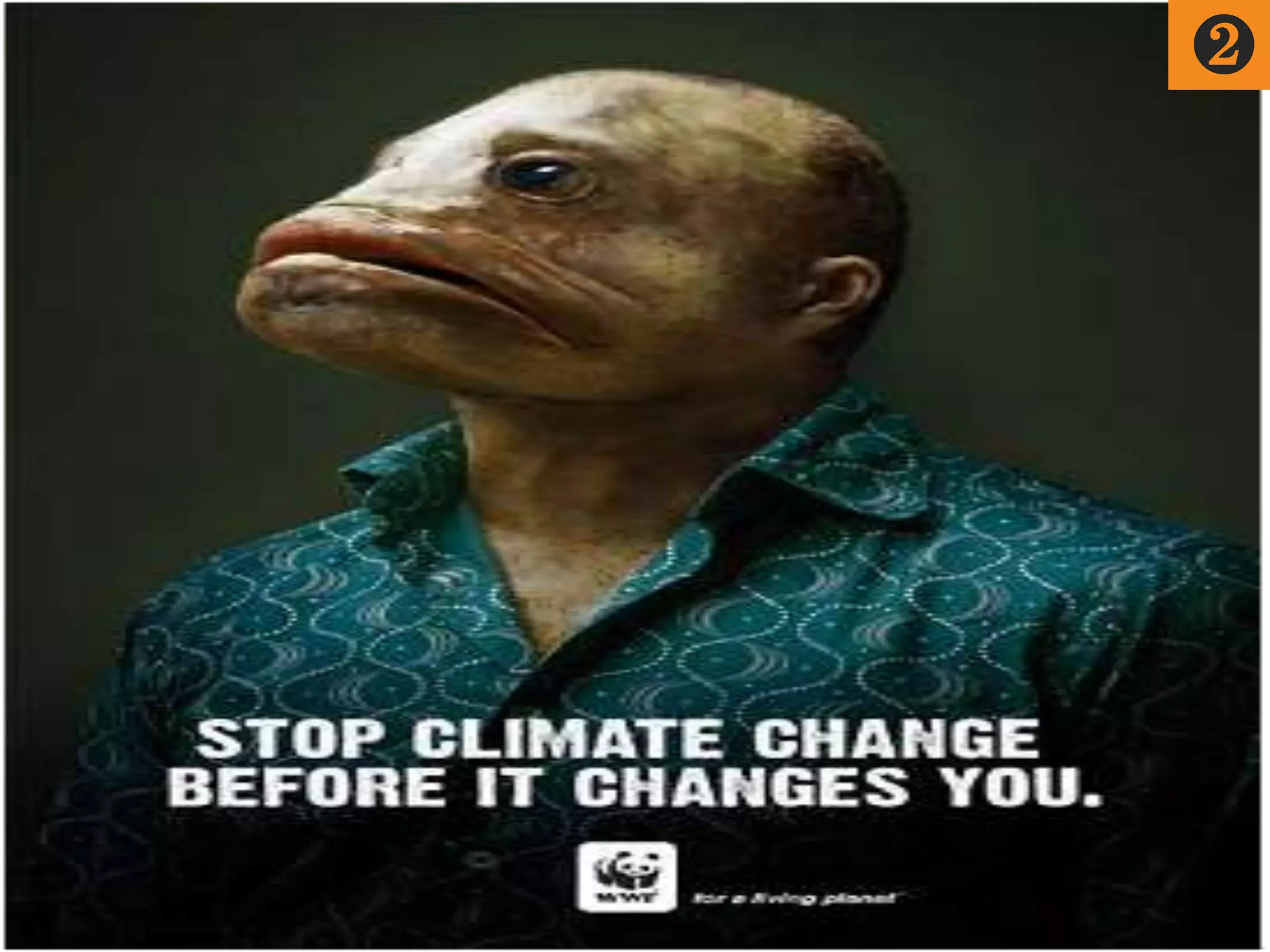
Not every visual object is visual rhetoric.

What turns a visual object into a
communicative artifact—a symbol that
communicates and can be studied as
rhetoric—is the presence of three
characteristics.
3 Characteristics of Visual Rhetoric
• Symbolic Action
 To qualify as visual rhetoric, an image must go beyond serving
 as a sign, however, and be symbolic, with that image only
 indirectly connected to its referent.
• Human Intervention
 Visual rhetoric requires human action in the process of
 creation and in the process of interpretation.
• Presence of an Audience
 Visual elements are arranged and modified by a rhetor
 not simply for self-expression but also for communication
 with an audience.
Rhetorical Figures
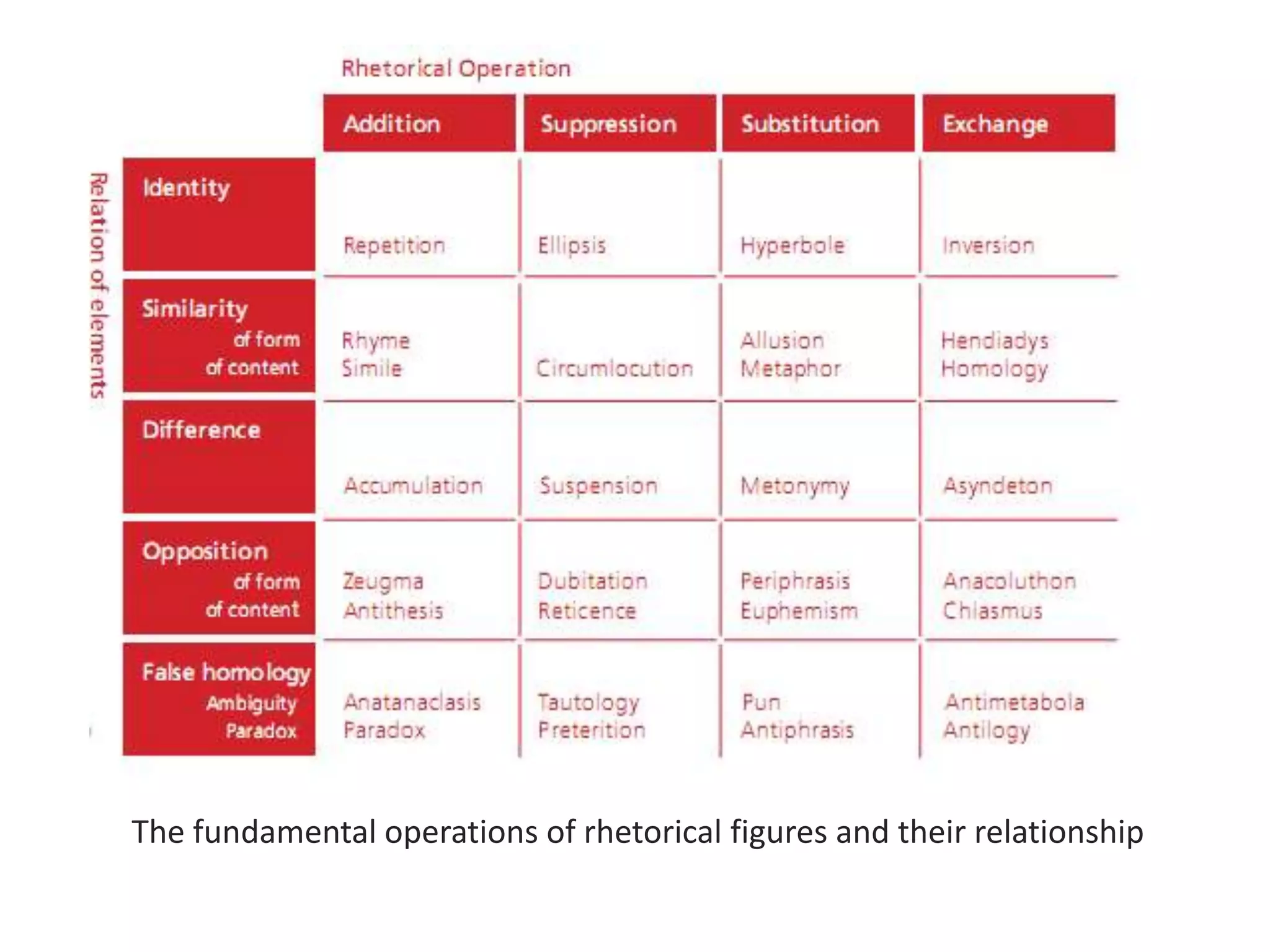
The fundamental operations of rhetorical figures and their relationship
Relation
1. Identity: is created when the significance between two
    elements is identical
2. Similarity: there is at least one significant relation in form or
    content between two elements
3. Difference: the relation between two elements differ totally,
    one element is totally different than the other
4. Opposition: at least one relation between two elements in
    form or content are opposed
5. False homology: two elements are compared, however there
    is no resemblance in reality between the elements, like a
    paradox
Rhetorical Operation
• Addition: One or more elements are added to the proposition
  (repetition is seen as addition of identical elements)
• Suppression: One or more elements of the proposition are
  suppressed, and two derived operations:
  1. Substitution is analyzed as a suppression followed by an
      addition: an element is suppressed in order to be
      replaced by another
  2. Exchange includes two reciprocal substitutions: two
      elements of the proposition are permutated
Metonymy: A meaning indicated verbally is set in relation to another
meaning, based on a thematic connection.
Synechdoche: A substitution for a part of something which stands for a
whole.
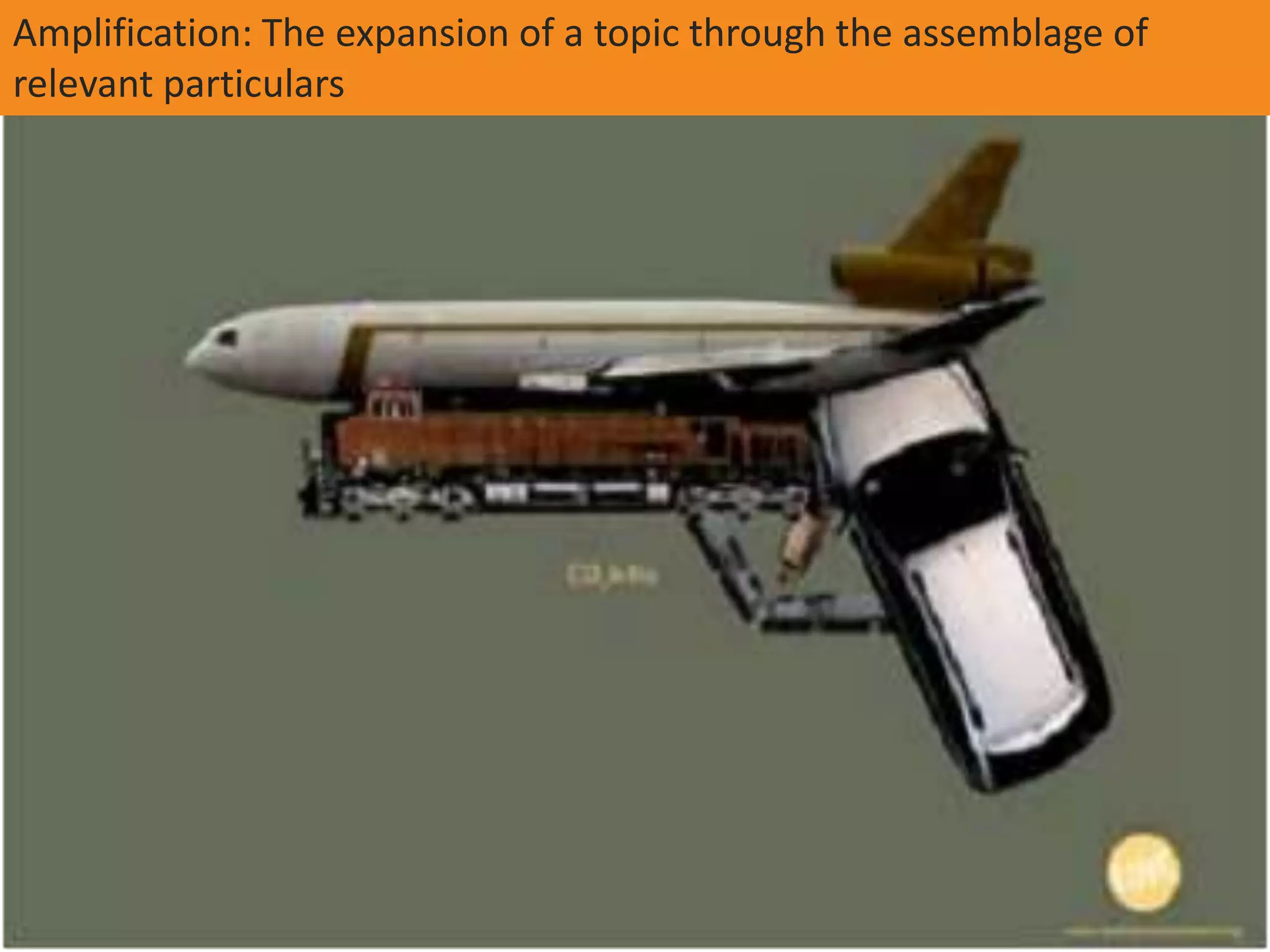
Amplification: The expansion of a topic through the assemblage of
relevant particulars
Metaphor: An implied comparison between two things of unlike nature
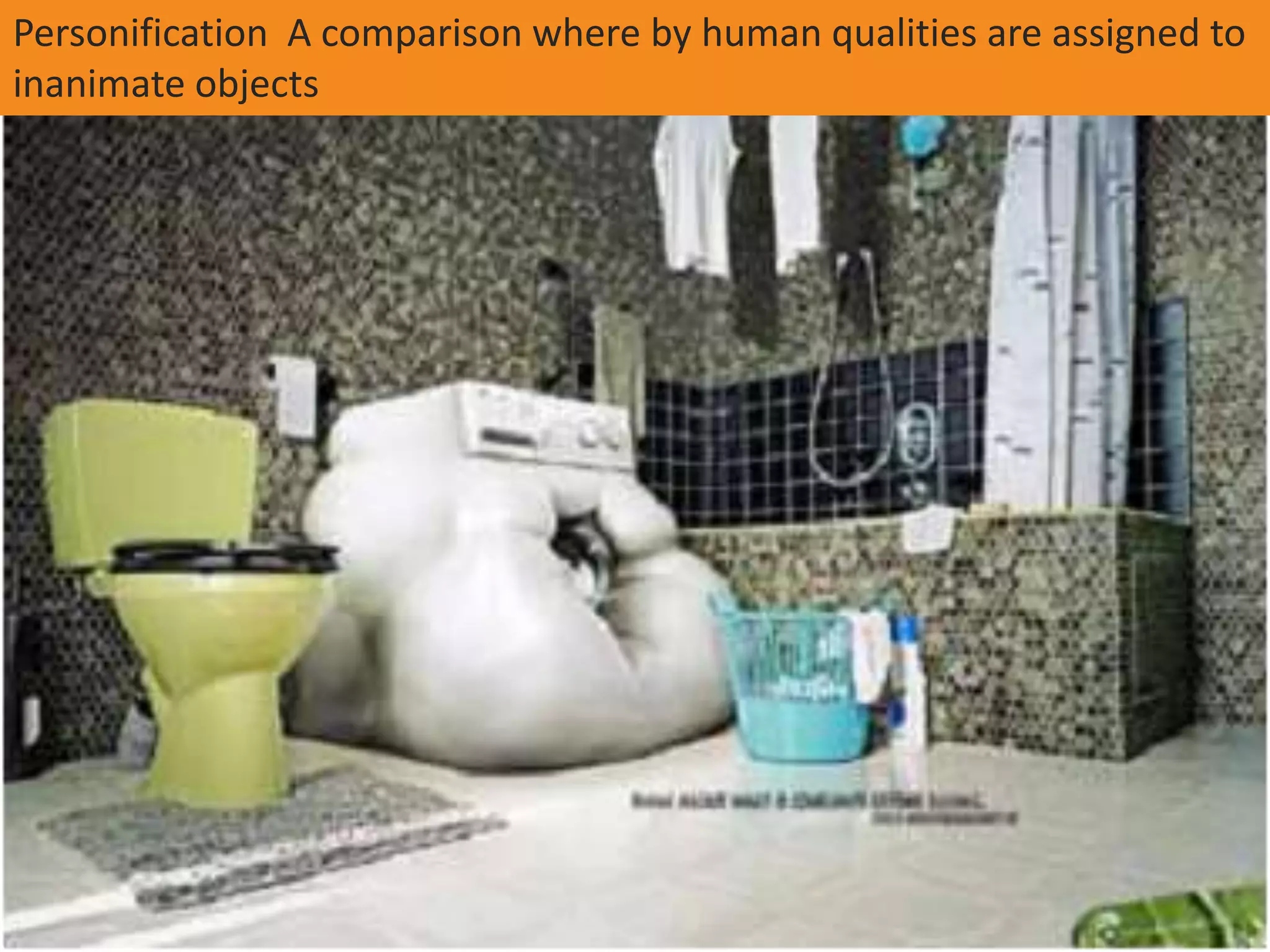
Personification A comparison where by human qualities are assigned to
inanimate objects
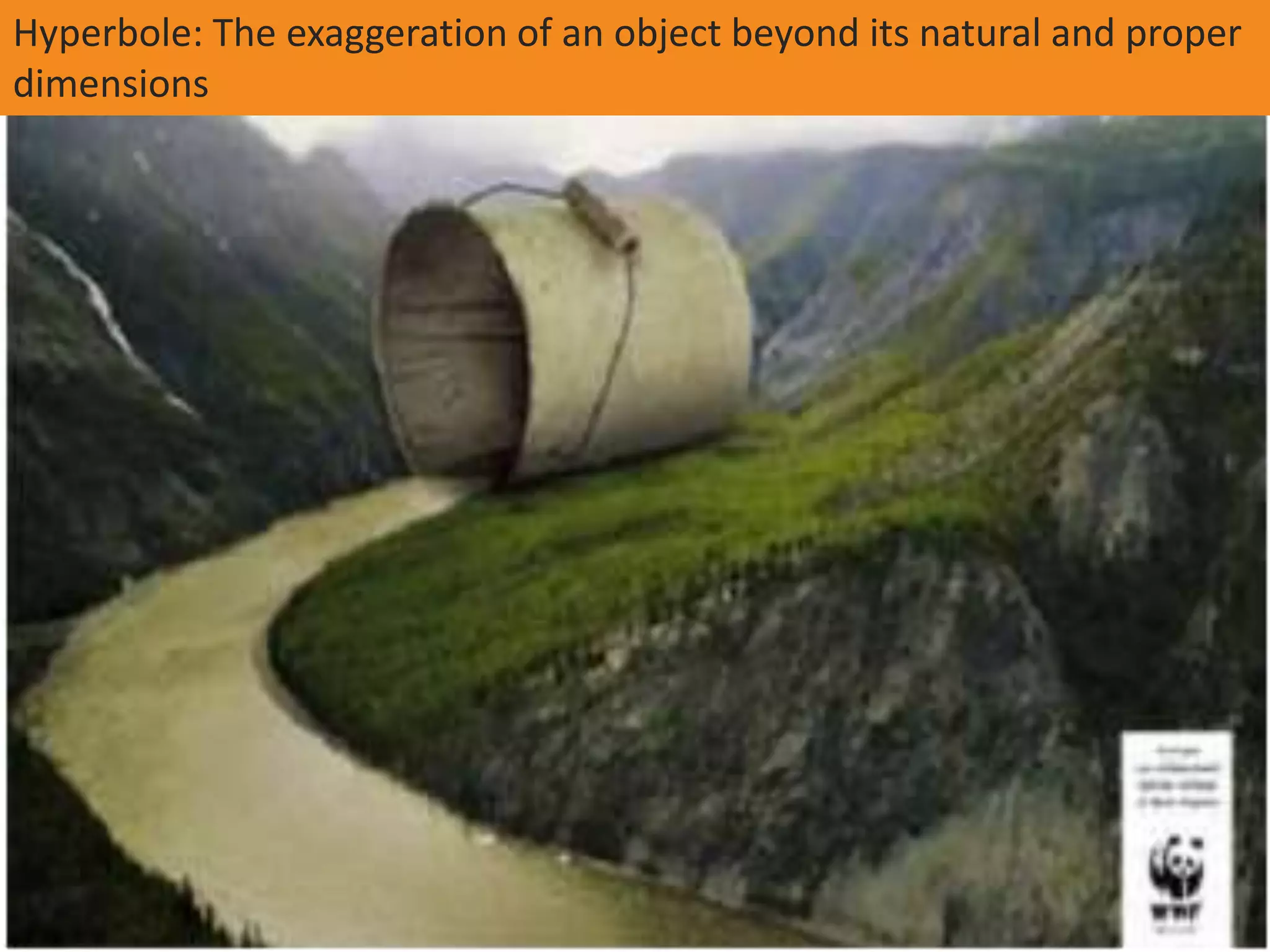
Hyperbole: The exaggeration of an object beyond its natural and proper
dimensions
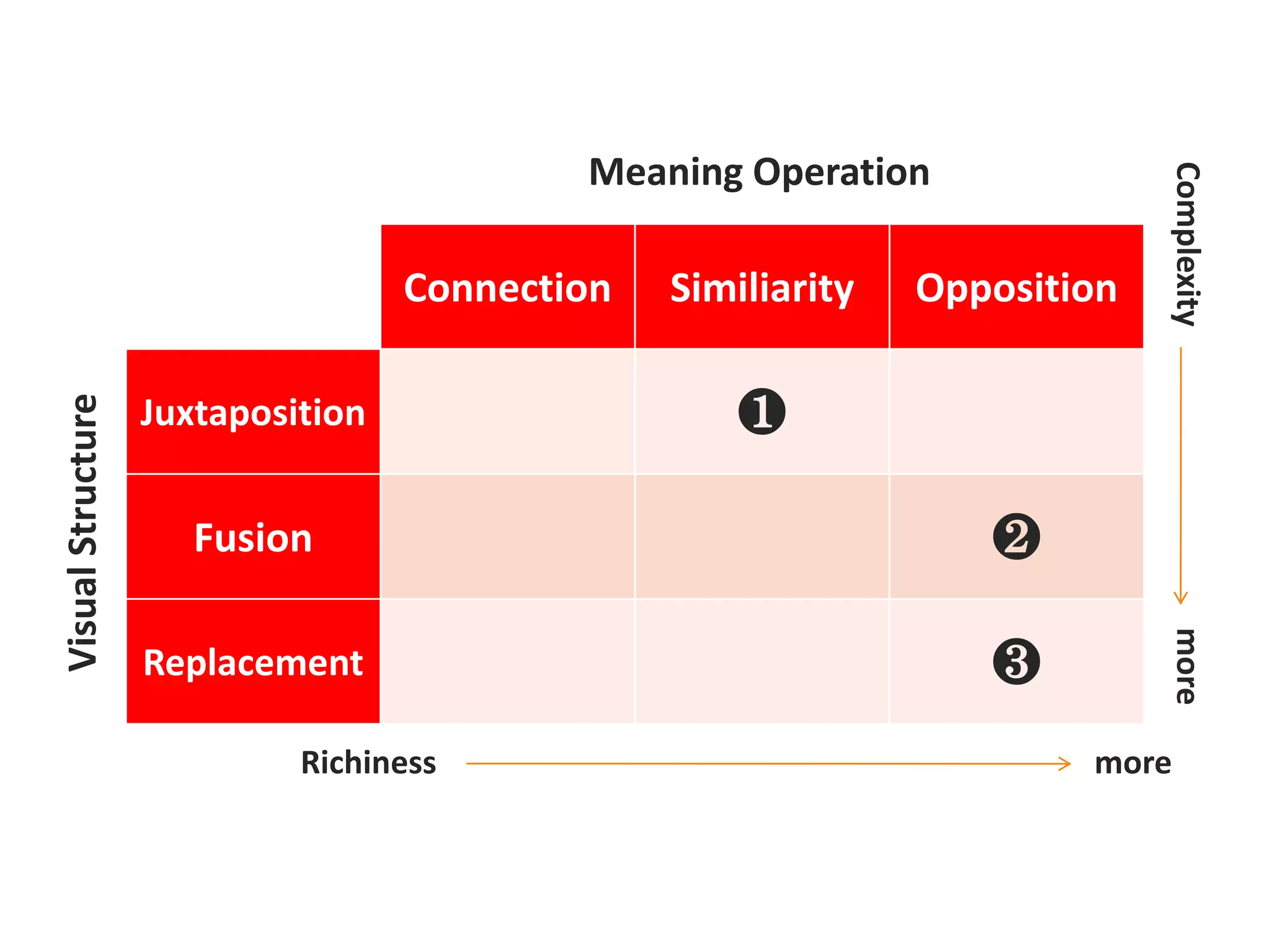
The Model of Visual Rhetoric
Meaning Operation


                                                                           Complexity
                                   Connection   Similiarity   Opposition

                                                    ❶
Visual Structure


                   Juxtaposition


                      Fusion                                     ❷


                                                                           more
                   Replacement                                   ❸
                            Richiness                                 more
• Juxta-position: two unities of significance
  (two images or signs) stand next to each
  other
• Fusion: two elements of significance are
  combined
• Replacement: one element is exchanged
  for another
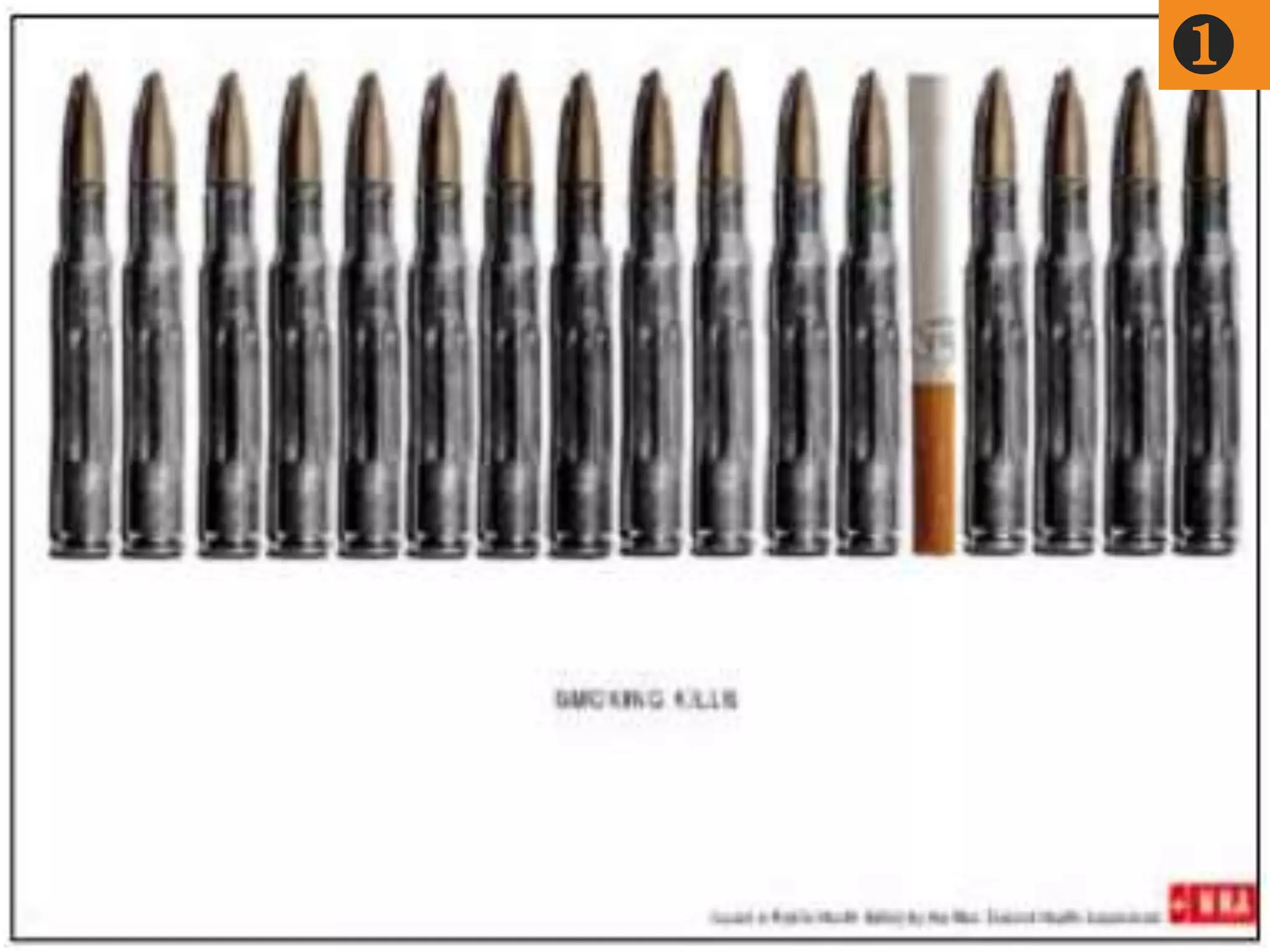
❶
❷
❸
The Genre of Photojournalism
The genre of photojournalism offers a
particular case for the merits of the
narrative theories and criticism in
visual rhetorical analysis.
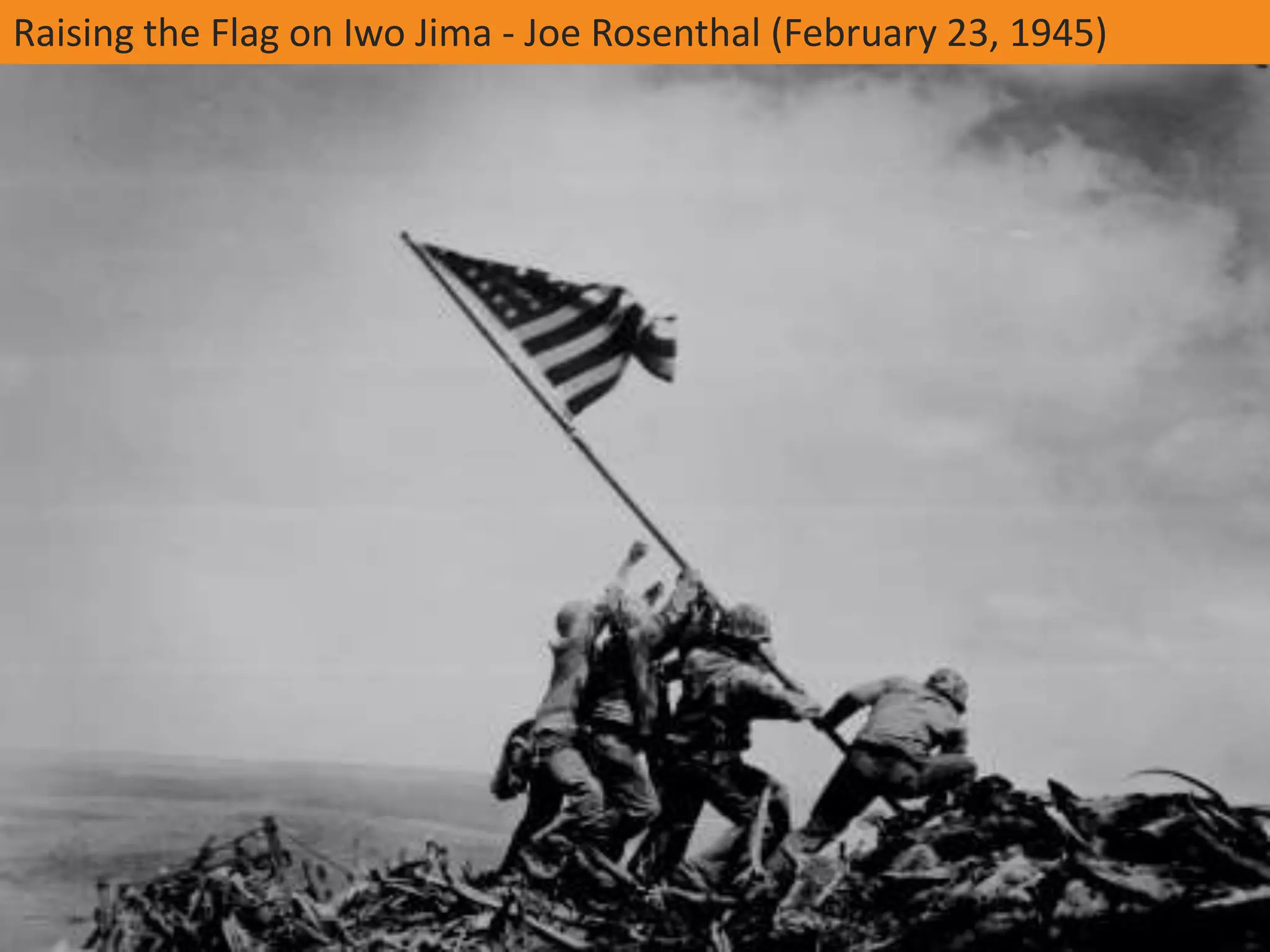
Raising the Flag on Iwo Jima - Joe Rosenthal (February 23, 1945)
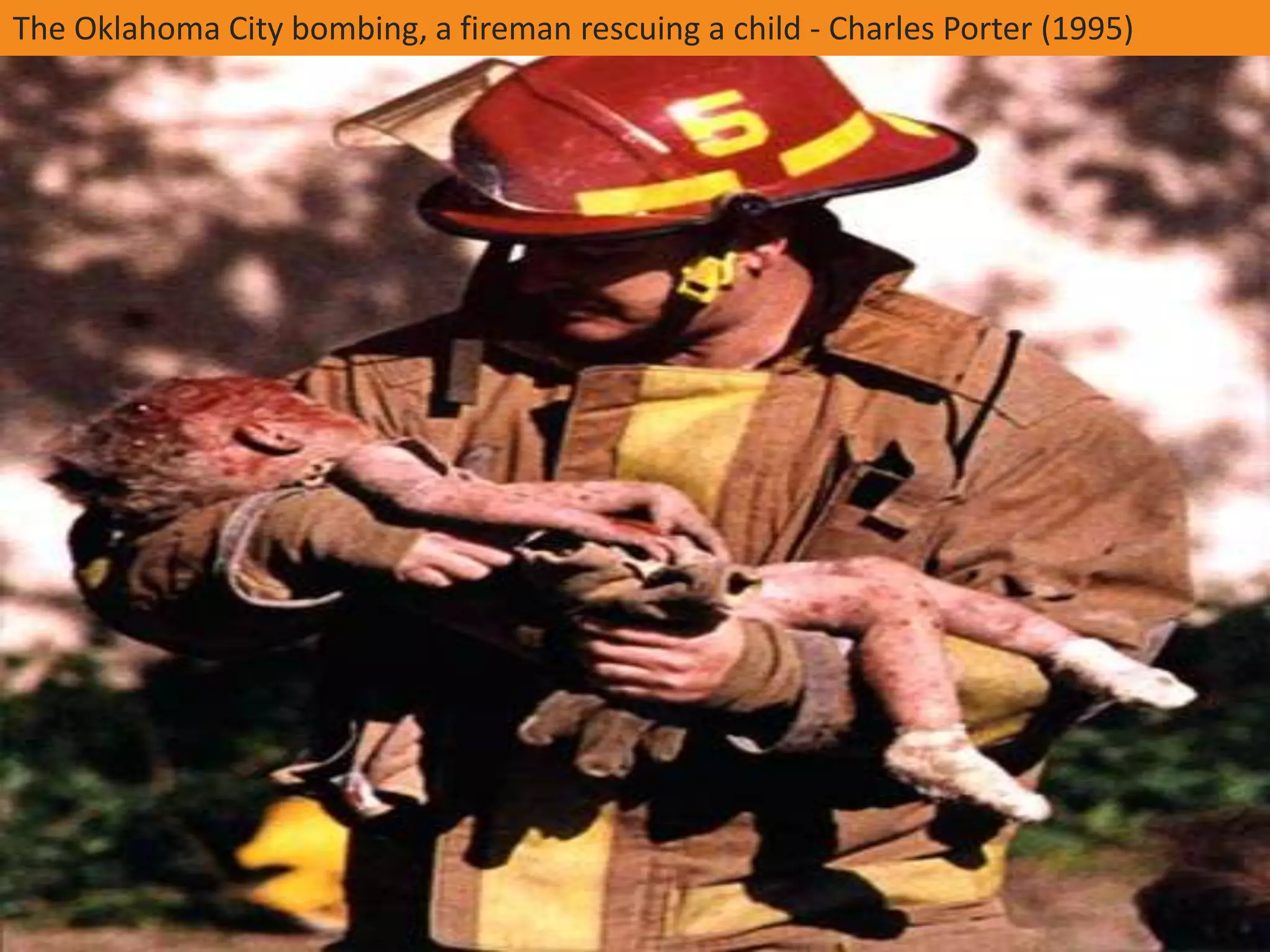
The Oklahoma City bombing, a fireman rescuing a child - Charles Porter (1995)
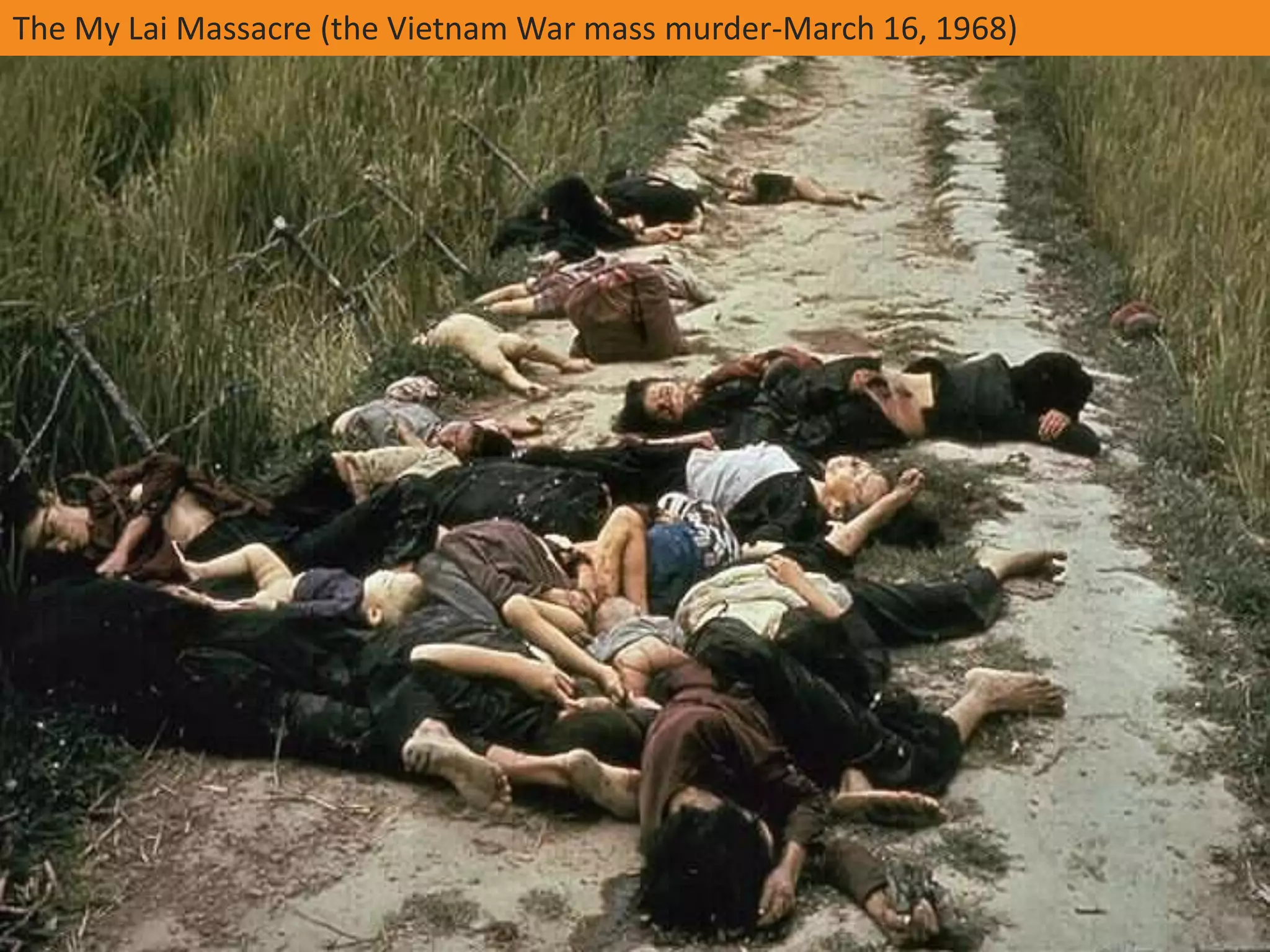
The My Lai Massacre (the Vietnam War mass murder-March 16, 1968)
© 2011
cokyfauzialfi.wordpress.com
What’s Your Message?

Visual Rhetoric

  • 1.
    Kuliah Proses Komunikasi Oleh Coky Fauzi Alfi cokyfauzialfi.wordpress.com VISUAL RHETORIC
  • 2.
    Topics • Define: Visual Rhetoric • Characteristics of Visual Rhetoric • Rhetorical Figures • The Model of Visual Rhetoric • The Genre of Photojournalism
  • 3.
    Classical rhetoric asapplied to arguments was concerned with the means of giving the greatest possible persuasive power to the written or spoken word. Pictures can also, like words be used to pose arguments, raise questions, create fictions, present metaphors, or even mount a critique and are not intended as faithful copies of reality.
  • 6.
  • 7.
    Sonja K. Fossgenerally defined visual rhetoric as the study of the use of visual symbols to influence and manage meanings.
  • 8.
    Rhetoric is theart of persuasion and gives possibilities to the designer to construct appropriate messages. The purpose of rhetoric is the efficient use of language in order to shape attitudes in others and influence their behavior. It operates on the basis of logical and esthetic modes to affect interaction in both a rational and an emotional way.
  • 9.
  • 10.
    Not every visualobject is visual rhetoric. What turns a visual object into a communicative artifact—a symbol that communicates and can be studied as rhetoric—is the presence of three characteristics.
  • 11.
    3 Characteristics ofVisual Rhetoric • Symbolic Action To qualify as visual rhetoric, an image must go beyond serving as a sign, however, and be symbolic, with that image only indirectly connected to its referent. • Human Intervention Visual rhetoric requires human action in the process of creation and in the process of interpretation. • Presence of an Audience Visual elements are arranged and modified by a rhetor not simply for self-expression but also for communication with an audience.
  • 12.
  • 13.
    The fundamental operationsof rhetorical figures and their relationship
  • 14.
    Relation 1. Identity: iscreated when the significance between two elements is identical 2. Similarity: there is at least one significant relation in form or content between two elements 3. Difference: the relation between two elements differ totally, one element is totally different than the other 4. Opposition: at least one relation between two elements in form or content are opposed 5. False homology: two elements are compared, however there is no resemblance in reality between the elements, like a paradox
  • 15.
    Rhetorical Operation • Addition:One or more elements are added to the proposition (repetition is seen as addition of identical elements) • Suppression: One or more elements of the proposition are suppressed, and two derived operations: 1. Substitution is analyzed as a suppression followed by an addition: an element is suppressed in order to be replaced by another 2. Exchange includes two reciprocal substitutions: two elements of the proposition are permutated
  • 16.
    Metonymy: A meaningindicated verbally is set in relation to another meaning, based on a thematic connection.
  • 17.
    Synechdoche: A substitutionfor a part of something which stands for a whole.
  • 18.
    Amplification: The expansionof a topic through the assemblage of relevant particulars
  • 19.
    Metaphor: An impliedcomparison between two things of unlike nature
  • 20.
    Personification A comparisonwhere by human qualities are assigned to inanimate objects
  • 21.
    Hyperbole: The exaggerationof an object beyond its natural and proper dimensions
  • 22.
    The Model ofVisual Rhetoric
  • 23.
    Meaning Operation Complexity Connection Similiarity Opposition ❶ Visual Structure Juxtaposition Fusion ❷ more Replacement ❸ Richiness more
  • 24.
    • Juxta-position: twounities of significance (two images or signs) stand next to each other • Fusion: two elements of significance are combined • Replacement: one element is exchanged for another
  • 25.
  • 26.
  • 27.
  • 28.
    The Genre ofPhotojournalism
  • 29.
    The genre ofphotojournalism offers a particular case for the merits of the narrative theories and criticism in visual rhetorical analysis.
  • 30.
    Raising the Flagon Iwo Jima - Joe Rosenthal (February 23, 1945)
  • 31.
    The Oklahoma Citybombing, a fireman rescuing a child - Charles Porter (1995)
  • 32.
    The My LaiMassacre (the Vietnam War mass murder-March 16, 1968)
  • 33.