Lesson Overview 4.5 Aquatic Ecosystems
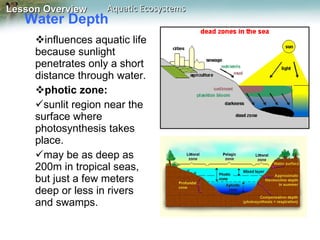
Water Depth  influences aquatic life because sunlight penetrates only a short distance through water. photic zone:  sunlit region near the surface where photosynthesis takes place. may be as deep as 200m in tropical seas, but just a few meters deep or less in rivers and swamps.
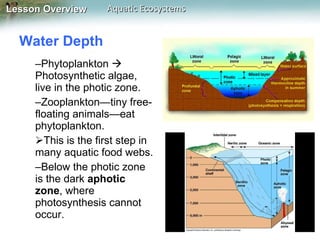
Water Depth  Phytoplankton    Photosynthetic algae,  live in the photic zone.  Zooplankton—tiny free-floating animals—eat phytoplankton.  This is the first step in many aquatic food webs.  Below the photic zone is the dark  aphotic zone , where photosynthesis cannot occur.
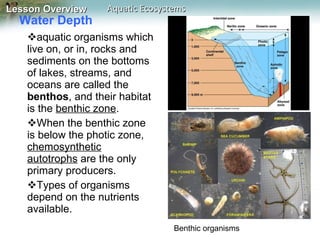
Water Depth  aquatic organisms which live on, or in, rocks and sediments on the bottoms of lakes, streams, and oceans are called the  benthos , and their habitat is the  benthic zone .  When the benthic zone is below the photic zone,  chemosynthetic autotrophs  are the only primary producers. Types of organisms depend on the nutrients available. Benthic organisms
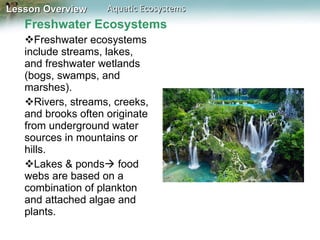
Freshwater Ecosystems Freshwater ecosystems include streams, lakes, and freshwater wetlands (bogs, swamps, and marshes). Rivers, streams, creeks, and brooks often originate from underground water sources in mountains or hills. Lakes & ponds   food webs are based on a combination of plankton and attached algae and plants.
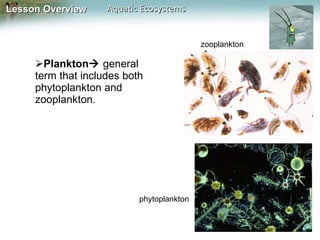
Plankton    general term that includes both phytoplankton and zooplankton. phytoplankton zooplankton
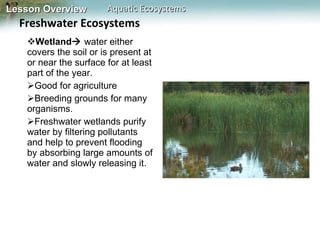
Wetland    water either covers the soil or is present at or near the surface for at least part of the year. Good for agriculture Breeding grounds for many organisms. Freshwater wetlands purify water by filtering pollutants and help to prevent flooding by absorbing large amounts of water and slowly releasing it. Freshwater Ecosystems
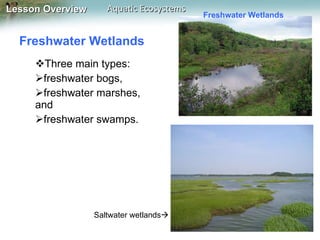
Freshwater Wetlands  Three main types:  freshwater bogs, freshwater marshes, and  freshwater swamps.  Saltwater wetlands  Freshwater Wetlands
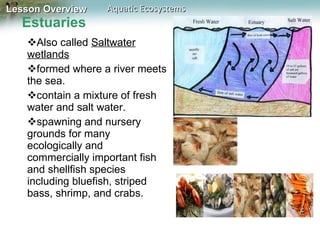
Estuaries Also called  Saltwater wetlands   formed where a river meets the sea.  contain a mixture of fresh water and salt water. spawning and nursery grounds for many ecologically and commercially important fish and shellfish species including bluefish, striped bass, shrimp, and crabs.
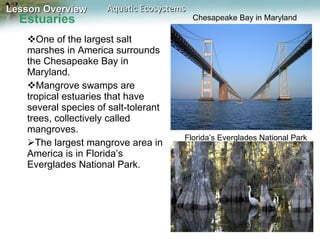
Estuaries One of the largest salt marshes in America surrounds the Chesapeake Bay in Maryland. Mangrove swamps are tropical estuaries that have several species of salt-tolerant trees, collectively called mangroves. The largest mangrove area in America is in Florida’s Everglades National Park. Chesapeake Bay in Maryland Florida’s Everglades National Park
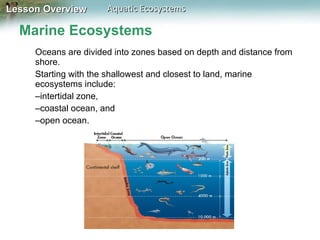
Marine Ecosystems Oceans are divided into zones based on depth and distance from shore. Starting with the shallowest and closest to land, marine ecosystems include: intertidal zone,  coastal ocean, and  open ocean.
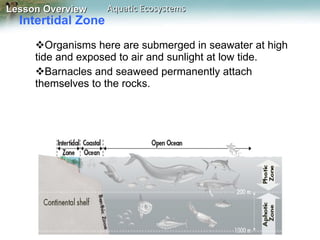
Intertidal Zone  Organisms here are submerged in seawater at high tide and exposed to air and sunlight at low tide.  Barnacles and seaweed permanently attach themselves to the rocks.
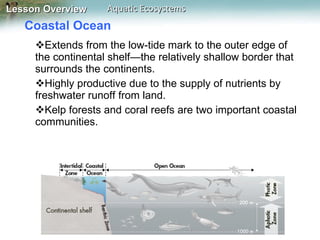
Coastal Ocean  Extends from the low-tide mark to the outer edge of the continental shelf—the relatively shallow border that surrounds the continents.  Highly productive due to the supply of nutrients by freshwater runoff from land.  Kelp forests and coral reefs are two important coastal communities.
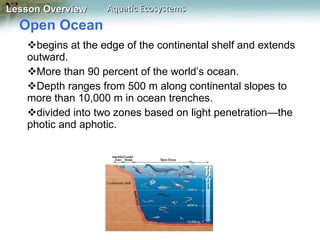
Open Ocean  begins at the edge of the continental shelf and extends outward.  More than 90 percent of the world’s ocean. Depth ranges from 500 m along continental slopes to more than 10,000 m in ocean trenches. divided into two zones based on light penetration—the photic and aphotic.
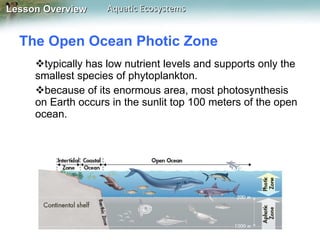
The Open Ocean Photic Zone  typically has low nutrient levels and supports only the smallest species of phytoplankton.  because of its enormous area, most photosynthesis on Earth occurs in the sunlit top 100 meters of the open ocean.
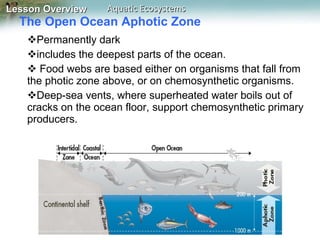
The Open Ocean Aphotic Zone  Permanently dark  includes the deepest parts of the ocean. Food webs are based either on organisms that fall from the photic zone above, or on chemosynthetic organisms.  Deep-sea vents, where superheated water boils out of cracks on the ocean floor, support chemosynthetic primary producers.

4.5 -- BIO

  • 1.
    Lesson Overview 4.5Aquatic Ecosystems
  • 2.
    Water Depth influences aquatic life because sunlight penetrates only a short distance through water. photic zone: sunlit region near the surface where photosynthesis takes place. may be as deep as 200m in tropical seas, but just a few meters deep or less in rivers and swamps.
  • 3.
    Water Depth Phytoplankton  Photosynthetic algae, live in the photic zone. Zooplankton—tiny free-floating animals—eat phytoplankton. This is the first step in many aquatic food webs. Below the photic zone is the dark aphotic zone , where photosynthesis cannot occur.
  • 4.
    Water Depth aquatic organisms which live on, or in, rocks and sediments on the bottoms of lakes, streams, and oceans are called the benthos , and their habitat is the benthic zone . When the benthic zone is below the photic zone, chemosynthetic autotrophs are the only primary producers. Types of organisms depend on the nutrients available. Benthic organisms
  • 5.
    Freshwater Ecosystems Freshwaterecosystems include streams, lakes, and freshwater wetlands (bogs, swamps, and marshes). Rivers, streams, creeks, and brooks often originate from underground water sources in mountains or hills. Lakes & ponds  food webs are based on a combination of plankton and attached algae and plants.
  • 6.
    Plankton  general term that includes both phytoplankton and zooplankton. phytoplankton zooplankton
  • 7.
    Wetland  water either covers the soil or is present at or near the surface for at least part of the year. Good for agriculture Breeding grounds for many organisms. Freshwater wetlands purify water by filtering pollutants and help to prevent flooding by absorbing large amounts of water and slowly releasing it. Freshwater Ecosystems
  • 8.
    Freshwater Wetlands Three main types: freshwater bogs, freshwater marshes, and freshwater swamps. Saltwater wetlands  Freshwater Wetlands
  • 9.
    Estuaries Also called Saltwater wetlands formed where a river meets the sea. contain a mixture of fresh water and salt water. spawning and nursery grounds for many ecologically and commercially important fish and shellfish species including bluefish, striped bass, shrimp, and crabs.
  • 10.
    Estuaries One ofthe largest salt marshes in America surrounds the Chesapeake Bay in Maryland. Mangrove swamps are tropical estuaries that have several species of salt-tolerant trees, collectively called mangroves. The largest mangrove area in America is in Florida’s Everglades National Park. Chesapeake Bay in Maryland Florida’s Everglades National Park
  • 11.
    Marine Ecosystems Oceansare divided into zones based on depth and distance from shore. Starting with the shallowest and closest to land, marine ecosystems include: intertidal zone, coastal ocean, and open ocean.
  • 12.
    Intertidal Zone Organisms here are submerged in seawater at high tide and exposed to air and sunlight at low tide. Barnacles and seaweed permanently attach themselves to the rocks.
  • 13.
    Coastal Ocean Extends from the low-tide mark to the outer edge of the continental shelf—the relatively shallow border that surrounds the continents. Highly productive due to the supply of nutrients by freshwater runoff from land. Kelp forests and coral reefs are two important coastal communities.
  • 14.
    Open Ocean begins at the edge of the continental shelf and extends outward. More than 90 percent of the world’s ocean. Depth ranges from 500 m along continental slopes to more than 10,000 m in ocean trenches. divided into two zones based on light penetration—the photic and aphotic.
  • 15.
    The Open OceanPhotic Zone typically has low nutrient levels and supports only the smallest species of phytoplankton. because of its enormous area, most photosynthesis on Earth occurs in the sunlit top 100 meters of the open ocean.
  • 16.
    The Open OceanAphotic Zone Permanently dark includes the deepest parts of the ocean. Food webs are based either on organisms that fall from the photic zone above, or on chemosynthetic organisms. Deep-sea vents, where superheated water boils out of cracks on the ocean floor, support chemosynthetic primary producers.