Chapter 6 Marine Microbes
         Plankton
(organisms invisible to the naked eye)
•   Include viruses, one-celled organisms, and fungi.
•   Microbes play many different roles in marine ecosystem.
•   Phytoplankton-planktonic algae
•   Zooplankton-larvae of small animals-ex fish, jellyfish
•   We will discuss 3 of these in detail that you will be
    accountable for and be able to identify under a
    microscope
    1.   Diatoms
    2.   Dinoflagellates
    3.   Forams
    4.   Euglena
    5.   Volvox
Diatoms Characteristics
• Most distinctive of plankton samples
  – Most common
• Low latitudes-occur in coastal waters
• Phytoplankton-Contributed to most of
  primary productivity of an area.
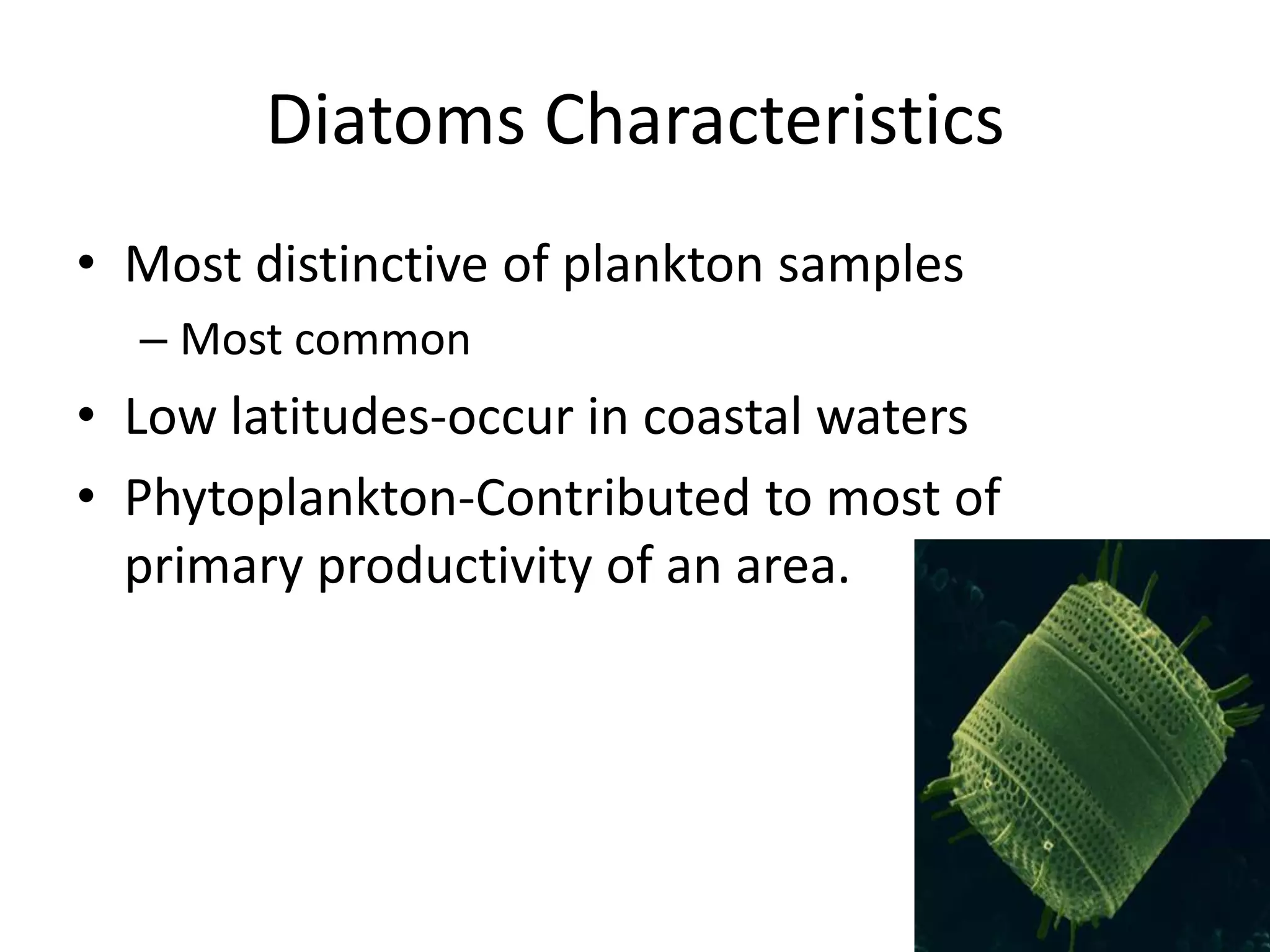
Diatom Structure
• Bilaterally symmetrical
• Glassy Cell wall
• 2 valves- 1 large, 1 small
• Visible geometrically shaped pattern-(helps
  distinguish between species)
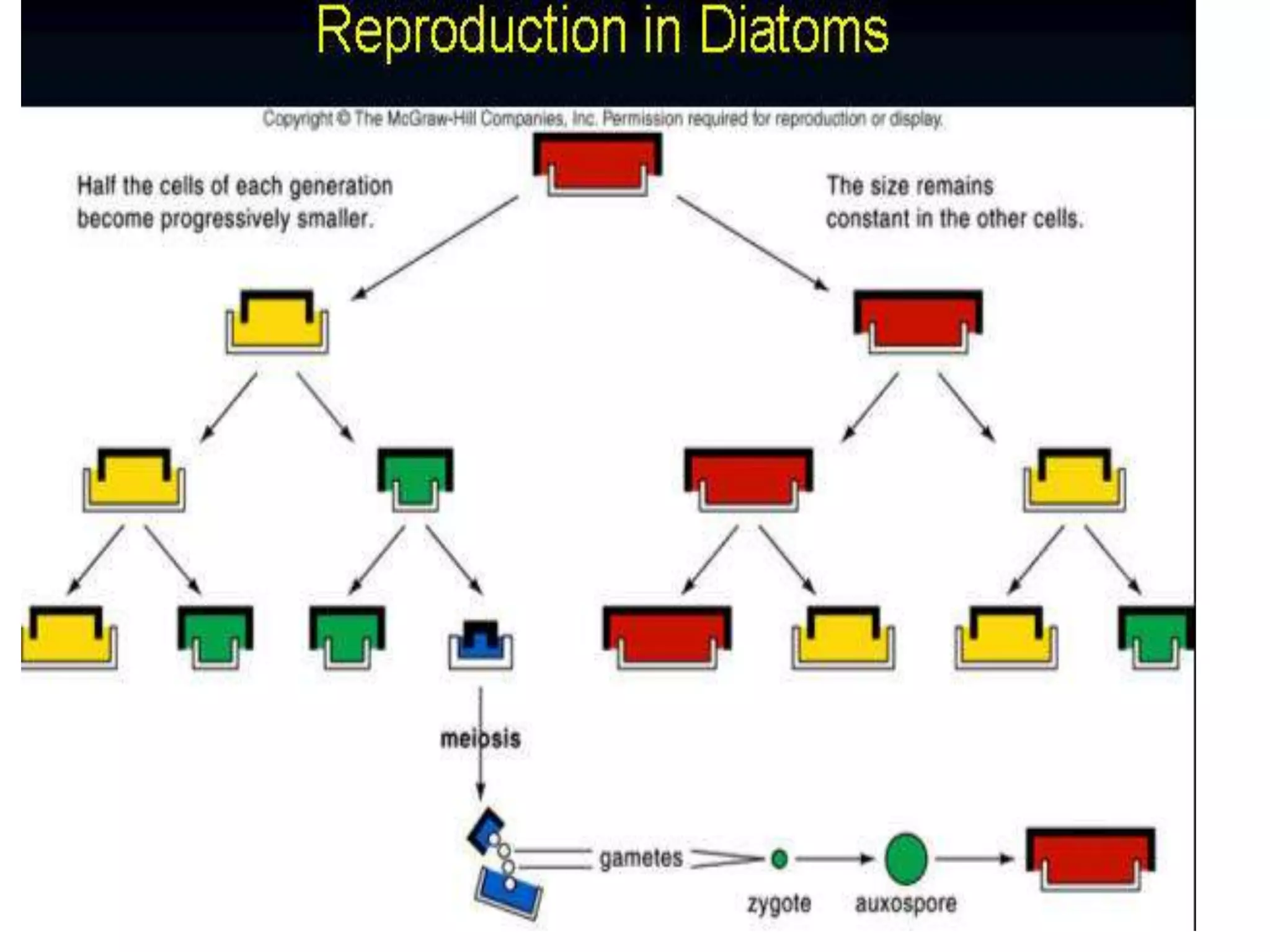
Reproduction
• Reproduction:                • Digestion:
  – Asexually by                  – Makes own food
    fission                         (autotroph) via
                                    photosynthesis
    • When cells divides,
      each daughter gets
      one of the 2 valves
    • Eventually daughter
      that inherited smaller
      valve will reproduces
      sexually
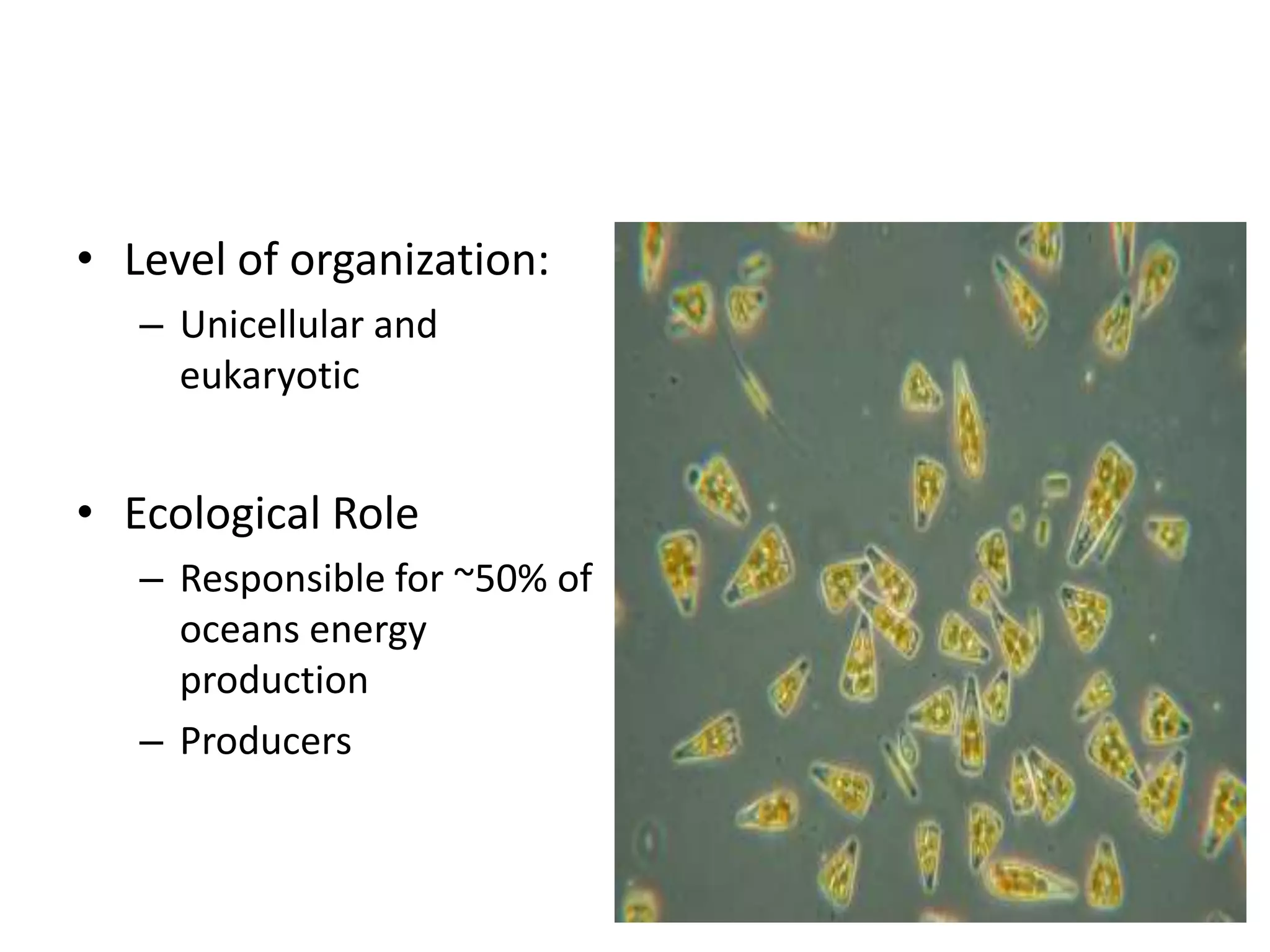
• Level of organization:
   – Unicellular and
     eukaryotic


• Ecological Role
   – Responsible for ~50% of
     oceans energy
     production
   – Producers
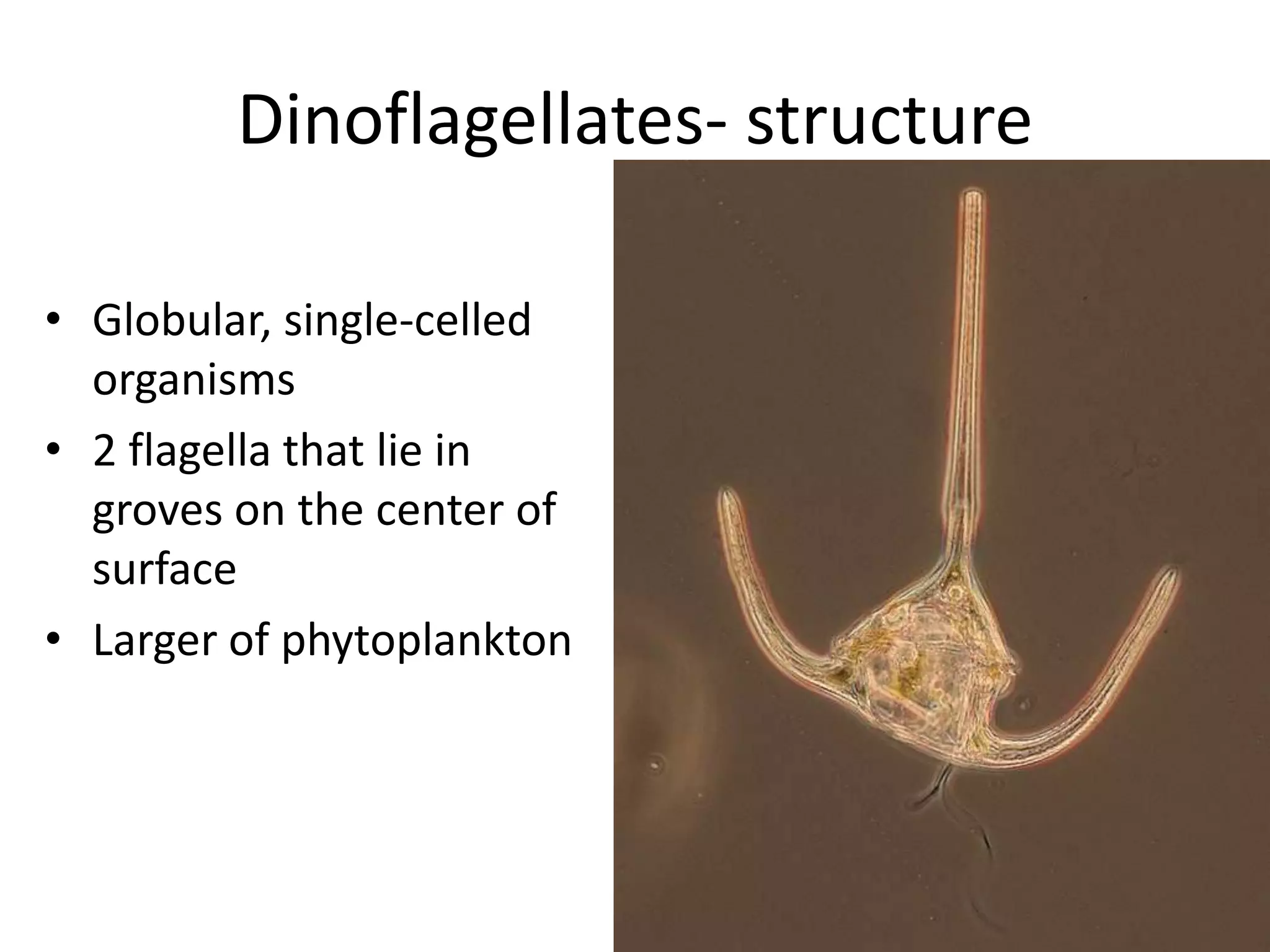
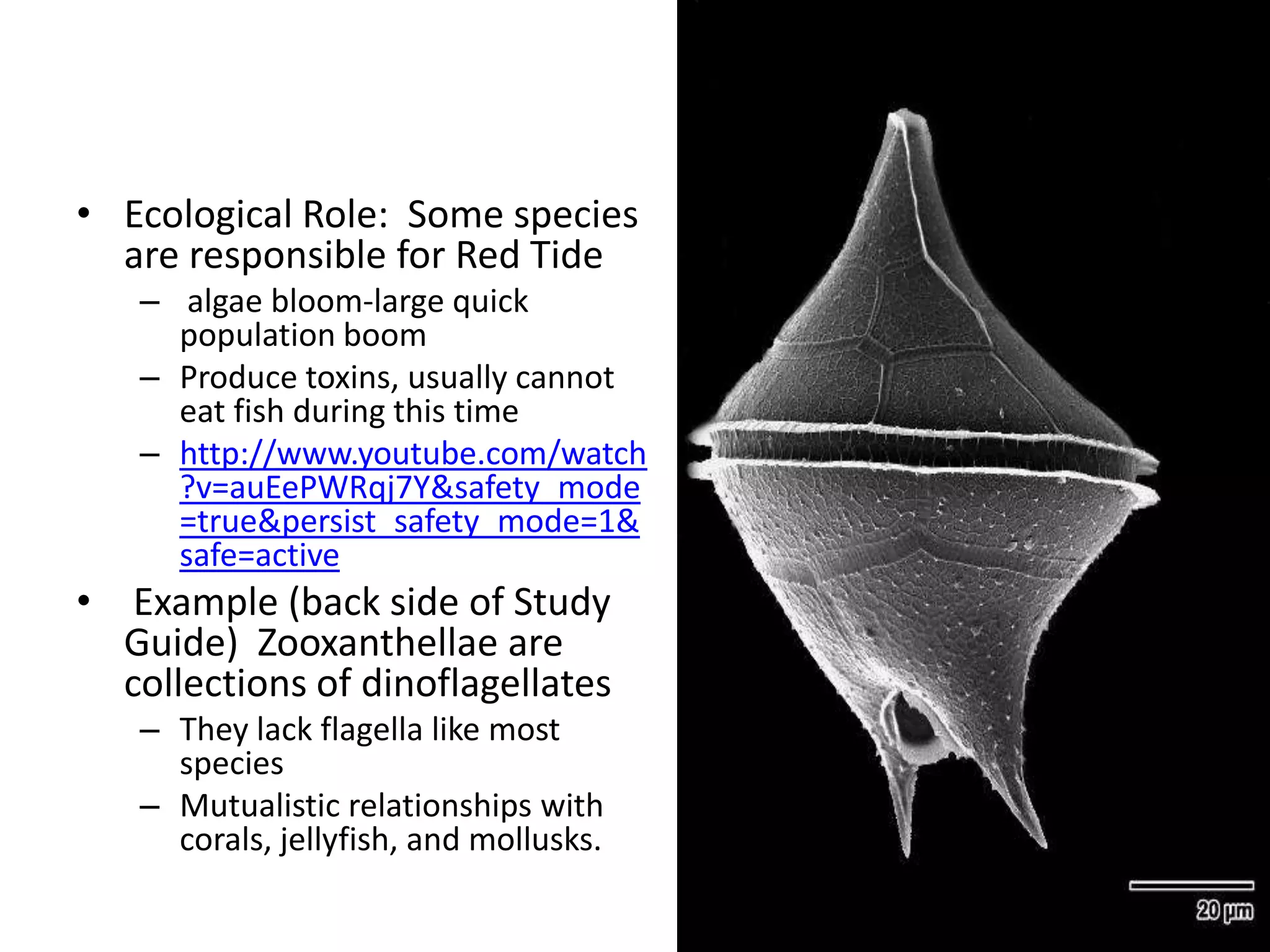
Dinoflagellates- structure

• Globular, single-celled
  organisms
• 2 flagella that lie in
  groves on the center of
  surface
• Larger of phytoplankton
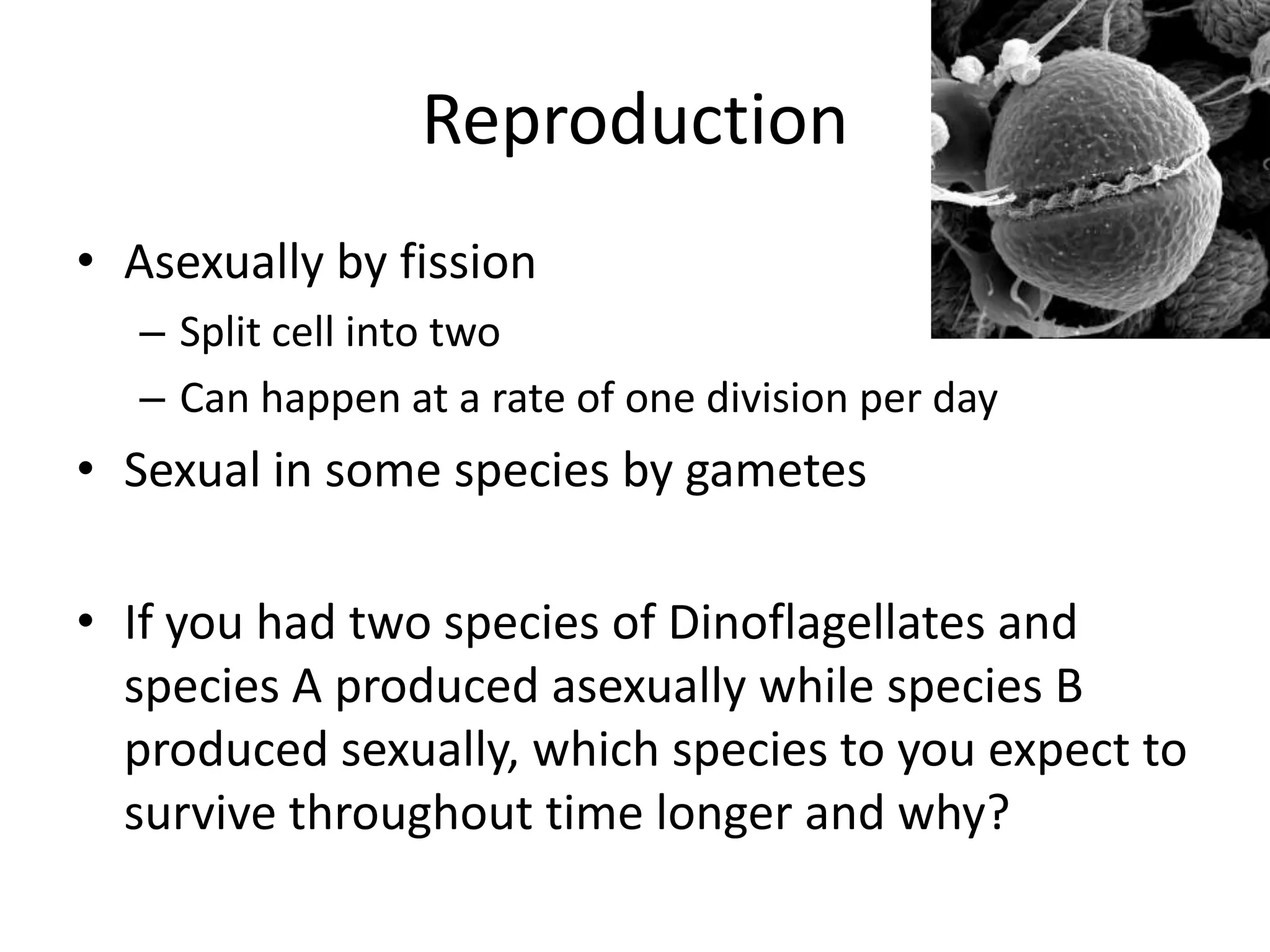
Reproduction
• Asexually by fission
   – Split cell into two
   – Can happen at a rate of one division per day
• Sexual in some species by gametes

• If you had two species of Dinoflagellates and
  species A produced asexually while species B
  produced sexually, which species to you expect to
  survive throughout time longer and why?
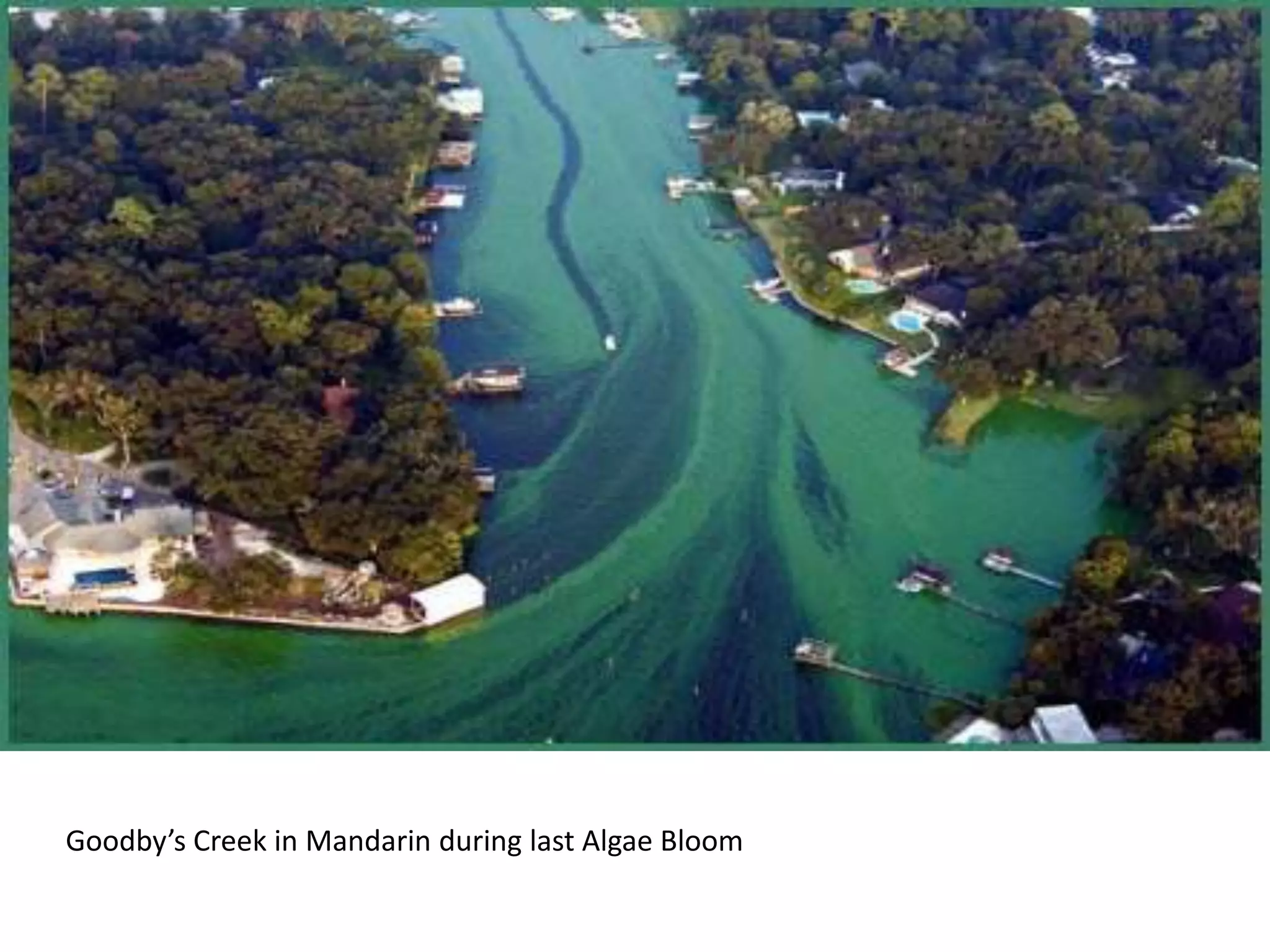
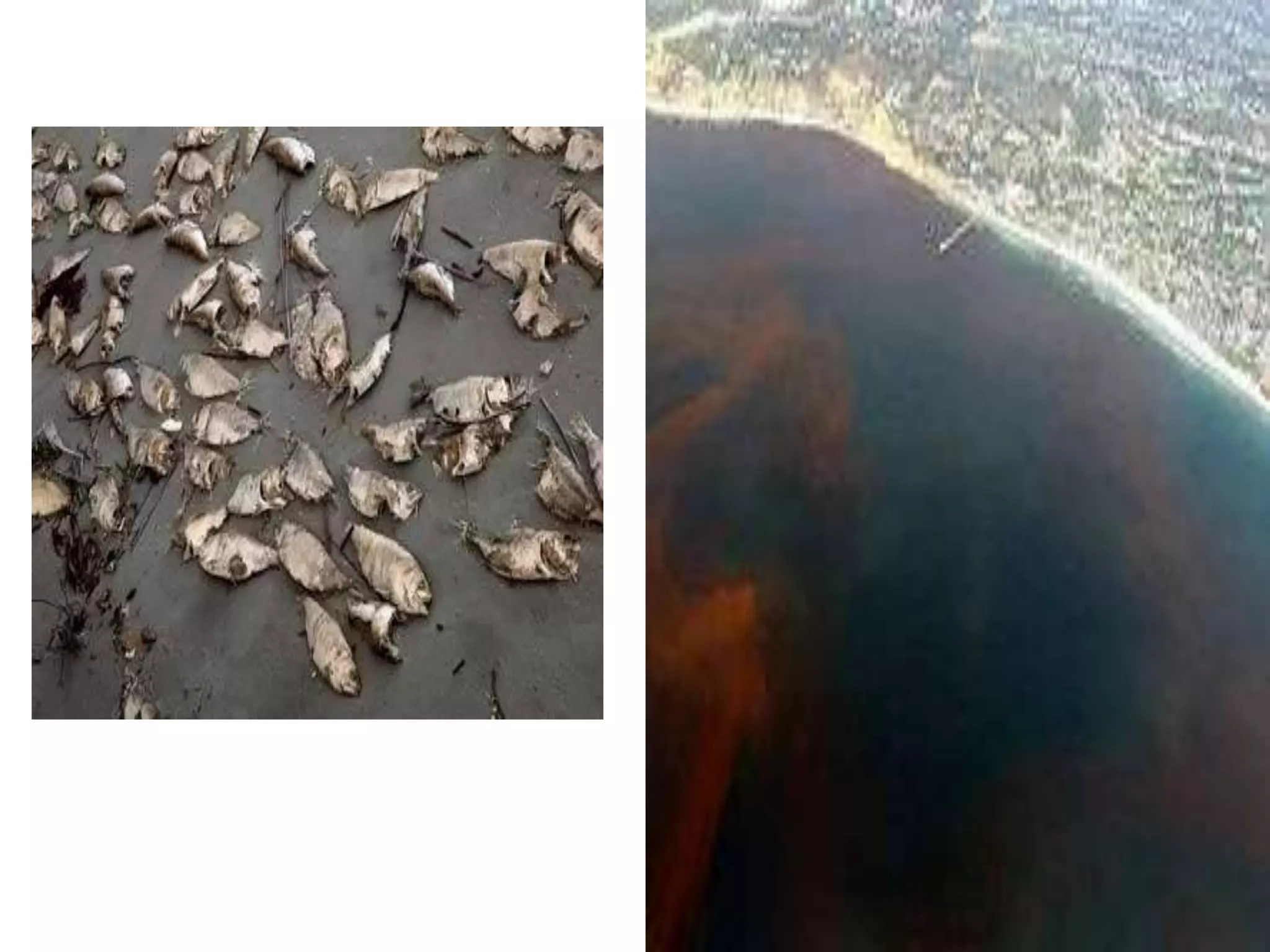
• Ecological Role: Some species
  are responsible for Red Tide
   – algae bloom-large quick
     population boom
   – Produce toxins, usually cannot
     eat fish during this time
   – http://www.youtube.com/watch
     ?v=auEePWRqj7Y&safety_mode
     =true&persist_safety_mode=1&
     safe=active
• Example (back side of Study
  Guide) Zooxanthellae are
  collections of dinoflagellates
   – They lack flagella like most
     species
   – Mutualistic relationships with
     corals, jellyfish, and mollusks.
Goodby’s Creek in Mandarin during last Algae Bloom
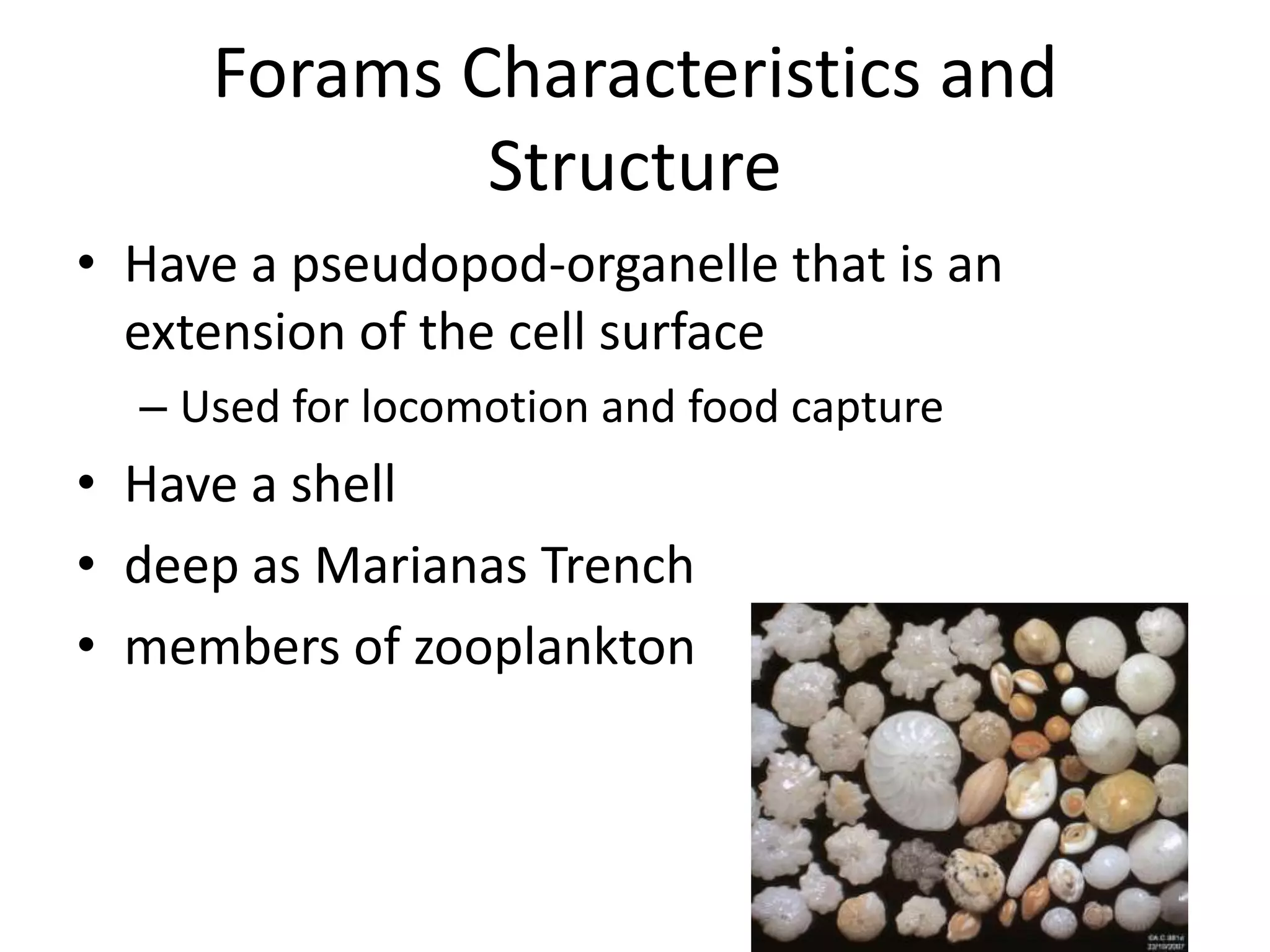
Forams Characteristics and
             Structure
• Have a pseudopod-organelle that is an
  extension of the cell surface
  – Used for locomotion and food capture
• Have a shell
• deep as Marianas Trench
• members of zooplankton
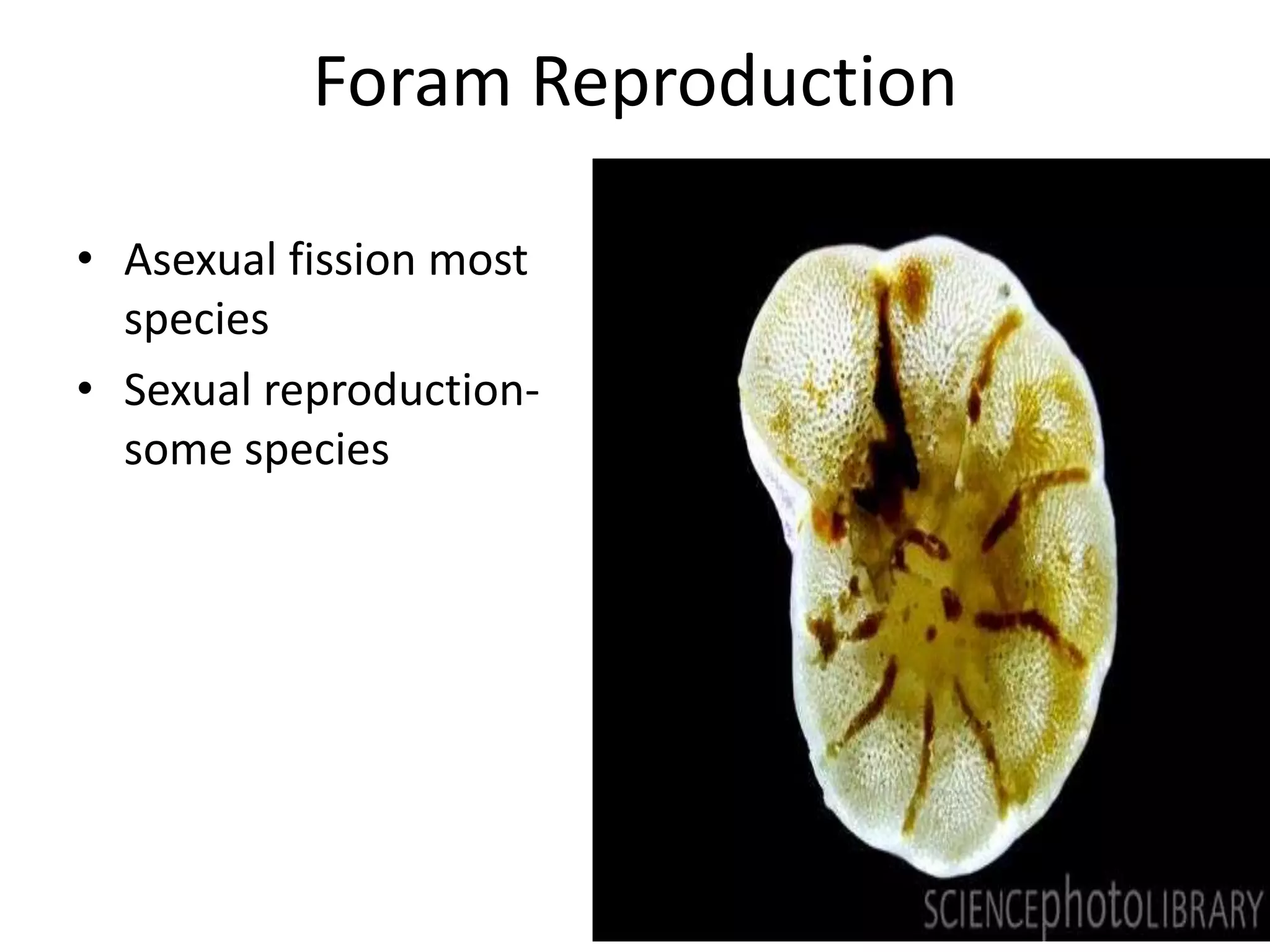
Foram Reproduction

• Asexual fission most
  species
• Sexual reproduction-
  some species
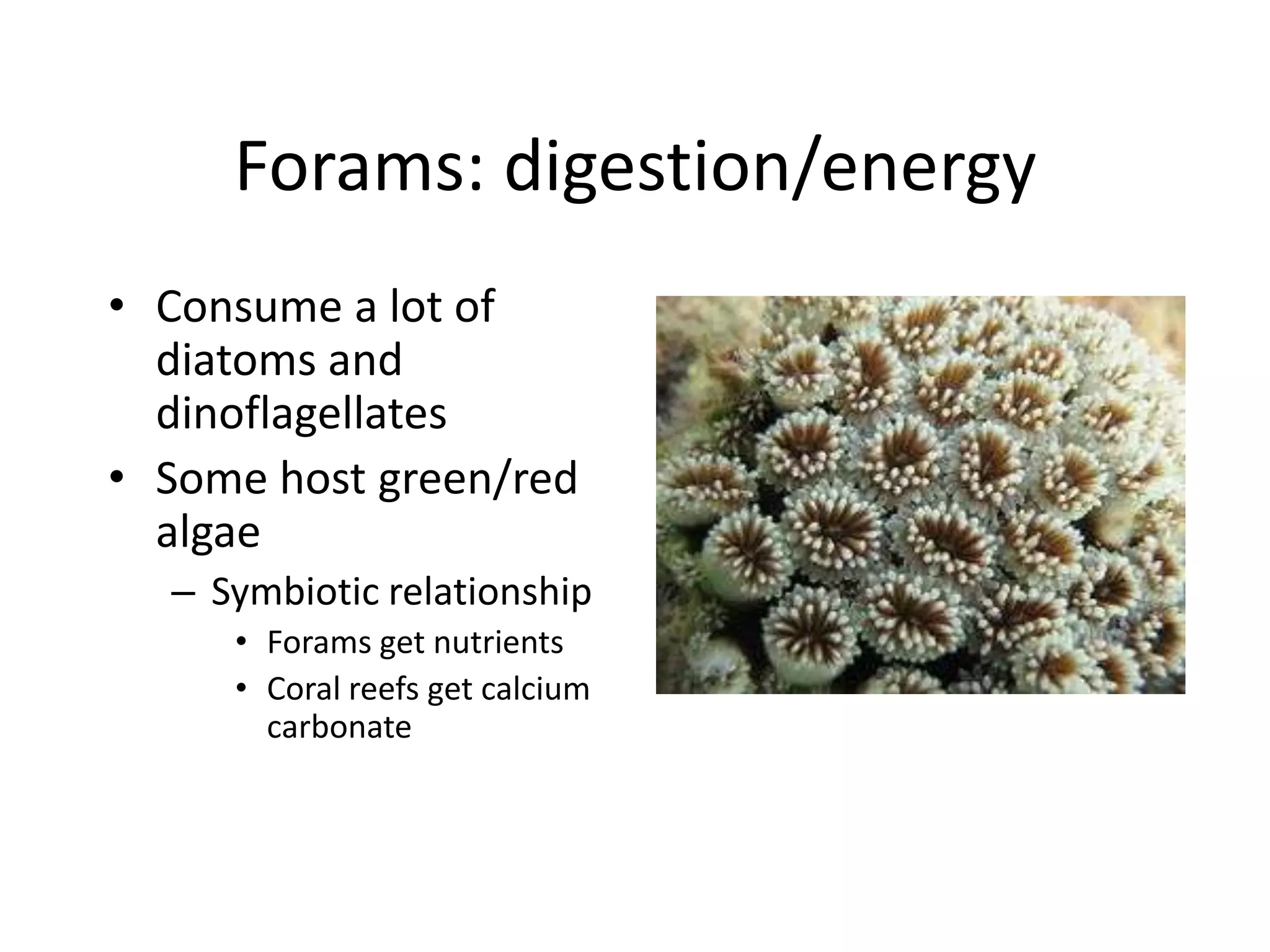
Forams: digestion/energy
• Consume a lot of
  diatoms and
  dinoflagellates
• Some host green/red
  algae
  – Symbiotic relationship
     • Forams get nutrients
     • Coral reefs get calcium
       carbonate
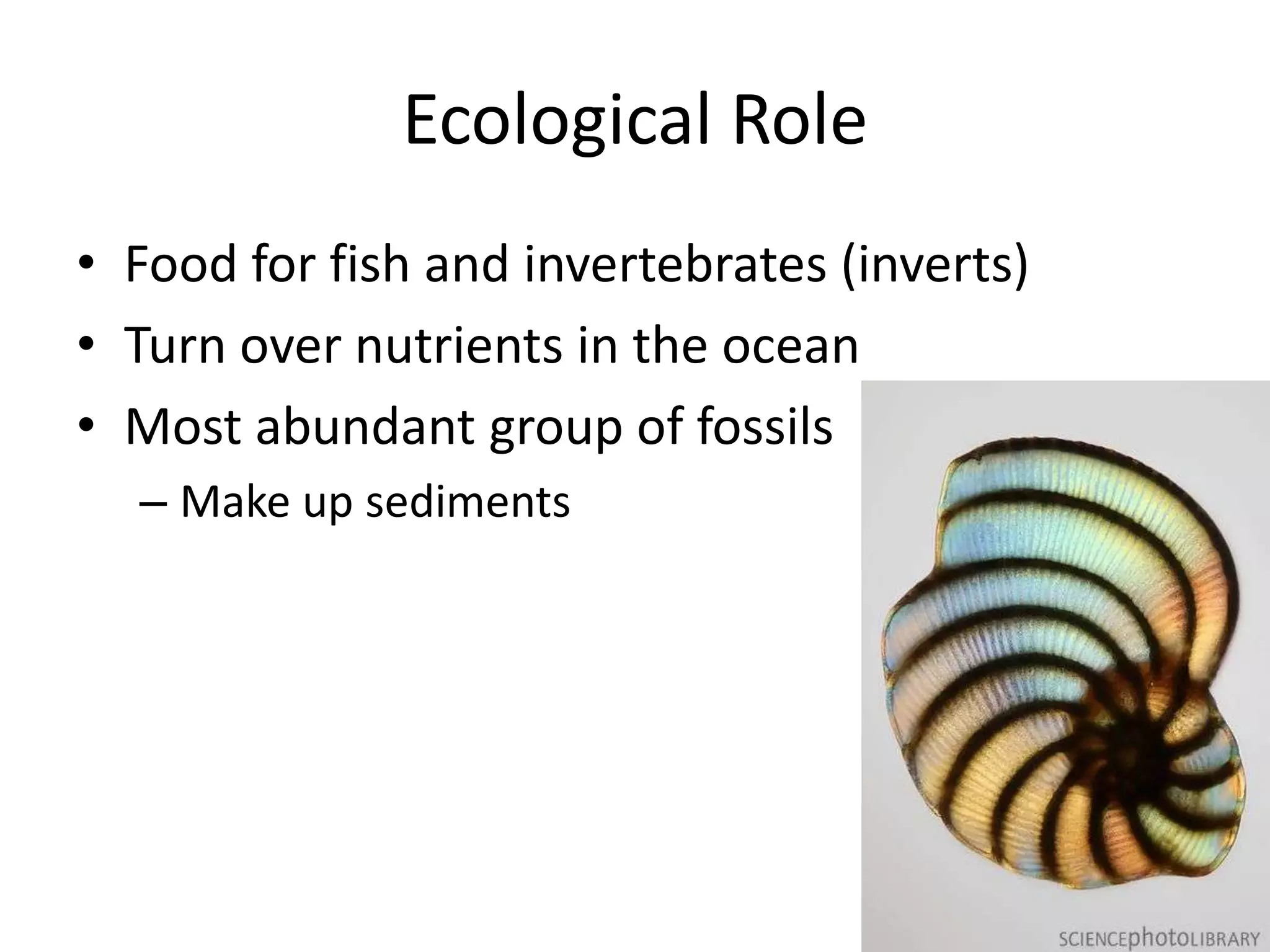
Ecological Role
• Food for fish and invertebrates (inverts)
• Turn over nutrients in the ocean
• Most abundant group of fossils
  – Make up sediments
• http://www.youtube.com/watch?v=Fpry23bS
  6g0&safety_mode=true&persist_safety_mode
  =1&safe=active
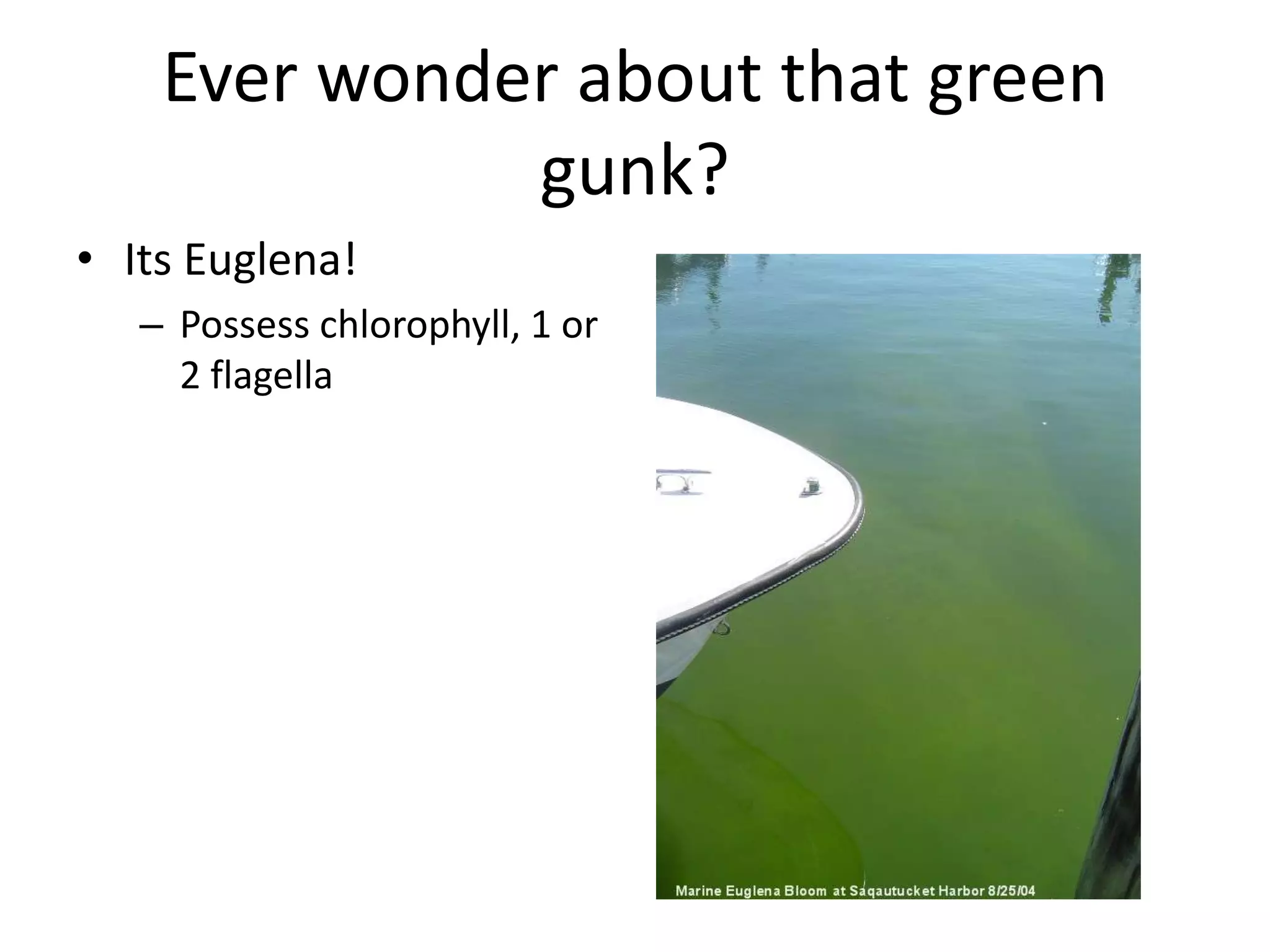
Ever wonder about that green
              gunk?
• Its Euglena!
   – Possess chlorophyll, 1 or
     2 flagella
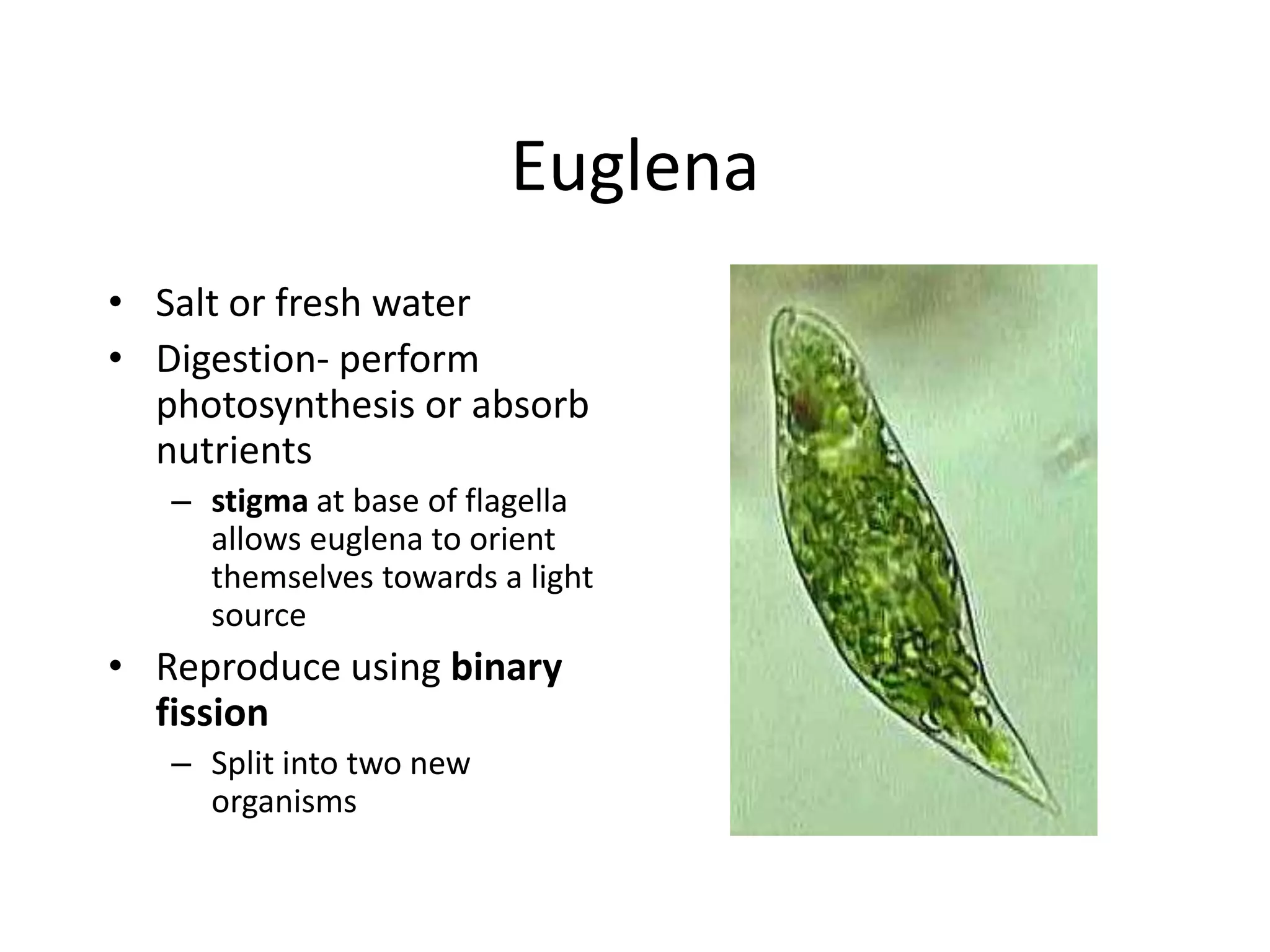
Euglena
• Salt or fresh water
• Digestion- perform
  photosynthesis or absorb
  nutrients
   – stigma at base of flagella
     allows euglena to orient
     themselves towards a light
     source
• Reproduce using binary
  fission
   – Split into two new
     organisms
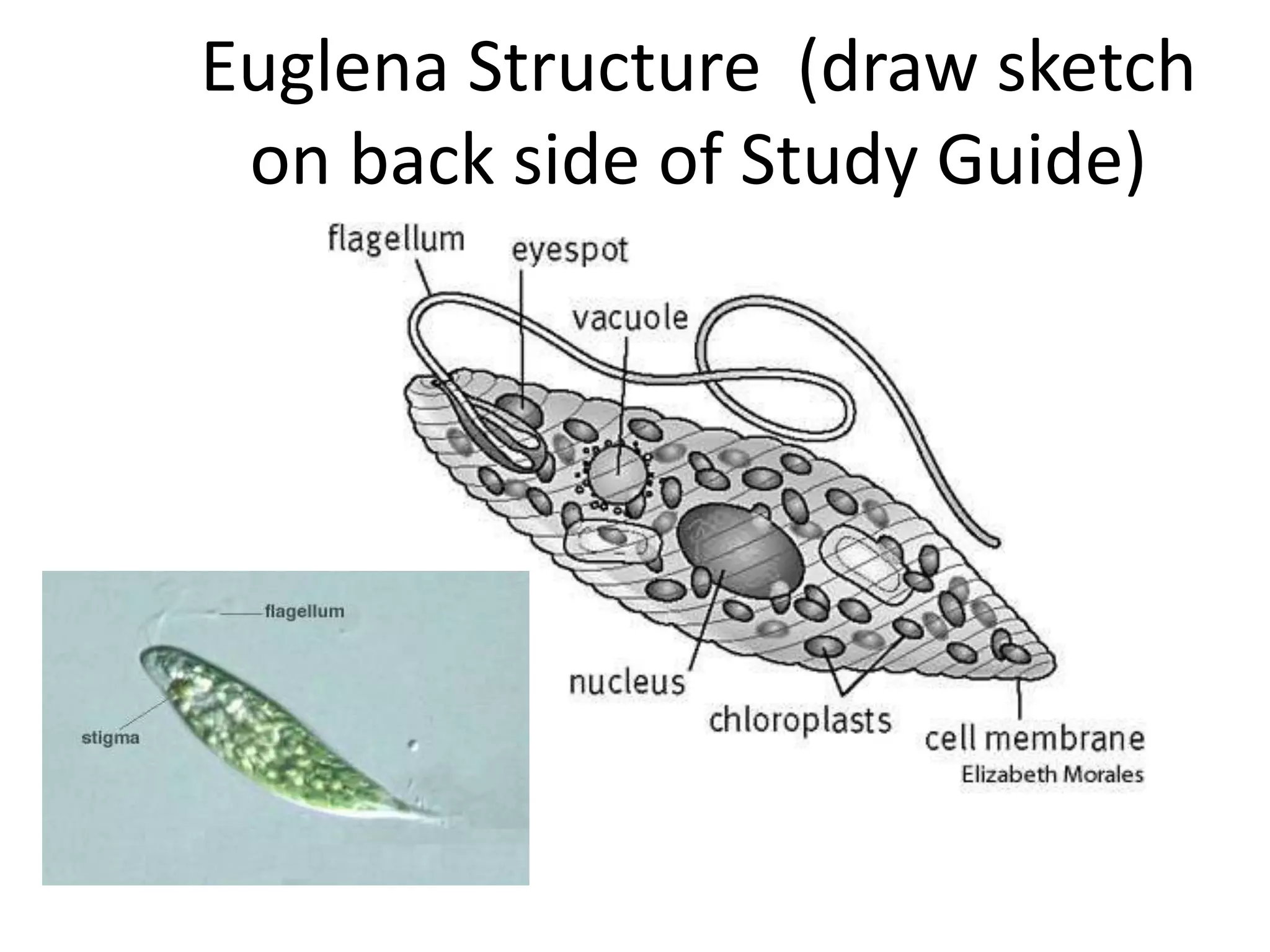
Euglena Structure (draw sketch
 on back side of Study Guide)
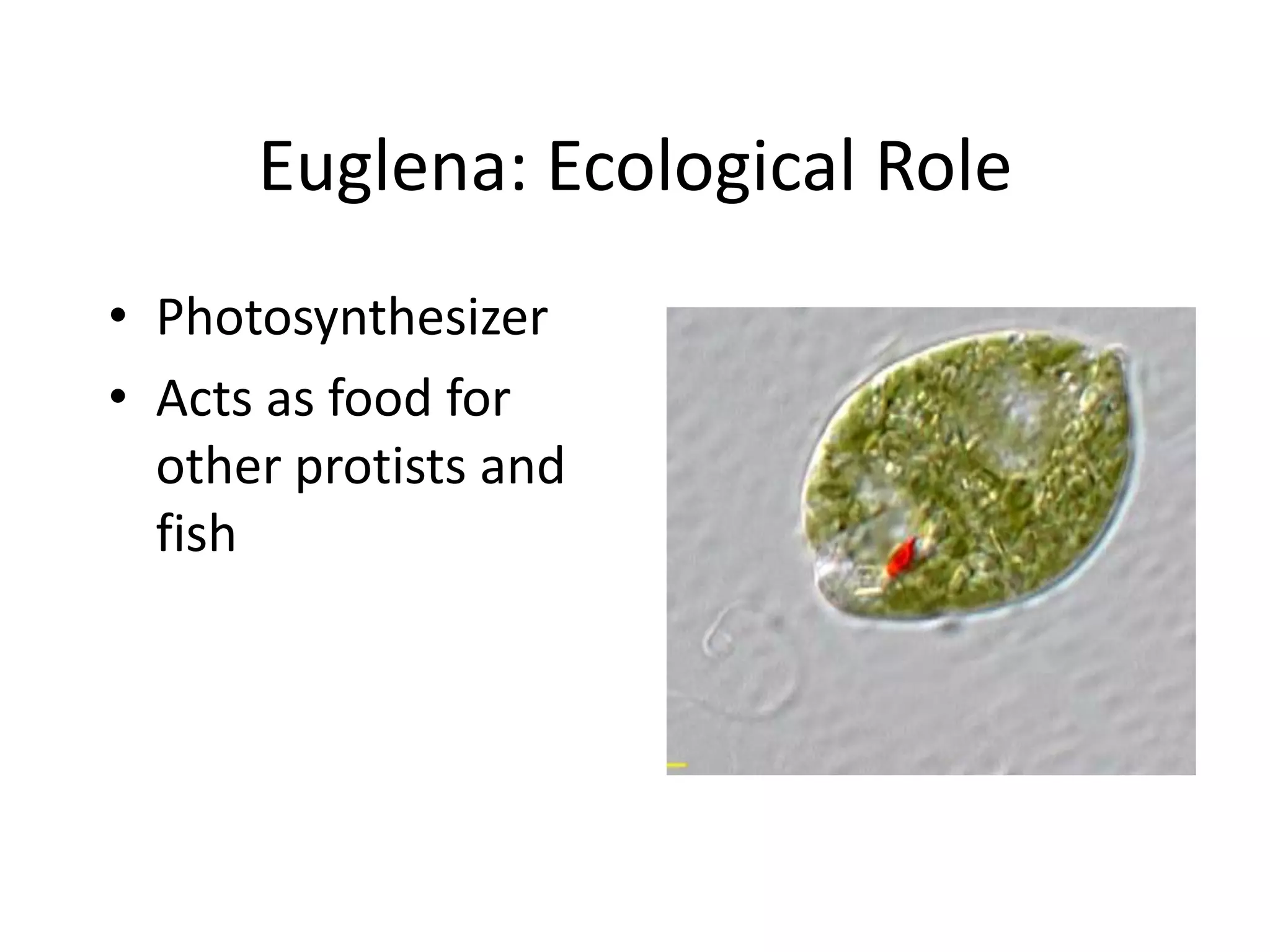
Euglena: Ecological Role
• Photosynthesizer
• Acts as food for
  other protists and
  fish
• http://www.youtube.com/watch?v=4MlR3dKf
  Xmc&feature=related&safety_mode=true&per
  sist_safety_mode=1&safe=active
•
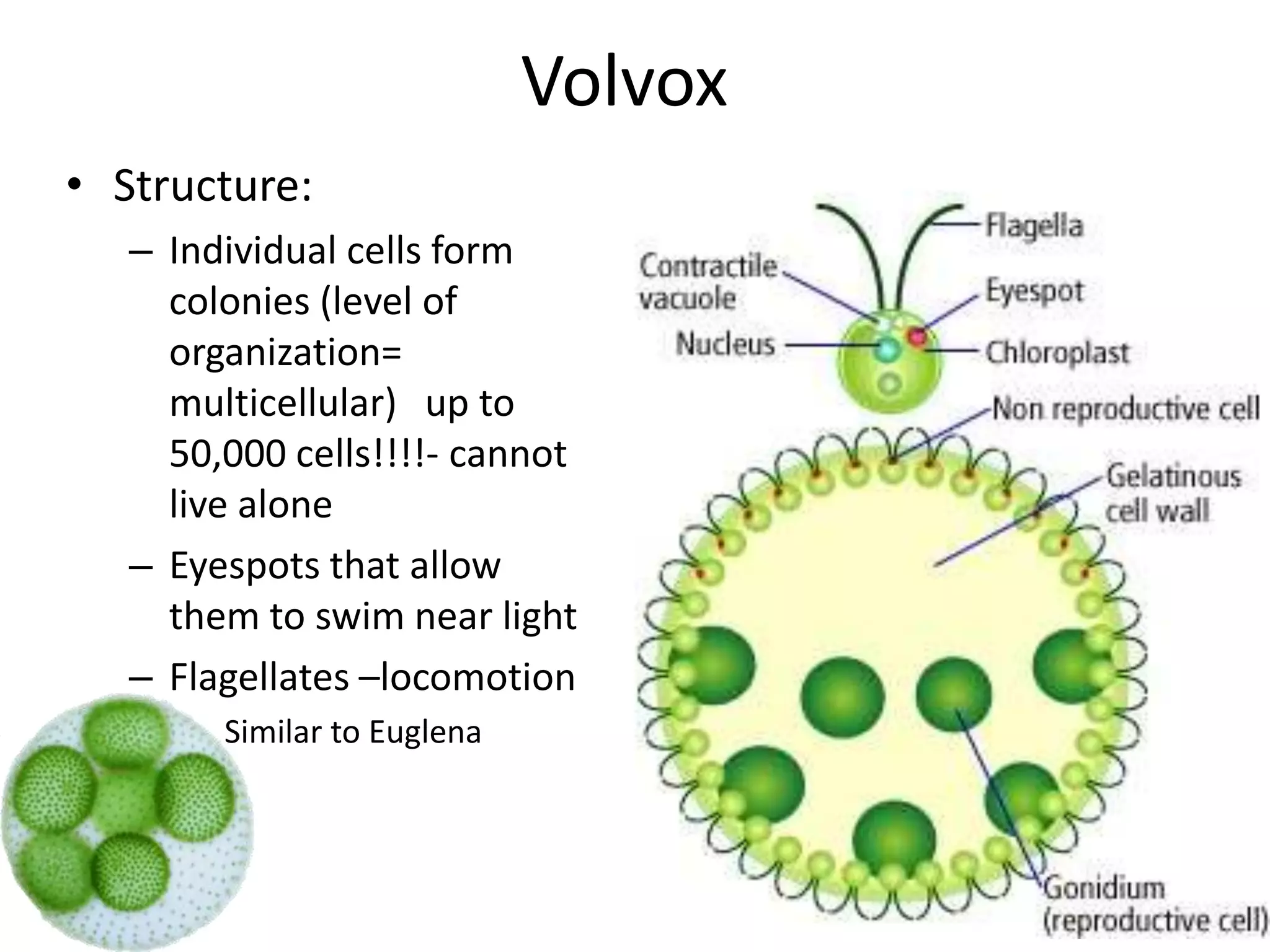
Volvox
• Structure:
   – Individual cells form
     colonies (level of
     organization=
     multicellular) up to
     50,000 cells!!!!- cannot
     live alone
   – Eyespots that allow
     them to swim near light
   – Flagellates –locomotion
      • Similar to Euglena
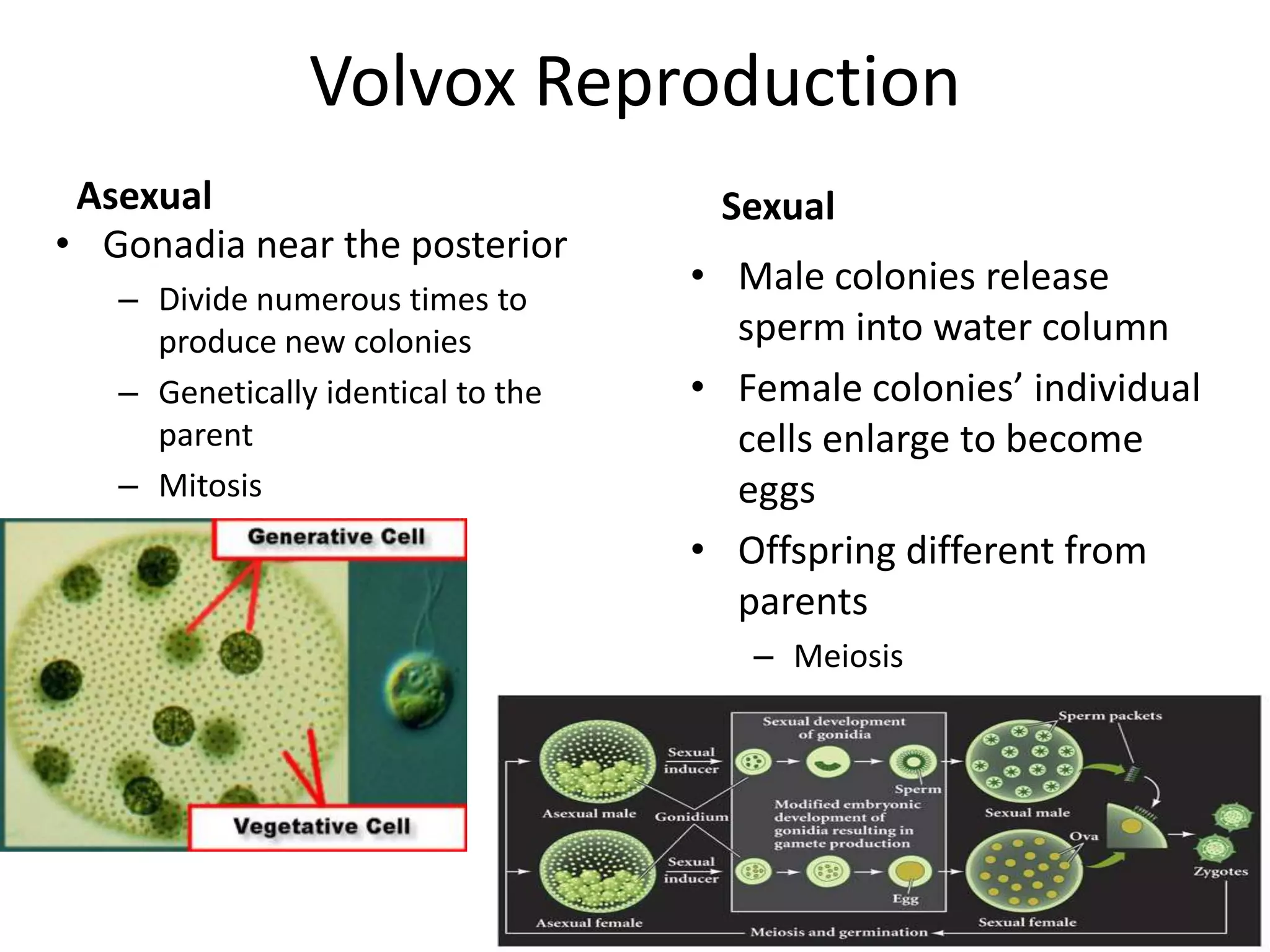
Volvox Reproduction
 Asexual                             Sexual
• Gonadia near the posterior
   – Divide numerous times to
                                    • Male colonies release
     produce new colonies             sperm into water column
   – Genetically identical to the   • Female colonies’ individual
     parent                           cells enlarge to become
   – Mitosis                          eggs
                                    • Offspring different from
                                      parents
                                       – Meiosis
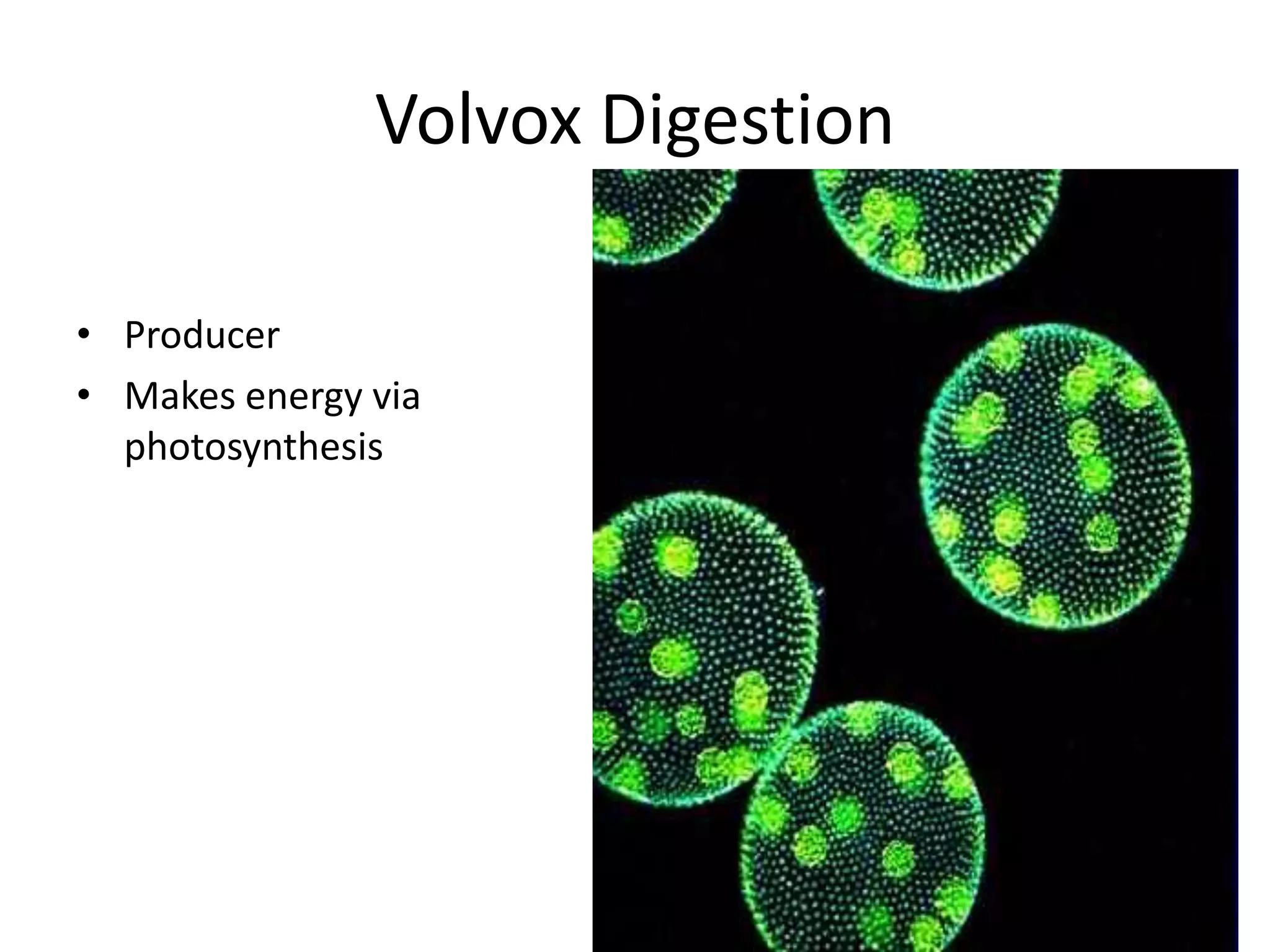
Volvox Digestion

• Producer
• Makes energy via
  photosynthesis
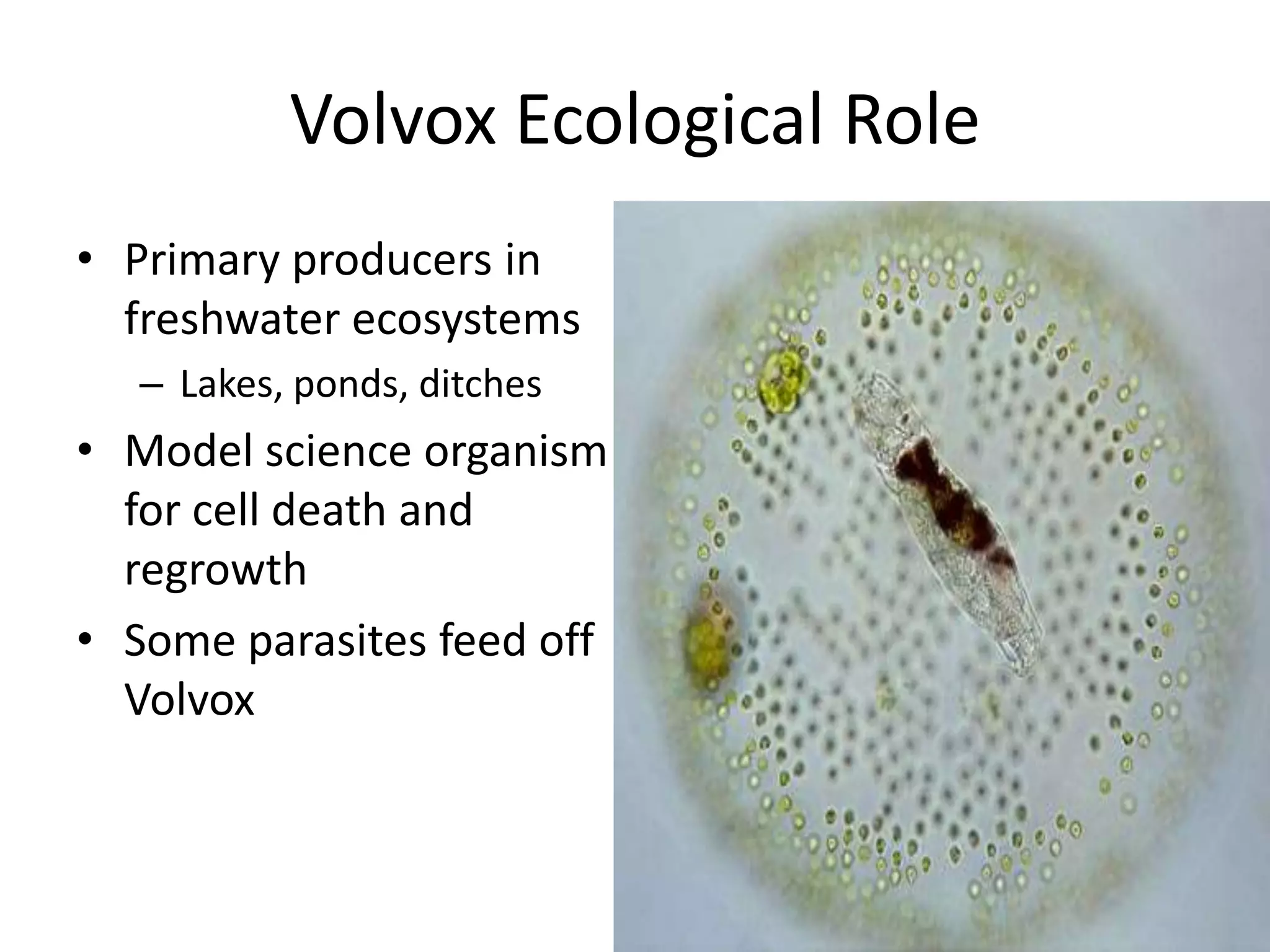
Volvox Ecological Role
• Primary producers in
  freshwater ecosystems
  – Lakes, ponds, ditches
• Model science organism
  for cell death and
  regrowth
• Some parasites feed off
  Volvox
Volvox
• http://www.youtube.com/watch?v=He9FSeGR
  i3A&safety_mode=true&persist_safety_mode
  =1&safe=active
Independent Work Time
• Finish back side of your study guide and turn
  in.
  – Study Guides will count as a homework/classwork
    assignment for Session 3


• You can find more information in Chapter 6
  (blue MARINE BIOLOGY class set books)

Chapter 6 marine microbes

  • 1.
    Chapter 6 MarineMicrobes Plankton (organisms invisible to the naked eye)
  • 2.
    Include viruses, one-celled organisms, and fungi. • Microbes play many different roles in marine ecosystem. • Phytoplankton-planktonic algae • Zooplankton-larvae of small animals-ex fish, jellyfish • We will discuss 3 of these in detail that you will be accountable for and be able to identify under a microscope 1. Diatoms 2. Dinoflagellates 3. Forams 4. Euglena 5. Volvox
  • 3.
    Diatoms Characteristics • Mostdistinctive of plankton samples – Most common • Low latitudes-occur in coastal waters • Phytoplankton-Contributed to most of primary productivity of an area.
  • 4.
    Diatom Structure • Bilaterallysymmetrical • Glassy Cell wall • 2 valves- 1 large, 1 small • Visible geometrically shaped pattern-(helps distinguish between species)
  • 5.
    Reproduction • Reproduction: • Digestion: – Asexually by – Makes own food fission (autotroph) via photosynthesis • When cells divides, each daughter gets one of the 2 valves • Eventually daughter that inherited smaller valve will reproduces sexually
  • 7.
    • Level oforganization: – Unicellular and eukaryotic • Ecological Role – Responsible for ~50% of oceans energy production – Producers
  • 8.
    Dinoflagellates- structure • Globular,single-celled organisms • 2 flagella that lie in groves on the center of surface • Larger of phytoplankton
  • 9.
    Reproduction • Asexually byfission – Split cell into two – Can happen at a rate of one division per day • Sexual in some species by gametes • If you had two species of Dinoflagellates and species A produced asexually while species B produced sexually, which species to you expect to survive throughout time longer and why?
  • 10.
    • Ecological Role:Some species are responsible for Red Tide – algae bloom-large quick population boom – Produce toxins, usually cannot eat fish during this time – http://www.youtube.com/watch ?v=auEePWRqj7Y&safety_mode =true&persist_safety_mode=1& safe=active • Example (back side of Study Guide) Zooxanthellae are collections of dinoflagellates – They lack flagella like most species – Mutualistic relationships with corals, jellyfish, and mollusks.
  • 11.
    Goodby’s Creek inMandarin during last Algae Bloom
  • 13.
    Forams Characteristics and Structure • Have a pseudopod-organelle that is an extension of the cell surface – Used for locomotion and food capture • Have a shell • deep as Marianas Trench • members of zooplankton
  • 14.
    Foram Reproduction • Asexualfission most species • Sexual reproduction- some species
  • 15.
    Forams: digestion/energy • Consumea lot of diatoms and dinoflagellates • Some host green/red algae – Symbiotic relationship • Forams get nutrients • Coral reefs get calcium carbonate
  • 16.
    Ecological Role • Foodfor fish and invertebrates (inverts) • Turn over nutrients in the ocean • Most abundant group of fossils – Make up sediments
  • 17.
    • http://www.youtube.com/watch?v=Fpry23bS 6g0&safety_mode=true&persist_safety_mode =1&safe=active
  • 18.
    Ever wonder aboutthat green gunk? • Its Euglena! – Possess chlorophyll, 1 or 2 flagella
  • 19.
    Euglena • Salt orfresh water • Digestion- perform photosynthesis or absorb nutrients – stigma at base of flagella allows euglena to orient themselves towards a light source • Reproduce using binary fission – Split into two new organisms
  • 20.
    Euglena Structure (drawsketch on back side of Study Guide)
  • 21.
    Euglena: Ecological Role •Photosynthesizer • Acts as food for other protists and fish
  • 22.
    • http://www.youtube.com/watch?v=4MlR3dKf Xmc&feature=related&safety_mode=true&per sist_safety_mode=1&safe=active •
  • 23.
    Volvox • Structure: – Individual cells form colonies (level of organization= multicellular) up to 50,000 cells!!!!- cannot live alone – Eyespots that allow them to swim near light – Flagellates –locomotion • Similar to Euglena
  • 24.
    Volvox Reproduction Asexual Sexual • Gonadia near the posterior – Divide numerous times to • Male colonies release produce new colonies sperm into water column – Genetically identical to the • Female colonies’ individual parent cells enlarge to become – Mitosis eggs • Offspring different from parents – Meiosis
  • 25.
    Volvox Digestion • Producer •Makes energy via photosynthesis
  • 26.
    Volvox Ecological Role •Primary producers in freshwater ecosystems – Lakes, ponds, ditches • Model science organism for cell death and regrowth • Some parasites feed off Volvox
  • 27.
    Volvox • http://www.youtube.com/watch?v=He9FSeGR i3A&safety_mode=true&persist_safety_mode =1&safe=active
  • 28.
    Independent Work Time •Finish back side of your study guide and turn in. – Study Guides will count as a homework/classwork assignment for Session 3 • You can find more information in Chapter 6 (blue MARINE BIOLOGY class set books)

Editor's Notes

  • #5 Left is how appear, right is how their probably appear through our microscopes