Coastal Wetlands
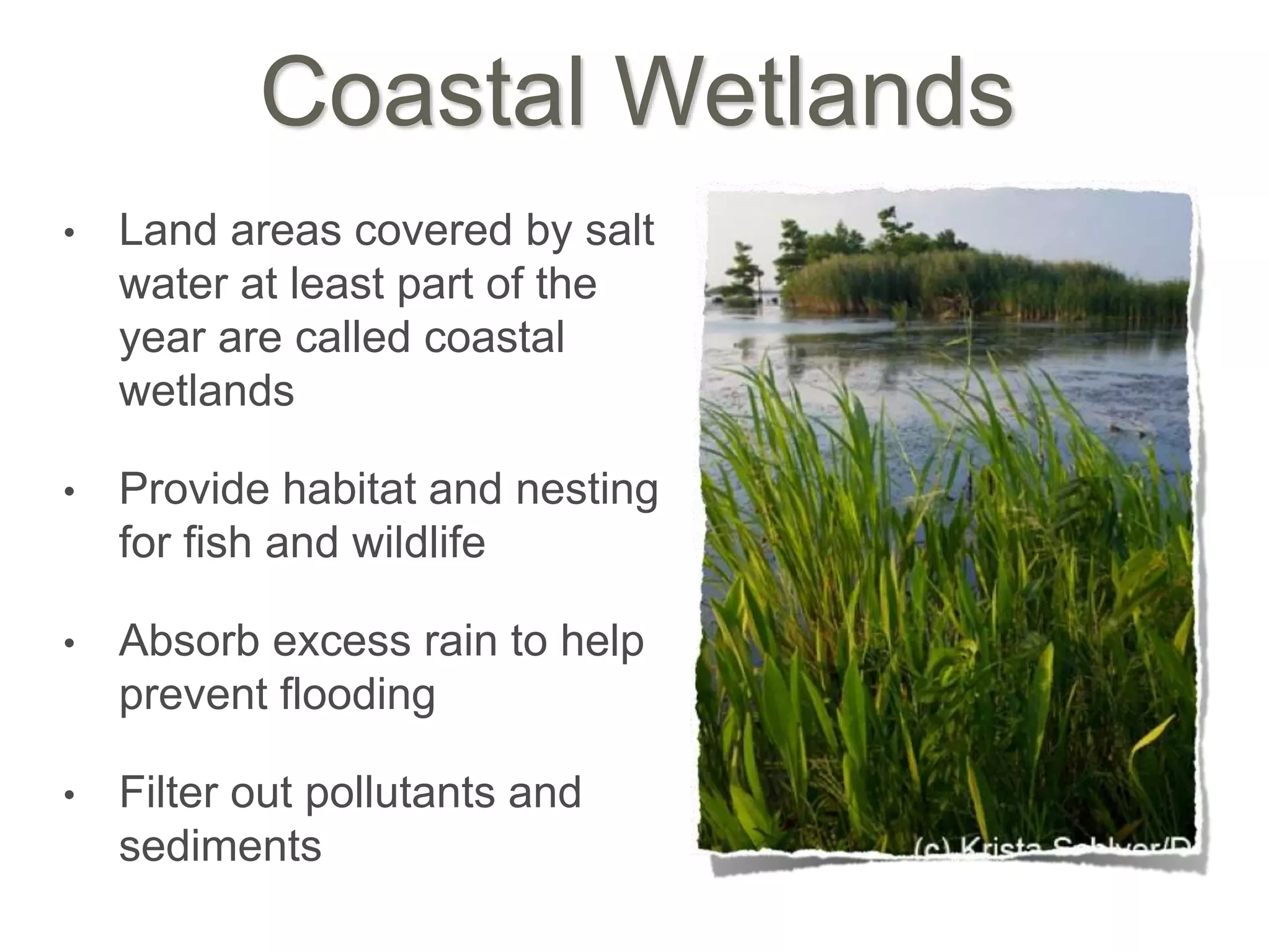
• Land areas covered by salt
water at least part of the
year are called coastal
wetlands
• Provide habitat and nesting
for fish and wildlife
• Absorb excess rain to help
prevent flooding
• Filter out pollutants and
sediments
Plants and Animals of
Estuaries
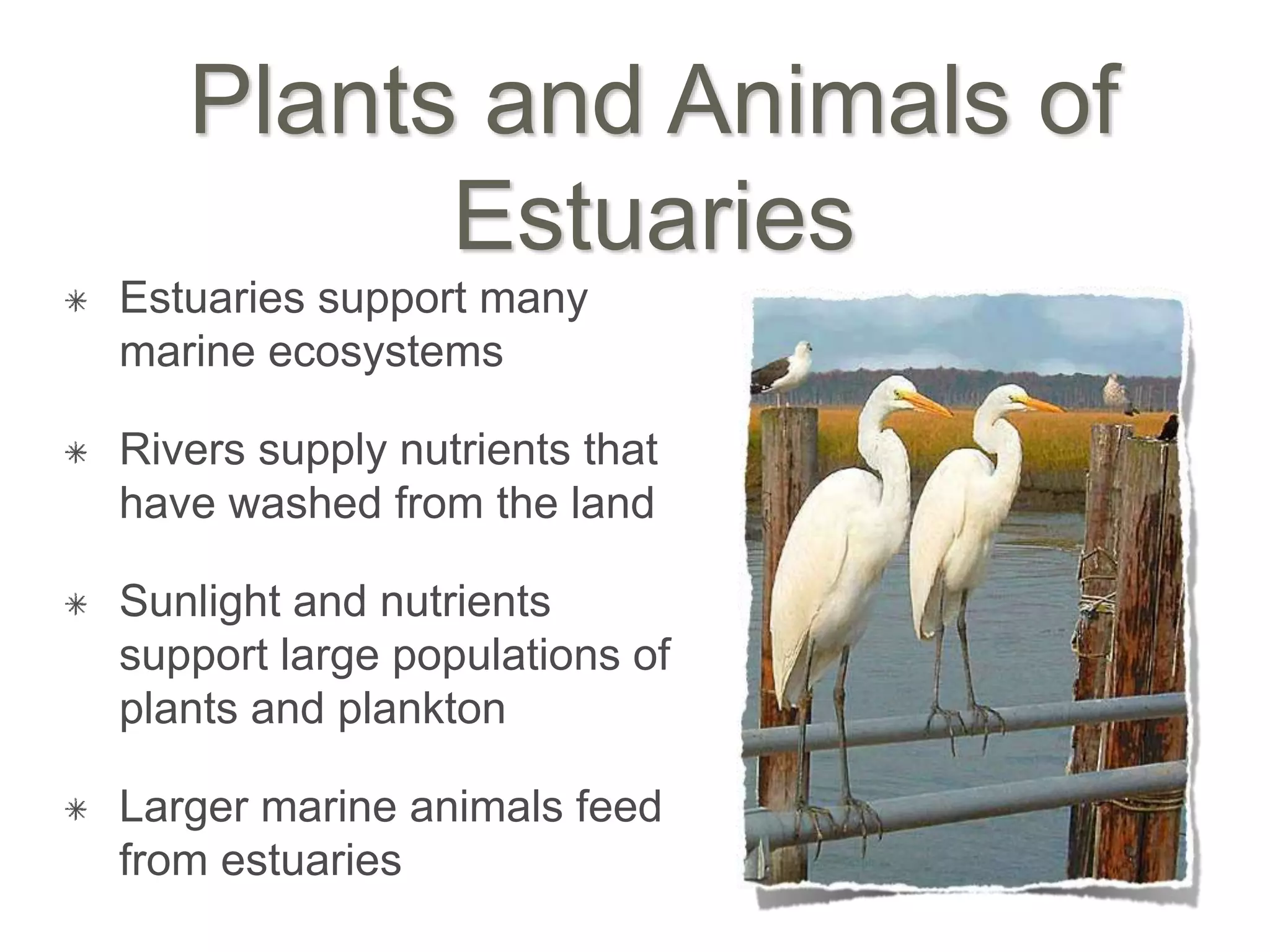
Estuaries support many
marine ecosystems
Rivers supply nutrients that
have washed from the land
Sunlight and nutrients
support large populations of
plants and plankton
Larger marine animals feed
from estuaries
Threats to Estuaries
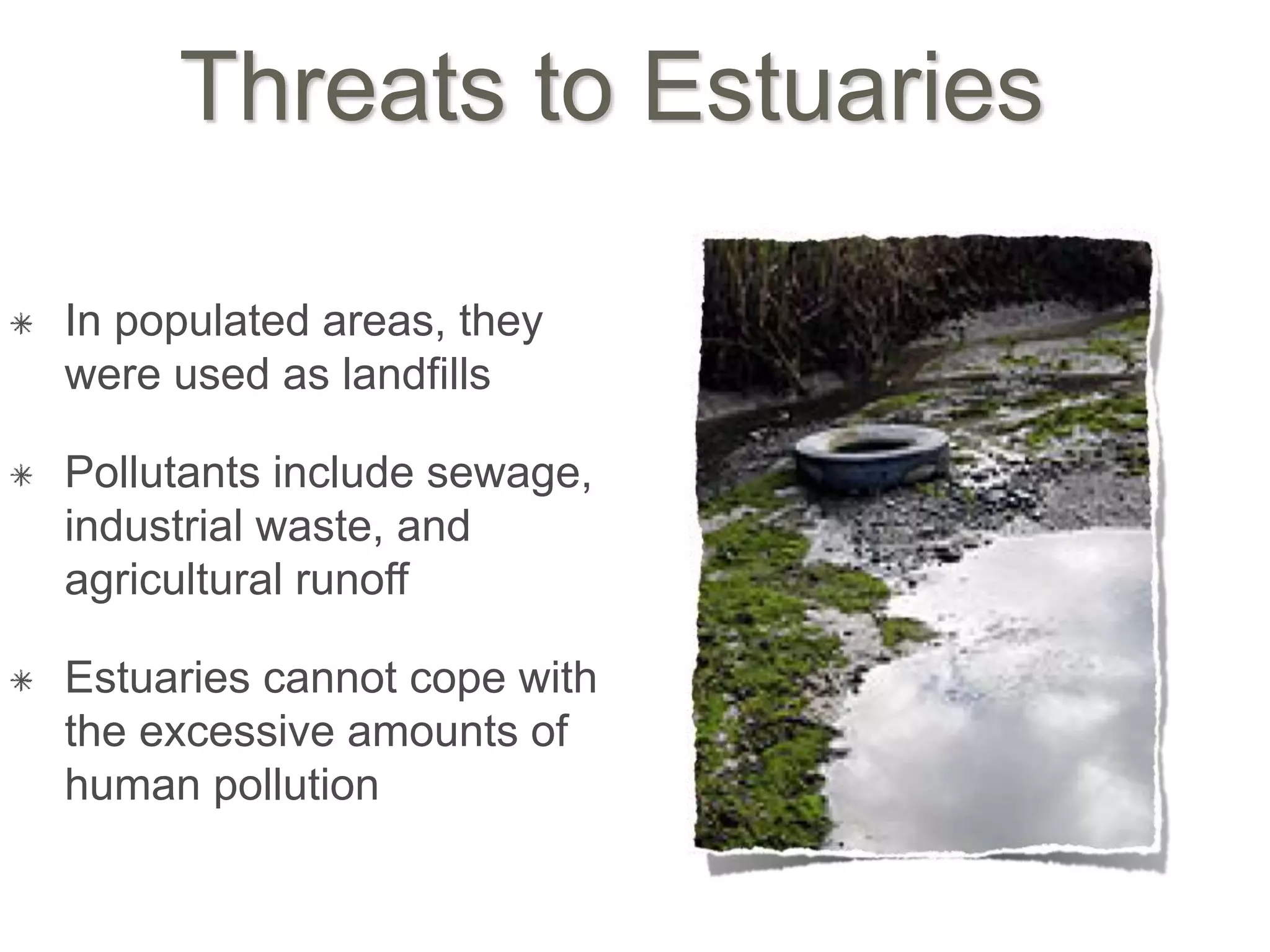
In populated areas, they
were used as landfills
Pollutants include sewage,
industrial waste, and
agricultural runoff
Estuaries cannot cope with
the excessive amounts of
human pollution
Salt Marshes
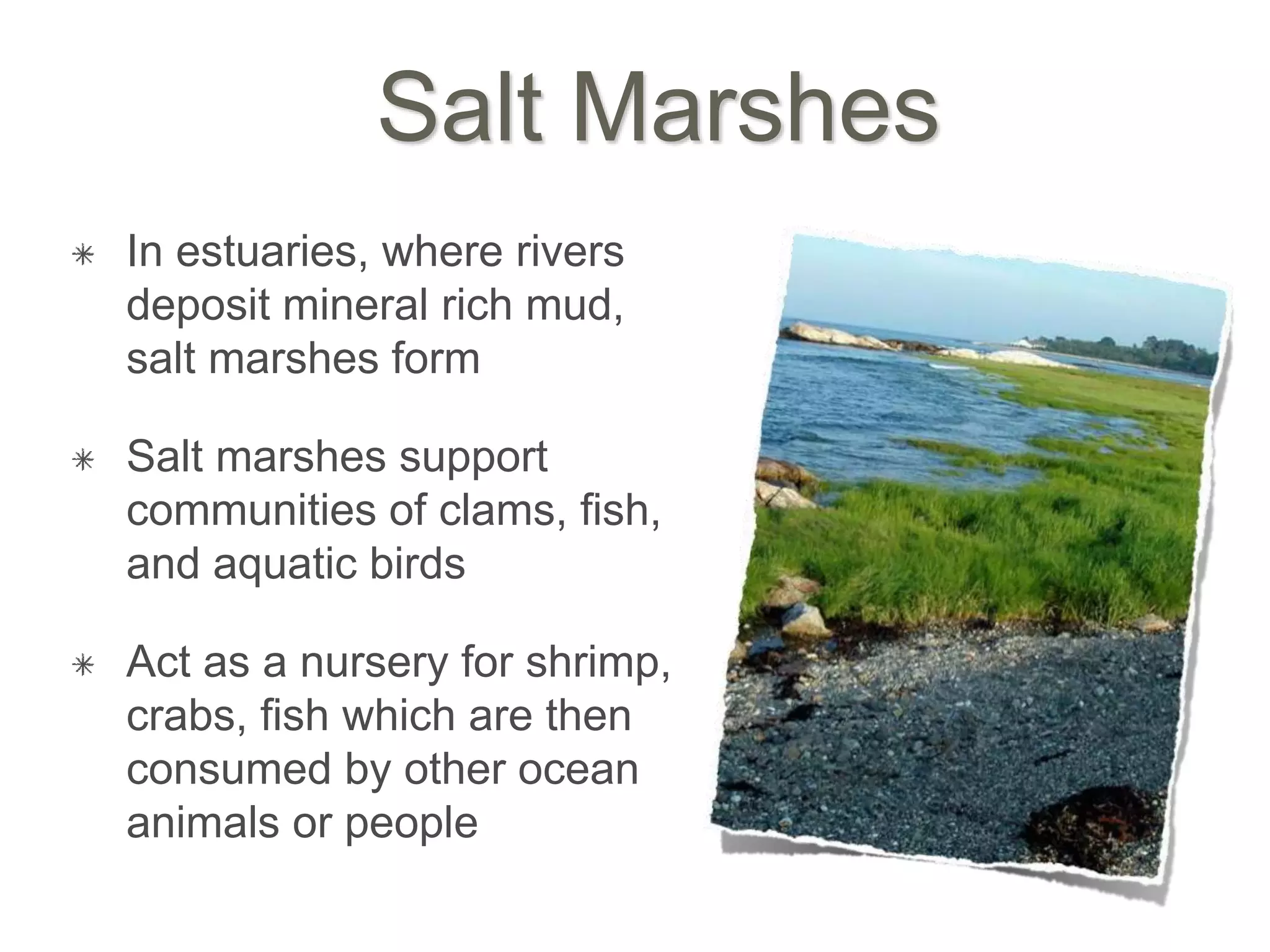
In estuaries, where rivers
deposit mineral rich mud,
salt marshes form
Salt marshes support
communities of clams, fish,
and aquatic birds
Act as a nursery for shrimp,
crabs, fish which are then
consumed by other ocean
animals or people
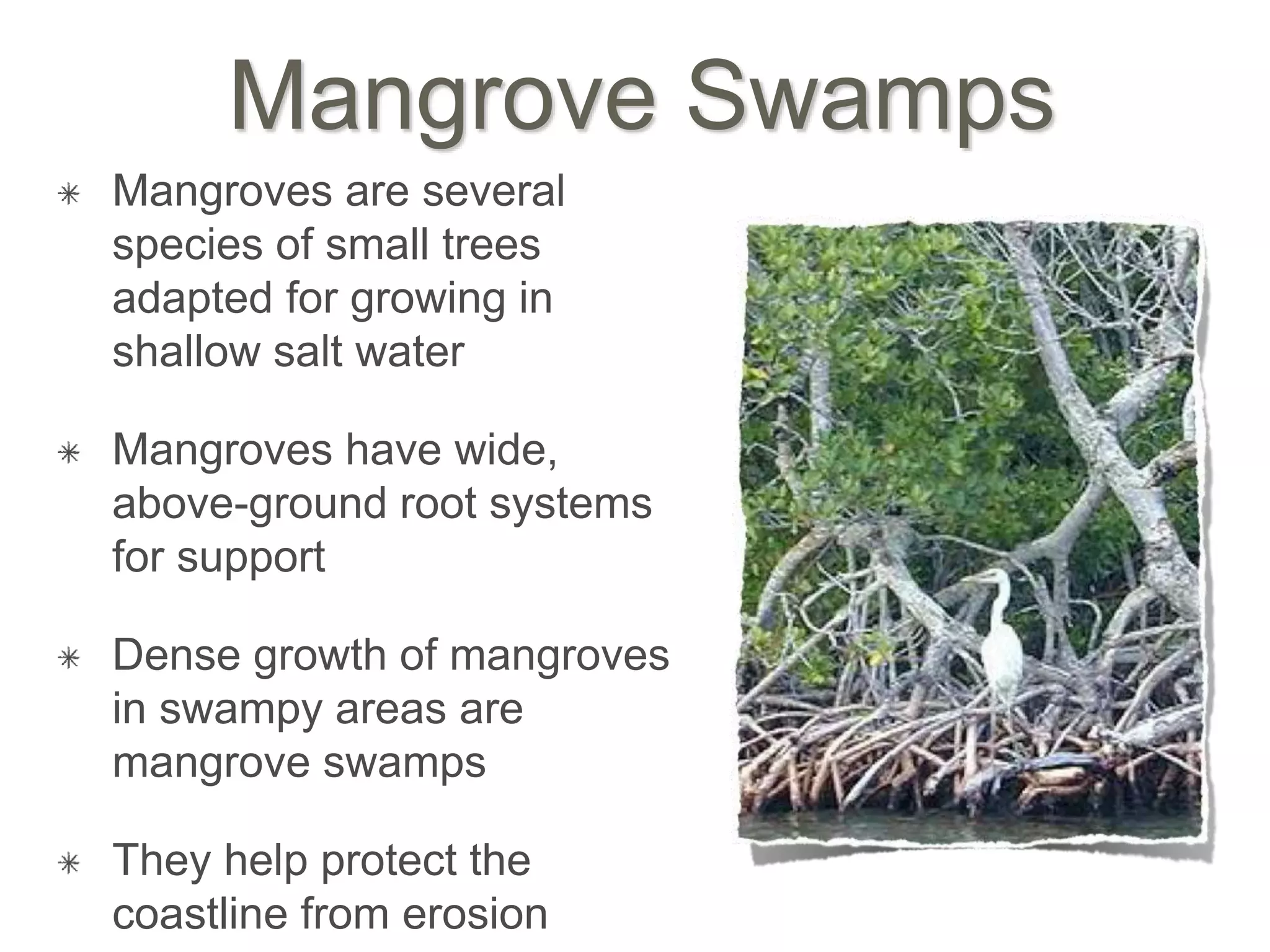
Mangrove Swamps
Mangroves are several
species of small trees
adapted for growing in
shallow salt water
Mangroves have wide,
above-ground root systems
for support
Dense growth of mangroves
in swampy areas are
mangrove swamps
They help protect the
coastline from erosion
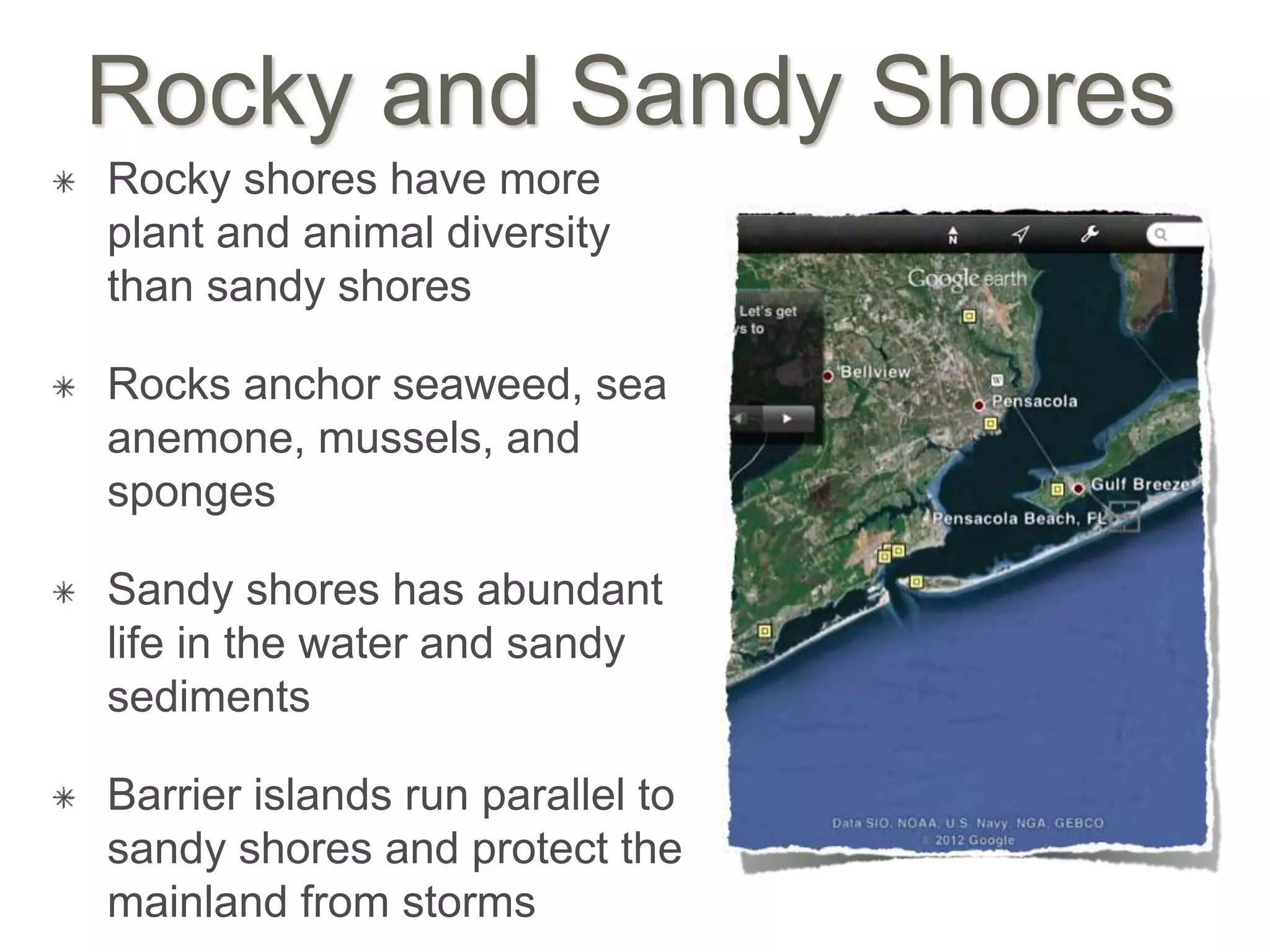
Rocky and Sandy Shores
Rocky shores have more
plant and animal diversity
than sandy shores
Rocks anchor seaweed, sea
anemone, mussels, and
sponges
Sandy shores has abundant
life in the water and sandy
sediments
Barrier islands run parallel to
sandy shores and protect the
mainland from storms
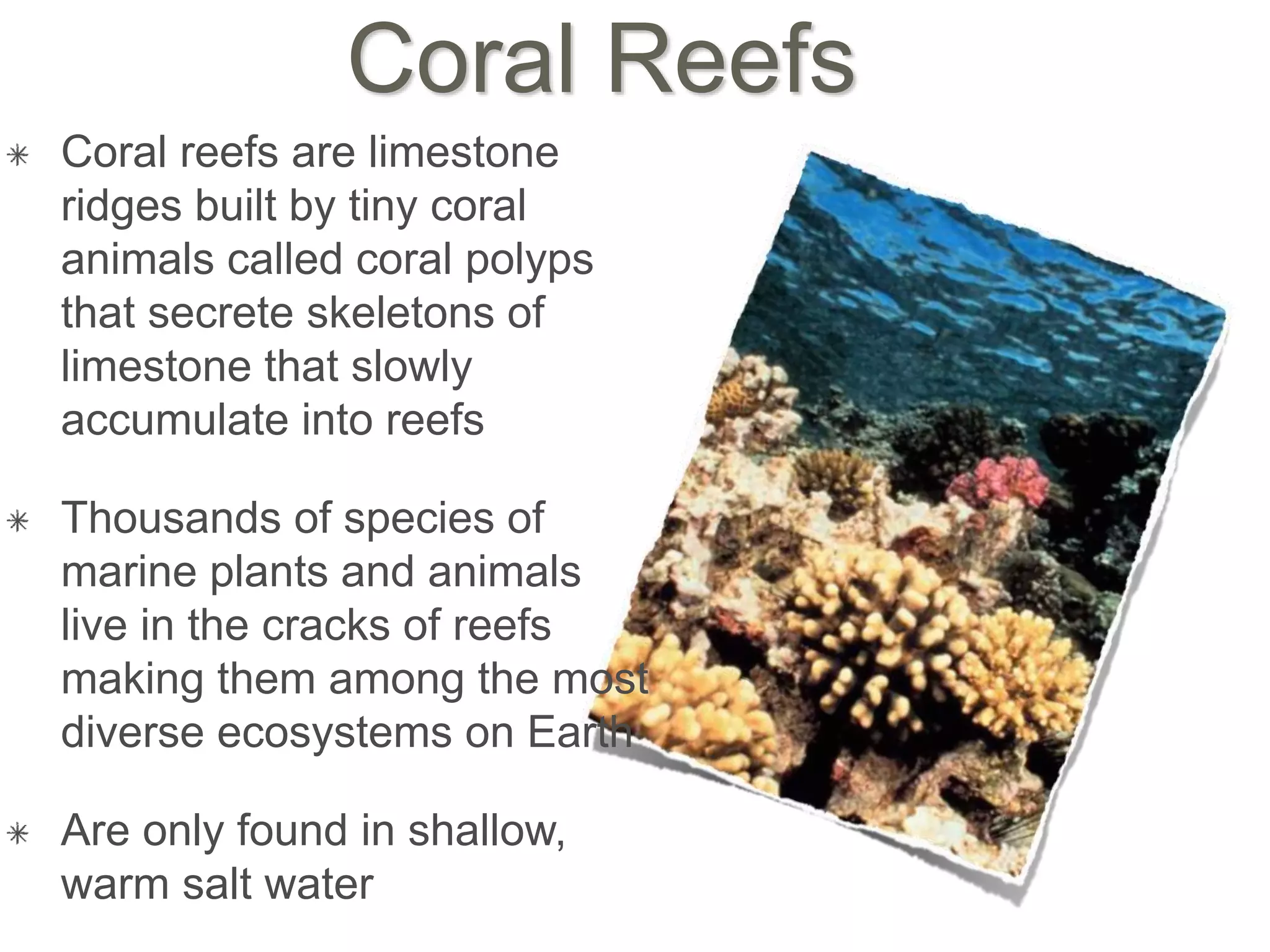
Coral Reefs
Coral reefs are limestone
ridges built by tiny coral
animals called coral polyps
that secrete skeletons of
limestone that slowly
accumulate into reefs
Thousands of species of
marine plants and animals
live in the cracks of reefs
making them among the most
diverse ecosystems on Earth
Are only found in shallow,
warm salt water
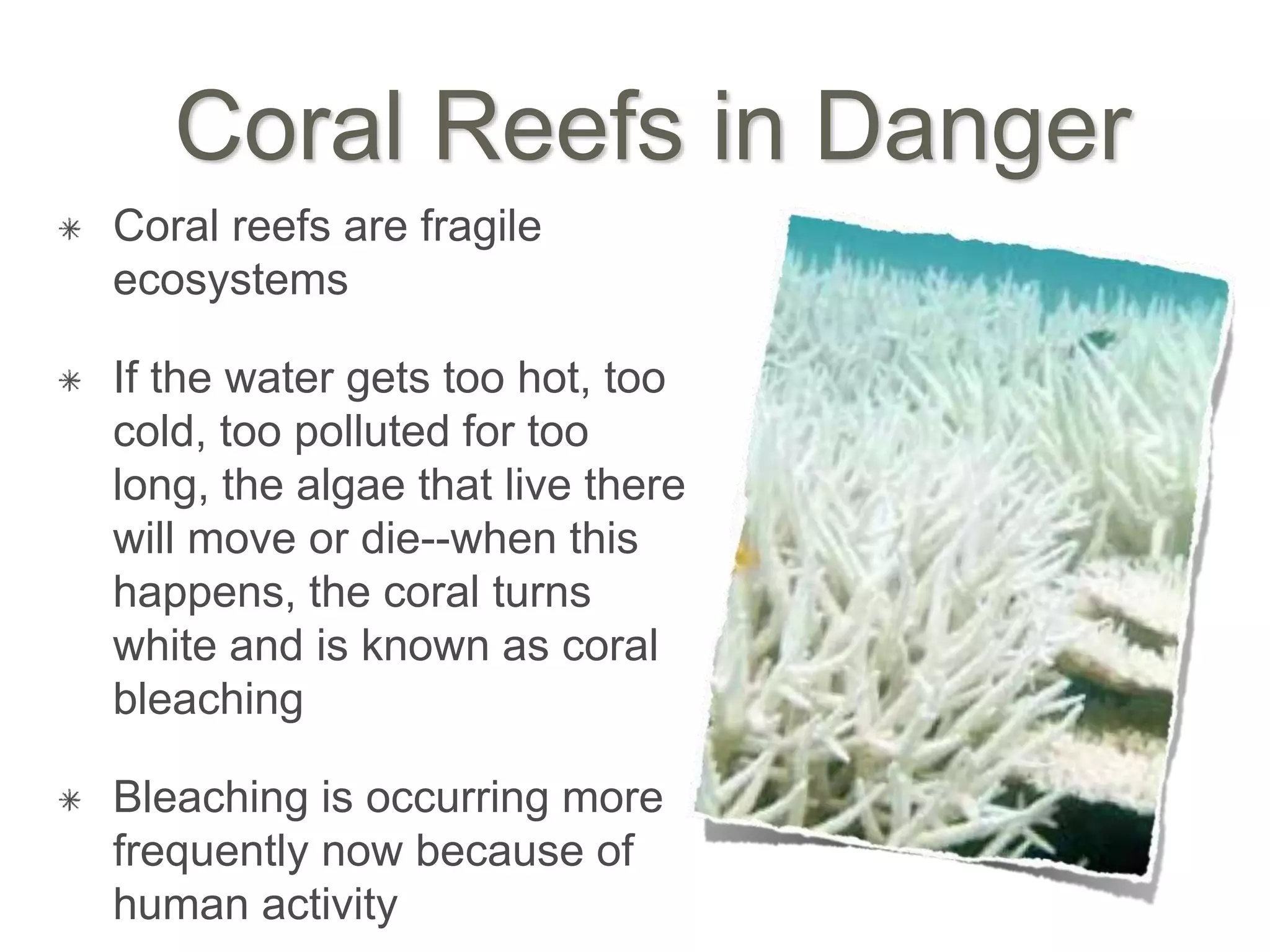
Coral Reefs in Danger
Coral reefs are fragile
ecosystems
If the water gets too hot, too
cold, too polluted for too
long, the algae that live there
will move or die--when this
happens, the coral turns
white and is known as coral
bleaching
Bleaching is occurring more
frequently now because of
human activity
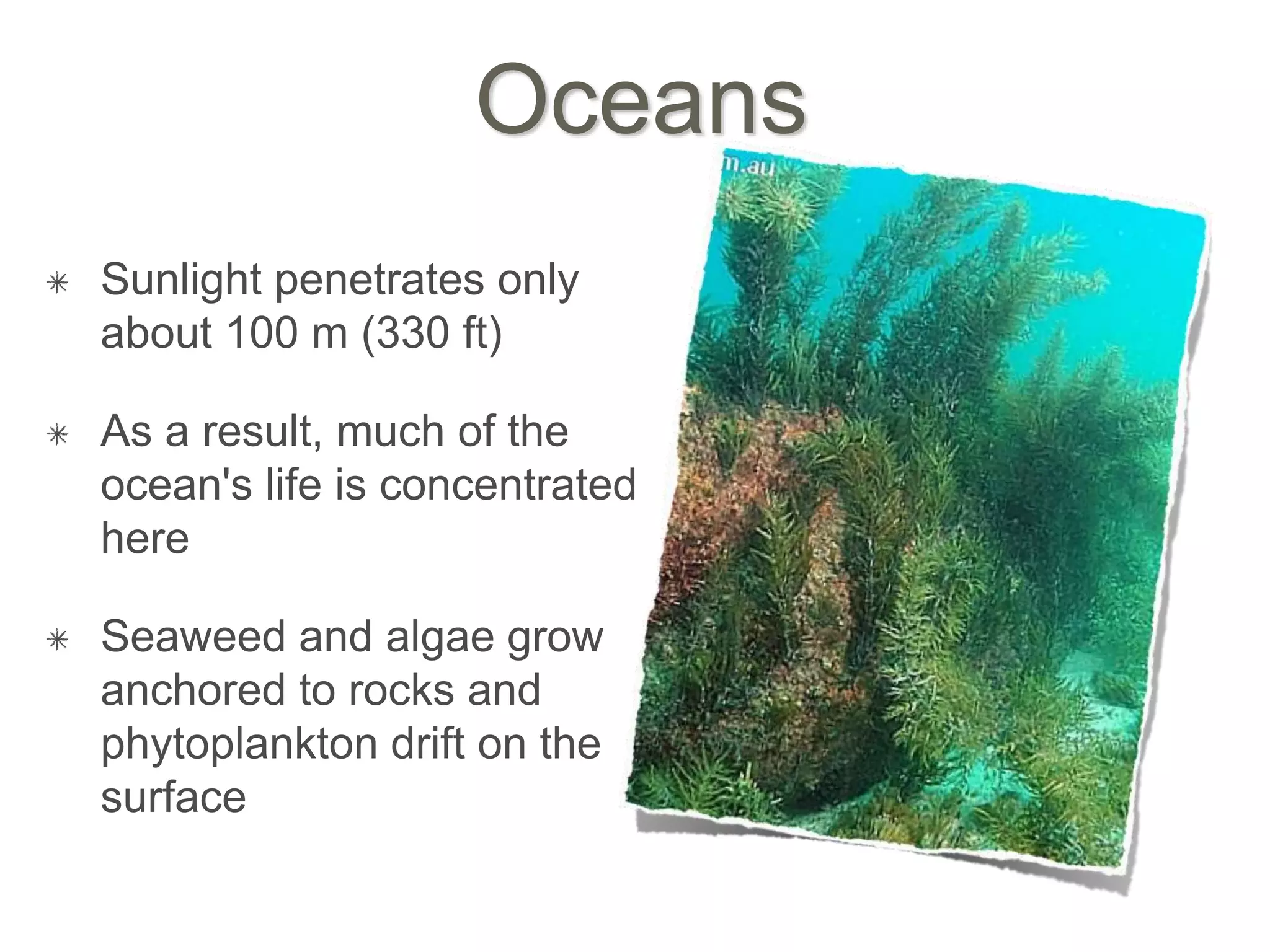
Oceans
Sunlight penetrates only
about 100 m (330 ft)
As a result, much of the
ocean's life is concentrated
here
Seaweed and algae grow
anchored to rocks and
phytoplankton drift on the
surface
Plants and Animals of Oceans
Phytoplankton grows only
where there is enough
sunlight and nutrients
This makes the open ocean
one of the least productive
ecosystems
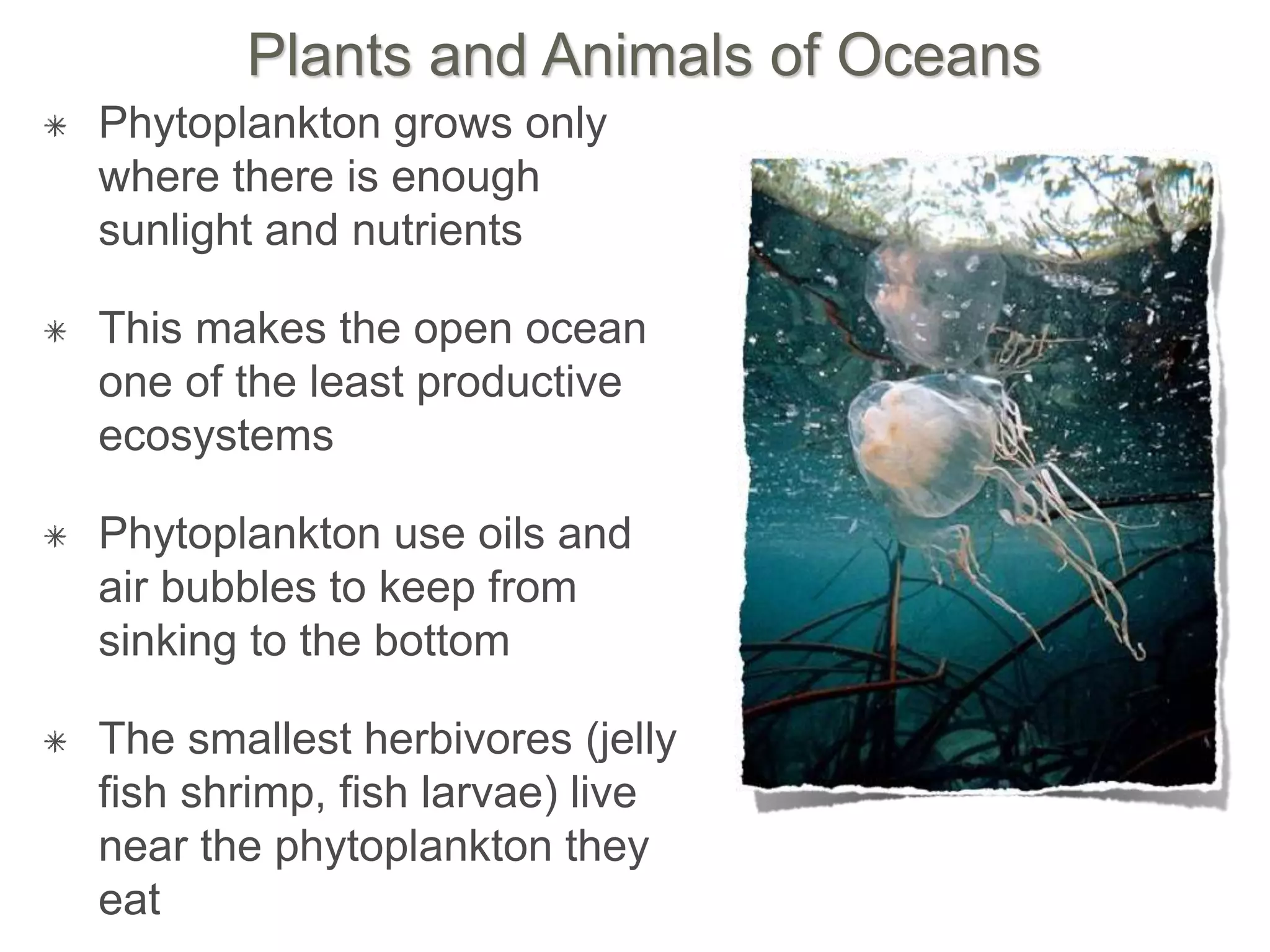
Phytoplankton use oils and
air bubbles to keep from
sinking to the bottom
The smallest herbivores (jelly
fish shrimp, fish larvae) live
near the phytoplankton they
eat
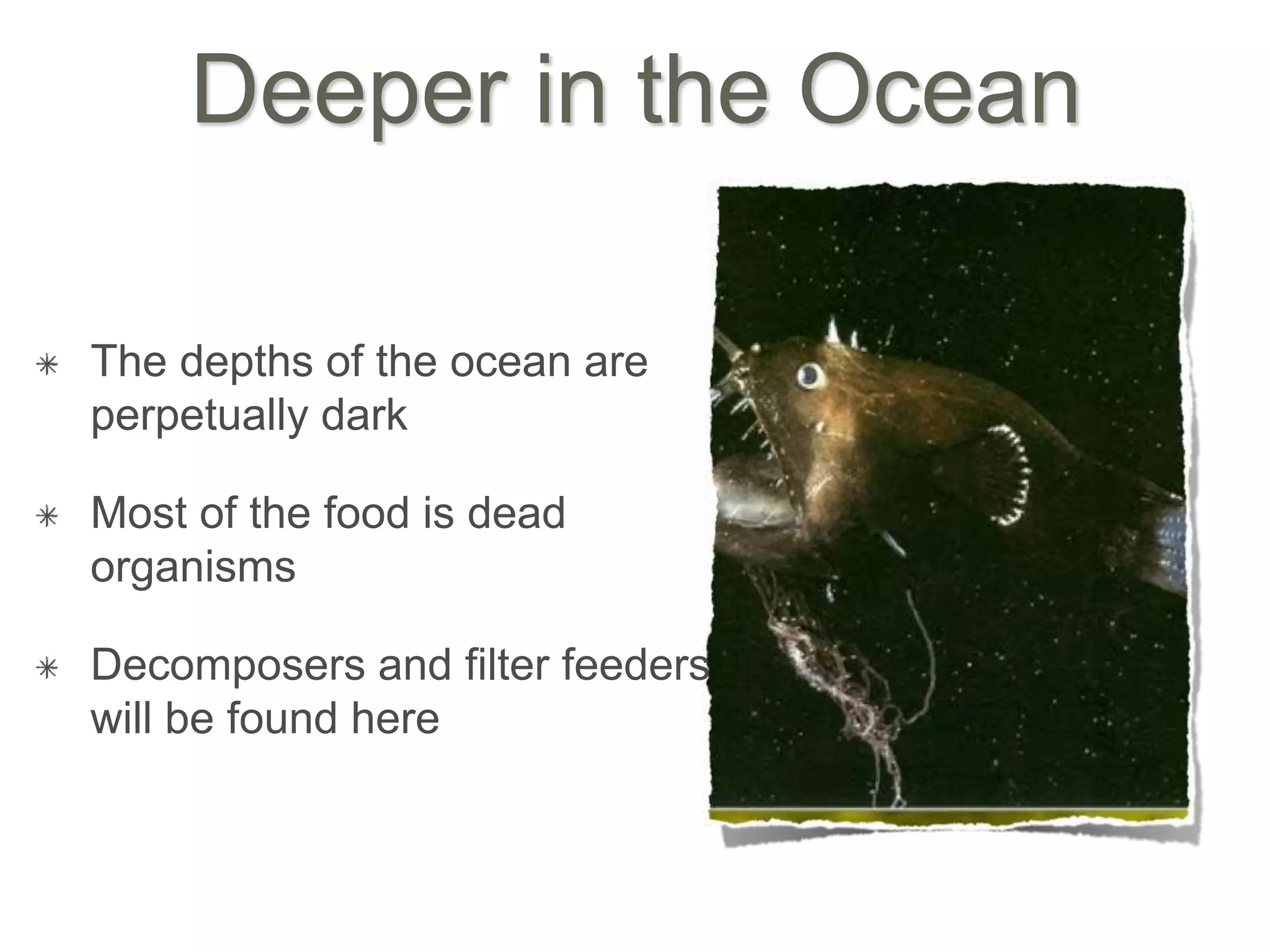
Deeper in the Ocean
The depths of the ocean are
perpetually dark
Most of the food is dead
organisms
Decomposers and filter feeders
will be found here
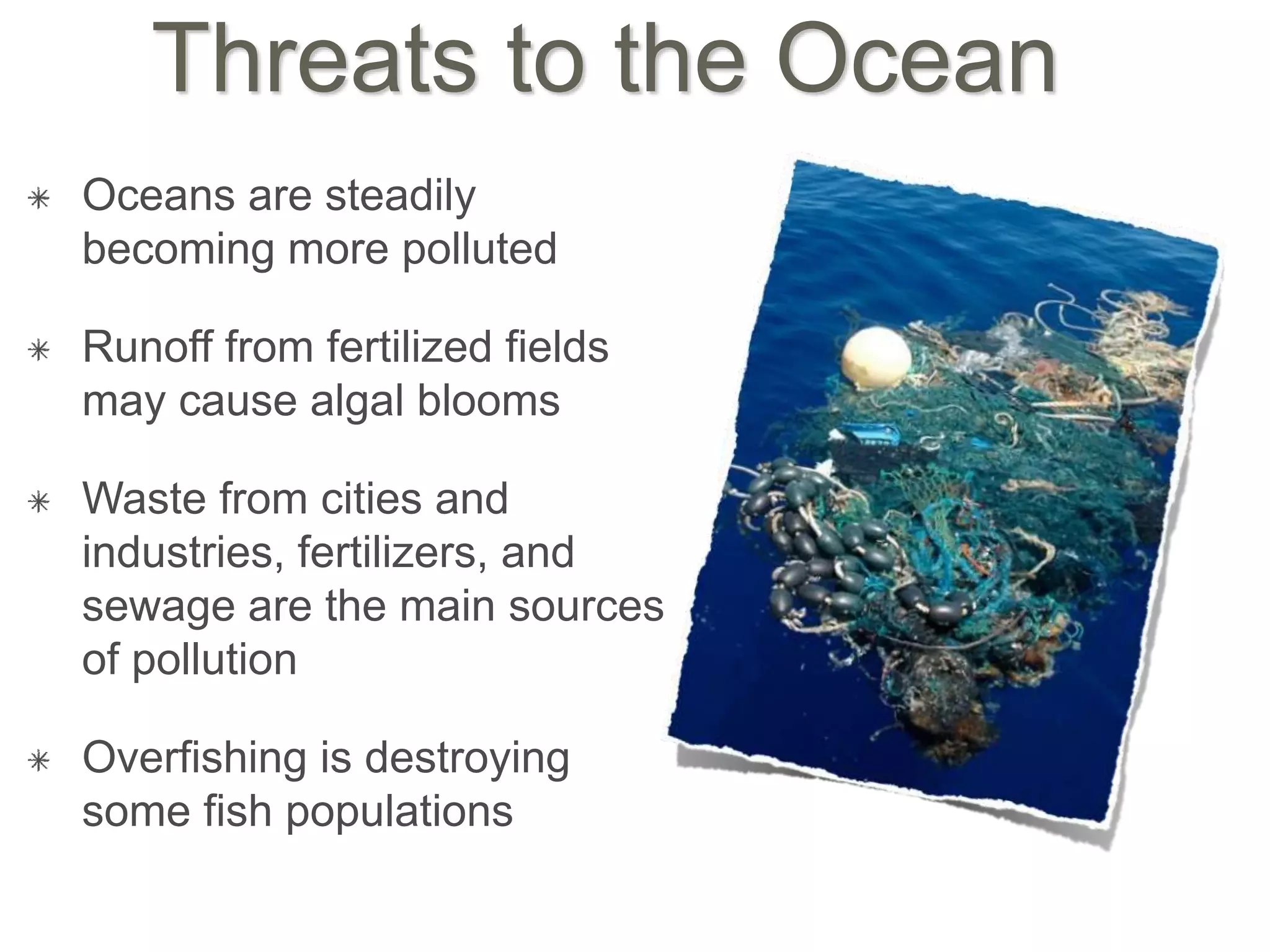
Threats to the Ocean
Oceans are steadily
becoming more polluted
Runoff from fertilized fields
may cause algal blooms
Waste from cities and
industries, fertilizers, and
sewage are the main sources
of pollution
Overfishing is destroying
some fish populations
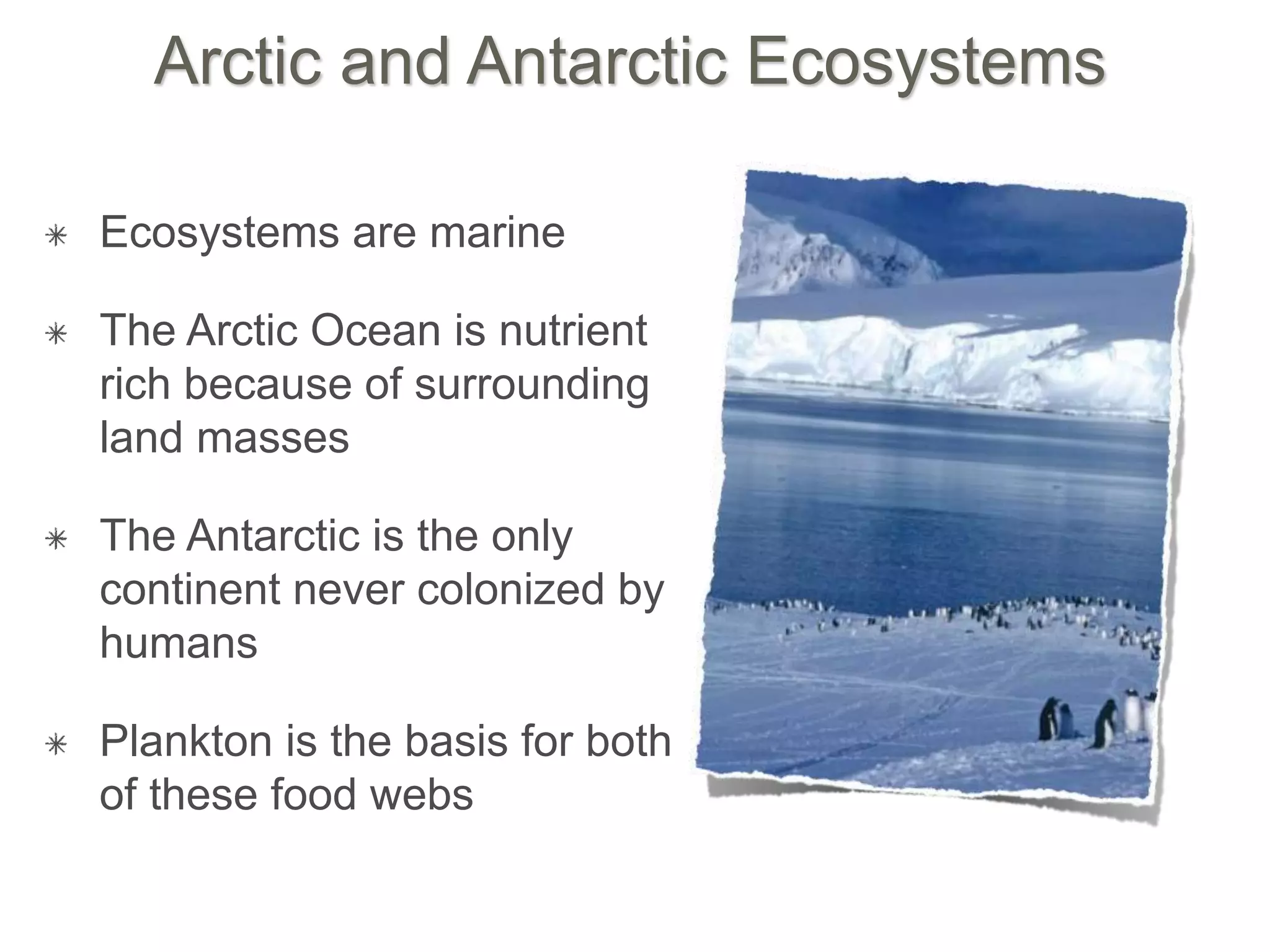
Arctic and Antarctic Ecosystems
Ecosystems are marine
The Arctic Ocean is nutrient
rich because of surrounding
land masses
The Antarctic is the only
continent never colonized by
humans
Plankton is the basis for both
of these food webs
Copy Now, Answer Later
Explain why estuaries are very productive
ecosystems. Why are estuaries vulnerable to the
effects of pollution?
Compare salt marshes with mangrove swamps.
Describe two factors that can damage coral reefs.
List two ways in which animals of the oceans are
threatened.
Suppose the sea suddenly rose 100 m. What would
happen to the world's coral reefs? Explain.

Chapter 7 Section 2.ppt

  • 1.
    Coastal Wetlands • Landareas covered by salt water at least part of the year are called coastal wetlands • Provide habitat and nesting for fish and wildlife • Absorb excess rain to help prevent flooding • Filter out pollutants and sediments
  • 2.
    Plants and Animalsof Estuaries Estuaries support many marine ecosystems Rivers supply nutrients that have washed from the land Sunlight and nutrients support large populations of plants and plankton Larger marine animals feed from estuaries
  • 3.
    Threats to Estuaries Inpopulated areas, they were used as landfills Pollutants include sewage, industrial waste, and agricultural runoff Estuaries cannot cope with the excessive amounts of human pollution
  • 4.
    Salt Marshes In estuaries,where rivers deposit mineral rich mud, salt marshes form Salt marshes support communities of clams, fish, and aquatic birds Act as a nursery for shrimp, crabs, fish which are then consumed by other ocean animals or people
  • 5.
    Mangrove Swamps Mangroves areseveral species of small trees adapted for growing in shallow salt water Mangroves have wide, above-ground root systems for support Dense growth of mangroves in swampy areas are mangrove swamps They help protect the coastline from erosion
  • 6.
    Rocky and SandyShores Rocky shores have more plant and animal diversity than sandy shores Rocks anchor seaweed, sea anemone, mussels, and sponges Sandy shores has abundant life in the water and sandy sediments Barrier islands run parallel to sandy shores and protect the mainland from storms
  • 7.
    Coral Reefs Coral reefsare limestone ridges built by tiny coral animals called coral polyps that secrete skeletons of limestone that slowly accumulate into reefs Thousands of species of marine plants and animals live in the cracks of reefs making them among the most diverse ecosystems on Earth Are only found in shallow, warm salt water
  • 8.
    Coral Reefs inDanger Coral reefs are fragile ecosystems If the water gets too hot, too cold, too polluted for too long, the algae that live there will move or die--when this happens, the coral turns white and is known as coral bleaching Bleaching is occurring more frequently now because of human activity
  • 9.
    Oceans Sunlight penetrates only about100 m (330 ft) As a result, much of the ocean's life is concentrated here Seaweed and algae grow anchored to rocks and phytoplankton drift on the surface
  • 10.
    Plants and Animalsof Oceans Phytoplankton grows only where there is enough sunlight and nutrients This makes the open ocean one of the least productive ecosystems Phytoplankton use oils and air bubbles to keep from sinking to the bottom The smallest herbivores (jelly fish shrimp, fish larvae) live near the phytoplankton they eat
  • 11.
    Deeper in theOcean The depths of the ocean are perpetually dark Most of the food is dead organisms Decomposers and filter feeders will be found here
  • 12.
    Threats to theOcean Oceans are steadily becoming more polluted Runoff from fertilized fields may cause algal blooms Waste from cities and industries, fertilizers, and sewage are the main sources of pollution Overfishing is destroying some fish populations
  • 13.
    Arctic and AntarcticEcosystems Ecosystems are marine The Arctic Ocean is nutrient rich because of surrounding land masses The Antarctic is the only continent never colonized by humans Plankton is the basis for both of these food webs
  • 14.
    Copy Now, AnswerLater Explain why estuaries are very productive ecosystems. Why are estuaries vulnerable to the effects of pollution? Compare salt marshes with mangrove swamps. Describe two factors that can damage coral reefs. List two ways in which animals of the oceans are threatened. Suppose the sea suddenly rose 100 m. What would happen to the world's coral reefs? Explain.