Introduction to Biology
Prepared by:
MR. KEVIN FRANCIS E. MAGAOAY
Faculty, SHS Biology Department
C h a p t e r 1
Learning Objectives:
 Define biology as a science
 Identify and describe the properties of life
 Infer and justify if something is living or non-living
 Describe levels of organization among living things
 Tabulate examples of different sub-disciplines in
biology
Overview:
 Definition of Biology
 Unifying Themes in Biology
 Characteristics of Living Organisms
 Levels of Biological Organization
 Branches of Biology
What is Biology?
 Biology is a natural science concerned with the
study of life and living organisms, including their
structure, function, growth, evolution,
distribution, identification and taxonomy.
Unifying Themes in Biology
 Cell theory as a description of living systems.
 Continuity of life is explained by the molecular
basis of inheritance.
 Function and structure are interdependent.
 Evolution change prompts diversity of life.
 Emergent properties arise from the organization
of life.
Characteristics of Living Organisms
 Living things are made up of cells
 Living things reproduce
 Living things grow and develop
 Living things obtain and use energy
 Living things respond to their environment
Levels of Biological Organization
 Atom
 Molecule
 Organelles
 Cell
 Tissue
 Organ
 Organ system
 Individual organism
BiologyBranches of
Zoology Botany
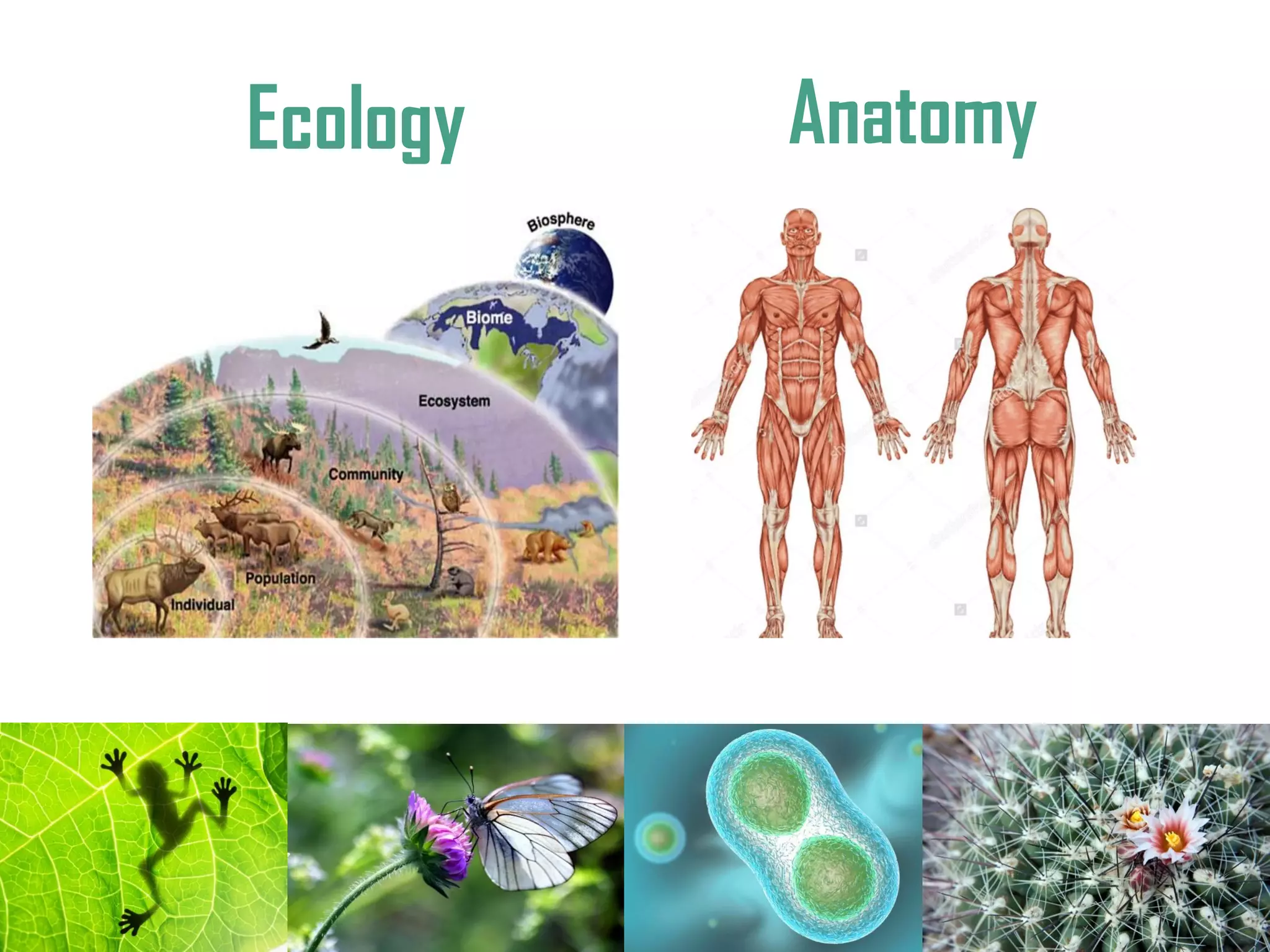
Ecology Anatomy
Morphology Physiology
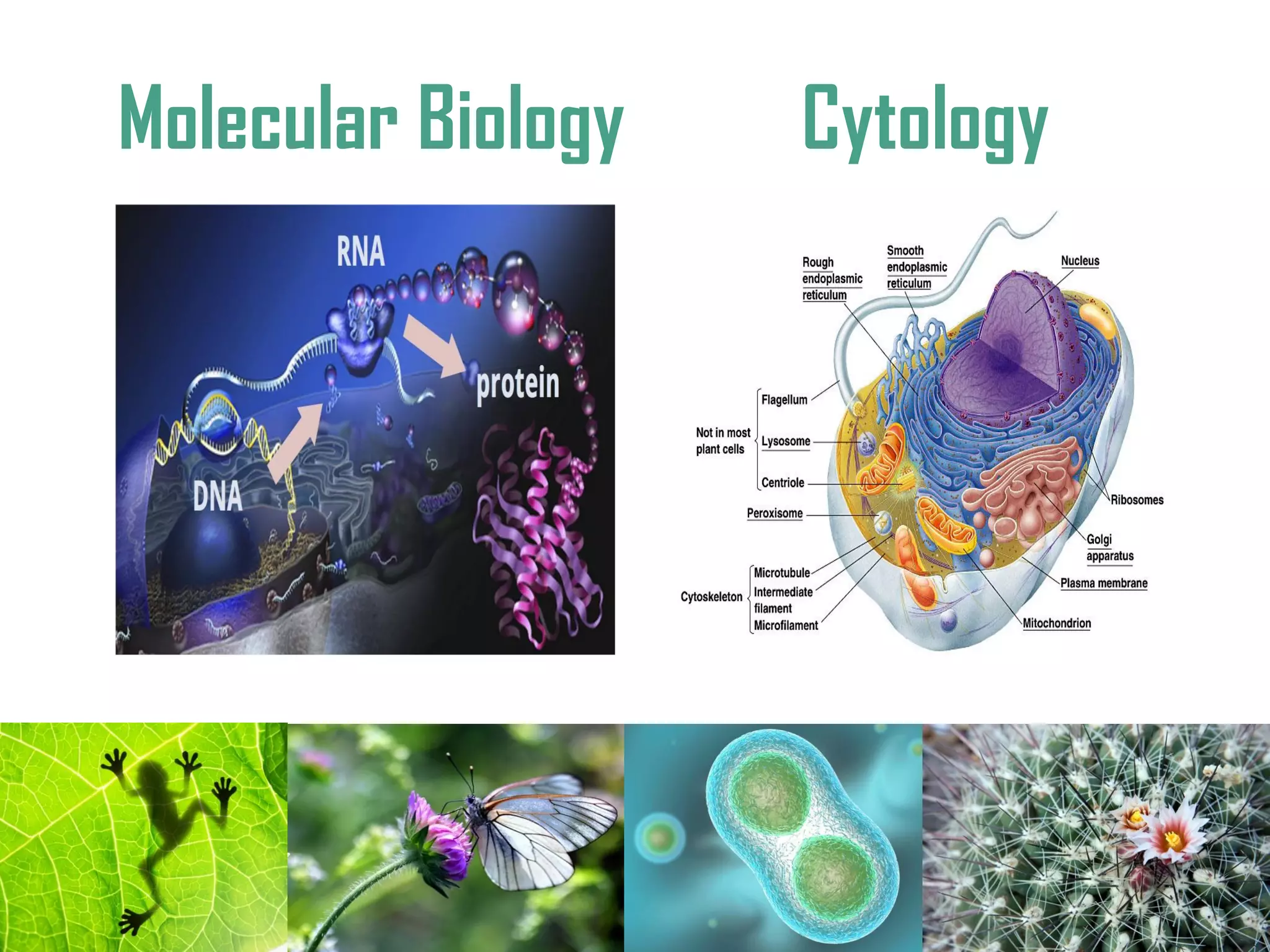
CytologyMolecular Biology
Developmental Biology
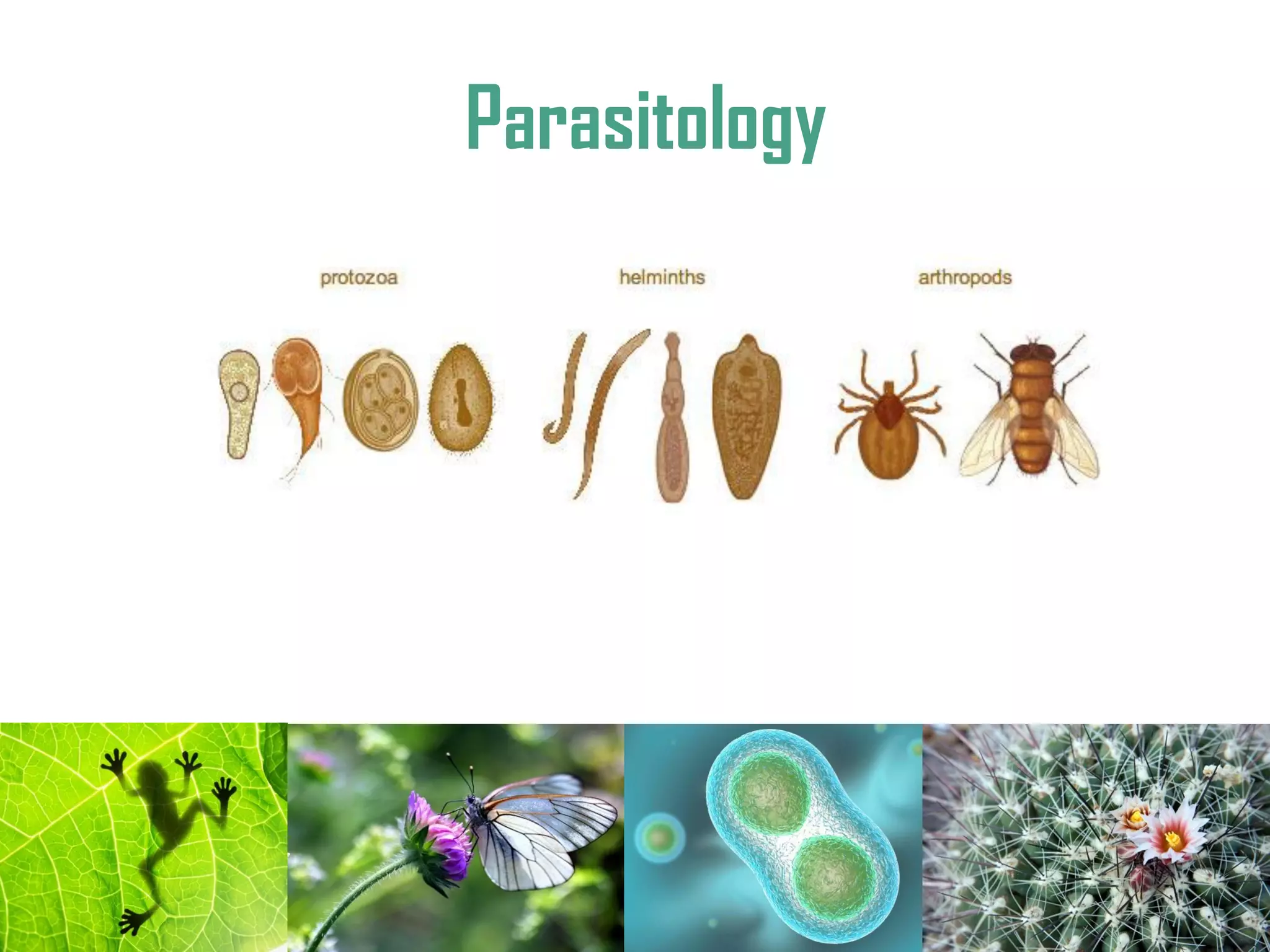
Parasitology
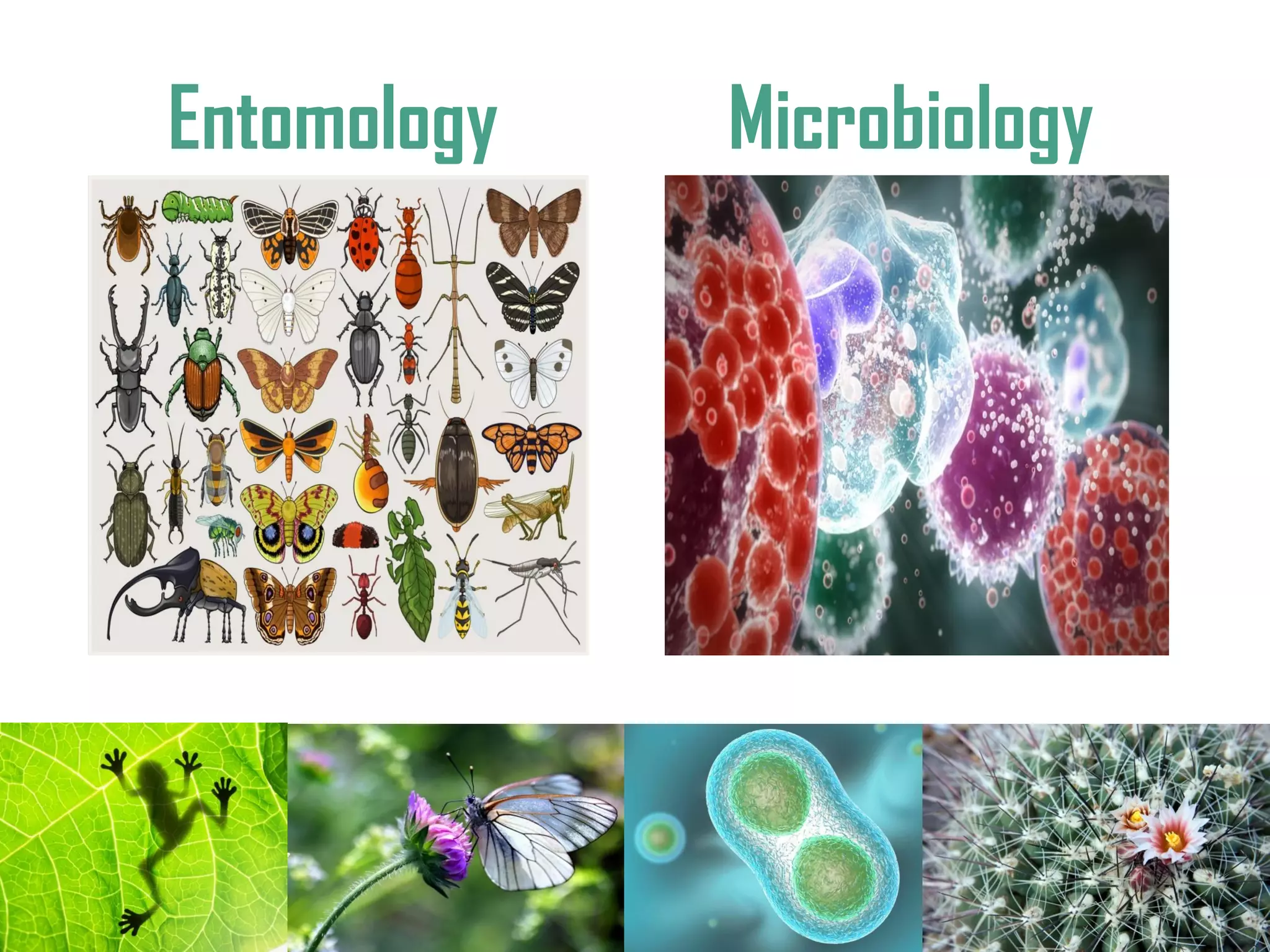
Entomology Microbiology
Histology Genetics
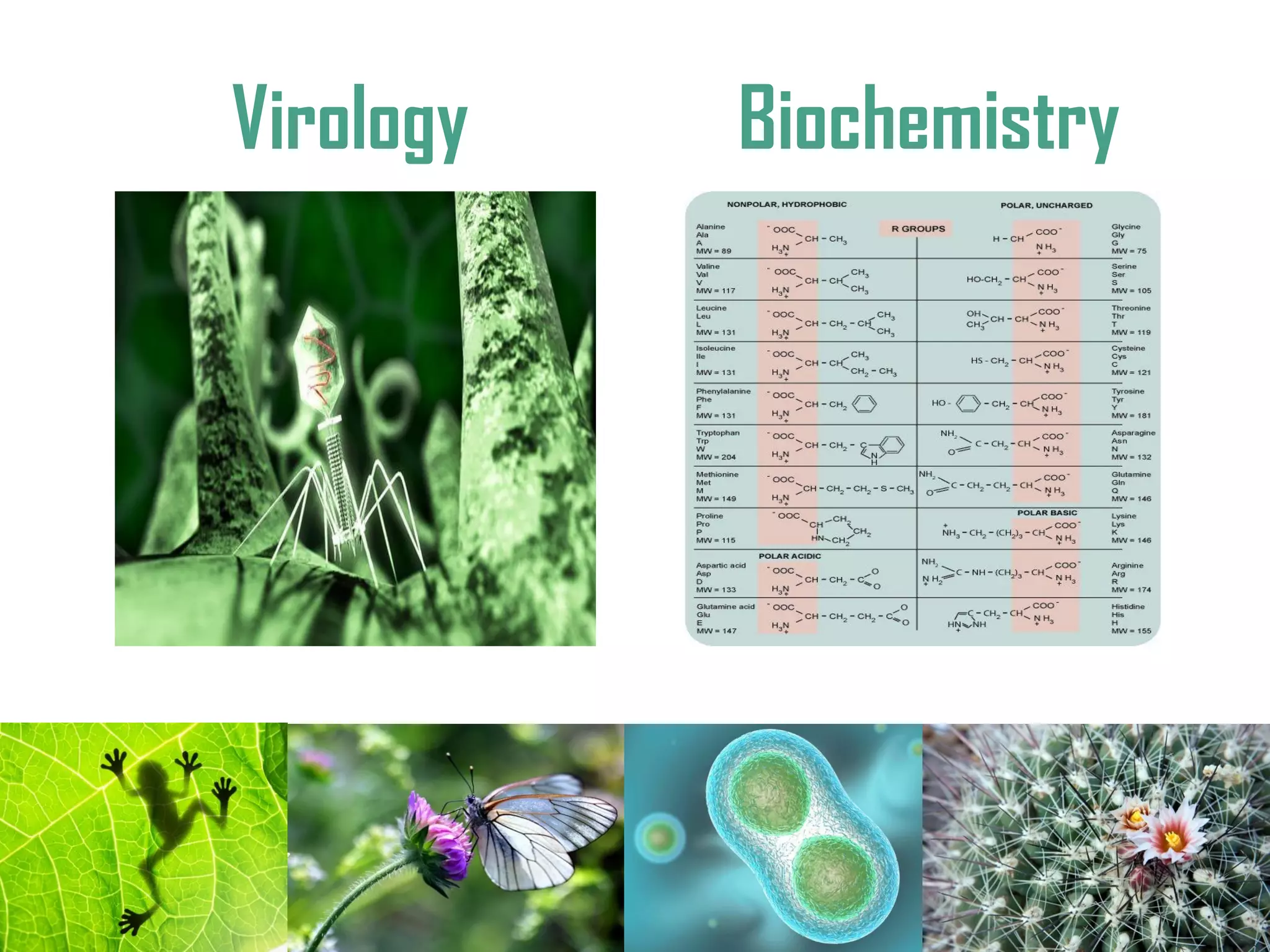
Virology Biochemistry
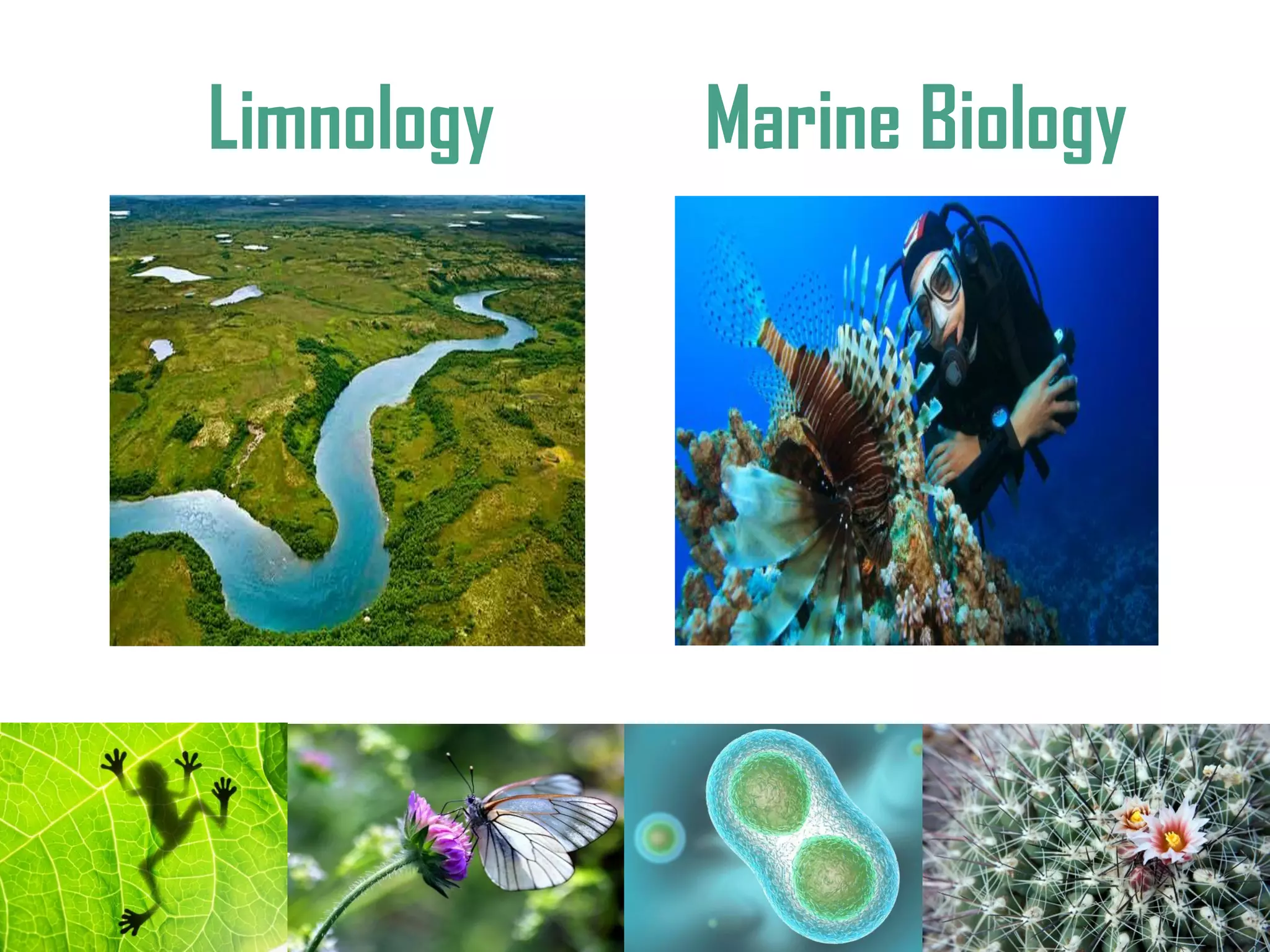
Limnology Marine Biology
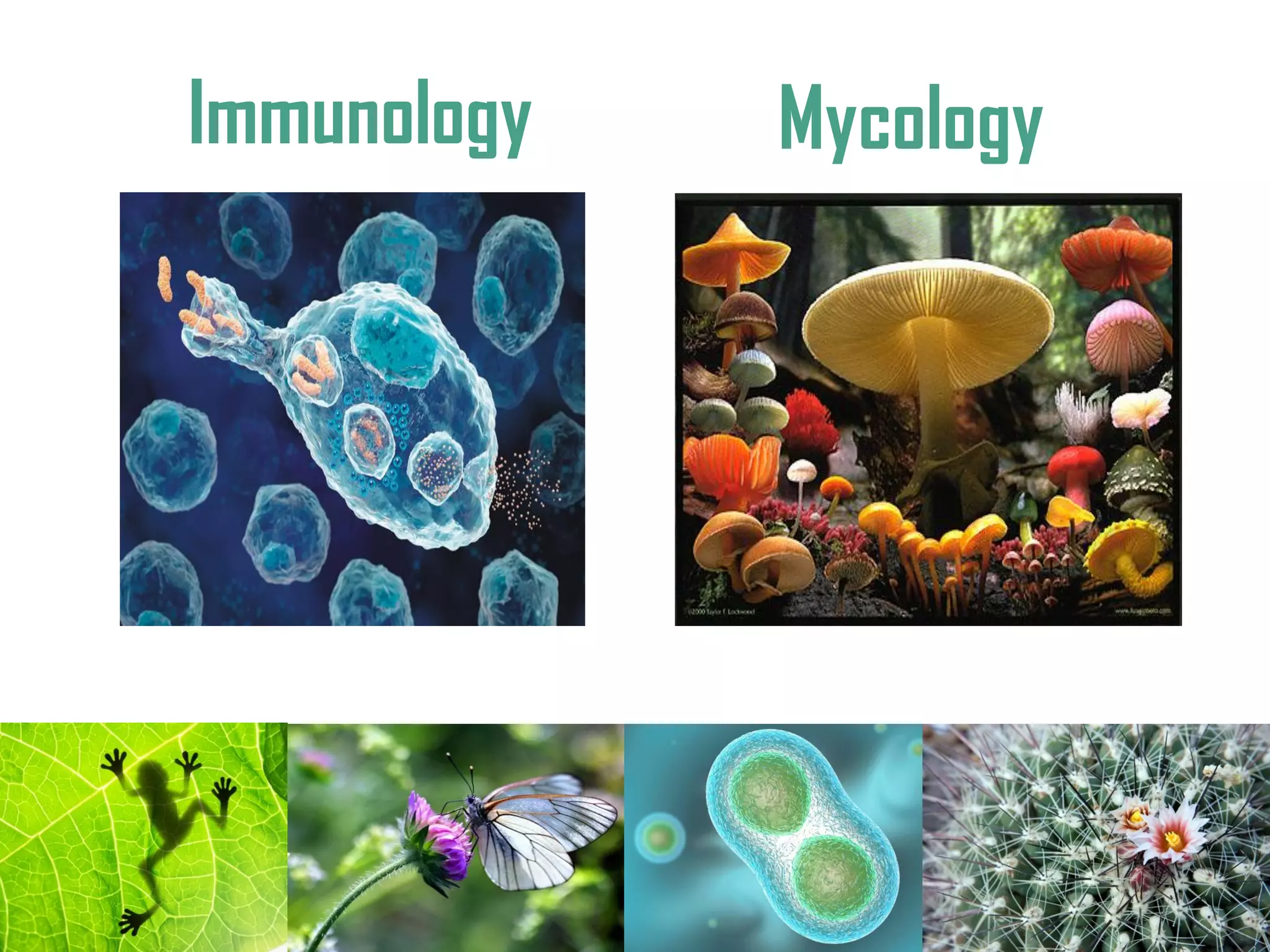
Immunology Mycology

Lesson 1 Introduction to Biology