DEFINITIONS/ IMPORTANCE
OF RESEARCH
Presented by:
Prof. Akhlas Ahmed
NILAT
Lets!
Check your IQ?
Which is the most powerful country
in the world?
 Germany spends 1.2 percent of its gross
domestic product on military
expenditures.
 The United States, which is perceived
to be the most powerful country, has the
world's largest economy and biggest
military budget, spending about $600
billion on military hardware and
personnel in 2015.
Which country appears to be
forthcoming world superpower?
Due to their large markets, growing military
strength, economic potential, and influence
in international affairs, China, the
European Union, India, and Russia are
among the countries (or political entities)
most cited as having the potential of
achieving superpower status in the 21st
century.
Who is the most richest person in
the world 2017?
 Larry Ellison (U.S.) Co-founder, Oracle.
 Carlos Slim Helu (Mexico) Chairman,
América Móvil
 Mark Zuckerberg (U.S.) Co-founder and
CEO, Facebook
 Amancio Ortega (Spain) Co-founder,
Zara
 Jeff Bezos (U.S.) CEO, Amazon
 Warren Buffett (U.S.) CEO, Berkshire
Hathaway
 Bill Gates (U.S.) Co-founder, Microsoft.
Who is the most beautiful girl in
the world 2017?
Milan Fashion Week 2017:
'Most beautiful girl in the world‘
Thylane Blondeau walks for Dolce &
Gabbana. The 16-year-old model who was
dubbed the “most beautiful girl in the
world” at the age of six walked the catwalk
for Dolce & Gabbana at Milan Fashion
Week on Saturday night in a "secret" off-
schedule show..
What countries have the most
attractive people?
 Denmark
 Colombia
 South Korea
 Bulgaria
 Russia
 Ukraine
 Argentina
 Sweden (Stockholm may have lost its
number one spot on our ranking of cities
with beautiful women, but Sweden is
still firmly in first place on this list.)
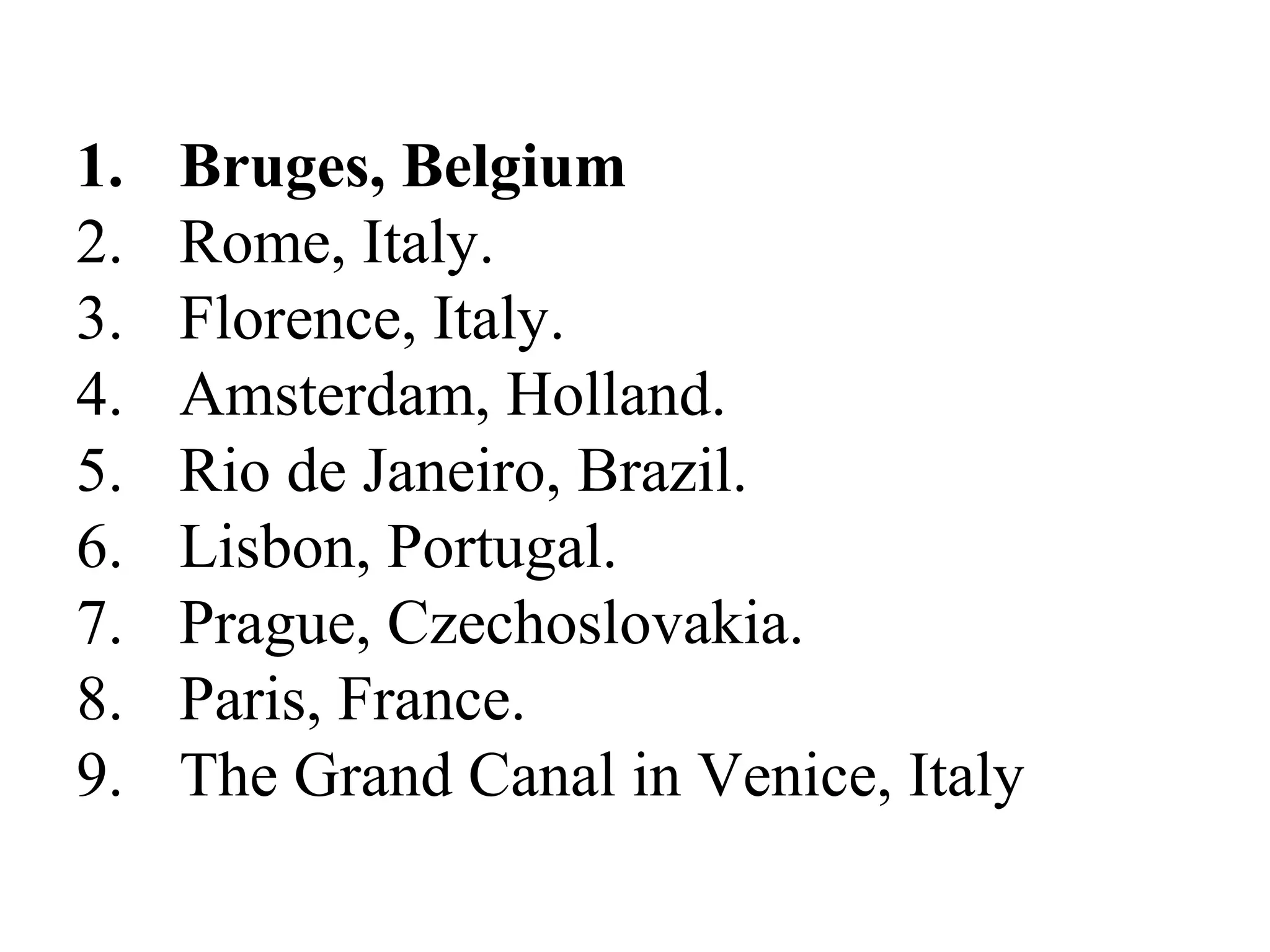
Which city is the most beautiful
in the world?
1. Bruges, Belgium
2. Rome, Italy.
3. Florence, Italy.
4. Amsterdam, Holland.
5. Rio de Janeiro, Brazil.
6. Lisbon, Portugal.
7. Prague, Czechoslovakia.
8. Paris, France.
9. The Grand Canal in Venice, Italy
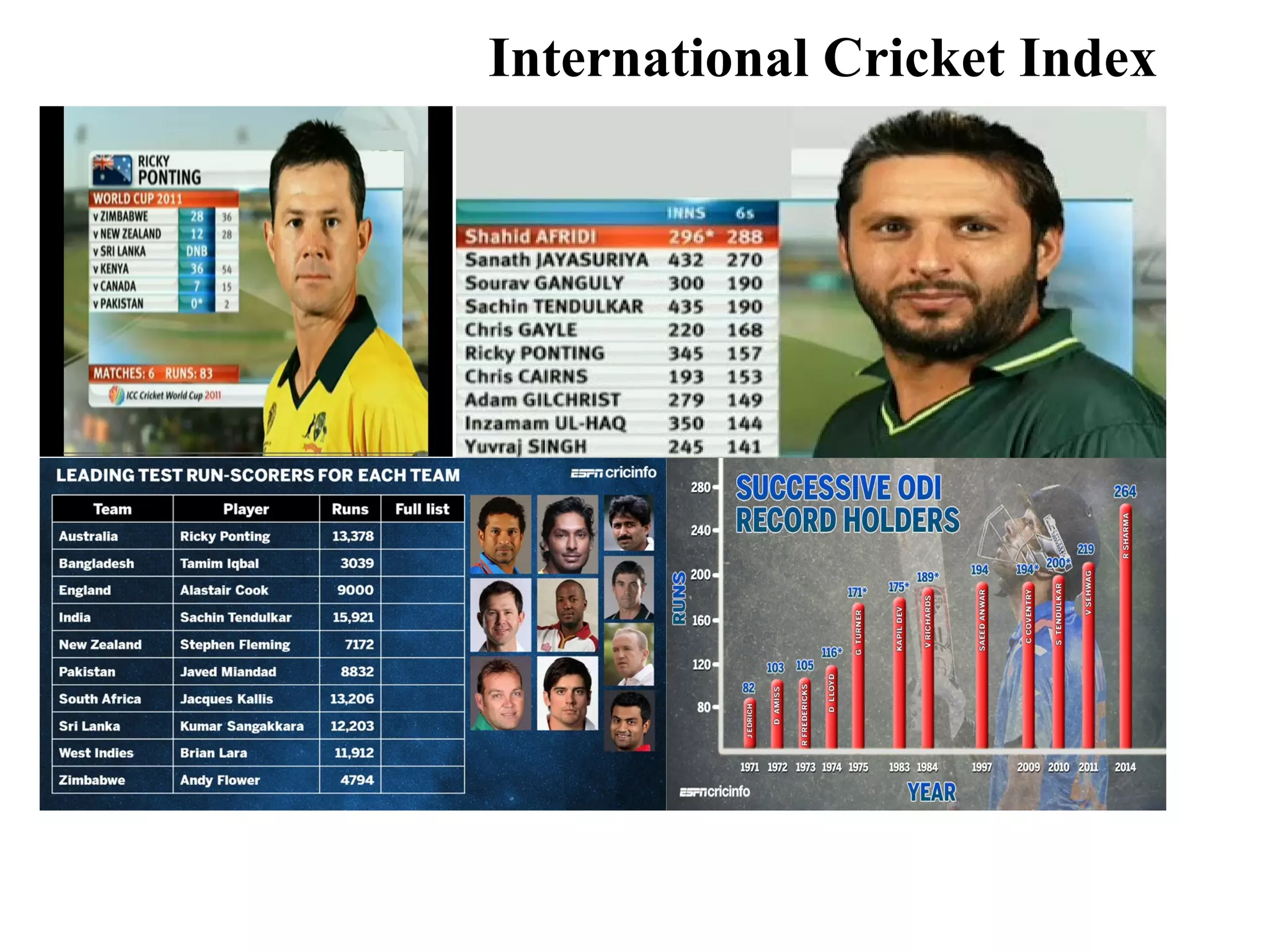
International Cricket Index
World Stock Exchange Index
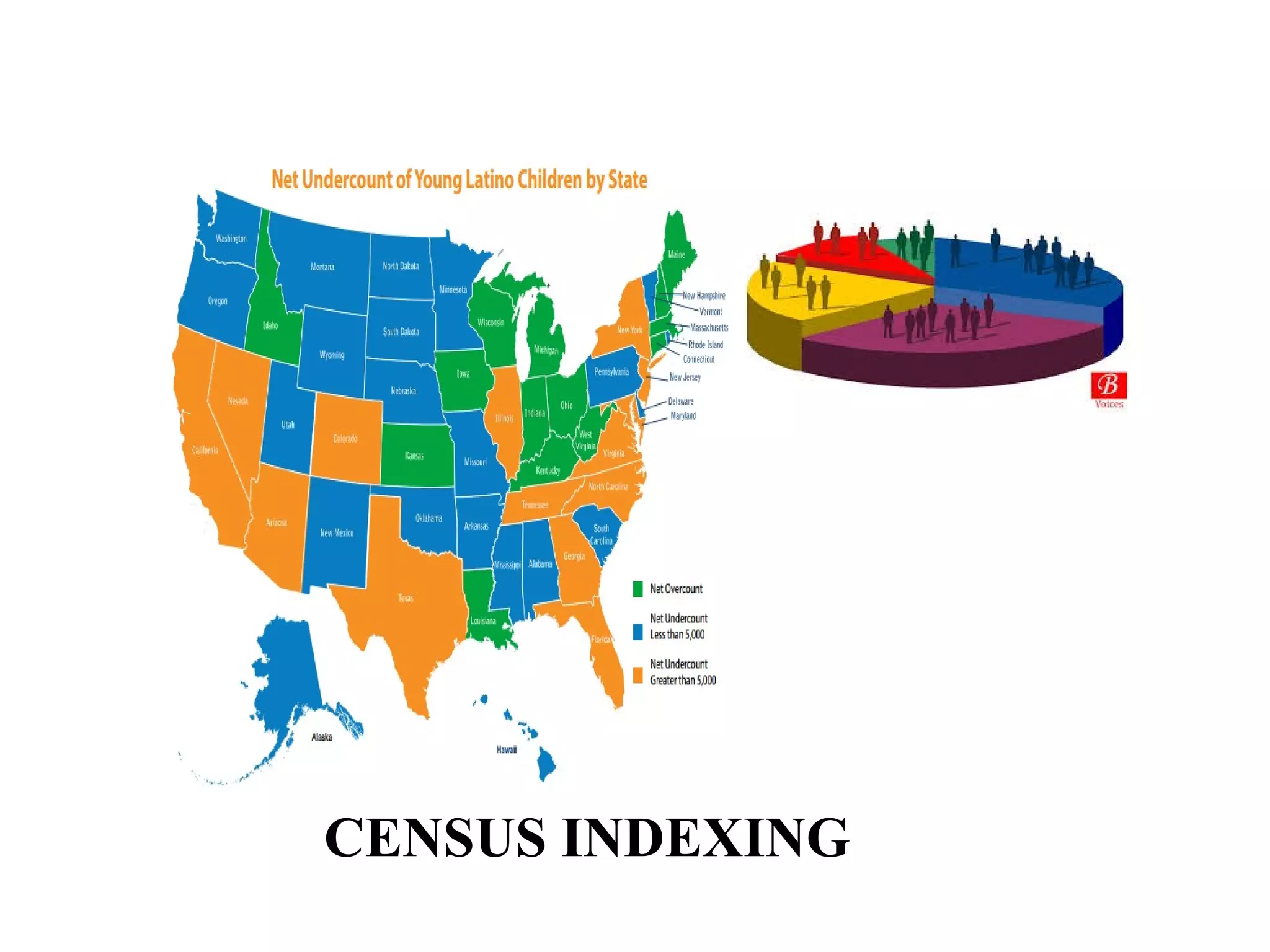
CENSUS INDEXING
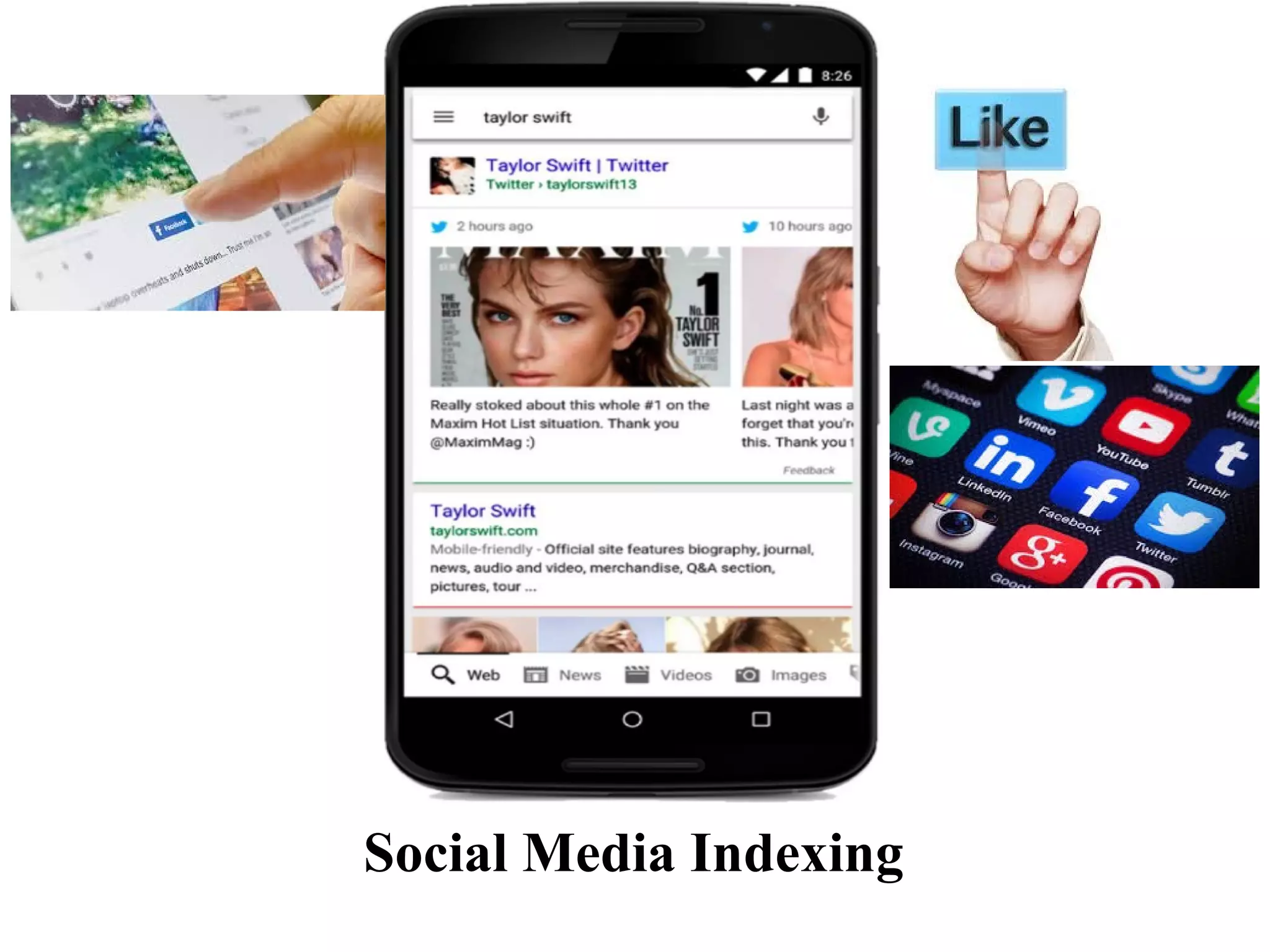
Social Media Indexing
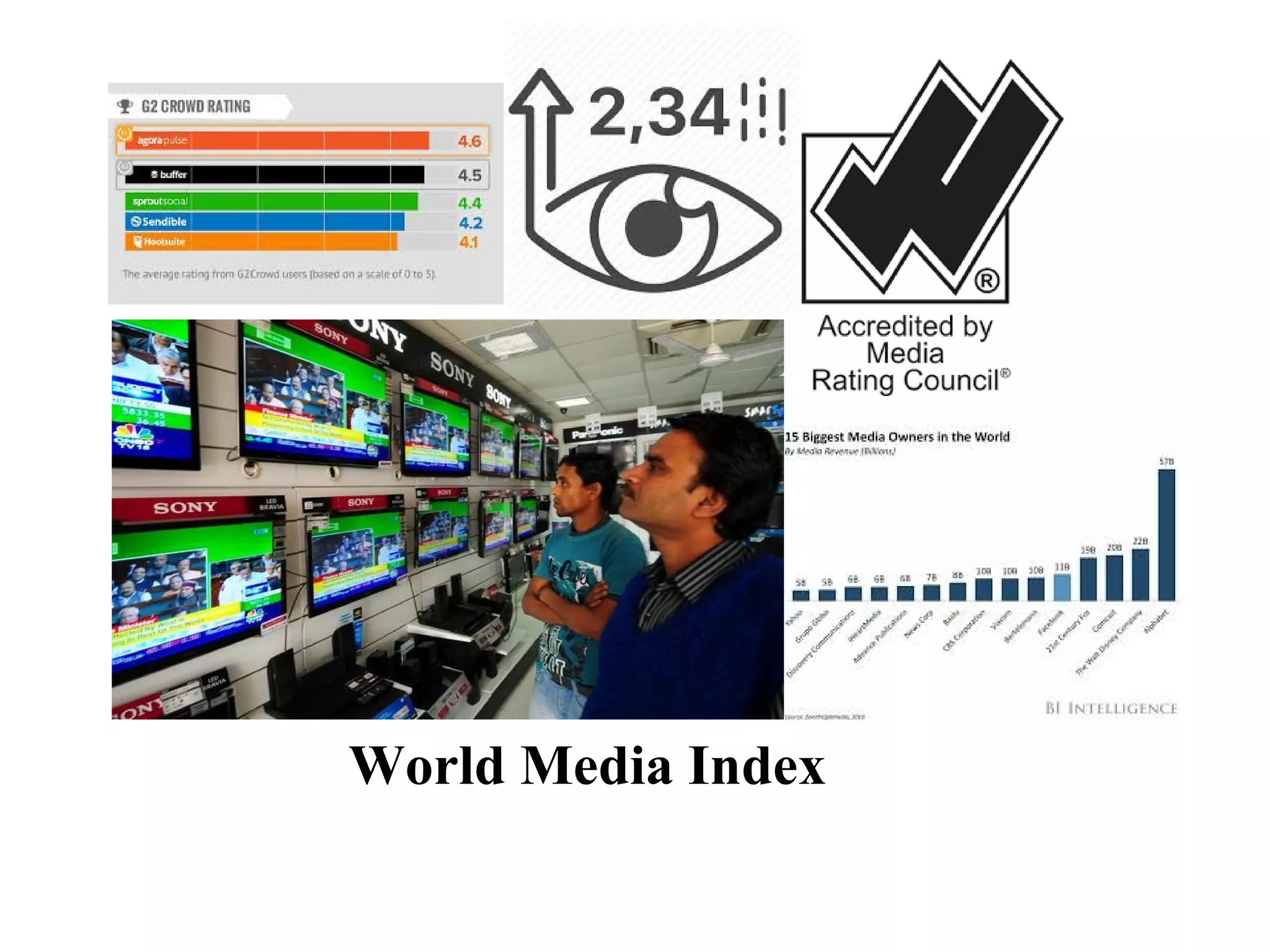
World Media Index
International research Indexing
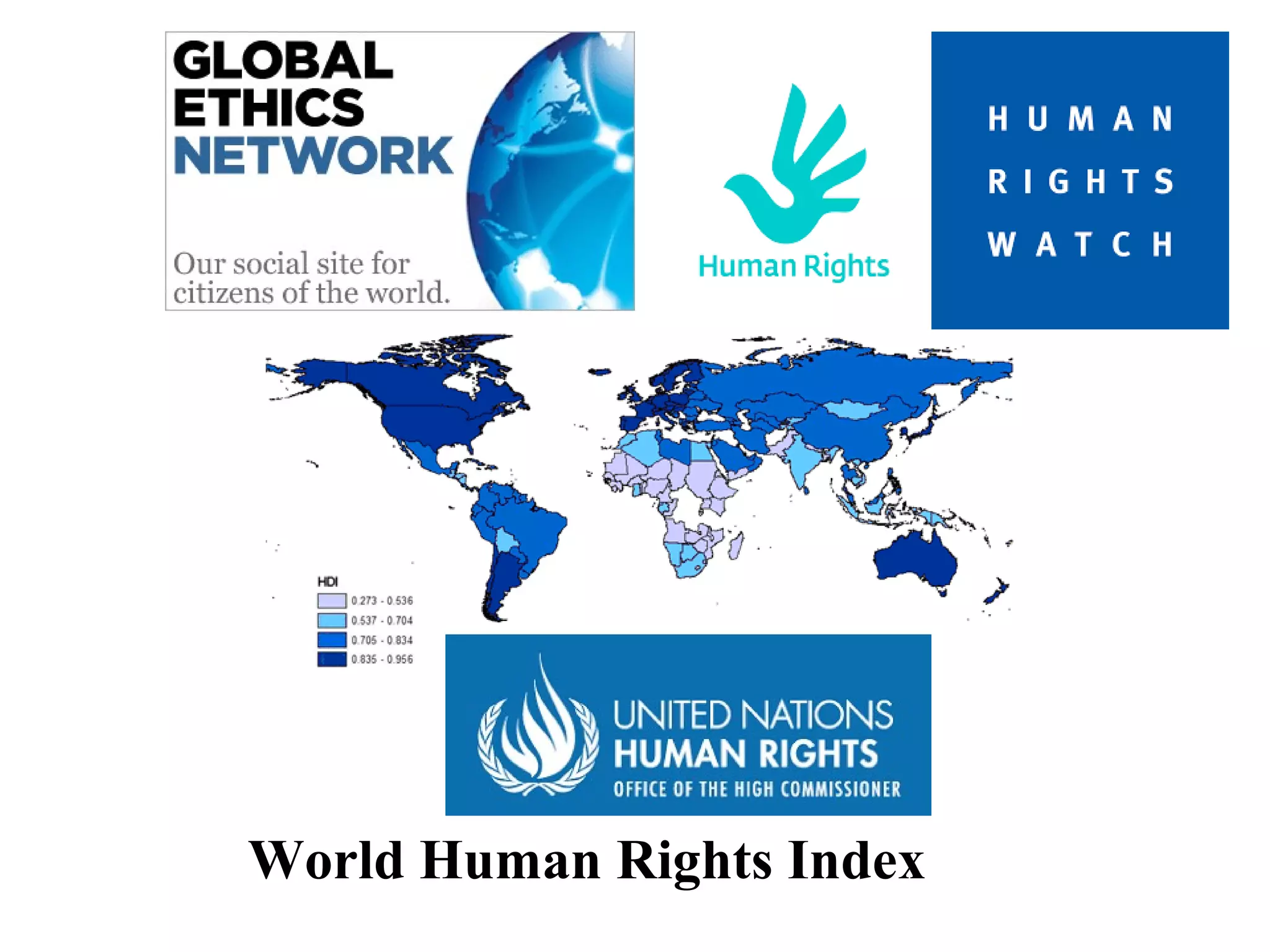
World Human Rights Index
World Economic Index
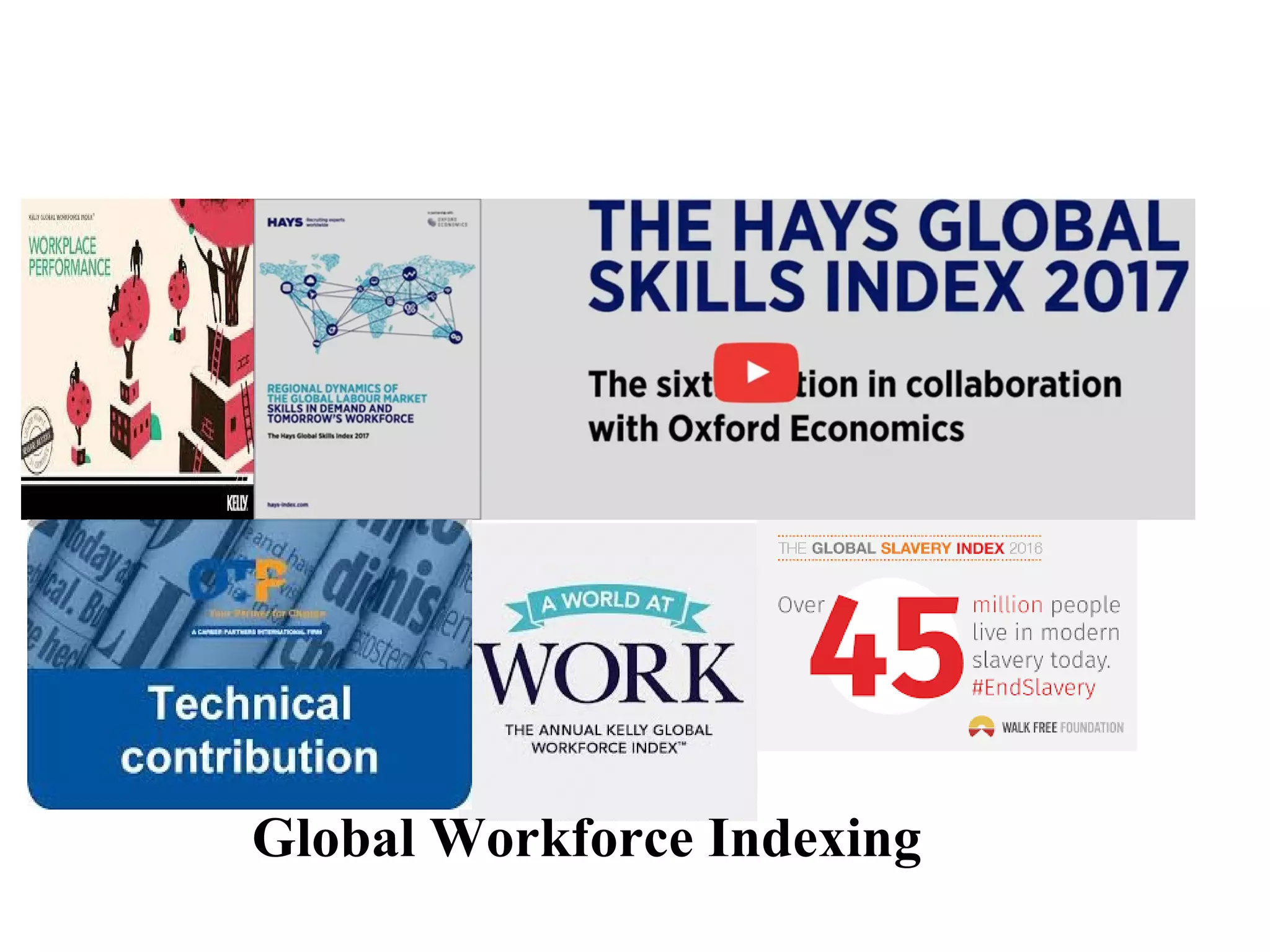
Global Workforce Indexing
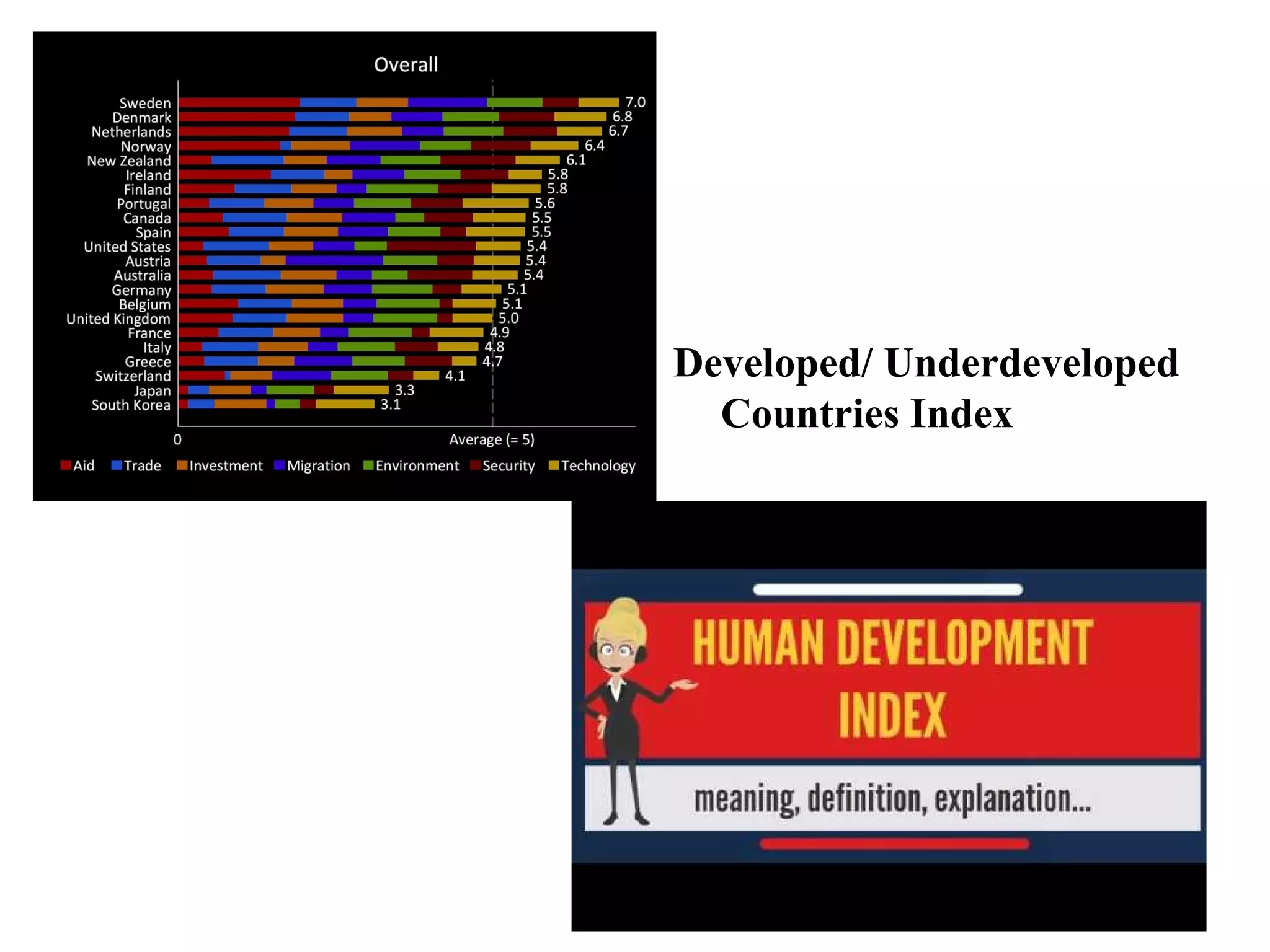
Developed/ Underdeveloped
Countries Index
Research Definitions:
1.“Any gathering of data, information, and facts for the
advancement of knowledge” (Godwin Colibao)“
2.“Research is a process of steps used to collect and analyze
information to increase our understanding of a topic or issue".
It consists of three steps: pose a question, collect data to
answer the question, and present an answer to the question.
(John W. Creswell)
3.The Merriam-Webster Online Dictionary defines as "a
studious inquiry or examination; especially investigation or
experimentation aimed at the discovery and interpretation of
facts, revision of accepted theories or laws in the light of new
facts, or practical application of such new or revised theories or
laws".[3]
Characteristics of the Scientific Method:
It involves gathering new data or using existing
data for a new purpose.
It is not merely reproducing information such as
would be produced by a student when asked to
‘research’ on a topic and write a paper.
It is directed towards the solution of a problem.
The ‘problem’ is the focus of the whole research
process in that the entire design aims at how the
problem can be solved or how the research
question(s) can be answered.
It relies on empirical evidence, i.e. on events or
data that can be verified by observation.
Characteristics of the Scientific Method
This distinguishes formal research from informal whose
findings and conclusions are based on popular belief, view,
rumor, feelings, guess work and other subjective methods
that people resort to when seeking answers to questions.
It is systematic in procedures of planning, collection of
data, analysis and reporting.
It follows clearly stipulated procedures. All these must be
carefully recorded and described.
Research ethics require that terms are defined, limiting
factors stated, procedures described, references given and
results reported faithfully. The report should also be
availed for scrutiny by other interested researchers.
Characteristics of the Scientific Method
It aims at generalizing findings to larger groups by
discovering general principles that will be helpful in
predicting future occurrences.
This calls for careful sampling procedures to ensure that
the sample is representative of the larger group.
It requires careful and accurate observation and
description.
It is logical and objective; every possible step is taken to
ensure validity of procedure, tools and conclusions. The
researcher strives to eliminate personal feelings and bias.
These could be intended or unintended. The emphasis is
on testing rather than proving the hypothesis.
Characteristics of the Scientific Method
Research findings are sometimes contrary to popular
belief. That not withstanding, the researcher should
always report findings as they are. At times this requires
courage. Copernicus is the 16th century was condemned
by the church authorities when he announced his
conclusions concerning the nature of the solar system.
His findings were counter to what was popularly
believed at the time, Best (1970).
Q/A Session

Lecture # 2 nilat (nov 22nd 2017)

  • 1.
  • 2.
  • 3.
    Which is themost powerful country in the world?
  • 4.
     Germany spends1.2 percent of its gross domestic product on military expenditures.  The United States, which is perceived to be the most powerful country, has the world's largest economy and biggest military budget, spending about $600 billion on military hardware and personnel in 2015.
  • 5.
    Which country appearsto be forthcoming world superpower?
  • 6.
    Due to theirlarge markets, growing military strength, economic potential, and influence in international affairs, China, the European Union, India, and Russia are among the countries (or political entities) most cited as having the potential of achieving superpower status in the 21st century.
  • 7.
    Who is themost richest person in the world 2017?
  • 8.
     Larry Ellison(U.S.) Co-founder, Oracle.  Carlos Slim Helu (Mexico) Chairman, América Móvil  Mark Zuckerberg (U.S.) Co-founder and CEO, Facebook  Amancio Ortega (Spain) Co-founder, Zara  Jeff Bezos (U.S.) CEO, Amazon  Warren Buffett (U.S.) CEO, Berkshire Hathaway  Bill Gates (U.S.) Co-founder, Microsoft.
  • 9.
    Who is themost beautiful girl in the world 2017?
  • 10.
    Milan Fashion Week2017: 'Most beautiful girl in the world‘ Thylane Blondeau walks for Dolce & Gabbana. The 16-year-old model who was dubbed the “most beautiful girl in the world” at the age of six walked the catwalk for Dolce & Gabbana at Milan Fashion Week on Saturday night in a "secret" off- schedule show..
  • 11.
    What countries havethe most attractive people?
  • 12.
     Denmark  Colombia South Korea  Bulgaria  Russia  Ukraine  Argentina  Sweden (Stockholm may have lost its number one spot on our ranking of cities with beautiful women, but Sweden is still firmly in first place on this list.)
  • 13.
    Which city isthe most beautiful in the world?
  • 14.
    1. Bruges, Belgium 2.Rome, Italy. 3. Florence, Italy. 4. Amsterdam, Holland. 5. Rio de Janeiro, Brazil. 6. Lisbon, Portugal. 7. Prague, Czechoslovakia. 8. Paris, France. 9. The Grand Canal in Venice, Italy
  • 15.
  • 16.
  • 17.
  • 18.
  • 19.
  • 20.
  • 21.
  • 22.
  • 23.
  • 24.
  • 25.
    Research Definitions: 1.“Any gatheringof data, information, and facts for the advancement of knowledge” (Godwin Colibao)“ 2.“Research is a process of steps used to collect and analyze information to increase our understanding of a topic or issue". It consists of three steps: pose a question, collect data to answer the question, and present an answer to the question. (John W. Creswell) 3.The Merriam-Webster Online Dictionary defines as "a studious inquiry or examination; especially investigation or experimentation aimed at the discovery and interpretation of facts, revision of accepted theories or laws in the light of new facts, or practical application of such new or revised theories or laws".[3]
  • 26.
    Characteristics of theScientific Method: It involves gathering new data or using existing data for a new purpose. It is not merely reproducing information such as would be produced by a student when asked to ‘research’ on a topic and write a paper. It is directed towards the solution of a problem. The ‘problem’ is the focus of the whole research process in that the entire design aims at how the problem can be solved or how the research question(s) can be answered. It relies on empirical evidence, i.e. on events or data that can be verified by observation.
  • 27.
    Characteristics of theScientific Method This distinguishes formal research from informal whose findings and conclusions are based on popular belief, view, rumor, feelings, guess work and other subjective methods that people resort to when seeking answers to questions. It is systematic in procedures of planning, collection of data, analysis and reporting. It follows clearly stipulated procedures. All these must be carefully recorded and described. Research ethics require that terms are defined, limiting factors stated, procedures described, references given and results reported faithfully. The report should also be availed for scrutiny by other interested researchers.
  • 28.
    Characteristics of theScientific Method It aims at generalizing findings to larger groups by discovering general principles that will be helpful in predicting future occurrences. This calls for careful sampling procedures to ensure that the sample is representative of the larger group. It requires careful and accurate observation and description. It is logical and objective; every possible step is taken to ensure validity of procedure, tools and conclusions. The researcher strives to eliminate personal feelings and bias. These could be intended or unintended. The emphasis is on testing rather than proving the hypothesis.
  • 29.
    Characteristics of theScientific Method Research findings are sometimes contrary to popular belief. That not withstanding, the researcher should always report findings as they are. At times this requires courage. Copernicus is the 16th century was condemned by the church authorities when he announced his conclusions concerning the nature of the solar system. His findings were counter to what was popularly believed at the time, Best (1970).
  • 30.

Editor's Notes

  • #2 Material pertinent to this illustration is found on pages 595-596.
  • #3 Material pertinent to this illustration is found on pages 595-596.
  • #4 Material pertinent to this illustration is found on pages 595-596.
  • #5 Material pertinent to this illustration is found on pages 595-596.
  • #6 Material pertinent to this illustration is found on pages 595-596.
  • #7 Material pertinent to this illustration is found on pages 595-596.
  • #8 Material pertinent to this illustration is found on pages 595-596.
  • #9 Material pertinent to this illustration is found on pages 595-596.
  • #10 Material pertinent to this illustration is found on pages 595-596.
  • #11 Material pertinent to this illustration is found on pages 595-596.
  • #12 Material pertinent to this illustration is found on pages 595-596.
  • #13 Material pertinent to this illustration is found on pages 595-596.
  • #14 Material pertinent to this illustration is found on pages 595-596.
  • #15 Material pertinent to this illustration is found on pages 595-596.
  • #16 Material pertinent to this illustration is found on pages 595-596.
  • #17 Material pertinent to this illustration is found on pages 595-596.
  • #18 Material pertinent to this illustration is found on pages 595-596.
  • #19 Material pertinent to this illustration is found on pages 595-596.
  • #20 Material pertinent to this illustration is found on pages 595-596.
  • #21 Material pertinent to this illustration is found on pages 595-596.
  • #22 Material pertinent to this illustration is found on pages 595-596.
  • #23 Material pertinent to this illustration is found on pages 595-596.
  • #24 Material pertinent to this illustration is found on pages 595-596.
  • #25 Material pertinent to this illustration is found on pages 595-596.
  • #26 Material pertinent to this illustration is found on pages 595-596.
  • #27 Material pertinent to this illustration is found on pages 595-596.
  • #28 Material pertinent to this illustration is found on pages 595-596.
  • #29 Material pertinent to this illustration is found on pages 595-596.
  • #30 Material pertinent to this illustration is found on pages 595-596.
  • #31 Organizational culture is a system of meaning that members share and that distinguishes the organization from others. The dominant culture expresses the core values shared by a majority of the organization’s members. However, subcultures exist in any organization. Developing along departmental or geographical lines to reflect common problems, situations, or experiences faced by members, subcultures include core values of the dominant culture plus additional values unique to members of the department. If organizations had no dominant culture and were composed, instead, of numerous subcultures, the value of organizational culture as an independent variable would be significantly lessened because there would be no uniform interpretation of what represented appropriate and inappropriate behavior. It is the “shared meaning” aspect of culture that makes it such a potent device for guiding and shaping behavior.