ICE 3015: CONTROL SYSTEM
COMPONENTS
Class 17: Actuation systems
Dr. S. Meenatchisundaram
Email: meenasundar@gmail.com
Control System Components (ICE 3015)
Dr. S.Meenatchisundaram, MIT, Manipal, Aug – Nov 2018
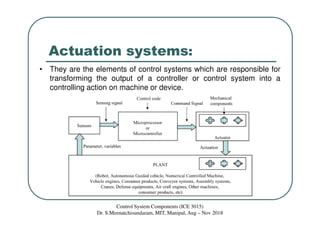
Actuation systems:
• They are the elements of control systems which are responsible for
transforming the output of a controller or control system into a
controlling action on machine or device.
Control System Components (ICE 3015)
Dr. S.Meenatchisundaram, MIT, Manipal, Aug – Nov 2018
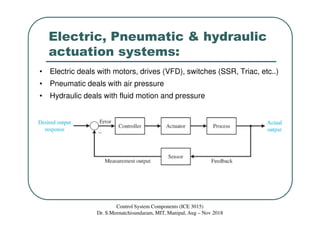
Electric, Pneumatic & hydraulic
actuation systems:
• Electric deals with motors, drives (VFD), switches (SSR, Triac, etc..)
• Pneumatic deals with air pressure
• Hydraulic deals with fluid motion and pressure
Control System Components (ICE 3015)
Dr. S.Meenatchisundaram, MIT, Manipal, Aug – Nov 2018
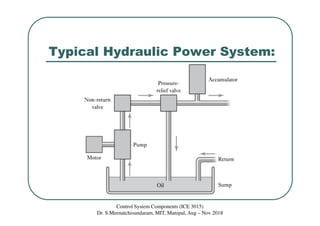
Typical Hydraulic Power System:
Control System Components (ICE 3015)
Dr. S.Meenatchisundaram, MIT, Manipal, Aug – Nov 2018
Typical Hydraulic Power System:
Control System Components (ICE 3015)
Dr. S.Meenatchisundaram, MIT, Manipal, Aug – Nov 2018
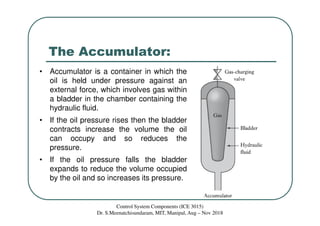
• With a hydraulic system, pressurized oil (fluid) is provided by a pump
driven by an electrical motor.
• The pump pumps oil from a sump through a non return valve and an
accumulator to the system, from which it return to the sump.
• The pressure relief valve is to release the pressure if it rises above a
safe level.
• The accumulator is to smooth out any short term fluctuations in the
output oil pressure.
The Accumulator:
Control System Components (ICE 3015)
Dr. S.Meenatchisundaram, MIT, Manipal, Aug – Nov 2018
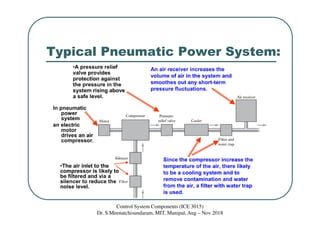
• Accumulator is a container in which the
oil is held under pressure against an
external force, which involves gas within
a bladder in the chamber containing the
hydraulic fluid.
• If the oil pressure rises then the bladder
contracts increase the volume the oil
can occupy and so reduces the
pressure.
• If the oil pressure falls the bladder
expands to reduce the volume occupied
by the oil and so increases its pressure.
Typical Pneumatic Power System:
Control System Components (ICE 3015)
Dr. S.Meenatchisundaram, MIT, Manipal, Aug – Nov 2018
References:
• http://web.itu.edu.tr/yalcinme/files/courses/MMG/ch5%20Hydraulic
%20and%20pneumatic%20actuators.pdf
Control System Components (ICE 3015)
Dr. S.Meenatchisundaram, MIT, Manipal, Aug – Nov 2018

Lecture 17 actuation systems

  • 1.
    ICE 3015: CONTROLSYSTEM COMPONENTS Class 17: Actuation systems Dr. S. Meenatchisundaram Email: meenasundar@gmail.com Control System Components (ICE 3015) Dr. S.Meenatchisundaram, MIT, Manipal, Aug – Nov 2018
  • 2.
    Actuation systems: • Theyare the elements of control systems which are responsible for transforming the output of a controller or control system into a controlling action on machine or device. Control System Components (ICE 3015) Dr. S.Meenatchisundaram, MIT, Manipal, Aug – Nov 2018
  • 3.
    Electric, Pneumatic &hydraulic actuation systems: • Electric deals with motors, drives (VFD), switches (SSR, Triac, etc..) • Pneumatic deals with air pressure • Hydraulic deals with fluid motion and pressure Control System Components (ICE 3015) Dr. S.Meenatchisundaram, MIT, Manipal, Aug – Nov 2018
  • 4.
    Typical Hydraulic PowerSystem: Control System Components (ICE 3015) Dr. S.Meenatchisundaram, MIT, Manipal, Aug – Nov 2018
  • 5.
    Typical Hydraulic PowerSystem: Control System Components (ICE 3015) Dr. S.Meenatchisundaram, MIT, Manipal, Aug – Nov 2018 • With a hydraulic system, pressurized oil (fluid) is provided by a pump driven by an electrical motor. • The pump pumps oil from a sump through a non return valve and an accumulator to the system, from which it return to the sump. • The pressure relief valve is to release the pressure if it rises above a safe level. • The accumulator is to smooth out any short term fluctuations in the output oil pressure.
  • 6.
    The Accumulator: Control SystemComponents (ICE 3015) Dr. S.Meenatchisundaram, MIT, Manipal, Aug – Nov 2018 • Accumulator is a container in which the oil is held under pressure against an external force, which involves gas within a bladder in the chamber containing the hydraulic fluid. • If the oil pressure rises then the bladder contracts increase the volume the oil can occupy and so reduces the pressure. • If the oil pressure falls the bladder expands to reduce the volume occupied by the oil and so increases its pressure.
  • 7.
    Typical Pneumatic PowerSystem: Control System Components (ICE 3015) Dr. S.Meenatchisundaram, MIT, Manipal, Aug – Nov 2018
  • 8.