A Lesson on 
Learning Targets 
JCHS Pilot’s Lounge 
September 2014 
Alyson Carpenter, Instructional Partner
ON TARGET 
Our Learning Targets: 
I can…. 
•understand how learning targets break 
down standards into manageable chunks of 
information for students. 
•describe the effective use of learning 
targets and the advocate for their use in 
the classroom to promote student 
ownership of learning (2.5). 
•reflect on current practice (LTs) in my 
classroom.
ON TARGET 
Defined 
Learning Targets are goals for lessons, projects, units, and 
courses. They are derived from standards and used to 
assess growth and achievement. They are written in 
concrete, student-friendly language– beginning with “I can” 
– shared with students, posted in the classroom, and 
tracked carefully by students and teachers during the 
process of learning. Students spend a good deal of time 
discussing and analyzing them and may be involved in 
modifying or creating them. 
Leaders of Their Own Learning 
~Berger, Rugen, Woodfin p. 21
ON TARGET 
Benefits 
Learning Targets provide students with tangible goals that they 
can understand and work toward. Rather than the teacher taking 
on all of the responsibility for meeting a lesson’s objectives, 
learning targets, written in student-friendly language and frequently 
reflected on, transfer ownership for meeting objectives from the 
teacher to the student. 
This seemingly simple work of reframing objectives written for 
teachers to learning targets, written for – and owned by– students, 
turns assessment on its head. The student becomes the main 
actor in assessing and improving his or her learning. 
Leaders of Their Own Learning 
~Berger, Rugen, Woodfin p. 21
ON TARGET 
Students who can identify what 
they are learning significantly 
outscore those who cannot. 
• Robert J. Marzano
ON TARGET 
Video- The Power of Targets 
Writing good learning targets takes time and care, but it is 
only the beginning. The practice really gains traction when 
students internalize the value of learning targets and use 
them to assess their progress. 
Leaders of Their Own Learning 
p. 41
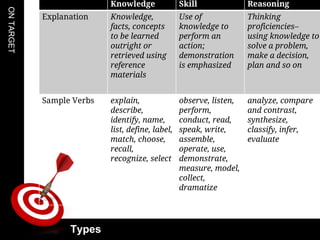
ON TARGET Types 
Knowledge Skill Reasoning 
Explanation Knowledge, 
facts, concepts 
to be learned 
outright or 
retrieved using 
reference 
materials 
Use of 
knowledge to 
perform an 
action; 
demonstration 
is emphasized 
Thinking 
proficiencies– 
using knowledge to 
solve a problem, 
make a decision, 
plan and so on 
Sample Verbs explain, 
describe, 
identify, name, 
list, define, label, 
match, choose, 
recall, 
recognize, select 
observe, listen, 
perform, 
conduct, read, 
speak, write, 
assemble, 
operate, use, 
demonstrate, 
measure, model, 
collect, 
dramatize 
analyze, compare 
and contrast, 
synthesize, 
classify, infer, 
evaluate
ON TARGET 
Where to Begin: Always with the 
STANDARD 
Video- How to Create a Learning Target (Lindsey 
Whitehouse)
ON TARGET 
“Learning targets have no 
inherent power. They 
enhance student learning 
and achievement only 
when educators commit to 
consistently and 
intentionally sharing them 
with students.” 
Educational Leadership - March 2011
ON TARGET 
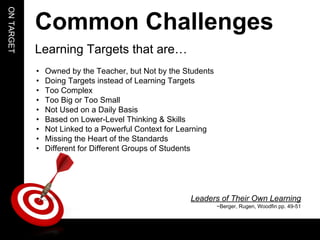
Common Challenges 
Learning Targets that are… 
• Owned by the Teacher, but Not by the Students 
• Doing Targets instead of Learning Targets 
• Too Complex 
• Too Big or Too Small 
• Not Used on a Daily Basis 
• Based on Lower-Level Thinking & Skills 
• Not Linked to a Powerful Context for Learning 
• Missing the Heart of the Standards 
• Different for Different Groups of Students 
Leaders of Their Own Learning 
~Berger, Rugen, Woodfin pp. 49-51
ON TARGET 
Reflection- 
Where am I? 
Where are we? 
Beginning Intermediate Advanced
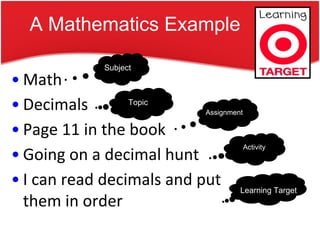
A Mathematics Example 
Subject 
• Math 
• Decimals 
Topic 
• Page 11 in the book 
• Going on a decimal hunt 
• I can read decimals and put 
them in order 
Assignment 
Activity 
Learning Target
Is this a Learning Target? 
• Complete a senior project 
• Build a bird feeder 
• Use a band saw safely 
• Analyze a lab report 
• Construct a diorama
ON TARGET 
Sources 
• Leaders of Their Own Learning Burger, Rugen, Woodfin 
• Expeditionary Learning (Vimeo / LOTOL DVD & book) 
• Advancing Formative Assessment in Every Classroom Brookhart & Moss 
• Lindsey Whitehouse on YouTube

Learning Targets JCHS

  • 1.
    A Lesson on Learning Targets JCHS Pilot’s Lounge September 2014 Alyson Carpenter, Instructional Partner
  • 2.
    ON TARGET OurLearning Targets: I can…. •understand how learning targets break down standards into manageable chunks of information for students. •describe the effective use of learning targets and the advocate for their use in the classroom to promote student ownership of learning (2.5). •reflect on current practice (LTs) in my classroom.
  • 3.
    ON TARGET Defined Learning Targets are goals for lessons, projects, units, and courses. They are derived from standards and used to assess growth and achievement. They are written in concrete, student-friendly language– beginning with “I can” – shared with students, posted in the classroom, and tracked carefully by students and teachers during the process of learning. Students spend a good deal of time discussing and analyzing them and may be involved in modifying or creating them. Leaders of Their Own Learning ~Berger, Rugen, Woodfin p. 21
  • 4.
    ON TARGET Benefits Learning Targets provide students with tangible goals that they can understand and work toward. Rather than the teacher taking on all of the responsibility for meeting a lesson’s objectives, learning targets, written in student-friendly language and frequently reflected on, transfer ownership for meeting objectives from the teacher to the student. This seemingly simple work of reframing objectives written for teachers to learning targets, written for – and owned by– students, turns assessment on its head. The student becomes the main actor in assessing and improving his or her learning. Leaders of Their Own Learning ~Berger, Rugen, Woodfin p. 21
  • 5.
    ON TARGET Studentswho can identify what they are learning significantly outscore those who cannot. • Robert J. Marzano
  • 6.
    ON TARGET Video-The Power of Targets Writing good learning targets takes time and care, but it is only the beginning. The practice really gains traction when students internalize the value of learning targets and use them to assess their progress. Leaders of Their Own Learning p. 41
  • 7.
    ON TARGET Types Knowledge Skill Reasoning Explanation Knowledge, facts, concepts to be learned outright or retrieved using reference materials Use of knowledge to perform an action; demonstration is emphasized Thinking proficiencies– using knowledge to solve a problem, make a decision, plan and so on Sample Verbs explain, describe, identify, name, list, define, label, match, choose, recall, recognize, select observe, listen, perform, conduct, read, speak, write, assemble, operate, use, demonstrate, measure, model, collect, dramatize analyze, compare and contrast, synthesize, classify, infer, evaluate
  • 8.
    ON TARGET Whereto Begin: Always with the STANDARD Video- How to Create a Learning Target (Lindsey Whitehouse)
  • 9.
    ON TARGET “Learningtargets have no inherent power. They enhance student learning and achievement only when educators commit to consistently and intentionally sharing them with students.” Educational Leadership - March 2011
  • 10.
    ON TARGET CommonChallenges Learning Targets that are… • Owned by the Teacher, but Not by the Students • Doing Targets instead of Learning Targets • Too Complex • Too Big or Too Small • Not Used on a Daily Basis • Based on Lower-Level Thinking & Skills • Not Linked to a Powerful Context for Learning • Missing the Heart of the Standards • Different for Different Groups of Students Leaders of Their Own Learning ~Berger, Rugen, Woodfin pp. 49-51
  • 11.
    ON TARGET Reflection- Where am I? Where are we? Beginning Intermediate Advanced
  • 12.
    A Mathematics Example Subject • Math • Decimals Topic • Page 11 in the book • Going on a decimal hunt • I can read decimals and put them in order Assignment Activity Learning Target
  • 13.
    Is this aLearning Target? • Complete a senior project • Build a bird feeder • Use a band saw safely • Analyze a lab report • Construct a diorama
  • 14.
    ON TARGET Sources • Leaders of Their Own Learning Burger, Rugen, Woodfin • Expeditionary Learning (Vimeo / LOTOL DVD & book) • Advancing Formative Assessment in Every Classroom Brookhart & Moss • Lindsey Whitehouse on YouTube