 Students can organize information from
secondary sources s basis of a research topic.
1. Practice differentiating source material and
one’s opinion.
2. Reading articles and formulating an original
paragraph.
3. writing of essays to develop the topic.
4. Integrating bibliographic entries in
appropriate format.
 Students apply principles of logical thinking
and persuasive argument in writing.
1. Forming opinion about the topic.
2. Researching and writing about a variety of
perspectives.
3. Adapting style to identified audience
4. Employing clear argument in writing..
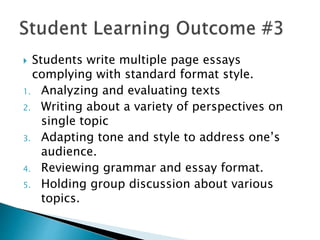
 Students write multiple page essays
complying with standard format style.
1. Analyzing and evaluating texts
2. Writing about a variety of perspectives on
single topic
3. Adapting tone and style to address one’s
audience.
4. Reviewing grammar and essay format.
5. Holding group discussion about various
topics.
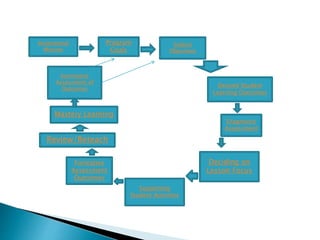
Institutional
Mission
Program
Goals
Subject
Objectives
Desired Student
Learning Outcomes
Diagnostic
Assessment
Deciding on
Lesson Focus
Supporting
Student Activities
Formative
Assessment
Outcomes
Review/Reteach
Mastery Learning
Summative
Assessment of
Outcomes
De Veyra, Joanna Chris V.
BSEd III- English
 Institutional mission statements provide
various constituencies--students, faculty,
legislators, etc.--with the institution's
educational goals and guidance concerning
the achievement of these goals.
 A program goal is a general statement about
the expected learning outcome of students
completing a program.
 Subject objectives are brief statements that
describe what students will be expected to
learn by the end of school year, course, unit,
lesson, project, or class period.
 Learning outcomes are statements that
describe significant and
essential learning that learners have achieved,
and can reliably demonstrate at the end of a
course or program. In other words, learning
outcomes identify what the learner will know
and be able to do by the end of a course or
program.
 Diagnostic assessment is an essential device
in a teacher's “tool kit”. It can be used
to diagnose strengths and areas of need in all
students.
 The first phase of a gradual release of
responsibility model is the focus lesson. This
is the time when the teacher is
demonstrating, modeling, and sharing his or
her thinking with students. Although this
segment may be brief (5–15 minutes), it is
powerful
 Formative assessment refers to a wide variety
of methods that teachers use to conduct in-
process evaluations of student
comprehension, learning needs, and
academic progress during a lesson, unit, or
course
 examine or assess (something) formally with
the possibility or intention of instituting
change if necessary.
 By definition, mastery learning is a method of
instruction where the focus is on the role of
feedback in learning. Furthermore, mastery
learning refers to a category of instructional
methods which establishes a level of
performance that all students must “master”
before moving on to the next unit (Slavin,
1987).
 Summative
assessment (or summative evaluation) refers
to theassessment of participants where the
focus is on the outcome of a program. This
contrasts with formative assessment, which
summarizes the participants development at
a particular time.

Samples of supporting student activities

  • 2.
     Students canorganize information from secondary sources s basis of a research topic. 1. Practice differentiating source material and one’s opinion. 2. Reading articles and formulating an original paragraph. 3. writing of essays to develop the topic. 4. Integrating bibliographic entries in appropriate format.
  • 3.
     Students applyprinciples of logical thinking and persuasive argument in writing. 1. Forming opinion about the topic. 2. Researching and writing about a variety of perspectives. 3. Adapting style to identified audience 4. Employing clear argument in writing..
  • 4.
     Students writemultiple page essays complying with standard format style. 1. Analyzing and evaluating texts 2. Writing about a variety of perspectives on single topic 3. Adapting tone and style to address one’s audience. 4. Reviewing grammar and essay format. 5. Holding group discussion about various topics.
  • 6.
    Institutional Mission Program Goals Subject Objectives Desired Student Learning Outcomes Diagnostic Assessment Decidingon Lesson Focus Supporting Student Activities Formative Assessment Outcomes Review/Reteach Mastery Learning Summative Assessment of Outcomes
  • 7.
    De Veyra, JoannaChris V. BSEd III- English
  • 8.
     Institutional missionstatements provide various constituencies--students, faculty, legislators, etc.--with the institution's educational goals and guidance concerning the achievement of these goals.
  • 9.
     A programgoal is a general statement about the expected learning outcome of students completing a program.
  • 10.
     Subject objectivesare brief statements that describe what students will be expected to learn by the end of school year, course, unit, lesson, project, or class period.
  • 11.
     Learning outcomesare statements that describe significant and essential learning that learners have achieved, and can reliably demonstrate at the end of a course or program. In other words, learning outcomes identify what the learner will know and be able to do by the end of a course or program.
  • 12.
     Diagnostic assessmentis an essential device in a teacher's “tool kit”. It can be used to diagnose strengths and areas of need in all students.
  • 13.
     The firstphase of a gradual release of responsibility model is the focus lesson. This is the time when the teacher is demonstrating, modeling, and sharing his or her thinking with students. Although this segment may be brief (5–15 minutes), it is powerful
  • 15.
     Formative assessmentrefers to a wide variety of methods that teachers use to conduct in- process evaluations of student comprehension, learning needs, and academic progress during a lesson, unit, or course
  • 16.
     examine orassess (something) formally with the possibility or intention of instituting change if necessary.
  • 17.
     By definition,mastery learning is a method of instruction where the focus is on the role of feedback in learning. Furthermore, mastery learning refers to a category of instructional methods which establishes a level of performance that all students must “master” before moving on to the next unit (Slavin, 1987).
  • 18.
     Summative assessment (orsummative evaluation) refers to theassessment of participants where the focus is on the outcome of a program. This contrasts with formative assessment, which summarizes the participants development at a particular time.