Elementary PLC
August 26, 2015
Weekly Reflection: (5 minutes)
What worked this week? What would you do
the same in the future?
What didn’t work this week? What do you want
to work on?
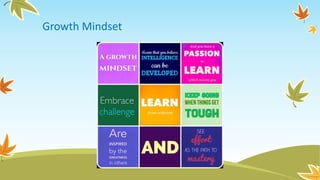
Growth Mindset
What do you think are the top three
characteristics of an effective teacher?
• Has positive expectations for all students
• Is an extremely good classroom
manager*
• Knows how to design lessons for
mastery*
Today’s Essential Questions
What will I do to establish or maintain classroom rules
and procedures?
What will I do to establish and communicate learning
goals?
What will I do recognize and acknowledge adherence and
lack of adherence to classroom rules and procedures?
Establishing,
Implementing, and
Maintaining
Classroom Rules &
Procedures
Marzano indicators involving Classroom
Management
Indicators 1, 4, 5 (routine events)
Indicators 24, 33, 34, 35 (enacted on the spot)
For detailed information: The Art and Science of Teaching by
Robert Marzano Ch 6 & 7
Why is Classroom management so important?
Jigsaw DQ6, DQ7
TASK: In pairs, read, discuss and prepare a poster on key
aspects of your assigned section. You may want to:
•Summarize key points in bullets
•Give examples of how to apply this action step to your
teaching circumstance.
•Offer suggestions, tips, ideas for implementing this task
Group presentations (3
minutes per group)
Individual Reflection &
Action Plan
1. Reflect on what you learned - What are the Big
“takeaway” idea/s?
2. Make a plan – what are you going to do or
implement THIS week. How are you going to do it?
What resources (websites, books, people, etc.) do
you have (or need?)
Clear Learning Goals
Robert J. Marzano
Who are Learning Goals for?
Students: Students who can identify what they are learning
significantly outscore those who cannot.
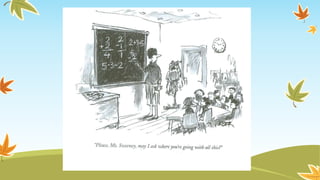
Teachers: If teachers aren’t sure of instructional goals,
their instructional activities will not be focused, and unfo
cused instructional activities do not
lead to student learning
Why are learning goals
important?
Summary:
Without Clear Learning Goals We Can’t Do Any of the
Following…
• Know if the assessment adequately covers and samples what we
taught.
• Correctly identify what students know and don’t know and their
level of achievement.
• Plan next steps in instruction.
• Give detailed, descriptive feedback to students.
• Have students self-assess or set goals likely to help them learn
more.
• Keep track of student learning goals
“Teachers who truly understand what they
want their students to accomplish will
almost surely be more instructionally
successful than teachers whose
understanding of hoped-for student
accomplishments are murky.”
-W. James Popham
Learning Goals are:
Statements of what we want
students to learn and be able
to do.
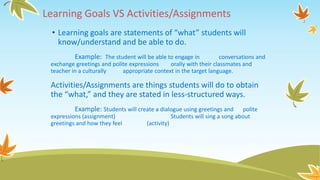
Learning Goals VS Activities/Assignments
• Learning goals are statements of “what” students will
know/understand and be able to do.
Example: The student will be able to engage in conversations and
exchange greetings and polite expressions orally with their classmates and
teacher in a culturally appropriate context in the target language.
Activities/Assignments are things students will do to obtain
the “what,” and they are stated in less-structured ways.
Example: Students will create a dialogue using greetings and polite
expressions (assignment) Students will sing a song about
greetings and how they feel (activity)
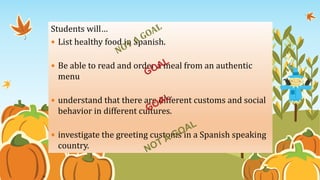
Goal or Not a
Goal?
20
Students will…
 List healthy food in Spanish.
 Be able to read and order a meal from an authentic
menu
 understand that there are different customs and social
behavior in different cultures.
 investigate the greeting customs in a Spanish speaking
country.
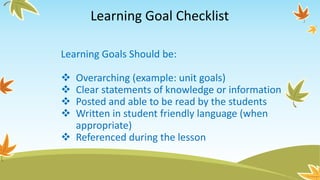
Learning Goal Checklist
Learning Goals Should be:
 Overarching (example: unit goals)
 Clear statements of knowledge or information
 Posted and able to be read by the students
 Written in student friendly language (when
appropriate)
 Referenced during the lesson
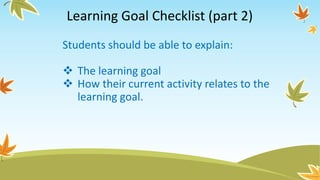
Learning Goal Checklist (part 2)
Students should be able to explain:
 The learning goal
 How their current activity relates to the
learning goal.
Educators & Students
must be able to answer……
• Where am I going? (Learning Goals)
• Where am I now? (tracking progress)
• How will I know I’m getting there? (assessment)
• How can I close the gap? (feedback)
• How can I keep it going? (feedback)
“By setting out clearly in their own minds what they
wanted the students to learn, the teachers would be
in a position to find out what the ‘gap’ was between
the state of students’ current learning and the
learning goal and to be able to monitor that ‘gap’ as it
closed.”
--Assessment for Learning: Putting it into
Practice
Where do you get your learning goals?
• Can your content standards and/or benchmarks stand
alone and be used as learning goals or do they need to be

deconstructed or ‘unpacked’?
• Deconstruction involves taking a standard and breaking it
down into manageable learning.
Create a learning goal for a unit with
the theme “Meeting new friends” or
“My family”
In Pairs
Individual Reflection &
Action Plan
1. Reflect on what you learned - What are the Big
“takeaway” idea/s?
2. Make a plan – what are you going to do or
implement THIS week. How are you going to do it?
What resources (websites, books, people, etc.) do
you have (or need?)
Individual Reflection &
Action Plan
1. Reflect on what you learned - What are the Big
“takeaway” idea/s?
2. Make a plan – what are you going to do or
implement THIS week. How are you going to do it?
What resources (websites, books, people, etc.) do
you have (or need?)
Lesson planning
Curriculum – What we teach
Instruction – How we teach
• Descubre Resources
• Curriculum Guides
• Standards
• Frequency and Time seeing students
• Age level of students
Step One:
Know how many times you
will see students. This will
determine how many lessons
you will need.
Step Two:
Look at Curriculum Guides to layout
your yearly plan and determine
which topics/units you will be able
to complete and how many days for
each unit.
Step Three:
Determine the vocabulary and
structures you will be able to
do with the schedule you have
Step Four:
Gather your resources
(Standards document, “Can
Do” statements, Descubre,
etc.) to map out your
lessons
Please go to
http://tinyurl.com/worldlangplcsurvey

Elementary World Languages PLC Aug 26, 2015

  • 1.
  • 2.
    Weekly Reflection: (5minutes) What worked this week? What would you do the same in the future? What didn’t work this week? What do you want to work on?
  • 3.
  • 4.
    What do youthink are the top three characteristics of an effective teacher? • Has positive expectations for all students • Is an extremely good classroom manager* • Knows how to design lessons for mastery*
  • 5.
    Today’s Essential Questions Whatwill I do to establish or maintain classroom rules and procedures? What will I do to establish and communicate learning goals? What will I do recognize and acknowledge adherence and lack of adherence to classroom rules and procedures?
  • 6.
  • 7.
    Marzano indicators involvingClassroom Management Indicators 1, 4, 5 (routine events) Indicators 24, 33, 34, 35 (enacted on the spot) For detailed information: The Art and Science of Teaching by Robert Marzano Ch 6 & 7
  • 8.
    Why is Classroommanagement so important?
  • 9.
    Jigsaw DQ6, DQ7 TASK:In pairs, read, discuss and prepare a poster on key aspects of your assigned section. You may want to: •Summarize key points in bullets •Give examples of how to apply this action step to your teaching circumstance. •Offer suggestions, tips, ideas for implementing this task
  • 10.
  • 11.
    Individual Reflection & ActionPlan 1. Reflect on what you learned - What are the Big “takeaway” idea/s? 2. Make a plan – what are you going to do or implement THIS week. How are you going to do it? What resources (websites, books, people, etc.) do you have (or need?)
  • 12.
  • 13.
    Robert J. Marzano Whoare Learning Goals for? Students: Students who can identify what they are learning significantly outscore those who cannot. Teachers: If teachers aren’t sure of instructional goals, their instructional activities will not be focused, and unfo cused instructional activities do not lead to student learning
  • 15.
    Why are learninggoals important?
  • 16.
    Summary: Without Clear LearningGoals We Can’t Do Any of the Following… • Know if the assessment adequately covers and samples what we taught. • Correctly identify what students know and don’t know and their level of achievement. • Plan next steps in instruction. • Give detailed, descriptive feedback to students. • Have students self-assess or set goals likely to help them learn more. • Keep track of student learning goals
  • 17.
    “Teachers who trulyunderstand what they want their students to accomplish will almost surely be more instructionally successful than teachers whose understanding of hoped-for student accomplishments are murky.” -W. James Popham
  • 18.
    Learning Goals are: Statementsof what we want students to learn and be able to do.
  • 19.
    Learning Goals VSActivities/Assignments • Learning goals are statements of “what” students will know/understand and be able to do. Example: The student will be able to engage in conversations and exchange greetings and polite expressions orally with their classmates and teacher in a culturally appropriate context in the target language. Activities/Assignments are things students will do to obtain the “what,” and they are stated in less-structured ways. Example: Students will create a dialogue using greetings and polite expressions (assignment) Students will sing a song about greetings and how they feel (activity)
  • 20.
    Goal or Nota Goal? 20 Students will…  List healthy food in Spanish.  Be able to read and order a meal from an authentic menu  understand that there are different customs and social behavior in different cultures.  investigate the greeting customs in a Spanish speaking country.
  • 21.
    Learning Goal Checklist LearningGoals Should be:  Overarching (example: unit goals)  Clear statements of knowledge or information  Posted and able to be read by the students  Written in student friendly language (when appropriate)  Referenced during the lesson
  • 22.
    Learning Goal Checklist(part 2) Students should be able to explain:  The learning goal  How their current activity relates to the learning goal.
  • 24.
    Educators & Students mustbe able to answer…… • Where am I going? (Learning Goals) • Where am I now? (tracking progress) • How will I know I’m getting there? (assessment) • How can I close the gap? (feedback) • How can I keep it going? (feedback)
  • 25.
    “By setting outclearly in their own minds what they wanted the students to learn, the teachers would be in a position to find out what the ‘gap’ was between the state of students’ current learning and the learning goal and to be able to monitor that ‘gap’ as it closed.” --Assessment for Learning: Putting it into Practice
  • 26.
    Where do youget your learning goals? • Can your content standards and/or benchmarks stand alone and be used as learning goals or do they need to be deconstructed or ‘unpacked’? • Deconstruction involves taking a standard and breaking it down into manageable learning.
  • 27.
    Create a learninggoal for a unit with the theme “Meeting new friends” or “My family” In Pairs
  • 28.
    Individual Reflection & ActionPlan 1. Reflect on what you learned - What are the Big “takeaway” idea/s? 2. Make a plan – what are you going to do or implement THIS week. How are you going to do it? What resources (websites, books, people, etc.) do you have (or need?)
  • 29.
    Individual Reflection & ActionPlan 1. Reflect on what you learned - What are the Big “takeaway” idea/s? 2. Make a plan – what are you going to do or implement THIS week. How are you going to do it? What resources (websites, books, people, etc.) do you have (or need?)
  • 30.
  • 31.
    Curriculum – Whatwe teach Instruction – How we teach
  • 33.
    • Descubre Resources •Curriculum Guides • Standards • Frequency and Time seeing students • Age level of students
  • 34.
    Step One: Know howmany times you will see students. This will determine how many lessons you will need.
  • 35.
    Step Two: Look atCurriculum Guides to layout your yearly plan and determine which topics/units you will be able to complete and how many days for each unit.
  • 36.
    Step Three: Determine thevocabulary and structures you will be able to do with the schedule you have
  • 37.
    Step Four: Gather yourresources (Standards document, “Can Do” statements, Descubre, etc.) to map out your lessons
  • 38.