Assessment  for  Learning: Doing it Right – Using it Well
Introductions
Joana and Teambuilding
Video: A Private Universe
Let’s Share
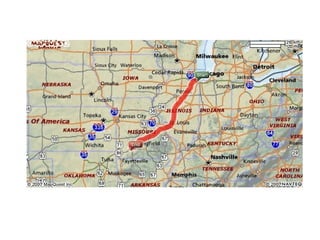
The school year is like a road trip  to Chicago because…
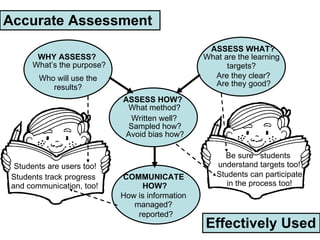
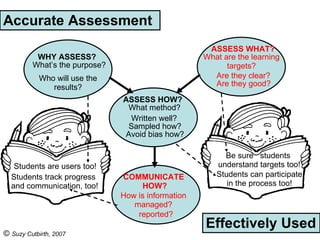
Accurate Assessment Effectively Used WHY ASSESS? What’s the purpose? Students are users too! ASSESS WHAT? What are the learning targets? Are they clear? Are they good? Who will use the results? Be sure  students  understand targets too! ASSESS HOW? What method? Written well? Sampled how? Avoid bias how? Students can participate in the process too! COMMUNICATE  HOW? How is information managed? reported? Students track progress and communication, too!
The good news is---you are doing much of this already! This Formative Classroom Assessment Program simply helps you make your  current  practice more  intentional  and  effective .
Balancing  Assessment  for  and  of  Learning
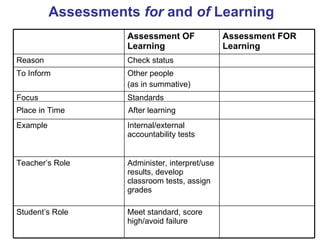
Assessments  for  and  of  Learning Place in Time     After learning  Assessment OF Learning Assessment FOR Learning Reason Check status To Inform Other people (as in summative) Focus Standards Example Internal/external accountability tests Teacher’s Role Administer, interpret/use results, develop classroom tests, assign grades Student’s Role Meet standard, score high/avoid failure
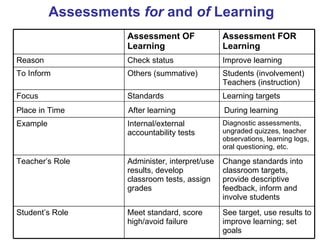
Assessments  for  and  of  Learning Place in Time     After learning    During learning Assessment OF Learning Assessment FOR Learning Reason Check status Improve learning To Inform Others (summative) Students (involvement) Teachers (instruction) Focus Standards Learning targets Example Internal/external accountability tests Diagnostic assessments, ungraded quizzes, teacher observations, learning logs, oral questioning, etc. Teacher’s Role Administer, interpret/use results, develop classroom tests, assign grades Change standards into classroom targets, provide descriptive feedback, inform and involve students Student’s Role Meet standard, score high/avoid failure See target, use results to improve learning; set goals
 
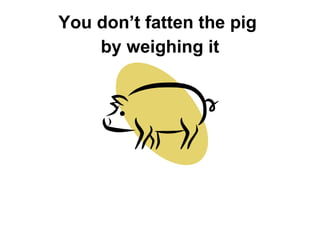
You don’t fatten the pig  by weighing it
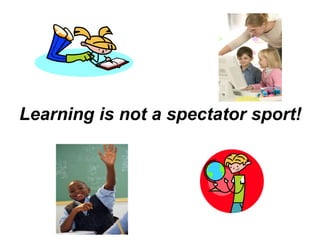
Learning is not a spectator sport!
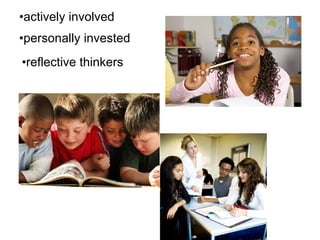
actively involved personally invested reflective thinkers
If kids don’t  want  to learn, there will be no learning.   If kids don’t feel  able  to learn, there will be no learning.   The questions is… How can we use assessments to help our students to learn? Rick Stiggins, 2004.  
Students Involvement:  Three Guiding Questions Where am I going? Where am I now? How can I close the gap? Adapted from Atkin, Black, & Coffey, 2001
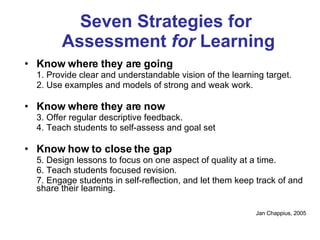
Seven Strategies for  Assessment  for  Learning Know where they are going 1. Provide clear and understandable vision of the learning target. 2. Use examples and models of strong and weak work. Know where they are now 3. Offer regular descriptive feedback. 4. Teach students to self-assess and goal set Know how to close the gap 5. Design lessons to focus on one aspect of quality at a time. 6. Teach students focused revision. 7. Engage students in self-reflection, and let them keep track of and share their learning. Jan Chappius, 2005
Accurate Assessment Effectively Used WHY ASSESS? What’s the purpose? Students are users too! ASSESS WHAT? What are the learning targets? Are they clear? Are they good? Who will use the results? Be sure  students  understand targets too! ASSESS HOW? What method? Written well? Sampled how? Avoid bias how? Students can participate in the process too! COMMUNICATE  HOW? How is information managed? reported? Students track progress and communication, too! ©  Suzy Cutbirth, 2007
Key Two:  Clear Targets
Knowledge Learning Target The facts and concepts we want students to know and understand
Reasoning Learning Target The ability to use that knowledge and understanding to figure things out and to solve problems Analyze, compare/contrast, synthesize, classify, evaluate, etc. Inductive and deductive thinking
Performance Skill Learning Target The development of proficiency in doing something where it is the process that is important Oral presentation Team debate Speak a second language Playing a musical instrument
Product Learning Target Using knowledge, reasoning, and skills to design, create, or develop a tangible product, where creating the object itself is the focus of learning Writing sample Term project, exhibit Painting
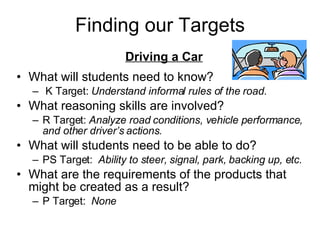
Finding our Targets Driving a Car What will students need to know? K Target:  Understand informal rules of the road. What reasoning skills are involved? R Target:  Analyze road conditions, vehicle performance, and other driver’s actions. What will students need to be able to do? PS Target:  Ability to steer, signal, park, backing up, etc. What are the requirements of the products that might be created as a result? P Target:  None
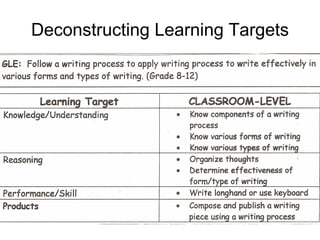
Deconstructing Learning Targets
 
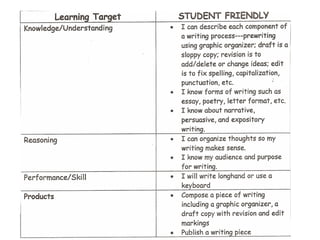
So how do we  deconstruct  our learning targets? Part 1: Handout,  Unpacking a GLE Get with a partner who teaches a similar grade and content Follow the coding steps of Unpacking a GLE Part 2: Use that information to write the  Deconstructed GLEs / Learning Targets  at the  classroom level  and  student friendly  level
Strategy 1 and 2 Strategy #1: Provide a Clear and Understandable Vision of the Learning Target Strategy #2:  Use Examples and Models of Strong and Weak Work
What are some  benefits  of clear learning targets?
Benefits of Clear Targets Help to avoid the problem of too much to teach and too little time. Provide a foundation for collaborative planning among teachers. Facilitate assessment for learning: when students understand the intended learning, they are set up for productive self-assessment and goal setting. Facilitate communication with parents.
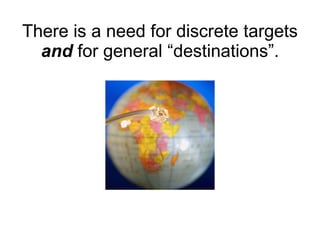
There is a need for discrete targets  and  for general “destinations”.
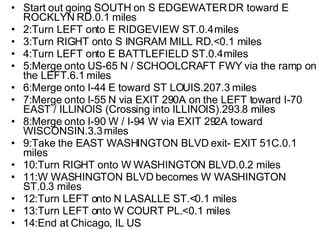
Start out going SOUTH on S EDGEWATER DR toward E ROCKLYN RD.0.1 miles 2:Turn LEFT onto E RIDGEVIEW ST.0.4 miles 3:Turn RIGHT onto S INGRAM MILL RD.<0.1 miles 4:Turn LEFT onto E BATTLEFIELD ST.0.4 miles 5:Merge onto US-65 N / SCHOOLCRAFT FWY via the ramp on the LEFT.6.1 miles 6:Merge onto I-44 E toward ST LOUIS.207.3 miles 7:Merge onto I-55 N via EXIT 290A on the LEFT toward I-70 EAST / ILLINOIS (Crossing into ILLINOIS).293.8 miles 8:Merge onto I-90 W / I-94 W via EXIT 292A toward WISCONSIN.3.3 miles 9:Take the EAST WASHINGTON BLVD exit- EXIT 51C.0.1 miles  10:Turn RIGHT onto W WASHINGTON BLVD.0.2 miles 11:W WASHINGTON BLVD becomes W WASHINGTON ST.0.3 miles  12:Turn LEFT onto N LASALLE ST.<0.1 miles  13:Turn LEFT onto W COURT PL.<0.1 miles 14:End at Chicago, IL US
 
First Pit Stop Purposes of Formative Assessment
Changing Gears How do we  communicate?
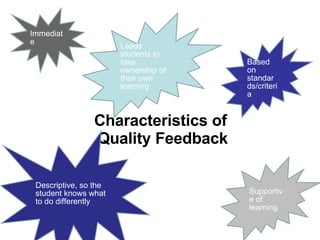
Characteristics of  Quality Feedback Immediate Based on standards/criteria Descriptive, so the student knows what to do differently Supportive of learning Leads students to take ownership of their own learning
Feedback Creed “ Do nothing to diminish hope.”   Rick Stiggins
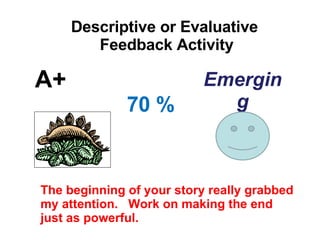
Descriptive or Evaluative  Feedback Activity A+ 70 % Emerging The beginning of your story really grabbed my attention.  Work on making the end just as powerful.
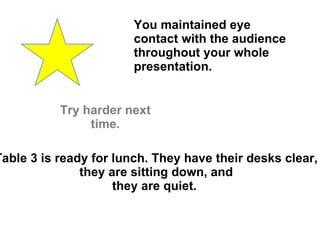
Try harder next time. You maintained eye contact with the audience throughout your whole presentation. Table 3 is ready for lunch. They have their desks clear, they are sitting down, and  they are quiet.
Stand Up and Read “ Helping Students Understand Assessment” By Jan Chappuis Educational Leadership/November 2005
Second Pit Stop Providing Descriptive Feedback
Let’s get out the lessons from the morning and apply them to an actual unit.
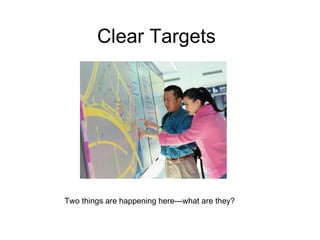
Clear Targets Two things are happening here---what are they?
Feedback “ Feedback is an engineering term…it leads back to the beginning, linking you to your original objectives, and always moves you  forward .” Tom Guskey
Our practice example: A 3 rd  Grade Science unit on matter and energy

Formative Assessment Workshop

  • 1.
    Assessment for Learning: Doing it Right – Using it Well
  • 2.
  • 3.
  • 4.
  • 5.
  • 6.
    The school yearis like a road trip to Chicago because…
  • 7.
    Accurate Assessment EffectivelyUsed WHY ASSESS? What’s the purpose? Students are users too! ASSESS WHAT? What are the learning targets? Are they clear? Are they good? Who will use the results? Be sure students understand targets too! ASSESS HOW? What method? Written well? Sampled how? Avoid bias how? Students can participate in the process too! COMMUNICATE HOW? How is information managed? reported? Students track progress and communication, too!
  • 8.
    The good newsis---you are doing much of this already! This Formative Classroom Assessment Program simply helps you make your current practice more intentional and effective .
  • 9.
    Balancing Assessment for and of Learning
  • 10.
    Assessments for and of Learning Place in Time After learning Assessment OF Learning Assessment FOR Learning Reason Check status To Inform Other people (as in summative) Focus Standards Example Internal/external accountability tests Teacher’s Role Administer, interpret/use results, develop classroom tests, assign grades Student’s Role Meet standard, score high/avoid failure
  • 11.
    Assessments for and of Learning Place in Time After learning During learning Assessment OF Learning Assessment FOR Learning Reason Check status Improve learning To Inform Others (summative) Students (involvement) Teachers (instruction) Focus Standards Learning targets Example Internal/external accountability tests Diagnostic assessments, ungraded quizzes, teacher observations, learning logs, oral questioning, etc. Teacher’s Role Administer, interpret/use results, develop classroom tests, assign grades Change standards into classroom targets, provide descriptive feedback, inform and involve students Student’s Role Meet standard, score high/avoid failure See target, use results to improve learning; set goals
  • 12.
  • 13.
    You don’t fattenthe pig by weighing it
  • 14.
    Learning is nota spectator sport!
  • 15.
    actively involved personallyinvested reflective thinkers
  • 16.
    If kids don’t want to learn, there will be no learning.   If kids don’t feel able to learn, there will be no learning.   The questions is… How can we use assessments to help our students to learn? Rick Stiggins, 2004.  
  • 17.
    Students Involvement: Three Guiding Questions Where am I going? Where am I now? How can I close the gap? Adapted from Atkin, Black, & Coffey, 2001
  • 18.
    Seven Strategies for Assessment for Learning Know where they are going 1. Provide clear and understandable vision of the learning target. 2. Use examples and models of strong and weak work. Know where they are now 3. Offer regular descriptive feedback. 4. Teach students to self-assess and goal set Know how to close the gap 5. Design lessons to focus on one aspect of quality at a time. 6. Teach students focused revision. 7. Engage students in self-reflection, and let them keep track of and share their learning. Jan Chappius, 2005
  • 19.
    Accurate Assessment EffectivelyUsed WHY ASSESS? What’s the purpose? Students are users too! ASSESS WHAT? What are the learning targets? Are they clear? Are they good? Who will use the results? Be sure students understand targets too! ASSESS HOW? What method? Written well? Sampled how? Avoid bias how? Students can participate in the process too! COMMUNICATE HOW? How is information managed? reported? Students track progress and communication, too! © Suzy Cutbirth, 2007
  • 20.
    Key Two: Clear Targets
  • 21.
    Knowledge Learning TargetThe facts and concepts we want students to know and understand
  • 22.
    Reasoning Learning TargetThe ability to use that knowledge and understanding to figure things out and to solve problems Analyze, compare/contrast, synthesize, classify, evaluate, etc. Inductive and deductive thinking
  • 23.
    Performance Skill LearningTarget The development of proficiency in doing something where it is the process that is important Oral presentation Team debate Speak a second language Playing a musical instrument
  • 24.
    Product Learning TargetUsing knowledge, reasoning, and skills to design, create, or develop a tangible product, where creating the object itself is the focus of learning Writing sample Term project, exhibit Painting
  • 25.
    Finding our TargetsDriving a Car What will students need to know? K Target: Understand informal rules of the road. What reasoning skills are involved? R Target: Analyze road conditions, vehicle performance, and other driver’s actions. What will students need to be able to do? PS Target: Ability to steer, signal, park, backing up, etc. What are the requirements of the products that might be created as a result? P Target: None
  • 26.
  • 27.
  • 28.
    So how dowe deconstruct our learning targets? Part 1: Handout, Unpacking a GLE Get with a partner who teaches a similar grade and content Follow the coding steps of Unpacking a GLE Part 2: Use that information to write the Deconstructed GLEs / Learning Targets at the classroom level and student friendly level
  • 29.
    Strategy 1 and2 Strategy #1: Provide a Clear and Understandable Vision of the Learning Target Strategy #2: Use Examples and Models of Strong and Weak Work
  • 30.
    What are some benefits of clear learning targets?
  • 31.
    Benefits of ClearTargets Help to avoid the problem of too much to teach and too little time. Provide a foundation for collaborative planning among teachers. Facilitate assessment for learning: when students understand the intended learning, they are set up for productive self-assessment and goal setting. Facilitate communication with parents.
  • 32.
    There is aneed for discrete targets and for general “destinations”.
  • 33.
    Start out goingSOUTH on S EDGEWATER DR toward E ROCKLYN RD.0.1 miles 2:Turn LEFT onto E RIDGEVIEW ST.0.4 miles 3:Turn RIGHT onto S INGRAM MILL RD.<0.1 miles 4:Turn LEFT onto E BATTLEFIELD ST.0.4 miles 5:Merge onto US-65 N / SCHOOLCRAFT FWY via the ramp on the LEFT.6.1 miles 6:Merge onto I-44 E toward ST LOUIS.207.3 miles 7:Merge onto I-55 N via EXIT 290A on the LEFT toward I-70 EAST / ILLINOIS (Crossing into ILLINOIS).293.8 miles 8:Merge onto I-90 W / I-94 W via EXIT 292A toward WISCONSIN.3.3 miles 9:Take the EAST WASHINGTON BLVD exit- EXIT 51C.0.1 miles 10:Turn RIGHT onto W WASHINGTON BLVD.0.2 miles 11:W WASHINGTON BLVD becomes W WASHINGTON ST.0.3 miles 12:Turn LEFT onto N LASALLE ST.<0.1 miles 13:Turn LEFT onto W COURT PL.<0.1 miles 14:End at Chicago, IL US
  • 34.
  • 35.
    First Pit StopPurposes of Formative Assessment
  • 36.
    Changing Gears Howdo we communicate?
  • 37.
    Characteristics of Quality Feedback Immediate Based on standards/criteria Descriptive, so the student knows what to do differently Supportive of learning Leads students to take ownership of their own learning
  • 38.
    Feedback Creed “Do nothing to diminish hope.” Rick Stiggins
  • 39.
    Descriptive or Evaluative Feedback Activity A+ 70 % Emerging The beginning of your story really grabbed my attention. Work on making the end just as powerful.
  • 40.
    Try harder nexttime. You maintained eye contact with the audience throughout your whole presentation. Table 3 is ready for lunch. They have their desks clear, they are sitting down, and they are quiet.
  • 41.
    Stand Up andRead “ Helping Students Understand Assessment” By Jan Chappuis Educational Leadership/November 2005
  • 42.
    Second Pit StopProviding Descriptive Feedback
  • 43.
    Let’s get outthe lessons from the morning and apply them to an actual unit.
  • 44.
    Clear Targets Twothings are happening here---what are they?
  • 45.
    Feedback “ Feedbackis an engineering term…it leads back to the beginning, linking you to your original objectives, and always moves you forward .” Tom Guskey
  • 46.
    Our practice example:A 3 rd Grade Science unit on matter and energy