Dr. Namrata Bavalekar
M.P.Th
Objectives
1. What are different learning strategies?
2. How to practice each learning strategies?
1. Spaced Practice
2. Retrieval Practice
3. Elaboration
4. Interleaving
5. Concrete Examples
6. Dual Coding
1) Spaced Practice
• Creating a study schedule that spreads study
activities out over time.
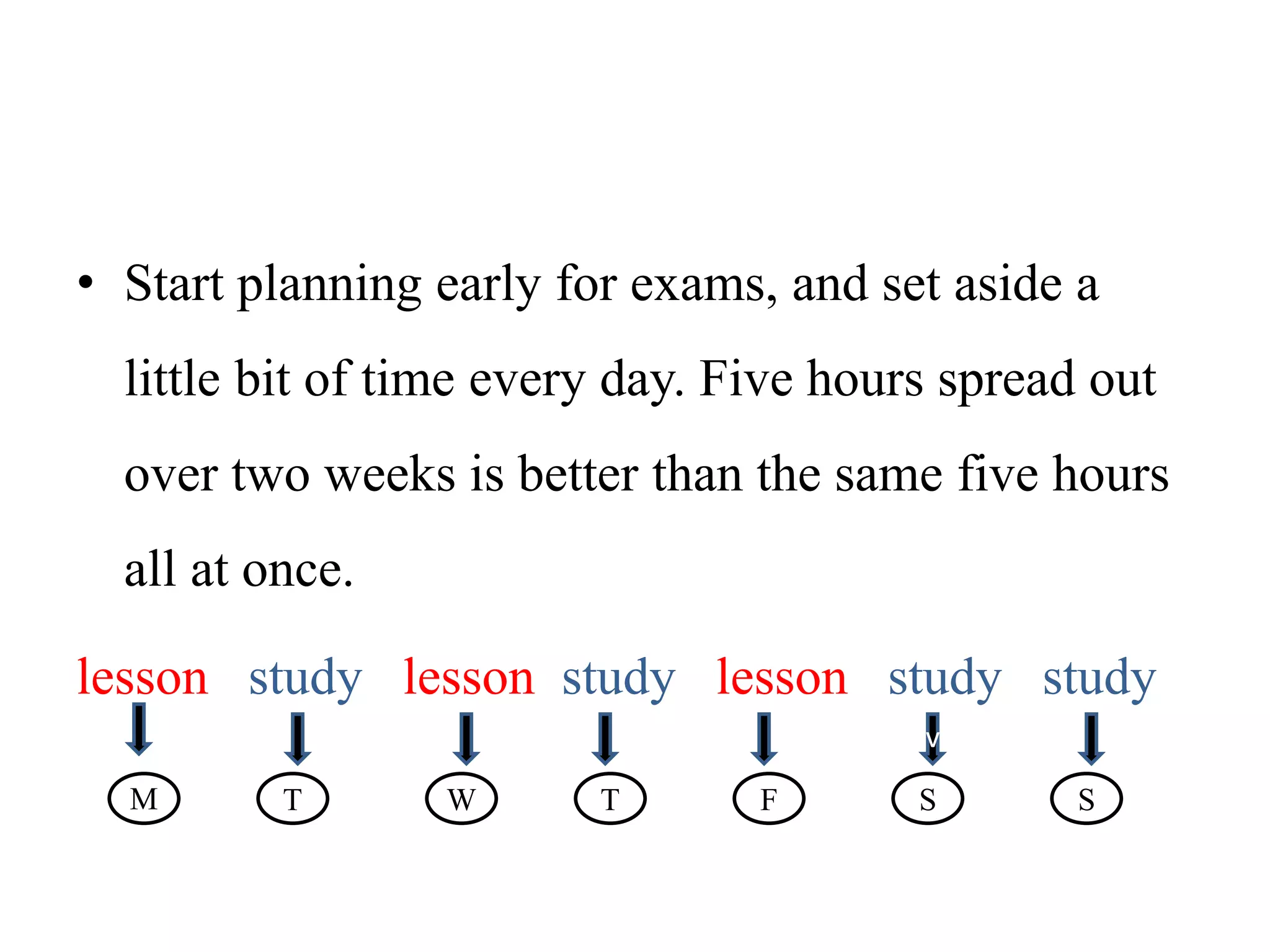
• Start planning early for exams, and set aside a
little bit of time every day. Five hours spread out
over two weeks is better than the same five hours
all at once.
lesson study lesson study lesson study study
M T T
W S
S
F
v
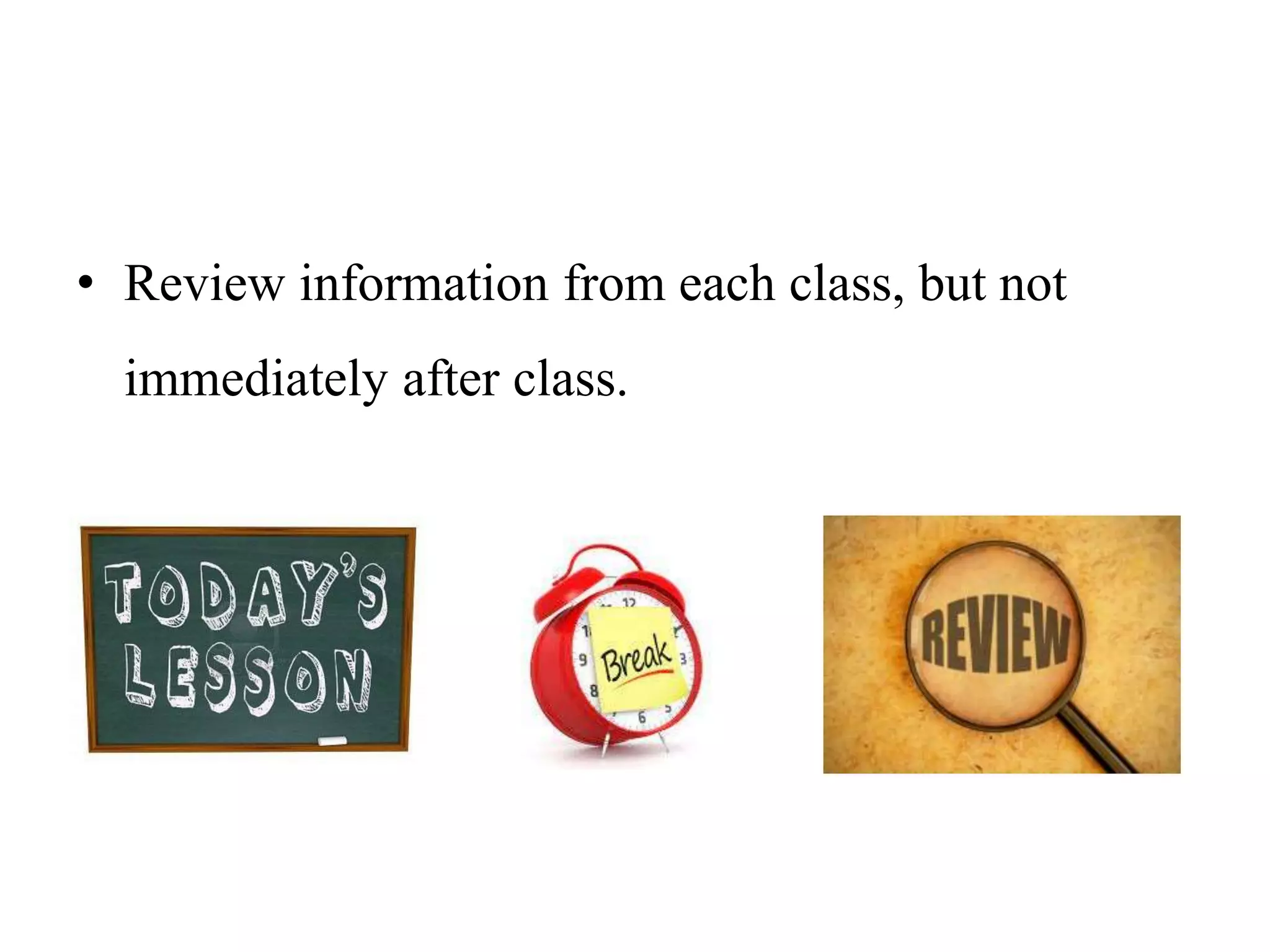
• Review information from each class, but not
immediately after class.
• After you review information from the most
recent class, make sure to go back and study
important older information to keep it fresh.
2) Retrieval Practice
• Bringing learned information to mind from long
term memory.
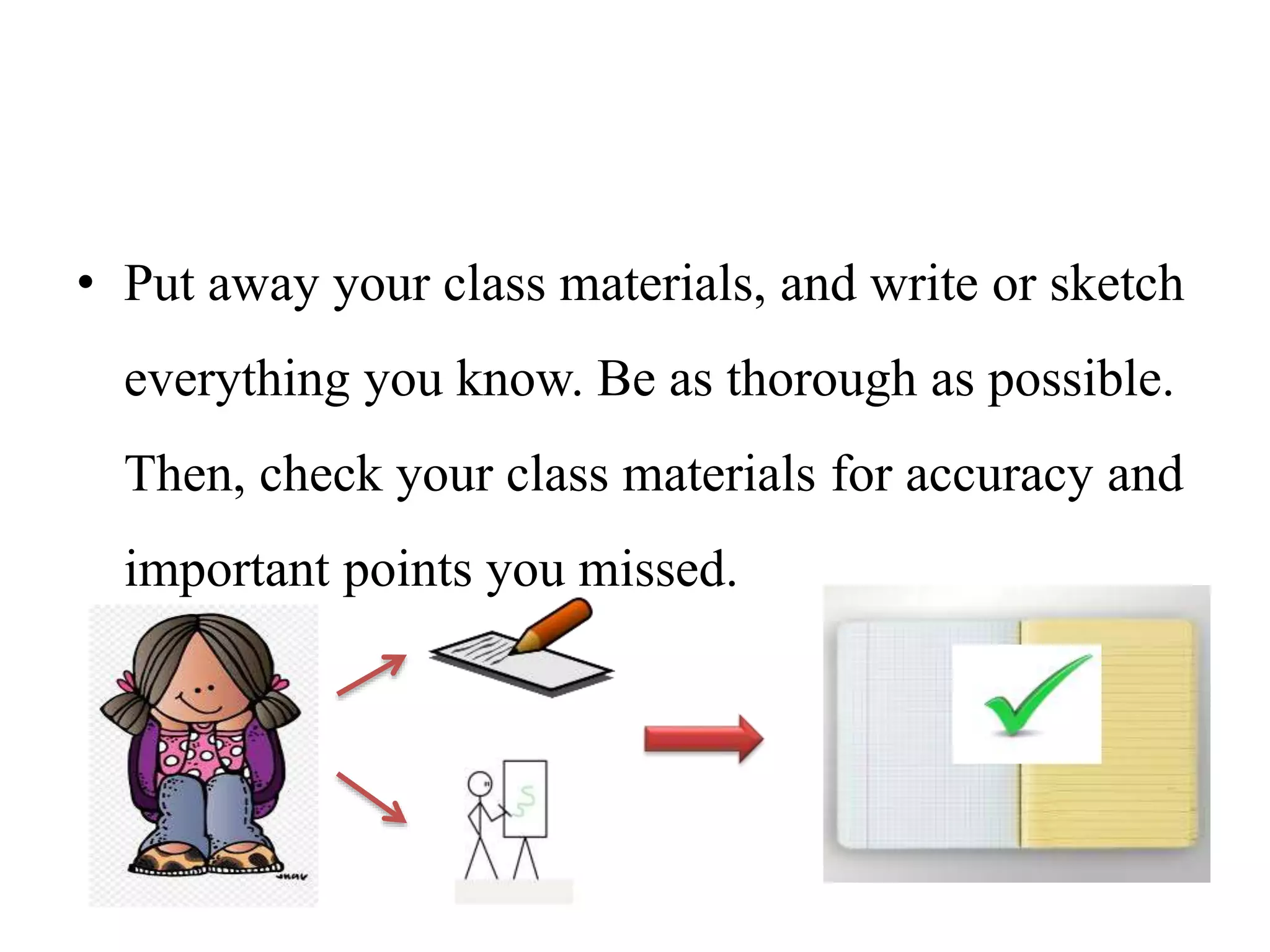
• Put away your class materials, and write or sketch
everything you know. Be as thorough as possible.
Then, check your class materials for accuracy and
important points you missed.
• Take as many practice tests as you can get your
hands on. If you don’t have ready-made tests, try
making your own and trading with a friend who
has done the same.
• Retrieval practice works best when you go back
to check your class materials for accuracy
afterward.
• Don’t only recall words and definitions. Make
sure to recall main ideas, how things are related or
different from one another, and new examples.
3) Elaboration
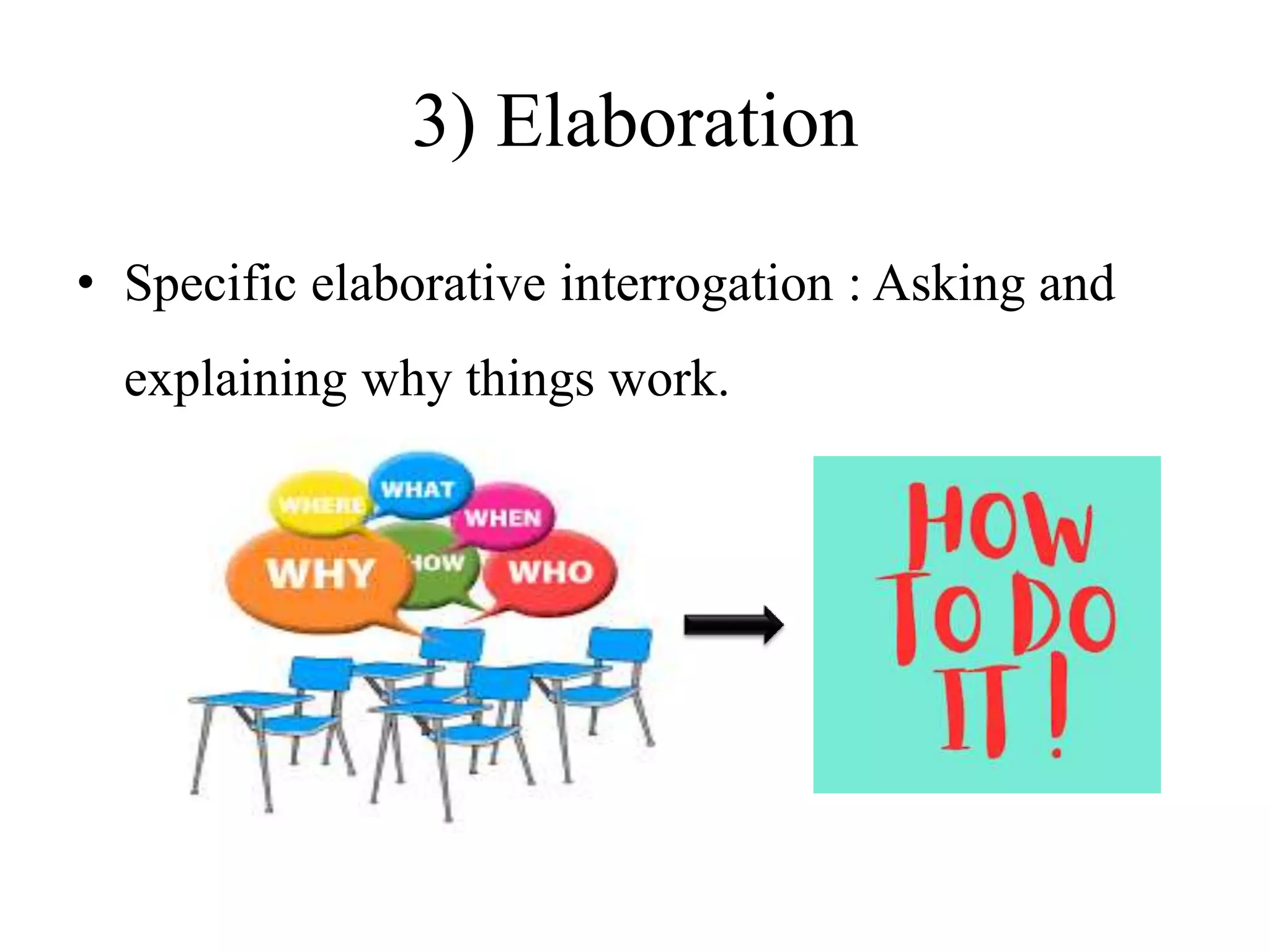
• Specific elaborative interrogation : Asking and
explaining why things work.
• Ask yourself questions while you are studying
about how things work and why, and then find the
answers in your class materials and discuss them
with your classmates.
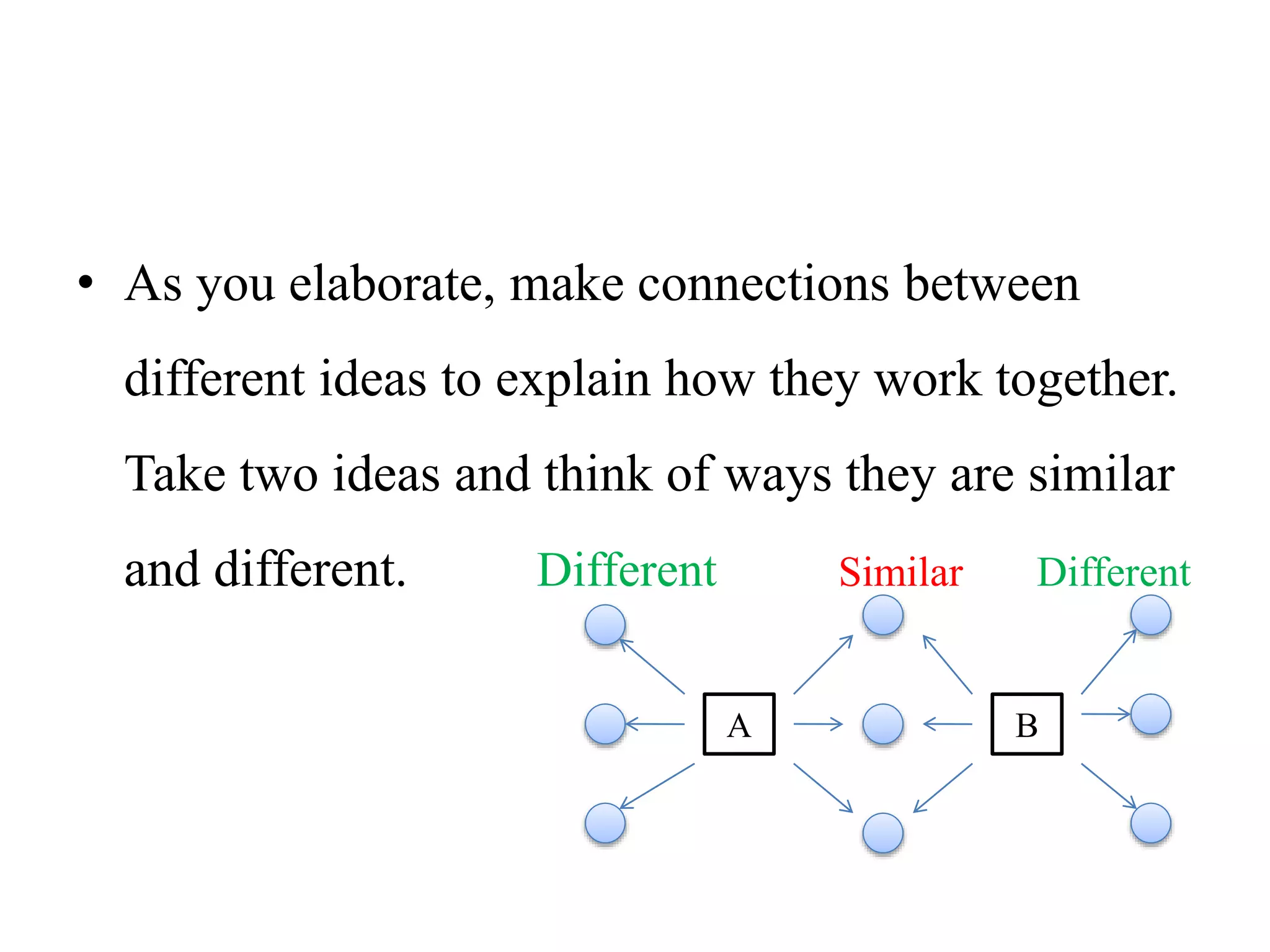
• As you elaborate, make connections between
different ideas to explain how they work together.
Take two ideas and think of ways they are similar
and different. Different Similar Different
A B
• Describe how the ideas you are studying apply to
your own experiences or memories. As you go
through your day, make connections to the ideas
you are learning in class.
4) Interleaving
• Creating a study schedule that mixes different
kind of problems or different content subjects
within one study session.
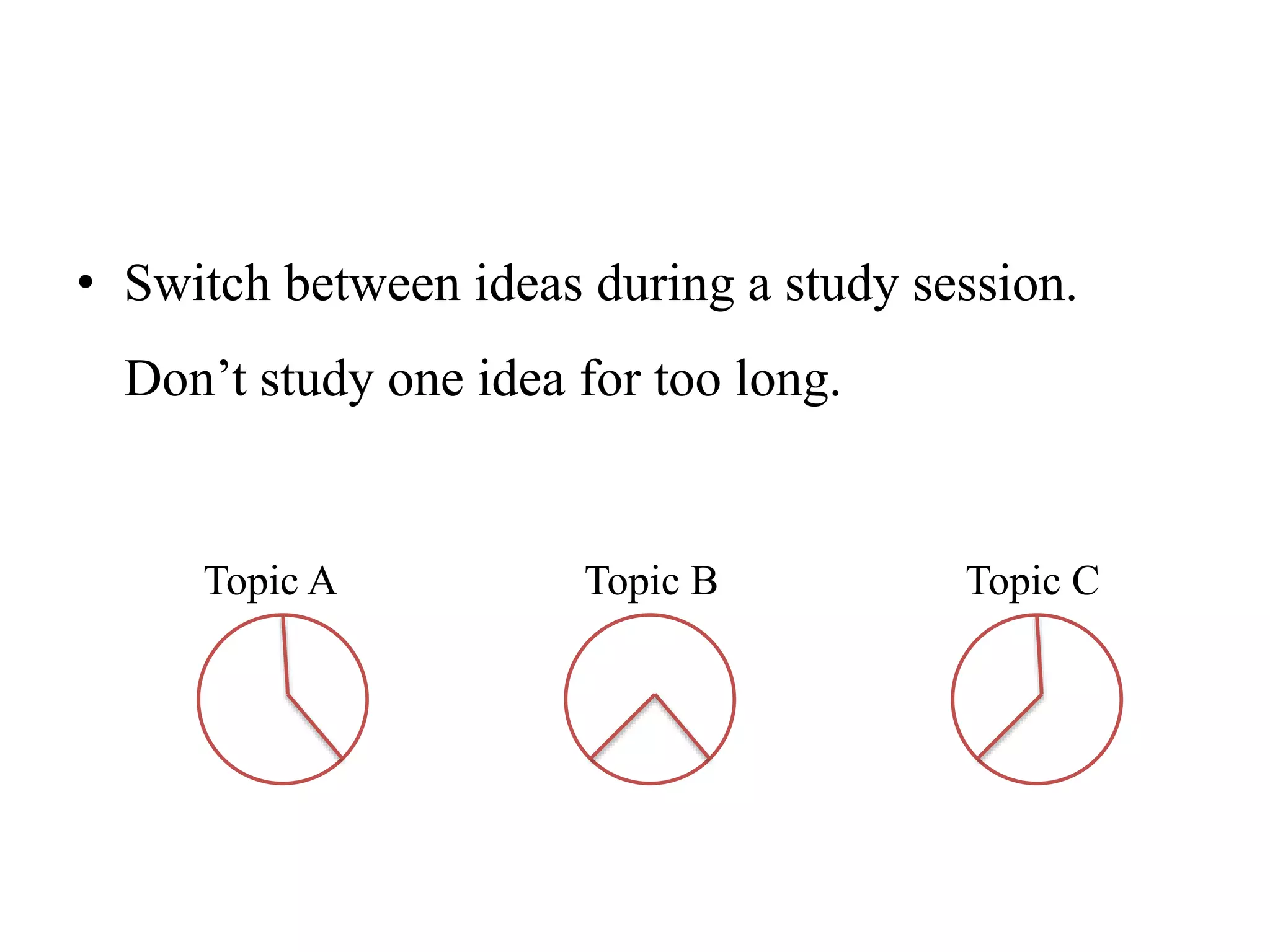
• Switch between ideas during a study session.
Don’t study one idea for too long.
Topic A Topic B Topic C
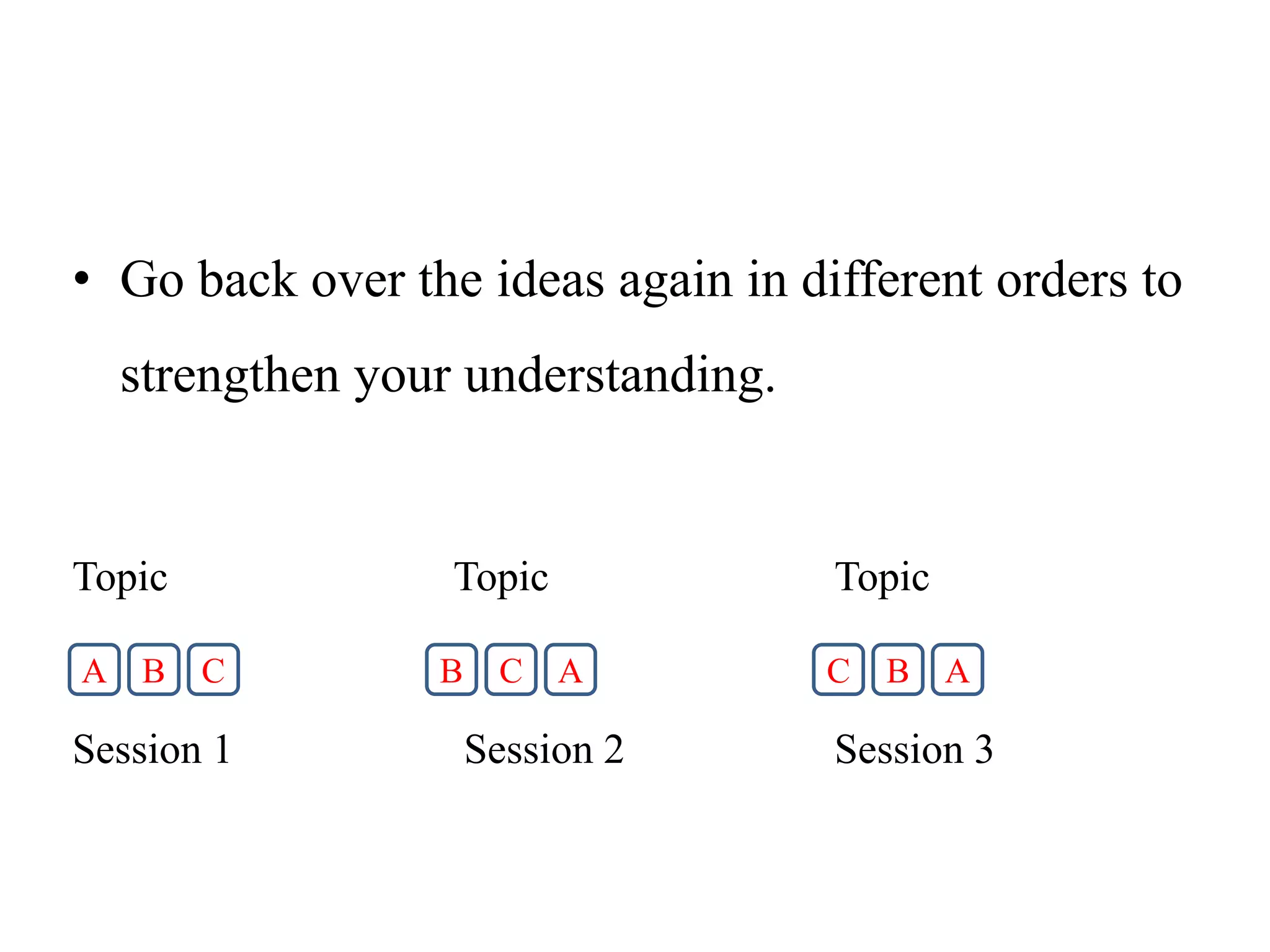
• Go back over the ideas again in different orders to
strengthen your understanding.
Topic Topic Topic
Session 1 Session 2 Session 3
A B C A
C
B A
B
C
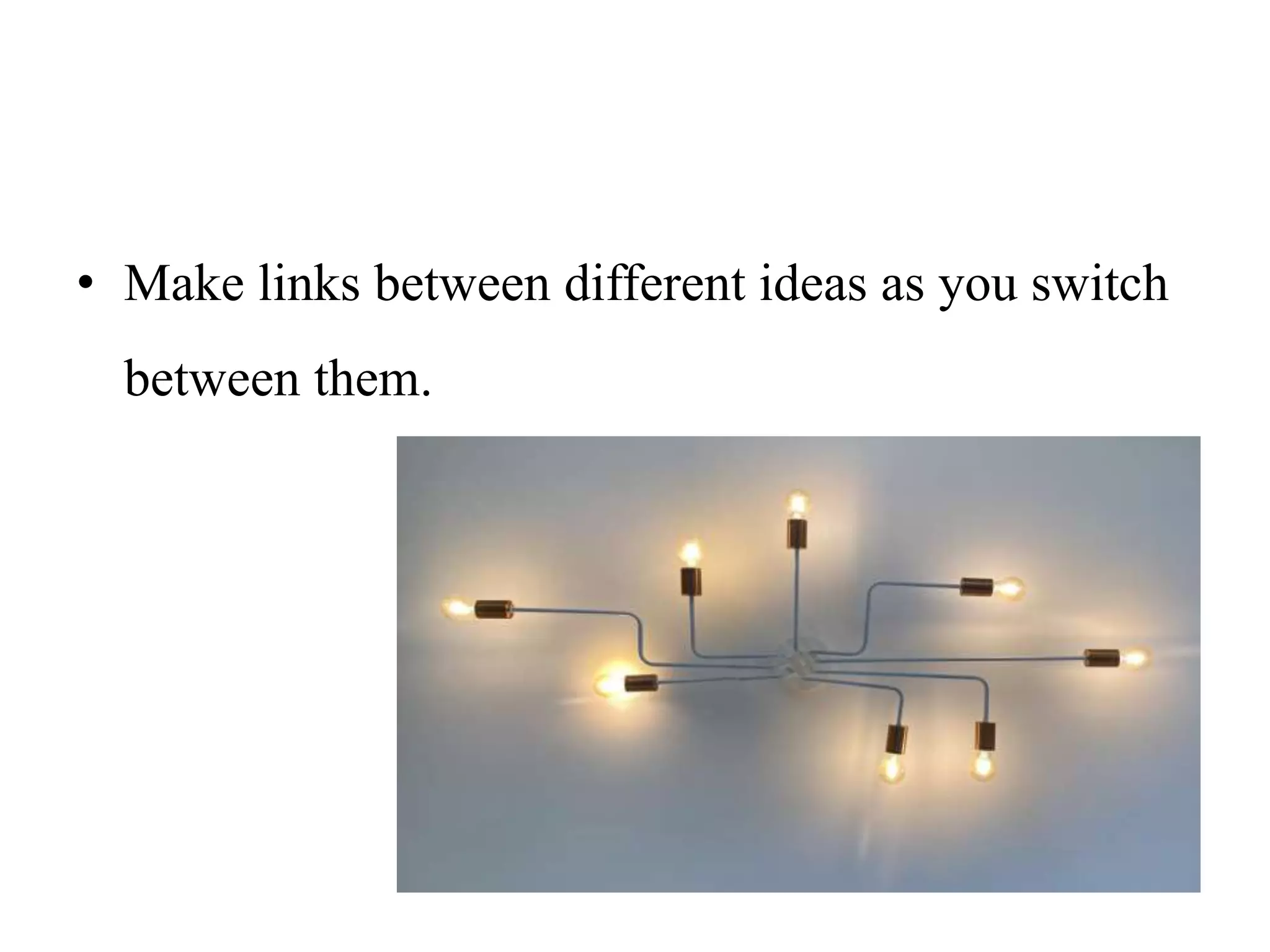
• Make links between different ideas as you switch
between them.
5) Concrete Example
• When studying abstract concepts, illustrating
them with specific real life examples.
• Collect examples your teacher has used, and look
in your class materials for as many examples as
you can find.
• Make the link between the idea you are studying
and each example, so that you understand how the
example applies to the idea.
• Share examples with friends, and explain them to
each other for added benefits.
6) Dual Coding
• Combining visual with words.
• Look at your class materials and find visuals.
Look over the visuals and compare to the words.
• Look at visuals, and explain in your own words
what they mean.
• Take information that you are trying to learn, and
draw visuals to go along with it.
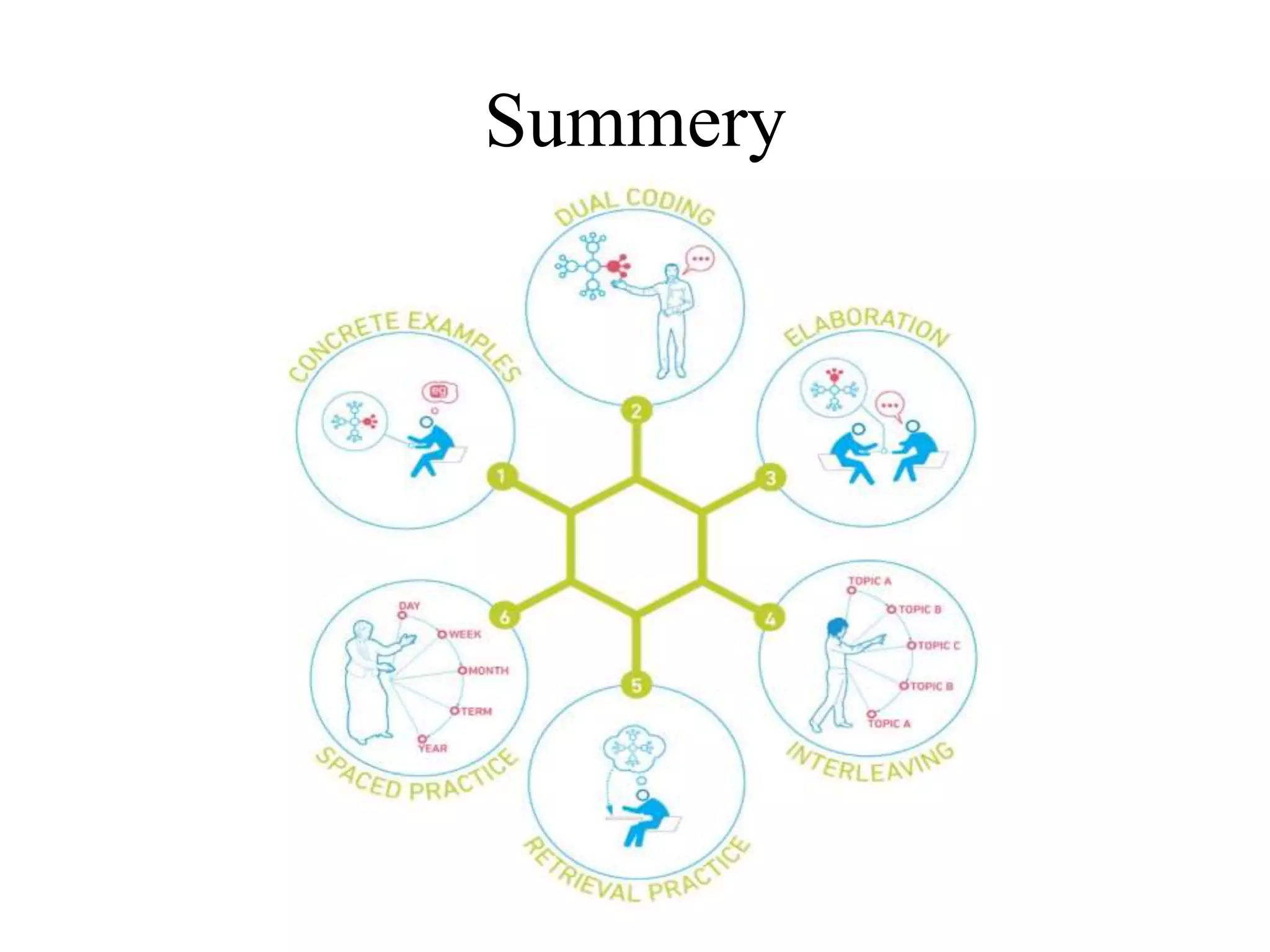
Summery
Sources
• Psychology of learning and motivation: Cognition
in education.
Learning strategies

Learning strategies

  • 1.
  • 2.
    Objectives 1. What aredifferent learning strategies? 2. How to practice each learning strategies?
  • 3.
    1. Spaced Practice 2.Retrieval Practice 3. Elaboration 4. Interleaving 5. Concrete Examples 6. Dual Coding
  • 4.
    1) Spaced Practice •Creating a study schedule that spreads study activities out over time.
  • 5.
    • Start planningearly for exams, and set aside a little bit of time every day. Five hours spread out over two weeks is better than the same five hours all at once. lesson study lesson study lesson study study M T T W S S F v
  • 6.
    • Review informationfrom each class, but not immediately after class.
  • 7.
    • After youreview information from the most recent class, make sure to go back and study important older information to keep it fresh.
  • 8.
    2) Retrieval Practice •Bringing learned information to mind from long term memory.
  • 9.
    • Put awayyour class materials, and write or sketch everything you know. Be as thorough as possible. Then, check your class materials for accuracy and important points you missed.
  • 10.
    • Take asmany practice tests as you can get your hands on. If you don’t have ready-made tests, try making your own and trading with a friend who has done the same.
  • 11.
    • Retrieval practiceworks best when you go back to check your class materials for accuracy afterward. • Don’t only recall words and definitions. Make sure to recall main ideas, how things are related or different from one another, and new examples.
  • 12.
    3) Elaboration • Specificelaborative interrogation : Asking and explaining why things work.
  • 13.
    • Ask yourselfquestions while you are studying about how things work and why, and then find the answers in your class materials and discuss them with your classmates.
  • 14.
    • As youelaborate, make connections between different ideas to explain how they work together. Take two ideas and think of ways they are similar and different. Different Similar Different A B
  • 15.
    • Describe howthe ideas you are studying apply to your own experiences or memories. As you go through your day, make connections to the ideas you are learning in class.
  • 16.
    4) Interleaving • Creatinga study schedule that mixes different kind of problems or different content subjects within one study session.
  • 17.
    • Switch betweenideas during a study session. Don’t study one idea for too long. Topic A Topic B Topic C
  • 18.
    • Go backover the ideas again in different orders to strengthen your understanding. Topic Topic Topic Session 1 Session 2 Session 3 A B C A C B A B C
  • 19.
    • Make linksbetween different ideas as you switch between them.
  • 20.
    5) Concrete Example •When studying abstract concepts, illustrating them with specific real life examples.
  • 21.
    • Collect examplesyour teacher has used, and look in your class materials for as many examples as you can find.
  • 22.
    • Make thelink between the idea you are studying and each example, so that you understand how the example applies to the idea. • Share examples with friends, and explain them to each other for added benefits.
  • 23.
    6) Dual Coding •Combining visual with words. • Look at your class materials and find visuals. Look over the visuals and compare to the words. • Look at visuals, and explain in your own words what they mean. • Take information that you are trying to learn, and draw visuals to go along with it.
  • 24.
  • 25.
    Sources • Psychology oflearning and motivation: Cognition in education.